NCEPower NCE30P15S

- Part No.:
- NCE30P15S
- Manufacturer:
- NCEPower
- Category:
- P-Channel MOSFETs
- Package:
- Description:
- NCE30P15S — -30V/-15A P-Channel Power MOSFET (SOP-8)The NCE30P15S is a -30V, -15A P-Channel enhancement-mode power MOSFET in SOP-8 from Wuxi NCE Power — the middle step of the 30P high-current family. Trench cell, RDS(on) of 12mΩ max @ -1…
- Quantity:
-
Unit Price:$0
Ext Price:$0
- Payment:
-

- Shipping:
-


NCE30P15S Information
- Specifications
- Product Details
- Comparison
- Tags
- Product attributes
- Attribute value
- Manufacturer:
- NCEPower
- Package/Case:
- Series:
- Packaging:
- SOP-8
- Product Status:
- Production
- FET Type:
- Industrial grade
- Technology:
- Trench
- Drain to Source Voltage (Vdss):
- P
- Current - Continuous Drain (Id) @ 25°C:
- -30
- Drive Voltage (Max Rds On, Min Rds On):
- -15
- Rds On (Max) @ Id, Vgs:
- -1.5
- Vgs(th) (Max) @ Id:
- 8.5
- Gate Charge (Qg) (Max) @ Vgs:
- 10
- Vgs (Max):
- 11.5
- Input Capacitance (Ciss) (Max) @ Vds:
- 15
- FET Feature:
- Power Dissipation (Max):
- Operating Temperature:
- ±20
- Grade:
- 2900
- Qualification:
- 48
- Mounting Type:
- 3.1
- Supplier Device Package:
- 供应商设备封装:
- 供应商设备封装:
- 控制特性:
- 认证机构:
- 标准编号:
- Current Rating (Amps):
- param_30:
NCE30P15S — -30V/-15A P-Channel Power MOSFET (SOP-8)
The NCE30P15S is a -30V, -15A P-Channel enhancement-mode power MOSFET in SOP-8 from Wuxi NCE Power — the middle step of the 30P high-current family. Trench cell, RDS(on) of 12mΩ max @ -10V (8.5mΩ typ), and a 48nC gate charge.
From what we see across Shenzhen lots (2025–2026), the 15A sibling is the pick engineers land on after the 9435 family runs out of current headroom — it carries 3× the current of a 9435 at a quarter of the RDS(on), in the same footprint.
The spec most people miss: the 48nC gate charge is double the 12A sibling's 24nC. Same SOP-8, same pinout, but it wants a stiffer drive — a 10kΩ pull-up turns this one off in slow motion.
What Are the Technical Specifications of NCE30P15S?
| Parameter | Value |
|---|---|
| Type | P-Channel Enhancement Mode Power MOSFET (Trench) |
| Package | SOP-8, RoHS / lead-free, tape & reel (2500/reel) |
| Drain-Source Voltage (VDS) | -30V |
| Gate-Source Voltage (VGS) | ±20V |
| Continuous Drain Current (ID) | -15A @ TA = 25°C |
| Pulsed Drain Current (IDM) | -60A |
| On-Resistance RDS(on) @ -10V | 8.5mΩ typ / 12mΩ max |
| On-Resistance RDS(on) @ -4.5V | 11.5mΩ typ / 15mΩ max |
| Gate Threshold Voltage (VGS(th)) | typ -1.5V, max -2.2V |
| Max Power Dissipation (PD) | 3.1W @ TA = 25°C |
| Total Gate Charge (Qg) | 48nC @ VGS=-10V |
| Input Capacitance (Ciss) | 2800pF typ |
| Output Capacitance (Coss) | 410pF typ |
| Operating Junction Temperature | -55°C to +150°C |
Key numbers that matter: per the NCE30P15S datasheet, RDS(on) drops to 8.5mΩ typ at -10V and still holds 11.5mΩ typ at -4.5V — this die is more drive-tolerant than the 12A sibling.
The headline is the 48nC gate charge. But why does that matter? It decides your pull-up resistor: at 12V with a 10kΩ pull-up, off-time runs about 40µs — fine for a battery switch, sluggish for anything that cycles fast.
The -60A pulse rating shrugs off capacitor inrush and hot-plug transients that would pop a smaller P-Channel.
When Should You Use (and NOT Use) the NCE30P15S?
✅ Use NCE30P15S when:
- High-side load switching at 5–10A. Power tools, UPS battery paths, drone power boards — the -30V rating covers 1S to 6S Li-ion with margin for inductive spikes.
- PWM applications up to tens of kHz. The datasheet calls out PWM and UPS duty explicitly; 48nC with a 1kΩ pull-up and a small driver stage switches cleanly.
- Reverse polarity protection above 3A. Body diode blocks the reversed supply, then the channel takes over at 12mΩ max instead of a diode's 0.4–0.6V. At 6A that's 0.43W vs 3W.
- 4.5V logic-level gate drive. RDS(on) is guaranteed at -4.5V (15mΩ max) — a 5V rail or a small NPN stage switches it fully.
- Upgrade from the 12A sibling or the 9435 family. Same SOP-8 socket, same pinout; +25% current headroom over the 30P12S and 3× over the 9435.
❌ Don't use NCE30P15S when:
- You plan to draw a true 15A continuously. That rating is at TA = 25°C with generous copper. At 12mΩ and 15A you dissipate 2.7W — a junction rise beyond what SOP-8 can shed. Plan for ~9A continuous; step to NCE30P25S beyond that.
- Driving from a 3.3V-only rail with no level shifter. RDS(on) is not specified below -4.5V; at -3.3V the die is partially enhanced and resistance climbs 2–3×. Add the NPN stage — it's two components.
- A 10kΩ gate pull-up on a fast-cycling design. 48nC times 10kΩ is roughly 40µs of off-time. If your load switches at kHz rates, drop the pull-up to 1kΩ or use a proper driver.
- Gate voltages above -20V. A 24V rail with the gate pulled to ground puts 24V across VGS — instant overstress. Add a Zener clamp between gate and source.
- High-frequency synchronous rectification. 48nC makes this a load switch and PWM part, not a 100kHz+ power-stage FET. Pick a lower-Qg part for that.
What Are the Alternatives to NCE30P15S?
| Model | Type | Key Difference | Best For |
|---|---|---|---|
| NCE30P12S | P-Ch, SOP-8 | -12A, 13mΩ max @ -10V, 24nC | Lighter load (to ~8A); easier drive, half the gate charge |
| NCE30P25S | P-Ch, SOP-8 | -25A, 6.4mΩ typ @ -10V, 98.9nC | True 10A+ continuous; big driver needed |
| AO4407A | P-Ch, SOP-8 | -12A, 11mΩ, 4.5V drive (AOS) | Direct pin-compatible competitor at 12A class |
| IRF9328 | P-Ch, SOP-8 | -30V, 10mΩ @ -10V, 2.5W (UMW) | Lower RDS(on) at the same voltage |
| IRF7240 | P-Ch, SO-8 | -40V, 13mΩ, 3.5W (Infineon) | Extra voltage headroom on noisy 24V rails |
| SI4435DY | P-Ch, SOP-8 | -8.8A, 26mΩ, Vishay classic | Branded drop-in; the part the 15S replaces |
The 30V P-Channel SOP-8 ladder: 12A sibling for loads to ~8A, 15A here for the 5–10A band with bursts, 25A sibling when continuous current passes 10A. All three share one footprint and one pinout.
In our experience (2025–2026), the 15S is the least-remarked of the trio because it sits between two louder siblings. But how do you choose? Match the gate drive you already have — if the BOM has a driver or a stiff pull-up, the 15S buys you headroom the 12S can't.
SOP-8 pinout: pins 1–3 are Source, pin 4 is Gate, pins 5–8 are Drain — identical to the whole 30P family, so the 15S drops into a 12S or 9435 layout unchanged.
High-side switch with level shifter: gate pulled up through 1kΩ (off), GPIO drives an NPN which pulls the gate to ground to enable. The 1kΩ pull-up keeps off-time near 4µs with the 48nC gate charge; a 10kΩ version works but turns the switch off in ~40µs.
On rails above 20V, add a 12V Zener clamp across gate-source to keep VGS inside ±20V.
Gate charge Qg @ -10V — more charge means a stiffer drive:
Off-time with a 1kΩ pull-up on a 12V rail: about 2µs for the 12S, 4µs for the 15S, 8µs for the 25S. The 15S is where a plain GPIO starts feeling the load.
What Are the Typical Applications of NCE30P15S?
Battery UPS / standby power path: The datasheet calls out PWM and UPS duty directly. In a small UPS, the 15S switches the battery path at 5–10A bursts while the -60A pulse rating absorbs the changeover transient.
Power tool high-side switch: A cordless tool drawing 8–12A peak benefits from the 15S's headroom over the 12A sibling — at 10A typ the die runs at 8.5mΩ (0.85W) rather than the 12S's 11.5mΩ (1.15W).
Drone and gimbal power distribution: Camera drones switch 5–12V rails at load-switch speeds. The 4.5V drive spec matches a 5V rail directly; the 48nC charge is easily handled by the flight controller's gate stage.
Reverse polarity protection: Connected source-to-load, drain-to-supply, the body diode blocks a reversed battery and the channel conducts at 12mΩ max after the gate is pulled negative. At 6A the drop is ~72mV instead of a Schottky's 0.4V.
Why Buy NCE30P15S from ICMASS?
Every lot tested for the two specs that matter. We batch-test VGS(th) and RDS(on) at -4.5V and -10V on 30P15S parts before they ship. A remarked smaller die passes a visual check but fails the RDS(on) measurement by 2–3×.
Cross-reference support for the whole 30P line. Not sure whether your board wants the 12S, 15S, 25S, or AO4407A? Send us your load current, rail voltage, and gate drive — we'll tell you which part the design actually needs.
BOM consolidation for battery products. The same portable-device BOM usually carries a battery charger (TP4056), a boost or buck converter (XL6009, LM2596), and a 30P family load switch. One shipment from Shenzhen covers the whole power section.
Same-day dispatch, 5–10 days worldwide. Orders before 15:00 CST ship same day via DHL or FedEx. For volume orders, we source directly from the NCE factory line.
Frequently Asked Questions About NCE30P15S
Q1: What's the real difference between NCE30P15S and NCE30P12S?
A: Same package, same pinout, +25% current, half the heat per amp — but double the gate charge. The 15S drops RDS(on) from 13mΩ max to 12mΩ max (8.5mΩ typ) and raises the rating from -12A to -15A. The trade: 48nC vs 24nC, so the drive circuit must be stiffer. If your BOM already has a driver or a 1kΩ pull-up, the 15S is the better value.
Q2: Why does my high-side switch stay on no matter what the GPIO does?
A: The gate is not being pulled to the source potential, so the channel never turns off. A GPIO reaching only 3.3V or 5V cannot cut off a P-Channel on a 12V rail. The forum-standard fix: an NPN level shifter pulls the gate to ground to enable, and a pull-up between gate and source pulls it to VIN to disable. A swapped source/drain (body diode conducting) looks identical.
Q3: Can I drive NCE30P15S directly from a 3.3V MCU pin?
A: It will switch on, but RDS(on) is not specified below -4.5V. At -3.3V the die is only partially enhanced and resistance runs 2–3× the -4.5V value. For a 1–2A load with headroom it works; for 5A+ add the two-component NPN level shifter.
Q4: What gate pull-up resistor should I use with the 48nC gate charge?
A: 1kΩ for switching; 10kΩ only if the load switches rarely. Off-time is roughly pull-up resistance times gate charge divided by rail voltage: 48nC at 12V through 1kΩ is ~4µs; through 10kΩ it's ~40µs. Forum threads converge on 1k–10kΩ, with the lower value whenever the load cycles faster than a few hundred Hz.
Q5: Can an SOP-8 really carry 15A continuous?
A: Not reliably — the -15A rating is at TA = 25°C with ideal copper. At 12mΩ max, 15A means 2.7W, which SOP-8 cannot shed continuously. With generous drain-pin copper pours, plan for ~9A continuous; beyond that step to the NCE30P25S. The -15A number buys you headroom for bursts and transients, not a continuous promise.
Q6: My MOSFET burns out in a 24V system — what am I missing?
A: Check the gate voltage. VGS is rated ±20V, so pulling the gate to ground on a 24V rail puts 24V across gate-to-source. Add a 12V Zener clamp between gate and source, or a resistor divider, so the gate never sees more than -20V.
Q7: Can I use the NCE30P15S for reverse polarity protection?
A: Yes — one of the best uses for a P-Channel part. Connect it source-to-load, drain-to-supply, so the body diode blocks the reversed supply; the channel then carries the load with millivolts of drop instead of a diode's 0.4–0.6V. The gate must pull to the load-side rail, not the supply side.
Q8: Is NCE30P15S a drop-in replacement for AO4407?
A: Yes — same SOP-8 pinout, same -30V rating, same 4.5V drive points. Pins 1–3 Source, 4 Gate, 5–8 Drain on both. The 15S is 12mΩ max vs the AO4407's 14mΩ (AO4407A: 11mΩ) — a slight win at -15A vs -12A. Watch the drive: 48nC wants a stiffer pull-up than the 4407's ~30nC.
Q9: Why does my MCU reset when the load switch turns on?
A: Inrush into the capacitive load is dragging down the rail. The 15S can pulse -60A, so charging a few hundred microfarads can brown-out a weak supply. Add bulk bypass capacitance near the switch and consider a series resistor or soft-start for large capacitor banks.
Q10: How do I verify a genuine NCE30P15S?
A: Measure RDS(on) at -4.5V and -10V with a bench supply and milliohm meter. A genuine part reads near 11.5mΩ typ at -4.5V. Counterfeit parts remarked from smaller dies fail this check by 2–3× while passing a visual inspection — which is exactly why we batch-test this parameter before shipping.
| Image |

|
| Part Number | NCE30P15S |
| Manufacturer | NCEPower |
| Package/Case | |
| Series | |
| Packaging | SOP-8 |
| Product Status | Production |
| FET Type | Industrial grade |
| Technology | Trench |
| Drain to Source Voltage (Vdss) | P |
| Current - Continuous Drain (Id) @ 25°C | -30 |
| Drive Voltage (Max Rds On, Min Rds On) | -15 |
| Rds On (Max) @ Id, Vgs | -1.5 |
| Vgs(th) (Max) @ Id | 8.5 |
| Gate Charge (Qg) (Max) @ Vgs | 10 |
| Vgs (Max) | 11.5 |
| Input Capacitance (Ciss) (Max) @ Vds | 15 |
| FET Feature | |
| Power Dissipation (Max) | |
| Operating Temperature | ±20 |
| Grade | 2900 |
| Qualification | 48 |
| Mounting Type | 3.1 |
| Supplier Device Package | |
| 供应商设备封装 | |
| 供应商设备封装 | |
| 控制特性 | |
| 认证机构 | |
| 标准编号 | |
| Current Rating (Amps) | |
| param_30 |
User Guide
- Purchase & Inquiry
- Package
- Shipping Information
- Customer Review
You may place an order without registering to IC-MAX.COM
We strongly suggest you sign in before purchasing as you can track your order in real time.
For your convenience, we accept multiple payment methods in USD, including PayPal, Credit Card, and wire transfer.
RFQ (Request for Quotations)
It is recommended to request for quotations to get the latest prices and inventories about the part.
Our sales will reply to your request by email within 24 hours.
1. You'll receive an order information email in your inbox. (Please remember to check the spam folder if you didn't hear from us).
2. Since inventories and prices may fluctuate to some extent, the sales manager is going to reconfirm the order and let you know if there are any updates.
-
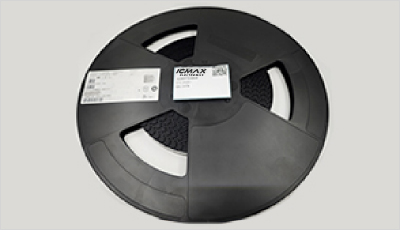
- Step1:Prepare product
-
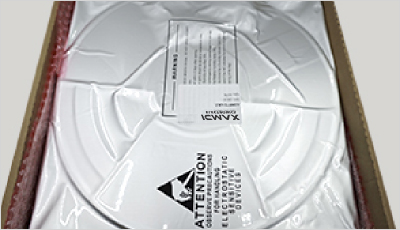
- Step2:Vacuum packaging
-
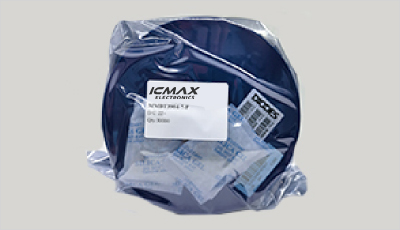
- Step3:Anti-static bag
-
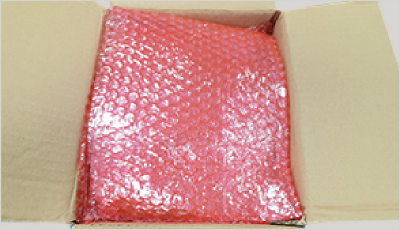
- Step4:Individual package
-
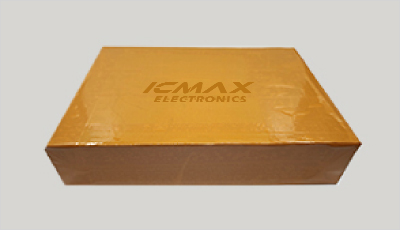
- Step5:Packaging box
-
- Step6:Barcode shipping label
Shipping starts at $40, but some countries will exceed $40. For example (South Africa, Brazil, India, Pakistan, Israel, etc.)
The basic freight (for package ≤0.5kg or corresponding volume) depends on the time zone and country.
Currently, our products are shipped through DHL, FedEx, SF, and UPS.
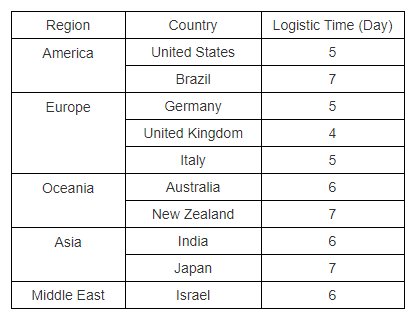
Delivery TimeOnce the goods are shipped, estimated delivery time depends on the shipping methods you chose:
FedEx International, 5-7 business days.
The following are some common countries' logistic time.
- Hot Sale
- Related Categories
- Include Parts
- Popular Search
The following parts include "NCE30P15S" in Silicon Labs NCE30P15S.
- Part Number
- Manufacturer
- Package
- Description
- NCE2305A NCEPower NCE30P15S — -30V/-15A P-Channel Power MOSFET (SOP-8)The NCE30P15S is a -30V, -15A P-Channel enhancement-mode power MOSFET in SOP-8 from Wuxi NCE Power — the middle step of the 30P high-current family. Trench cell, RDS(on) of 12mΩ max @ -1…
- NCE2305 NCEPower NCE30P15S — -30V/-15A P-Channel Power MOSFET (SOP-8)The NCE30P15S is a -30V, -15A P-Channel enhancement-mode power MOSFET in SOP-8 from Wuxi NCE Power — the middle step of the 30P high-current family. Trench cell, RDS(on) of 12mΩ max @ -1…
- NCE3401 : P-Channel 30V -4.2A Power MOSFET SOT-23 NCEPower NCE30P15S — -30V/-15A P-Channel Power MOSFET (SOP-8)The NCE30P15S is a -30V, -15A P-Channel enhancement-mode power MOSFET in SOP-8 from Wuxi NCE Power — the middle step of the 30P high-current family. Trench cell, RDS(on) of 12mΩ max @ -1…
- NCE9435 NCEPower NCE30P15S — -30V/-15A P-Channel Power MOSFET (SOP-8)The NCE30P15S is a -30V, -15A P-Channel enhancement-mode power MOSFET in SOP-8 from Wuxi NCE Power — the middle step of the 30P high-current family. Trench cell, RDS(on) of 12mΩ max @ -1…
- NCE30P12S NCEPower NCE30P15S — -30V/-15A P-Channel Power MOSFET (SOP-8)The NCE30P15S is a -30V, -15A P-Channel enhancement-mode power MOSFET in SOP-8 from Wuxi NCE Power — the middle step of the 30P high-current family. Trench cell, RDS(on) of 12mΩ max @ -1…
- NCE30P25S NCEPower NCE30P15S — -30V/-15A P-Channel Power MOSFET (SOP-8)The NCE30P15S is a -30V, -15A P-Channel enhancement-mode power MOSFET in SOP-8 from Wuxi NCE Power — the middle step of the 30P high-current family. Trench cell, RDS(on) of 12mΩ max @ -1…
- NCE30P30K NCEPower NCE30P15S — -30V/-15A P-Channel Power MOSFET (SOP-8)The NCE30P15S is a -30V, -15A P-Channel enhancement-mode power MOSFET in SOP-8 from Wuxi NCE Power — the middle step of the 30P high-current family. Trench cell, RDS(on) of 12mΩ max @ -1…
- NCE30P30G NCEPower NCE30P15S — -30V/-15A P-Channel Power MOSFET (SOP-8)The NCE30P15S is a -30V, -15A P-Channel enhancement-mode power MOSFET in SOP-8 from Wuxi NCE Power — the middle step of the 30P high-current family. Trench cell, RDS(on) of 12mΩ max @ -1…
- NCE30P50G NCEPower NCE30P15S — -30V/-15A P-Channel Power MOSFET (SOP-8)The NCE30P15S is a -30V, -15A P-Channel enhancement-mode power MOSFET in SOP-8 from Wuxi NCE Power — the middle step of the 30P high-current family. Trench cell, RDS(on) of 12mΩ max @ -1…
- NCE2309 — P-Channel 60V/1.6A Enhancement Mode Power MOSFET (SOT-23) NCEPower NCE30P15S — -30V/-15A P-Channel Power MOSFET (SOP-8)The NCE30P15S is a -30V, -15A P-Channel enhancement-mode power MOSFET in SOP-8 from Wuxi NCE Power — the middle step of the 30P high-current family. Trench cell, RDS(on) of 12mΩ max @ -1…
The following parts are popular search parts in Test and Measurement.
Inventory:50,000
Please send an inquiry. Send us your inquiry, and we will respond immediately.

- 1500+ Daily average RFQ Volume

- 20,000.000 Standard Product Unit

- 1800+ Worldwide Manufacturers

- 15,000+ In-stock Warehouse