NCEPower NCE30P50G

- Part No.:
- NCE30P50G
- Manufacturer:
- NCEPower
- Category:
- P-Channel MOSFETs
- Package:
- Description:
- NCE30P50G — 30V/50A P-Channel Power MOSFET (DFN 5x6 EP)The NCE30P50G is the top of the NCE 30P line — a -30V/-50A P-Channel trench MOSFET in DFN 5x6, with 7mΩ max at 10V (typ 4.4mΩ), -200A pulsed current, and a body diode rated for …
- Quantity:
-
Unit Price:$0
Ext Price:$0
- Payment:
-

- Shipping:
-


NCE30P50G Information
- Specifications
- Product Details
- Comparison
- Tags
- Product attributes
- Attribute value
- Manufacturer:
- NCEPower
- Package/Case:
- Series:
- Packaging:
- DFN5*6
- Product Status:
- Production
- FET Type:
- Industrial grade
- Technology:
- Trench
- Drain to Source Voltage (Vdss):
- P
- Current - Continuous Drain (Id) @ 25°C:
- -30
- Drive Voltage (Max Rds On, Min Rds On):
- -50
- Rds On (Max) @ Id, Vgs:
- -1.5
- Vgs(th) (Max) @ Id:
- 5.5
- Gate Charge (Qg) (Max) @ Vgs:
- 7
- Vgs (Max):
- 7
- Input Capacitance (Ciss) (Max) @ Vds:
- 11
- FET Feature:
- Power Dissipation (Max):
- Operating Temperature:
- ±20
- Grade:
- 7016
- Qualification:
- 93
- Mounting Type:
- 35
- Supplier Device Package:
- 供应商设备封装:
- 供应商设备封装:
- 控制特性:
- 认证机构:
- 标准编号:
- Current Rating (Amps):
- param_30:
NCE30P50G — 30V/50A P-Channel Power MOSFET (DFN 5x6 EP)
The NCE30P50G is the top of the NCE 30P line — a -30V/-50A P-Channel trench MOSFET in DFN 5x6, with 7mΩ max at 10V (typ 4.4mΩ), -200A pulsed current, and a body diode rated for -50A. From Wuxi NCE Power, datasheet v2.0.
From what we see across Shenzhen lots (2025–2026), the 50A P-ch goes into the same jobs the 25A and 30A parts do — battery switching, load switching — just with the surge headroom: motor stalls, inrush, and the loads that kill smaller P-ch parts.
The spec sheet that doesn't get quoted enough: the 7mΩ row is measured at -10A, there is no 4.5V row at all, and the 35W case envelope sits behind RθJC 3.6°C/W — worse than the 30A sibling's 1.56.
Buy the 50G for 50A-class surge duty with a real 10V driver, its -50A diode and 300mJ avalanche budget — and treat the sticker current as a case-temperature promise, not a board reality.
What Are the Technical Specifications of NCE30P50G?
| Parameter | Value |
|---|---|
| Type | P-Channel Enhancement Mode Power MOSFET (Trench) |
| Package | DFN 5x6 EP (8 leads + exposed pad) |
| Drain-Source Voltage (VDS) | -30V (typ -33V) |
| Gate-Source Voltage (VGS) | ±20V max |
| Continuous Drain Current (ID) | -50A @ TC = 25°C |
| Continuous Drain Current @ 100°C | Not published |
| Pulsed Drain Current (IDM) | -200A (pulse width limited by Tj) |
| On-Resistance RDS(on) @ 10V | 4.4mΩ typ / 7mΩ max (ID = -10A) |
| On-Resistance @ 4.5V | Not specified — this is a 10V-drive die |
| Gate Threshold Voltage (VGS(th)) | -1.0V to -2.2V (typ -1.5V) |
| Forward Transconductance (gfs) | 20S typ (VDS = -10V, ID = -15A) |
| Max Power Dissipation (PD) | 35W, derate 0.28W/°C |
| Thermal Resistance RθJC | 3.6°C/W |
| Total Gate Charge (Qg) | 84nC (VDS = -15V, ID = -10A, VGS = -10V) |
| Gate-Source Charge (Qgs) / Gate-Drain (Qgd) | 11.7nC / 25nC |
| Input Capacitance (Ciss) | 3590pF (VDS = -15V) |
| Output / Reverse Transfer Capacitance | Coss 695pF / Crss 665pF |
| Switching Times | td(on) 13ns / tr 12ns / td(off) 50ns / tf 14ns (VDD = -15V, RGEN = 6Ω) |
| Body Diode Forward Voltage (VSD) | -0.85V typ / -1.2V max (IS = -10A) |
| Body Diode Continuous Current (IS) | -50A |
| Body Diode Recovery | trr 45ns max / Qrr 43nC max (IF = -10A, di/dt = 100A/μs) |
| Single Pulse Avalanche Energy (EAS) | 300mJ (Tj 25°C, VDD -15V, VGS -10V, L = 0.5mH, Rg = 25Ω) — 100% UIS tested |
| ESD Capability | Special process for high ESD claimed; no rating row published |
| Operating Junction Temperature | -55°C to +150°C |
Key numbers that matter: per the NCE30P50G datasheet (v2.0), the headline 7mΩ max is measured at -10A — one-fifth of the sticker current.
That is the most honest thing on the page: at -50A the die is out of the pulse-tested region and RDS(on) runs higher than the row says.
Then the two rows the 50A buyer must read twice: no 4.5V row (10V-drive only), and PD 35W behind RθJC 3.6°C/W — a tighter case envelope than the 30A DFN sibling's 80W at 1.56.
What does that combination mean? This is a surge-and-switching die, not a 50A continuous heater — at 25A the conduction loss is 4.4W, and that is where the envelope starts to breathe.
RDS(on) max at 10V — each measured at its own test current (datasheet):
Read the test currents, not just the milliohms: the 50G's 7mΩ is a -10A measurement. Compare at the same current and the gap to the G narrows.
Pulsed current class IDM (datasheet) — where the 50A sticker lives:
Why does -200A matter? Motor stalls and battery inrush are pulse events — this is the die that swallows them.
When Should You Use (and NOT Use) the NCE30P50G?
✅ Use NCE30P50G when:
- High-side switching with a real 10V gate rail. 84nC wants a driver or push-pull, but the die delivers the family's lowest conduction loss once it is driven properly.
- Battery switching with surge headroom. Motor stalls and hot-plug inrush run far past the continuous number — IDM -200A is the pulse budget that survives them.
- Reverse-current and OR-ing duty on the body diode. IS -50A with VSD -0.85V typ is a real diode — unusual for a power P-ch.
- Unclamped inductive events with a published budget. EAS 300mJ with conditions and 100% UIS testing — the family's top number.
- 25A-class continuous load on a serious pad. At 25A and 7mΩ the loss is 4.4W — inside a well-vented 35W envelope with real copper.
❌ Don't use NCE30P50G when:
- Your only drive is 4.5V or 3.3V. There is no 4.5V row on this datasheet — it is a 10V-drive die, full stop. The 30A siblings (G/K) have 4.5V rows; this one does not.
- You plan continuous 50A on a board. 50A² × 7mΩ = 17.5W against a 35W case envelope behind RθJC 3.6°C/W — the case would need to sit at liquid-cooled temperatures to sustain it.
- You expect the DFN pad to do all the work. RθJC 3.6°C/W is the tightest envelope of the family for the biggest die — copper, vias, airflow and duty cycle decide the real number.
- 24V rails without a gate clamp. Same ±20V family limit: on-state VGS on a 24V rail exceeds it. 18V zener gate-source, or stay at or below ~18V.
- Cheap 10A jobs. At 10A this die's advantage is wasted and its gate charge is a tax — a 30P12S or 30P30K carries the same load for less money and less drive.
What Are the Alternatives to NCE30P50G?
| Model | Type | Key Difference | Best For |
|---|---|---|---|
| NCE30P30G | P-Ch, DFN5×6-8L | -30A, 10mΩ max at -15A test, 4.5V row present, RθJC 1.56 | Conduction-loss duty with 4.5V-10V drive |
| NCE30P30K | P-Ch, TO-252-2L | -30A, 18mΩ max, 31.2nC, EAS 169mJ, TJ 175°C | Light gates, TO-252 assembly, published rows |
| NCE30P25S | P-Ch, SOP-8 | 25A, 9mΩ max at 10V, 98.9nC — the SO-8 top step | Existing SO-8 layouts at modest current |
| N-ch + high-side driver | N-Ch + driver IC | Half the conduction loss at this current class, adds driver and level-shift | Above ~25A continuous where P-ch economics break |
The 50A decision in one line: the 50G is a surge-class P-ch with a -50A diode and -200A pulse budget, not a continuous 50A switch.
Here's the thing to check before buying: your duty cycle and your drive rail.
If the design is 25A average with stalls to 80A and a 10V gate, this is the family's best answer.
If the load sits at 40A continuous, the honest answer is an N-ch plus driver — no P-ch DFN sustains that on a board.
The pour is the current rating: at 50A even 10mΩ of trace on the pad side burns board watts. Fan the drain-side copper wide on both layers and via it — the DFN pad and the pours are one component. Pin map per the datasheet figure.
Read the test currents: the 50G's headline mΩ is measured at one-fifth of its sticker current; the G at half; the K at two-thirds. Same family, three different honesty levels in the fine print.
What Are the Typical Applications of NCE30P50G?
Battery switching with stall and inrush headroom. The datasheet's own first application is battery switching. On 2S-4S packs, motor stalls and hot-plug inrush run far above the continuous number — IDM -200A is the budget that survives them.
Load switching at 20-30A continuous with pulse peaks. At 25A the 7mΩ die burns 4.4W — a well-vented DFN pad with pours carries that; the -50A diode carries the commutation when the load fights back.
Reverse-protection and OR-ing positions. IS -50A with VSD -0.85V typ is a rated diode — back-to-back P-ch pairs can block reverse current without an external Schottky in the main path.
High-pulse actuator and solenoid banks on 12-18V rails. Solenoid inrush is a pulse event, which is exactly what this die is built for — with a real 10V driver and a clamp for any rail beyond ~18V.
Why Buy NCE30P50G from ICMASS?
Every lot batch-tested at the datasheet's own point. We test RDS(on) at 10V/-10A against the 7mΩ max — the condition that catches a relabeled smaller die cold.
Cross-reference support across the 30P line. G, K, 50G, or the SOP-8 trio? Send us load profile, drive rail and duty cycle — we'll tell you which die your pulses and your continuous load actually need.
Footprint and fanout verification on request. We confirm the DFN 5x6 pad map against the datasheet figure and advise on drain-pour layout before volume orders.
Same-day dispatch, 5-10 days worldwide. Orders before 15:00 CST ship same day via DHL or FedEx. For volume, we source directly from the NCE factory line.
Frequently Asked Questions About NCE30P50G
Q1: Why is the 50A die measured at only -10A?
A: Datasheet convention — and a hint about the die. The 7mΩ row is a pulse test at -10A, where the die has headroom. At -50A the resistance runs higher and the measurement is not repeatable at pulse widths. Read the row as a die-quality figure, not a 50A conduction promise.
Q2: Can it really switch 50A?
A: It can pulse it, briefly — continuously only with an impossible heat sink. 50A² × 7mΩ = 17.5W against a 35W case envelope behind RθJC 3.6°C/W. The honest continuous number on a real board lands in the 20-30A range with copper and airflow; past that, an N-ch plus driver is the answer.
Q3: There's no 4.5V row — can I still drive it from 5V logic?
A: It conducts at 5V, but nothing is guaranteed. Threshold is -1.0 to -2.2V, so 5V turns the channel on — yet RDS(on) is only guaranteed at 10V. Unlike the G and K siblings, this datasheet has no 4.5V row at all. Drive it from 10V or measure your low-voltage resistance yourself.
Q4: Why is PD only 35W when the 30A sibling has 80W?
A: The bigger die sits behind a tighter case attribution. The 50G lists RθJC 3.6°C/W and PD 35W at TJ 150°C; the 30P30G lists 1.56°C/W and 80W. Both are self-consistent with their own thermal rows. The practical reading: the 50G's envelope is for surge duty, not continuous 50A.
Q5: How do I use the EAS 300mJ number?
A: Size your unclamped event against it, derated for temperature. The test is Tj 25°C, VDD -15V, L = 0.5mH, Rg = 25Ω. Estimate your event as ½LI² at the fault current and compare — and remember it is single-pulse. Repetitive avalanche needs a clamp or snubber.
Q6: The body diode is rated -50A — what can I do with that?
A: Reverse protection and OR-ing without an external Schottky in the main path. IS -50A, VSD -0.85V typ and trr 45ns are published. Two back-to-back P-ch pairs block reverse current through the opposing body diode — the rating makes that design defensible.
Q7: What does IDM -200A actually mean?
A: A pulse ceiling, limited by junction temperature — not a 200A switch. The pulsed rating is Note 1: pulse width limited by maximum junction temperature. It tells you the die survives stalls and inrush of that class; it does not tell you to design a 200A continuous path around it.
Q8: The datasheet claims high ESD capability — how much?
A: A feature claim without a rating row — treat it as unquantified. The v2.0 datasheet states a special process for high ESD capability but publishes no HBM or CDM number. Handle it like any power MOSFET on the bench; if ESD rating matters to your line, ask for the test data.
Q9: How do I verify a genuine NCE30P50G?
A: Test at -10A, where the row is guaranteed. A genuine part reads within 7mΩ max at 10V/-10A with VGS(th) in the -1.0 to -2.2V band. A relabeled 30P30G fails that check — its 10mΩ max at -15A sits above the 50G's 7mΩ row even at lighter current.
| Image |

|
| Part Number | NCE30P50G |
| Manufacturer | NCEPower |
| Package/Case | |
| Series | |
| Packaging | DFN5*6 |
| Product Status | Production |
| FET Type | Industrial grade |
| Technology | Trench |
| Drain to Source Voltage (Vdss) | P |
| Current - Continuous Drain (Id) @ 25°C | -30 |
| Drive Voltage (Max Rds On, Min Rds On) | -50 |
| Rds On (Max) @ Id, Vgs | -1.5 |
| Vgs(th) (Max) @ Id | 5.5 |
| Gate Charge (Qg) (Max) @ Vgs | 7 |
| Vgs (Max) | 7 |
| Input Capacitance (Ciss) (Max) @ Vds | 11 |
| FET Feature | |
| Power Dissipation (Max) | |
| Operating Temperature | ±20 |
| Grade | 7016 |
| Qualification | 93 |
| Mounting Type | 35 |
| Supplier Device Package | |
| 供应商设备封装 | |
| 供应商设备封装 | |
| 控制特性 | |
| 认证机构 | |
| 标准编号 | |
| Current Rating (Amps) | |
| param_30 |
User Guide
- Purchase & Inquiry
- Package
- Shipping Information
- Customer Review
You may place an order without registering to IC-MAX.COM
We strongly suggest you sign in before purchasing as you can track your order in real time.
For your convenience, we accept multiple payment methods in USD, including PayPal, Credit Card, and wire transfer.
RFQ (Request for Quotations)
It is recommended to request for quotations to get the latest prices and inventories about the part.
Our sales will reply to your request by email within 24 hours.
1. You'll receive an order information email in your inbox. (Please remember to check the spam folder if you didn't hear from us).
2. Since inventories and prices may fluctuate to some extent, the sales manager is going to reconfirm the order and let you know if there are any updates.
-
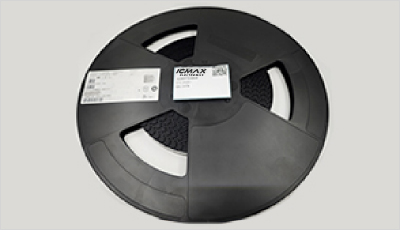
- Step1:Prepare product
-
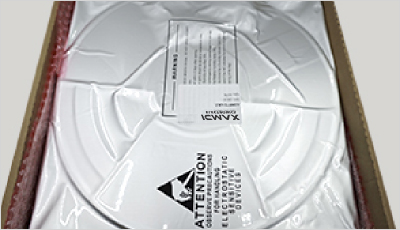
- Step2:Vacuum packaging
-
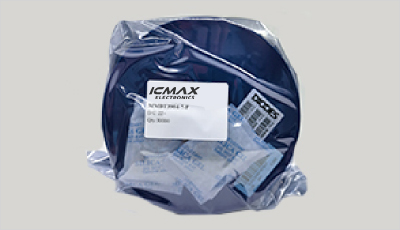
- Step3:Anti-static bag
-
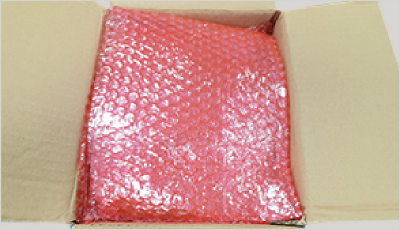
- Step4:Individual package
-
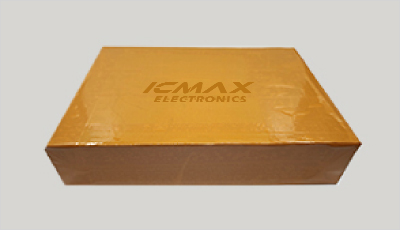
- Step5:Packaging box
-
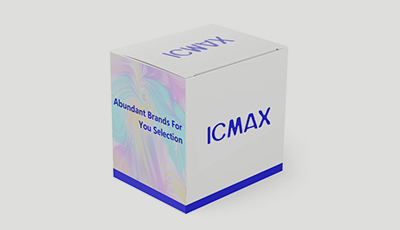
- Step6:Barcode shipping label
Shipping starts at $40, but some countries will exceed $40. For example (South Africa, Brazil, India, Pakistan, Israel, etc.)
The basic freight (for package ≤0.5kg or corresponding volume) depends on the time zone and country.
Currently, our products are shipped through DHL, FedEx, SF, and UPS.
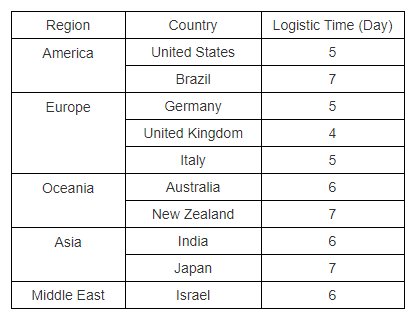
Delivery TimeOnce the goods are shipped, estimated delivery time depends on the shipping methods you chose:
FedEx International, 5-7 business days.
The following are some common countries' logistic time.
- Hot Sale
- Related Categories
- Include Parts
- Popular Search
The following parts include "NCE30P50G" in Silicon Labs NCE30P50G.
- Part Number
- Manufacturer
- Package
- Description
- NCE2305A NCEPower NCE30P50G — 30V/50A P-Channel Power MOSFET (DFN 5x6 EP)The NCE30P50G is the top of the NCE 30P line — a -30V/-50A P-Channel trench MOSFET in DFN 5x6, with 7mΩ max at 10V (typ 4.4mΩ), -200A pulsed current, and a body diode rated for …
- NCE2305 NCEPower NCE30P50G — 30V/50A P-Channel Power MOSFET (DFN 5x6 EP)The NCE30P50G is the top of the NCE 30P line — a -30V/-50A P-Channel trench MOSFET in DFN 5x6, with 7mΩ max at 10V (typ 4.4mΩ), -200A pulsed current, and a body diode rated for …
- NCE3401 : P-Channel 30V -4.2A Power MOSFET SOT-23 NCEPower NCE30P50G — 30V/50A P-Channel Power MOSFET (DFN 5x6 EP)The NCE30P50G is the top of the NCE 30P line — a -30V/-50A P-Channel trench MOSFET in DFN 5x6, with 7mΩ max at 10V (typ 4.4mΩ), -200A pulsed current, and a body diode rated for …
- NCE9435 NCEPower NCE30P50G — 30V/50A P-Channel Power MOSFET (DFN 5x6 EP)The NCE30P50G is the top of the NCE 30P line — a -30V/-50A P-Channel trench MOSFET in DFN 5x6, with 7mΩ max at 10V (typ 4.4mΩ), -200A pulsed current, and a body diode rated for …
- NCE30P12S NCEPower NCE30P50G — 30V/50A P-Channel Power MOSFET (DFN 5x6 EP)The NCE30P50G is the top of the NCE 30P line — a -30V/-50A P-Channel trench MOSFET in DFN 5x6, with 7mΩ max at 10V (typ 4.4mΩ), -200A pulsed current, and a body diode rated for …
- NCE30P25S NCEPower NCE30P50G — 30V/50A P-Channel Power MOSFET (DFN 5x6 EP)The NCE30P50G is the top of the NCE 30P line — a -30V/-50A P-Channel trench MOSFET in DFN 5x6, with 7mΩ max at 10V (typ 4.4mΩ), -200A pulsed current, and a body diode rated for …
- NCE30P30K NCEPower NCE30P50G — 30V/50A P-Channel Power MOSFET (DFN 5x6 EP)The NCE30P50G is the top of the NCE 30P line — a -30V/-50A P-Channel trench MOSFET in DFN 5x6, with 7mΩ max at 10V (typ 4.4mΩ), -200A pulsed current, and a body diode rated for …
- NCE30P30G NCEPower NCE30P50G — 30V/50A P-Channel Power MOSFET (DFN 5x6 EP)The NCE30P50G is the top of the NCE 30P line — a -30V/-50A P-Channel trench MOSFET in DFN 5x6, with 7mΩ max at 10V (typ 4.4mΩ), -200A pulsed current, and a body diode rated for …
- NCE30P50G NCEPower NCE30P50G — 30V/50A P-Channel Power MOSFET (DFN 5x6 EP)The NCE30P50G is the top of the NCE 30P line — a -30V/-50A P-Channel trench MOSFET in DFN 5x6, with 7mΩ max at 10V (typ 4.4mΩ), -200A pulsed current, and a body diode rated for …
- NCE2309 — P-Channel 60V/1.6A Enhancement Mode Power MOSFET (SOT-23) NCEPower NCE30P50G — 30V/50A P-Channel Power MOSFET (DFN 5x6 EP)The NCE30P50G is the top of the NCE 30P line — a -30V/-50A P-Channel trench MOSFET in DFN 5x6, with 7mΩ max at 10V (typ 4.4mΩ), -200A pulsed current, and a body diode rated for …
The following parts are popular search parts in Test and Measurement.
Inventory:50,000
Please send an inquiry. Send us your inquiry, and we will respond immediately.

- 1500+ Daily average RFQ Volume

- 20,000.000 Standard Product Unit

- 1800+ Worldwide Manufacturers

- 15,000+ In-stock Warehouse