NCEPower NCE2305A

- Part No.:
- NCE2305A
- Manufacturer:
- NCEPower
- Category:
- P-Channel MOSFETs
- Package:
- Description:
- NCE2305A – NCE P-Channel Enhancement Mode MOSFET (SOT-23)Quick Answer The NCE2305A is an enhanced version of the popular NCE2305 P-Channel MOSFET from NCE.
- Quantity:
-
Unit Price:$0
Ext Price:$0
- Payment:
-

- Shipping:
-


NCE2305A Information
- Specifications
- Product Details
- Comparison
- Tags
- Product attributes
- Attribute value
- Manufacturer:
- NCEPower
- Package/Case:
- Series:
- Packaging:
- SOT-23
- Product Status:
- Production
- FET Type:
- Industrial grade
- Technology:
- Trench
- Drain to Source Voltage (Vdss):
- P
- Current - Continuous Drain (Id) @ 25°C:
- -12
- Drive Voltage (Max Rds On, Min Rds On):
- -4.1
- Rds On (Max) @ Id, Vgs:
- -0.7
- Vgs(th) (Max) @ Id:
- Gate Charge (Qg) (Max) @ Vgs:
- Vgs (Max):
- 29
- Input Capacitance (Ciss) (Max) @ Vds:
- 45
- FET Feature:
- 40
- Power Dissipation (Max):
- 60
- Operating Temperature:
- ±12
- Grade:
- 740
- Qualification:
- 7.8
- Mounting Type:
- 1.7
- Supplier Device Package:
- 供应商设备封装:
- 供应商设备封装:
- 控制特性:
- 认证机构:
- 标准编号:
- Current Rating (Amps):
- param_30:
NCE2305A — 4.1A P-Channel Enhancement Mode MOSFET, 29mΩ RDS(on) (SOT-23)
The NCE2305A is a P-channel enhancement mode power MOSFET from NCE Power (Wuxi New Clean Energy) in a SOT-23 package, rated -12V / -4.1A.
It's built for low-voltage load switching: the trench process delivers a gate threshold voltage around -0.7V, so a 2.5V logic signal turns it fully on. Typical RDS(on) is 29mΩ at VGS = -4.5V.
The "A" suffix means lower voltage, lower resistance: NCE2305A drops to -12V where the standard NCE2305 is -20V, and RDS(on) improves from 52mΩ to 45mΩ max at -4.5V.
Across the 3.3V/5V load-switch designs we support (2025–2026), the SOT-23 P-channel gets swapped into the wrong footprint more often than any other part — pinouts differ between manufacturers even at the same package. Always verify against the exact datasheet.
What Are the Technical Specifications of NCE2305A?
| Parameter | Value |
|---|---|
| Type | P-Channel Enhancement Mode Power MOSFET (Trench) |
| Package | SOT-23 (3-pin) |
| Drain-Source Voltage (VDS) | -12V |
| Gate-Source Voltage (VGS) | ±8V |
| Continuous Drain Current (ID) | -4.1A @ 25°C |
| Pulsed Drain Current (IDM) | -16A |
| RDS(on) @ VGS = -4.5V | 29mΩ typ / 45mΩ max |
| RDS(on) @ VGS = -2.5V | 40mΩ typ / 60mΩ max |
| Gate Threshold Voltage (VGS(th)) | -0.7V typ |
| Gate Charge (Qg) | 7.8nC @ -4.5V |
| Input Capacitance (Ciss) | 740pF |
| Power Dissipation (PD) | 1.7W |
| Operating Temperature | -55°C to +150°C |
Key numbers that matter: Per the NCE Power NCE2305A datasheet, the 29mΩ typ RDS(on) at -4.5V is the best in the SOT-23 P-channel class at this voltage — the -20V NCE2305 measures 52mΩ max, the IRLML6402 65mΩ, and the SI2301DS roughly double that.
At 1A load current, 29mΩ costs you just 29mV of drop. Gate charge of 7.8nC keeps switching loss low enough for PWM control up to several hundred kHz.
Verify the pinout against your exact supplier's datasheet. SOT-23 MOSFET pin order is not standardized — a forum case showed a BSS123 layout shorting Vbus to ground because the footprint assumed a different pin order.
When Should You Use (and NOT Use) the NCE2305A?
✅ Use NCE2305A when:
- 3.3V or 5V rail load switching. The -12V rating gives 2x margin over a 5V supply, and 29mΩ RDS(on) keeps the drop under 30mV at 1A.
- MCU GPIO direct drive. VGS(th) around -0.7V means a 2.5V logic output fully enhances the channel — RDS(on) at -2.5V is still just 40mΩ typ.
- Battery-powered devices (single-cell Li-ion). A 4.2V cell sits at one-third of the -12V rating; the low RDS(on) and 7.8nC gate charge extend runtime.
- Power-path and load-discharge switching. Low Qg makes it fast enough for PWM dimming and sequenced power rails.
- Reverse-polarity protection on 3.3V/5V inputs. Connected source-to-load, the body diode acts as an ideal-diode drop-in — one part replaces a Schottky plus its voltage drop.
❌ Don't use NCE2305A when:
- Bus voltage above 10V. A 12V rail with ringing or transients can exceed -12V and avalanche the die. Step up to the NCE2305 (-20V) or AO3401A (-30V).
- Automotive 12V loads. Load-dump transients reach 40V+; even a -30V part is marginal. Use a 60V-rated P-channel or a load-switch IC with built-in clamping.
- Continuous current above ~2A at high ambient. SOT-23 dissipates 1.7W max — at 2A with 45mΩ hot resistance you're already at 180mW plus switching loss.
- High-side switching where the gate driver can't pull the gate below the supply. If VGS can't reach -4.5V, you give up the RDS(on) advantage this part exists for.
What Are the Alternatives to NCE2305A?
| Model | Type | Key Difference | Best For |
|---|---|---|---|
| NCE2305 | P-Ch SOT-23 | -20V / 4.1A, RDS(on) 52mΩ max @ -4.5V | 12V rails, higher-voltage load switching |
| AO3401A | P-Ch SOT-23 | -30V / 4A, RDS(on) ~50mΩ max | Voltage margin over 12-24V rails |
| IRLML6402TRPBF | P-Ch SOT-23 | -20V / 4.2A, RDS(on) 65mΩ max | Drop-in alternative with 20V rating |
| SI2301DS | P-Ch SOT-23 | -20V / 3.1A, RDS(on) ~105mΩ max | Cost-sensitive designs, lower current |
| NCE2302 | N-Ch SOT-23 | 20V / 2.9A, RDS(on) 85mΩ max | Low-side switching, logic level |
The voltage-versus-resistance trade-off in one rule. Below 10V bus voltage, NCE2305A wins on RDS(on). Above 10V, the -20V NCE2305 or -30V AO3401A buy the margin you need — 45mΩ vs 50mΩ doesn't matter at 0.5A, but avalanche failure does.
Watch the pinout, not the silkscreen. On the forums, the classic failure is a SOT-23 P-channel soldered with source and drain swapped — the body diode then conducts constantly and the load never turns off.
Pin order differs between NCE, onsemi, and Alpha & Omega parts — check the exact part's pinout (G/S/D) before layout.
What Are the Typical Applications of NCE2305A?
High-Side Load Switch for 3.3V/5V Rails: Source to supply, drain to load, gate pulled low through a 100kΩ resistor. An MCU GPIO pulling the gate to ground turns the load on with 29mΩ of channel resistance — a solid-state replacement for a mechanical switch or a PNP pass transistor.
Battery Power-Path Switching: In a single-cell Li-ion design, the NCE2305A switches between USB input power and battery discharge. The -12V rating covers the 4.2V cell with 3x margin, and 29mΩ means less than 10mV lost at typical 300mA system current.
PWM Load Control (LED Dimming, Motor Speed): Gate charge of 7.8nC keeps switching transitions short — at 20kHz PWM, the part spends a negligible fraction of each cycle in the linear region. Keep the PWM frequency below ~500kHz where the 740pF Ciss starts to dominate gate drive loss.
Reverse-Polarity Protection: Connected with drain to the input and source to the load, the body diode conducts on correct polarity and the channel carries the load once VGS is established. One SOT-23 part replaces a Schottky diode + MOSFET solution for 3.3V/5V inputs — no forward-voltage penalty after turn-on.
Why the pull-down matters: during MCU reset the GPIO floats, and R1 holds the gate at source potential so the load stays off. Swapped source and drain here puts the body diode forward-conducting — the rail powers up with no gate control at all.
Why Buy NCE2305A from ICMASS?
Genuine NCE Power die, lot-tested for RDS(on). We measure every incoming lot for RDS(on) at -4.5V and VGS(th). A remarked part from gray-market channels typically reads 2-5x the specified resistance — the sort of failure that shows up as a warm SOT-23 months into production.
Cross-reference support. Not sure whether your footprint needs NCE2305A, NCE2305, or AO3401A? Tell us your bus voltage and load current — we'll confirm which pinout and rating fits before you commit the layout.
BOM consolidation on SOT-23 parts. You're likely ordering this alongside AO3401A, NCE2302, SI2301DS, and logic-level N-channels for the same board. We stock the whole SOT-23 MOSFET family in one shipment from Shenzhen.
Frequently Asked Questions About NCE2305A
Q1: Is NCE2305A a drop-in replacement for NCE2305?
A: No — check the bus voltage first. The NCE2305A is rated -12V, the NCE2305 is -20V. On 3.3V/5V rails the A version is a direct footprint swap with better RDS(on). On a 12V rail, the A version has no margin and the standard NCE2305 is the right part.
Q2: What is the RDS(on) of NCE2305A?
A: 29mΩ typ / 45mΩ max at VGS = -4.5V, and 40mΩ typ / 60mΩ max at VGS = -2.5V. At 1A, the 29mΩ typical value drops just 29mV across the channel. That's the lowest in the SOT-23 P-channel class at this voltage rating.
Q3: Can a 3.3V MCU GPIO drive NCE2305A directly?
A: Yes. Threshold voltage is around -0.7V typ, so a 3.3V GPIO pulling the gate to ground gives VGS = -3.3V — deep in the fully-enhanced region. RDS(on) at -2.5V is still only 40mΩ typ, so even 1.8V logic works with a small efficiency penalty.
Q4: Why does my P-channel load switch stay on when the gate is pulled low?
A: You almost certainly swapped source and drain. With the MOSFET connected backwards, current flows through the body diode instead of the channel, so the load never turns off. On a P-channel, source connects to the positive rail — "S = supply rail." This is the most common P-channel mistake on the forums.
Q5: What is the pinout of NCE2305A?
A: SOT-23, pins 1/2/3 = G/S/D — but verify against your exact supplier's datasheet. SOT-23 MOSFET pinouts are not standardized: some manufacturers put drain on pin 2, others put source there. One forum case showed a BSS123 layout shorting Vbus to ground because the footprint used the wrong pin order.
Q6: Can I use NCE2305A for reverse polarity protection?
A: Yes, on 3.3V/5V inputs. Connect it source-to-load (deliberately "backwards") so the body diode conducts on correct polarity, then the channel takes over with near-zero drop once VGS is established. This replaces a Schottky + MOSFET solution with one part. Don't use it above ~10V — the -12V rating needs margin against transients.
Q7: Why did my load switch burn out?
A: Most likely VGS over-voltage or thermal overload. A classic forum case: a MOSFET on a 24V supply, gate pulled to ground through a resistor, saw nearly the full rail across VGS and burned out. Check that your gate driver never exceeds the ±8V rating, and that continuous current times RDS(on) stays inside the 1.7W dissipation budget.
Q8: What's the difference between NCE2305A and the -VB variants sold online?
A: The -VB suffix parts are a different device with a different datasheet. "NCE2305A-VB" listings describe a -30V/-5.6A part under the same base name — a VBsemi cross-referenced device, not the NCE Power original. If your BOM specifies the NCE Power NCE2305A (-12V/-4.1A), verify the seller's datasheet matches those ratings before buying.
Q9: Is NCE2305A suitable for PWM dimming or motor speed control?
A: Yes, up to a few hundred kHz. Gate charge of 7.8nC keeps switching transitions short at 20kHz PWM. Above ~500kHz the 740pF input capacitance starts to dominate gate-drive loss, and a logic-level gate driver becomes worthwhile.
Q10: How much does NCE2305A cost and is it in stock?
A: Volume pricing typically ranges from $0.02–$0.05/unit depending on quantity and date code. ICMASS stocks NCE2305A in SOT-23 and ships same-day from Shenzhen. Contact us for a quote on your specific quantity — and we'll confirm the exact NCE Power die, not a cross-referenced substitute.
| Image |

|
| Part Number | NCE2305A |
| Manufacturer | NCEPower |
| Package/Case | |
| Series | |
| Packaging | SOT-23 |
| Product Status | Production |
| FET Type | Industrial grade |
| Technology | Trench |
| Drain to Source Voltage (Vdss) | P |
| Current - Continuous Drain (Id) @ 25°C | -12 |
| Drive Voltage (Max Rds On, Min Rds On) | -4.1 |
| Rds On (Max) @ Id, Vgs | -0.7 |
| Vgs(th) (Max) @ Id | |
| Gate Charge (Qg) (Max) @ Vgs | |
| Vgs (Max) | 29 |
| Input Capacitance (Ciss) (Max) @ Vds | 45 |
| FET Feature | 40 |
| Power Dissipation (Max) | 60 |
| Operating Temperature | ±12 |
| Grade | 740 |
| Qualification | 7.8 |
| Mounting Type | 1.7 |
| Supplier Device Package | |
| 供应商设备封装 | |
| 供应商设备封装 | |
| 控制特性 | |
| 认证机构 | |
| 标准编号 | |
| Current Rating (Amps) | |
| param_30 |
User Guide
- Purchase & Inquiry
- Package
- Shipping Information
- Customer Review
You may place an order without registering to IC-MAX.COM
We strongly suggest you sign in before purchasing as you can track your order in real time.
For your convenience, we accept multiple payment methods in USD, including PayPal, Credit Card, and wire transfer.
RFQ (Request for Quotations)
It is recommended to request for quotations to get the latest prices and inventories about the part.
Our sales will reply to your request by email within 24 hours.
1. You'll receive an order information email in your inbox. (Please remember to check the spam folder if you didn't hear from us).
2. Since inventories and prices may fluctuate to some extent, the sales manager is going to reconfirm the order and let you know if there are any updates.
-
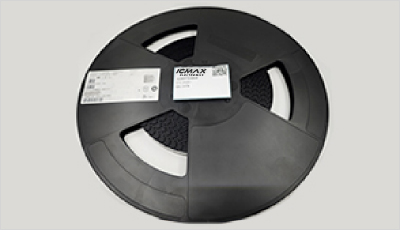
- Step1:Prepare product
-
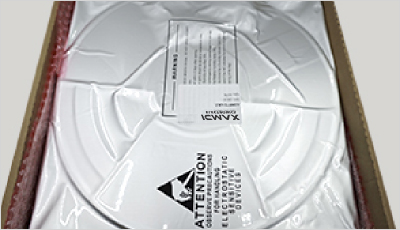
- Step2:Vacuum packaging
-
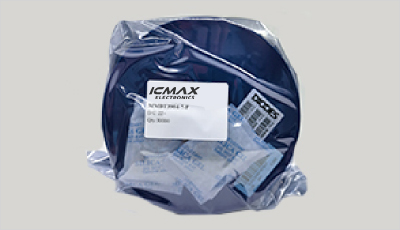
- Step3:Anti-static bag
-
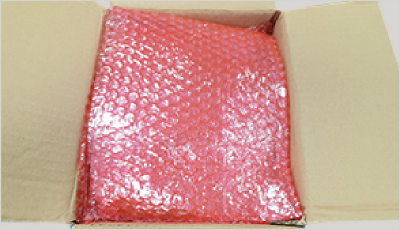
- Step4:Individual package
-
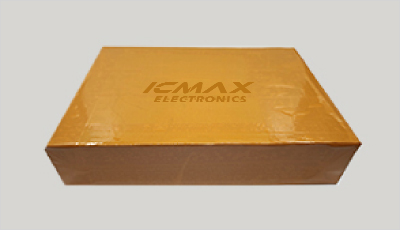
- Step5:Packaging box
-
- Step6:Barcode shipping label
Shipping starts at $40, but some countries will exceed $40. For example (South Africa, Brazil, India, Pakistan, Israel, etc.)
The basic freight (for package ≤0.5kg or corresponding volume) depends on the time zone and country.
Currently, our products are shipped through DHL, FedEx, SF, and UPS.
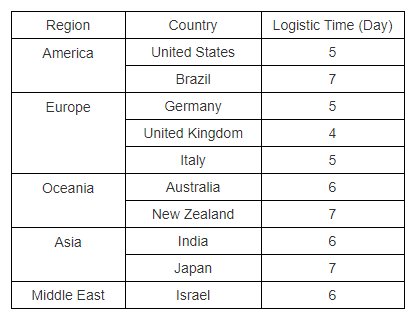
Delivery TimeOnce the goods are shipped, estimated delivery time depends on the shipping methods you chose:
FedEx International, 5-7 business days.
The following are some common countries' logistic time.
- Hot Sale
- Related Categories
- Include Parts
- Popular Search
The following parts include "NCE2305A" in Silicon Labs NCE2305A.
- Part Number
- Manufacturer
- Package
- Description
- NCE2305A NCEPower NCE2305A – NCE P-Channel Enhancement Mode MOSFET (SOT-23)Quick Answer The NCE2305A is an enhanced version of the popular NCE2305 P-Channel MOSFET from NCE.
- NCE2305 NCEPower NCE2305A – NCE P-Channel Enhancement Mode MOSFET (SOT-23)Quick Answer The NCE2305A is an enhanced version of the popular NCE2305 P-Channel MOSFET from NCE.
- NCE3401 : P-Channel 30V -4.2A Power MOSFET SOT-23 NCEPower NCE2305A – NCE P-Channel Enhancement Mode MOSFET (SOT-23)Quick Answer The NCE2305A is an enhanced version of the popular NCE2305 P-Channel MOSFET from NCE.
- NCE9435 NCEPower NCE2305A – NCE P-Channel Enhancement Mode MOSFET (SOT-23)Quick Answer The NCE2305A is an enhanced version of the popular NCE2305 P-Channel MOSFET from NCE.
- NCE30P12S NCEPower NCE2305A – NCE P-Channel Enhancement Mode MOSFET (SOT-23)Quick Answer The NCE2305A is an enhanced version of the popular NCE2305 P-Channel MOSFET from NCE.
- NCE30P25S NCEPower NCE2305A – NCE P-Channel Enhancement Mode MOSFET (SOT-23)Quick Answer The NCE2305A is an enhanced version of the popular NCE2305 P-Channel MOSFET from NCE.
- NCE30P30K NCEPower NCE2305A – NCE P-Channel Enhancement Mode MOSFET (SOT-23)Quick Answer The NCE2305A is an enhanced version of the popular NCE2305 P-Channel MOSFET from NCE.
- NCE30P30G NCEPower NCE2305A – NCE P-Channel Enhancement Mode MOSFET (SOT-23)Quick Answer The NCE2305A is an enhanced version of the popular NCE2305 P-Channel MOSFET from NCE.
- NCE30P50G NCEPower NCE2305A – NCE P-Channel Enhancement Mode MOSFET (SOT-23)Quick Answer The NCE2305A is an enhanced version of the popular NCE2305 P-Channel MOSFET from NCE.
- NCE2309 — P-Channel 60V/1.6A Enhancement Mode Power MOSFET (SOT-23) NCEPower NCE2305A – NCE P-Channel Enhancement Mode MOSFET (SOT-23)Quick Answer The NCE2305A is an enhanced version of the popular NCE2305 P-Channel MOSFET from NCE.
The following parts are popular search parts in Test and Measurement.
Inventory:50,000
Please send an inquiry. Send us your inquiry, and we will respond immediately.

- 1500+ Daily average RFQ Volume

- 20,000.000 Standard Product Unit

- 1800+ Worldwide Manufacturers

- 15,000+ In-stock Warehouse