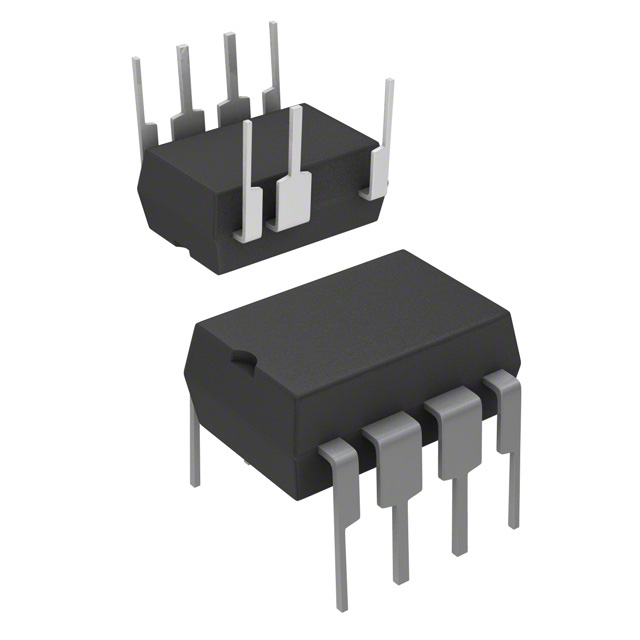
Power Integrations LNK304PN-TL

- Part No.:
- LNK304PN-TL
- Manufacturer:
- Power Integrations
- Category:
- AC DC Converters, Offline Switches
- Package:
- 8-DIP (0.300", 7.62mm), 7 Leads
- Description:
- IC OFFLINE SWITCH MULT TOP 8DIP
- Quantity:
-
Unit Price:$0
Ext Price:$0
- Payment:
-

- Shipping:
-


LNK304PN-TL Information
- Specifications
- Product Details
- Comparison
- Tags
- Product attributes
- Attribute value
- Manufacturer:
- Power Integrations
- Series:
- LinkSwitch®-TN
- Package/Case:
- 8-DIP (0.300", 7.62mm), 7 Leads
- Packaging:
- Tube
- Product Status:
- Active
- Output Isolation:
- Non-Isolated
- Internal Switch(s):
- Yes
- Voltage - Breakdown:
- 700V
- Topology:
- Buck, Buck-Boost, Flyback
- Voltage - Start Up:
- -
- Voltage - Supply (Vcc/Vdd):
- -
- Duty Cycle:
- 69%
- Frequency - Switching:
- 66kHz
- Power (Watts):
- -
- Fault Protection:
- Current Limiting, Open Loop, Over Temperature, Short Circuit
- Control Features:
- -
- Operating Temperature:
- -40°C ~ 150°C (TJ)
- Grade:
- -
- Qualification:
- -
- Supplier Device Package:
- 8-PDIP-B
- Mounting Type:
- Through Hole
LNK304PN-TL - Offline Switcher IC by Power Integrations
The LNK304PN-TL is a non-isolated AC-DC switching regulator from Power Integrations' LinkSwitch-TN family. It packs a 700V power MOSFET and a PWM controller into a single 8-pin DIP package - no external switching transistor needed. Input range covers 85V to 265V AC, and it delivers up to 120 mA in discontinuous mode or 170 mA in continuous mode.
A typical buck converter design needs only a handful of external parts: the LNK304, an inductor, a diode, a couple of capacitors, and you've got a regulated DC output from the AC mains. The "PN" suffix means 8-pin PDIP-B package. The "-TL" means tape-and-reel.
It's the kind of chip that replaces capacitive droppers and small linear transformers in appliances, smart home devices, and industrial controls. But it's also the kind of chip that can be tricky to debug if you get the layout wrong.
What Is LNK304PN-TL and How Does It Work?
It's a monolithic switcher IC using a simple ON/OFF control scheme. When the output voltage drops below the regulation threshold, the MOSFET switches on at 66 kHz. When it rises above, switching stops. No loop compensation, no complex feedback network - just a resistor divider or zener diode to the FB pin.
The internal 700V MOSFET handles the high-voltage switching. The BP (bypass) pin needs a 0.1 μF capacitor to generate the internal 5.8V supply. The FB (feedback) pin controls regulation - if current into FB exceeds 49 μA, switching stops.
The switching frequency is 66 kHz with a built-in 4 kHz frequency jitter. This spreads the EMI spectrum, helping you pass EN55022 / CISPR-22 without expensive filtering.
Protection built in: Auto-restart on fault, cycle-by-cycle current limiting, thermal shutdown at ~142°C.
But here's the thing - the LNK304 is the lowest-current member of the family. If you need more headroom, the LNK305 (180 mA) and LNK306 (360 mA) are pin-compatible upgrades in the same package.
What Are the Specifications of LNK304PN-TL?
| Parameter | Value | Notes |
|---|---|---|
| Manufacturer | Power Integrations | LinkSwitch-TN family |
| Topology | Buck, Buck-Boost, Flyback | Non-isolated typical |
| Input Voltage (AC) | 85 VAC to 265 VAC | Universal mains |
| Output Current (MDCM) | 120 mA | Discontinuous mode |
| Output Current (CCM) | 170 mA | Continuous mode |
| MOSFET Breakdown | 700V | Integrated |
| Switching Frequency | 66 kHz typical | ±4 kHz jitter |
| Duty Cycle | 69% max | - |
| Feedback Threshold | 49 μA into FB | Above threshold stops switching |
| BP Pin Voltage | 5.8V typical | Requires 0.1 μF BP cap |
| No-Load Consumption | ~50 mW | With external bias |
| Protection | Current limit, auto-restart, OTP | - |
| Package | 8-PDIP-B (7 leads) | DIP-8 compatible |
| Operating Temp | -40°C to +150°C | Junction |
Key Numbers That Matter
- 120 mA (MDCM) / 170 mA (CCM): This is a low-current part. Fine for control electronics, sensors, relays, MCUs. Need more? The LNK305 (180/280 mA) and LNK306 (360/450 mA) are pin-compatible drop-in replacements. But here's a warning from the Power Integrations community - don't substitute them without checking your inductor's saturation current rating.
- 700V MOSFET: Works directly from 265V AC (rectified DC ~375V). That's 325V of headroom for leakage inductance spikes and line transients. Comfortable margin for universal input designs.
- 66 kHz with jitter: The 4 kHz jitter spreads EMI energy so you don't get a sharp peak at 66 kHz. Makes a real difference for passing conducted emissions testing.
- ON/OFF control: Bang-bang control eliminates loop compensation components. But the effective switching frequency varies with load, which can make output filtering trickier than with fixed-frequency PWM controllers.
What Is LNK304PN-TL Used For?
So where does this chip actually end up?
Non-Isolated Appliance Power Supplies
The most common application: replacing a capacitive dropper or small linear transformer in washing machines, rice cookers, and air conditioners. These applications need a low-current DC rail from the AC mains, and the LNK304 does it with far better regulation than a dropper.
Smart Home and IoT
Smart switches, thermostats, occupancy sensors. The LNK304 can power a WiFi module (ESP8266 draws ~80 mA peak) plus a relay from mains without an external transformer.
Industrial Controls
PLCs and motor controllers needing a local 5V or 12V rail from 220VAC. The wide input range handles the voltage variations common in industrial environments.
Low-Power LED Lighting
Non-isolated LED drivers using buck-boost topology. Works for low-power lighting where isolation isn't required.
LNK304 vs LNK305 vs LNK306
Here's the comparison if you're wondering whether the 304 is enough:
| Parameter | LNK304 | LNK305 | LNK306 |
|---|---|---|---|
| Output (MDCM) | 120 mA | 180 mA | 360 mA |
| Output (CCM) | 170 mA | 280 mA | 450 mA |
| MOSFET Rds(on) | 36 Ω | 23 Ω | 11.5 Ω |
| Breakdown | 700V | 700V | 700V |
| Package | PDIP-8B | PDIP-8B | PDIP-8B |
| Pinout | Identical | Identical | Identical |
| Price (1k) | ~$0.45 | ~$0.55 | ~$0.75 |
Pick LNK304 when: Your load is under 100 mA and BOM cost is critical. It's the cheapest member of the family.
Pick LNK305 when: You need 200-280 mA peak. Same pinout, same footprint.
Pick LNK306 when: You need 360-450 mA. If your design might scale up, start with the LNK306 layout from day one.
Common Problems and How to Fix Them
Based on the Power Integrations community forum, here are the most common issues:
- No output, burnt input resistor: The most common failure. The LNK304PN is shorted (Drain-Source reads 20-35Ω instead of open). Replace both the IC and the burnt fusible resistor.
- Output drops every 10ms: Usually a feedback loop issue - wrong feedback resistor values or a diode after the bridge rectifier interfering with half-wave operation. Remove unnecessary diodes, check your Rbias value (2 kΩ per datasheet).
- Output oscillating / pulsing on and off: Could be input capacitors too small (<4.7 μF), inductor saturation, or a layout issue. First thing to check: is the inductor rated for the peak current?
- BP pin voltage above 6V: Normal BP voltage should be 5.8V. If it's reading 10.5V, the IC is likely damaged. Disconnect external bias and test BP alone.
- Wrong pinout assumption: Pins 1,2,7,8 are all Source. Pin 6 is Drain. Pin 4 is BP. Pin 5 is FB. Don't confuse pin 3 for Drain - it's Source.
Frequently Asked Questions About LNK304PN-TL
Q1: Is the LNK304 isolated or non-isolated?
A: It's designed for non-isolated topologies (buck, buck-boost). The output shares a ground reference with the input. For isolated designs, you'd want the LinkSwitch-II or -HP family instead.
Q2: What output voltage can I get from it?
A: Any voltage from about 3.3V to 30V, set by the feedback zener or resistor divider. 5V and 12V are the most common by far - that's what we see in most customer designs.
Q3: My LNK304 board has no output. What do I check first?
A: Check the input fusible resistor - if it's open, the IC is likely shorted. Measure Drain-Source resistance; if you read 20-35Ω instead of near-open, replace the IC and the resistor together. This is the #1 reported issue on the Power Integrations community forum.
Q4: What's the difference between LNK304PN and LNK304PN-TL?
A: Only the packaging. PN = tube, PN-TL = tape-and-reel for automated assembly. The silicon is identical.
Q5: Does it need a heatsink?
A: At 120 mA output in buck topology, typical dissipation is about 0.8-1.2W. The DIP-8 package handles this on a standard PCB with adequate copper area. If ambient exceeds 60°C or you're running near maximum output, add a clip-on heatsink.
Q6: What diode should I use with the LNK304?
A: An ultrafast recovery diode with trr < 50 ns and reverse voltage of at least 600V. The UF4004 works for low-voltage outputs. The BYV26C (1A/600V) is a solid choice for universal input designs. Using a standard 1N4007 will cause excessive heating - it's too slow.
Q7: Why does my output drop by 1.5V every 10ms?
A: This is a known issue on the forums. The likely cause is an extra diode after the bridge rectifier interfering with the half-wave rectification, or incorrect feedback resistor values. Remove any unnecessary diodes, and set Rbias to 2 kΩ per the datasheet recommendation.
Q8: Can I replace an LNK304 with an LNK305 for more current?
A: They're pin-compatible, so physically yes. But you need to check two things: your inductor must handle the higher peak current without saturating, and your load must tolerate up to 280 mA instead of 170 mA under fault conditions.
Q9: What happens if the output is shorted?
A: The device detects the fault through the FB pin and enters auto-restart, trying to restart every ~800 ms. Average power during fault is low, so no damage.
Q10: What BP pin voltage should I expect?
A: 5.8V typical. If you're reading above 6V (e.g., 10.5V), the IC is likely damaged. Disconnect external bias and test BP alone - should read 5.8V. If still high, replace the IC.
Q11: What inductor value do I need?
A: For a 5V output at 120 mA, use 470 μH. For 12V output, use 1 mH. The inductor must be rated for at least 2x the average output current to avoid saturation.
Q12: Can I use this to replace a capacitive dropper?
A: Yes, and it's a much better solution. Capacitive droppers have poor regulation, high inrush, and no protection. The LNK304 gives you regulated output, current limiting, and thermal protection in a single 8-pin DIP.
Pricing & Availability
| Parameter | Details |
|---|---|
| Part Number | LNK304PN-TL |
| Package | 8-PDIP-B (DIP-8) |
| Condition | New, original Power Integrations |
| Lead Time | In stock, ship from Shenzhen |
| Packing | Tape & Reel |
Contact ICMASS for current pricing. We carry original Power Integrations LinkSwitch ICs with full traceability. Pin-compatible options (LNK305PN, LNK306PN) also available.
| Image |
|
|
|
| Part Number | LNK304PN | LNK304PNAU | LNK304PN-TL |
| Manufacturer | Power Integrations | Power Integrations | Power Integrations |
| Series | LinkSwitch®-TN | LinkSwitch®-TN | LinkSwitch®-TN |
| Package/Case | 8-DIP (0.300", 7.62mm), 7 Leads | 8-DIP (0.300", 7.62mm), 7 Leads | 8-DIP (0.300", 7.62mm), 7 Leads |
| Packaging | Tube | Tube | Tube |
| Product Status | Active | Obsolete | Active |
| Output Isolation | Non-Isolated | Non-Isolated | Non-Isolated |
| Internal Switch(s) | Yes | Yes | Yes |
| Voltage - Breakdown | 700V | 700V | 700V |
| Topology | Buck, Buck-Boost, Flyback | Buck, Buck-Boost, Flyback | Buck, Buck-Boost, Flyback |
| Voltage - Start Up | - | - | - |
| Voltage - Supply (Vcc/Vdd) | - | - | - |
| Duty Cycle | 69% | 69% | 69% |
| Frequency - Switching | 66kHz | 66kHz | 66kHz |
| Power (Watts) | - | - | - |
| Fault Protection | Current Limiting, Open Loop, Over Temperature, Short Circuit | Current Limiting, Open Loop, Over Temperature, Short Circuit | Current Limiting, Open Loop, Over Temperature, Short Circuit |
| Control Features | - | - | - |
| Operating Temperature | -40°C ~ 150°C (TJ) | -40°C ~ 150°C (TJ) | -40°C ~ 150°C (TJ) |
| Grade | - | - | - |
| Qualification | - | - | - |
| Supplier Device Package | 8-PDIP-B | 8-PDIP-B | 8-PDIP-B |
| Mounting Type | Through Hole | Through Hole | Through Hole |
User Guide
- Purchase & Inquiry
- Package
- Shipping Information
- Customer Review
You may place an order without registering to IC-MAX.COM
We strongly suggest you sign in before purchasing as you can track your order in real time.
For your convenience, we accept multiple payment methods in USD, including PayPal, Credit Card, and wire transfer.
RFQ (Request for Quotations)
It is recommended to request for quotations to get the latest prices and inventories about the part.
Our sales will reply to your request by email within 24 hours.
1. You'll receive an order information email in your inbox. (Please remember to check the spam folder if you didn't hear from us).
2. Since inventories and prices may fluctuate to some extent, the sales manager is going to reconfirm the order and let you know if there are any updates.
-
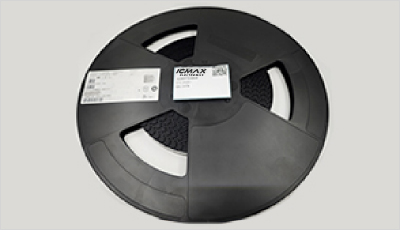
- Step1:Prepare product
-
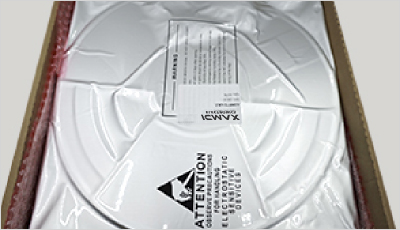
- Step2:Vacuum packaging
-
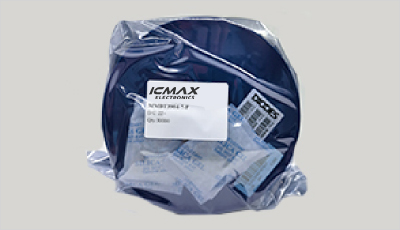
- Step3:Anti-static bag
-
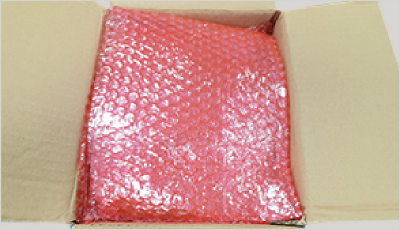
- Step4:Individual package
-
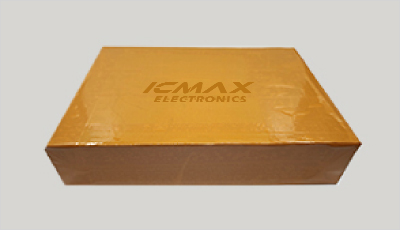
- Step5:Packaging box
-
- Step6:Barcode shipping label
Shipping starts at $40, but some countries will exceed $40. For example (South Africa, Brazil, India, Pakistan, Israel, etc.)
The basic freight (for package ≤0.5kg or corresponding volume) depends on the time zone and country.
Currently, our products are shipped through DHL, FedEx, SF, and UPS.
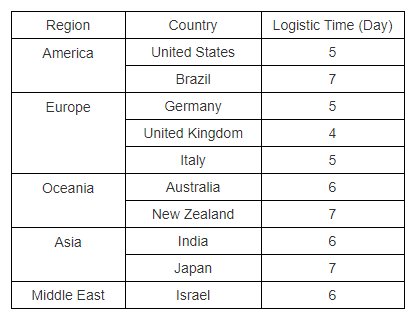
Delivery TimeOnce the goods are shipped, estimated delivery time depends on the shipping methods you chose:
FedEx International, 5-7 business days.
The following are some common countries' logistic time.
- Hot Sale
- Related Categories
- Include Parts
- Popular Search
- Voltage Regulators - Linear, Low Drop Out (LDO) Regulators(66836)
- Voltage Regulators - Linear Regulator Controllers(325)
- Voltage Regulators - Linear + Switching(1473)
- Voltage Regulators - DC DC Switching Regulators(35756)
- Voltage Reference(8428)
- V/F and F/V Converters(139)
- Thermal Management(515)
- Supervisors(41287)
- Special Purpose Regulators(4820)
- RMS to DC Converters(144)
The following parts include "LNK304PN-TL" in Silicon Labs LNK304PN-TL.
- Part Number
- Manufacturer
- Package
- Description
- LNK6407D-TL Power Integrations 8-DIP (0.300", 7.62mm), 7 Leads IC OFFLINE SWITCH MULT TOP 8DIP
- LNK3204D-TL Power Integrations 8-DIP (0.300", 7.62mm), 7 Leads IC OFFLINE SWITCH MULT TOP 8DIP
- SR10LG-G Microchip Technology 8-DIP (0.300", 7.62mm), 7 Leads IC OFFLINE SWITCH MULT TOP 8DIP
- TNY285DG-TL Power Integrations 8-DIP (0.300", 7.62mm), 7 Leads IC OFFLINE SWITCH MULT TOP 8DIP
- LNK304DN-TL Datasheet, Price, Stock & Alternatives | ICMASS Power Integrations 8-DIP (0.300", 7.62mm), 7 Leads IC OFFLINE SWITCH MULT TOP 8DIP
- TNY285KG-TL Power Integrations 8-DIP (0.300", 7.62mm), 7 Leads IC OFFLINE SWITCH MULT TOP 8DIP
- LNK3206D-TL Power Integrations 8-DIP (0.300", 7.62mm), 7 Leads IC OFFLINE SWITCH MULT TOP 8DIP
- LNK623DG-TL Power Integrations 8-DIP (0.300", 7.62mm), 7 Leads IC OFFLINE SWITCH MULT TOP 8DIP
- TNY286PG Power Integrations 8-DIP (0.300", 7.62mm), 7 Leads IC OFFLINE SWITCH MULT TOP 8DIP
- LNK624DG-TL Power Integrations 8-DIP (0.300", 7.62mm), 7 Leads IC OFFLINE SWITCH MULT TOP 8DIP
The following parts are popular search parts in Test and Measurement.
Inventory:2,631
Please send an inquiry. Send us your inquiry, and we will respond immediately.

- 1500+ Daily average RFQ Volume

- 20,000.000 Standard Product Unit

- 1800+ Worldwide Manufacturers

- 15,000+ In-stock Warehouse