Power Integrations LNK304PN

- Part No.:
- LNK304PN
- Manufacturer:
- Power Integrations
- Category:
- AC DC Converters, Offline Switches
- Package:
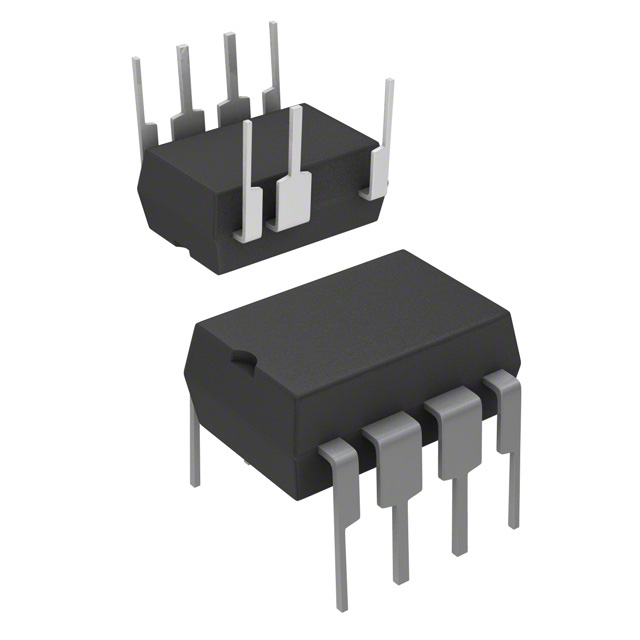
- 8-DIP (0.300", 7.62mm), 7 Leads
- Datasheet:
-
 LNK304PN.pdf
- Description:
- IC OFFLINE SWITCH MULT TOP 8DIP
- Quantity:
-
Unit Price:$0
Ext Price:$0
- Payment:
-

- Shipping:
-


LNK304PN Information
- Specifications
- Product Details
- Comparison
- Tags
- Product attributes
- Attribute value
- Manufacturer:
- Power Integrations
- Series:
- LinkSwitch®-TN
- Package/Case:
- 8-DIP (0.300", 7.62mm), 7 Leads
- Packaging:
- Tube
- Product Status:
- Active
- Output Isolation:
- Non-Isolated
- Internal Switch(s):
- Yes
- Voltage - Breakdown:
- 700V
- Topology:
- Buck, Buck-Boost, Flyback
- Voltage - Start Up:
- -
- Voltage - Supply (Vcc/Vdd):
- -
- Duty Cycle:
- 69%
- Frequency - Switching:
- 66kHz
- Power (Watts):
- -
- Fault Protection:
- Current Limiting, Open Loop, Over Temperature, Short Circuit
- Control Features:
- -
- Operating Temperature:
- -40°C ~ 150°C (TJ)
- Grade:
- -
- Qualification:
- -
- Supplier Device Package:
- 8-PDIP-B
- Mounting Type:
- Through Hole
- Datasheet:
-
LNK304PN.pdf
LNK304PN - Energy-Efficient Offline Switcher IC from Power Integrations
The LNK304PN is the workhorse of low-power non-isolated power supplies. If you're designing anything that converts mains AC to a low DC rail - appliance control boards, smart meters, LED drivers, standby supplies - this chip shows up everywhere. It packs a 700V MOSFET, oscillator, and all the protection you'd otherwise need a handful of discretes for, into a DIP-7 package. One chip replaces a capacitor dropper or linear regulator and actually meets modern energy standards while doing it. 120mA output in MDCM, 170mA if you push it into CCM. No-load consumption sits at 50mW on 115VAC - that's low enough to pass CEC and Energy Star without breaking a sweat.
What Are the Technical Specifications of LNK304PN?
| Parameter | Value |
|---|---|
| Manufacturer | Power Integrations |
| Series | LinkSwitch-TN |
| Package | DIP-7 (8-PDIP-B, 7 Leads) |
| Mounting Type | Through Hole |
| Input Voltage (AC) | 85 VAC – 265 VAC (Universal Input) |
| Breakdown Voltage | 700 V (integrated MOSFET) |
| Switching Frequency | 66 kHz (typical) |
| Maximum Duty Cycle | 69% (72% max) |
| Output Current (MDCM) | 120 mA |
| Output Current (CCM) | 170 mA |
| No-Load Consumption | 50/80 mW @ 115/230 VAC (buck, opto feedback) |
| Feedback Pin Voltage | 1.65 V (regulation reference) |
| Current Limit | 240 mA (typical) |
| Thermal Shutdown | +135°C minimum (hysteretic) |
| Operating Temperature (Junction) | -40°C to +150°C |
| Auto-Restart Timing | 50 ms FB inactive → 800 ms disable |
| Frequency Jittering | ±4 kHz (reduces EMI ~10 dB) |
| RoHS Compliance | Yes, Lead-Free (N suffix) |
| Supported Topologies | Buck, Buck-Boost, Flyback |
What Are the Alternatives to LNK304PN?
| Alternative | Key Difference | Best For |
|---|---|---|
| LNK302PN | Lower current limit (~200 mA), otherwise pin-compatible | Lower-power designs where cost is critical |
| LNK305PN | Higher current limit (~280 mA), same package | Designs needing more output headroom |
| LNK306PN | Highest current limit (~360 mA), same DIP-7 package | Maximum output current in the family |
LNK304PN vs LNK305PN - When to Step Up
The LNK305PN has a current limit roughly 17% higher than the LNK304. From our experience, if your design needs more than 100mA continuous in MDCM, going straight to the LNK305 saves you the headache of pushing into CCM - which means a larger inductor, an ultrafast freewheeling diode (trr ≤ 35ns instead of ≤ 75ns), and tighter layout constraints. The BOM cost difference between the two chips is negligible, but the inductor and diode you save by staying in MDCM with a slightly larger device often pays for the chip upgrade.
LNK304PN vs LNK306PN - When the Load Isn't Fixed
The LNK306PN is overkill for a 50mA auxiliary supply, but it's the right call when your load profile isn't flat. If a microcontroller on the 12V rail wakes up a relay and a display simultaneously, that current spike can trip the LNK304's current limit. The LNK306 gives you 50% more headroom for the same PCB real estate.
How Much Does LNK304PN Cost and Is It in Stock?
| Quantity | Unit Price (USD) |
|---|---|
| 1 – 49 | $0.68 |
| 50 – 999 | $0.55 |
| 1,000 – 4,999 | $0.42 |
| 5,000+ | $0.36 |
In stock at ICMASS. Ships same day from Shenzhen for orders placed before 4PM HKT. Tube packaging (50 units per tube). For tape & reel (SMD version), see LNK304GN-TL.
What Are the Typical Applications of LNK304PN?
Appliance Control Boards
The most common sighting. Washing machines, microwaves, induction cookers, and air conditioners all need a small non-isolated DC rail for their MCU and display. The LNK304PN's 85–265VAC universal input means one design works across 110V and 220V markets, and the 50mW standby hits appliance efficiency regulations. A typical configuration: 12V/120mA buck converter with a 1mH inductor, UF4005 freewheeling diode, and a 2.05kΩ/13.0kΩ feedback divider.
Smart Meters and IoT Endpoints
Utility meters live inside a sealed box for 10+ years with no service access. A capacitor dropper wastes watts and drifts with temperature; the LNK304PN sips milliwatts and the integrated 700V MOSFET survives the voltage surges that kill discretes. At 50mW no-load, a meter's standby budget has room for the MCU, the radio, and still comes in under regulatory limits.
LED Drivers (Non-Isolated)
Constant-current buck configuration for small LED arrays. The on/off control scheme doesn't need loop compensation, which means the design shrinks to the chip, an inductor, a diode, and two resistors. From our experience, for LED strings under 15W, the LNK304 in buck mode is routinely cheaper than a dedicated LED driver IC once you factor in the external MOSFET and control loop components the driver IC still needs.
Auxiliary Housekeeping Supplies
Every decent-size power converter (server PSU, motor drive, UPS) has a small standby rail that keeps the control logic alive when the main converter is off. The LNK304PN's auto-restart means if the auxiliary rail gets shorted, it doesn't cook itself - it hiccups at ~1Hz until the fault clears.
Industrial Timers and Relays
These sit in electrical panels where the "mains" can swing from 90V during a brownout to 280V during a surge. The LNK304's 700V MOSFET margin and hysteretic thermal shutdown buy you the kind of robustness that keeps a factory running through dirty power.
Why Buy LNK304PN from ICMASS?
We stock it, we know it. The LNK304PN is one of those parts where the difference between genuine and remarked actually matters. The counterfeit ones usually re-mark an LNK302 die (lower current limit) into an LNK304 package - they'll work on a test jig at 50mA and fail in the field at full load. We source directly from authorized PI distribution and our incoming QC spot-checks gate threshold and Rds(on) curves on a sample-per-batch basis.
Mixed BOM? One box. If your design also needs the UF4005 freewheeling diodes, 400V input caps, the 1mH choke, and the feedback divider resistors - we likely stock all of it. One invoice, one shipment, one set of customs paperwork.
Shenzhen means speed. For Asia-based production, Shenzhen-to-Shenzhen shipping is next-day. For rest-of-world, DHL pickup from our office lands in 3-5 business days.
Batch traceability. Every tube has lot code and date code logged in our system. If a PI PCN (Product Change Notice) ever affects your design, we can tell you whether your batch is impacted - not "probably not," but yes or no with the lot numbers to prove it.
Frequently Asked Questions About LNK304PN
Q1: What topologies can I use with LNK304PN?
A: Buck (step-down), buck-boost, and flyback - both isolated and non-isolated. Buck is the most common and lowest component count. For isolated designs, see Power Integrations design example report DER-48.
Q2: Which application note should I use for LNK304PN design?
A: AN-23, not AN-17. AN-17 targets PWM controllers; the LNK304 uses cycle-skipping on/off control. The KP, DMAX, and inductance formulas in AN-17 will give you wrong results. Always use AN-23 for LinkSwitch-TN.
Q3: What freewheeling diode works with LNK304PN in a buck converter?
A: This is the #1 trap for new designers. You need a diode rated ≥400V reverse voltage - the DRAIN pin sees the rectified DC bus plus the output voltage reflected back when the MOSFET switches on. A UF4005 (trr ≤ 75ns) works for MDCM. For CCM operation, step up to an ultrafast diode with trr ≤ 35ns. Using a low-voltage Schottky like a 1N5817 (20V rating) will fail on first power-up - its reverse voltage rating is an order of magnitude too low.
Q4: Why is my output voltage wrong - I'm getting ~5V instead of 12V?
A: Check three things in order. First, the FB pin voltage - it should be 1.65V at regulation. If it's much higher (~8V), your feedback divider (R1/R3) or the feedback capacitor C3 is wrong. Second, pre-load - at zero load the output can float high. Add a pre-load resistor (R4), start with 3.3kΩ and drop to 2.4kΩ if regulation at zero load matters. Third, the freewheeling diode - if you used a slow-recovery diode or a low-voltage Schottky, it's not switching fast enough or has already failed.
Q5: MDCM or CCM - which mode should I run?
A: MDCM for almost everything. It uses a smaller, cheaper inductor and a standard fast diode (UF4005, trr ≤ 75ns). Only push into CCM if you absolutely need the extra current - and even then, consider stepping up to an LNK305PN or LNK306PN in MDCM first. The larger device in MDCM is usually cheaper than a smaller device forced into CCM once you add the larger inductor and ultrafast diode cost.
Q6: Can I replace LNK304PN with LNK304P?
A: Electrically, yes - same die. But LNK304P is discontinued and not RoHS compliant (contains lead). LNK304PN is the active, lead-free replacement. Don't design LNK304P into new boards.
Q7: Can LNK304PN run from a DC input instead of AC?
A: Yes. The minimum DC input is roughly 70VDC for reliable startup. The 700V MOSFET gives you plenty of headroom on the high side. This is useful in systems where you already have a rectified DC bus and just need a small auxiliary rail.
Q8: What does the "PN" suffix mean?
A: P = PDIP-8 (DIP, through-hole, 7 leads used). N = Lead-free / RoHS compliant. The G variants (GN, GN-TL) are SMD/SO-8 surface mount. The -TL suffix (tape & reel) only applies to SMD packages, never DIP.
Q9: How does auto-restart protection work?
A: If the FB pin isn't pulled high within 50ms of switching, the chip assumes a fault (output short or open-loop feedback) and disables switching for 800ms. It then tries again. This limits average output power during a fault to about 6% of maximum - the chip power-cycles at ~1Hz instead of self-destructing. Once the fault clears, normal operation resumes automatically.
Q10: What heatsinking does LNK304PN need?
A: For most applications under 100mA output, the DIP-7 package needs the SOURCE pins soldered to sufficient copper area on the PCB - nothing exotic. Keep the SOURCE pin junction temperature under 100°C. The integrated thermal shutdown at 135°C minimum is your backstop, but don't design to it.
Q11: What's the real no-load power consumption?
A: 50mW at 115VAC, 80mW at 230VAC - these are the datasheet numbers for buck topology with optocoupler feedback. In practice, if you're using the basic non-opto feedback configuration (just a resistor divider from the output to the FB pin), expect maybe 10-15mW higher. Still well within CEC and Energy Star standby limits.
Q12: Can I use LNK304PN in a flyback converter for isolation?
A: Yes. The flyback topology gives you galvanic isolation and multiple output rails. See DER-48 for a complete reference design. The component count goes up - you'll need a transformer, optocoupler, and secondary-side reference - but the LNK304PN's on/off control works the same way regardless of topology.
Q13: What's different between LNK304PN and the LNK304GN (SMD version)?
A: Same silicon, different package. LNK304PN = DIP-7 through-hole (good for prototyping and hand-assembly). LNK304GN = SMD-8 surface mount (for production pick-and-place). LNK304GN-TL adds tape & reel packaging. Electrical specs are identical. Choose based on your assembly process, not electrical requirements.
Internal Links
- LM2596S-ADJ - DC-DC Buck Converter - when you need more current than an LNK304 can deliver
- LM317T - Adjustable Linear Regulator - if your design already has a DC rail and just needs regulation
- AMS1117-3.3 - 3.3V LDO Regulator - for the post-regulation stage after the LNK304
- IRLZ44NPBF - N-Channel Power MOSFET - if you're switching the output of an LNK304 supply
- TNY274PN - TinySwitch-III Offline Switcher - PI's isolated flyback specialist, when you need galvanic isolation
- TOP224YN - TOPSwitch-II PWM Switcher - higher power PI option when LNK304's 120mA isn't enough
| Image |
|
|
|
| Part Number | LNK304PN | LNK304PNAU | LNK304PN-TL |
| Manufacturer | Power Integrations | Power Integrations | Power Integrations |
| Series | LinkSwitch®-TN | LinkSwitch®-TN | LinkSwitch®-TN |
| Package/Case | 8-DIP (0.300", 7.62mm), 7 Leads | 8-DIP (0.300", 7.62mm), 7 Leads | 8-DIP (0.300", 7.62mm), 7 Leads |
| Packaging | Tube | Tube | Tube |
| Product Status | Active | Obsolete | Active |
| Output Isolation | Non-Isolated | Non-Isolated | Non-Isolated |
| Internal Switch(s) | Yes | Yes | Yes |
| Voltage - Breakdown | 700V | 700V | 700V |
| Topology | Buck, Buck-Boost, Flyback | Buck, Buck-Boost, Flyback | Buck, Buck-Boost, Flyback |
| Voltage - Start Up | - | - | - |
| Voltage - Supply (Vcc/Vdd) | - | - | - |
| Duty Cycle | 69% | 69% | 69% |
| Frequency - Switching | 66kHz | 66kHz | 66kHz |
| Power (Watts) | - | - | - |
| Fault Protection | Current Limiting, Open Loop, Over Temperature, Short Circuit | Current Limiting, Open Loop, Over Temperature, Short Circuit | Current Limiting, Open Loop, Over Temperature, Short Circuit |
| Control Features | - | - | - |
| Operating Temperature | -40°C ~ 150°C (TJ) | -40°C ~ 150°C (TJ) | -40°C ~ 150°C (TJ) |
| Grade | - | - | - |
| Qualification | - | - | - |
| Supplier Device Package | 8-PDIP-B | 8-PDIP-B | 8-PDIP-B |
| Mounting Type | Through Hole | Through Hole | Through Hole |
User Guide
- Purchase & Inquiry
- Package
- Shipping Information
- Customer Review
You may place an order without registering to IC-MAX.COM
We strongly suggest you sign in before purchasing as you can track your order in real time.
For your convenience, we accept multiple payment methods in USD, including PayPal, Credit Card, and wire transfer.
RFQ (Request for Quotations)
It is recommended to request for quotations to get the latest prices and inventories about the part.
Our sales will reply to your request by email within 24 hours.
1. You'll receive an order information email in your inbox. (Please remember to check the spam folder if you didn't hear from us).
2. Since inventories and prices may fluctuate to some extent, the sales manager is going to reconfirm the order and let you know if there are any updates.
-
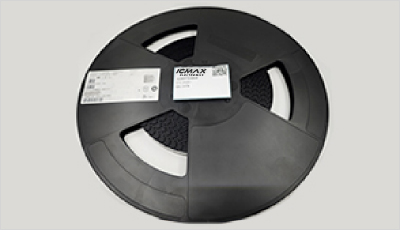
- Step1:Prepare product
-
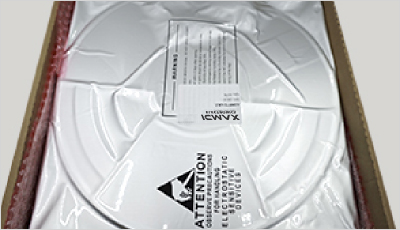
- Step2:Vacuum packaging
-
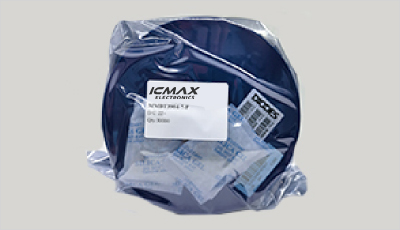
- Step3:Anti-static bag
-
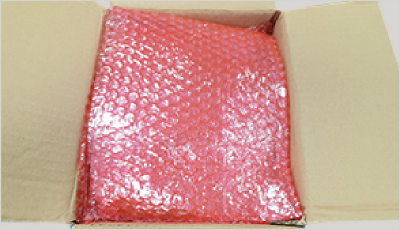
- Step4:Individual package
-
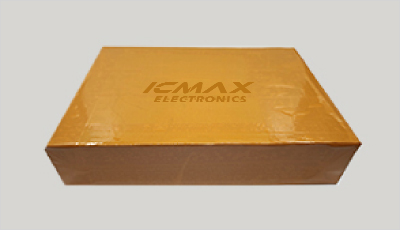
- Step5:Packaging box
-
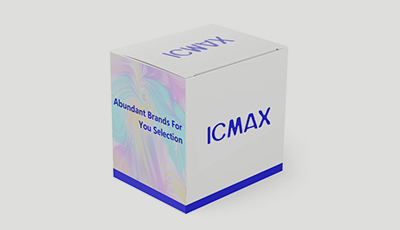
- Step6:Barcode shipping label
Shipping starts at $40, but some countries will exceed $40. For example (South Africa, Brazil, India, Pakistan, Israel, etc.)
The basic freight (for package ≤0.5kg or corresponding volume) depends on the time zone and country.
Currently, our products are shipped through DHL, FedEx, SF, and UPS.
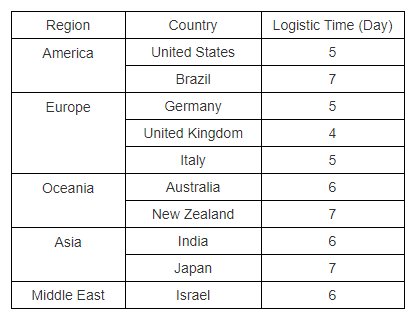
Delivery TimeOnce the goods are shipped, estimated delivery time depends on the shipping methods you chose:
FedEx International, 5-7 business days.
The following are some common countries' logistic time.
- Hot Sale
- Related Categories
- Include Parts
- Popular Search
- Voltage Regulators - Linear, Low Drop Out (LDO) Regulators(66836)
- Voltage Regulators - Linear Regulator Controllers(325)
- Voltage Regulators - Linear + Switching(1473)
- Voltage Regulators - DC DC Switching Regulators(35756)
- Voltage Reference(8428)
- V/F and F/V Converters(139)
- Thermal Management(515)
- Supervisors(41287)
- Special Purpose Regulators(4820)
- RMS to DC Converters(144)
The following parts include "LNK304PN" in Silicon Labs LNK304PN.
- Part Number
- Manufacturer
- Package
- Description
- LNK6407D-TL Power Integrations 8-DIP (0.300", 7.62mm), 7 Leads IC OFFLINE SWITCH MULT TOP 8DIP
- LNK3204D-TL Power Integrations 8-DIP (0.300", 7.62mm), 7 Leads IC OFFLINE SWITCH MULT TOP 8DIP
- SR10LG-G Microchip Technology 8-DIP (0.300", 7.62mm), 7 Leads IC OFFLINE SWITCH MULT TOP 8DIP
- TNY285DG-TL Power Integrations 8-DIP (0.300", 7.62mm), 7 Leads IC OFFLINE SWITCH MULT TOP 8DIP
- LNK304DN-TL Datasheet, Price, Stock & Alternatives | ICMASS Power Integrations 8-DIP (0.300", 7.62mm), 7 Leads IC OFFLINE SWITCH MULT TOP 8DIP
- TNY285KG-TL Power Integrations 8-DIP (0.300", 7.62mm), 7 Leads IC OFFLINE SWITCH MULT TOP 8DIP
- LNK3206D-TL Power Integrations 8-DIP (0.300", 7.62mm), 7 Leads IC OFFLINE SWITCH MULT TOP 8DIP
- LNK623DG-TL Power Integrations 8-DIP (0.300", 7.62mm), 7 Leads IC OFFLINE SWITCH MULT TOP 8DIP
- TNY286PG Power Integrations 8-DIP (0.300", 7.62mm), 7 Leads IC OFFLINE SWITCH MULT TOP 8DIP
- LNK624DG-TL Power Integrations 8-DIP (0.300", 7.62mm), 7 Leads IC OFFLINE SWITCH MULT TOP 8DIP
The following parts are popular search parts in Test and Measurement.
Inventory:2,631
Please send an inquiry. Send us your inquiry, and we will respond immediately.

- 1500+ Daily average RFQ Volume

- 20,000.000 Standard Product Unit

- 1800+ Worldwide Manufacturers

- 15,000+ In-stock Warehouse