TNY280GN-TL Equivalent & Cross-Reference Guide
TNY280GN-TL Equivalent & Cross-Reference Guide
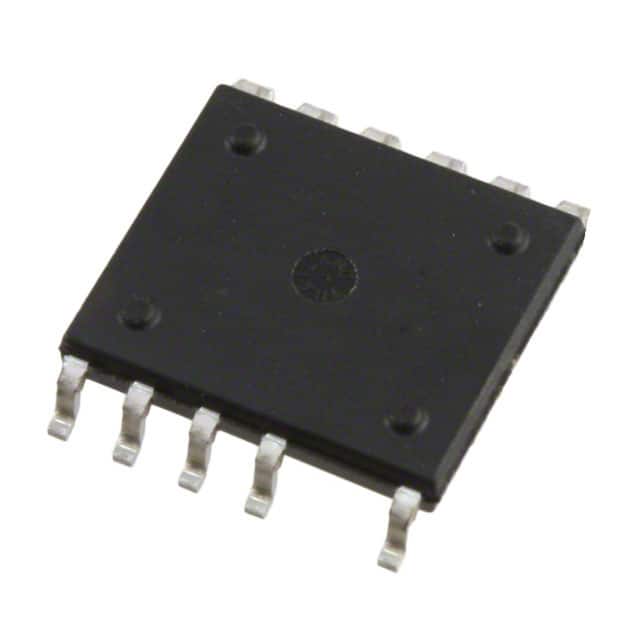
The TNY280GN-TL is Power Integrations' highest-power TinySwitch-III - a 700V integrated flyback switcher in SMD-8C. If you're looking for a replacement, here's what you need to know: there's no pin-compatible second source from another manufacturer. But there are functional alternatives at every level - same-family, newer-family, cross-tier, and cross-manufacturer.
From what we see in Shenzhen distribution, the TNY280 replacement question usually comes from one of three scenarios: (1) the part is out of stock and you need a drop-in, (2) you're starting a new design and want the modern equivalent, or (3) the design needs more power.
Quick Guide: Pick Your Scenario
| Scenario | Best Replacement | Why |
|---|---|---|
| TNY280 out of stock, same PCB | TNY280PN-TL (DIP-8C) | Same die, through-hole package - rework-friendly if your layout allows |
| TNY280 out of stock, need SMD | TNY287DG-TL | TinySwitch-4, same SMD-8C pinout, 725V, selectable ILIM |
| New design at same power | TNY288DG-TL or TNY290DG-TL | TinySwitch-4, 725V, better specs across the board |
| Need more than 28.5W | TOP264KG-TL | TOPSwitch-JX, 30–49W, programmable thresholds |
| Need less than 15W | TNY275PN-TL | Same TinySwitch-III family, scaled down |
| Non-PI alternative | ST VIPer26LD | Closest functional match from another manufacturer |
Same-Family Replacements: TinySwitch-III
These are the closest possible replacements - same architecture, same control scheme, same transformer designs. All TinySwitch-III parts are pin-compatible within the SMD-8C package.
| Part | Power (Open Frame) | RDS(on) @ 25°C | When to Use |
|---|---|---|---|
| TNY274GN-TL | 8.5W | 15.5Ω | 5–8W designs, lowest cost in family |
| TNY275GN-TL | 11.5W | 11.2Ω | 8–12W, the volume sweet spot |
| TNY276GN-TL | 15W | 8.0Ω | 12–15W |
| TNY277GN-TL | 19W | 6.0Ω | 15–19W |
| TNY278GN-TL | 23W | 4.8Ω | 19–23W |
| TNY279GN-TL | 26W | 3.4Ω | 23–26W, one step below |
| TNY280GN-TL | 28.5W | 2.6Ω | 26–28.5W - this is what you're replacing |
Going up or down within TinySwitch-III: if you need less power, drop to TNY279 or TNY278 - same PCB, same BOM, lower cost. The transformer primary inductance stays the same because the switching frequency is fixed at 132kHz. The only thing that changes is the MOSFET die inside the package.
Drop-In Upgrade: TinySwitch-4 (TNY284–TNY290)
TinySwitch-4 is the natural successor. Same SMD-8C pinout as TinySwitch-III - you can swap the IC without changing the PCB footprint. But there are behavioral differences you need to account for.
| Model | MOSFET | Adapter Power | ILIM Select | No-Load |
|---|---|---|---|---|
| TNY284DG-TL | 725V | 8.5W | BP/M pin | <30mW |
| TNY285DG-TL | 725V | 11.5W | BP/M pin | <30mW |
| TNY286DG-TL | 725V | 15W | BP/M pin | <30mW |
| TNY287DG-TL | 725V | 19W | BP/M pin | <30mW |
| TNY288DG-TL | 725V | 23W | BP/M pin | <30mW |
| TNY289DG-TL | 725V | 26W | BP/M pin | <30mW |
| TNY290DG-TL | 725V | 30W | BP/M pin | <30mW |
What you need to verify when switching from TNY280 to TNY290:
- BP pin capacitor value. On TinySwitch-III, the BP pin takes 100nF - that's it. On TinySwitch-4, the BP/M pin capacitor selects the current limit: 100nF = standard, 1µF = reduced, 10µF = increased. Your existing 100nF on BP automatically sets standard ILIM mode on TinySwitch-4.
- 725V vs 700V MOSFET. Extra 25V margin - no PCB changes needed, just better surge withstand.
- <30mW vs <50mW no-load. Half the standby power with the same bias winding. If your design doesn't have a bias winding, both parts draw ~150mW at no-load.
- <150mW no-load without bias. TinySwitch-4's no-load without bias winding is <150mW, same ballpark as TinySwitch-III.
For new designs, skip TinySwitch-III and go straight to TinySwitch-4. The TNY290 matches the TNY280's power capability and adds selectable ILIM, 725V MOSFET, and half the no-load. The cost difference at 1k volume is negligible. But which one do you actually need? If the PCB is done and you just need parts, stick with TNY280 - zero engineering time. If you're spinning a new Rev A board anyway, TNY290 is the obvious upgrade.
Step Up: TOPSwitch-JX (TOP264–TOP271)
When 28.5W isn't enough. TOPSwitch-JX is the next tier - different package (eSOP-12B), different pinout, programmable thresholds. Not a drop-in.
| Model | Open Frame (85–265VAC) | Adapter (230VAC) | Key Feature vs TNY280 |
|---|---|---|---|
| TOP264KG-TL | 30W | 30W | Programmable V/X/F pins, 78% duty cycle |
| TOP265KG-TL | 57W (VG) | 40W (VG) | ~2× power, lower RDS(on) |
Switching from TNY280 to TOP264 means a PCB redesign - different package, different pin count, different feedback loop. But if the power spec has outgrown TinySwitch, this is the path.
Cross-Manufacturer Functional Alternatives
Power Integrations' ON/OFF control with integrated 700V MOSFET is a unique combination. No one else makes a pin-compatible drop-in. But these parts cover similar power levels in similar topologies.
| Part | Manufacturer | MOSFET | Power | Package | Notes |
|---|---|---|---|---|---|
| VIPer26LD | STMicroelectronics | 800V | 20W | SO-16N | Closest functional match - integrated 800V MOSFET, fixed 60kHz, PWM control. Requires transformer redesign. |
| VIPer37LE | STMicroelectronics | 800V | 30W | eDIP-12 | Higher power VIPer, quasi-resonant, better EMI than TNY280 at full load. |
| ICE5AR4770AG | Infineon | 700V | 24W | DSO-12 | CoolSET Gen5, 100kHz, frequency jittering, active burst mode. More external parts than TNY280. |
| UCC28740 | Texas Instruments | External | Up to 50W | SOT-23-6 | Controller only - needs external MOSFET. More design work, more flexibility. |
Important: none of these are drop-in replacements. Each requires a complete transformer re-design, feedback loop re-tuning, and PCB layout change. The VIPer26 is the closest in spirit (integrated MOSFET, simple flyback) but uses PWM control instead of ON/OFF - the transformer and compensation network are fundamentally different.
So which one's worth the Rev E re-spin? If your supply chain demands a second source, the VIPer26LD is where you start. If you just need more power and don't care about manufacturer lock-in, go TOP264KG.
Non-Isolated Alternative: LinkSwitch-TN2
If your design doesn't actually need galvanic isolation (fully enclosed product, no user-accessible outputs), the LNK3206D-TL is a much cheaper option that eliminates the transformer entirely.
| Parameter | TNY280GN-TL | LNK3206D-TL |
|---|---|---|
| Topology | Isolated Flyback | Non-Isolated Buck |
| Output | 28.5W | 225–360mA |
| BOM Cost (1k) | ~$2.50–$3.50 | ~$1.00–$1.50 |
| Package | SMD-8C | SO-8C |
| Transformer | Required | Not required |
Frequently Asked Questions
Q1: Is there a direct pin-compatible second source for TNY280GN-TL?
A: No. Power Integrations' TinySwitch-III uses proprietary ON/OFF control with an integrated 700V MOSFET. No other manufacturer makes a pin-compatible, drop-in replacement. For a same-footprint alternative, use TinySwitch-4 (TNY287–TNY290) - same SMD-8C pinout, same PI ecosystem, but newer specs.
Q2: Can I replace TNY280GN-TL with TNY280PN-TL?
A: Electrically identical, different package. The PN variant is DIP-8C (through-hole) while GN is SMD-8C (surface-mount). Same die, same specs. If your PCB can accept a through-hole part (or you're reworking prototypes by hand), the PN is functionally identical.
Q3: TNY290DG-TL vs TNY280GN-TL - what's the real difference?
A: Three things. First, 725V MOSFET vs 700V - 25V more breakdown margin. Second, BP/M pin selects current limit (100nF/1µF/10µF) vs TNY280's fixed limit with 100nF BP. Third, <30mW no-load vs <50mW. The TNY290 also delivers 30W adapter vs 20W on the TNY280. For new designs, there's no reason to choose TNY280 over TNY290.
Q4: What if I need a replacement from a non-PI manufacturer?
A: STMicroelectronics VIPer26LD is the closest functional match. 800V MOSFET, integrated flyback switcher, 20W capability. But it's not pin-compatible and the transformer design is different (PWM control at 60kHz vs ON/OFF at 132kHz). Budget for a full power-stage redesign if you switch manufacturers.
Q5: TNY280GN-TL is discontinued - what now?
A: It's not discontinued - it's an active production part. Some distributor listings show it as obsolete because they stopped carrying it, not because PI stopped making it. TNY280GN-TL remains in production and available through ICMASS and other distributors. If you're seeing "obsolete" on a specific distributor's site, check another source before redesigning.
Q6: Can I use two TNY279 in parallel for more power?
A: No. TinySwitch-III parts cannot be paralleled. The ON/OFF control scheme relies on cycle-by-cycle current sensing, and two ICs running independently will beat against each other. For more power, step up to TOPSwitch-JX (TOP264) or use an external MOSFET solution.
Related information




-
LNK304DN-TL Power Integrations
-
LNK304GN-TL Power Integrations
-
LNK304DG-TL Power Integrations
-
TNY277PN Power Integrations
-
TNY276PN Power Integrations
-
TNY278PN Power Integrations
-
TNY278GN-TL Power Integrations
-
TNY280GN-TL Power Integrations
-
TOP266KG-TL Power Integrations
-
TOP258PN Power Integrations
-
TOP253PN Power Integrations
-
TOP253PNAU Power Integrations

- 1500+ Daily average RFQ Volume

- 20,000.000 Standard Product Unit

- 1800+ Worldwide Manufacturers

- 15,000+ In-stock Warehouse