Power Integrations TNY280GN-TL| ICMASS

- Part No.:
- TNY280GN-TL| ICMASS
- Manufacturer:
- Power Integrations
- Category:
- AC DC Converters, Offline Switches
- Package:
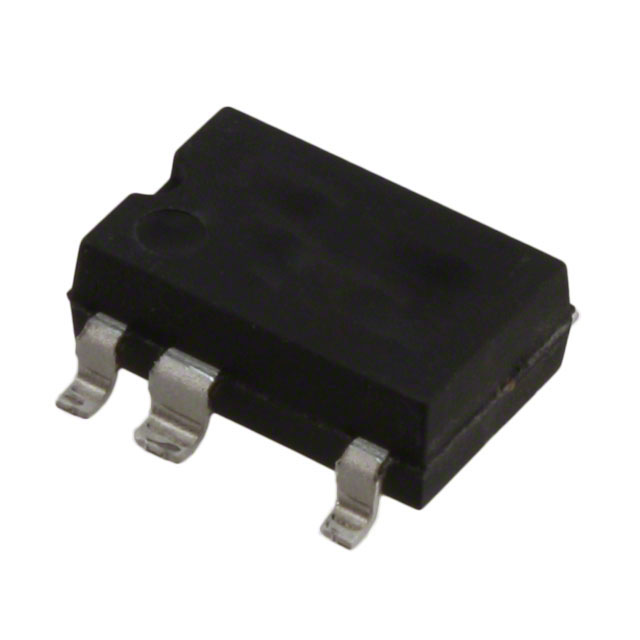
- 8-SMD (7 Leads), Gull Wing
- Datasheet:
-
 TNY280GN-TL| ICMASS.pdf
- Description:
- IC OFFLINE SWITCH FLYBACK 8SMD
- Quantity:
-
Unit Price:$0
Ext Price:$0
- Payment:
-

- Shipping:
-


TNY280GN-TL| ICMASS Information
- Specifications
- Product Details
- Comparison
- Tags
- Product attributes
- Attribute value
- Manufacturer:
- Power Integrations
- Series:
- TinySwitch®-III
- Package/Case:
- 8-SMD (7 Leads), Gull Wing
- Packaging:
- Tape & Reel (TR)
- Product Status:
- Active
- Output Isolation:
- Isolated
- Internal Switch(s):
- Yes
- Voltage - Breakdown:
- 700V
- Topology:
- Flyback
- Voltage - Start Up:
- -
- Voltage - Supply (Vcc/Vdd):
- -
- Duty Cycle:
- 65%
- Frequency - Switching:
- 132kHz
- Power (Watts):
- 36.5 W
- Fault Protection:
- Current Limiting, Open Loop, Over Temperature, Over Voltage, Short Circuit
- Control Features:
- EN
- Operating Temperature:
- -40°C ~ 150°C (TJ)
- Grade:
- -
- Qualification:
- -
- Supplier Device Package:
- SMD-8C
- Mounting Type:
- Surface Mount
- Datasheet:
-
TNY280GN-TL| ICMASS.pdf
TNY280GN-TL — 28.5W Offline Flyback Switcher, TinySwitch-III (SMD-8C)
The TNY280GN-TL is the highest-power member of Power Integrations' TinySwitch-III family — a 700V integrated flyback switcher that delivers 28.5W open-frame (36.5W peak) from universal AC input. Its headline numbers: 132kHz switching, ON/OFF control with no loop compensation, and <50mW no-load with a bias winding.
From what we see in Shenzhen distribution, the TNY280 moves in steady volume to mid-sized manufacturers. It's the part engineers reach for when TNY274–279 max out and they're not ready to redesign around a two-chip solution.
TinySwitch-III is the workhorse that shipped in millions of set-top boxes, appliance supplies, and PC standby rails over the past decade.
The TNY280 sits at the top of the family — the one you reach for when TNY274–279 run out of headroom. Past 28.5W, you leave TinySwitch entirely and step up to TOPSwitch.
What Are the Technical Specifications of TNY280GN-TL?
| Parameter | Value |
|---|---|
| Manufacturer | Power Integrations |
| Series | TinySwitch®-III (TNY274–TNY280) |
| Topology | Isolated Flyback |
| Integrated Switch | 700V Power MOSFET |
| Switching Frequency | 132kHz typical (124–140kHz, with frequency jittering for EMI) |
| Duty Cycle | 65% max |
| Adapter Power Rating | 20W (85–265VAC) / 28.5W (230VAC ±15%) |
| Peak/Open Frame Power | 28.5W (85–265VAC) / 36.5W (230VAC ±15%) |
| No-Load Consumption | <50mW with bias winding; <150mW without |
| On-State Resistance | 2.6Ω (TJ = 25°C) |
| Current Limit | Fixed — no selectable modes (unlike TinySwitch-4) |
| Supply Current | 630µA typical (EN pin high) |
| Control Method | ON/OFF control (no loop compensation needed) |
| Input Voltage (AC) | 85VAC – 265VAC (full universal range) |
| Fault Protection | Current limiting, open-loop auto-restart (<3% max power), hysteretic thermal shutdown (142°C), output OVP (with external Zener) |
| Package | SMD-8C (4.9 × 3.9mm, 7-lead gull-wing, exposed SOURCE pads) |
| Operating Temperature | -40°C to +150°C (TJ) |
Per the Power Integrations TinySwitch-III datasheet (Rev N, TNY274-280).
Key numbers that matter: 132kHz switching means the transformer can be smaller than 66kHz designs — roughly half the primary inductance for the same power.
The 700V MOSFET gives adequate breakdown margin for universal-input flybacks, but at 230VAC the reflected voltage plus leakage spike can kiss 650V — this is where most TNY280 failures happen.
The fixed current limit means you size the transformer primary inductance to hit your power target at minimum input voltage. There's no dial to tweak.
When Should You Use (and NOT Use) the TNY280GN-TL?
✅ Use TNY280GN-TL when:
- You need a proven flyback supply in the 15–28W range. Set-top boxes, LCD monitor standby rails, small appliance power supplies, industrial auxiliary rails — anything where the TNY274–279 run out of steam and you don't want to jump to a two-chip (controller + external MOSFET) solution.
- Design reuse matters more than the latest specs. TinySwitch-III has a decade of field history, known transformer designs, and a mature PI Expert support library. If your team already knows the TNY274 and you need more power, the TNY280 is the same architecture with a bigger MOSFET.
- You're building an always-plugged-in product that needs sub-50mW standby. With a bias winding, the TNY280's no-load draw is low enough for every global efficiency standard: DOE Level VI, EU CoC Tier 2, California Title 20. The bias winding is the key — without it, you're at ~150mW.
- Cost pressure says "one chip, not two." The TNY280 integrates the 700V MOSFET, the controller, the startup current source, and the protection circuits into one SMD-8C package. The alternative — a separate PWM controller + external 700V MOSFET — costs more in BOM and board area.
❌ Don't use TNY280GN-TL when:
- You need more than 28.5W open-frame. The TNY280 is the ceiling of TinySwitch-III. At 36.5W peak, it's at its thermal limit and the MOSFET RDS(on) (2.6Ω) dominates losses. Step up to TOPSwitch-JX (TOP264–271) for 30–100W with lower RDS(on) and multi-mode switching.
- You want selectable current limits. TinySwitch-III has a fixed current limit. TinySwitch-4 (TNY284–290) adds BP/M pin-selectable current limits (standard/reduced/increased) and a 725V MOSFET. If you need that flexibility, skip TNY280 and go to TNY287–290.
- You don't need isolation. A non-isolated buck with LNK306 or LNK3206 costs less, eliminates the transformer and optocoupler, and needs fewer components. Flyback isolation only earns its keep when galvanic isolation is a safety requirement.
- You need CC/CV output for battery charging. TinySwitch-III is a fixed-voltage controller. For lithium chargers with primary-side CC/CV regulation, use LinkSwitch-II (LNK623–626) or LinkSwitch-CV (LNK625).
TNY280 vs TNY278 vs TNY279 — Where Does It Sit in the Family?
The TinySwitch-III family scales from 5W to 36.5W. The TNY280 is the top of the stack — same architecture as the smaller parts, bigger MOSFET die.
So which one? TNY278 covers 10–16W designs. TNY279 stretches to 23W. The TNY280 is for designs pushing past 23W where the smaller parts thermally limit.
One thing to watch: at 28.5W from 85VAC, peak currents near 1.5A through 2.6Ω mean ~6W of conduction loss. PCB copper area matters.
Pin Functions at a Glance
| Pin | Name | Function |
|---|---|---|
| 1,2,7,8 | SOURCE (S) | MOSFET source. All four pins connect internally. Tie to ground plane copper pour for heatsinking — at 28.5W, the source copper area is your primary thermal path. Keep this node electrically quiet for low EMI. |
| 3 | BP (Bypass) | Internal 5.8V regulator bypass pin. Connect 100nF ceramic capacitor to SOURCE. Unlike TinySwitch-4, this pin does NOT select current limit — it's purely a bypass. Do not use 1µF or 10µF here. |
| 4 | EN/UV (Enable/Undervoltage) | Enable switching when current is pulled from the pin (<240µA). Also sets line undervoltage threshold via a single resistor to the DC bus. When the pin current exceeds the disable threshold, switching stops. This is driven by the optocoupler on the secondary side. |
| 5 | DRAIN (D) | 700V MOSFET drain. Connect to flyback transformer primary. Self-biases the IC during startup by drawing current from the DRAIN pin through an internal high-voltage current source. During normal operation, the transformer bias winding powers the IC. |
What Are the Typical Applications of TNY280GN-TL?
Set-top box / DVR main supply (12V/2A). The TNY280 powers the always-on rail in millions of cable and satellite boxes. 24W from universal AC in a closed enclosure with limited airflow — this is the TNY280's sweet spot.
Thermal management matters: at 24W from 85VAC, the IC dissipates ~3–4W. That needs at least 600mm² of 2oz copper on the SOURCE pins.
PC standby / ATX 5VSB supply (5V/2A). The always-on 5V standby rail in desktop PSUs is a textbook TNY280 application. With a bias winding, the <50mW no-load keeps the whole PSU under ErP Lot 6 limits.
For ATX supplies needing 3–4A on the 5VSB rail, the TNY280 hits the limit — consider TOPSwitch-JX.
Industrial auxiliary power supply (24V/1A). DIN-rail modules, motor drives, and PLC expansions need an isolated low-voltage rail from 230VAC. The TNY280 + EFD20 or EE19 transformer fits in a 35mm-wide DIN housing. At 24W output, efficiency runs around 82–85% — the transformer design makes or breaks this number.
Small appliance control board (multi-output: 12V + 5V). Washing machines, dishwashers, and HVAC controllers need isolated 12V for relays and 5V for the MCU. A TNY280 flyback with a multi-winding secondary generates both rails from one transformer.
Cross-regulation on the 5V rail depends on the transformer stack — stacked windings give better tracking than side-by-side.
What Are the Alternatives to TNY280GN-TL?
| Model | Family | Key Difference | Best For |
|---|---|---|---|
| TNY287DG-TL | TinySwitch-4 | 725V MOSFET, selectable ILIMIT, <30mW no-load, 23W adapter | New designs — better specs, similar power, same footprint |
| TNY288DG-TL | TinySwitch-4 | 725V MOSFET, 26W adapter, all 3 ILIMIT modes | When you need TNY280 power + TinySwitch-4 features |
| TNY290DG-TL | TinySwitch-4 | Highest TinySwitch-4, 30W adapter, 150 mA/µs ILIMIT | 28W+ new designs — equivalent power, modern feature set |
| TOP264KG-TL | TOPSwitch-JX | 725V, multi-mode (PWM at full load, variable-freq at light), 62W peak | When 28.5W isn't enough — step up to TOPSwitch |
| LNK3206D-TL | LinkSwitch-TN2 | Non-isolated buck, 725V, 66kHz, no transformer | When isolation isn't required — much lower BOM cost |
TNY280 vs TNY287–290 — stick with III or move to 4? The TNY280 still ships in volume and has a decade of proven designs. But for new projects, TinySwitch-4 (TNY287–290) gives you a 725V MOSFET, selectable current limits via BP/M, and half the no-load consumption (per the TinySwitch-4 datasheet, Rev B).
If you're starting from scratch, skip III and go to 4. If you're maintaining an existing TNY280 design, stay with it — the BOM is locked and the reliability data is in.
TNY280 vs TOP264 — the line between TinySwitch and TOPSwitch. At 28.5W, the TNY280 is running near its thermal ceiling. TOPSwitch-JX (TOP264) starts where TinySwitch ends — 725V MOSFET, multi-mode control, and an eSOP-11 package with better thermal impedance.
The cost difference at 1k volume is roughly $0.15–0.25. The real question: will your design ever need more than 30W? If yes, start with TOPSwitch.
How Much Does the TNY280GN-TL Cost and Is It in Stock?
| Quantity | Reference Price (per unit) |
|---|---|
| 1–99 | $0.35–$0.55 |
| 100–999 | $0.25–$0.40 |
| 1,000–9,999 (reel) | $0.20–$0.32 |
| 10,000+ | $0.16–$0.26 |
Contact ICMASS for a same-day quote. The TNY280GN-TL is an active production part with stable availability. As the top-of-family TinySwitch-III, it typically commands a 10–20% premium over the TNY278/279 — you're paying for the largest MOSFET die in the family. Reel quantity (1,000 pcs) is the standard procurement unit for production.
Why Buy TNY280GN-TL from ICMASS?
Full TinySwitch-III family in one shipment. We stock TNY274 through TNY280 across SMD-8C and DIP packages. If your design starts at 5W with a TNY274 and your next product needs 28.5W with a TNY280, we have both — same day, same shipment.
Transformer design guidance that saves you a prototype spin. The TNY280's biggest failure mode is the transformer — leakage inductance, insufficient primary inductance, or winding polarity errors.
Tell us your input range, output voltage, and target power. We'll help you size the core (EE19/EFD20/EE22), estimate the primary inductance, and flag the snubber values that work at 132kHz. Real application feedback, not a datasheet re-read.
Complete flyback BOM in one place. A TNY280 supply needs a flyback transformer, optocoupler (PC817 or similar), TL431 reference, output Schottky rectifier, and RCD clamp components. We stock every part in the standard TinySwitch-III reference design — one purchase order, one shipment.
Shenzhen warehouse, global shipping. Orders placed before 15:00 CST ship same day. DHL/FedEx international delivery in 5–10 days.
Frequently Asked Questions About TNY280GN-TL
Q1: Why did my TNY280 fail at startup?
A: Startup is the highest-stress condition for the TNY280. At power-on, the DC bus rises while the output is at zero volts — the IC runs at maximum current limit into a short circuit until the output capacitor charges.
If the RCD clamp isn't sized correctly, the drain voltage spike from leakage inductance hits the 700V MOSFET limit. The fix: verify clamp snubber values at 270VAC input with low source impedance. A 200V Zener clamp in parallel with the RCD gives extra margin.
Q2: Why is my output voltage sagging under load with the TNY280?
A: The most likely cause: primary inductance (LPRI) is too low for your power target. Since TinySwitch-III has a fixed current limit and fixed switching frequency, output power is proportional to LPRI × ILIM² × FS. If your transformer's primary inductance is too low, the IC hits its current limit before delivering enough energy per cycle. Measure LPRI at 132kHz (not 10kHz — the number changes). For a 24W design at 85–265VAC, typical LPRI is in the 800µH–1.2mH range.
Q3: Can I replace a TNY280 with a TNY287 (TinySwitch-4)?
A: The pinout is identical, but you need to verify three things. First, the TNY287's BP/M pin uses the capacitor value to select the current limit mode — 100nF = standard, 1µF = reduced, 10µF = increased. If your TNY280 design has 100nF on BP, the TNY287 defaults to standard mode. Second, the TNY287's 725V MOSFET gives 25V more breakdown margin. Third, the TNY287 delivers 23W adapter vs 20W — verify your transformer can handle the extra power without saturating.
Q4: How do I size the RCD clamp for a TNY280 flyback?
A: The clamp must absorb the leakage inductance energy without letting the drain voltage exceed 650V (leaving 50V margin to the 700V limit). Measure the leakage inductance at 132kHz by shorting all secondary windings. The clamp resistor value: RCLAMP = VCLAMP² / (0.5 × LLEAK × IPK² × FS). The clamp capacitor: CCLAMP = VCLAMP / (ΔV × RCLAMP × FS). Start with these PI Expert values and verify on the bench at 270VAC — that's where the margin is thinnest.
Q5: Does the TNY280's thermal shutdown actually protect the device?
A: Yes — the TNY280 has hysteretic thermal shutdown at 142°C with automatic recovery. When the junction hits 142°C, switching stops. It resumes when the junction drops roughly 40–50°C below the threshold. But you don't want to rely on this in normal operation — repeated thermal cycling stresses the die attach and bond wires. Design for TJ ≤ 110°C at maximum ambient and full load. Use all four SOURCE pins soldered to at least 600mm² of 2oz copper for heatsinking at 28.5W.
Q6: Why is my TNY280 switching frequency erratic or audible?
A: Two common causes. First, the transformer core is saturating — at 132kHz, peak flux density should stay under 300mT (3000 Gauss) to avoid both saturation and audible noise.
Second, the optocoupler CTR may be too low. The EN/UV pin needs the optocoupler to pull enough current to reliably disable switching cycles. If the CTR is marginal, the IC enters an irregular burst mode that can be audible. Use an optocoupler with CTR ≥ 100% at the actual LED current.
Q7: What's the real no-load power of a TNY280 supply?
A: Around 50mW with a properly designed bias winding; ~150mW without. The bias winding powers the IC during normal operation instead of drawing from the internal DRAIN-pin current source. For always-plugged-in products, add the bias winding — it's the difference between comfortably passing every global standby regulation and being marginal. The bias winding typically adds 3–5 turns on the primary side of the transformer.
Q8: TNY280GN vs TNY280PN vs TNY280KG — which package?
A: GN (SMD-8C) for surface-mount, PN (DIP-8C) for through-hole, KG (eSOP-12) for best thermals. Same die in all three. SMD-8C fits automated assembly and reflow soldering. DIP-8C is easier to hand-solder and prototype — the through-hole pins provide natural convection cooling. eSOP-12 has an exposed thermal pad that handles ~20–25% more power before hitting the same junction temperature. At 28.5W open-frame, the KG package gives you thermal margin.
| Image |
|
|
| Part Number | TNY280GN-TL| ICMASS | TNY280GN |
| Manufacturer | Power Integrations | Power Integrations |
| Series | TinySwitch®-III | TinySwitch®-III |
| Package/Case | 8-SMD (7 Leads), Gull Wing | 8-SMD (7 Leads), Gull Wing |
| Packaging | Tape & Reel (TR) | Tube |
| Product Status | Active | Discontinued at Digi-Key |
| Output Isolation | Isolated | Isolated |
| Internal Switch(s) | Yes | Yes |
| Voltage - Breakdown | 700V | 700V |
| Topology | Flyback | Flyback |
| Voltage - Start Up | - | - |
| Voltage - Supply (Vcc/Vdd) | - | - |
| Duty Cycle | 65% | 65% |
| Frequency - Switching | 132kHz | 132kHz |
| Power (Watts) | 36.5 W | 36.5 W |
| Fault Protection | Current Limiting, Open Loop, Over Temperature, Over Voltage, Short Circuit | Current Limiting, Open Loop, Over Temperature, Over Voltage, Short Circuit |
| Control Features | EN | EN |
| Operating Temperature | -40°C ~ 150°C (TJ) | -40°C ~ 150°C (TJ) |
| Grade | - | - |
| Qualification | - | - |
| Supplier Device Package | SMD-8C | SMD-8C |
| Mounting Type | Surface Mount | Surface Mount |
User Guide
- Purchase & Inquiry
- Package
- Shipping Information
- Customer Review
You may place an order without registering to IC-MAX.COM
We strongly suggest you sign in before purchasing as you can track your order in real time.
For your convenience, we accept multiple payment methods in USD, including PayPal, Credit Card, and wire transfer.
RFQ (Request for Quotations)
It is recommended to request for quotations to get the latest prices and inventories about the part.
Our sales will reply to your request by email within 24 hours.
1. You'll receive an order information email in your inbox. (Please remember to check the spam folder if you didn't hear from us).
2. Since inventories and prices may fluctuate to some extent, the sales manager is going to reconfirm the order and let you know if there are any updates.
-
- Step1:Prepare product
-
- Step2:Vacuum packaging
-
- Step3:Anti-static bag
-
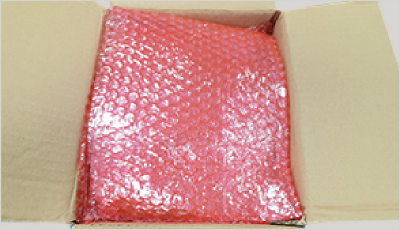
- Step4:Individual package
-
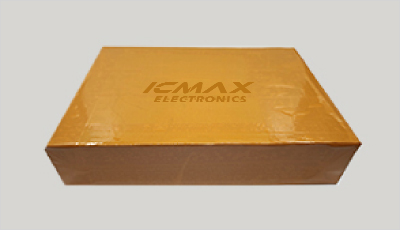
- Step5:Packaging box
-
- Step6:Barcode shipping label
Shipping starts at $40, but some countries will exceed $40. For example (South Africa, Brazil, India, Pakistan, Israel, etc.)
The basic freight (for package ≤0.5kg or corresponding volume) depends on the time zone and country.
Currently, our products are shipped through DHL, FedEx, SF, and UPS.
Delivery TimeOnce the goods are shipped, estimated delivery time depends on the shipping methods you chose:
FedEx International, 5-7 business days.
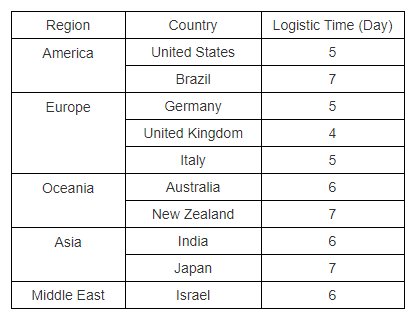
The following are some common countries' logistic time.
- Hot Sale
- Related Categories
- Include Parts
- Popular Search
- Voltage Regulators - Linear, Low Drop Out (LDO) Regulators(66836)
- Voltage Regulators - Linear Regulator Controllers(325)
- Voltage Regulators - Linear + Switching(1473)
- Voltage Regulators - DC DC Switching Regulators(35756)
- Voltage Reference(8428)
- V/F and F/V Converters(139)
- Thermal Management(515)
- Supervisors(41287)
- Special Purpose Regulators(4820)
- RMS to DC Converters(144)
The following parts include "TNY280GN-TL| ICMASS" in Silicon Labs TNY280GN-TL| ICMASS.
- Part Number
- Manufacturer
- Package
- Description
- LNK6407D-TL Power Integrations 8-SMD (7 Leads), Gull Wing IC OFFLINE SWITCH FLYBACK 8SMD
- LNK3204D-TL Power Integrations 8-SMD (7 Leads), Gull Wing IC OFFLINE SWITCH FLYBACK 8SMD
- SR10LG-G Microchip Technology 8-SMD (7 Leads), Gull Wing IC OFFLINE SWITCH FLYBACK 8SMD
- TNY285DG-TL Power Integrations 8-SMD (7 Leads), Gull Wing IC OFFLINE SWITCH FLYBACK 8SMD
- LNK304DN-TL Datasheet, Price, Stock & Alternatives | ICMASS Power Integrations 8-SMD (7 Leads), Gull Wing IC OFFLINE SWITCH FLYBACK 8SMD
- TNY285KG-TL Power Integrations 8-SMD (7 Leads), Gull Wing IC OFFLINE SWITCH FLYBACK 8SMD
- LNK3206D-TL Power Integrations 8-SMD (7 Leads), Gull Wing IC OFFLINE SWITCH FLYBACK 8SMD
- LNK623DG-TL Power Integrations 8-SMD (7 Leads), Gull Wing IC OFFLINE SWITCH FLYBACK 8SMD
- TNY286PG Power Integrations 8-SMD (7 Leads), Gull Wing IC OFFLINE SWITCH FLYBACK 8SMD
- LNK624DG-TL Power Integrations 8-SMD (7 Leads), Gull Wing IC OFFLINE SWITCH FLYBACK 8SMD
The following parts are popular search parts in Test and Measurement.
Inventory:59,793
Please send an inquiry. Send us your inquiry, and we will respond immediately.

- 1500+ Daily average RFQ Volume

- 20,000.000 Standard Product Unit

- 1800+ Worldwide Manufacturers

- 15,000+ In-stock Warehouse