TNY280GN-TL vs TOP264KG-TL vs LNK3206D-TL — Which PI Switcher Fits Your Design?
TNY280GN-TL vs TOP264KG-TL vs LNK3206D-TL — Which PI Switcher Fits Your Design?
Three Power Integrations offline switchers, three different jobs. The TNY280GN-TL is the highest-power TinySwitch-III - 15–28.5W isolated flyback. The TOP264KG-TL is TOPSwitch-JX entry - same flyback, programmable, 20–49W. The LNK3206D-TL is a non-isolated buck that ditches the transformer entirely.
From what we see in Shenzhen distribution, these three move together in procurement — same buyer, different designs across a product line. Pick the wrong one and you're either paying for features you don't need or redesigning when you hit a power ceiling.
Quick Comparison: The Numbers
| Parameter | TNY280GN-TL | TOP264KG-TL | LNK3206D-TL |
|---|---|---|---|
| Family | TinySwitch-III | TOPSwitch-JX | LinkSwitch-TN2 |
| MOSFET | 700V | 725V | 725V |
| Topology | Isolated Flyback | Isolated Flyback | Non-Isolated Buck |
| RDS(on) @ 25°C | 2.6Ω | 5.4Ω | N/A (current-limited) |
| ILIM typ | Fixed (~1.5A) | 1.30A (programmable) | 482mA / 370mA (selectable) |
| Switching Frequency | 132kHz fixed | 66/132kHz selectable | 66kHz fixed |
| Duty Cycle max | 65% | 78% | 69% |
| Open Frame Power | 28.5W (85–265VAC) | 30W (85–265VAC) / 49W (230VAC) | 225mA MDCM / 360mA CCM |
| No-Load | <50mW with bias | <100mW | <30mW with bias |
| Control Pins | BP, EN/UV | V, X, C, F | FB, BP |
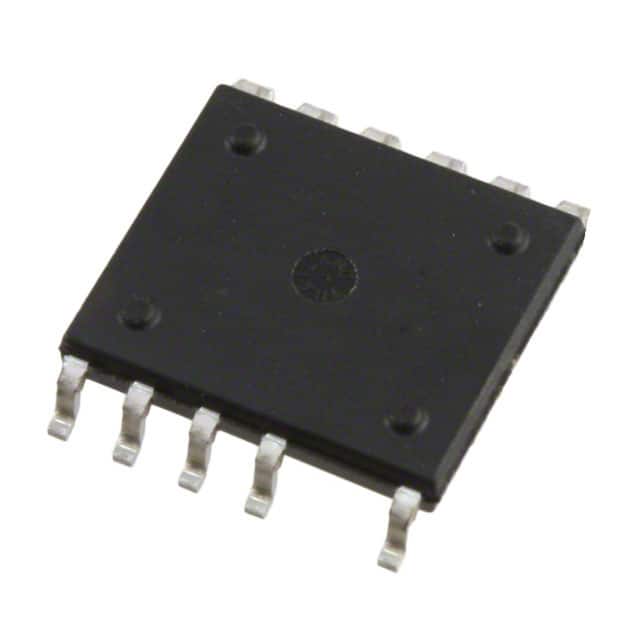
| Package | SMD-8C | eSOP-12B (11-lead) | SO-8C (7-lead) |
| Isolation | Yes (transformer) | Yes (transformer) | No |
| BOM Complexity | Medium | Medium-High | Low |
| Volume Price | $0.20–$0.32 | $0.60–$0.85 | $0.38–$0.50 |
When to Use Each
TNY280GN-TL
Isolated flyback, 15–28.5W
Pick when you need a proven isolated supply in the 15–28W range and don't need to program thresholds. Millions shipped. PI Expert has known-good transformer designs for every common output.
Ideal: Set-top boxes, appliance supplies, PC standby, industrial auxiliary rails.
TOP264KG-TL
Isolated flyback, 20–49W, programmable
Pick when you need more power than TinySwitch delivers, or when your input voltage range varies by region and you need programmable UV/OV thresholds.
Ideal: LCD monitors, notebook adapters, multi-region platform designs, DIN-rail industrial supplies.
LNK3206D-TL
Non-isolated buck, up to 360mA
Pick when galvanic isolation isn't needed. No transformer, no optocoupler — BOM cost drops 40–60% vs a flyback.
Ideal: Smart meters, IoT sensor nodes, appliance control boards, LED bulb drivers — anything with a fully enclosed, user-inaccessible circuit.
Decision #1: Do You Need Isolation?
So which one fits? If the output is user-accessible — a USB port, a panel connector, exposed terminals — you need galvanic isolation for safety. That eliminates the LNK3206 immediately. Go TNY280 or TOP264.
If the entire circuit lives inside a sealed enclosure and no human ever touches the low-voltage side, the LNK3206's non-isolated buck saves you the transformer, optocoupler, and TL431. That's typically $0.80–1.50 in BOM savings at 1k volume.
Decision #2: How Much Power?
Under 15W: Skip all three. The TNY280 and TOP264 are oversized. Use TNY274–279 (TinySwitch-III) or LNK3204–3205 (LinkSwitch-TN2).
15–28.5W isolated: TNY280. It's the top of TinySwitch-III, and at these power levels you want that 2.6Ω RDS(on). The TOP264's 8.35Ω at 100°C would dissipate nearly 3× the conduction loss at the same current.
28.5–49W isolated: TOP264KG. The TNY280 hits its thermal ceiling at 28.5W open-frame. The TOP264KG handles up to 49W at 230VAC. It costs more but that's the price of the extra headroom.
100–360mA non-isolated: LNK3206. At these currents, a non-isolated buck is the right answer. The TNY280 and TOP264 are flyback switchers — using them without a transformer makes no sense.
Decision #3: Fixed Thresholds or Programmable?
The TNY280 has a fixed current limit and fixed UV/OV thresholds. The TOP264 lets you program both via the V-pin and X-pin.
Why does this matter? If your product ships to Japan (100VAC), Europe (230VAC), and US industrial sites (277VAC), the TOP264's programmable V-pin lets you set different UV/OV thresholds per market — same PCB, different resistor values. The TNY280's fixed thresholds mean you're designing for the worst case and accepting the compromises.
The X-pin adds another dimension: dial back peak current to use a smaller transformer. Start a 20W design at reduced ILIM. When the requirement grows to 30W, change one resistor instead of redesigning the power stage.
Decision #4: BOM Cost vs Flexibility
In ascending order of BOM cost:
- LNK3206: IC + inductor + diode + 5 passives. Simplest, cheapest.
- TNY280: IC + transformer + optocoupler + TL431 + RCD clamp + output rectifier + passives.
- TOP264: Everything in #2, plus V-pin divider resistors, X-pin resistor, and F-pin connection. Most BOM lines.
But BOM cost isn't everything. The TOP264's extra components buy you flexibility that can save a PCB spin when requirements change. At 100k/year volume, one saved spin pays for the BOM delta many times over.
Silicon-Level Differences That Matter
700V vs 725V MOSFET. The TNY280's 700V rating is adequate for universal-input flybacks. The TOP264 and LNK3206's 725V gives 25V more margin.
At 265VAC with 135V reflected voltage and a 150V leakage spike, you're at 660V on a 700V part — 40V margin. On 725V parts, it's 65V.
Both are fine for a well-snubbed design. But why care about 25V? When the snubber isn't perfect — production variation, hot day, surge recovery — that margin is survival vs latch-off.
RDS(on) at operating temperature. The TNY280's 2.6Ω at 25°C rises to ~4.3Ω at 100°C. The TOP264's 5.4Ω rises to 8.35Ω. At 1A peak, that's 4.3W vs 8.35W of conduction loss. This is why the TNY280 delivers 28.5W from a smaller package.
Duty cycle range. Per TinySwitch-III datasheet (Rev N), the TNY280's 65% max is fine for universal-input flyback. The TOP264's 78% (TOPSwitch-JX Rev E) gives more headroom at 85VAC.
The LNK3206's 69% is designed for buck topology where duty cycle = VOUT/VIN and rarely exceeds 50%.
What About the Next Step Up?
Beyond TNY280: TinySwitch-4 (TNY284–290) gives you a 725V MOSFET, selectable current limits via BP/M, and <30mW no-load. Same power range, modern feature set. If you're starting a new isolated design at 15–28W, TinySwitch-4 is the natural successor to TinySwitch-III.
Beyond TOP264: TOP265–TOP268 in eDIP-12 (VG) packages deliver up to 137W open-frame. Same multi-mode control, better thermals.
Beyond LNK3206: LNK3207 in a larger package, or if you need isolation at similar current, LNK625 (LinkSwitch-CV, primary-side regulated flyback).
Bottom Line
Three parts, three clear lanes. LNK3206 for the cheapest offline supply where isolation isn't needed. TNY280 for a proven isolated flyback at 15–28W where simplicity matters. TOP264 for 28W+ isolated designs that need programmability.
None of these parts is "better" than the others. They solve different problems.
Frequently Asked Questions
Q1: Can I replace a TNY280 with a TOP264 in an existing design?
A: Not a drop-in replacement — different package, different pinout, different control behavior. The TNY280 uses SMD-8C (4 functional pins: D, S, BP, EN/UV). The TOP264 uses eSOP-12B (6 functional pins: D, S, C, V, X, F). You're redesigning the PCB and re-tuning the feedback loop. If you're doing that much work, consider TinySwitch-4 (TNY287–290) instead — same SMD-8C footprint, modern specs.
Q2: Why would I ever choose a flyback (TNY/TOP) over a buck (LNK) when the buck is cheaper?
A: Safety isolation. Period. If your product has any user-accessible low-voltage connection, it needs galvanic isolation. No exceptions. The buck topology saves money until the moment someone touches a live output and the product gets recalled.
There's also a technical reason: flyback topology handles wide VOUT/VIN ratios better. A buck converter with 12V output from 325VDC bus runs at ~3.7% duty cycle. Regulation gets twitchy at duty cycles that low.
Q3: Which one should I use if my power requirement might grow later?
A: TOP264KG-TL — specifically because of the programmable X-pin. Design at the reduced current limit for your current power target. When requirements grow, change the X-pin resistor (or short X to SOURCE for full ILIM) and verify the transformer can handle the higher peak current. If the transformer was sized with margin, this is a one-resistor change instead of a complete redesign.
Q4: TNY280 vs TNY287 — why is TOP264 in this comparison instead of TinySwitch-4?
A: Because the TOP264 represents a different tier of capability (programmable thresholds, wider duty cycle, higher power ceiling), not just a newer version. The TNY287 is TinySwitch-4's closer equivalent to the TNY280 — same architecture, modern specs. The TOP264 is for designs that outgrow TinySwitch entirely.
If your question is "TNY280 or TNY287?", the answer is TNY287 for new designs — better MOSFET (725V), selectable ILIM, and <30mW no-load. The TNY280 is for maintaining existing designs with locked BOMs.
Q5: Can the LNK3206 ever be used with a transformer for isolation?
A: Technically yes — LinkSwitch-TN2 supports flyback topology — but it's not what the part is optimized for. The LNK3206's 66kHz fixed frequency, current limit range, and FB pin regulation are designed around non-isolated buck. For isolated flyback at similar power, use LNK625 (LinkSwitch-CV) which has primary-side CV regulation and is purpose-built for isolated designs.
Q6: At exactly 28.5W — TNY280 or TOP264?
A: TNY280 if this is a fixed-spec design, TOP264 if there's any chance the spec changes. At 28.5W, the TNY280 is at its rated maximum but runs fine with adequate copper. The TOP264 at 28.5W has plenty of headroom and the RDS(on) penalty (8.35Ω vs 4.3Ω hot) is offset by the wider duty cycle keeping peak currents lower.
One practical note: if you need 28.5W at 85VAC, the TNY280 will run hotter than the TOP264 at the same power because the fixed current limit forces higher peak currents at low line. The TOP264's 78% duty cycle spreads the energy transfer over more of the switching period.
Related information




-
LNK304DN-TL Power Integrations
-
LNK304GN-TL Power Integrations
-
LNK304DG-TL Power Integrations
-
TNY277PN Power Integrations
-
TNY276PN Power Integrations
-
TNY278PN Power Integrations
-
TNY278GN-TL Power Integrations
-
TNY280GN-TL Power Integrations
-
TOP266KG-TL Power Integrations
-
TOP258PN Power Integrations
-
TOP253PN Power Integrations
-
TOP253PNAU Power Integrations

- 1500+ Daily average RFQ Volume

- 20,000.000 Standard Product Unit

- 1800+ Worldwide Manufacturers

- 15,000+ In-stock Warehouse