SS34 Equivalent, Alternative & Replacement Guide
SS34 Equivalent, Alternative & Replacement Guide | ICMASS
The SS34 is a 3A/40V Schottky barrier rectifier in SMC (DO-214AB). It's everywhere — DC-DC converters, reverse-polarity protection, flyback catch diodes, solar bypass. VF is 0.5V at 3A. Reverse leakage at 25°C is 0.5mA max, climbing fast with temperature.
You're here for a second source, a pin-compatible upgrade, or a part that doesn't desolder at 2.5A. The real-world limit is closer to 2A sustained in enclosed designs. At 3A in still air, minimal copper, junction temperature walks past 125°C within minutes. The datasheet says 3A. Thermal reality says derate.
SS34 vs SK34 vs B340 vs SS54: Full Comparison
| Parameter | SS34 | SK34 (Panjit) | B340-13-F (Diodes Inc) | SS54 |
|---|---|---|---|---|
| Type | Schottky Rectifier | Schottky Rectifier | Schottky Rectifier | Schottky Rectifier |
| VRRM | 40V | 40V | 40V | 40V |
| IF(AV) | 3A | 3A | 3A | 5A |
| IFSM (surge) | 80A | 80A | 80A | 120A |
| VF @ 3A | 0.50V | 0.50V | 0.50V | 0.45V |
| IR @ 40V, 25°C | 0.5mA max | 0.5mA max | 0.5mA max | 0.5mA max |
| Package | SMC (DO-214AB) | SMC (DO-214AB) | SMC (DO-214AB) | SMC (DO-214AB) |
| Pin Count / Footprint | 2-pin, SMC | 2-pin, SMC | 2-pin, SMC | 2-pin, SMC |
| AEC-Q101 | No (standard) | AU variant available | Q variant available | No (standard) |
| TJ max | 125°C | 150°C | 150°C | 150°C |
| Relative Cost (1ku) | $ Base | $ Same | $ Same | $$ ~1.5× |
| Best For | General purpose, ≤2A sustained | Higher TJ margin | Second source, AEC-Q available | Upgrade for higher current |
When to Use SK34
The SK34 is the closest parametric equivalent. Same SMC, same 40V/3A, same 0.5V VF. The key difference: 150°C junction vs 125°C. That extra 25°C buys margin in enclosed power supplies and under-hood applications. Panjit, Diotec, and Lite-On all manufacture SK34s. Same PCB layout, same BOM line, better thermal safety net.
When to Use B340-13-F
The B340 is Diodes Inc's answer to the SS34. Same SMC, same 40V/3A. B340Q-13-F adds AEC-Q101. Like SK34, 150°C junction. Also available in SMA (B340A) and SMB (B340B) — useful if your layout can't fit SMC. SMA is smaller; verify thermals with the reduced copper area.
When to Upgrade to SS54
The SS54 is 40V/5A in the same SMC footprint. VF drops to 0.45V at 3A. Surge: 120A vs 80A. Costs about 50% more. The upgrade makes sense at 2A+ sustained. Same pad layout, swap and go. 5A rating means 3A continuous with no derating.
When NOT to Use an SMC Schottky at All
Above 5A continuous, the SMC package becomes the bottleneck, not the silicon. The package's thermal resistance limits heat regardless of die size. Move to D2PAK (TO-263) or a MOSFET ideal diode controller.
For low-voltage apps below 15V, a lower-VRRM Schottky like the SL42 (20V, 4A, 0.25V VF) runs much cooler. Forward voltage drops with reverse voltage rating. Don't spec a 40V diode for a 5V rail just because "it's what we always use."
Pinout & Layout Notes
The SS34 uses the standard SMC (DO-214AB) 2-pin footprint. Pin 1 is the cathode (band on body). Pin 2 is the anode. Cathode to positive in rectifiers; in reverse-polarity protection, anode to input, cathode to load.
PCB layout matters as much as the part number. The SMC dissipates heat through the cathode lead frame into copper. Maximize the cathode pad area. 200mm² of 1oz copper on the cathode roughly halves thermal resistance vs a minimal pad. For 2A+ continuous, copper pour, not a trace.
Other Alternatives Worth Knowing
| Model | Key Spec | Package | Why Consider It |
|---|---|---|---|
| MBRS540T3G | 40V/5A, onsemi | SMC | 5A rated, same footprint, onsemi brand |
| CDBC340-G | 40V/3A, AEC-Q101 | SMC | Automotive, 125°C max |
| SS36 | 60V/3A | SMC | 60V margin for 48V systems |
| B340A-13-F | 40V/3A | SMA (smaller) | SMA footprint; verify thermals |
| SL42 | 20V/4A, VF=0.25V | SMC | Half the forward drop for <15V apps |
Frequently Asked Questions
Q1: Can I replace SS34 with SS54 directly?
A: Yes, same SMC footprint, same pinout. Swap and go. The SS54 gives you 5A rating instead of 3A, lower VF (0.45V vs 0.50V at 3A), and higher surge current (120A vs 80A). It costs about 50% more. For any design running the SS34 above 2A continuous, the SS54 is a reliability upgrade with zero layout changes.
Q2: SS34 vs SK34 — what's the actual difference?
A: Junction temperature rating. SS34 = 125°C max, SK34 = 150°C max. Electrically, they're identical — same 40V/3A, same 0.5V VF, same SMC package. The SK34's 150°C TJ gives you 25°C more thermal headroom. In enclosed designs or outdoor equipment, that margin matters. If your SS34s are failing after months of operation, try SK34s before redesigning the PCB.
Q3: Why does my SS34 get so hot at 2A?
A: 2A × 0.5V = 1W. The SMC package on a typical PCB hits 60–80°C junction rise per watt. At 1W, junction temperature sits 60–80°C above ambient. At 40°C ambient, that's 100–120°C. The SS34's 125°C max leaves almost no margin. Fixes: add copper area on the cathode pad, switch to a 150°C-rated part (SK34/B340), or upgrade to SS54 (5A, lower VF).
Q4: What's the SMA vs SMC vs SMB difference for SS34?
A: Package size and thermal capability. SMC (largest) → SMB (medium) → SMA (smallest). The SS34 is standard in SMC, which handles the full 3A rating with adequate copper. SMA versions exist (B340A, SS34 from YINT) but need more careful thermal design — the smaller pad area means higher thermal resistance. For 3A continuous, use SMC. For ≤1.5A, SMA works. SMB sits in between.
Q5: Can I use SS34 for reverse polarity protection?
A: Yes, but at 3A you're dissipating 1.5W in the diode. A MOSFET ideal diode costs a few cents more and dissipates milliwatts. The SS34 in series with the supply rail drops 0.5V. At 3A, that's 1.5W of pure heat. A P-channel MOSFET with the gate pulled low by the input voltage achieves the same reverse-polarity protection with RDS(on) of 10–30mΩ — 90mW dissipation at 3A. For battery-powered devices, the MOSFET approach is worth the extra BOM line.
Q6: What kills SS34 diodes in DC-DC converters?
A: Peak startup current into a discharged output cap, and reverse voltage spikes from layout inductance. IFSM is 80A for 8.3ms. A 100µF output cap charging through the diode can exceed that. Add soft-start or an NTC. For voltage spikes, keep the diode as close as possible to the switching node and output cap. Every millimetre of trace inductance rings at the switching edge.
Q7: Are cheap SS34s from no-name brands safe to use?
A: Counterfeit or substandard Schottky diodes use smaller die, thinner bond wires, and worse passivation. The part looks right and measures 0.5V VF on a meter. But at 3A, VF creeps up as the undersized die heats. Reverse leakage at 100°C can be 10–50× the datasheet spec. Buy from authorized distribution. Genuine SS34s from Vishay, Diodes Inc, or Panjit cost cents. Clone savings aren't worth field failures.
Related Products
Related information


-
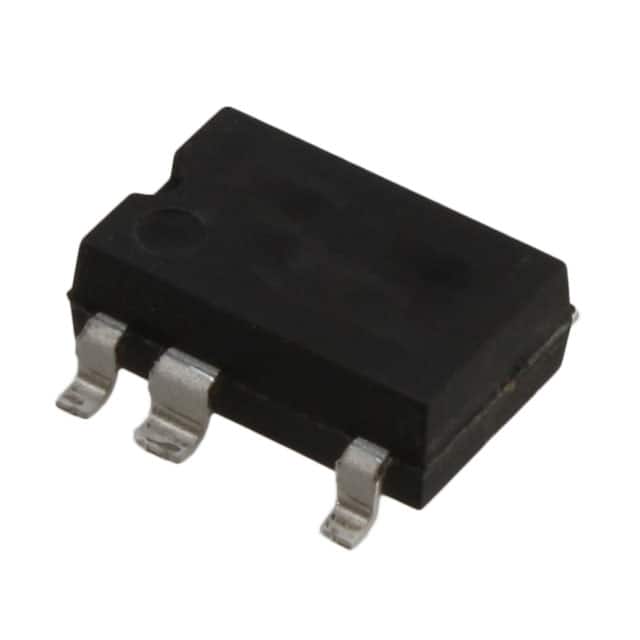
LNK304DN-TL Power Integrations
-
LNK304GN-TL Power Integrations
-
LNK304DG-TL Power Integrations
-
TNY277PN Power Integrations
-
TNY276PN Power Integrations
-
TNY278PN Power Integrations
-
TNY278GN-TL Power Integrations
-
TNY280GN-TL Power Integrations
-
TOP266KG-TL Power Integrations
-
TOP258PN Power Integrations
-
TOP253PN Power Integrations
-
TOP253PNAU Power Integrations

- 1500+ Daily average RFQ Volume

- 20,000.000 Standard Product Unit

- 1800+ Worldwide Manufacturers

- 15,000+ In-stock Warehouse