Power Integrations AC-DC Selection Guide: TinySwitch vs TOPSwitch vs LinkSwitch
Power Integrations AC-DC Selection Guide: TinySwitch vs TOPSwitch vs LinkSwitch
Power Integrations makes six families of integrated AC-DC switchers. For most designs between 5W and 50W, the decision comes down to four families: TinySwitch-III, TinySwitch-4, TOPSwitch-JX, and LinkSwitch-TN2. Each one solves a different problem.
Pick the wrong one and you're either overpaying for features you don't need, or under-spec'ing a supply that trips protection at high line. Here's how to get it right the first time.
This guide walks through the decision step by step - from topology choice through to package selection. All four families are available through ICMASS in production volumes.
Quick Decision: Start Here
Before you dig into datasheets, answer these three questions. They'll rule out 75% of the families immediately.
| Question | If Yes | If No |
|---|---|---|
| Does your design need galvanic isolation? | TinySwitch-III, TinySwitch-4, or TOPSwitch-JX | LinkSwitch-TN2 - skip the transformer entirely |
| Is the output power above 30W? | TOPSwitch-JX (TOP264-271). TinySwitch tops out at 28.5W open frame. | TinySwitch-III or TinySwitch-4 - cheaper, simpler |
| Is this a new design or a drop-in replacement? | New design = TinySwitch-4. Replacing an existing TinySwitch-III = stay with TinySwitch-III for Rev compatibility. | - |
Family Overview
| Family | Series | Power Range | Topology | MOSFET | Freq | Best For |
|---|---|---|---|---|---|---|
| TinySwitch-III | TNY274-280 | 8.5-28.5W | Isolated Flyback | 700V | 132kHz | Cost-sensitive adapters, appliance power supplies, standby rails |
| TinySwitch-4 | TNY284-290 | 8.5-30W | Isolated Flyback | 725V | 132kHz | New designs at 8-30W - better no-load, selectable ILIM |
| TOPSwitch-JX | TOP264-271 | 30-177W | Isolated Flyback | 725V | 66/132kHz | LCD monitors, set-top boxes, industrial supplies, printers |
| LinkSwitch-TN2 | LNK3202-3206 | 63-360mA | Non-Isolated Buck | 725V | 66kHz | Smart meters, IoT sensors, appliance bias supplies, LED drivers |
Family Deep Dive
TinySwitch-III (TNY274-280): The Volume King
TinySwitch-III is the workhorse. Fixed 132kHz, fixed current limit, ON/OFF control - there are no knobs to turn because PI tuned it at the factory. You connect the transformer, the optocoupler, a few passives, and it works.
The trade-off is zero flexibility: the peak current, the frequency, the line thresholds - all locked. Use TinySwitch-III for 10k+ units of a known design where the transformer is already qualified. Not for designs needing field-adjustable current limits or frequency agility.
| Part | Open Frame Power | Adapter Power | RDS(on) | Package |
|---|---|---|---|---|
| TNY274GN-TL | 8.5W | 5W | 15.5Ω | SMD-8C |
| TNY275GN-TL | 11.5W | 8W | 11.2Ω | SMD-8C |
| TNY276GN-TL | 15W | 10W | 8.0Ω | SMD-8C |
| TNY277GN-TL | 19W | 13W | 6.0Ω | SMD-8C |
| TNY278GN-TL | 23W | 16W | 4.8Ω | SMD-8C |
| TNY279GN-TL | 26W | 18W | 3.4Ω | SMD-8C |
| TNY280GN-TL | 28.5W | 20W | 2.6Ω | SMD-8C |
TinySwitch-4 (TNY284-290): The Modern Upgrade
TinySwitch-4 is the direct successor to TinySwitch-III. Same SMD-8C package, same pinout, but with three critical upgrades: 725V MOSFET for extra surge margin, BP/M pin that selects three current limit levels, and no-load consumption cut in half to under 30mW.
If you're spinning a new Rev A board, there's no reason to pick TinySwitch-III over TinySwitch-4 - the price difference at volume is pennies.
| Part | Adapter Power | No-Load | ILIM | Package |
|---|---|---|---|---|
| TNY284DG-TL | 5W | <30mW | BP/M pin | SMD-8C |
| TNY285DG-TL | 8W | <30mW | BP/M pin | SMD-8C |
| TNY286DG-TL | 10W | <30mW | BP/M pin | SMD-8C |
| TNY287DG-TL | 13W | <30mW | BP/M pin | SMD-8C |
| TNY288DG-TL | 16W | <30mW | BP/M pin | SMD-8C |
| TNY289DG-TL | 18W | <30mW | BP/M pin | SMD-8C |
| TNY290DG-TL | 20W | <30mW | BP/M pin | SMD-8C |
TOPSwitch-JX (TOP264-271): When TinySwitch Isn't Enough
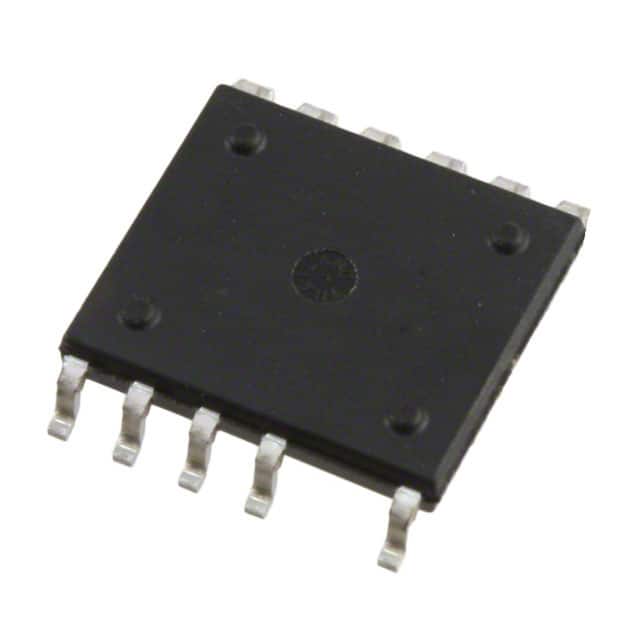
TOPSwitch-JX is the next tier up - different package (eSOP-12B), different pinout, and a full set of programmable pins: V for line OV/UV, X for external current limit programming, F for frequency selection.
It's more complex than TinySwitch but covers the 30-177W range that TinySwitch can't touch. The eSOP-12B exposed pad must be soldered to the PCB for anything above 15W. Rev B re-spins that miss the thermal vias under the pad will hit shutdown under load.
| Part | Open Frame (85-265VAC) | Adapter (230VAC) | Package |
|---|---|---|---|
| TOP264KG-TL | 30W | 30W | eSOP-12B |
| TOP265KG-TL | 57W (VG) | 40W (VG) | eSOP-12B |
| TOP266KG-TL | 71W (VG) | 51W (VG) | eSOP-12B |
| TOP267KG-TL | 103W (VG) | 72W (VG) | eSOP-12B |
| TOP268KG-TL | 132W (VG) | 85W (VG) | eSOP-12B |
| TOP269KG-TL | 159W (VG) | 103W (VG) | eSOP-12B |
| TOP270KG-TL | 177W (VG) | 114W (VG) | eSOP-12B |
Note: VG suffix models require the V-pin connection for the higher power rating. Without the V-pin connected, the IC defaults to lower internal ILIM and the higher power isn't available.
LinkSwitch-TN2 (LNK3202-3206): No Transformer, No Isolation
LinkSwitch-TN2 is the outlier - it's a non-isolated buck converter, not a flyback. No transformer, no optocoupler, no secondary-side reference. The BOM is a single inductor, a freewheeling diode, an output cap, and a feedback resistor divider.
Total external parts count: 12-15 components. Total BOM cost at 1k: under $1.50 including the IC.
The trade-off is no galvanic isolation. The output is referenced to the input neutral. If your product has user-accessible outputs - USB ports, terminals, connectors - LinkSwitch-TN2 is the wrong choice.
But for a smart meter or IoT sensor sealed inside a plastic enclosure, it's half the cost and a quarter the PCB area of a flyback solution.
| Part | ILIM (Standard) | ILIM (Reduced) | RDS(on) | Package |
|---|---|---|---|---|
| LNK3202D-TL | 63mA | 50mA | 32Ω | SO-8C |
| LNK3204D-TL | 120mA | 97mA | 21Ω | SO-8C |
| LNK3205D-TL | 175mA | 140mA | 14Ω | SO-8C |
| LNK3206D-TL | 225mA | 180mA | 10Ω | SO-8C |
BOM Complexity & Cost Comparison
Application Matrix
| Application | Power | Isolation? | Best Family | Recommended Part |
|---|---|---|---|---|
| Smart meter power supply | 2-5W | No (sealed enclosure) | LinkSwitch-TN2 | LNK3206D-TL |
| IoT sensor node | 1-3W | No | LinkSwitch-TN2 | LNK3204D-TL |
| Appliance standby rail | 5-8W | Usually yes | TinySwitch-4 | TNY284DG-TL |
| USB charger (5V/2A) | 10W | Yes (safety required) | TinySwitch-III | TNY276GN-TL |
| Set-top box main supply | 20-30W | Yes | TinySwitch-4 | TNY290DG-TL |
| LCD monitor power supply | 30-50W | Yes | TOPSwitch-JX | TOP265KG-TL |
| Printer power supply | 40-70W | Yes | TOPSwitch-JX | TOP266KG-TL |
| Industrial 24V rail | 50-100W | Yes | TOPSwitch-JX | TOP267KG-TL |
Pin Count & PCB Footprint
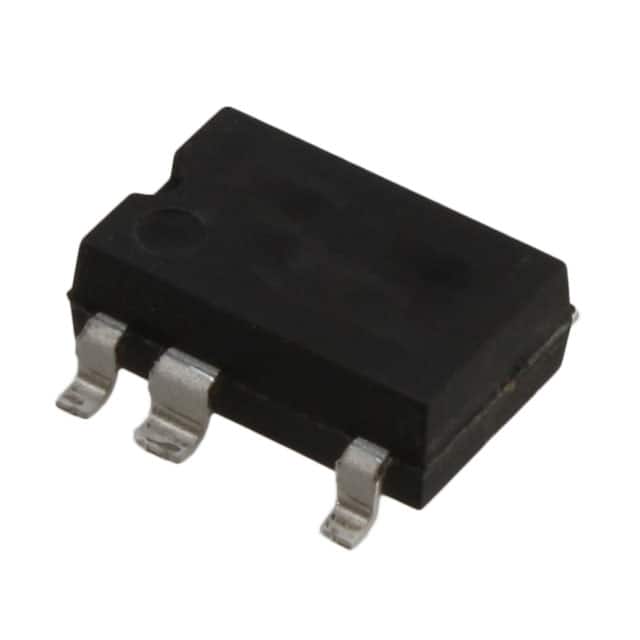
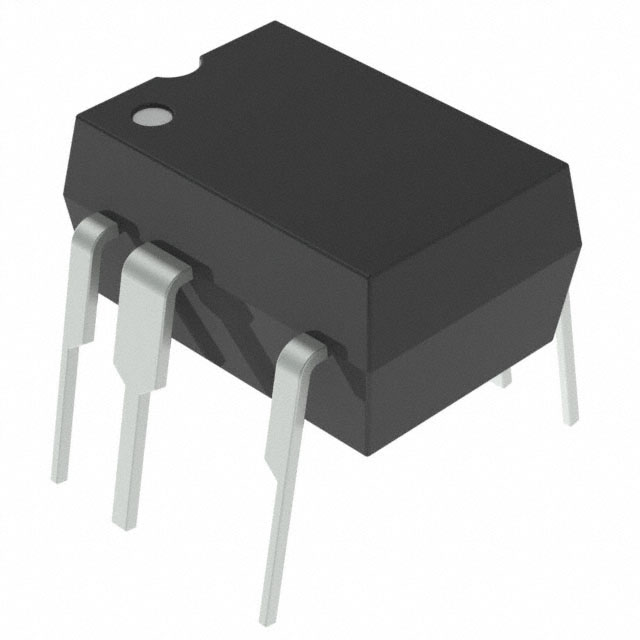
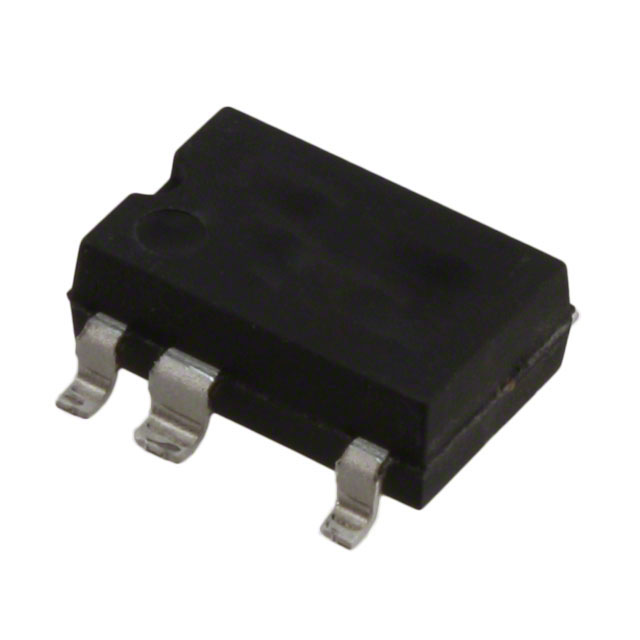
The pin count drives PCB complexity. TinySwitch-III and TinySwitch-4 share the same 7-lead SMD-8C footprint - swap between them without touching the layout. TOPSwitch-JX uses eSOP-12B with 11 pins plus an exposed pad, needing roughly 2x the PCB area for thermal management.
LinkSwitch-TN2 uses SO-8C with 7 active pins and no heatsinking - smallest footprint, simplest layout.
Frequently Asked Questions
Q1: TinySwitch-III vs TinySwitch-4 - which one for a new design?
A: TinySwitch-4, every time. Same SMD-8C package, same pinout, same BOM cost at volume - but you get 725V MOSFET (vs 700V), selectable ILIM through the BP/M capacitor, and under 30mW no-load (vs under 50mW). The only reason to stay with TinySwitch-III is if the design is Rev-locked and you can't change the approved BOM. For any Rev A board, go TinySwitch-4.
Q2: Can I use LinkSwitch-TN2 for a USB charger?
A: No. LinkSwitch-TN2 is non-isolated. USB chargers require galvanic isolation by safety standard (IEC 60950-1 / IEC 62368-1). If the output can be touched by a user, you need a transformer between primary and secondary. Use TinySwitch-III or TinySwitch-4 for any design with user-accessible outputs. But does that mean LinkSwitch-TN2 is only for sealed products? Yes - smart meters, appliance internal bias rails, LED bulb drivers where the entire PCB is enclosed and nobody can touch the output.
Q3: How do I choose between TinySwitch-III power levels?
A: Size for the adapter power rating, not the open-frame rating. The open-frame number assumes free air convection and a specific PCB copper area. In a sealed plastic adapter case, the available power drops by 30-40%.
A TNY279 rated at 26W open frame delivers about 18W in a sealed adapter. For a 20W adapter design, don't use a TNY279 - use a TNY280 and give yourself thermal margin. The extra 50 cents on the BOM pays for itself the first time a unit doesn't come back.
Q4: What's the real difference between 66kHz and 132kHz operation?
A: Transformer size vs EMI. 132kHz (TinySwitch default, TOPSwitch F=SOURCE) lets you use a transformer core about 30% smaller by volume. The trade-off is conducted EMI starts from a higher fundamental - you'll need more filtering to pass EN 55022 Class B. 66kHz (TOPSwitch F=CONTROL) means a larger transformer but the EMI spectrum is easier to manage. Sealed plastic adapters usually run 66kHz. Open-frame industrial supplies where space is tight run 132kHz.
Q5: When does it make sense to step up from TinySwitch to TOPSwitch?
A: Three triggers. One: the power spec exceeds 28.5W open frame - TinySwitch can't deliver more regardless of how good your thermal design is. Two: you need programmable line OV/UV thresholds - TinySwitch's internal thresholds are fixed. Three: you need field-adjustable current limit - TinySwitch-III has a fixed ILIM and TinySwitch-4 has only three preset levels via the BP/M cap. TOPSwitch gives you continuous ILIM adjustment through the X-pin resistor.
Q6: Can I drop a TinySwitch-4 into a TinySwitch-III PCB without any changes?
A: Mostly, but check three things. First, the BP/M capacitor on TinySwitch-4 selects ILIM - your existing 100nF BP cap on TinySwitch-III defaults to standard ILIM on TinySwitch-4, which is usually fine.
Second, the 725V MOSFET has different drain capacitance - the RCD clamp values that worked for 700V may need a small tweak. Third, TinySwitch-4 enters a deeper skip-cycle mode at no-load. If your design has a minimum load requirement, verify it holds regulation at zero load. In our experience, 90% of drop-ins work without BOM changes. Still - test it on the bench before committing to a production run.
Q7: What about InnoSwitch and LinkSwitch-LP?
A: Different segments. InnoSwitch (INN) is PI's premium tier - it integrates secondary-side controller and synchronous rectification into the primary-side package through FluxLink isolation. Higher efficiency, higher cost. Worth evaluating for 45W+ USB-PD designs where efficiency is the primary spec.
LinkSwitch-LP (LNK562-564) is the ultra-low-power predecessor to LinkSwitch-TN2 - max 3W, older process, higher RDS(on). For new low-power designs, LinkSwitch-TN2 replaced it. ICMASS focuses on TinySwitch/TOPSwitch/LinkSwitch-TN2 because those three cover 90% of AC-DC design starts.
Q8: How do I estimate real-world power before building a prototype?
A: Use PI's PI Expert Online tool. It's free, runs in a browser, and generates a complete transformer design plus BOM for any PI part. Enter your input voltage range, output voltage, output current, and enclosure type.
The tool picks the right family and power level, accounting for thermal de-rating. The transformer design includes core size, primary inductance, turns ratio, and winding instructions. It's not perfect - you'll still need a prototype - but it gets you 90% there before you order the first PCB.
Related information

-
LNK304DN-TL Power Integrations
-
LNK304GN-TL Power Integrations
-
LNK304DG-TL Power Integrations
-
TNY277PN Power Integrations
-
TNY276PN Power Integrations
-
TNY278PN Power Integrations
-
TNY278GN-TL Power Integrations
-
TNY280GN-TL Power Integrations
-
TOP266KG-TL Power Integrations
-
TOP258PN Power Integrations
-
TOP253PN Power Integrations
-
TOP253PNAU Power Integrations

- 1500+ Daily average RFQ Volume

- 20,000.000 Standard Product Unit

- 1800+ Worldwide Manufacturers

- 15,000+ In-stock Warehouse