STMicroelectronics VIPER22ADIP-E

- Part No.:
- VIPER22ADIP-E
- Manufacturer:
- STMicroelectronics
- Category:
- AC DC Converters, Offline Switches
- Package:
- 8-DIP (0.300", 7.62mm)
- Datasheet:
-
 VIPER22ADIP-E.pdf
- Description:
- IC OFFLINE SWITCH FLYBACK 8DIP
- Quantity:
-
Unit Price:$0
Ext Price:$0
- Payment:
-

- Shipping:
-


VIPER22ADIP-E Information
- Specifications
- Product Details
- Comparison
- Tags
- Product attributes
- Attribute value
- Manufacturer:
- STMicroelectronics
- Series:
- VIPER™
- Package/Case:
- 8-DIP (0.300", 7.62mm)
- Packaging:
- Tube
- Product Status:
- Active
- Output Isolation:
- Isolated
- Internal Switch(s):
- Yes
- Voltage - Breakdown:
- 730V
- Topology:
- Flyback
- Voltage - Start Up:
- 14.5 V
- Voltage - Supply (Vcc/Vdd):
- 8V ~ 38V
- Duty Cycle:
- -
- Frequency - Switching:
- 60kHz
- Power (Watts):
- 12 W
- Fault Protection:
- Current Limiting, Over Temperature, Over Voltage
- Control Features:
- -
- Operating Temperature:
- -40°C ~ 150°C (TC)
- Grade:
- -
- Qualification:
- -
- Supplier Device Package:
- 8-DIP
- Mounting Type:
- Through Hole
- Datasheet:
-
VIPER22ADIP-E.pdf
VIPER22ADIP-E — 60kHz Offline Flyback Switcher with 730V MOSFET (DIP-8) from STMicroelectronics
The VIPER22ADIP-E is a 60kHz current-mode offline flyback switcher with the controller and a 730V avalanche-rugged MOSFET on one die — the DIP-8 version delivers up to 12W, and it starts itself from the high-voltage rail through an internal current source.
From what we see across Shenzhen lots (2025–2026), the VIPER22A is one of the most heavily counterfeited offline switchers in circulation — we test every lot for startup and switching behavior before it ships.
On real parts the VDD pin sits at 15–18V while running. Fakes often stall at 4.5–7.7V and never enter switching.
What Are the Technical Specifications of VIPER22ADIP-E?
| Parameter | Value |
|---|---|
| Type | Offline flyback switcher (current-mode PWM + power MOSFET) |
| Package | DIP-8 (SO-8 version: VIPER22AS-E) |
| Internal MOSFET | 730V breakdown, avalanche-rugged |
| Switching Frequency | Fixed 60kHz |
| Max Output Power | 12W (DIP-8, 230VAC) / 7W (SO-8, 230VAC) |
| Supply Voltage (VDD) | 8V–38V |
| Startup / Shutdown Threshold | 14.5V on / 8V off (hysteresis) |
| Current Limit | 700mA max drain current (FB shorted to SOURCE) |
| FB Input Range | 0V–1V, defines peak drain current |
| Startup | Internal high-voltage current source from DRAIN |
| Light Load | Automatic burst mode |
| Protections | OVP (hiccup), OCP, OTP, UVLO with hysteresis, auto-restart |
| Operating Temperature | −40°C to +150°C (TC) |
| Feedback | Secondary-side (optocoupler or direct Zener to FB) |
Key numbers that matter: the 60kHz fixed frequency is your transformer design constant. Pick a flyback core for 60kHz and the part locks to it — no frequency jitter to tune.
The 12W ceiling is a 230VAC rating: at 85VAC input, derate roughly 25% and keep the VDD winding happy, or the chip folds back.
But the spec most buyers miss is the internal 730V MOSFET with avalanche ruggedness. Leakage energy from the transformer primary gets absorbed by the MOSFET itself — that's why the BOM can skip the RCD clamp in low-power designs.
When Should You Use (and NOT Use) the VIPER22ADIP-E?
✅ Use VIPER22ADIP-E when:
- You need a 5–12W offline supply with a tiny BOM. Controller, MOSFET, and high-voltage startup all live in one DIP-8. Add a transformer, a couple of caps, and a feedback path — that's the whole supply.
- Standby and auxiliary rails. A 5VSB rail in an appliance, a TV, or a charger adapter is this part's home turf. Burst mode keeps no-load draw low enough for standby regulations.
- Through-hole prototyping or repair. The DIP-8 is socket- and solder-friendly — you can swap it without a hot-air station, which is exactly why repair shops keep it in stock.
- Secondary-side feedback with an optocoupler. Tight regulation is easy: TL431 + PC817 to the FB pin. The FB pin's 0–1V window maps directly to drain-current limiting.
- High-line (230VAC) designs. At 230VAC the part runs at its full 12W; at universal input, design for the derated low-line figure.
❌ Don't use VIPER22ADIP-E when:
- You need more than ~12W. Pushing 20W+ through a VIPER22A burns it out — the forum threads are full of 23W DIY projects that died. Step up to a TO-220-package switcher or an external-MOSFET controller instead.
- You need tight regulation without an optocoupler. Primary-side regulation parts (LinkSwitch-CV class) hold ±5% without the opto; the VIPER22A's direct-Zener feedback drifts with load and temperature.
- Your transformer leakage is severe. The avalanche rating absorbs modest leakage energy, but a sloppy transformer still kills the chip. Keep the snubber or fix the winding.
- Low standby budgets in universal-input designs. At 85–264VAC the burst-mode no-load figure is higher than a dedicated standby IC. Check your regulation limit before committing.
What Are the Alternatives to VIPER22ADIP-E?
| Model | Type | Key Difference | Best For |
|---|---|---|---|
| VIPER22ADIP-E | ST offline switcher, DIP-8 | 12W, 730V MOSFET, 60kHz | 5–12W flyback supplies |
| VIPER12A | ST offline switcher | Pin-compatible, lower power (~8W DIP-8) | Downsizing or second source |
| AP8022 | Analog Power domestic clone | Pin-to-pin VIPER22A, 50–60kHz, full OVP/UVP/OCP | Cost-down, fewer counterfeits |
| AP8012 | Analog Power domestic clone | Pin-to-pin VIPER12A class | Lower-power pin-to-pin swaps |
| LNK304PN | Power Integrations LinkSwitch-TN | Non-isolated buck, no transformer needed | Non-isolated 5–12V aux rails |
The decision in one line: same-power VIPER22A clones (AP8022, AM22A) swap pin-to-pin if the external circuit matches; the VIPER12A drops in only when your power budget shrinks to ~8W. If your rail doesn't need isolation at all, an LNK304-class buck removes the transformer entirely.
DIP-8 pinout: only four functional terminals — pins 1–2 are the MOSFET source (circuit ground), pins 5–8 are the drain (transformer primary). Pin 3 (FB) takes the feedback voltage that sets peak drain current; pin 4 (VDD) is the chip supply, charged at startup by the internal high-voltage current source.
Typical flyback circuit: the 310V DC rail feeds the transformer primary, which connects to the DRAIN pins. The VDD cap on pin 4 is charged by the internal current source at startup, then by an auxiliary winding while running.
The TL431 + PC817 on the secondary drives pin 3 (FB) to regulate the output — the FB voltage maps directly to the peak drain-current limit.
How do you know whether the chip or the transformer is the dead part?
Max output power at 230VAC — why the package matters:
Same die family, three power ceilings. The DIP-8's thermal path is the difference — through-hole pins dump heat into the board far better than an SO-8 footprint. Plan your load budget against the package, not the family name.
But why does the package decide the power ceiling?
What Are the Typical Applications of VIPER22ADIP-E?
Phone and small-device charger adapters (5–10W): the classic duty — a flyback with secondary-side regulation holding 5V or 9V within a couple of percent. The 60kHz fixed frequency keeps the transformer small enough to fit in the adapter case.
Standby and 5VSB rails in appliances: TVs, set-top boxes, washing machine control boards — the main supply shuts down and the VIPER22A keeps the standby rail alive. Burst mode trims the no-load draw so the board meets standby power limits.
Auxiliary supplies in motor and industrial control: a 12V rail for relay coils or gate drive, derived from a 310V DC bus. One chip replaces a bulky linear supply and drops the board's heat load.
LED driver boards and smart-home modules: non-critical lighting rails and IoT power sections where the small BOM and through-hole form factor make assembly and rework easy. Keep the current-sense design honest — a wrong sense resistor is a classic way to cook the chip.
Why Buy VIPER22ADIP-E from ICMASS?
Every lot tested for startup and switching behavior. Because the VIPER22A is a counterfeit magnet, we batch-verify VDD startup and switch-on before shipping. A fake part typically idles at a few volts on pin 4 and never produces a gate signal — that's a test we can run in seconds.
Cross-reference support for the offline switcher family. Not sure whether your board wants a VIPER22A, a VIPER12A, or a domestic clone like the AP8022? Send us your power budget, input range, and feedback topology — we'll tell you which part drops into the footprint.
BOM consolidation for power boards. The same product usually carries the switcher, the feedback TL431, an optocoupler, and rectifiers. One shipment from Shenzhen covers the whole power section.
Same-day dispatch, 5–10 days worldwide. Orders before 15:00 CST ship same day via DHL or FedEx. For volume orders we source directly from the ST production line.
Frequently Asked Questions About VIPER22ADIP-E
Q1: The chip explodes when I power up a repaired supply — why?
A: The most common cause is a fusible resistor replaced with a wire jumper. Repair threads repeatedly show a dead supply whose primary fuse or fusible resistor was bridged with wire — the next power-up kills the VIPER22A. Replace the fusible part with the correct value and add a series lamp limiter when testing.
Q2: VDD sits at 7V and the supply never starts — fake chip or circuit fault?
A: On a good part VDD runs at 15–18V; a stuck-low VDD points to the supply diode, the VDD capacitor, or a counterfeit chip. Check the rectifier diode feeding pin 4 and the electrolytic first, then suspect the chip. Fakes are common enough that swapping in a known-good part is a legitimate diagnostic step.
Q3: The 12V rail reads 37V — what broke?
A: The feedback loop is dead — the chip is running at maximum current with no regulation. Typical culprits: a shorted Zener (direct-feedback designs), a failed PC817 optocoupler, a shorted TL431, or a feedback resistor that drifted far off value. One repair thread traced a 33V output to a 220Ω resistor that had drifted to 85kΩ.
Q4: Output voltage jumps around and the LED flashes — what's failing?
A: Check the electrolytic on pin 4 (VDD) — leakage here makes the chip repeatedly start and stop. This is one of the most repeated fixes in VIPER22A repair threads: a leaky VDD cap causes the output to pulse and the load to flash. Replace it before touching the chip.
Q5: How many watts can the DIP-8 really deliver?
A: 12W at 230VAC, less at low line — roughly 25% derated at 85VAC. The rating is package- and input-dependent. DIY builds pushing 20W+ through it burn out; step up to a higher-power switcher or an external-MOSFET design for those loads.
Q6: Can I replace a VIPER22A with a VIPER12A?
A: Pin-compatible, but only if your power budget fits — the VIPER12A delivers about 8W (DIP-8) against the 22A's 12W. Same package and pin arrangement, lower current limit. If the design was marginal at 22A, the 12A will overheat and fold back.
Q7: Does the AP8022 drop in without PCB changes?
A: It's marketed pin-to-pin for the VIPER22A, but verify the external circuit and your power budget first. The AP8022 family runs 50–60kHz with full OVP/UVP/OCP and is reported to have fewer counterfeits in circulation — a real advantage in high-volume sourcing. Confirm the transformer matches the switching frequency before committing.
Q8: New chip in, still no output — what else should I check?
A: Work the loop: input rail, transformer, secondary diodes, and the feedback path. Check the DC rail reaches ~310V, the primary winding is continuous, the secondary rectifier isn't shorted, and the startup components feeding VDD are intact. One DVD-player repair ended up needing the transformer rewound — suspect magnetics when everything else tests fine.
Q9: How do I spot a counterfeit VIPER22A before building with it?
A: Test the startup voltage and switching behavior — fakes often stall below 10V on VDD and never enter switching. A parts tester or a bench supply on pin 4 reveals the difference in seconds. In production, we test every lot the same way before shipping; the same check catches re-marked and fake parts.
| Image |

|
|
| Part Number | VIPER22ADIP-E | VIPER22ADIP |
| Manufacturer | STMicroelectronics | STMicroelectronics |
| Series | VIPER™ | VIPER™ |
| Package/Case | 8-DIP (0.300", 7.62mm) | 8-DIP (0.300", 7.62mm) |
| Packaging | Tube | Tube |
| Product Status | Active | Obsolete |
| Output Isolation | Isolated | Isolated |
| Internal Switch(s) | Yes | Yes |
| Voltage - Breakdown | 730V | 730V |
| Topology | Flyback | Flyback |
| Voltage - Start Up | 14.5 V | 14.5 V |
| Voltage - Supply (Vcc/Vdd) | 8V ~ 38V | 8V ~ 38V |
| Duty Cycle | - | - |
| Frequency - Switching | 60kHz | 60kHz |
| Power (Watts) | 12 W | 12 W |
| Fault Protection | Current Limiting, Over Temperature, Over Voltage | Current Limiting, Over Temperature, Over Voltage |
| Control Features | - | - |
| Operating Temperature | -40°C ~ 150°C (TC) | -40°C ~ 150°C (TC) |
| Grade | - | - |
| Qualification | - | - |
| Supplier Device Package | 8-DIP | 8-DIP |
| Mounting Type | Through Hole | Through Hole |
User Guide
- Purchase & Inquiry
- Package
- Shipping Information
- Customer Review
You may place an order without registering to IC-MAX.COM
We strongly suggest you sign in before purchasing as you can track your order in real time.
For your convenience, we accept multiple payment methods in USD, including PayPal, Credit Card, and wire transfer.
RFQ (Request for Quotations)
It is recommended to request for quotations to get the latest prices and inventories about the part.
Our sales will reply to your request by email within 24 hours.
1. You'll receive an order information email in your inbox. (Please remember to check the spam folder if you didn't hear from us).
2. Since inventories and prices may fluctuate to some extent, the sales manager is going to reconfirm the order and let you know if there are any updates.
-
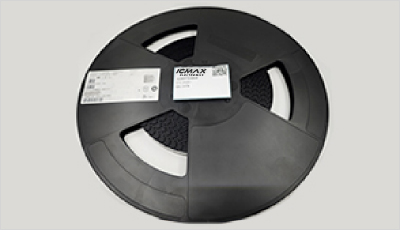
- Step1:Prepare product
-
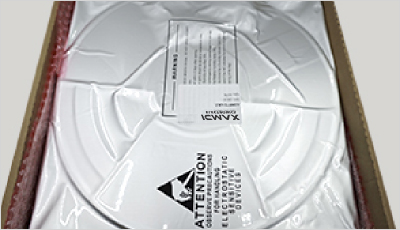
- Step2:Vacuum packaging
-
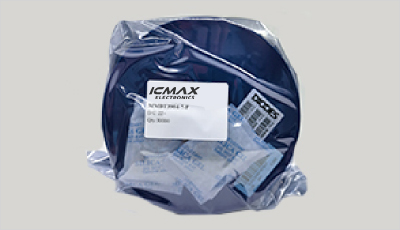
- Step3:Anti-static bag
-
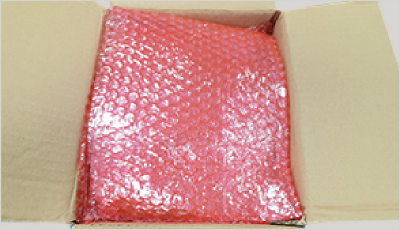
- Step4:Individual package
-
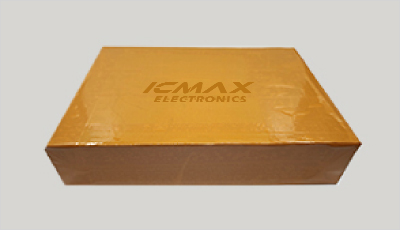
- Step5:Packaging box
-
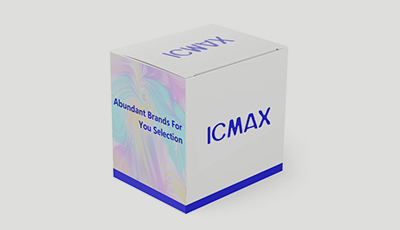
- Step6:Barcode shipping label
Shipping starts at $40, but some countries will exceed $40. For example (South Africa, Brazil, India, Pakistan, Israel, etc.)
The basic freight (for package ≤0.5kg or corresponding volume) depends on the time zone and country.
Currently, our products are shipped through DHL, FedEx, SF, and UPS.
Delivery TimeOnce the goods are shipped, estimated delivery time depends on the shipping methods you chose:
FedEx International, 5-7 business days.
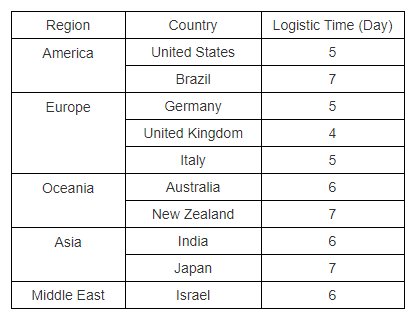
The following are some common countries' logistic time.
- Hot Sale
- Related Categories
- Include Parts
- Popular Search
- Voltage Regulators - Linear, Low Drop Out (LDO) Regulators(66836)
- Voltage Regulators - Linear Regulator Controllers(325)
- Voltage Regulators - Linear + Switching(1473)
- Voltage Regulators - DC DC Switching Regulators(35756)
- Voltage Reference(8428)
- V/F and F/V Converters(139)
- Thermal Management(515)
- Supervisors(41287)
- Special Purpose Regulators(4820)
- RMS to DC Converters(144)
The following parts include "VIPER22ADIP-E" in Silicon Labs VIPER22ADIP-E.
- Part Number
- Manufacturer
- Package
- Description
- LNK6407D-TL Power Integrations 8-DIP (0.300", 7.62mm) IC OFFLINE SWITCH FLYBACK 8DIP
- LNK3204D-TL Power Integrations 8-DIP (0.300", 7.62mm) IC OFFLINE SWITCH FLYBACK 8DIP
- SR10LG-G Microchip Technology 8-DIP (0.300", 7.62mm) IC OFFLINE SWITCH FLYBACK 8DIP
- TNY285DG-TL Power Integrations 8-DIP (0.300", 7.62mm) IC OFFLINE SWITCH FLYBACK 8DIP
- LNK304DN-TL Datasheet, Price, Stock & Alternatives | ICMASS Power Integrations 8-DIP (0.300", 7.62mm) IC OFFLINE SWITCH FLYBACK 8DIP
- TNY285KG-TL Power Integrations 8-DIP (0.300", 7.62mm) IC OFFLINE SWITCH FLYBACK 8DIP
- LNK3206D-TL Power Integrations 8-DIP (0.300", 7.62mm) IC OFFLINE SWITCH FLYBACK 8DIP
- LNK623DG-TL Power Integrations 8-DIP (0.300", 7.62mm) IC OFFLINE SWITCH FLYBACK 8DIP
- TNY286PG Power Integrations 8-DIP (0.300", 7.62mm) IC OFFLINE SWITCH FLYBACK 8DIP
- LNK624DG-TL Power Integrations 8-DIP (0.300", 7.62mm) IC OFFLINE SWITCH FLYBACK 8DIP
The following parts are popular search parts in Test and Measurement.
Inventory:2,055
Please send an inquiry. Send us your inquiry, and we will respond immediately.

- 1500+ Daily average RFQ Volume

- 20,000.000 Standard Product Unit

- 1800+ Worldwide Manufacturers

- 15,000+ In-stock Warehouse