Power Integrations TOP225YN

- Part No.:
- TOP225YN
- Manufacturer:
- Power Integrations
- Category:
- AC DC Converters, Offline Switches
- Package:
- TO-220-3
- Datasheet:
-
 TOP225YN.pdf
- Description:
- IC OFFLINE SW MULT TOP TO220-3
- Quantity:
-
Unit Price:$0
Ext Price:$0
- Payment:
-

- Shipping:
-


TOP225YN Information
- Specifications
- Product Details
- Comparison
- Tags
- Product attributes
- Attribute value
- Manufacturer:
- Power Integrations
- Series:
- TOPSwitch®-II
- Package/Case:
- TO-220-3
- Packaging:
- Tube
- Product Status:
- Not For New Designs
- Output Isolation:
- Isolated
- Internal Switch(s):
- Yes
- Voltage - Breakdown:
- 700V
- Topology:
- Boost, Buck, Flyback, Forward
- Voltage - Start Up:
- -
- Voltage - Supply (Vcc/Vdd):
- -
- Duty Cycle:
- 67%
- Frequency - Switching:
- 100kHz
- Power (Watts):
- 100 W
- Fault Protection:
- Current Limiting, Over Temperature
- Control Features:
- -
- Operating Temperature:
- -40°C ~ 150°C (TJ)
- Grade:
- -
- Qualification:
- -
- Supplier Device Package:
- TO-220-3
- Mounting Type:
- Through Hole
- Datasheet:
-
TOP225YN.pdf
TOP225YN - TOPSwitch-II Offline PWM Switch, 60W, TO-220, by Power Integrations
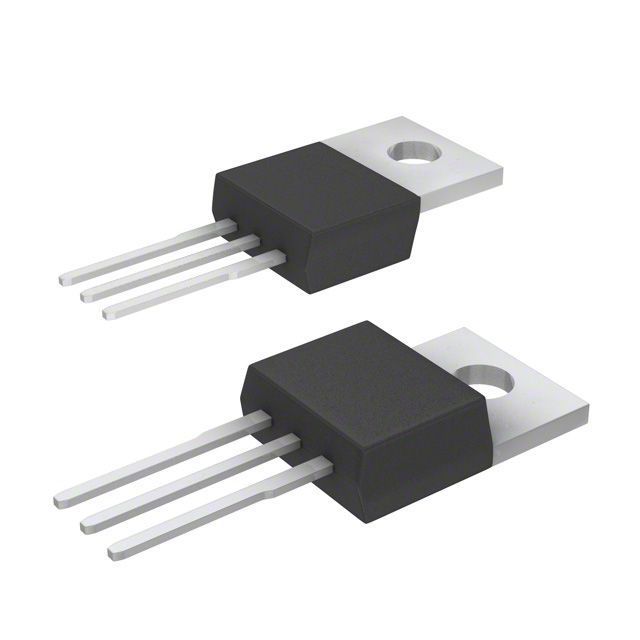
The TOP225YN is the 60W member of Power Integrations' TOPSwitch-II family. Same three pins as the TOP224YN: Drain, Source, Control. Same 100 kHz oscillator. Same auto-restart protection. But the MOSFET inside is bigger - 3.9Ω Rds(on) at 25°C versus 5.2Ω on the TOP224. That lower resistance buys you 60W from universal 85–265 VAC input, or 100W from a fixed 110/230 VAC line. The classic TO-220-3 through-hole package. Available in tube (TOP225YN) or tape and reel (TOP225YN) for automated assembly - same chip either way.
This is the chip you reach for when the TOP224YN is running too hot. If your 45W design has the TOP224's heatsink at 85°C and you need another 15W of headroom without redesigning the whole supply, the TOP225YN drops into the same footprint with the same pinout and gives you exactly that. The transformer and output diode need to be rated for the extra power - they usually aren't in a design that was optimized around the TOP224 - but the controller side of the circuit stays the same. Same Control pin capacitor, same feedback network, same snubber topology.
Like the rest of the TOPSwitch-II family, the TOP225YN is not recommended for new designs. Power Integrations wants you using TOPSwitch-JX or TOPSwitch-HX. But if you're repairing industrial power supplies, satellite receiver boards, or audio amplifier rails that were designed around the TOP225, you need the TOP225. The newer JX parts are not drop-in replacements - different pin functions, different frequency, different feedback behavior. For repair and maintenance, the TOP225YN is what you order.
What Is the TOP225YN and How Does It Work?
The TOPSwitch-II is a current-mode PWM controller with the power switch integrated on the same die. An internal oscillator runs at 100 kHz (90–110 kHz). At the start of each cycle, the MOSFET turns on and current ramps up in the transformer primary. When the current reaches the threshold set by the Control pin feedback, the MOSFET turns off. The energy stored in the core transfers to the secondary through the output rectifier. Maximum duty cycle is clamped at 67%, which prevents transformer saturation during startup and overload. The TOP225YN supports flyback, forward, buck, and boost topologies, though flyback is where you'll find it 95% of the time.
The Control pin is the brain of the whole thing. An internal shunt regulator holds it at 5.8V. The current drawn from this pin directly sets the MOSFET duty cycle - pull more current, the duty cycle shrinks. The feedback usually comes from a TL431 and optocoupler on the secondary side: output voltage goes up → TL431 drives the optocoupler harder → optocoupler pulls more current from the Control pin → duty cycle drops → output comes back down. It's the same feedback architecture used in virtually every isolated flyback supply built since the 1990s.
The auto-restart protection is what keeps a TOP225YN alive through output shorts and feedback failures. When the Control pin voltage collapses below the internal threshold, the chip shuts down, waits for the internal startup current source to recharge the Control pin bypass capacitor, and tries again. This repeats at about 1–2 Hz - the characteristic "hiccup" mode you can hear as a faint tick from the transformer. The thermal shutdown is latching, not auto-restart: once the die hits ~140°C, the chip turns off and stays off until you cycle input power. At 60W, a thermal runaway is dangerous enough to deserve a hard shutdown rather than a retry.
What Are the Specifications of TOP225YN?
| Parameter | Value | Notes |
|---|---|---|
| Manufacturer | Power Integrations | TOPSwitch-II family (TOP221–TOP227) |
| Topology Support | Flyback, Forward, Buck, Boost | Flyback is the most common application |
| Internal MOSFET Rds(on) | 3.9Ω typ @ 25°C | 6.4Ω typ @ 100°C |
| MOSFET Breakdown Voltage | 700V min | At 25°C |
| Peak Drain Current Limit | 2.0A typ | Internally limited; TOP224 is 1.5A |
| Switching Frequency | 100 kHz typ | 90–110 kHz range |
| Max Duty Cycle | 67% | Internally clamped |
| Min Duty Cycle | 1.7% | Below this, cycle skipping occurs |
| Output Power @ 85–265 VAC | 60W (open frame) | Universal input, flyback topology |
| Output Power @ Fixed Input | 100W (100/115/230 VAC) | Single-voltage input design |
| Control Pin Voltage | 5.8V regulated | Internal shunt regulator |
| Control Pin Supply Current | 1.4 mA typ | During normal operation |
| Startup Current | 0.8 mA typ @ Vcontrol=0V | Internal high-voltage current source from DRAIN |
| Efficiency | Up to 90% | Depends on topology and design optimization |
| Protection | OCP (cycle-by-cycle), OTP (latching), auto-restart | Thermal shutdown ~140°C; latch until power cycle |
| Package | TO-220-3 | Through-hole; tab = Source (connect to heatsink) |
| θJA | ~60 °C/W (no heatsink) | With heatsink: θJC = 2–4 °C/W |
| Junction Temp | -40°C to +150°C | Latching thermal shutdown at ~140°C typ |
| Status | Not recommended for new designs | Use TOPSwitch-JX/HX for new projects |
Numbers That Actually Matter in a Design
- The 60W universal-input rating needs a real heatsink. At 60W output with 85% efficiency, the chip dissipates about 10.6W. With θJA of 60 °C/W and no heatsink, that's a 636°C temperature rise - the chip hits thermal shutdown in under a second. You need a finned aluminum extrusion. Do the math: target Tj = 90°C for reliability, 40°C ambient, so you need θJA_total ≤ (90−40)/10.6 = 4.7 °C/W. With θJC around 2–4 °C/W, the heatsink needs θSA of 0.7–2.7 °C/W. That's a substantial heatsink - roughly 50×50×25mm finned extrusion with natural convection. A clip-on won't cut it. The TO-220 tab is at Source potential (not ground), so you need a silicone pad or mica washer plus thermal grease between the tab and a grounded heatsink.
- The lower Rds(on) is the whole reason to pick this over the TOP224. At 25°C: 3.9Ω vs 5.2Ω for the TOP224 - 25% lower. At 100°C: 6.4Ω vs 8.6Ω - 26% lower. Conduction losses are I²R, so at the same current, the TOP225YN dissipates about 25% less heat in the MOSFET. In a 45W design where the TOP224 is running at Tj=100°C, dropping in a TOP225YN brings Tj down to about 85°C. That's the difference between a supply that runs for 10 years and one that cooks its electrolytics in 2. But if you push the TOP225 to its full 60W rating, the absolute dissipation is higher than the TOP224 at 45W - the lower Rds(on) lets you go to higher power, it doesn't make the same power level magically cooler.
- The Control pin capacitor is still 47 μF, same as every other TOPSwitch-II. 47 μF electrolytic, low ESR, 10V or higher. Too small (<10 μF) and the internal 5.8V regulator can't filter switching noise, causing erratic duty cycle. Too large (>100 μF) and startup time stretches out: the internal current source provides only ~0.8 mA, so charging 100 μF to 5.8V takes (5.8 × 100 μF) / 0.8 mA = 725 ms. That's a noticeable delay. Place this cap as close as physically possible to the Control and Source pins. Power Integrations app note AN-57 covers the details.
- The output rectifier diode must be ultra-fast recovery. At 100 kHz, a standard recovery diode like 1N4007 cannot turn off fast enough. The reverse recovery current overheats the diode in seconds, it shorts, and the secondary becomes a dead short across the output. The TOP225 drives into it until auto-restart kicks in, and eventually the MOSFET fails drain-to-source short. We see this failure cascade constantly in repair work. Use UF4007, MUR460, or BYV27 series for the output rectifier. Someone substituting a 1N4007 because "same voltage, same current" accounts for a significant fraction of TOPSwitch field failures.
- At 60W, snubber design stops being optional and starts being critical. The 700V MOSFET has headroom above the rectified 340V DC bus. But the transformer's leakage inductance creates turn-off voltage spikes on the drain that scale with current - and at 60W you're switching more current than at 45W. The RCD snubber (resistor + capacitor + ultra-fast diode across the primary) clamps these spikes. At 60W, the snubber resistor dissipates real power - use a 2W rated part, not a quarter-watt. The snubber diode needs to handle the peak current and switch fast. A UF4007 works for most designs; at higher power, consider a BYV26C. Check the snubber resistor temperature after 30 minutes of full-load operation. If it's too hot to touch, your snubber is dissipating too much power, which means your transformer has too much leakage inductance.
What Is TOP225YN Used For?
Higher-Power AC-DC Adapters and Power Bricks (45–60W)
The TOP225YN's 60W universal-input rating covers laptop adapters (19V/3.16A), multi-port USB-C chargers, and industrial power bricks. This is the power range where TOPSwitch-II was the default choice for over a decade before newer families took over. The TO-220 package bolts directly to the adapter's aluminum case for heatsinking, and at 60W with good thermal design, the case itself serves as the heatsink.
Set-Top Box and TV Main Power Supplies
Satellite receivers, DVRs, and CRT TVs used the TOP225YN for the main power rail - not just standby. A typical satellite receiver needs 5V at 2A for the digital logic, 12V at 1A for the LNB and motor, and maybe 30V for the tuner. That's 40–50W total, right in the TOP225YN's sweet spot. The 100 kHz switching keeps the transformer size reasonable for the cramped enclosure of a set-top box.
Audio Amplifier Power Rails
Class AB audio amplifiers in the 40–80W range use the TOP225YN for their power supply. A stereo amplifier delivering 2×30W into 8Ω needs roughly ±35V rails at about 2A total - call it 70W from the supply. The flyback topology provides isolated rails with good regulation for audio. The 100 kHz switching is above the audio band, though careful grounding and layout are essential to keep switching harmonics out of the signal path. The TOPSwitch-II's current-mode control provides better audio PSRR than older voltage-mode supplies because it responds to load changes within a single switching cycle.
Industrial Control and Factory Automation Power
PLC power supplies, motor driver bias rails, and sensor power distribution in factory environments. The TOP225YN's 85–265 VAC universal input means the same design works on 110V (US/Japan) and 220V (China/Europe) factory floors without a range switch. The latching thermal shutdown is the right behavior in an industrial setting - if the supply overheats, you want it to stay off until someone investigates, not keep auto-restarting into a fault.
LED Driver Power Stages
High-power LED arrays (80–120W of LEDs) use the TOP225YN configured for constant-current output. The TL431 feedback loop senses current across a shunt resistor instead of voltage. At 90% efficiency and 100W output on fixed 230 VAC input, the TOP225YN handles the power with margin. For outdoor LED floodlights and stadium lighting running on 220–240V mains, this is a common architecture.
TOP225YN vs TOP224YN vs TOP227YN - Which TOPSwitch-II for Your Power Level?
| Parameter | TOP224YN | TOP225YN | TOP227YN |
|---|---|---|---|
| Max Power (85–265 VAC) | 45W | 60W | 90W |
| Max Power (Fixed Input) | 75W | 100W | 150W |
| Rds(on) @ 25°C | 5.2Ω typ | 3.9Ω typ | 2.6Ω typ |
| Rds(on) @ 100°C | 8.6Ω typ | 6.4Ω typ | 4.3Ω typ |
| Peak Drain Current | 1.5A typ | 2.0A typ | 2.7A typ |
| Switching Frequency | 100 kHz | 100 kHz | 100 kHz |
| Max Duty Cycle | 67% | 67% | 67% |
| Pin Count | 3 (TO-220) | 3 (TO-220) | 3 (TO-220) |
| Pinout | Identical | Identical | Identical |
| Status | Not for new designs | Not for new designs | Not for new designs |
| Price Position | $$ | $$ | $$$ |
Pick TOP224YN when: Your output is 30–45W universal input. You're repairing equipment that originally used a TOP224. The heatsink and transformer are already sized for 45W. This is the most common TOPSwitch-II part by volume and the one you'll find in most consumer electronics from the 2000s.
Pick TOP225YN when: You need 45–60W universal input. Your TOP224 design is hitting its thermal limit and you need headroom. The 25% lower Rds(on) means 25% less conduction loss at the same current - if your TOP224 heatsink is at 95°C, the TOP225YN at the same power level will run about 10–15°C cooler. Just verify that your transformer and output diode are rated for the higher power before cranking up the output.
Pick TOP227YN when: You need 60–90W universal input. This is the highest-power member of the TOPSwitch-II family in the TO-220 package. At 90W, you're into serious thermal management territory - forced air cooling or a large external heatsink. For new designs at this power level, consider TOPSwitch-JX or a two-switch forward converter instead. The TOP227YN makes sense for repair and maintenance of existing high-power equipment.
Important: These three are pin-compatible but going up in power means more than just swapping the IC. The transformer's primary inductance, core size, and winding gauge need to handle the higher peak current. The output rectifier's current rating increases. The input bulk capacitor ripple current goes up. The snubber dissipates more power. A TOP225YN dropped into a TOP224-optimized design will work at the same power level (with better thermals) but pushing it to 60W without re-verifying the rest of the design is asking for field failures. Run the numbers through PI Expert before committing to a power upgrade.
Frequently Asked Questions About TOP225YN
Q1: What's the difference between TOP225YN and TOP225YN-TL?
A: The "-TL" suffix indicates tape and reel packaging for automated pick-and-place assembly. The part itself is identical - same die, same package, same electrical specs. If you're hand-soldering or doing repair work, the packaging suffix doesn't matter. Order the base part number TOP225YN if you want tubes; order TOP225YN if your assembly line needs tape and reel. In practice, most distributors stock both packaging options under slightly different SKUs, and the pricing is usually the same.
Q2: My TOP225YN power supply outputs a low voltage and makes a ticking sound. What's wrong?
A: It's in auto-restart (hiccup) mode. The chip detects a fault and cycles on and off at 1–2 Hz to protect itself. The ticking is the transformer energizing and de-energizing during each restart attempt. Check in this order: (1) Output rectifier diode - if shorted, the secondary is a dead short. Must be ultra-fast recovery, not a standard diode. (2) Output capacitors - high ESR or shorted caps trigger the same protection. (3) Feedback optocoupler and TL431 - if the feedback loop is open, the Control pin runs away and auto-restart kicks in. The classic repair cascade: output cap dries out → ripple increases → rectifier overheats and shorts → TOP225 blows. When replacing the TOP225, always check the output diode and caps or you'll be replacing it again next week.
Q3: Can I replace a TOP224YN with a TOP225YN?
A: Mechanically, yes - same TO-220-3 package, same pinout. Electrically, at the same power level, yes - the TOP225YN will run cooler because of its lower Rds(on). If you want to increase the output power beyond the original design's rating, you need to verify: the transformer's primary inductance and core size can handle the higher peak current (2.0A vs 1.5A), the output rectifier is rated for the higher current, the output capacitors have adequate ripple current rating, the input bulk capacitor can supply the higher DC bus current, and the snubber resistor's power rating is sufficient for the increased snubber dissipation. The feedback network (optocoupler + TL431) stays the same. The Control pin capacitor stays at 47 μF.
Q4: What Control pin capacitor value should I use with the TOP225YN?
A: 47 μF electrolytic, low ESR, 10V or higher rating. This is the standard value across the entire TOPSwitch-II family (per PI app note AN-57). Minimum practical: 10 μF. Below that, the internal 5.8V regulator can't filter switching noise adequately and the duty cycle becomes erratic. Maximum practical: 100 μF. Above that, startup delay becomes excessive because the internal ~0.8 mA current source takes too long to charge the cap. Place this capacitor as close as physically possible to the Control and Source pins. A low-ESR electrolytic is fine; a ceramic is not recommended because the higher ESR of the electrolytic actually helps damp the control loop.
Q5: Does the TOP225YN need a snubber circuit?
A: Yes, absolutely. At 60W, more so than the TOP224. The transformer's leakage inductance creates voltage spikes on the MOSFET drain during turn-off that can exceed the 700V breakdown voltage. The RCD snubber (resistor + capacitor + ultra-fast diode across the primary winding) clamps these spikes. At 60W, use a 1–2W rated snubber resistor - a quarter-watt part will cook. Typical values: 100–220 pF capacitor rated 1 kV, 47–100 kΩ resistor (1–2W), and an ultra-fast diode (UF4007 or BYV26C). Check the snubber resistor temperature after 30 minutes of full-load operation. If it's too hot to touch, the snubber dissipation is too high, which usually means the transformer has excessive leakage inductance. Confirmed across Power Integrations community forum discussions and EEVblog repair threads.
Q6: Why does my replacement TOP225YN keep failing after a few days?
A: The replacement chip is the victim, not the cause. Four things to check, in order: (1) Output rectifier diode - if it's a standard recovery type (1N4007) instead of ultra-fast, it overheats, shorts, and takes out the TOP225. (2) RCD snubber - open resistor, shorted capacitor, or wrong diode lets drain spikes exceed 700V, avalanching the MOSFET. (3) Control pin capacitor - a dried-out or undersized cap causes erratic switching. (4) Counterfeit TOP225YN - sanded and re-marked TO-220 packages with 2–5× the real Rds(on). Genuine Power Integrations parts have distinctive dot indentations on the package face. If you bought the part at an unusually low price, it's probably fake. The failure signature of a counterfeit TOP225 at moderate load is a cracked package and a drain-source short. This is well-documented in the repair community.
Q7: Can I use the TOP225YN in a new design today?
A: Power Integrations says no - the TOPSwitch-II family is "Not Recommended for New Designs." For a new project at the 60W level, use TOPSwitch-JX (TOP264–TOP271) which adds frequency jitter for lower EMI, EcoSmart for lower standby power, and more package options. If you're maintaining an existing design that already uses the TOP225YN or repairing equipment that contains one, the part is still widely available and will be for the foreseeable future. The TOPSwitch-II has been in continuous production for over 25 years and has a massive installed base. Just don't start a new PCB layout with it unless you have a specific, well-justified reason.
Pricing & Availability
| Parameter | Details |
|---|---|
| Part Number | TOP225YN (Tube) / TOP225YN-TL (Tape & Reel) |
| Package | TO-220-3 |
| Condition | New, genuine Power Integrations - batch-tested for Rds(on) verification |
| Lead Time | In stock, ship from Shenzhen |
| Packing | Tape & Reel (-TL) or Tube (50 pcs/tube) |
Contact ICMASS for current pricing and volume quotes. We stock genuine Power Integrations TOPSwitch-II parts with Rds(on)-verified batches. The full TOPSwitch-II family (TOP221 through TOP227) available, plus newer TOPSwitch-JX and TOPSwitch-HX for new designs. If you're repairing equipment with repeated TOP225 failures, ask about our repair-kit bundles (TOP225YN + UF4007 output diode + 47 μF/50V Control pin capacitor + snubber components) - one order, everything you need to fix it right the first time.
| Image |
|
| Part Number | TOP225YN |
| Manufacturer | Power Integrations |
| Series | TOPSwitch®-II |
| Package/Case | TO-220-3 |
| Packaging | Tube |
| Product Status | Not For New Designs |
| Output Isolation | Isolated |
| Internal Switch(s) | Yes |
| Voltage - Breakdown | 700V |
| Topology | Boost, Buck, Flyback, Forward |
| Voltage - Start Up | - |
| Voltage - Supply (Vcc/Vdd) | - |
| Duty Cycle | 67% |
| Frequency - Switching | 100kHz |
| Power (Watts) | 100 W |
| Fault Protection | Current Limiting, Over Temperature |
| Control Features | - |
| Operating Temperature | -40°C ~ 150°C (TJ) |
| Grade | - |
| Qualification | - |
| Supplier Device Package | TO-220-3 |
| Mounting Type | Through Hole |
User Guide
- Purchase & Inquiry
- Package
- Shipping Information
- Customer Review
You may place an order without registering to IC-MAX.COM
We strongly suggest you sign in before purchasing as you can track your order in real time.
For your convenience, we accept multiple payment methods in USD, including PayPal, Credit Card, and wire transfer.
RFQ (Request for Quotations)
It is recommended to request for quotations to get the latest prices and inventories about the part.
Our sales will reply to your request by email within 24 hours.
1. You'll receive an order information email in your inbox. (Please remember to check the spam folder if you didn't hear from us).
2. Since inventories and prices may fluctuate to some extent, the sales manager is going to reconfirm the order and let you know if there are any updates.
-
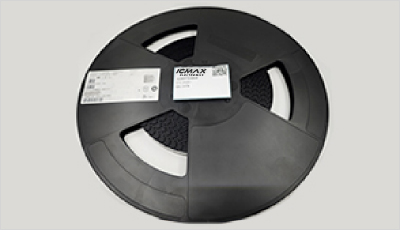
- Step1:Prepare product
-
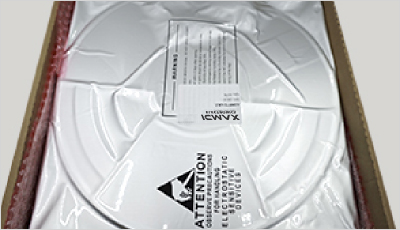
- Step2:Vacuum packaging
-
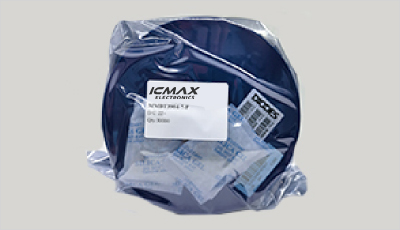
- Step3:Anti-static bag
-
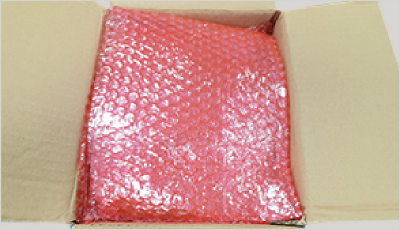
- Step4:Individual package
-
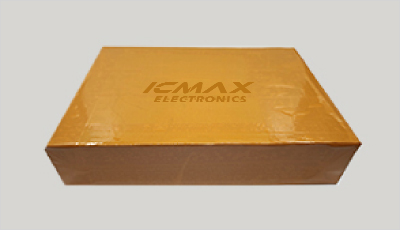
- Step5:Packaging box
-
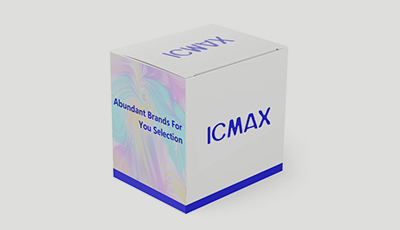
- Step6:Barcode shipping label
Shipping starts at $40, but some countries will exceed $40. For example (South Africa, Brazil, India, Pakistan, Israel, etc.)
The basic freight (for package ≤0.5kg or corresponding volume) depends on the time zone and country.
Currently, our products are shipped through DHL, FedEx, SF, and UPS.
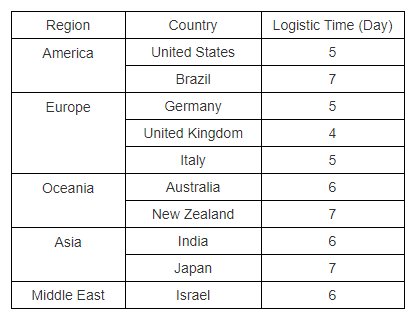
Delivery TimeOnce the goods are shipped, estimated delivery time depends on the shipping methods you chose:
FedEx International, 5-7 business days.
The following are some common countries' logistic time.
- Hot Sale
- Related Categories
- Include Parts
- Popular Search
- Voltage Regulators - Linear, Low Drop Out (LDO) Regulators(66836)
- Voltage Regulators - Linear Regulator Controllers(325)
- Voltage Regulators - Linear + Switching(1473)
- Voltage Regulators - DC DC Switching Regulators(35756)
- Voltage Reference(8428)
- V/F and F/V Converters(139)
- Thermal Management(515)
- Supervisors(41287)
- Special Purpose Regulators(4820)
- RMS to DC Converters(144)
The following parts include "TOP225YN" in Silicon Labs TOP225YN.
- Part Number
- Manufacturer
- Package
- Description
- LNK6407D-TL Power Integrations TO-220-3 IC OFFLINE SW MULT TOP TO220-3
- LNK3204D-TL Power Integrations TO-220-3 IC OFFLINE SW MULT TOP TO220-3
- SR10LG-G Microchip Technology TO-220-3 IC OFFLINE SW MULT TOP TO220-3
- TNY285DG-TL Power Integrations TO-220-3 IC OFFLINE SW MULT TOP TO220-3
- LNK304DN-TL Datasheet, Price, Stock & Alternatives | ICMASS Power Integrations TO-220-3 IC OFFLINE SW MULT TOP TO220-3
- TNY285KG-TL Power Integrations TO-220-3 IC OFFLINE SW MULT TOP TO220-3
- LNK3206D-TL Power Integrations TO-220-3 IC OFFLINE SW MULT TOP TO220-3
- LNK623DG-TL Power Integrations TO-220-3 IC OFFLINE SW MULT TOP TO220-3
- TNY286PG Power Integrations TO-220-3 IC OFFLINE SW MULT TOP TO220-3
- LNK624DG-TL Power Integrations TO-220-3 IC OFFLINE SW MULT TOP TO220-3
The following parts are popular search parts in Test and Measurement.
Inventory:444
Please send an inquiry. Send us your inquiry, and we will respond immediately.

- 1500+ Daily average RFQ Volume

- 20,000.000 Standard Product Unit

- 1800+ Worldwide Manufacturers

- 15,000+ In-stock Warehouse