Power Integrations TOP224YN

- Part No.:
- TOP224YN
- Manufacturer:
- Power Integrations
- Category:
- AC DC Converters, Offline Switches
- Package:
- TO-220-3
- Datasheet:
-
 TOP224YN.pdf
- Description:
- IC OFFLINE SW MULT TOP TO220-3
- Quantity:
-
Unit Price:$0
Ext Price:$0
- Payment:
-

- Shipping:
-


TOP224YN Information
- Specifications
- Product Details
- Comparison
- Tags
- Product attributes
- Attribute value
- Manufacturer:
- Power Integrations
- Series:
- TOPSwitch®-II
- Package/Case:
- TO-220-3
- Packaging:
- Tube
- Product Status:
- Not For New Designs
- Output Isolation:
- Isolated
- Internal Switch(s):
- Yes
- Voltage - Breakdown:
- 700V
- Topology:
- Boost, Buck, Flyback, Forward
- Voltage - Start Up:
- -
- Voltage - Supply (Vcc/Vdd):
- -
- Duty Cycle:
- 67%
- Frequency - Switching:
- 100kHz
- Power (Watts):
- 75 W
- Fault Protection:
- Current Limiting, Over Temperature
- Control Features:
- -
- Operating Temperature:
- -40°C ~ 150°C (TJ)
- Grade:
- -
- Qualification:
- -
- Supplier Device Package:
- TO-220-3
- Mounting Type:
- Through Hole
- Datasheet:
-
TOP224YN.pdf
TOP224YN - Three-Terminal Offline PWM Switcher from Power Integrations
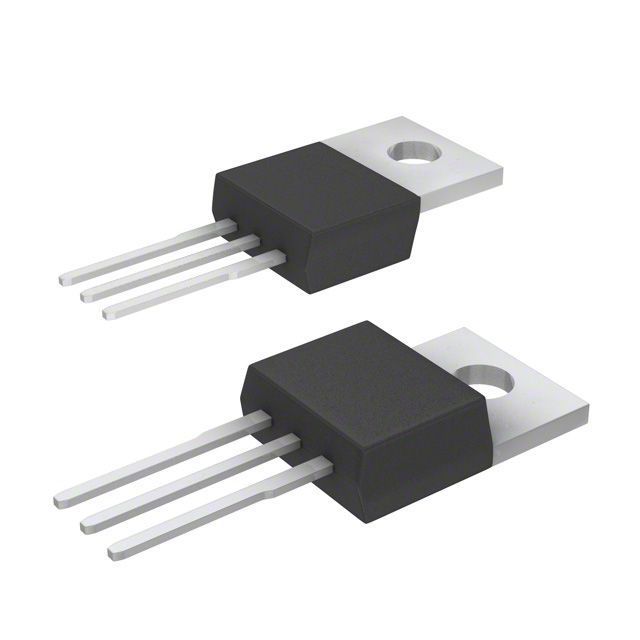
The TOP224YN is old-school in the best way. Three terminals - DRAIN, SOURCE, CONTROL. No BP/M pin, no EN/UV pin, no configuration registers. You feed it rectified DC on the DRAIN, put a capacitor on the CONTROL pin, and the chip regulates the output by modulating the MOSFET duty cycle based on the current drawn from the CONTROL pin. That's it. It's the second-generation TOPSwitch-II from Power Integrations, TO-220-3 package with an exposed metal tab you bolt to a heatsink, and it'll push 45W on universal input (85-265VAC) or 75W if you're on 230VAC only. 100kHz switching, 67% max duty cycle, up to 90% efficiency in a well-designed flyback. The trade-off for the simplicity: the thermal shutdown is latching, not auto-recovery - if it overheats, you cycle input power to reset it. Not a bug, just how it works. If you want auto-recovery thermal protection, look at the newer TOPSwitch-GX (TOP244YN) or TOPSwitch-HX (TOP254EN). But if you're maintaining an existing design that's been running for a decade on a TOP224YN, or you need a TO-220 power switcher that just works without firmware, this is still the part.
What Are the Technical Specifications of TOP224YN?
| Parameter | Value |
|---|---|
| Manufacturer | Power Integrations |
| Series | TOPSwitch-II |
| Package | TO-220-3 (3 pins, exposed metal tab) |
| Mounting Type | Through Hole |
| Input Voltage (AC) | 85 – 265 VAC (Universal) |
| Breakdown Voltage (BVDSS) | 700 V (integrated MOSFET) |
| Switching Frequency | 100 kHz (90-110 kHz range) |
| Maximum Duty Cycle | 67% (70% max) |
| Output Power (Universal, 85-265VAC) | 45 W |
| Output Power (Single, 230VAC ±15%) | 75 W |
| Control Pin Current (operating) | 1.2 mA (typical) |
| Control Pin Voltage | 5.7 V (regulated internally) |
| Maximum Control Pin Current | 100 mA |
| Maximum Control Pin Voltage | 9 V |
| Efficiency (flyback, optimized) | Up to 90% |
| Thermal Shutdown | Latching @ +135°C (power cycle to reset) |
| Auto-Restart | Yes (output short / open-loop faults) |
| Operating Temperature (Junction) | -40°C to +150°C |
| Frequency Jittering | Yes (reduces EMI) |
| RoHS Compliance | Yes, Lead-Free (N suffix) |
| Supported Topologies | Flyback, Forward, Buck, Boost |
| Isolation | Isolated and Non-Isolated |
| Feedback Type | Primary-side or Optocoupler |
The Three-Terminal Architecture
Unlike later PI families with 7-8 pins, the TOP224YN has exactly three:
| Pin | Name | What It Does |
|---|---|---|
| 1 | DRAIN | 700V MOSFET drain - connects to transformer primary |
| 2 | SOURCE | MOSFET source + tab/heatsink connection - ground reference |
| 3 | CONTROL | Feedback + bias - the current you draw from this pin sets the duty cycle |
The CONTROL pin is the whole control loop in one pin. It regulates to 5.7V internally. Draw more current from it → duty cycle increases → more power delivered. Draw less → duty cycle drops. The optocoupler or primary-side feedback network pulls current from this pin proportional to output error, closing the loop.
What Are the Alternatives to TOP224YN?
| Alternative | Key Difference | Best For |
|---|---|---|
| TOP223YN | Lower power: 30W (85-265V) / 50W (230V) | Cost-sensitive designs under 30W |
| TOP225YN | Higher power: 55W (85-265V) / 100W (230V) | Next step up, same TO-220 footprint |
| TOP224PN | Same power, DIP-8 through-hole package | PCB-mount without heatsink tab |
| TOP224GN | Same power, SMD-8 surface mount | Automated assembly |
| TOP244YN | TOPSwitch-GX, 132kHz, auto-recovery thermal | New designs - more features, better efficiency |
TOP224YN vs TOP225YN - The Heatsink Already Fits
The TOP225YN is rated for 55W on universal input - about 22% more than the TOP224. They share the same TO-220-3 package, same pinout, same heatsink mounting. From our experience, if you're already bolting a TO-220 to a heatsink, the marginal cost of the TOP225YN over the TOP224YN is around $0.30-0.50 in volume - and it buys you 10W of thermal headroom. For a supply that runs 24/7 in an enclosed chassis, that headroom directly translates to lower heatsink temperature and longer electrolytic capacitor life.
TOP224YN vs TOP244YN - Old Reliable vs New Features
The TOP244YN (TOPSwitch-GX) is three generations newer. It adds: auto-recovery thermal shutdown (no power-cycle needed), programmable current limit, line under/over-voltage detection, and 132kHz switching for smaller magnetics. If you're doing a new design today, use the TOP244YN. If you're stocking spares for an existing product that's been qualified and certified with the TOP224YN, don't change it - the re-certification cost will dwarf any BOM savings.
Cross-Brand Alternative: VIPER22A
The STMicroelectronics VIPER22ADIP-E is the most common cross-brand comparison. It's a DIP-8 device rated for 12W - not in the same power class. At the 20-45W level, the TOP224YN's TO-220 package with a bolted heatsink is the standard solution. The VIPER22A competes more directly with the TinySwitch and LinkSwitch families at sub-15W power levels.
How Much Does TOP224YN Cost and Is It in Stock?
| Quantity | Unit Price (USD) |
|---|---|
| 1 – 49 | $1.85 |
| 50 – 249 | $1.42 |
| 250 – 999 | $1.12 |
| 1,000+ | $0.89 |
In stock at ICMASS. Ships same day from Shenzhen for orders before 4PM HKT. TO-220-3 tube packaging (50 units per tube). The exposed metal tab is electrically connected to SOURCE - plan your heatsink isolation accordingly.
What Are the Typical Applications of TOP224YN?
TV and Monitor Standby / Main Power Supplies
This is where the TOP224YN earned its reputation. CRT TVs, early LCD TVs, and computer monitors from the late 1990s through the 2010s ran on TOPSwitch-II flyback supplies. The TO-220 package bolted to the chassis for heatsinking, the three-terminal design kept BOM count low, and the 700V MOSFET handled mains surges without external protection. If you repair or maintain CRT monitors or older industrial displays, you've desoldered a TOP224YN.
Industrial SMPS (20-45W)
Factory-floor power supplies for sensors, PLC I/O rails, and isolated communications. The latching thermal shutdown is a feature here, not a bug - if the supply overheats because a cabinet fan failed, you want it to stay off until someone investigates, not cycle on and off while the root cause festers.
Battery Chargers (Lead-Acid, NiMH)
The simple CONTROL-pin architecture makes it easy to implement CC/CV charging profiles with just a few external components. The primary-side feedback option means you can skip the optocoupler entirely if output regulation tolerance is relaxed (±5% instead of ±1%), cutting BOM cost for price-sensitive charger designs.
Audio Amplifier Power Supplies
Class-D and Class-AB amplifier rails in the 20-50W range. The 100kHz switching frequency is low enough that layout-induced EMI into the audio path is manageable - higher-frequency switchers (132kHz+) need more careful routing and shielding near sensitive analog stages.
Auxiliary / Housekeeping Supplies in High-Power Converters
When a 2kW server PSU or 10kW motor drive needs a small isolated rail to power its own control board, the TOP224YN in a simple flyback configuration does the job. At these power levels in the main converter, the auxiliary supply's BOM is rounding error - what matters is reliability and not interfering with the main power stage.
Why Buy TOP224YN from ICMASS?
We stock the full TOPSwitch-II gradient. TOP221 through TOP227, YN (TO-220), PN (DIP-8), and GN (SMD) packages. If your product line has multiple SKUs at different power levels sharing the same supply architecture, we can supply the entire wattage ladder from one source.
Genuine, not remarked. The TOP224YN has been in production for over 20 years. That means there's a healthy counterfeit ecosystem - remarked lower-grade TOPSwitch dice (TOP222/TOP223) sold as TOP224. The counterfeit parts will run at half load and fail when pushed. We source from authorized PI distribution with lot traceability back to the factory.
Heatsink and hardware, too. If you're ordering TOP224YN in TO-220, you probably also need TO-220 mounting hardware - silicone insulators, shoulder washers, M3 screws, thermal paste or pads. We stock the full mounting kit. One box.
Shenzhen delivery, same day. Orders placed before 4PM HKT ship same day. DHL 3-5 days to North America and Europe.
Frequently Asked Questions About TOP224YN
Q1: What's the difference between TOP224YN, TOP224PN, and TOP224GN?
A: Package only. YN = TO-220-3 with exposed metal tab (heatsink-mountable, highest power: 45W/75W). PN = DIP-8 through-hole (PCB-mount, 20W/30W). GN = SMD-8 surface mount (20W/30W). Same silicon in all three. The TO-220's metal tab is electrically connected to SOURCE - if you bolt it to a grounded chassis, you don't need an insulator. If your heatsink is floating or at a different potential, use a silicone pad and shoulder washer.
Q2: The thermal shutdown on TOP224YN is latching - what does that mean?
A: When the die temperature exceeds +135°C (typical), the MOSFET turns off and stays off. It does not auto-recover when the temperature drops. You must cycle input power (remove AC, wait for the bulk caps to discharge, reapply) to reset. This is different from LinkSwitch-TN and TinySwitch-III, which use auto-recovery (hysteretic) thermal shutdown. The latching behavior is by design - in applications like industrial power supplies, you want the supply to stay off after a thermal event until someone investigates. If you need auto-recovery, use a TOPSwitch-GX (TOP244YN) or TOPSwitch-HX (TOP254EN).
Q3: My TOP224YN supply doesn't start - what should I check?
A: Five things, in order. (1) Is the CONTROL pin voltage reaching 5.7V? If not, the internal startup current source from DRAIN may not be charging the CONTROL pin capacitor - check for a shorted or leaky cap. (2) Clamp Zener voltage too low - the Zener across the transformer primary should be ≥1.5 × VOR (reflected output voltage). (3) Optocoupler drawing too much current during startup - increase the optocoupler LED series resistor, use CTR 50-200%. (4) Source trace too long - use Kelvin (single-point) grounding at the SOURCE pin, keep the trace extremely short. (5) Stuck in auto-restart - briefly short CONTROL to SOURCE to reset, or apply CONTROL voltage before DRAIN voltage during bench testing.
Q4: Why does my TOP224YN blow up at turn-on?
A: The #1 cause is inadequate primary clamp. Every flyback using TOP224YN needs a Zener + ultra-fast blocking diode clamp across the transformer primary winding to absorb the leakage inductance spike. Without it, or with a Zener rated too low, the DRAIN voltage exceeds the 700V BVDSS at MOSFET turn-off and the device fails - usually on the first power cycle. Use a TVS or Zener rated at 1.5 × VOR with an ultra-fast blocking diode. Maximum recommended clamp Zener: 200V for the TOP2XX series. Maximum VOR: 135V.
Q5: My TOP224YN is overheating - what's wrong?
A: Four common causes. (1) Clamp Zener voltage too low → excessive clamp dissipation → raise to 1.5 × VOR. (2) Slow recovery diodes in the output rectifier or clamp circuit → switch to ultra-fast recovery (≥400V rating for universal input). (3) Transformer primary inductance too low → increases RMS current through the MOSFET → increase primary inductance. (4) Insufficient heatsinking - the TO-220 tab needs either chassis-mounting or a dedicated heatsink. At 45W, bolting the tab to the inside of a metal chassis with thermal compound is usually enough. At 75W, add a finned heatsink.
Q6: My switching frequency measures 50kHz instead of 100kHz - what's happening?
A: You're seeing a subharmonic. The TOP224YN is skipping every other cycle because a turn-on current spike is exceeding the leading-edge blanking time. Fixes: (1) Use a Zener clamp instead of an RC snubber across the primary. (2) Remove or reduce any RC damping networks on the DRAIN. (3) Switch to ultra-fast output rectifiers - slow diodes cause a current spike when the MOSFET turns on. (4) Reduce transformer primary capacitance by adding inter-layer insulation (see PI application note AN-18 for winding techniques).
Q7: Can TOP224YN replace TOP224Y or TOP224P (non-RoHS versions)?
A: Yes. TOP224Y and TOP224P are the older versions containing lead, now discontinued. TOP224YN and TOP224PN are the active, lead-free, RoHS-compliant direct replacements. Same silicon, same specs. No design changes needed.
Q8: What optocoupler should I use with TOP224YN?
A: Any standard optocoupler with CTR (Current Transfer Ratio) between 50% and 200%. PC817 is the most common choice. If your optocoupler CTR is too high (>200%), the CONTROL pin gets pulled too hard during startup and the supply won't start - increase the LED series resistor. If CTR is too low (<50%), the regulation loop has insufficient gain and output voltage sags under load.
Q9: How do I do a quick bench test without blowing the TOP224YN?
A: Three rules. (1) Apply CONTROL voltage before DRAIN voltage - this prevents the chip from getting stuck in auto-restart. Use a bench supply to feed 5.7V to the CONTROL pin first, then apply AC to the input. (2) Start with a resistive load at 10% of rated power, not full load. (3) Monitor DRAIN voltage with an isolated high-voltage probe on your first power-up - if you see ringing exceeding 600V peak, shut down and fix the clamp before proceeding.
Q10: Can I use TOP224YN in a non-isolated buck converter instead of flyback?
A: Yes - the TOPSwitch-II supports buck, boost, buck-boost, forward, and flyback. But if you're doing a non-isolated buck under 5W, the LNK304PN (LinkSwitch-TN) is purpose-built for that and will be cheaper and simpler. The TOP224YN shines in isolated flyback designs at 20-75W where the TO-220 heatsinking matters.
Q11: Is TOP224YN still recommended for new designs?
A: No - Power Integrations marks it "Not Recommended for New Designs." For new projects, use TOPSwitch-GX (TOP244-TOP250YN) or TOPSwitch-HX (TOP254-TOP258EN). These offer auto-recovery thermal shutdown, programmable current limit, higher switching frequency (132kHz), and better light-load efficiency. That said, TOP224YN is still in full production and widely available - it's not going end-of-life anytime soon. If you're maintaining an existing qualified design, keep using it.
Q12: What transformer core size do I need for TOP224YN at 45W?
A: For 45W universal input flyback: ETD29, EER28, or E30 core. Primary inductance typically 300-600µH depending on your reflected voltage (VOR) design choice. For 75W single-voltage (230VAC): ETD34 or EER35. Reference PI application notes AN-16 (design procedure) and AN-17 (transformer design) for complete magnetics calculations.
Q13: What's different about TOP224YN's CONTROL pin compared to the FB pin on LinkSwitch/TinySwitch?
A: The CONTROL pin on TOPSwitch-II is both a feedback input and a bias supply, all on one pin. The chip regulates the pin to 5.7V internally. The feedback network (optocoupler + secondary-side reference) pulls current from this pin - more current = higher duty cycle. On LinkSwitch-TN (LNK304PN), the FB pin is a voltage-sense input with a 1.65V threshold - completely different scheme. On TinySwitch-III (TNY274PN), the EN/UV pin is a digital enable with a 240µA threshold, and the BP/M pin handles bias. Three different control architectures across the three PI families.
Internal Links
- LNK304PN - LinkSwitch-TN Offline Switcher - non-isolated buck, 120mA, simpler and cheaper for sub-5W
- TNY274PN - TinySwitch-III Flyback Switcher - isolated flyback specialist, 8.5W, 132kHz
- LM2596S-ADJ - DC-DC Buck Converter - when your input is already DC
- IRLZ44NPBF - N-Channel Power MOSFET - if you decide to design a discrete flyback controller instead
- NE555DR - Precision Timer - for DIY SMPS PWM generation if you're building a discrete solution
| Image |
|
| Part Number | TOP224YN |
| Manufacturer | Power Integrations |
| Series | TOPSwitch®-II |
| Package/Case | TO-220-3 |
| Packaging | Tube |
| Product Status | Not For New Designs |
| Output Isolation | Isolated |
| Internal Switch(s) | Yes |
| Voltage - Breakdown | 700V |
| Topology | Boost, Buck, Flyback, Forward |
| Voltage - Start Up | - |
| Voltage - Supply (Vcc/Vdd) | - |
| Duty Cycle | 67% |
| Frequency - Switching | 100kHz |
| Power (Watts) | 75 W |
| Fault Protection | Current Limiting, Over Temperature |
| Control Features | - |
| Operating Temperature | -40°C ~ 150°C (TJ) |
| Grade | - |
| Qualification | - |
| Supplier Device Package | TO-220-3 |
| Mounting Type | Through Hole |
User Guide
- Purchase & Inquiry
- Package
- Shipping Information
- Customer Review
You may place an order without registering to IC-MAX.COM
We strongly suggest you sign in before purchasing as you can track your order in real time.
For your convenience, we accept multiple payment methods in USD, including PayPal, Credit Card, and wire transfer.
RFQ (Request for Quotations)
It is recommended to request for quotations to get the latest prices and inventories about the part.
Our sales will reply to your request by email within 24 hours.
1. You'll receive an order information email in your inbox. (Please remember to check the spam folder if you didn't hear from us).
2. Since inventories and prices may fluctuate to some extent, the sales manager is going to reconfirm the order and let you know if there are any updates.
-
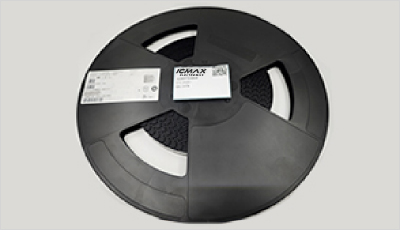
- Step1:Prepare product
-
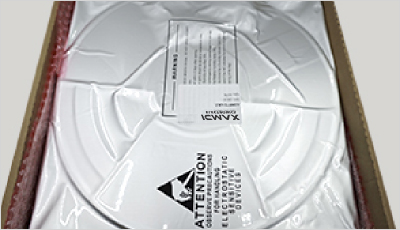
- Step2:Vacuum packaging
-
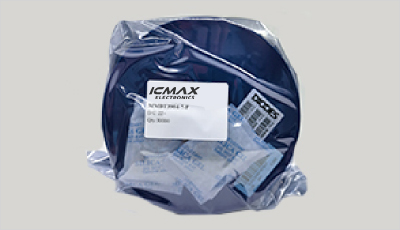
- Step3:Anti-static bag
-
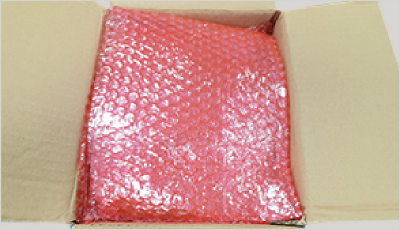
- Step4:Individual package
-
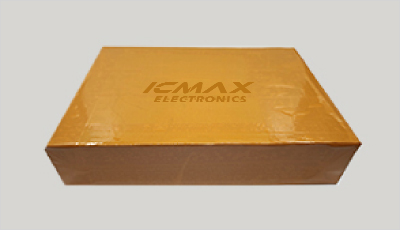
- Step5:Packaging box
-
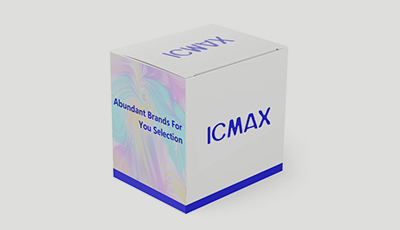
- Step6:Barcode shipping label
Shipping starts at $40, but some countries will exceed $40. For example (South Africa, Brazil, India, Pakistan, Israel, etc.)
The basic freight (for package ≤0.5kg or corresponding volume) depends on the time zone and country.
Currently, our products are shipped through DHL, FedEx, SF, and UPS.
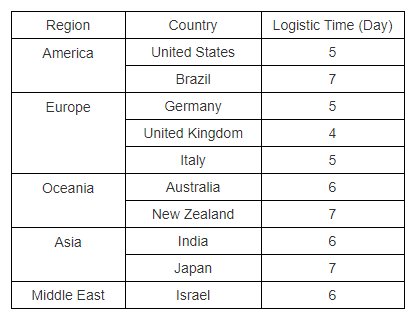
Delivery TimeOnce the goods are shipped, estimated delivery time depends on the shipping methods you chose:
FedEx International, 5-7 business days.
The following are some common countries' logistic time.
- Hot Sale
- Related Categories
- Include Parts
- Popular Search
- Voltage Regulators - Linear, Low Drop Out (LDO) Regulators(66836)
- Voltage Regulators - Linear Regulator Controllers(325)
- Voltage Regulators - Linear + Switching(1473)
- Voltage Regulators - DC DC Switching Regulators(35756)
- Voltage Reference(8428)
- V/F and F/V Converters(139)
- Thermal Management(515)
- Supervisors(41287)
- Special Purpose Regulators(4820)
- RMS to DC Converters(144)
The following parts include "TOP224YN" in Silicon Labs TOP224YN.
- Part Number
- Manufacturer
- Package
- Description
- LNK6407D-TL Power Integrations TO-220-3 IC OFFLINE SW MULT TOP TO220-3
- LNK3204D-TL Power Integrations TO-220-3 IC OFFLINE SW MULT TOP TO220-3
- SR10LG-G Microchip Technology TO-220-3 IC OFFLINE SW MULT TOP TO220-3
- TNY285DG-TL Power Integrations TO-220-3 IC OFFLINE SW MULT TOP TO220-3
- LNK304DN-TL Datasheet, Price, Stock & Alternatives | ICMASS Power Integrations TO-220-3 IC OFFLINE SW MULT TOP TO220-3
- TNY285KG-TL Power Integrations TO-220-3 IC OFFLINE SW MULT TOP TO220-3
- LNK3206D-TL Power Integrations TO-220-3 IC OFFLINE SW MULT TOP TO220-3
- LNK623DG-TL Power Integrations TO-220-3 IC OFFLINE SW MULT TOP TO220-3
- TNY286PG Power Integrations TO-220-3 IC OFFLINE SW MULT TOP TO220-3
- LNK624DG-TL Power Integrations TO-220-3 IC OFFLINE SW MULT TOP TO220-3
The following parts are popular search parts in Test and Measurement.
Inventory:2,688
Please send an inquiry. Send us your inquiry, and we will respond immediately.

- 1500+ Daily average RFQ Volume

- 20,000.000 Standard Product Unit

- 1800+ Worldwide Manufacturers

- 15,000+ In-stock Warehouse