Power Integrations TNY277GN

- Part No.:
- TNY277GN
- Manufacturer:
- Power Integrations
- Category:
- AC DC Converters, Offline Switches
- Package:
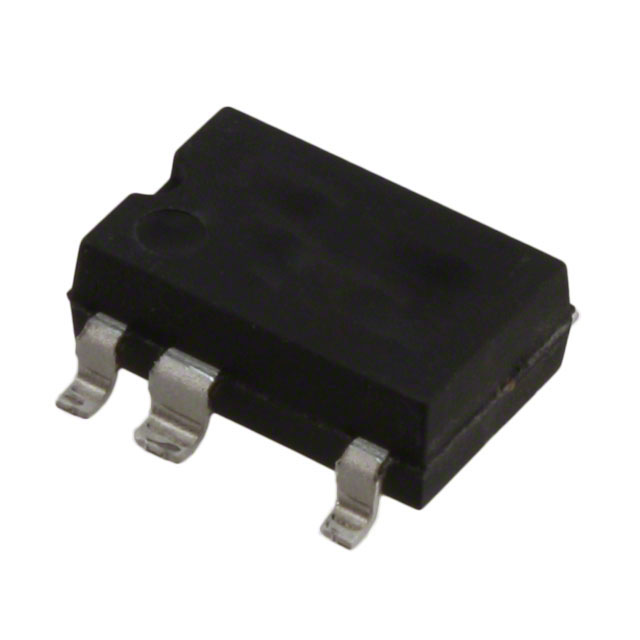
- 8-SMD (7 Leads), Gull Wing
- Datasheet:
-
 TNY277GN.pdf
- Description:
- IC OFFLINE SWITCH FLYBACK 8SMD
- Quantity:
-
Unit Price:$0
Ext Price:$0
- Payment:
-

- Shipping:
-


TNY277GN Information
- Specifications
- Product Details
- Comparison
- Tags
- Product attributes
- Attribute value
- Manufacturer:
- Power Integrations
- Series:
- TinySwitch®-III
- Package/Case:
- 8-SMD (7 Leads), Gull Wing
- Packaging:
- Tube
- Product Status:
- Discontinued at Digi-Key
- Output Isolation:
- Isolated
- Internal Switch(s):
- Yes
- Voltage - Breakdown:
- 700V
- Topology:
- Flyback
- Voltage - Start Up:
- -
- Voltage - Supply (Vcc/Vdd):
- -
- Duty Cycle:
- 65%
- Frequency - Switching:
- 132kHz
- Power (Watts):
- 23.5 W
- Fault Protection:
- Current Limiting, Open Loop, Over Temperature, Over Voltage, Short Circuit
- Control Features:
- EN
- Operating Temperature:
- -40°C ~ 150°C (TJ)
- Grade:
- -
- Qualification:
- -
- Supplier Device Package:
- SMD-8C
- Mounting Type:
- Surface Mount
- Datasheet:
-
TNY277GN.pdf
TNY277GN — 13W Off-Line Switcher with 700V MOSFET (SMD-8C)
The TNY277GN is a TinySwitch-III off-line switcher from Power Integrations — a 700V power MOSFET and an ON/OFF controller in an SMD-8C package, rated 13W in a sealed adapter and 23.5W peak from a 230VAC rail.
From what we see in Shenzhen reorder patterns (2025–2026), the 277 moves in volume as a repair part and as the default pick for small 5V and 12V supplies.
Here's the number to read first. The 13W figure belongs to the 230VAC ±15% column. On universal input the same part is rated 8W — a 38% drop, and the largest derating in the TinySwitch-III family.
That gap is why this part number shows up in so many "works fine below 6W, everything hot above it" threads. The design was sized from the headline row.
And there's a fix that keeps the transformer. Step up one family member and use the BP/M capacitor to hold the current limit exactly where it was.
What Are the Technical Specifications of TNY277GN?
| Parameter | Value |
|---|---|
| Type | Off-line switcher with integrated 700V power MOSFET (TinySwitch-III) |
| Package | SMD-8C (G) — seven leads, pin 3 absent |
| Ordering Code | TNY277GN-TL (G = SMD-8C, N = halogen-free, TL = tape & reel 1000/reel) |
| Breakdown Voltage (BVDSS) | 700V min |
| DRAIN Peak Current (abs max) | 880mA (1650mA while DRAIN stays below 400V) |
| Output Power, 230VAC ±15% | 13W enclosed adapter / 23.5W open-frame peak |
| Output Power, 85–265VAC | 8W enclosed adapter / 18W open-frame peak |
| Standard Current Limit (0.1µF BP/M) | 450mA typ (419 min / 491 max) |
| Reduced Current Limit (1µF BP/M) | 350mA typ (326 min / 396 max) |
| Increased Current Limit (10µF BP/M) | 550mA typ (512 min / 622 max) |
| On-State Resistance, TJ = 25°C | 9.0Ω max (7.8Ω min, ID = 45mA) |
| On-State Resistance, TJ = 100°C | 13.5Ω max (11.7Ω min) |
| Switching Frequency | 132kHz typ (124–140kHz), 8kHz peak-to-peak jitter |
| Maximum Duty Cycle | 65% typ (62% min, S1 open) |
| Thermal Shutdown Temperature | 142°C typ (135 min / 150 max) |
| Thermal Shutdown Hysteresis | 75°C |
| Auto-Restart ON-Time | 64ms typ; auto-restart duty cycle 3% typ |
| OFF-State Drain Leakage | 100µA max at 125°C, VDS = 560V |
| DRAIN Supply Current | 365µA typ / 460µA max (EN/UV open, switching) |
| BP/M Shutdown Threshold Current | 6.5mA typ (4 min / 9 max) |
| Thermal Resistance (θJA) | 70°C/W on 232mm² copper; 60°C/W on 645mm² copper |
| Thermal Resistance (θJC) | 11°C/W |
| Operating Junction Temperature | −40°C to 150°C |
| No-Load Consumption | <150mW at 265VAC without bias winding; <50mW with |
Two rows decide whether this part runs warm or hot, and neither is the wattage. The first is the current limit — 450mA at the standard setting, and total output power scales roughly with its square.
The second is the on-state resistance. At a 100°C junction the TNY277GN is specified at up to 13.5Ω, against 9.0Ω cold. That near-doubling is the thermal runaway path: hotter part, higher resistance, more heat.
Why Does the TNY277GN Get Hot Above About 6W?
Because the 13W row and the 8W row describe the same part under different input conditions. Table 1 of the TinySwitch-III family sheet lists an enclosed-adapter rating at 230VAC ±15% and a second one at 85–265VAC. For the TNY277 those are 13W and 8W.
Track = the 230VAC ±15% adapter row. Fill = the 85–265VAC adapter row. Bars are drawn to scale, so the shortest fill is the worst derating.
That shortest bar is the TNY277 at 61.5%, and the pattern is not monotonic — the family's mid-range members lose the most, not the smallest or the largest. The peak/open-frame columns tell a gentler story: those hold a near-constant 77% ratio across all seven parts.
Resistance falls by roughly a factor of ten across the family while the current limit only doubles. That is why stepping up a die size buys thermal margin so cheaply: the TNY279 carries more current through a lower resistance than the TNY277 does at less.
Read the vertical gap between the two lines as the temperature penalty. It is not a small correction — it is a 50% increase, and it applies at every point on the curve.
When Should You Use (and NOT Use) the TNY277GN?
✅ Use TNY277GN when:
- Your worst-case line voltage is 230VAC, not universal. The 13W adapter row is real — it just does not cover 85VAC designs.
- You need 5–8W on universal input. That is inside the 85–265VAC row, with margin for a non-ventilated case.
- You are repairing an existing TNY277 board. Matching the original part keeps the current limit, clamp and transformer as designed.
- You are dropping to the reduced setting deliberately. A 1µF BP/M capacitor takes the limit to 350mA and the peak power to 15.1W, which is the efficiency-first option for a warm enclosure.
- Your SOURCE pins have copper under them. The 60°C/W figure assumes 645mm² of 2oz copper; anything less is outside the specified range.
❌ Don't use TNY277GN when:
- You need 15W on universal input. That is the common failure: a 15V/1A design reads the 13W row and ships. On 85–265VAC this part is an 8W device.
- Your enclosure has no airflow and no copper. Overtemperature shutdown trips at 142°C with 75°C of hysteresis, so the symptom is a supply that works, then stops, then works again.
- You want efficiency at high line. The DRAIN supply current is drawn from the high-voltage pin; a bias winding into BP/M removes that term.
- You need more than 8W and cannot change the transformer. Step up the family and hold the current limit with the BP/M capacitor — see the swap paths below.
- Your output diode can fail open. With nowhere for the core energy to go, the primary spike can exceed the internal MOSFET's breakdown. Clamp first, then the switch.
What Are the Alternatives to TNY277GN?
| Model | Type | Key Difference | Best For |
|---|---|---|---|
| TNY278GN | TinySwitch-III, SMD-8C | 16W / 28W at 230VAC; RDS(on) 6.0Ω max cold, and a 1µF BP/M capacitor gives exactly the TNY277's 450mA | Same limit, one third less resistance — the closest drop-in |
| TNY279GN | TinySwitch-III, SMD-8C | 18W / 32W; RDS(on) 4.5Ω max cold; a 1µF BP/M capacitor gives 550mA, matching the TNY277's increased setting | Designs already running the 277 in +1 mode |
| TNY276GN | TinySwitch-III, SMD-8C | 10W / 19W; RDS(on) 16Ω max cold — one step down on the same ladder | Cost-driven designs at 5–8W universal input |
| TNY288DG | TinySwitch-4, SO-8C | 725V MOSFET, line-compensated overload power, 14.5W / 26W on its own package row | New designs that want the newer generation |
Here's the thing that costs people a redesign: the part number changes, but the current limit does not have to. Power Integrations made the levels line up between adjacent family members, so a bigger die can be held at the old limit by the capacitor alone.
Two exact pairings from the Rev. N rows. A TNY277GN at its standard 450mA maps to a TNY278 with a 1µF BP/M capacitor — 450mA typ, same limit, and the on-state resistance drops from 9.0Ω to 6.0Ω max cold.
And a TNY277GN running at its increased 550mA maps to a TNY279 with a 1µF capacitor — 550mA typ, the same 23.7W peak, and 4.5Ω instead of 9.0Ω. Same transformer, same limit, roughly half the conduction loss.
Neither path touches the magnetics. The current limit stays where the clamp and transformer were designed for, and only the resistance under it changes.
What Are the Typical Applications of TNY277GN?
Small 5V and 12V supplies on 230VAC. Where the line voltage is known, the 13W adapter row applies and the part is comfortable. The moment the design has to work from 85VAC, the 8W row governs.
Repair and replacement. The TNY277 appears across consumer PSU repair kits, usually paired with an 18V Zener. Matching the original part number keeps the current limit, so the clamp and transformer stay as designed.
Auxiliary and standby rails. ON/OFF control holds efficiency down to very light load, which is what a rail that idles at milliwatts needs. The 64ms auto-restart and 3% duty cycle keep fault power low without a manual reset.
Chargers for small battery equipment. The ON/OFF scheme lets the output fall close to zero volts while still delivering power, so constant-current charging works without a forward bias winding.
Why Buy TNY277GN from ICMASS?
We test incoming TinySwitch lots against the rows that decide whether a design runs cool: the current limit at each BP/M capacitor value, and the on-state resistance. A remarked part is usually a smaller family member, and both numbers move together when it is.
We stock the TinySwitch-III SMD line as a ladder — TNY276GN, TNY277GN, TNY278GN, TNY279GN and TNY280GN — so the swap paths above are a stock question rather than a sourcing project. TNY288DG covers the TinySwitch-4 side.
Ask us which row of the power table your design should actually use. Tell us the worst-case line voltage, the enclosure type and the copper area under the SOURCE pins. The answer is frequently a different family member than the one on the drawing.
Orders ship same day from Shenzhen, and the official Power Integrations PDF for every part we quote travels with the quote.
Frequently Asked Questions About TNY277GN
Q1: My TNY277 design works below 6W but everything gets hot above it. Why?
A: You are almost certainly designing against the 230VAC row on a universal-input supply. The TNY277 is rated 13W enclosed at 230VAC ±15% but only 8W at 85–265VAC — the widest gap in the family. This exact complaint appears repeatedly on EEWorld and CSDN with 15V/1A designs. Check your worst-case line voltage first, before touching the layout.
Q2: Can I use a bigger TinySwitch without redesigning the transformer?
A: Often yes, if you hold the current limit with the BP/M capacitor. A TNY278GN with a 1µF capacitor gives 450mA — exactly the TNY277's standard limit — with on-state resistance falling from 9.0Ω to 6.0Ω max cold. A TNY279GN with 1µF gives 550mA, matching a TNY277 running in +1 mode, at 4.5Ω. Same limit, less heat.
Q3: How do I tell whether the heat is the chip or the transformer?
A: Run the same heavy load briefly and compare which reaches temperature first. Then scope the DRAIN waveform at light and heavy load. A useful second test: drop the input to about 90VAC. If the chip cools noticeably, the loss is line-dependent and points at the DRAIN supply current; the datasheet's remedy is feeding BP/M from a bias winding instead.
Q4: Why does the chip run hotter at high line voltage?
A: Partly because the internal supply current is drawn from the DRAIN pin. Rev. N specifies 365µA typical and 460µA maximum for the TNY277 while switching. Against a 375V bus that is roughly 0.14W of line-dependent loss, which a bias winding into BP/M removes. Switching losses in the clamp and snubber add to it.
Q5: The supply works, then shuts down, then works again. What is happening?
A: Overtemperature shutdown, then recovery. The TNY277 trips at 142°C typical with 75°C of hysteresis, so it stays off until the die cools well below the trip point. That long off-time is what you observe as a cycle. Auto-restart looks different: a 64ms on-time followed by roughly 2.5 seconds off.
Q6: What does the 75°C thermal hysteresis mean in practice?
A: It sets how far the die must cool before switching resumes. A 142°C trip with 75°C hysteresis means it does not restart until around 67°C. That gap is deliberate — it prevents rapid thermal oscillation at the trip point — so recovery takes seconds.
Q7: Can an open output diode damage the TNY277?
A: Yes, and this is documented on Power Integrations' own forum. With the secondary open, the energy stored in the core has nowhere to go, and the primary flyback spike can exceed the internal MOSFET's breakdown voltage. The clamp circuit is usually damaged first. If you are diagnosing a dead TNY switch, check the output diode and the clamp before replacing the IC.
Q8: How much copper do the SOURCE pins need?
A: 645mm² (1 in²) of 2oz copper for the 60°C/W figure, or 232mm² for 70°C/W. Those are the only two board-level thermal numbers Rev. N publishes, and both assume the SOURCE pins are soldered to that area. A common field figure of 3/4 in² sits between them, so treat it as a floor rather than a target.
Q9: What transformer wire gauge should I use at 132kHz?
A: Keep the primary winding conductor at or below about 0.35mm diameter. At 124–132kHz the skin depth in copper is small enough that thicker wire adds AC resistance without carrying much more current. For higher currents, use multiple parallel strands rather than a single heavier gauge. This is a frequency effect, not a power rating.
Q10: What is the TNY277GN's reduced current limit for?
A: It trades peak power for lower losses. A 1µF BP/M capacitor sets 350mA typical and drops the open-frame peak to 15.1W at 230VAC. Power Integrations recommends this for thermally challenging designs where dissipation must be minimised. The RMS device current falls, so the part runs cooler — at the cost of maximum output.
| Image |
|
|
| Part Number | TNY277GN-TL | TNY277GN |
| Manufacturer | Power Integrations | Power Integrations |
| Series | TinySwitch®-III | TinySwitch®-III |
| Package/Case | 8-SMD (7 Leads), Gull Wing | 8-SMD (7 Leads), Gull Wing |
| Packaging | Tape & Reel (TR) | Tube |
| Product Status | Active | Discontinued at Digi-Key |
| Output Isolation | Isolated | Isolated |
| Internal Switch(s) | Yes | Yes |
| Voltage - Breakdown | 700V | 700V |
| Topology | Flyback | Flyback |
| Voltage - Start Up | - | - |
| Voltage - Supply (Vcc/Vdd) | - | - |
| Duty Cycle | 65% | 65% |
| Frequency - Switching | 132kHz | 132kHz |
| Power (Watts) | 23.5 W | 23.5 W |
| Fault Protection | Current Limiting, Open Loop, Over Temperature, Over Voltage, Short Circuit | Current Limiting, Open Loop, Over Temperature, Over Voltage, Short Circuit |
| Control Features | EN | EN |
| Operating Temperature | -40°C ~ 150°C (TJ) | -40°C ~ 150°C (TJ) |
| Grade | - | - |
| Qualification | - | - |
| Supplier Device Package | SMD-8C | SMD-8C |
| Mounting Type | Surface Mount | Surface Mount |
User Guide
- Purchase & Inquiry
- Package
- Shipping Information
- Customer Review
You may place an order without registering to IC-MAX.COM
We strongly suggest you sign in before purchasing as you can track your order in real time.
For your convenience, we accept multiple payment methods in USD, including PayPal, Credit Card, and wire transfer.
RFQ (Request for Quotations)
It is recommended to request for quotations to get the latest prices and inventories about the part.
Our sales will reply to your request by email within 24 hours.
1. You'll receive an order information email in your inbox. (Please remember to check the spam folder if you didn't hear from us).
2. Since inventories and prices may fluctuate to some extent, the sales manager is going to reconfirm the order and let you know if there are any updates.
-
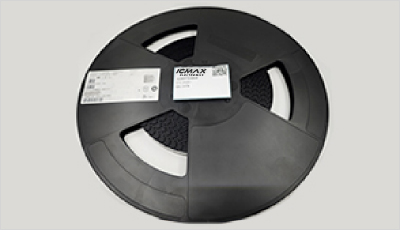
- Step1:Prepare product
-
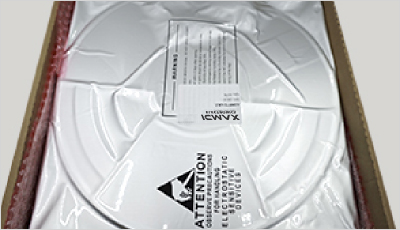
- Step2:Vacuum packaging
-
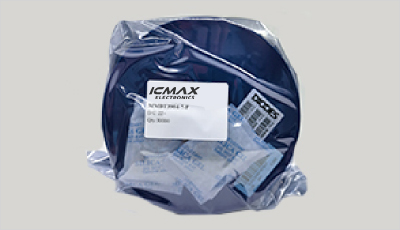
- Step3:Anti-static bag
-
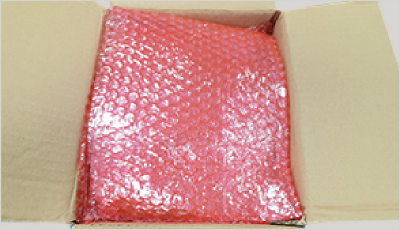
- Step4:Individual package
-
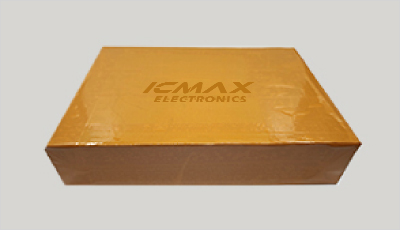
- Step5:Packaging box
-
- Step6:Barcode shipping label
Shipping starts at $40, but some countries will exceed $40. For example (South Africa, Brazil, India, Pakistan, Israel, etc.)
The basic freight (for package ≤0.5kg or corresponding volume) depends on the time zone and country.
Currently, our products are shipped through DHL, FedEx, SF, and UPS.
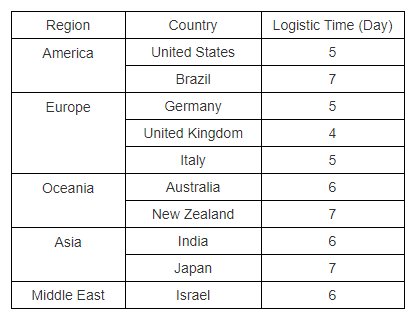
Delivery TimeOnce the goods are shipped, estimated delivery time depends on the shipping methods you chose:
FedEx International, 5-7 business days.
The following are some common countries' logistic time.
- Hot Sale
- Related Categories
- Include Parts
- Popular Search
- Voltage Regulators - Linear, Low Drop Out (LDO) Regulators(66836)
- Voltage Regulators - Linear Regulator Controllers(325)
- Voltage Regulators - Linear + Switching(1473)
- Voltage Regulators - DC DC Switching Regulators(35756)
- Voltage Reference(8428)
- V/F and F/V Converters(139)
- Thermal Management(515)
- Supervisors(41287)
- Special Purpose Regulators(4820)
- RMS to DC Converters(144)
The following parts include "TNY277GN" in Silicon Labs TNY277GN.
- Part Number
- Manufacturer
- Package
- Description
- LNK6407D-TL Power Integrations 8-SMD (7 Leads), Gull Wing IC OFFLINE SWITCH FLYBACK 8SMD
- LNK3204D-TL Power Integrations 8-SMD (7 Leads), Gull Wing IC OFFLINE SWITCH FLYBACK 8SMD
- SR10LG-G Microchip Technology 8-SMD (7 Leads), Gull Wing IC OFFLINE SWITCH FLYBACK 8SMD
- TNY285DG-TL Power Integrations 8-SMD (7 Leads), Gull Wing IC OFFLINE SWITCH FLYBACK 8SMD
- LNK304DN-TL Datasheet, Price, Stock & Alternatives | ICMASS Power Integrations 8-SMD (7 Leads), Gull Wing IC OFFLINE SWITCH FLYBACK 8SMD
- TNY285KG-TL Power Integrations 8-SMD (7 Leads), Gull Wing IC OFFLINE SWITCH FLYBACK 8SMD
- LNK3206D-TL Power Integrations 8-SMD (7 Leads), Gull Wing IC OFFLINE SWITCH FLYBACK 8SMD
- LNK623DG-TL Power Integrations 8-SMD (7 Leads), Gull Wing IC OFFLINE SWITCH FLYBACK 8SMD
- TNY286PG Power Integrations 8-SMD (7 Leads), Gull Wing IC OFFLINE SWITCH FLYBACK 8SMD
- LNK624DG-TL Power Integrations 8-SMD (7 Leads), Gull Wing IC OFFLINE SWITCH FLYBACK 8SMD
The following parts are popular search parts in Test and Measurement.
Inventory:0
Please send an inquiry. Send us your inquiry, and we will respond immediately.

- 1500+ Daily average RFQ Volume

- 20,000.000 Standard Product Unit

- 1800+ Worldwide Manufacturers

- 15,000+ In-stock Warehouse