Power Integrations TNY274PN

- Part No.:
- TNY274PN
- Manufacturer:
- Power Integrations
- Category:
- AC DC Converters, Offline Switches
- Package:
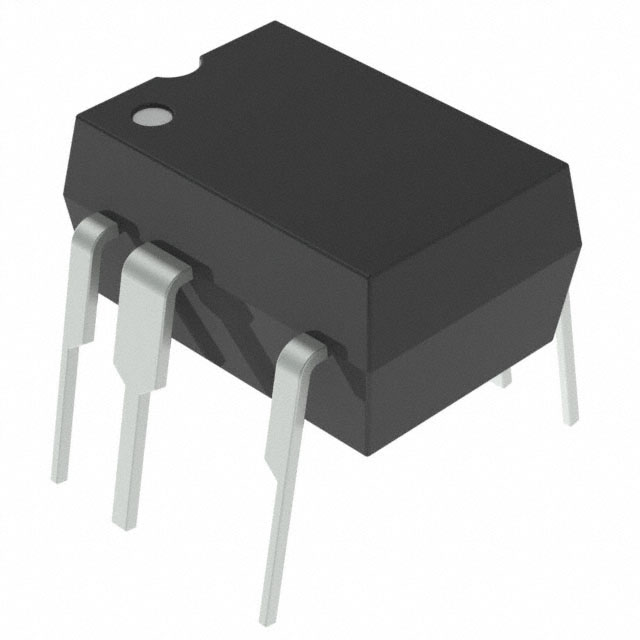
- 8-DIP (0.300", 7.62mm), 7 Leads
- Datasheet:
-
 TNY274PN.pdf
- Description:
- IC OFFLINE SWITCH FLYBACK 8DIP
- Quantity:
-
Unit Price:$0
Ext Price:$0
- Payment:
-

- Shipping:
-


TNY274PN Information
- Specifications
- Product Details
- Comparison
- Tags
- Product attributes
- Attribute value
- Manufacturer:
- Power Integrations
- Series:
- TinySwitch®-III
- Package/Case:
- 8-DIP (0.300", 7.62mm), 7 Leads
- Packaging:
- Tube
- Product Status:
- Active
- Output Isolation:
- Isolated
- Internal Switch(s):
- Yes
- Voltage - Breakdown:
- 700V
- Topology:
- Flyback
- Voltage - Start Up:
- -
- Voltage - Supply (Vcc/Vdd):
- -
- Duty Cycle:
- 65%
- Frequency - Switching:
- 132kHz
- Power (Watts):
- 11 W
- Fault Protection:
- Current Limiting, Open Loop, Over Temperature, Over Voltage, Short Circuit
- Control Features:
- EN
- Operating Temperature:
- -40°C ~ 150°C (TJ)
- Grade:
- -
- Qualification:
- -
- Supplier Device Package:
- 8-PDIP-C
- Mounting Type:
- Through Hole
- Datasheet:
-
TNY274PN.pdf
TNY274PN - Energy-Efficient Offline Flyback Switcher from Power Integrations
The TNY274PN is what you reach for when you need a proper isolated flyback supply under 10 watts and you don't want to design a discrete PWM controller with an external MOSFET. It belongs to Power Integrations' TinySwitch-III family - the "III" matters, because it's the generation where PI added the selectable current limit via the BP/M pin capacitor, ON-time extension for better hold-up, and got the no-load consumption below 50mW with a bias winding. 8.5W on universal input (85-265VAC), 11W on 230VAC-only if you're designing for a single market. The switching frequency runs at 132kHz - double the older TinySwitch-II - which means your transformer can be smaller. If 8.5W isn't enough, you step up to the TNY275PN (11.5W) or TNY276PN (15W) in the same DIP-8C footprint. If it's too much, the TNY273PN gives you 6W for a slightly lower BOM cost.
What Are the Technical Specifications of TNY274PN?
| Parameter | Value |
|---|---|
| Manufacturer | Power Integrations |
| Series | TinySwitch-III |
| Package | DIP-8C (8-PDIP-C, 7 Leads) |
| Mounting Type | Through Hole |
| Input Voltage (AC) | 85 – 265 VAC (Universal) |
| Breakdown Voltage (BVDSS) | 700 V (integrated MOSFET) |
| Switching Frequency | 132 kHz (typical, with jitter) |
| Maximum Duty Cycle | 65% |
| Output Power (Adapter, 85-265VAC) | 5 W |
| Output Power (Open Frame, 85-265VAC) | 8.5 W |
| Output Power (Open Frame, 230VAC ±15%) | 11 W |
| On-Resistance RDS(on) | 48 Ω (typical) |
| No-Load Consumption (with bias winding) | < 50 mW @ 265 VAC |
| No-Load Consumption (without bias winding) | < 150 mW @ 265 VAC |
| Current Limit (BP/M = 0.1µF) | 250 mA (typical) |
| Current Limit (BP/M = 1µF) | 275 mA (typical) |
| Current Limit (BP/M = 10µF) | 300 mA (typical) |
| Thermal Shutdown | +135°C minimum (hysteretic, auto-recovery) |
| Operating Temperature (Junction) | -40°C to +150°C |
| Auto-Restart Duty Cycle | ~3% (fault protection) |
| Frequency Jittering | ±4 kHz (reduces EMI) |
| RoHS Compliance | Yes, Lead-Free |
| Topology | Flyback (designed for) |
BP/M Pin - Selectable Current Limit
The BP/M pin isn't just a bypass capacitor connection. The capacitor value you put on it sets the current limit:
| BP/M Capacitor | Current Limit | Use Case |
|---|---|---|
| 0.1 µF | 250 mA | Standard operation |
| 1 µF | 275 mA | Increased power (TNY275 equivalent) |
| 10 µF | 300 mA | Maximum headroom (TNY276 equivalent) |
This means one PCB layout can serve multiple power levels just by changing the BOM - the same board can be a 6W, 8.5W, or 11W supply with nothing more than a capacitor value change and a transformer swap.
What Are the Alternatives to TNY274PN?
| Alternative | Key Difference | Best For |
|---|---|---|
| TNY273PN | Lower power: 6W (85-265V) / 8W (230V) | Cost-sensitive designs under 6W |
| TNY275PN | Higher power: 11.5W (85-265V) / 15W (230V) | Next step up, same footprint |
| TNY276PN | Even higher: 15W (85-265V) / 19W (230V) | Maximum power in DIP-8C |
| TNY286PG | TinySwitch-4, higher efficiency, same pinout | New designs targeting latest efficiency regs |
TNY274PN vs TNY275PN - The Power Headroom Decision
The TNY275PN is rated for 11.5W on universal input - roughly 35% more than the TNY274. From our experience, if your design calculates to 7-8W on paper, go with the TNY275PN, not the TNY274PN. Here's why: the paper calculation assumes nominal input and a resistive load. Real-world conditions - a motor starting on the same circuit, a brownout, a load that draws 2× its rated current for 50ms - will push a marginal TNY274 into its current limit repeatedly. The TNY275 gives you enough headroom that the auto-restart protection stays quiet. The price difference between the two is pennies; the field return from an under-designed supply is not.
TNY274PN vs TNY286PG - TinySwitch-III vs TinySwitch-4
The TNY286PG is the newer generation. It's pin-compatible with the TNY274PN and offers better efficiency, especially at light load. If you're starting a new design today and the project will be in production for 5+ years, go TNY286PG. If you're maintaining an existing design or ordering replacement stock, TNY274PN is the safe call - it's been in production since 2006 and isn't going anywhere.
How Much Does TNY274PN Cost and Is It in Stock?
| Quantity | Unit Price (USD) |
|---|---|
| 1 – 49 | $0.79 |
| 50 – 499 | $0.62 |
| 500 – 2,499 | $0.48 |
| 2,500+ | $0.39 |
In stock at ICMASS. Ships same day from Shenzhen for orders before 4PM HKT. Tube packaging (50 units per tube). For SMD version, see TNY274GN-TL (tape & reel).
What Are the Typical Applications of TNY274PN?
USB Chargers and Small Adapters
The 8.5W sweet spot lines up perfectly with 5V/1.7A USB charging. The tight no-load consumption (<50mW with bias winding) meets every energy regulation that matters - CEC, Energy Star, EU CoC Tier 2. One IC replaces the PWM controller, external MOSFET, startup circuit, and protection discretes.
PC Standby / Auxiliary Power Supplies
Every ATX power supply has a 5V standby rail that has to stay alive while the main converter is off. The TNY274PN is designed for exactly this: the flyback topology gives you isolation from mains, the auto-restart protects against secondary-side shorts, and with a bias winding the standby consumption barely registers on a power meter.
Set-Top Box and Home Appliance Power
DVD players, PVRs, broadband modems, smart speakers - anything that plugs into the wall and needs 5-15W of isolated DC. The 132kHz switching frequency lets you use a smaller transformer, which matters when the industrial design team has given you 18mm of height to work with.
LED Driver Power Supplies
Constant-voltage flyback to feed a secondary-side constant-current LED controller. The TNY274's ON-time extension means the LED string stays lit through short line dropouts without a massive input bulk capacitor - at 132kHz, even a small cap holds enough energy to bridge a half-cycle dip.
Industrial Metering and Sensor Nodes
Isolated power for RS-485 transceivers, 4-20mA loop-powered instruments, and industrial sensor endpoints. The 700V MOSFET survives the kind of voltage transients you get on a factory floor, and the hysteretic thermal shutdown means the supply hiccups instead of burning when a panel door closes and the ventilation dies.
Why Buy TNY274PN from ICMASS?
We carry the full TinySwitch-III lineup. TNY273 through TNY278, all in stock. If your production run needs to scale from a 6W baseline to a 19W variant across different SKUs, we ship the entire BOM gradient from one place.
Transformer-ready support. The TNY274PN's biggest design variable isn't the chip - it's the transformer. We stock the common EFD15/EE16/EE19 cores and bobbins that pair with TinySwitch-III reference designs. If you're working off PI's RD-91 or DI-153 reference designs, we can quote the full magnetics BOM alongside the IC.
Batch-matched current limit. PI's datasheet gives a typical current limit - but in production, there's a distribution. For customers running near the power limit, we can pull same-date-code tubes so your production line sees consistent current limit behavior across the entire run.
Shenzhen delivery. Stock ships from Shenzhen the same day for orders placed before 4PM HKT. DHL to North America and Europe in 3-5 days.
Frequently Asked Questions About TNY274PN
Q1: What's the difference between TNY274PN and TNY274GN?
A: Package only. PN = DIP-8C through-hole (8 leads, 7 used, 0.300" row spacing). GN = SMD-8 surface mount. Same silicon, same specs. PN is better for prototyping and hand-soldering; GN is for reflow production lines. GN-TL adds tape & reel packaging for pick-and-place.
Q2: How do I select the BP/M capacitor value?
A: The BP/M pin capacitor sets the current limit. 0.1µF = 250mA (standard), 1µF = 275mA (TNY275 equivalent), 10µF = 300mA (TNY276 equivalent). One PCB can serve three power levels by changing this capacitor value and the transformer. The capacitor also sets the startup time - larger values mean longer startup delay as the cap charges from the internal current source.
Q3: Do I need a bias winding for TNY274PN?
A: Not required, but recommended. Without it, the chip self-biases from the DRAIN pin, but no-load consumption runs around 150mW. Add a bias winding and it drops below 50mW. For any design targeting CEC Level VI or EU CoC Tier 2, the bias winding pays for itself.
Q4: What is the RCD clamp circuit and do I need it?
A: Yes, you need it. Every flyback converter using TNY274PN requires an RCD (resistor-capacitor-diode) clamp across the transformer primary to absorb the leakage inductance spike when the MOSFET turns off. Without it, the DRAIN voltage will exceed the 700V BVDSS rating and the chip will fail - usually within minutes. A typical clamp: 100V TVS or 150V zener + fast diode + 2.2-4.7nF cap + 47-100kΩ resistor. The resistor dissipates the leakage energy - size it for the worst-case leakage at maximum load.
Q5: Why is my TNY274PN output hiccupping (starting and stopping repeatedly)?
A: This is auto-restart mode. It means the output is either shorted, overloaded, or the feedback loop is open. Check: (1) Is the optocoupler working? Measure the EN/UV pin - it should go low (< 240µA disable threshold) to enable switching. (2) Is the output capacitor shorted or leaky? (3) Is the transformer saturating? If the core saturates, the current spike trips cycle-by-cycle current limit and the chip can't deliver power - measure the DRAIN voltage waveform at full load with an isolated probe.
Q6: What undervoltage lockout (UVLO) threshold should I set?
A: The UVLO is set by a single resistor from the EN/UV pin to the rectified DC bus. For universal input designs, set UVLO around 100VDC - this prevents the supply from trying to start during brownout conditions. The resistor value: R = (VDC_bus_at_UVLO - 1.2V) / 25µA. Typical value is around 4MΩ for 100VDC UVLO.
Q7: Can the TNY274PN replace a TNY274P?
A: Yes. TNY274P is the older non-RoHS version (contains lead). TNY274PN is the active, lead-free, RoHS-compliant drop-in replacement. Same pinout, same specs.
Q8: How do I size the input bulk capacitor for TNY274PN?
A: With the ON-time extension feature, you can use a smaller input bulk capacitor than traditional flyback designs. A rule of thumb: 1-1.5µF per watt for universal input. For an 8.5W design, start with 10µF and verify hold-up time meets your spec.
Q9: What transformer core size works with TNY274PN?
A: For 8.5W universal input: EE16 or EFD15 with a gap for the required primary inductance (typically 1.0-1.5mH). For the 11W 230VAC-only design: EE16 is sufficient. Reference designs RD-91 and DI-153 from Power Integrations give complete transformer specifications - turns ratios, wire gauges, core gaps, and winding order.
Q10: What causes audible noise from a TNY274PN supply?
A: Three common culprits. (1) The transformer - varnish impregnation fixes it. If the core halves are vibrating, the gap is too small or the clamping band is loose. (2) The input filter choke - a loosely wound common-mode choke can buzz at the 132kHz fundamental or its subharmonics during burst-mode operation at light load. (3) Ceramic capacitors - X7R caps in the clamp circuit can be piezoelectric; switch to film or C0G if they're singing.
Q11: TNY274PN vs LNK304PN - which one for my design?
A: TNY274PN if you need galvanic isolation (flyback) and more than a couple watts. LNK304PN if you can do non-isolated (buck) and your load is under 120mA. Different families, different use cases. The TNY274PN is a flyback specialist with a transformer; the LNK304PN is a buck specialist without one. If you need isolation, there's no contest - the TNY274PN's flyback topology is the answer.
Q12: Can I parallel two TNY274PNs for more power?
A: Don't. The on/off control scheme isn't designed for parallel operation - the two chips won't share current evenly. If you need more power, step up to a TNY275PN (11.5W), TNY276PN (15W), or move to the TOPSwitch family (TOP224YN, 20-30W) instead.
Internal Links
- LNK304PN - LinkSwitch-TN Offline Switcher - non-isolated buck, when you don't need a transformer
- TOP224YN - TOPSwitch-II PWM Switcher - higher power PI option (20-30W)
- LM2596S-ADJ - DC-DC Buck Converter - when your input is already DC and you just need step-down
- LM317T - Adjustable Linear Regulator - for post-regulation after a flyback output
- IRLZ44NPBF - N-Channel Power MOSFET - if you decide to design a discrete flyback instead
| Image |
|
|
|
| Part Number | TNY274PN | TNY274PNAU | TNY274PN-TL |
| Manufacturer | Power Integrations | Power Integrations | Power Integrations |
| Series | TinySwitch®-III | TinySwitch®-III | TinySwitch®-III |
| Package/Case | 8-DIP (0.300", 7.62mm), 7 Leads | 8-DIP (0.300", 7.62mm), 7 Leads | 8-DIP (0.300", 7.62mm), 7 Leads |
| Packaging | Tube | Tube | Tube |
| Product Status | Active | Obsolete | Active |
| Output Isolation | Isolated | Isolated | Isolated |
| Internal Switch(s) | Yes | Yes | Yes |
| Voltage - Breakdown | 700V | 700V | 700V |
| Topology | Flyback | Flyback | Flyback |
| Voltage - Start Up | - | - | - |
| Voltage - Supply (Vcc/Vdd) | - | - | - |
| Duty Cycle | 65% | 65% | 65% |
| Frequency - Switching | 132kHz | 132kHz | 132kHz |
| Power (Watts) | 11 W | 11 W | 11 W |
| Fault Protection | Current Limiting, Open Loop, Over Temperature, Over Voltage, Short Circuit | Current Limiting, Open Loop, Over Temperature, Over Voltage, Short Circuit | Current Limiting, Open Loop, Over Temperature, Over Voltage, Short Circuit |
| Control Features | EN | EN | EN |
| Operating Temperature | -40°C ~ 150°C (TJ) | -40°C ~ 150°C (TJ) | -40°C ~ 150°C (TJ) |
| Grade | - | - | - |
| Qualification | - | - | - |
| Supplier Device Package | 8-PDIP-C | 8-PDIP-C | 8-PDIP-C |
| Mounting Type | Through Hole | Through Hole | Through Hole |
User Guide
- Purchase & Inquiry
- Package
- Shipping Information
- Customer Review
You may place an order without registering to IC-MAX.COM
We strongly suggest you sign in before purchasing as you can track your order in real time.
For your convenience, we accept multiple payment methods in USD, including PayPal, Credit Card, and wire transfer.
RFQ (Request for Quotations)
It is recommended to request for quotations to get the latest prices and inventories about the part.
Our sales will reply to your request by email within 24 hours.
1. You'll receive an order information email in your inbox. (Please remember to check the spam folder if you didn't hear from us).
2. Since inventories and prices may fluctuate to some extent, the sales manager is going to reconfirm the order and let you know if there are any updates.
-
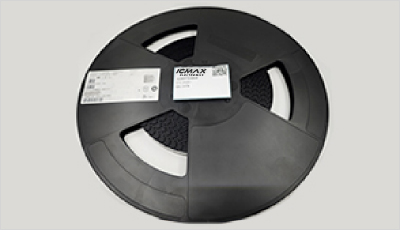
- Step1:Prepare product
-
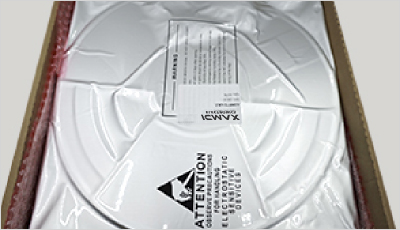
- Step2:Vacuum packaging
-
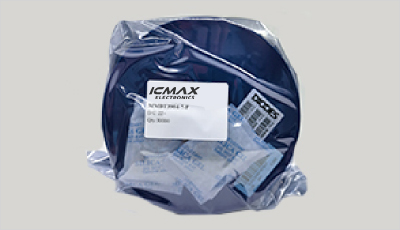
- Step3:Anti-static bag
-
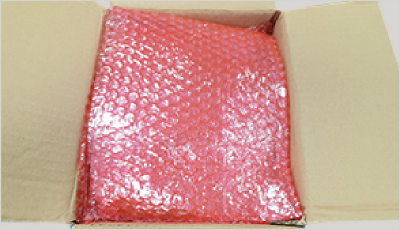
- Step4:Individual package
-
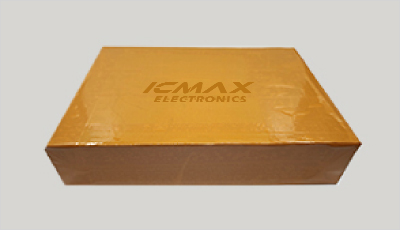
- Step5:Packaging box
-
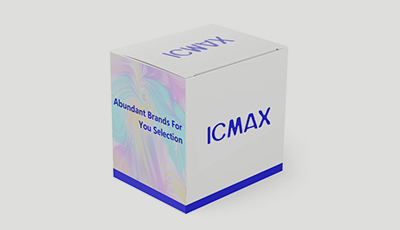
- Step6:Barcode shipping label
Shipping starts at $40, but some countries will exceed $40. For example (South Africa, Brazil, India, Pakistan, Israel, etc.)
The basic freight (for package ≤0.5kg or corresponding volume) depends on the time zone and country.
Currently, our products are shipped through DHL, FedEx, SF, and UPS.
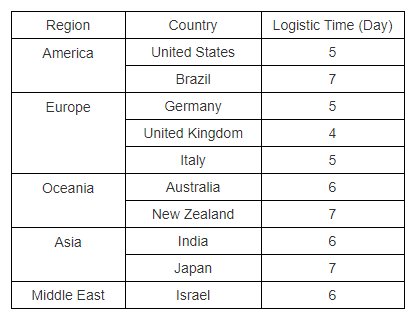
Delivery TimeOnce the goods are shipped, estimated delivery time depends on the shipping methods you chose:
FedEx International, 5-7 business days.
The following are some common countries' logistic time.
- Hot Sale
- Related Categories
- Include Parts
- Popular Search
- Voltage Regulators - Linear, Low Drop Out (LDO) Regulators(66836)
- Voltage Regulators - Linear Regulator Controllers(325)
- Voltage Regulators - Linear + Switching(1473)
- Voltage Regulators - DC DC Switching Regulators(35756)
- Voltage Reference(8428)
- V/F and F/V Converters(139)
- Thermal Management(515)
- Supervisors(41287)
- Special Purpose Regulators(4820)
- RMS to DC Converters(144)
The following parts include "TNY274PN" in Silicon Labs TNY274PN.
- Part Number
- Manufacturer
- Package
- Description
- LNK6407D-TL Power Integrations 8-DIP (0.300", 7.62mm), 7 Leads IC OFFLINE SWITCH FLYBACK 8DIP
- LNK3204D-TL Power Integrations 8-DIP (0.300", 7.62mm), 7 Leads IC OFFLINE SWITCH FLYBACK 8DIP
- SR10LG-G Microchip Technology 8-DIP (0.300", 7.62mm), 7 Leads IC OFFLINE SWITCH FLYBACK 8DIP
- TNY285DG-TL Power Integrations 8-DIP (0.300", 7.62mm), 7 Leads IC OFFLINE SWITCH FLYBACK 8DIP
- LNK304DN-TL Datasheet, Price, Stock & Alternatives | ICMASS Power Integrations 8-DIP (0.300", 7.62mm), 7 Leads IC OFFLINE SWITCH FLYBACK 8DIP
- TNY285KG-TL Power Integrations 8-DIP (0.300", 7.62mm), 7 Leads IC OFFLINE SWITCH FLYBACK 8DIP
- LNK3206D-TL Power Integrations 8-DIP (0.300", 7.62mm), 7 Leads IC OFFLINE SWITCH FLYBACK 8DIP
- LNK623DG-TL Power Integrations 8-DIP (0.300", 7.62mm), 7 Leads IC OFFLINE SWITCH FLYBACK 8DIP
- TNY286PG Power Integrations 8-DIP (0.300", 7.62mm), 7 Leads IC OFFLINE SWITCH FLYBACK 8DIP
- LNK624DG-TL Power Integrations 8-DIP (0.300", 7.62mm), 7 Leads IC OFFLINE SWITCH FLYBACK 8DIP
The following parts are popular search parts in Test and Measurement.
Inventory:683
Please send an inquiry. Send us your inquiry, and we will respond immediately.

- 1500+ Daily average RFQ Volume

- 20,000.000 Standard Product Unit

- 1800+ Worldwide Manufacturers

- 15,000+ In-stock Warehouse