Power Integrations LNK562DN-TL

- Part No.:
- LNK562DN-TL
- Manufacturer:
- Power Integrations
- Category:
- AC DC Converters, Offline Switches
- Package:
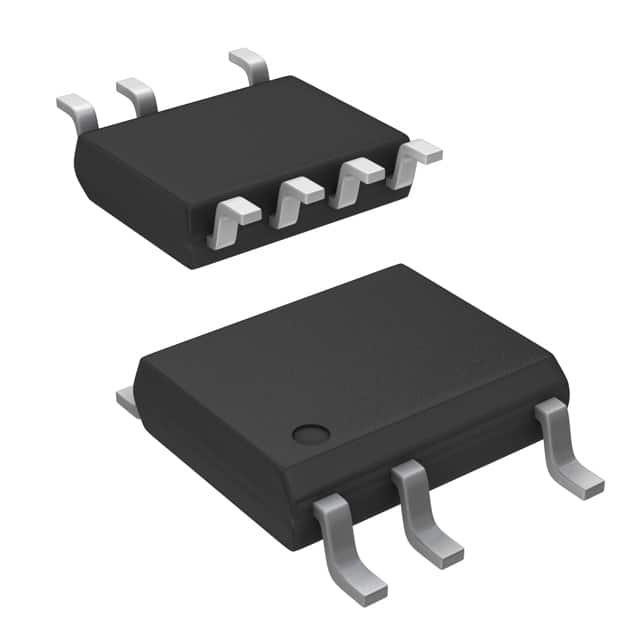
- 8-SOIC (0.154", 3.90mm Width), 7 Leads
- Datasheet:
-
 LNK562DN-TL.pdf
- Description:
- IC OFFLINE SWITCH FLYBACK 8SO
- Quantity:
-
Unit Price:$0
Ext Price:$0
- Payment:
-

- Shipping:
-


LNK562DN-TL Information
- Specifications
- Product Details
- Comparison
- Tags
- Product attributes
- Attribute value
- Manufacturer:
- Power Integrations
- Series:
- LinkSwitch®-LP
- Package/Case:
- 8-SOIC (0.154", 3.90mm Width), 7 Leads
- Packaging:
- Tape & Reel (TR)
- Product Status:
- Active
- Output Isolation:
- Isolated
- Internal Switch(s):
- Yes
- Voltage - Breakdown:
- 700V
- Topology:
- Flyback
- Voltage - Start Up:
- -
- Voltage - Supply (Vcc/Vdd):
- -
- Duty Cycle:
- 70%
- Frequency - Switching:
- 66kHz
- Power (Watts):
- 1.9 W
- Fault Protection:
- Current Limiting, Open Loop, Over Temperature, Short Circuit
- Control Features:
- -
- Operating Temperature:
- -40°C ~ 150°C (TJ)
- Grade:
- -
- Qualification:
- -
- Supplier Device Package:
- SO-8C
- Mounting Type:
- Surface Mount
- Datasheet:
-
LNK562DN-TL.pdf
LNK562DN-TL — 1.9W Off-Line Flyback Switcher, Primary-Side Regulated, No Optocoupler (SO-8C)
The LNK562DN-TL is Power Integrations' LinkSwitch-LP switcher — a 700V MOSFET with an on/off controller in SO-8C, rated for 1.9W of isolated flyback output across every input condition in the datasheet.
Its whole pitch is what it deletes: no optocoupler, no TL431, no secondary-side sense resistor, no loop compensation. The output voltage is sensed through a bias winding and two resistors, so a complete charger fits in about 14 components.
The trade? Load regulation is looser than an opto loop. One designer's LNK562 board read 3V at heavy load and 8V at no-load until the feedback network was fixed. Understand the bias-winding path and you'll never meet that symptom.
What Are the Technical Specifications of LNK562DN?
| Parameter | Value |
|---|---|
| Product Family | LinkSwitch-LP |
| Package | SO-8C surface mount (7 leads) |
| Output Power | 1.9W — 85–265VAC and 230VAC, open frame and adapter |
| Integrated Power Switch | 700V MOSFET (BVDSS 700V), ~76Ω RDS(on) |
| Topology | Isolated flyback |
| Feedback | Primary-side regulation via bias winding — no optocoupler |
| Switching Frequency | 66kHz typical (61–71kHz) with jittering |
| Maximum Duty Cycle | 70% |
| Control Method | Simple on/off control (cycle skipping) |
| FB Pin Thresholds | >70µA disables switching; 1.69V = CC entry; 0.8V = auto-restart |
| CC-Mode Behavior | Oscillator folds back linearly from 100% to 48% |
| Auto-Restart | ~100ms on / 800ms off — limits power to ~12% under fault |
| Internal Supply | 5.8V regulator from BYPASS pin (0.1µF external cap) |
| Protections | Current limiting, open-loop fault, hysteretic overtemperature, short circuit |
| Operating Temperature | -40°C to +150°C (junction) |
| EcoSmart | Low no-load consumption |
Key numbers that matter: three voltages define the whole regulation — 70µA into FB kills the switch, 1.69V on FB marks constant-current entry, and 0.8V triggers auto-restart. Everything else is a transformer and two resistors.
How Does the LNK562 Regulate Without an Optocoupler?
The feedback path in one picture: N1 is switched by DRAIN, N3 feeds the isolated output, and N2 — wound on the same core, wired to neither — mirrors the output voltage into the feedback chain.
A slow diode (1N400x class) rectifies it, C3 smooths it, and a 1% resistor divider scales it into the FB pin. The crossed-out optocoupler is the loop this design deletes.
And the control law: when more than 70µA flows into FB, that switching cycle is skipped. Load light, output high, more cycles skipped. Load heavy, output low, fewer skipped. The ratio of enabled to skipped cycles is the regulation — no PWM, no error amplifier.
Why a slow diode matters: a fast recovery diode on the bias winding lets the leakage-inductance spike into the measurement, corrupting regulation. The 1N400x class filters it out — and in clampless designs a slow bias diode is mandatory, acting as a clamp that damps leakage ringing.
When Should You Use (and NOT Use) the LNK562DN?
✅ Use LNK562DN when:
- You're replacing a 50/60Hz linear transformer. The reference designs push this hard — a 1W supply that even drops the input electrolytic capacitor entirely.
- You're building a small battery charger. The CV/CC output characteristic comes free: constant voltage in normal operation, current fold-back in overload.
- BOM count is the whole game. Around 14 components for a complete isolated supply, and none of them exotic.
- The rail is inside an appliance. Doorbells, timers, cooker controls, standby rails — 1.9W is usually the whole budget.
❌ Don't use LNK562DN when:
- You need more than ~2W. Step up within the family: LNK563DN (2.5W) or LNK564DN (3W), or leave for LNK364DN at 6W.
- Load regulation must be tight. Bias-winding sensing is a proxy measurement — a documented build drifted from 3V at 100Ω to 8V at no-load until its feedback was fixed.
- Both outputs of a dual rail must be precise. Primary-side regulation watches the winding, not your load; the second output rides loose unless you post-regulate.
- Ripple at light load is unforgivable. Cycle skipping at light load shows up as low-frequency ripple — an opto loop (e.g., TNY284DG) controls it more cleanly.
What Are the Alternatives to LNK562DN?
| Model | Type | Key Difference | Best For |
|---|---|---|---|
| LNK563DN | LinkSwitch-LP 2.5W | Same regulation, 83kHz oscillator | The next power step up |
| LNK564DN | LinkSwitch-LP 3W | Same regulation, 100kHz oscillator | 3W PSR designs |
| LNK364DN | LinkSwitch-XT 6W | Opto feedback, tighter regulation | 2–6W supplies with real output sensing |
| TNY284DG | TinySwitch-4 5W | Opto loop with higher feedback gain | 5W rails needing tight tolerance |
| LNK306DN | LinkSwitch-TN buck | Non-isolated buck, no transformer | Non-isolated 3.3–12V rails |
| INN3676C | InnoSwitch3-EP 36W | FluxLink + SR, 19× the power | The adapter class |
The LinkSwitch-LP ladder: the 1.9W rating is flat across the whole datasheet table — adapter or open frame, 85–265VAC or 230VAC — which makes it the family's most predictable part to design with.
LNK562DN vs LNK563DN/LNK564DN — when does the frequency matter? The higher-frequency siblings shrink the transformer for the same power, but the regulation doesn't change.
The bias-winding architecture is identical across the family, so a design that's stable on the LNK562 moves to the LNK563 with a transformer swap, not a loop redesign.
LNK562DN vs LNK364DN — the two-loop question. At 1.9W the LNK562's part-count win is decisive. At 2–6W, the LNK364's opto senses the actual output, and regulation tightens accordingly. Both share the SO-8C footprint, so the schematic is the only thing that changes.
What Are the Typical Applications of LNK562DN?
The CV/CC characteristic is built in: normal loads sit in the constant-voltage region, where cycle skipping holds the rail. Push past the peak power point and the oscillator folds back linearly to 48%, holding current roughly constant as voltage falls — a charger profile with zero extra silicon.
Linear transformer replacement: The design references show the ambition — a 1W supply with no input electrolytic capacitor, sized for wall plugs and doorbells that a 50/60Hz transformer served for decades.
Small battery chargers: NiMH, small lead-acid, and trickle chargers use the CV/CC curve directly. No charge controller, no sense resistor, no opto — the fold-back region does the current limiting.
White goods standby rails: The appliance only needs a watt or two in standby, and the LNK562's component count keeps the board cost below what the transformer alone once cost.
Smart-home and metering nodes: Always-on but lightly loaded — exactly where low no-load consumption and a 14-part BOM matter more than lab-grade regulation.
Why Buy LNK562DN from ICMASS?
Family stocked together. The LNK562, LNK563, and LNK564 share a design file — if the 1.9W budget stretches, the 2.5W or 3W part ships in the same order.
Genuine Power Integrations parts. Low-power LinkSwitch parts are cheap to counterfeit and the 700V rating is invisible on the bench. We source from authorized channels with lot traceability available.
Cross-reference support. Moving from a linear transformer, from an LNK306 buck, or up to an opto design — give us input range, output, and tolerance, and we'll confirm the right LinkSwitch before you order.
Shenzhen warehouse, global DHL/FedEx. Same-day shipping for orders placed before 15:00 CST. International delivery in 5–10 days.
Frequently Asked Questions About LNK562DN
Q1: How does the LNK562 regulate output without an optocoupler?
A: A bias winding mirrors the output voltage and a resistor divider feeds it to the FB pin. All transformer windings share one flux, so the bias winding voltage tracks the secondary. The divider scales it into FB, and on/off control skips switching cycles whenever more than 70µA flows in.
Q2: Why does my output voltage climb at no-load?
A: The bias-winding feedback path is misbehaving — it's the classic LinkSwitch-LP symptom. One documented build read 3V at a 100Ω load, 5V at 220Ω, and 8V at no-load. Fixes: tighten bias-to-secondary coupling, shrink an oversized feedback filter (a 36k + 1µF pair was too slow), and load the bias winding lightly to damp transients.
Q3: How much load regulation should I expect compared to an opto design?
A: Looser — primary-side regulation measures a proxy, not the output. With tight coupling and 1% divider resistors it's fine for chargers and standby rails. But if the load spans near-zero to near-full current with a tight spec, an opto loop like the LNK364 or TNY284 is the right tool.
Q4: Why use a slow diode on the bias winding?
A: A slow diode (1N400x class) filters the leakage-inductance spike out of the feedback measurement. Fast recovery diodes let that spike through and corrupt regulation — Power Integrations makes the slow diode mandatory in clampless designs, where it also damps leakage ringing.
Q5: What do the three FB numbers mean — 70µA, 1.69V, 0.8V?
A: 70µA disables switching, 1.69V marks constant-current entry, and 0.8V triggers auto-restart. Above 70µA the cycle is skipped; at the 1.69V source-follower threshold the oscillator starts folding back; below 0.8V the part shuts down into auto-restart.
Q6: What happens during a short circuit?
A: Auto-restart — about 100ms of switching every 800ms, limiting power to ~12% of maximum. The FB pin falls below 0.8V, the controller waits, retries, and recovers automatically when the fault clears. No fuse, no latch, no reset button.
Q7: What's the difference between LNK562, LNK563, and LNK564?
A: Power and frequency: 1.9W at 66kHz, 2.5W at 83kHz, 3W at 100kHz. The regulation architecture is identical across the family, so moving up is a transformer and feedback-divider exercise, not a control redesign.
Q8: Can the LNK562 charge a battery directly?
A: Yes — the CV/CC output characteristic is the charger. Normal operation holds constant voltage; beyond the peak power point the oscillator folds back to 48% and current limits. Small NiMH and lead-acid packs charge with no dedicated controller.
Q9: Which transformer core does a 1.9W LNK562 design need?
A: An EE19 class core — an EE13 tops out around 1.1–1.7W. The datasheet power table assumes discontinuous mode (KP > 1), ~70% efficiency, and a suitably sized core, so don't chase the full rating on a core that can't carry it.
Q10: Does the 1.9W rating change with input voltage?
A: No — 1.9W holds across 85–265VAC and 230VAC, open frame and adapter. It's the flat row of the LinkSwitch-LP power table, which makes the LNK562 unusually predictable: the rating doesn't quietly derate when the input range widens.
| Image |
|
|
| Part Number | LNK562DN-TL | LNK562DN |
| Manufacturer | Power Integrations | Power Integrations |
| Series | LinkSwitch®-LP | LinkSwitch®-LP |
| Package/Case | 8-SOIC (0.154", 3.90mm Width), 7 Leads | 8-SOIC (0.154", 3.90mm Width), 7 Leads |
| Packaging | Tape & Reel (TR) | Tube |
| Product Status | Active | Discontinued at Digi-Key |
| Output Isolation | Isolated | Isolated |
| Internal Switch(s) | Yes | Yes |
| Voltage - Breakdown | 700V | 700V |
| Topology | Flyback | Flyback |
| Voltage - Start Up | - | - |
| Voltage - Supply (Vcc/Vdd) | - | - |
| Duty Cycle | 70% | 70% |
| Frequency - Switching | 66kHz | 66kHz |
| Power (Watts) | 1.9 W | 1.9 W |
| Fault Protection | Current Limiting, Open Loop, Over Temperature, Short Circuit | Current Limiting, Open Loop, Over Temperature, Short Circuit |
| Control Features | - | - |
| Operating Temperature | -40°C ~ 150°C (TJ) | -40°C ~ 150°C (TJ) |
| Grade | - | - |
| Qualification | - | - |
| Supplier Device Package | SO-8C | SO-8C |
| Mounting Type | Surface Mount | Surface Mount |
User Guide
- Purchase & Inquiry
- Package
- Shipping Information
- Customer Review
You may place an order without registering to IC-MAX.COM
We strongly suggest you sign in before purchasing as you can track your order in real time.
For your convenience, we accept multiple payment methods in USD, including PayPal, Credit Card, and wire transfer.
RFQ (Request for Quotations)
It is recommended to request for quotations to get the latest prices and inventories about the part.
Our sales will reply to your request by email within 24 hours.
1. You'll receive an order information email in your inbox. (Please remember to check the spam folder if you didn't hear from us).
2. Since inventories and prices may fluctuate to some extent, the sales manager is going to reconfirm the order and let you know if there are any updates.
-
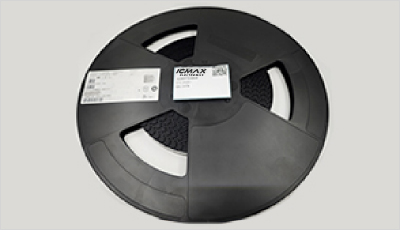
- Step1:Prepare product
-
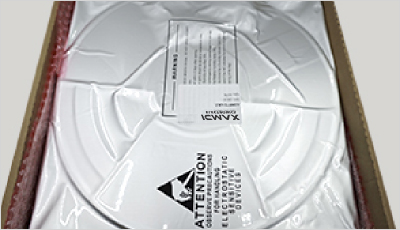
- Step2:Vacuum packaging
-
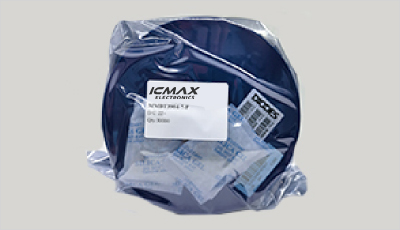
- Step3:Anti-static bag
-
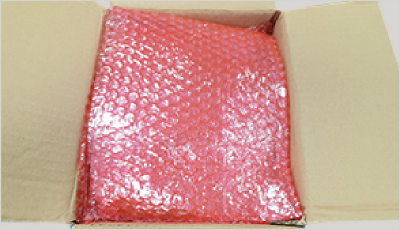
- Step4:Individual package
-
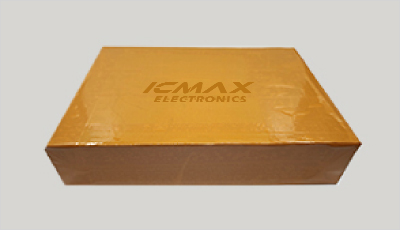
- Step5:Packaging box
-
- Step6:Barcode shipping label
Shipping starts at $40, but some countries will exceed $40. For example (South Africa, Brazil, India, Pakistan, Israel, etc.)
The basic freight (for package ≤0.5kg or corresponding volume) depends on the time zone and country.
Currently, our products are shipped through DHL, FedEx, SF, and UPS.
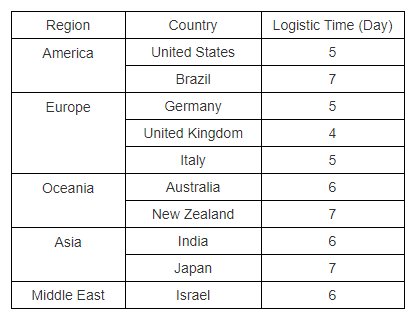
Delivery TimeOnce the goods are shipped, estimated delivery time depends on the shipping methods you chose:
FedEx International, 5-7 business days.
The following are some common countries' logistic time.
- Hot Sale
- Related Categories
- Include Parts
- Popular Search
- Voltage Regulators - Linear, Low Drop Out (LDO) Regulators(66836)
- Voltage Regulators - Linear Regulator Controllers(325)
- Voltage Regulators - Linear + Switching(1473)
- Voltage Regulators - DC DC Switching Regulators(35756)
- Voltage Reference(8428)
- V/F and F/V Converters(139)
- Thermal Management(515)
- Supervisors(41287)
- Special Purpose Regulators(4820)
- RMS to DC Converters(144)
The following parts include "LNK562DN-TL" in Silicon Labs LNK562DN-TL.
- Part Number
- Manufacturer
- Package
- Description
- LNK6407D-TL Power Integrations 8-SOIC (0.154", 3.90mm Width), 7 Leads IC OFFLINE SWITCH FLYBACK 8SO
- LNK3204D-TL Power Integrations 8-SOIC (0.154", 3.90mm Width), 7 Leads IC OFFLINE SWITCH FLYBACK 8SO
- SR10LG-G Microchip Technology 8-SOIC (0.154", 3.90mm Width), 7 Leads IC OFFLINE SWITCH FLYBACK 8SO
- TNY285DG-TL Power Integrations 8-SOIC (0.154", 3.90mm Width), 7 Leads IC OFFLINE SWITCH FLYBACK 8SO
- LNK304DN-TL Datasheet, Price, Stock & Alternatives | ICMASS Power Integrations 8-SOIC (0.154", 3.90mm Width), 7 Leads IC OFFLINE SWITCH FLYBACK 8SO
- TNY285KG-TL Power Integrations 8-SOIC (0.154", 3.90mm Width), 7 Leads IC OFFLINE SWITCH FLYBACK 8SO
- LNK3206D-TL Power Integrations 8-SOIC (0.154", 3.90mm Width), 7 Leads IC OFFLINE SWITCH FLYBACK 8SO
- LNK623DG-TL Power Integrations 8-SOIC (0.154", 3.90mm Width), 7 Leads IC OFFLINE SWITCH FLYBACK 8SO
- TNY286PG Power Integrations 8-SOIC (0.154", 3.90mm Width), 7 Leads IC OFFLINE SWITCH FLYBACK 8SO
- LNK624DG-TL Power Integrations 8-SOIC (0.154", 3.90mm Width), 7 Leads IC OFFLINE SWITCH FLYBACK 8SO
The following parts are popular search parts in Test and Measurement.
Inventory:7,140
Please send an inquiry. Send us your inquiry, and we will respond immediately.

- 1500+ Daily average RFQ Volume

- 20,000.000 Standard Product Unit

- 1800+ Worldwide Manufacturers

- 15,000+ In-stock Warehouse