Power Integrations LNK306DG-TL

- Part No.:
- LNK306DG-TL
- Manufacturer:
- Power Integrations
- Category:
- AC DC Converters, Offline Switches
- Package:
- 8-SOIC (0.154", 3.90mm Width), 7 Leads
- Datasheet:
-
 LNK306DG-TL.pdf
- Description:
- IC OFFLINE SWITCH MULT TOP 8SO
- Quantity:
-
Unit Price:$0
Ext Price:$0
- Payment:
-

- Shipping:
-


LNK306DG-TL Information
- Specifications
- Product Details
- Comparison
- Tags
- Product attributes
- Attribute value
- Manufacturer:
- Power Integrations
- Series:
- LinkSwitch®-TN
- Package/Case:
- 8-SOIC (0.154", 3.90mm Width), 7 Leads
- Packaging:
- Tape & Reel (TR)
- Product Status:
- Active
- Output Isolation:
- Non-Isolated
- Internal Switch(s):
- Yes
- Voltage - Breakdown:
- 700V
- Topology:
- Buck, Buck-Boost, Flyback
- Voltage - Start Up:
- -
- Voltage - Supply (Vcc/Vdd):
- -
- Duty Cycle:
- 69%
- Frequency - Switching:
- 66kHz
- Power (Watts):
- -
- Fault Protection:
- Current Limiting, Open Loop, Over Temperature, Short Circuit
- Control Features:
- -
- Operating Temperature:
- -40°C ~ 150°C (TJ)
- Grade:
- -
- Qualification:
- -
- Supplier Device Package:
- SO-8C
- Mounting Type:
- Surface Mount
- Datasheet:
-
LNK306DG-TL.pdf
LNK306DG-TL — 225mA Non-Isolated Buck Converter IC (SO-8C)
The LNK306DG-TL is the highest-current member of Power Integrations' LinkSwitch-TN family — a 700V integrated switcher that builds a non-isolated buck supply with about a dozen components. Its defining number: 482mA typical current limit (ILIMIT).
That's 225mA in mostly-discontinuous mode or 360mA in continuous conduction. On-resistance is 7Ω — less than a third of the LNK304's 24Ω. If you're building an appliance standby supply or an industrial sensor node, reach for the LNK306 when the LNK304 runs out of current.
What Are the Technical Specifications of LNK306DG-TL?
| Parameter | Value |
|---|---|
| Manufacturer | Power Integrations |
| Series | LinkSwitch®-TN (LNK302/304/305/306) |
| Topology | Buck, Buck-Boost, Flyback (non-isolated) |
| Integrated Switch | 700V Power MOSFET |
| Switching Frequency | 66kHz typical (with frequency jittering) |
| Duty Cycle | 69% max (72% typical) |
| Current Limit (ILIMIT) | 482mA typ (450–515mA range) |
| RDS(ON) | 7Ω typ, 8.1Ω max @ 25°C |
| Output Current (MDCM) | 225mA (230VAC) / 200mA (85–265VAC) |
| Output Current (CCM) | 360mA (230VAC) / 320mA (85–265VAC) |
| Input Voltage (AC) | 85VAC – 265VAC (full universal range) |
| DRAIN Supply Voltage | 50V max |
| Fault Protection | Cycle-by-cycle current limit, open-loop auto-restart, thermal shutdown (~142°C), output OVP clamp |
| Package | SO-8C (4.9 × 3.9mm, exposed SOURCE pads) |
| Operating Temperature (TJ) | -40°C to +150°C |
Key numbers that matter: The 7Ω RDS(ON) is what separates the LNK306 from its smaller siblings. At 482mA ILIMIT, conduction loss (I2R) peaks around 1.6W — manageable with adequate copper pour. A 1mH buck inductor at 66kHz gives ~30% ripple at 12V output.
When Should You Use (and NOT Use) the LNK306DG-TL?
✅ Use LNK306DG-TL when:
- You need a non-isolated offline supply with 150–250mA output. The LNK306 in buck topology converts 85–265VAC to a regulated DC rail with about a dozen passives. No transformer, no optocoupler, no auxiliary winding.
- You're pushing past an LNK304's current limit. The LNK304 tops out around 170mA in CCM. Swapping to an LNK306 gives you 360mA in the same footprint — but verify the inductor saturation current can handle the higher peak.
- Appliance standby supplies and e-meter power boards. The LinkSwitch-TN family is the reference design inside millions of smart meters, rice cookers, and AC fans. The LNK306 covers the higher end of standby power where the MCU draws more than a trickle.
- Industrial sensor nodes running from 24VAC. Full-wave rectify 24VAC to ~34VDC, buck it to 3.3V or 5V with the LNK306 — compact, reliable, no heatsink needed below 200mA load.
❌ Don't use LNK306DG-TL when:
- You need galvanic isolation. LinkSwitch-TN is non-isolated by design. For isolated supplies, look at TinySwitch-III (TNY274–280) or LinkSwitch-II (LNK623–626) with a coupled inductor or flyback transformer.
- Output current above 360mA. The LNK306 hits its current limit wall in CCM at about 360mA. For 500mA+, step up to TNY284 (TinySwitch-4, 500mA) or a discrete PWM controller.
- Audible noise is a hard requirement (silent operation). The 66kHz switching frequency and cycle-skipping at light load can produce audible inductor whine. The newer LinkSwitch-TN2 family addresses this with higher switching frequency and improved jitter. If you're locked into LNK306, add a series resistor (~47Ω) in the feedback path to damp the loop.
- You need sub-20mW no-load standby. LinkSwitch-TN draws about 50–80mW unloaded. For tighter standby budgets, LinkSwitch-XT or TinySwitch-4 offer lower no-load consumption.
LNK304 vs LNK305 vs LNK306 — How Do They Compare?
All three share the same 700V MOSFET, 66kHz frequency, SO-8C package, and auto-restart protection. The difference is how much current the internal MOSFET can carry before hitting its limit.
So which one? The LNK304 covers low-power standby rails (≤120mA). Jump to the LNK305 at 150–200mA. Reach for the LNK306 when you need 200–360mA or want the thermal margin of lower RDS(ON). One caveat: the LNK306's higher ILIMIT can saturate an inductor sized for an LNK304 — check ISAT before swapping.
Pin Functions at a Glance
| Pin | Name | Function |
|---|---|---|
| 1,2,3,6,7,8 | SOURCE (S) | MOSFET source. All six pins connect internally. Tie to ground plane with maximum copper pour for heatsinking — this is the only thermal path. |
| 4 | BP (Bypass) | Internal 5.8V regulator bypass. Connect a 100nF ceramic capacitor directly between BP and SOURCE — keep the trace under 5mm. |
| 5 | FB (Feedback) | Feedback input. A single resistor from the buck inductor's output side sets the output voltage. The IC regulates to maintain 1.65V at this pin. |
| Thermal pad | Exposed SOURCE | The six SOURCE pins conduct heat out of the die. PCB copper area directly determines maximum output current — 50mm² minimum, 100mm² recommended above 200mA load. |
What Are the Typical Applications of LNK306DG-TL?
Non-isolated appliance standby supply (12V/200mA). A dozen components — fuse, bridge rectifier, input cap, buck inductor, freewheeling diode, output cap, feedback resistors, and the LNK306 — build a complete 12V rail from universal AC. No auxiliary winding. The auto-restart feature means a shorted output just hiccups until the fault clears.
Smart meter / e-meter power supply (3.3V/150mA). Millions of electricity meters use LinkSwitch-TN to power the MCU, display, and RF module from the AC line being measured. The LNK306 covers the higher end — always-on wireless (Zigbee, Wi-SUN) pushes standby current past what an LNK304 can deliver.
Industrial 24VAC sensor node (5V/200mA). Factory automation runs on 24VAC. Full-wave rectify to ~34VDC, buck to 5V with LNK306 — the 700V MOSFET easily handles line transients. Add a TVS across the input for surge protection and you've got a supply that fits in a sensor housing.
LED driver (constant-current buck, 80–150mA). Configure the FB pin with a current-sense resistor instead of a voltage divider, and the LNK306 becomes a constant-current LED driver. The 66kHz switching keeps inductor size small enough for GU10 bulb form factors. Useful for low-cost, non-dimmable LED bulbs where isolation isn't required.
What Are the Alternatives to LNK306DG-TL?
| Model | Family | Key Difference | Best For |
|---|---|---|---|
| LNK304DG-TL | LinkSwitch-TN | 170mA max output, 24Ω RDS(ON) | Low-power standby (≤120mA), lowest cost |
| LNK305DG-TL | LinkSwitch-TN | 280mA max output, 12Ω RDS(ON) | Mid-range non-isolated supplies (120–200mA) |
| TNY284DG-TL | TinySwitch-4 | Isolated flyback, 500mA, 132kHz, lowest no-load (<10mW) | Isolated supplies where efficiency matters |
| LNK623DG-TL | LinkSwitch-II | Isolated CC/CV, primary-side regulation, 66kHz | Battery chargers and LED drivers needing isolated output |
| 78D05AL-TN3-R | Linear Regulator | 5V linear from DC, no switching noise | When you already have a DC rail and just need clean 5V |
LNK306 vs TNY284 — non-isolated or isolated? The LNK306 buck needs no transformer — cheaper BOM, smaller footprint, no isolation. The TNY284 flyback gives you safety isolation and more power, at higher magnetics cost.
If your load floats at line potential (appliance internals), the LNK306 saves cost. If a human can touch the output, you need isolation — use the TNY284.
How Much Does the LNK306DG-TL Cost and Is It in Stock?
| Quantity | Reference Price (per unit) |
|---|---|
| 1–99 | $0.25–$0.40 |
| 100–999 | $0.18–$0.30 |
| 1,000–9,999 (reel) | $0.14–$0.22 |
| 10,000+ | $0.11–$0.18 |
Contact ICMASS for a same-day quote on your specific quantity. The LNK306DG-TL is an active production part with stable multi-source availability. It's typically 2–3× the price of an LNK304 at the same quantity — you're paying for the larger die area that delivers the lower RDS(ON) and higher current limit.
Why Buy LNK306DG-TL from ICMASS?
We stock the full LinkSwitch-TN family in one place. If you're prototyping with an LNK304 and find you need more current, we have LNK305 and LNK306 on the shelf — same package, same footprint, same day shipping. No need to re-spin the PCB for a larger part.
Cross-reference support for non-isolated designs. Tell us your input voltage range, output voltage, and load current. We'll tell you whether the LNK306 fits, or whether you need to step up to TinySwitch for isolation or LinkSwitch-II for CC/CV output. No datasheet translation required.
BOM consolidation for power supply builds. The LNK306 needs a buck inductor, a freewheeling diode (UF4007 or similar fast-recovery), input and output capacitors, and a few resistors. We stock all of them — one shipment, one set of shipping docs.
Shenzhen warehouse, global DHL/FedEx. Same-day shipping for orders placed before 15:00 CST. International delivery in 5–10 days.
Frequently Asked Questions About LNK306DG-TL
Q1: Can I drop an LNK306 into a board designed for LNK304?
A: Electrically yes — same pinout, same SO-8C footprint. But check your inductor's saturation current first. The LNK306's ILIMIT is 482mA versus the LNK304's 257mA. If your inductor saturates at 350mA, the LNK306 will drive it into saturation on every cycle, and the resulting current spikes will cook both the inductor and the IC.
Q2: Why is my LNK306 making an audible whistling noise?
A: Cycle-skipping at light load is the most common cause. At 66kHz, the inductor can vibrate audibly through magnetostriction when the IC skips cycles to maintain regulation. The fix: add a 47–100Ω series resistor in the feedback path to damp the control loop. If that doesn't silence it, try a different inductor with tighter winding or consider upgrading to LinkSwitch-TN2, which addresses this with higher switching frequency.
Q3: How much PCB copper area does the LNK306 need?
A: 50mm² minimum, 100mm² recommended for full output. The SOURCE pins are the only thermal path out of the die. At 225mA output from 230VAC, a 50mm² copper pour keeps junction temperature around 85–95°C. At 360mA in CCM, you need closer to 100mm². If your board is too compact, expect thermal shutdown cycling — the IC hits ~142°C, shuts off, cools down, and restarts.
Q4: LNK306DG-TL vs LNK306DN-TL — what's the difference?
A: Package height. DG is 1.43mm max; DN is 1.75mm max. Same die, same electrical specs, same SO-8C footprint. The DG variant is the lower-profile option. In practice, the two are interchangeable for most designs — pick whichever your assembler has on the reel.
Q5: Can the LNK306 do a buck-boost or inverting supply?
A: Yes — the same IC works in buck, buck-boost, and flyback topologies. Power Integrations' DER-49 reference design shows a buck-boost configuration producing 12V from universal AC. The catch: in buck-boost, the output current capability drops to about 60–70% of the buck-mode rating. Plan for 140–160mA max in buck-boost.
Q6: What causes my LNK306 supply to go into auto-restart?
A: Output capacitor too small. If the output cap charges too fast or the feedback loop is unstable, the IC enters auto-restart (50ms on, ~750ms off, repeating). Increase the output capacitor to at least 100µF. Also verify the BP capacitor is a 100nF ceramic right at the BP and SOURCE pins — long traces cause noise injection.
Q7: Is the LNK306 DG-TL RoHS compliant?
A: Yes. All current-production LinkSwitch-TN parts in SO-8C are RoHS-compliant and lead-free. The "-TL" suffix denotes tape-and-reel packaging (2,500 units per reel).
Q8: Can I use LNK306 for a 5V USB charger?
A: Don't — USB outputs need isolation. The LNK306 is non-isolated, meaning the output ground sits at line potential relative to earth. For any supply where a human can touch the output connector, you need galvanic isolation. Use a TinySwitch or LinkSwitch-II part instead.
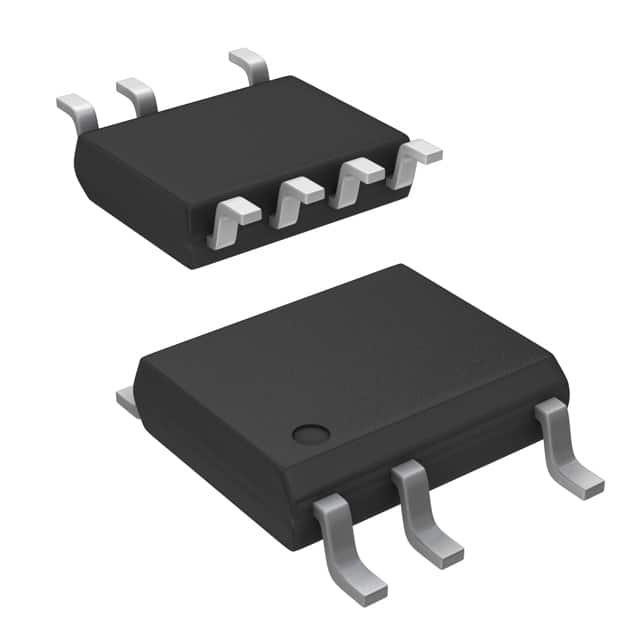
| Image |
|
|
| Part Number | LNK306DG-TL | LNK306DG |
| Manufacturer | Power Integrations | Power Integrations |
| Series | LinkSwitch®-TN | LinkSwitch®-TN |
| Package/Case | 8-SOIC (0.154", 3.90mm Width), 7 Leads | 8-SOIC (0.154", 3.90mm Width), 7 Leads |
| Packaging | Tape & Reel (TR) | Tube |
| Product Status | Active | Discontinued at Digi-Key |
| Output Isolation | Non-Isolated | Non-Isolated |
| Internal Switch(s) | Yes | Yes |
| Voltage - Breakdown | 700V | 700V |
| Topology | Buck, Buck-Boost, Flyback | Buck, Buck-Boost, Flyback |
| Voltage - Start Up | - | - |
| Voltage - Supply (Vcc/Vdd) | - | - |
| Duty Cycle | 69% | 69% |
| Frequency - Switching | 66kHz | 66kHz |
| Power (Watts) | - | - |
| Fault Protection | Current Limiting, Open Loop, Over Temperature, Short Circuit | Current Limiting, Open Loop, Over Temperature, Short Circuit |
| Control Features | - | - |
| Operating Temperature | -40°C ~ 150°C (TJ) | -40°C ~ 150°C (TJ) |
| Grade | - | - |
| Qualification | - | - |
| Supplier Device Package | SO-8C | SO-8C |
| Mounting Type | Surface Mount | Surface Mount |
User Guide
- Purchase & Inquiry
- Package
- Shipping Information
- Customer Review
You may place an order without registering to IC-MAX.COM
We strongly suggest you sign in before purchasing as you can track your order in real time.
For your convenience, we accept multiple payment methods in USD, including PayPal, Credit Card, and wire transfer.
RFQ (Request for Quotations)
It is recommended to request for quotations to get the latest prices and inventories about the part.
Our sales will reply to your request by email within 24 hours.
1. You'll receive an order information email in your inbox. (Please remember to check the spam folder if you didn't hear from us).
2. Since inventories and prices may fluctuate to some extent, the sales manager is going to reconfirm the order and let you know if there are any updates.
-
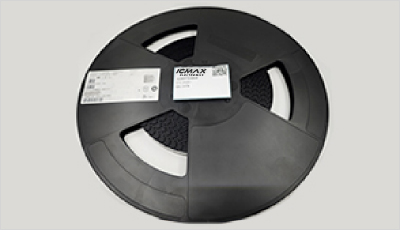
- Step1:Prepare product
-
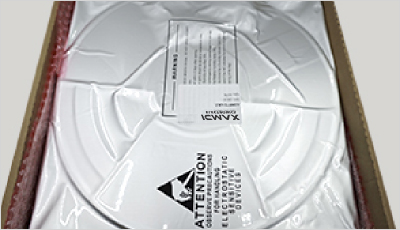
- Step2:Vacuum packaging
-
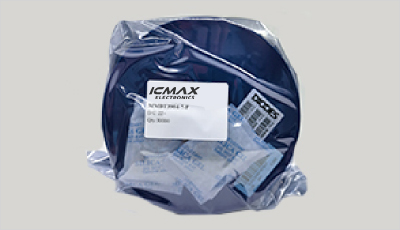
- Step3:Anti-static bag
-
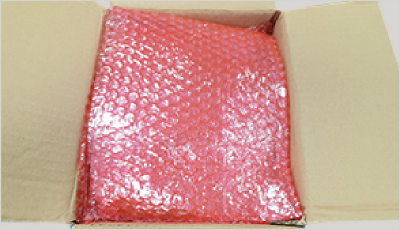
- Step4:Individual package
-
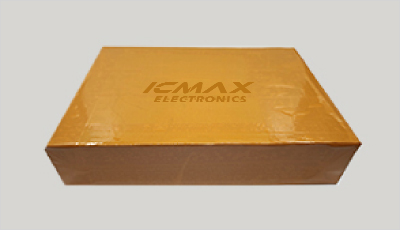
- Step5:Packaging box
-
- Step6:Barcode shipping label
Shipping starts at $40, but some countries will exceed $40. For example (South Africa, Brazil, India, Pakistan, Israel, etc.)
The basic freight (for package ≤0.5kg or corresponding volume) depends on the time zone and country.
Currently, our products are shipped through DHL, FedEx, SF, and UPS.
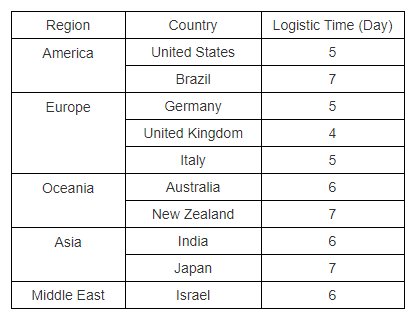
Delivery TimeOnce the goods are shipped, estimated delivery time depends on the shipping methods you chose:
FedEx International, 5-7 business days.
The following are some common countries' logistic time.
- Hot Sale
- Related Categories
- Include Parts
- Popular Search
- Voltage Regulators - Linear, Low Drop Out (LDO) Regulators(66836)
- Voltage Regulators - Linear Regulator Controllers(325)
- Voltage Regulators - Linear + Switching(1473)
- Voltage Regulators - DC DC Switching Regulators(35756)
- Voltage Reference(8428)
- V/F and F/V Converters(139)
- Thermal Management(515)
- Supervisors(41287)
- Special Purpose Regulators(4820)
- RMS to DC Converters(144)
The following parts include "LNK306DG-TL" in Silicon Labs LNK306DG-TL.
- Part Number
- Manufacturer
- Package
- Description
- LNK6407D-TL Power Integrations 8-SOIC (0.154", 3.90mm Width), 7 Leads IC OFFLINE SWITCH MULT TOP 8SO
- LNK3204D-TL Power Integrations 8-SOIC (0.154", 3.90mm Width), 7 Leads IC OFFLINE SWITCH MULT TOP 8SO
- SR10LG-G Microchip Technology 8-SOIC (0.154", 3.90mm Width), 7 Leads IC OFFLINE SWITCH MULT TOP 8SO
- TNY285DG-TL Power Integrations 8-SOIC (0.154", 3.90mm Width), 7 Leads IC OFFLINE SWITCH MULT TOP 8SO
- LNK304DN-TL Datasheet, Price, Stock & Alternatives | ICMASS Power Integrations 8-SOIC (0.154", 3.90mm Width), 7 Leads IC OFFLINE SWITCH MULT TOP 8SO
- TNY285KG-TL Power Integrations 8-SOIC (0.154", 3.90mm Width), 7 Leads IC OFFLINE SWITCH MULT TOP 8SO
- LNK3206D-TL Power Integrations 8-SOIC (0.154", 3.90mm Width), 7 Leads IC OFFLINE SWITCH MULT TOP 8SO
- LNK623DG-TL Power Integrations 8-SOIC (0.154", 3.90mm Width), 7 Leads IC OFFLINE SWITCH MULT TOP 8SO
- TNY286PG Power Integrations 8-SOIC (0.154", 3.90mm Width), 7 Leads IC OFFLINE SWITCH MULT TOP 8SO
- LNK624DG-TL Power Integrations 8-SOIC (0.154", 3.90mm Width), 7 Leads IC OFFLINE SWITCH MULT TOP 8SO
The following parts are popular search parts in Test and Measurement.
Inventory:9,476
Please send an inquiry. Send us your inquiry, and we will respond immediately.

- 1500+ Daily average RFQ Volume

- 20,000.000 Standard Product Unit

- 1800+ Worldwide Manufacturers

- 15,000+ In-stock Warehouse