Power Integrations LNK304DN

- Part No.:
- LNK304DN
- Manufacturer:
- Power Integrations
- Category:
- AC DC Converters, Offline Switches
- Package:
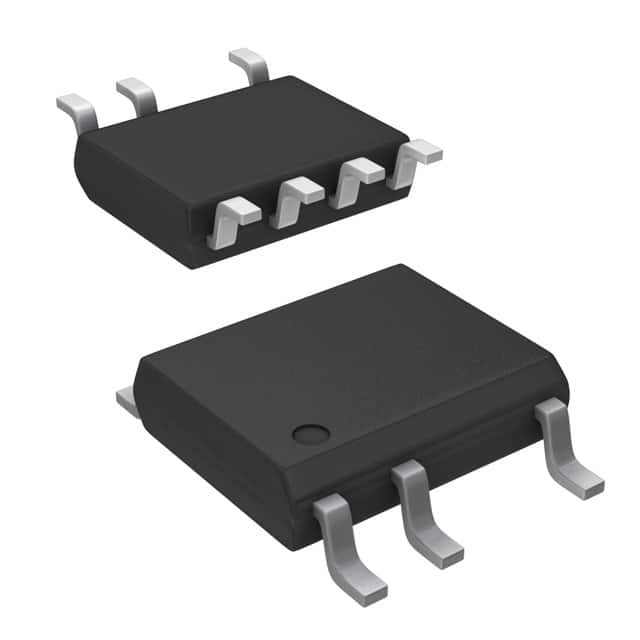
- 8-SOIC (0.154", 3.90mm Width), 7 Leads
- Datasheet:
-
 LNK304DN.pdf
- Description:
- IC OFFLINE SWIT OCP 8SOIC
- Quantity:
-
Unit Price:$0
Ext Price:$0
- Payment:
-

- Shipping:
-


LNK304DN Information
- Specifications
- Product Details
- Comparison
- Tags
- Product attributes
- Attribute value
- Manufacturer:
- Power Integrations
- Series:
- LinkSwitch®-TN
- Package/Case:
- 8-SOIC (0.154", 3.90mm Width), 7 Leads
- Packaging:
- Tube
- Product Status:
- Discontinued at Digi-Key
- Output Isolation:
- Non-Isolated
- Internal Switch(s):
- Yes
- Voltage - Breakdown:
- 700V
- Topology:
- Buck, Buck-Boost, Flyback
- Voltage - Start Up:
- -
- Voltage - Supply (Vcc/Vdd):
- -
- Duty Cycle:
- 69%
- Frequency - Switching:
- 66kHz
- Power (Watts):
- -
- Fault Protection:
- Current Limiting, Open Loop, Over Temperature, Short Circuit
- Control Features:
- -
- Operating Temperature:
- -40°C ~ 150°C (TJ)
- Grade:
- -
- Qualification:
- -
- Supplier Device Package:
- SO-8C
- Mounting Type:
- Surface Mount
- Datasheet:
-
LNK304DN.pdf
LNK304DN — 120/170 mA Off-Line Buck Switcher, LinkSwitch-TN (SO-8C)
The LNK304DN is a Power Integrations LinkSwitch-TN off-line switcher in the surface-mount SO-8C package — a 700 V power MOSFET rated 120 mA in mostly discontinuous conduction and 170 mA in continuous conduction, built to replace linear and capacitor-fed supplies, datasheet Rev. P.
Those two numbers are not a range. They are two different designs, and which one you get is decided by a diode and an inductor you have not chosen yet.
The datasheet puts all three in a single sentence, and it is the sentence worth reading first.
Why Does the Freewheeling Diode Decide the Whole Design?
Why would a diode set a current rating? Because the current rating on page 1 assumes a specific diode speed, and that speed changes with the conduction mode you picked. A slow diode doesn't just lose efficiency — it invalidates the number you designed to.
Under the output current table, condition six reads: a catch or freewheeling diode with tRR of 75 ns or less for mostly discontinuous operation, and 35 ns or less for continuous operation.
The trap is that the diode can look fine on paper. A rectifier with the right voltage and current rating is still the wrong part here if its recovery time does not match the mode.
What makes it a trap rather than a spec is the direction of the dependency. Choosing continuous conduction to get 170 mA instead of 120 mA tightens the diode requirement from 75 ns to 35 ns and forces a bigger inductor. The three parts move together.
Why Is a Bigger LNK304 Cheaper Than a Smaller One?
Because the datasheet says so, in as many words. Choosing and selection guidance states it is lower cost to use a larger LinkSwitch-TN in mostly discontinuous mode than a smaller LinkSwitch-TN in continuous mode.
Read the two columns as total cost, not as device cost. The left column trades a bigger IC for a smaller inductor and a diode you can buy anywhere. The right column does the opposite.
So which mode should you pick? Mostly discontinuous, the datasheet says — it generally gives both the lowest cost and the highest efficiency.
Continuous conduction exists for one reason: it's how a given device reaches its highest output current.
The same dependency catches people in design tools. An inductor value is only valid for the device and the mode it was solved for.
Change the part number and the value no longer holds. The current limits differ, so the inductance the tool solves for differs with them.
What Do the 170 mA Figures Actually Assume?
A buck converter, a 12 V output, at least 70 V of DC input, 75% efficiency, and a SOURCE pin held at or below 100 °C. The output current table is a set of conditions, not a property of the part.
Bars scaled so 360 mA fills the track. The same device sits at two different currents depending on conduction mode, and the mode is your choice.
| Device | MDCM current | CCM current | RDS(on) max at 25 °C | Auto-restart |
|---|---|---|---|---|
| LNK302 | 63 mA | 80 mA | 55.2 Ω | No |
| LNK304 | 120 mA | 170 mA | 27.6 Ω | Yes |
| LNK305 | 175 mA | 280 mA | 13.8 Ω | Yes |
| LNK306 | 225 mA | 360 mA | 8.1 Ω | Yes |
All four share the 700 V rating and the same package options. The columns that move are the current, the on-resistance and whether the part folds back on a fault.
The table also assumes a buck converter, which is the configuration the whole family is positioned around. LinkSwitch-TN supports buck, buck-boost and flyback, but the current ratings are written for the non-isolated buck case.
The last letter of the part number is worth stating plainly, because the package codes across Power Integrations families don't agree. In LinkSwitch-TN, D is SO-8C, G is SMD-8B and P is DIP-8B. The LNK304DN is a 1.27 mm pitch surface-mount part.
What Are the Specifications of the LNK304DN?
A 700 V non-isolated buck switcher with a 257 mA normalized current limit and 66 kHz switching. All figures below are from the LinkSwitch-TN family datasheet, Rev. P (12/21).
| Parameter | Value |
|---|---|
| Manufacturer | Power Integrations |
| Family | LinkSwitch-TN (LNK302/304-306) |
| Package | SO-8C surface mount (D suffix) |
| Breakdown voltage | 700 V |
| Output current, mostly discontinuous | 120 mA |
| Output current, continuous | 170 mA |
| Normalized current limit at 25 °C | 257 mA |
| ON-state resistance at 25 °C | 27.6 Ω max, ID = 25 mA |
| ON-state resistance at 100 °C | 44.2 Ω max |
| Switching frequency | 66 kHz, with frequency jitter |
| Thermal shutdown | 142 °C typical, 75 °C hysteresis |
| Auto-restart | Yes — 50 ms counter, 800 ms off-time |
| Topologies | Buck, buck-boost, flyback |
| Applications | Appliances and timers, LED drivers, industrial controls |
One row in that table separates this part from the one below it in the family. The LNK302 has no auto-restart at all — the datasheet lists it as not applicable. The LNK304 is the smallest member that folds back on a fault.
Note also what the auto-restart watches. Where the TinySwitch families count time since the enable pin was last pulled low, LinkSwitch-TN counts time since the FEEDBACK pin was last pulled high, and the periods are shorter: 50 ms and 800 ms.
When Should You Use (and NOT Use) the LNK304DN?
Use it to replace a linear or capacitor-fed supply that needs up to 170 mA and doesn't need isolation.
Use the LNK304DN when:
- You are replacing a cap dropper or a linear regulator and want regulation instead of a line-dependent output
- Your load sits between the LNK302 and LNK305 ratings, and you want the cheapest overall bill of materials
- You want auto-restart on a fault — the LNK302 below it does not have any
- You need a high-side buck with the output referenced to the input rail
- You want the narrow SO-8C footprint for an automated assembly line
Don't use the LNK304DN when:
- You need isolation. This is positioned as a non-isolated replacement, and the current ratings are written for the buck case
- You need more than 170 mA continuously. The LNK305 and LNK306 reach 280 mA and 360 mA in the same footprint family
- You have not settled the freewheeling diode. Picking the mode without picking a diode that meets its tRR limit is how this design fails
- Your board has no copper under the SOURCE pins. The current ratings assume the pin is held at 100 °C or below
Why Buy LNK304DN from ICMASS?
Because the design decision here is a three-way trade, and the parts have to be quoted together. Device, inductor and freewheeling diode move as a set, and quoting one of them is not much use.
Tell us your output voltage, your load current and whether you have settled on discontinuous or continuous operation. We will quote the LinkSwitch-TN device alongside the diode and inductor values that go with that choice.
If you are replacing a capacitor-fed supply, send us the existing output current and we will size the replacement from the current table rather than from watts.
Frequently Asked Questions About LNK304DN
Q1: Why does the freewheeling diode in my LNK304DN buck run hot?
A: Its reverse recovery is slower than the conduction mode allows. The datasheet's current table assumes tRR of 75 ns or less for mostly discontinuous operation and 35 ns or less for continuous operation. A slower diode dissipates the difference as heat.
Q2: What current can the LNK304DN deliver?
A: 120 mA in mostly discontinuous conduction, or 170 mA in continuous conduction. Those are two different designs rather than a range. Continuous operation reaches the higher number but needs a larger inductor and a faster diode.
Q3: Why does the datasheet say a bigger device is cheaper?
A: Because it is comparing total cost, not device cost. The selection guidance states it is lower cost to use a larger LinkSwitch-TN in mostly discontinuous mode than a smaller one in continuous mode. The smaller device forces a larger inductor and a 35 ns diode.
Q4: Why does the inductor value differ between the app note and the design tool?
A: Because the inductor value is set by the device and the conduction mode, not by the output alone. A tool and an application note can be solving for different device sizes. Match the inductor to the part you actually fit.
Q5: Is the LNK304DN an isolated supply?
A: No — it is positioned as a non-isolated replacement. The description targets linear and capacitor-fed non-isolated supplies, and the output current table is specified for a non-isolated buck converter. The family does support flyback, but the ratings follow the buck case.
Q6: What does the D in LNK304DN mean?
A: SO-8C, the narrow surface-mount package. LinkSwitch-TN package letters run D for SO-8C, G for SMD-8B and P for DIP-8B. The same letters mean different packages in other Power Integrations families.
Q7: Does the LNK304DN have auto-restart?
A: Yes, and the LNK302 does not. On a fault the FEEDBACK pin stops being pulled high for 50 ms and switching stops for 800 ms. The datasheet lists auto-restart as not applicable on the LNK302.
Q8: Should I use mostly discontinuous or continuous conduction?
A: Mostly discontinuous, unless you need the last of the current. The datasheet notes it generally gives the lowest cost and the highest efficiency. Continuous operation exists to reach the higher output current from a given device.
Q9: What input voltage does the current table assume?
A: A minimum DC input of 70 V or higher. The input capacitance has to be sized to hold that. Other assumptions are a 12 V output, 75% efficiency and a SOURCE pin temperature at or below 100 °C.
Q10: Can I use the LNK304DN in a flyback?
A: The family supports it, but the current ratings do not describe it. LinkSwitch-TN covers buck, buck-boost and flyback topologies. The 120 mA and 170 mA figures are specified for a non-isolated buck converter, so treat them as a starting point elsewhere.
| Image |
|
|
| Part Number | LNK304DN-TL Datasheet, Price, Stock & Alternatives | ICMASS | LNK304DN |
| Manufacturer | Power Integrations | Power Integrations |
| Series | LinkSwitch®-TN | LinkSwitch®-TN |
| Package/Case | 8-SOIC (0.154", 3.90mm Width), 7 Leads | 8-SOIC (0.154", 3.90mm Width), 7 Leads |
| Packaging | Tape & Reel (TR) | Tube |
| Product Status | Active | Discontinued at Digi-Key |
| Output Isolation | Non-Isolated | Non-Isolated |
| Internal Switch(s) | Yes | Yes |
| Voltage - Breakdown | 700V | 700V |
| Topology | Buck, Buck-Boost, Flyback | Buck, Buck-Boost, Flyback |
| Voltage - Start Up | - | - |
| Voltage - Supply (Vcc/Vdd) | - | - |
| Duty Cycle | 69% | 69% |
| Frequency - Switching | 66kHz | 66kHz |
| Power (Watts) | - | - |
| Fault Protection | Current Limiting, Open Loop, Over Temperature, Short Circuit | Current Limiting, Open Loop, Over Temperature, Short Circuit |
| Control Features | - | - |
| Operating Temperature | -40°C ~ 150°C (TJ) | -40°C ~ 150°C (TJ) |
| Grade | - | - |
| Qualification | - | - |
| Supplier Device Package | SO-8C | SO-8C |
| Mounting Type | Surface Mount | Surface Mount |
User Guide
- Purchase & Inquiry
- Package
- Shipping Information
- Customer Review
You may place an order without registering to IC-MAX.COM
We strongly suggest you sign in before purchasing as you can track your order in real time.
For your convenience, we accept multiple payment methods in USD, including PayPal, Credit Card, and wire transfer.
RFQ (Request for Quotations)
It is recommended to request for quotations to get the latest prices and inventories about the part.
Our sales will reply to your request by email within 24 hours.
1. You'll receive an order information email in your inbox. (Please remember to check the spam folder if you didn't hear from us).
2. Since inventories and prices may fluctuate to some extent, the sales manager is going to reconfirm the order and let you know if there are any updates.
-
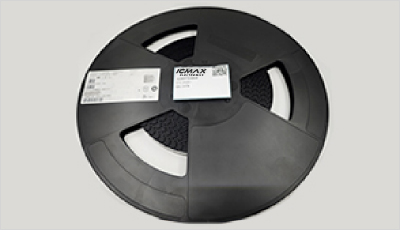
- Step1:Prepare product
-
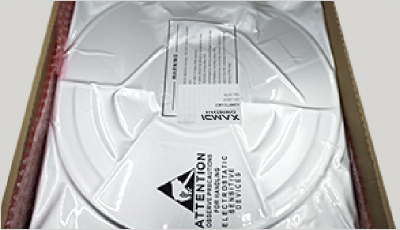
- Step2:Vacuum packaging
-
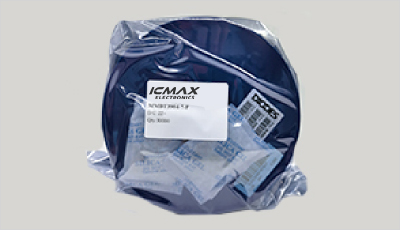
- Step3:Anti-static bag
-
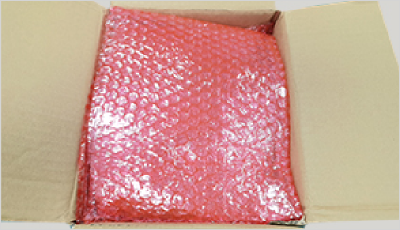
- Step4:Individual package
-
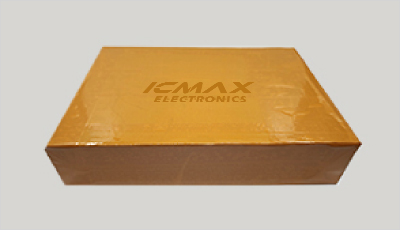
- Step5:Packaging box
-
- Step6:Barcode shipping label
Shipping starts at $40, but some countries will exceed $40. For example (South Africa, Brazil, India, Pakistan, Israel, etc.)
The basic freight (for package ≤0.5kg or corresponding volume) depends on the time zone and country.
Currently, our products are shipped through DHL, FedEx, SF, and UPS.
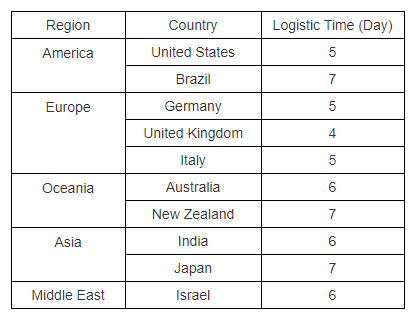
Delivery TimeOnce the goods are shipped, estimated delivery time depends on the shipping methods you chose:
FedEx International, 5-7 business days.
The following are some common countries' logistic time.
- Hot Sale
- Related Categories
- Include Parts
- Popular Search
- Voltage Regulators - Linear, Low Drop Out (LDO) Regulators(66836)
- Voltage Regulators - Linear Regulator Controllers(325)
- Voltage Regulators - Linear + Switching(1473)
- Voltage Regulators - DC DC Switching Regulators(35756)
- Voltage Reference(8428)
- V/F and F/V Converters(139)
- Thermal Management(515)
- Supervisors(41287)
- Special Purpose Regulators(4820)
- RMS to DC Converters(144)
The following parts include "LNK304DN" in Silicon Labs LNK304DN.
- Part Number
- Manufacturer
- Package
- Description
- LNK6407D-TL Power Integrations 8-SOIC (0.154", 3.90mm Width), 7 Leads IC OFFLINE SWIT OCP 8SOIC
- LNK3204D-TL Power Integrations 8-SOIC (0.154", 3.90mm Width), 7 Leads IC OFFLINE SWIT OCP 8SOIC
- SR10LG-G Microchip Technology 8-SOIC (0.154", 3.90mm Width), 7 Leads IC OFFLINE SWIT OCP 8SOIC
- TNY285DG-TL Power Integrations 8-SOIC (0.154", 3.90mm Width), 7 Leads IC OFFLINE SWIT OCP 8SOIC
- LNK304DN-TL Datasheet, Price, Stock & Alternatives | ICMASS Power Integrations 8-SOIC (0.154", 3.90mm Width), 7 Leads IC OFFLINE SWIT OCP 8SOIC
- TNY285KG-TL Power Integrations 8-SOIC (0.154", 3.90mm Width), 7 Leads IC OFFLINE SWIT OCP 8SOIC
- LNK3206D-TL Power Integrations 8-SOIC (0.154", 3.90mm Width), 7 Leads IC OFFLINE SWIT OCP 8SOIC
- LNK623DG-TL Power Integrations 8-SOIC (0.154", 3.90mm Width), 7 Leads IC OFFLINE SWIT OCP 8SOIC
- TNY286PG Power Integrations 8-SOIC (0.154", 3.90mm Width), 7 Leads IC OFFLINE SWIT OCP 8SOIC
- LNK624DG-TL Power Integrations 8-SOIC (0.154", 3.90mm Width), 7 Leads IC OFFLINE SWIT OCP 8SOIC
The following parts are popular search parts in Test and Measurement.
Inventory:0
Please send an inquiry. Send us your inquiry, and we will respond immediately.

- 1500+ Daily average RFQ Volume

- 20,000.000 Standard Product Unit

- 1800+ Worldwide Manufacturers

- 15,000+ In-stock Warehouse