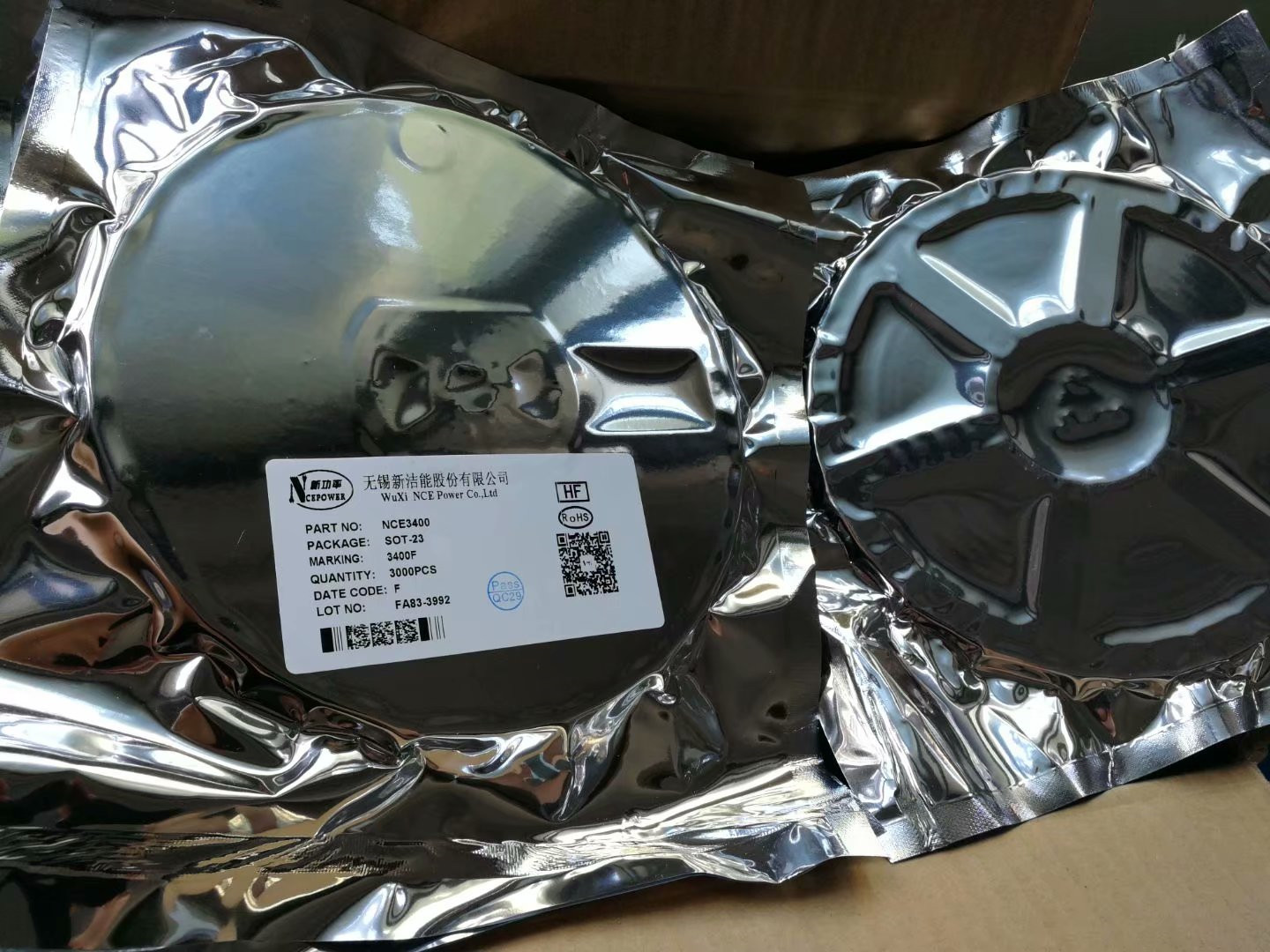
NCEPower NCE3400 : N-Channel 30V 5.8A MOSFET SOT-23

- Part No.:
- NCE3400 : N-Channel 30V 5.8A MOSFET SOT-23
- Manufacturer:
- NCEPower
- Category:
- N-Channel MOSFETs
- Package:
- Description:
- The NCE3400 is a high-density N-channel logic-level MOSFET manufactured by NCE Power, featuring a 30V drain-source voltage and 5.8A continuous current.
- Quantity:
-
Unit Price:$0
Ext Price:$0
- Payment:
-

- Shipping:
-


NCE3400 : N-Channel 30V 5.8A MOSFET SOT-23 Information
- Specifications
- Product Details
- Comparison
- Tags
- Product attributes
- Attribute value
- Manufacturer:
- NCEPower
- Series:
- Package/Case:
- Packaging:
- SOT-23
- Product Status:
- Production
- FET Type:
- Industrial grade
- Technology:
- Trench
- Drain to Source Voltage (Vdss):
- N
- Current - Continuous Drain (Id) @ 25°C:
- 30
- Drive Voltage (Max Rds On, Min Rds On):
- 5.8
- Rds On (Max) @ Id, Vgs:
- 0.9
- Vgs(th) (Max) @ Id:
- 22
- Gate Charge (Qg) (Max) @ Vgs:
- 35
- Vgs (Max):
- 24
- Input Capacitance (Ciss) (Max) @ Vds:
- 41
- FET Feature:
- 28
- Power Dissipation (Max):
- 57
- Operating Temperature:
- ±12
- Grade:
- 820
- Qualification:
- 9.5
- Mounting Type:
- 1.4
- Supplier Device Package:
NCE3400 — N-Channel 30V/5.8A Enhancement Mode Power MOSFET (SOT-23)
The NCE3400 is an N-channel enhancement mode power MOSFET from Wuxi NCE Power, built on trench gate technology. It delivers 30V drain-source rating with 5.8A continuous drain current in a SOT-23 package. The spec that sets it apart: RDS(on) down to 22mΩ at 4.5V VGS — unusually low for a SOT-23 device, which makes it viable in designs where you'd normally reach for a larger package.
The NCE3400 turns on fully with just 2.5V gate drive, so it works directly from 3.3V logic without a level shifter. Total gate charge sits at ~10nC — low enough to switch at a few hundred kHz. If you're designing a load switch, a battery protection circuit, or a compact DC-DC converter that needs low RDS(on) in SOT-23, this part belongs on your shortlist.
What Are the Technical Specifications of NCE3400?
| Parameter | Value |
|---|---|
| Type | N-Channel Enhancement Mode Power MOSFET |
| Package | SOT-23-3L (surface mount) |
| Drain-Source Voltage (VDSS) | 30V |
| Gate-Source Voltage (VGSS) | ±12V |
| Continuous Drain Current (ID) | 5.8A @ 25°C |
| Pulsed Drain Current (IDM) | 30A (10µs pulse) |
| Power Dissipation (PD) | 1.4W @ 25°C |
| Gate Threshold Voltage (VGS(th)) | 0.9V typ / 1.4V max @ 250µA |
| Total Gate Charge (QG) | ~10nC @ VGS=4.5V |
| Input Capacitance (CISS) | ~825pF @ VDS=15V |
| Reverse Transfer Capacitance (CRSS) | ~78pF @ VDS=15V |
| Operating Temperature | -55°C to +150°C |
| Manufacturer | Wuxi NCE Power Semiconductor |
RDS(on) at each gate drive level — see the saturation knee. The biggest jump in performance happens between 2.5V and 4.5V. After 4.5V you're deep in the flat part of the curve — more gate voltage buys you almost nothing.
Bar width = typical RDS(on) relative to 28mΩ (longest). The gap between typical and max widens at low VGS — budget for worst case when driving from 2.5V.
Gate voltage operating zones — one axis, three regions. The ±12V VGS absolute maximum is tighter than the industry-typical ±20V. Know where your gate drive sits on this axis before you commit the BOM.
The ±12V VGS max is the NCE3400's main limitation vs competitors with ±20V tolerance. At 3.3V or 5V gate drive, this doesn't matter. At 12V, add a BZX84-C10 zener from gate to source.
When Should You Use (and NOT Use) the NCE3400?
✅ Use NCE3400 when:
- 3.3V MCU direct drive — no level shifter needed. The 0.9V typical VGS(th) means a 3.3V GPIO turns it on hard. One less IC on the BOM.
- Single-cell Li-Ion battery protection. 30V VDSS covers any 1S scenario. 28mΩ at 2.5V keeps voltage drop under 150mV at 5A.
- USB load switching at 5V/2A. Drops only 56mV at 2A with 4.5V gate drive. Within USB spec with margin.
- DC-DC synchronous rectifier (sub-5A, sub-200kHz). Low gate charge keeps switching losses manageable; low RDS(on) minimizes conduction loss.
- LED matrix row drivers, peripheral power gating. SOT-23 fits between rows on dense layouts.
❌ Don't use NCE3400 when:
- VDS exceeds 30V (even transient). No avalanche rating specified. Step up to NCE6005AN (60V, SOT-23) or AO3400A (30V with EAS rating).
- Gate drive is 12V or higher. ±12V VGSS max. Either add a zener clamp or use AO3400A (±20V).
- Continuous current above 4A in still air. The 5.8A rating assumes 25°C case. Real PCB = 3–4A practical ceiling. For 5A+ sustained, parallel two devices or use SOP-8.
- Switching above 500kHz. 10nC gate charge dominates at high frequency. Use BSS138 or GaN for >500kHz.
What Are the Alternatives to NCE3400?
| Model | Type | Key Difference | Best For |
|---|---|---|---|
| AO3400A | N-Ch Trench MOSFET | Same 30V/5.8A/SOT-23, ±20V VGS, avalanche-rated | Direct replacement with wider gate tolerance |
| SI2302DS | N-Ch Trench MOSFET | 20V/2.8A, RDS(on) ~45mΩ at 4.5V | Lower voltage, lower cost alternative |
| 2N7002-TP | N-Ch MOSFET | 60V/115mA, RDS(on) ~5Ω | High voltage, signal-level switching |
| HN3400 | N-Ch Trench MOSFET | 30V/5.8A, RDS(on) ~35mΩ at 10V | Pin-compatible drop-in, marginally better RDS(on) |
| STT6N3LLH6 | N-Ch STripFET | 30V/6A, RDS(on) 25mΩ, QG 3.6nC | Performance upgrade — 3× lower QG |
| BSS138 | N-Ch MOSFET | 50V/200mA, RDS(on) ~3.5Ω | High voltage, logic-level, low current |
Head-to-head on the two specs that drive most substitution decisions.
NCE3400 vs AO3400A — the gate voltage decision. Same voltage, same current, same package. The AO3400A wins on gate robustness (±20V vs ±12V) and has an avalanche rating. The NCE3400 typically shows slightly lower RDS(on) at 2.5V. If your gate drive is 3.3V and well-controlled, NCE3400 gives marginally better conduction. If the gate rail is 12V or might overshoot, pick the AO3400A.
NCE3400 vs STT6N3LLH6 — worth the upgrade. The ST part trims QG to 3.6nC — nearly 3× lower. In any design where switching loss is the thermal bottleneck, that alone justifies the higher unit cost.
What Are the Typical Applications of NCE3400?
The NCE3400 sits between BAT− and P− as the discharge control FET. Under normal operation, the protection IC holds the gate at ~3.3V — the NCE3400 is fully enhanced. At 5A load with 28mΩ RDS(on), voltage drop across the FET is only 140mV — less than 5% of a depleted battery's voltage lost in the protection switch.
On over-discharge, short-circuit, or over-current, the protection IC pulls the gate to ground. The NCE3400 turns off, breaking the current path. The body diode blocks in the charge direction, so a separate charge-control FET (not shown) is needed for a complete BMS.
Key advantage of NCE3400 here: 2.5V gate drive works even when the battery is nearly dead (3.0V). A MOSFET with higher VGS(th) might not fully enhance, causing excessive voltage drop and premature cutoff.
USB Load Switch. At 5V and 2A, the NCE3400 drops 56mV with 4.5V gate drive. Add a 10kΩ gate pulldown and a 10Ω series gate resistor for controlled slew rate — three components, no dedicated load-switch IC needed.
LED Matrix Row Driver. A 16×16 matrix at 20mA per column puts 320mA through the row FET. The NCE3400 is overkill on current, but its low and consistent RDS(on) means uniform row voltage — which means uniform brightness across all rows.
Why Buy NCE3400 from ICMASS?
Full batch traceability. NCE MOSFETs are widely sourced. We verify date codes and lot numbers against NCE Power factory records. Out-of-spec VGS(th) or RDS(on) gets caught during incoming inspection, not during your production test.
Cross-reference and substitution support. Not sure whether your design needs NCE3400, AO3400A, or a different SOT-23 MOSFET? Send us your operating voltage, load current, switching frequency, and gate drive voltage — we'll tell you which part fits. We stock the full NCE SOT-23 family plus the major alternatives.
BOM consolidation. Most designs using an NCE3400 also need voltage regulators, Schottky diodes, bypass capacitors, and current-sense resistors. One shipment from ICMASS covers the full BOM, Shenzhen to your factory door.
Shenzhen stock, same-day dispatch. Orders placed before 15:00 CST ship same day via DHL/FedEx. Contact us for current pricing on your quantity — volume pricing typically ranges from $0.02–$0.06/unit depending on order size and manufacturer allocation.
Frequently Asked Questions About NCE3400
Q1: Can NCE3400 replace an AO3400A directly?
A: Usually yes, but check your gate drive voltage first. Both are 30V/5.8A in SOT-23 with near-identical pinout. The critical difference: NCE3400 has ±12V VGS max while AO3400A tolerates ±20V. At 3.3V or 5V gate drive, they're interchangeable. At 12V, the NCE3400 needs a gate clamp. On the other hand, the NCE3400 typically shows slightly lower RDS(on) at 2.5V — so in 3.3V designs, it actually beats the AO3400A on conduction.
Q2: How much gate voltage does the NCE3400 actually need?
A: It starts turning on around 0.9V, but you need at least 2.5V for full enhancement. At 2.5V, RDS(on) is 28mΩ typical. At 3.3V, you're safely saturated. At 1.8V, it's barely on and RDS(on) shoots up — don't use this MOSFET with 1.8V logic without a level shifter.
Q3: What is the maximum current the NCE3400 can really handle?
A: 5.8A on the datasheet, but 3–4A in practice for continuous DC. The 5.8A rating assumes the case is held at 25°C. In still air on a standard 2-layer 1oz board, expect 3–4A before junction temperature exceeds 100°C. For pulsed applications, the 30A (10µs) rating is usable — keep average power under 1.4W.
Q4: Why does the NCE3400 have ±12V gate limit instead of ±20V?
A: Thinner gate oxide — a deliberate trade-off for better low-voltage performance. NCE Power optimized for low VGS(th) and low RDS(on) at 2.5V drive. Thinner oxide = lower threshold, but also lower voltage tolerance. Competing parts with ±20V rating have thicker oxide, pushing VGS(th) higher (1.5–2.5V). It's not a defect — it's a different optimization target. For 3.3V/5V designs, the NCE3400's choice is the right one.
Q5: Is the NCE3400 avalanche-rated?
A: No — the standard datasheet does not specify EAS. If your application switches inductive loads without clamping, either add external protection or choose a rated part like the AO3400A. For resistive loads, DC-DC converters with proper snubbing, and battery protection circuits, the lack of an EAS spec is irrelevant.
Q6: Does the NCE3400 need a gate resistor?
A: Yes — a small one for EMI control. With ~825pF CISS, the NCE3400 isn't prone to parasitic oscillation. But a 10–100Ω series gate resistor slows the turn-on edge enough to reduce radiated EMI without meaningfully impacting efficiency below 200kHz. At 500kHz+, keep it small (10Ω) to avoid excessive switching loss.
Q7: NCE3400 vs SI2302 — which one for battery protection?
A: NCE3400 — higher current, lower RDS(on), more voltage margin. The SI2302 is 20V/2.8A with RDS(on) ~45mΩ. For 3–5A protection, the NCE3400 runs cooler and drops less voltage. The 30V rating also provides margin against charger transients. The SI2302 costs slightly less — use it for sub-2A designs only.
Q8: Can I parallel two NCE3400s for more current?
A: Yes — MOSFETs parallel naturally thanks to positive temperature coefficient on RDS(on). One heats up → RDS(on) rises → current shifts to the cooler device. Keep the layout symmetric and add individual gate resistors (10–22Ω) to each MOSFET to prevent high-frequency gate ringing. Two in parallel = roughly half the RDS(on) and double the current capacity.
Related Products
- NCE2305 — 20V/4A N-Ch MOSFET, SOT-23, lower voltage cousin
- NCE2302 — 20V/3A N-Ch MOSFET, SOT-23, entry-level logic-level switching
- AO3400A — 30V/5.8A N-Ch MOSFET, SOT-23, ±20V VGS alternative
- 2N7002-TP — 60V/115mA N-Ch MOSFET, SOT-23, high-voltage low-current
- LM7805L-TA3-T — 5V/1A linear regulator, common companion in power supply BOMs
| Image |
|
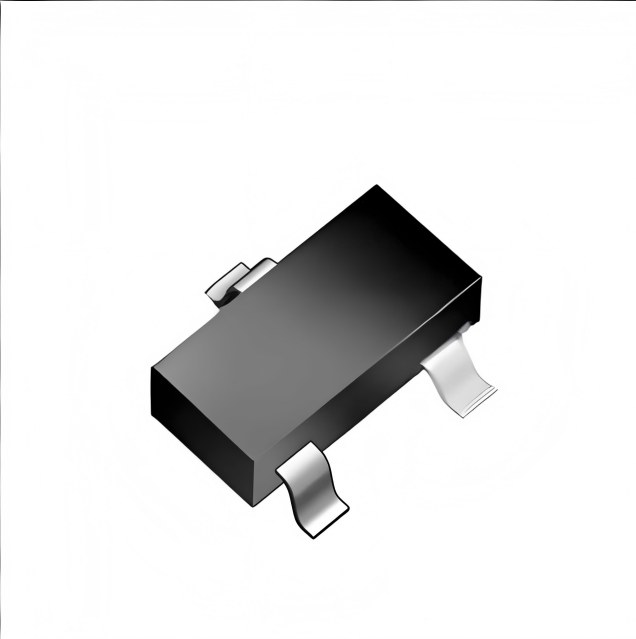
| Part Number | NCE3400 : N-Channel 30V 5.8A MOSFET SOT-23 |
| Manufacturer | NCEPower |
| Series | |
| Package/Case | |
| Packaging | SOT-23 |
| Product Status | Production |
| FET Type | Industrial grade |
| Technology | Trench |
| Drain to Source Voltage (Vdss) | N |
| Current - Continuous Drain (Id) @ 25°C | 30 |
| Drive Voltage (Max Rds On, Min Rds On) | 5.8 |
| Rds On (Max) @ Id, Vgs | 0.9 |
| Vgs(th) (Max) @ Id | 22 |
| Gate Charge (Qg) (Max) @ Vgs | 35 |
| Vgs (Max) | 24 |
| Input Capacitance (Ciss) (Max) @ Vds | 41 |
| FET Feature | 28 |
| Power Dissipation (Max) | 57 |
| Operating Temperature | ±12 |
| Grade | 820 |
| Qualification | 9.5 |
| Mounting Type | 1.4 |
| Supplier Device Package |
User Guide
- Purchase & Inquiry
- Package
- Shipping Information
- Customer Review
You may place an order without registering to IC-MAX.COM
We strongly suggest you sign in before purchasing as you can track your order in real time.
For your convenience, we accept multiple payment methods in USD, including PayPal, Credit Card, and wire transfer.
RFQ (Request for Quotations)
It is recommended to request for quotations to get the latest prices and inventories about the part.
Our sales will reply to your request by email within 24 hours.
1. You'll receive an order information email in your inbox. (Please remember to check the spam folder if you didn't hear from us).
2. Since inventories and prices may fluctuate to some extent, the sales manager is going to reconfirm the order and let you know if there are any updates.
-
- Step1:Prepare product
-
- Step2:Vacuum packaging
-
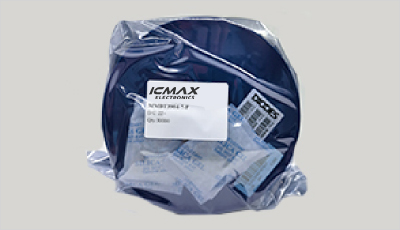
- Step3:Anti-static bag
-
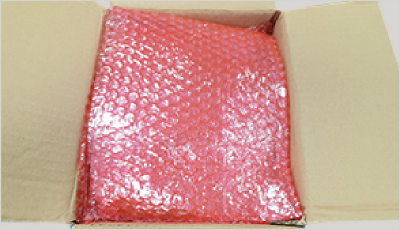
- Step4:Individual package
-
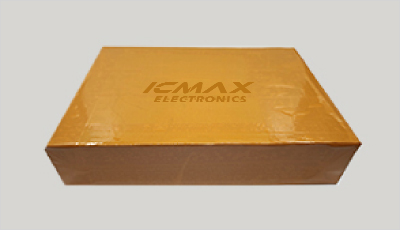
- Step5:Packaging box
-
- Step6:Barcode shipping label
Shipping starts at $40, but some countries will exceed $40. For example (South Africa, Brazil, India, Pakistan, Israel, etc.)
The basic freight (for package ≤0.5kg or corresponding volume) depends on the time zone and country.
Currently, our products are shipped through DHL, FedEx, SF, and UPS.
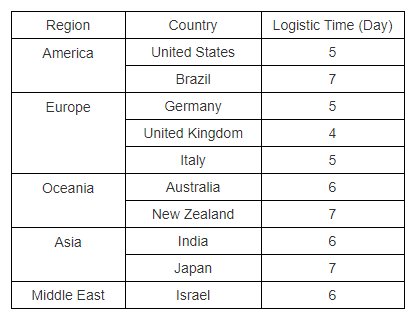
Delivery TimeOnce the goods are shipped, estimated delivery time depends on the shipping methods you chose:
FedEx International, 5-7 business days.
The following are some common countries' logistic time.
- Hot Sale
- Related Categories
- Include Parts
- Popular Search
The following parts include "NCE3400 : N-Channel 30V 5.8A MOSFET SOT-23" in Silicon Labs NCE3400 : N-Channel 30V 5.8A MOSFET SOT-23.
- Part Number
- Manufacturer
- Package
- Description
- BSZ180P03NS3EGATMA1 Infineon Technologies The NCE3400 is a high-density N-channel logic-level MOSFET manufactured by NCE Power, featuring a 30V drain-source voltage and 5.8A continuous current.
- SIRA14DP-T1-GE3 Vishay Siliconix The NCE3400 is a high-density N-channel logic-level MOSFET manufactured by NCE Power, featuring a 30V drain-source voltage and 5.8A continuous current.
- AO4419 Alpha & Omega Semiconductor Inc. The NCE3400 is a high-density N-channel logic-level MOSFET manufactured by NCE Power, featuring a 30V drain-source voltage and 5.8A continuous current.
- SISA14BDN-T1-GE3 Vishay Siliconix The NCE3400 is a high-density N-channel logic-level MOSFET manufactured by NCE Power, featuring a 30V drain-source voltage and 5.8A continuous current.
- PSMN9R5-30YLC,115 Nexperia USA Inc. The NCE3400 is a high-density N-channel logic-level MOSFET manufactured by NCE Power, featuring a 30V drain-source voltage and 5.8A continuous current.
- BUK9Y21-40E,115 Nexperia USA Inc. The NCE3400 is a high-density N-channel logic-level MOSFET manufactured by NCE Power, featuring a 30V drain-source voltage and 5.8A continuous current.
- RTQ035N03HZGTR Rohm Semiconductor The NCE3400 is a high-density N-channel logic-level MOSFET manufactured by NCE Power, featuring a 30V drain-source voltage and 5.8A continuous current.
- FDMS7680 onsemi The NCE3400 is a high-density N-channel logic-level MOSFET manufactured by NCE Power, featuring a 30V drain-source voltage and 5.8A continuous current.
- RQ3E180BNTB Rohm Semiconductor The NCE3400 is a high-density N-channel logic-level MOSFET manufactured by NCE Power, featuring a 30V drain-source voltage and 5.8A continuous current.
- STL6N2VH5 STMicroelectronics The NCE3400 is a high-density N-channel logic-level MOSFET manufactured by NCE Power, featuring a 30V drain-source voltage and 5.8A continuous current.
The following parts are popular search parts in Test and Measurement.
Inventory:50,000
Please send an inquiry. Send us your inquiry, and we will respond immediately.

- 1500+ Daily average RFQ Volume

- 20,000.000 Standard Product Unit

- 1800+ Worldwide Manufacturers

- 15,000+ In-stock Warehouse