NCEPower NCE3015S

- Part No.:
- NCE3015S
- Manufacturer:
- NCEPower
- Category:
- N-Channel MOSFETs
- Package:
- Description:
- NCE3015S — 30V/15A N-Channel Power MOSFET (SOP-8)The NCE3015S is a 30V/15A trench N-Channel MOSFET in SOP-8 — 7mΩ max at 10V, 9.5mΩ max at 4.5V, 32.3nC gate charge, from Wuxi NCE Power.From what we see across Shenzhen lots (2025&nda…
- Quantity:
-
Unit Price:$0
Ext Price:$0
- Payment:
-

- Shipping:
-


NCE3015S Information
- Specifications
- Product Details
- Comparison
- Tags
- Product attributes
- Attribute value
- Manufacturer:
- NCEPower
- Series:
- Package/Case:
- Packaging:
- SOP-8
- Product Status:
- Production
- FET Type:
- Industrial grade
- Technology:
- Trench
- Drain to Source Voltage (Vdss):
- N
- Current - Continuous Drain (Id) @ 25°C:
- 30
- Drive Voltage (Max Rds On, Min Rds On):
- 15
- Rds On (Max) @ Id, Vgs:
- 1.5
- Vgs(th) (Max) @ Id:
- 5.3
- Gate Charge (Qg) (Max) @ Vgs:
- 7
- Vgs (Max):
- 7.4
- Input Capacitance (Ciss) (Max) @ Vds:
- 16
- FET Feature:
- Power Dissipation (Max):
- Operating Temperature:
- ±20
- Grade:
- 1400
- Qualification:
- 32.3
- Mounting Type:
- 2.5
- Supplier Device Package:
NCE3015S — 30V/15A N-Channel Power MOSFET (SOP-8)
The NCE3015S is a 30V/15A trench N-Channel MOSFET in SOP-8 — 7mΩ max at 10V, 9.5mΩ max at 4.5V, 32.3nC gate charge, from Wuxi NCE Power.
From what we see across Shenzhen lots (2025–2026), the 30V/15A SO-8 slot sits between the 10A entry parts and the 18A top dies — and it gets skipped most often by buyers who reach for the biggest number on the reel label.
Here's why that's a mistake: at 10V drive, the 3015S and the 18A top die carry the same 7mΩ max. The 15A part wins the 4.5V row (9.5mΩ vs 10mΩ) and needs about 21% less gate charge — on a 5V-logic board carrying 15A, the middle die is the better part.
The spec that doesn't get quoted enough: the 3015S publishes a single-pulse avalanche rating — EAS 120mJ — and is 100% UIS tested. The 10A entry part publishes no EAS number at all. For motor stalls and unclamped solenoid kick, that difference is the whole point.
What Are the Technical Specifications of NCE3015S?
| Parameter | Value |
|---|---|
| Type | N-Channel Enhancement Mode Power MOSFET (Trench) |
| Package | SOP-8 (SOIC-8, 150 mil) |
| Drain-Source Voltage (VDS) | 30V |
| Gate-Source Voltage (VGS) | ±20V |
| Continuous Drain Current (ID) | 15A @ TC = 25°C |
| Continuous Drain Current (ID) | 10.6A @ TC = 100°C |
| Pulsed Drain Current (IDM) | 60A |
| On-Resistance RDS(on) @ 10V | 7mΩ max |
| On-Resistance RDS(on) @ 4.5V | 9.5mΩ max |
| Gate Threshold Voltage (VGS(th)) | 1V to 2.4V (typ 1.4V) |
| Max Power Dissipation (PD) | 3.5W |
| Thermal Resistance RθJA | 36°C/W (FR4, surface mounted) |
| Total Gate Charge (Qg) | 32.3nC @ 10V (Qgs 4.9nC / Qgd 6.9nC) |
| Input Capacitance (Ciss) | 1400pF (VDS = 15V) |
| Output Capacitance (Coss) | 205pF (VDS = 15V) |
| Reverse Transfer Capacitance (Crss) | 177pF (VDS = 15V) |
| Switching Times | td(on) 9ns / tr 8ns / td(off) 28ns / tf 5ns |
| Single Pulse Avalanche Energy (EAS) | 120mJ (100% UIS tested) |
| Operating Junction Temperature | -55°C to +150°C |
Key numbers that matter: per the NCE3015S datasheet (V2.0), RDS(on) is guaranteed at 10V and at 4.5V — and the 4.5V number (9.5mΩ max) is the lowest of the three-family 4.5V rows. The 18A top die specs 10mΩ at 4.5V; the 10A entry part specs 16mΩ.
Why does the 4.5V row matter? It tells you how the die behaves on a 5V rail. The 3015S is the family member that gives up the least when driven from 5V logic — half the conduction-loss penalty of the entry part at the same gate voltage.
The avalanche numbers are the other headline: 120mJ single-pulse EAS, 100% UIS tested. Per the datasheet, every part is verified on an unclamped inductive switching test — not just characterized by design.
The 3.5W envelope is the highest in the family — but it still assumes the PCB carries the heat. 3.5W at 36°C/W puts the junction at 151°C in a 25°C room, and the thermal number is a short-duration rating. Big drain copper is the rated operating condition.
When Should You Use (and NOT Use) the NCE3015S?
✅ Use NCE3015S when:
- 5V-logic low-side switches carrying 8-15A. The 4.5V row is the family's best, so a 5V GPIO or rail drives it with the least conduction penalty. Relay banks, solenoids, fans, and heaters on 12-24V rails.
- 20V-max cordless tool motors with stall risk. 5S packs charge to 21V; a stalled drill or saw dumps the winding energy into the FET at turn-off. The 120mJ single-pulse EAS is the margin that keeps the part alive.
- Unclamped solenoid and contactor switching. EAS 120mJ with 100% UIS testing means you can skip the freewheel diode in modest solenoid banks — within the energy budget.
- Sockets running 10A-class parts that need headroom. Same SO-8 pinout, nearly identical gate charge (32.3nC vs 32.5nC on the entry part), so the same driver works — and RDS(on) roughly halves.
- UPS and hard-switched circuits at moderate frequency. 9ns turn-on delay, 28ns turn-off delay, 32.3nC gate charge — a real driver keeps this switching cleanly.
❌ Don't use NCE3015S when:
- Driving from a 3.3V MCU GPIO. RDS(on) is specified at 4.5V and 10V only. VGS(th) maxes at 2.4V, which is better margin than the entry part — but a 3.3V rail still sits outside the guaranteed window. Use a 2.5V-specified part or a driver.
- Sustained 15A without ≥100mm² drain copper. 15A at 7mΩ is 1.58W of conduction loss — 45% of the 3.5W envelope before switching loss. The 36°C/W number is short-duration; steady-state SO-8 runs hotter.
- Raw 24V battery rails with transients. A 24V lead-acid float sits at 28.8V; 30V leaves under 1.2V of headroom. Step to the 40V/60V class for real 24V battery work.
- Repetitive avalanche events. EAS is a single-pulse rating. Repeated stall-recovery cycles need the repetitive avalanche analysis (thermal impedance, not the mJ number) — or a clamp.
- High-frequency SMPS synchronous rectification. No body-diode reverse recovery time is published. This is a switching and load-switch part, not an SR part.
What Are the Alternatives to NCE3015S?
| Model | Type | Key Difference | Best For |
|---|---|---|---|
| NCE3010S | N-Ch, SOP-8 | 30V/10A, 12mΩ max @10V, no EAS published | Cost entry point below 10A |
| NCE3018AS | N-Ch, SOP-8 | 30V/18A, 7mΩ max @10V, EAS 204mJ, 72A pulse | The headroom top of the family |
| AO4496 | N-Ch, SO-8 | 30V/10A class (AOS), legacy socket | Drop-in cross-reference checks |
| FDS6690 | N-Ch, SO-8 | 30V/10A class, 10mΩ-class (onsemi legacy) | Legacy BOM second-source |
| AO4410 | N-Ch, SO-8 | 30V/18A class (AOS), 5.5mΩ max @10V | Design validation reference |
| 40V/60V class | N-Ch, SOP-8 | NCE6008AS-family, same pinout | Raw 24V rails and hot-swap |
The 30V family decision in one line: the 3015S is the step where RDS(on) stops improving with die size at 10V drive — the 18A top die shares its 7mΩ max and mainly adds avalanche energy and pulse current.
Here's the thing buyers miss: at 15A of actual load, the 18A part runs no cooler than the 15A part — same on-resistance. The top die only pays off if you need the 204mJ avalanche margin, the 72A pulse rating, or future headroom past 15A.
From what we see in Shenzhen (2025–2026), boards that step from 10A sockets to 15A loads usually jump straight to the 18A part out of habit.
The 15A middle die costs less, switches with less gate charge, and covers the 4.5V drive better — for most 15A designs it's the correct stop.
SOP-8 pinout: pins 1–3 Source, pin 4 Gate, pins 5–8 Drain — identical to the 3010S and 3018AS, so family upgrades and 10A-socket drop-ins keep the same layout.
20V-max tool motor low-side stage: the driver (5V PWM input, 10V gate rail) switches the 3015S under the motor.
No freewheel clamp is shown deliberately: at a stall turn-off the winding energy hits the FET in avalanche — the datasheet's 120mJ single-pulse EAS is the budget it absorbs. Check ½LI² against the derated number.
4.5V-drive RDS(on) max across the 30V family (datasheet rows) — the 3015S is the 5V-logic champion:
Bigger die does not automatically mean better 4.5V behavior. The 15A middle die carries the lowest guaranteed on-resistance at 5V-logic drive.
Single-pulse avalanche energy EAS (datasheet max ratings):
Only the top two dies publish an avalanche number. If your load can stall or kick unclamped, that row is the one that decides survival — not the amp rating.
What Are the Typical Applications of NCE3015S?
20V-max cordless tool low-side stages: A 5S pack (21V charge) drives a brushless tool through the 3015S-class FETs.
Stall events — a jammed drill bit, a locked saw — dump the motor winding energy into the low-side FET at turn-off. The 120mJ EAS with 100% UIS testing is the margin that absorbs it.
Solenoid and contactor banks without freewheel diodes: Each solenoid coil stores energy at turn-off. Within the single-pulse budget, the 3015S absorbs the kick in avalanche instead of requiring a diode per channel — a real BOM and layout saving on multi-channel boards.
5V-logic appliance load switching at 10-15A: Heaters, pumps, and fan banks on 12-24V rails, switched from a 5V MCU rail. The 4.5V guarantee row keeps conduction loss predictable without a driver stage.
UPS inverter switching sections: The datasheet's own application list. 32.3nC gate charge and sub-30ns turn-off delay keep the half-bridge drive simple at moderate frequency.
Parallel-pair output stages past 25A: Two 3015S on shared drain copper and equal gate traces push a design toward 25A+ with the same package family — each die handling half the current inside its envelope.
Why Buy NCE3015S from ICMASS?
Every lot tested at both drive points. We batch-test RDS(on) at 10V and 4.5V against the datasheet maxes before shipping. A remarked part from a smaller die fails the 4.5V check by 1.5-2× — the fastest counterfeit catch in the 30V SO-8 class.
Avalanche-sample verification on request. Because the datasheet's 100% UIS claim matters most in stall-prone designs, we can sample-test EAS on your lot before volume orders — confirm the margin you're buying.
Cross-reference support for the whole 30V family. Not sure whether your board wants the 3010S, the 3015S, or the 3018AS? Send us load current, stall energy, gate drive voltage, and board copper — we'll tell you which die your design actually needs.
Same-day dispatch, 5-10 days worldwide. Orders before 15:00 CST ship same day via DHL or FedEx. For volume orders, we source directly from the NCE factory line.
Frequently Asked Questions About NCE3015S
Q1: Can it really carry 15A continuous?
A: Only with the PCB copper to move the heat. The datasheet derates to 10.6A at 100°C, and the package is rated 3.5W. At 15A and 7mΩ the conduction loss alone is 1.58W. With ≥100mm² drain copper and thermal vias, the honest continuous envelope is 8-12A depending on ambient and airflow.
Q2: Is it a logic-level MOSFET? Can a 3.3V GPIO drive it?
A: It's a 5V-logic part with the family's best 4.5V row. RDS(on) is guaranteed at 4.5V (9.5mΩ max) and 10V. VGS(th) maxes at 2.4V — better 3.3V margin than the 10A entry part's 3V — but the spec rows stop at 4.5V. Arduino-forum and TME guidance is consistent: a 3.3V rail needs a part specified at 2.5V or lower, or a gate driver.
Q3: Why buy the 15A part when the 18A part has the same 7mΩ?
A: Because at 15A of load they run identically, and the 15A part drives easier. Same RDS(on) max at 10V, 21% less gate charge (32.3nC vs 41nC), and a better 4.5V row (9.5mΩ vs 10mΩ). The 18A part buys EAS 204mJ, the 72A pulse rating, and headroom past 15A — not cooler running at 15A.
Q4: What does EAS 120mJ with 100% UIS testing actually mean?
A: The part is verified to absorb 120mJ in one unclamped inductive switching event at 25°C. UIS is the JEDEC test that slams the FET off into an inductor without a clamp. For design, estimate your stall energy as ½LI², compare against the derated EAS for your junction temperature, and remember EAS is single-pulse — repetitive events need a different analysis (Vishay AN912, Toshiba and Renesas application notes walk through this).
Q5: Can I drop it into a socket currently running a 10A-class part?
A: Yes — same pinout, same package, nearly the same driver. Pins 1-3 Source, pin 4 Gate, pins 5-8 Drain. Gate charge is almost unchanged (32.3nC vs 32.5nC on the 3010S), so the existing driver and layout work — and RDS(on) drops from 12mΩ to 7mΩ, roughly halving conduction loss at the same current.
Q6: How hot will it run at 10A?
A: About a 25°C rise from conduction at the datasheet thermal number. 10A at 7mΩ is 0.7W; 0.7W × 36°C/W is a 25°C rise. But the 36°C/W is a short-duration FR4 rating — steady-state SO-8 on a typical board runs hotter (Fairchild AN-1032 puts minimal-copper SO-8 near 125°C/W). Drain copper is what keeps 10A continuous realistic.
Q7: Can I use two in parallel for more current?
A: Yes, with equal gate traces and shared drain copper. Both parts on the same copper pour so current shares by temperature; equal gate lengths so they switch together. A parallel pair is the standard way to push an SO-8 design past one part's envelope without leaving the package family.
Q8: What switching frequency is realistic?
A: Into the hundreds of kHz with a real driver. td(on) is 9ns, td(off) 28ns, Qg 32.3nC — among the fastest switching specs in the family. From a 5V MCU GPIO directly, stay in the tens of kHz; with a driver, hard switching at several hundred kHz is practical.
Q9: How do I verify a genuine NCE3015S?
A: Measure RDS(on) at both drive points. A genuine part reads within the 7mΩ (10V) and 9.5mΩ (4.5V) maxes. Remarked parts from smaller dies typically fail the 4.5V check by 1.5-2×. Check the marking reads NCE3015 and confirm a true 150-mil SO-8 body — not a smaller die glued into the frame.
Q10: Which applications actually buy this part?
A: 20V-max cordless tools, solenoid banks, appliance boards, and UPS sections. From what we see in Shenzhen (2025–2026), the 30V/15A SO-8 slot serves designs that outgrew 10A sockets but don't need the top die — and the ones that skip it for the 18A part are usually paying for margin they don't use at 15A of load.
| Image |

|
| Part Number | NCE3015S |
| Manufacturer | NCEPower |
| Series | |
| Package/Case | |
| Packaging | SOP-8 |
| Product Status | Production |
| FET Type | Industrial grade |
| Technology | Trench |
| Drain to Source Voltage (Vdss) | N |
| Current - Continuous Drain (Id) @ 25°C | 30 |
| Drive Voltage (Max Rds On, Min Rds On) | 15 |
| Rds On (Max) @ Id, Vgs | 1.5 |
| Vgs(th) (Max) @ Id | 5.3 |
| Gate Charge (Qg) (Max) @ Vgs | 7 |
| Vgs (Max) | 7.4 |
| Input Capacitance (Ciss) (Max) @ Vds | 16 |
| FET Feature | |
| Power Dissipation (Max) | |
| Operating Temperature | ±20 |
| Grade | 1400 |
| Qualification | 32.3 |
| Mounting Type | 2.5 |
| Supplier Device Package |
User Guide
- Purchase & Inquiry
- Package
- Shipping Information
- Customer Review
You may place an order without registering to IC-MAX.COM
We strongly suggest you sign in before purchasing as you can track your order in real time.
For your convenience, we accept multiple payment methods in USD, including PayPal, Credit Card, and wire transfer.
RFQ (Request for Quotations)
It is recommended to request for quotations to get the latest prices and inventories about the part.
Our sales will reply to your request by email within 24 hours.
1. You'll receive an order information email in your inbox. (Please remember to check the spam folder if you didn't hear from us).
2. Since inventories and prices may fluctuate to some extent, the sales manager is going to reconfirm the order and let you know if there are any updates.
-
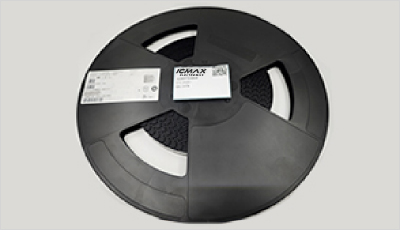
- Step1:Prepare product
-
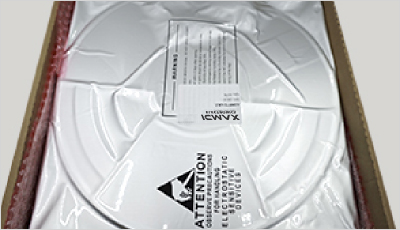
- Step2:Vacuum packaging
-
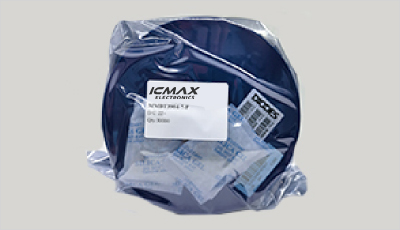
- Step3:Anti-static bag
-
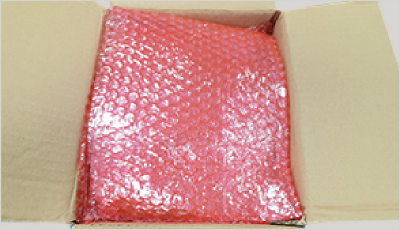
- Step4:Individual package
-
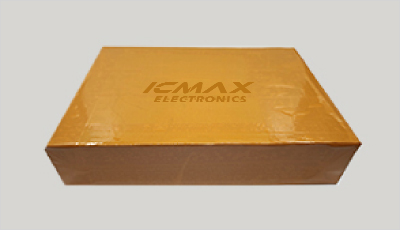
- Step5:Packaging box
-
- Step6:Barcode shipping label
Shipping starts at $40, but some countries will exceed $40. For example (South Africa, Brazil, India, Pakistan, Israel, etc.)
The basic freight (for package ≤0.5kg or corresponding volume) depends on the time zone and country.
Currently, our products are shipped through DHL, FedEx, SF, and UPS.
Delivery TimeOnce the goods are shipped, estimated delivery time depends on the shipping methods you chose:
FedEx International, 5-7 business days.
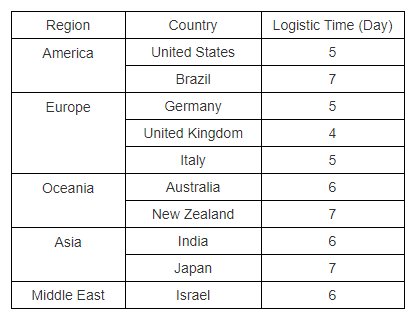
The following are some common countries' logistic time.
- Hot Sale
- Related Categories
- Include Parts
- Popular Search
The following parts include "NCE3015S" in Silicon Labs NCE3015S.
- Part Number
- Manufacturer
- Package
- Description
- BSZ180P03NS3EGATMA1 Infineon Technologies NCE3015S — 30V/15A N-Channel Power MOSFET (SOP-8)The NCE3015S is a 30V/15A trench N-Channel MOSFET in SOP-8 — 7mΩ max at 10V, 9.5mΩ max at 4.5V, 32.3nC gate charge, from Wuxi NCE Power.From what we see across Shenzhen lots (2025&nda…
- SIRA14DP-T1-GE3 Vishay Siliconix NCE3015S — 30V/15A N-Channel Power MOSFET (SOP-8)The NCE3015S is a 30V/15A trench N-Channel MOSFET in SOP-8 — 7mΩ max at 10V, 9.5mΩ max at 4.5V, 32.3nC gate charge, from Wuxi NCE Power.From what we see across Shenzhen lots (2025&nda…
- AO4419 Alpha & Omega Semiconductor Inc. NCE3015S — 30V/15A N-Channel Power MOSFET (SOP-8)The NCE3015S is a 30V/15A trench N-Channel MOSFET in SOP-8 — 7mΩ max at 10V, 9.5mΩ max at 4.5V, 32.3nC gate charge, from Wuxi NCE Power.From what we see across Shenzhen lots (2025&nda…
- SISA14BDN-T1-GE3 Vishay Siliconix NCE3015S — 30V/15A N-Channel Power MOSFET (SOP-8)The NCE3015S is a 30V/15A trench N-Channel MOSFET in SOP-8 — 7mΩ max at 10V, 9.5mΩ max at 4.5V, 32.3nC gate charge, from Wuxi NCE Power.From what we see across Shenzhen lots (2025&nda…
- PSMN9R5-30YLC,115 Nexperia USA Inc. NCE3015S — 30V/15A N-Channel Power MOSFET (SOP-8)The NCE3015S is a 30V/15A trench N-Channel MOSFET in SOP-8 — 7mΩ max at 10V, 9.5mΩ max at 4.5V, 32.3nC gate charge, from Wuxi NCE Power.From what we see across Shenzhen lots (2025&nda…
- BUK9Y21-40E,115 Nexperia USA Inc. NCE3015S — 30V/15A N-Channel Power MOSFET (SOP-8)The NCE3015S is a 30V/15A trench N-Channel MOSFET in SOP-8 — 7mΩ max at 10V, 9.5mΩ max at 4.5V, 32.3nC gate charge, from Wuxi NCE Power.From what we see across Shenzhen lots (2025&nda…
- RTQ035N03HZGTR Rohm Semiconductor NCE3015S — 30V/15A N-Channel Power MOSFET (SOP-8)The NCE3015S is a 30V/15A trench N-Channel MOSFET in SOP-8 — 7mΩ max at 10V, 9.5mΩ max at 4.5V, 32.3nC gate charge, from Wuxi NCE Power.From what we see across Shenzhen lots (2025&nda…
- FDMS7680 onsemi NCE3015S — 30V/15A N-Channel Power MOSFET (SOP-8)The NCE3015S is a 30V/15A trench N-Channel MOSFET in SOP-8 — 7mΩ max at 10V, 9.5mΩ max at 4.5V, 32.3nC gate charge, from Wuxi NCE Power.From what we see across Shenzhen lots (2025&nda…
- RQ3E180BNTB Rohm Semiconductor NCE3015S — 30V/15A N-Channel Power MOSFET (SOP-8)The NCE3015S is a 30V/15A trench N-Channel MOSFET in SOP-8 — 7mΩ max at 10V, 9.5mΩ max at 4.5V, 32.3nC gate charge, from Wuxi NCE Power.From what we see across Shenzhen lots (2025&nda…
- STL6N2VH5 STMicroelectronics NCE3015S — 30V/15A N-Channel Power MOSFET (SOP-8)The NCE3015S is a 30V/15A trench N-Channel MOSFET in SOP-8 — 7mΩ max at 10V, 9.5mΩ max at 4.5V, 32.3nC gate charge, from Wuxi NCE Power.From what we see across Shenzhen lots (2025&nda…
The following parts are popular search parts in Test and Measurement.
Inventory:50,000
Please send an inquiry. Send us your inquiry, and we will respond immediately.

- 1500+ Daily average RFQ Volume

- 20,000.000 Standard Product Unit

- 1800+ Worldwide Manufacturers

- 15,000+ In-stock Warehouse