NCEPower NCE2302

- Part No.:
- NCE2302
- Manufacturer:
- NCEPower
- Category:
- N-Channel MOSFETs
- Package:
- Description:
- .vis-row { display: flex; flex-wrap: wrap; gap: 1.5rem; margin: 1.5rem 0; align-items: flex-start; }.vis-col { flex: 1; min-width: 260px; }.vis-title { font-size: 0.78rem; color: #6a8aaa; text-transform: uppercase; letter-spacing: 0.05em; margin-bottom: 0.…
- Quantity:
-
Unit Price:$0
Ext Price:$0
- Payment:
-

- Shipping:
-


NCE2302 Information
- Specifications
- Product Details
- Comparison
- Tags
- Product attributes
- Attribute value
- Manufacturer:
- NCEPower
- Series:
- Package/Case:
- Packaging:
- SOT-23
- Product Status:
- Production
- FET Type:
- Industrial grade
- Technology:
- Trench
- Drain to Source Voltage (Vdss):
- N
- Current - Continuous Drain (Id) @ 25°C:
- 20
- Drive Voltage (Max Rds On, Min Rds On):
- 4
- Rds On (Max) @ Id, Vgs:
- 0.9
- Vgs(th) (Max) @ Id:
- Gate Charge (Qg) (Max) @ Vgs:
- Vgs (Max):
- 30
- Input Capacitance (Ciss) (Max) @ Vds:
- 45
- FET Feature:
- 37
- Power Dissipation (Max):
- 59
- Operating Temperature:
- ±12
- Grade:
- 300
- Qualification:
- 4
- Mounting Type:
- 1
- Supplier Device Package:
NCE2302 — N-Channel 20V/2.9A Enhancement Mode Power MOSFET (SOT-23)
The NCE2302 is an N-channel enhancement mode power MOSFET from Wuxi NCE Power, built on trench gate technology. It delivers 20V drain-source rating with 2.9A continuous drain current in a SOT-23 package. The standout spec: total gate charge of just 4.0nC — half that of most MOSFETs in this current class. Combined with input capacitance of only 300pF, this part switches faster and with less drive current than almost anything else in SOT-23.
At RDS(on) of 33mΩ typical at 4.5V, the NCE2302 runs efficiently at its rated 2.9A. The 0.75V typical VGS(th) means 3.3V logic drives it directly. Think of this as the entry-level logic-level MOSFET in the NCE SOT-23 family: smaller than the NCE3400 (30V/5.8A), faster switching, and about the same price. If you're switching under 3A from 5V or below, the NCE2302 is the most cost-effective N-channel option in the NCE lineup.
What Are the Technical Specifications of NCE2302?
| Parameter | Value |
|---|---|
| Type | N-Channel Enhancement Mode Power MOSFET |
| Package | SOT-23-3L (surface mount) |
| Drain-Source Voltage (VDSS) | 20V |
| Gate-Source Voltage (VGSS) | ±12V |
| Continuous Drain Current (ID) | 2.9A @ 25°C |
| Pulsed Drain Current (IDM) | 10A (10µs pulse) |
| Power Dissipation (PD) | 1.0W @ 25°C |
| Gate Threshold Voltage (VGS(th)) | 0.75V typ / 1.2V max @ 250µA |
| RDS(on) @ VGS=4.5V | 33mΩ typ / 40mΩ max |
| RDS(on) @ VGS=2.5V | 40mΩ typ / 60mΩ max |
| Total Gate Charge (QG) | 4.0nC @ VGS=4.5V |
| Input Capacitance (CISS) | 300pF @ VDS=10V |
| Reverse Transfer Capacitance (CRSS) | ~80pF |
| Turn-on Delay / Rise Time | 10ns / 50ns |
| Body Diode VF | 0.75V typ @ 2.9A |
| Operating Temperature | -55°C to +150°C |
| Manufacturer | Wuxi NCE Power Semiconductor |
RDS(on) at each gate drive level. At 33mΩ typical at 4.5V, the NCE2302 competes with MOSFETs rated for double the current. The key trade-off: 20V VDS max means this is strictly for 5V-and-below designs.
Bar width = typical RDS(on) relative to 40mΩ. The gap between typical and max is narrow — this is a mature, well-characterized part with tight process control.
Why the NCE2302 punches above its weight class. The 4.0nC gate charge and 300pF input capacitance mean this part switches with almost no drive current. Compare to similar MOSFETs in its class — the NCE2302 needs half the gate drive energy of a typical 20V SOT-23 MOSFET.
The NCE2302 has one of the lowest VGS(th) in its class (0.75V typ). 3.3V GPIOs drive it with margin to spare. The ±12V VGS max is the same constraint as the rest of the NCE family: don't drive the gate from 12V without a clamp.
When Should You Use (and NOT Use) the NCE2302?
✅ Use NCE2302 when:
- Switching up to 2A from a 5V or 3.3V rail. At 2A and 40mΩ (worst case, 4.5V drive), the NCE2302 dissipates 160mW — well within the 1W package limit. At 2.9A, dissipation rises to 336mW, still safe but warm. This is a 2A part in practice, and the datasheet's 2.9A is achievable with good PCB copper.
- High-frequency PWM above 200kHz. With 4.0nC gate charge, a 10mA gate driver switches the NCE2302 in 400ns. That's practical for 500kHz+ PWM. The 300pF CISS means even a weak MCU GPIO (5mA drive) can switch this part at 100kHz without a dedicated gate driver.
- Single-cell Li-Ion protection (sub-3A). For 1S packs below 3A, the NCE2302 is adequate and costs less than the NCE3400. The 20V VDS rating covers any single-cell scenario.
- LED drivers, small motor drivers, peripheral power gating. Any application under 2A where board space, cost, or switching speed matter. The NCE2302 is the cheapest NCE SOT-23 MOSFET that still delivers logic-level drive and reasonable RDS(on).
❌ Don't use NCE2302 when:
- VDS can exceed 20V. 20V is the absolute maximum — there's no margin for ringing or transients. For anything above a 5V rail, step up to NCE3400 (30V) or 2N7002-TP (60V, but only 115mA).
- Load current exceeds 2A continuous. Above 2A, the NCE3400 (5.8A rating, 24mΩ) is the safer choice. The NCE2302 will survive 2.9A, but thermal margin shrinks to near zero on a typical 2-layer board.
- You need the lowest possible RDS(on). 33mΩ is good, but the NCE3400 delivers 24mΩ (27% lower) for a similar price. In battery-powered designs where every millivolt of drop counts, pay the extra cent for the NCE3400.
- Gate drive is 1.8V. VGS(th) max is 1.2V, so 1.8V might barely turn it on, but RDS(on) at 1.8V is unspecified and likely very high. Use BSS138 or add a level shifter.
What Are the Alternatives to NCE2302?
| Model | Type | Key Difference | Best For |
|---|---|---|---|
| NCE3400 | N-Ch Trench MOSFET | 30V/5.8A, RDS(on) 24mΩ, QG 10nC, SOT-23 | Step-up: higher voltage, higher current |
| SI2302DS | N-Ch Trench MOSFET | 20V/2.8A, RDS(on) ~45mΩ, QG ~5nC | Near-equivalent, slightly worse specs |
| BSS138 | N-Ch MOSFET | 50V/200mA, RDS(on) ~3.5Ω, ±20V VGS | Higher voltage, signal-level only |
| 2N7002-TP | N-Ch MOSFET | 60V/115mA, RDS(on) ~5Ω | HV switching, very low current |
| NCE2305 | P-Ch Trench MOSFET | -20V/-4.1A, RDS(on) 52mΩ, SOT-23 | P-channel complement for high-side switching |
The NCE SOT-23 family: three parts, three jobs.
The NCE2302 is the speed king of the family — less than half the gate charge of the NCE3400. For high-frequency PWM applications, this is the one you want. The trade-off: lower voltage rating and higher RDS(on).
What Are the Typical Applications of NCE2302?
The NCE2302's 4.0nC gate charge makes it ideal for PWM dimming at several kHz. A 3.3V MCU GPIO delivering 5mA charges the gate in under 1µs — no gate driver IC needed. At 1A LED current with 40mΩ RDS(on), the FET drops just 40mV, keeping the LED current sense resistor the dominant voltage drop in the path.
For small DC motor PWM (sub-2A), the NCE2302 is the go-to low-side switch. At 20kHz PWM — typical for motor control — the rise/fall times are under 100ns. Switching loss is negligible compared to conduction loss at this frequency. Add a flyback diode across the motor and you have a complete motor driver in four components.
Battery Protection (1S, sub-3A). Same topology as NCE3400 but scaled down. The NCE2302 sits between BAT− and P−. At 2A load and 40mΩ, voltage drop is 80mV. The 20V VDS rating is sufficient for single-cell. If you're building a 1S protection board for a sub-$10 product, the NCE2302 saves a fraction of a cent per unit over the NCE3400 — and at volume, fractions of a cent add up.
Why Buy NCE2302 from ICMASS?
Full batch traceability. We verify date codes and lot numbers against NCE Power factory records. The NCE2302's 20V VDS rating makes it vulnerable to ESD and overvoltage damage during handling — we test incoming lots for gate leakage and VGS(th) shift before they enter inventory.
NCE SOT-23 family in one shipment. The NCE2302 is usually one of several MOSFETs on a BOM — alongside the NCE3400 for higher-current paths and the NCE2305 for high-side switching. We stock all three. One order, one shipment, one invoice.
Shenzhen stock, same-day dispatch before 15:00 CST. DHL/FedEx to North America and Europe in 5–10 days. Contact us for current pricing on your quantity — volume pricing typically ranges from $0.015–$0.04/unit depending on order size.
Frequently Asked Questions About NCE2302
Q1: NCE2302 vs NCE3400 — when do I pay the extra cent?
A: Pay it when you need >20V, >2A, or the lowest RDS(on). The NCE3400 gives you 30V VDS (vs 20V), 5.8A (vs 2.9A), and 24mΩ (vs 33mΩ). For 5V/2A designs, the NCE2302 is adequate and cheaper. For anything that might ever see a voltage transient above 20V, or any current above 2A continuous, the NCE3400's extra margin is worth the few cents. If you're unsure, default to the NCE3400 — the BOM cost difference is smaller than the cost of a field failure.
Q2: Can the NCE2302 really switch at 500kHz?
A: Yes, and this is where it shines. With 4.0nC gate charge and 300pF input capacitance, a 10mA gate driver charges the gate in ~400ns. At 500kHz (2µs period), turn-on and turn-off transitions occupy about 40% of the period — you'll see switching loss, but it's manageable with good layout. Compare to the NCE3400 (10nC): at 500kHz, switching loss dominates and the part runs hot. If you're pushing PWM above 200kHz, the NCE2302 is the best choice in the NCE SOT-23 lineup.
Q3: How much current can the NCE2302 really handle?
A: 2A comfortably, 2.9A with good thermal design. At 2A, worst-case RDS(on) of 60mΩ (at 2.5V drive) gives 240mW — about 30°C rise above ambient with typical SOT-23 PCB copper. At 2.9A, worst-case dissipation jumps to 500mW — about 63°C rise. The part will survive but your PCB won't love it. For anything above 2A continuous, the NCE3400 is the safer bet.
Q4: Is the NCE2302 avalanche-rated?
A: The standard datasheet does not specify EAS. The 20V VDS rating leaves little headroom for inductive kickback anyway. If your application switches inductive loads, add external clamping or choose an avalanche-rated part.
Q5: Why does the NCE2302 have such low gate charge?
A: Smaller die area. The NCE2302 is rated for 2.9A — about half the NCE3400's 5.8A. The silicon die is physically smaller, which means less gate capacitance. The 20V rating also allows a thinner gate oxide than a 30V part. Smaller die + lower voltage rating = lower QG. It's not magic, it's physics — and it's the reason this part is so good at high-frequency switching.
Q6: Can I use the NCE2302 in a 2S (7.4V) Li-Ion pack?
A: No — 7.4V nominal means 8.4V fully charged, and transients can push past 10V. While 10V is still under the 20V VDS rating, a 2S pack with charger transients and load dump can easily exceed 20V for microseconds. For 2S and above, use the NCE3400 (30V) or a dedicated battery protection IC. The NCE2302 is strictly for single-cell and 5V-rail applications.
Q7: NCE2302 vs SI2302DS — any reason to pick the SI part?
A: Only if it's already in your BOM or significantly cheaper. Spec-wise, the NCE2302 has lower RDS(on) (33mΩ vs ~45mΩ), lower gate charge (4.0nC vs ~5nC), and nearly identical voltage/current ratings. The NCE2302 is the objectively better part. The SI2302DS is ubiquitous and well-characterized, which matters in some regulated industries, but for new designs there's no technical reason to choose it over the NCE2302.
Q8: Does this part need a gate resistor for EMI?
A: Yes — but a small one. With only 300pF input capacitance, the NCE2302 turns on extremely fast even with a weak gate driver. That sharp edge radiates. A 10–47Ω series gate resistor slows the edge just enough to pass EMI without noticeably impacting efficiency below 300kHz. At 500kHz+, keep it at 10Ω or less.
Related Products
- NCE3400 — 30V/5.8A N-Ch MOSFET, SOT-23, step-up for higher voltage/current
- NCE2305 — -20V/-4.1A P-Ch MOSFET, SOT-23, high-side switching complement
- SI2302DS — 20V/2.8A N-Ch MOSFET, SOT-23, near-equivalent alternative
- BSS138 — 50V/200mA N-Ch MOSFET, signal-level HV switching
- 2N7002-TP — 60V/115mA N-Ch MOSFET, SOT-23, highest voltage in SOT-23
| Image |

|
| Part Number | NCE2302 |
| Manufacturer | NCEPower |
| Series | |
| Package/Case | |
| Packaging | SOT-23 |
| Product Status | Production |
| FET Type | Industrial grade |
| Technology | Trench |
| Drain to Source Voltage (Vdss) | N |
| Current - Continuous Drain (Id) @ 25°C | 20 |
| Drive Voltage (Max Rds On, Min Rds On) | 4 |
| Rds On (Max) @ Id, Vgs | 0.9 |
| Vgs(th) (Max) @ Id | |
| Gate Charge (Qg) (Max) @ Vgs | |
| Vgs (Max) | 30 |
| Input Capacitance (Ciss) (Max) @ Vds | 45 |
| FET Feature | 37 |
| Power Dissipation (Max) | 59 |
| Operating Temperature | ±12 |
| Grade | 300 |
| Qualification | 4 |
| Mounting Type | 1 |
| Supplier Device Package |
User Guide
- Purchase & Inquiry
- Package
- Shipping Information
- Customer Review
You may place an order without registering to IC-MAX.COM
We strongly suggest you sign in before purchasing as you can track your order in real time.
For your convenience, we accept multiple payment methods in USD, including PayPal, Credit Card, and wire transfer.
RFQ (Request for Quotations)
It is recommended to request for quotations to get the latest prices and inventories about the part.
Our sales will reply to your request by email within 24 hours.
1. You'll receive an order information email in your inbox. (Please remember to check the spam folder if you didn't hear from us).
2. Since inventories and prices may fluctuate to some extent, the sales manager is going to reconfirm the order and let you know if there are any updates.
-
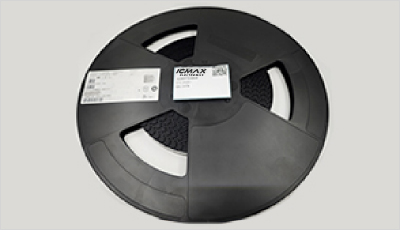
- Step1:Prepare product
-
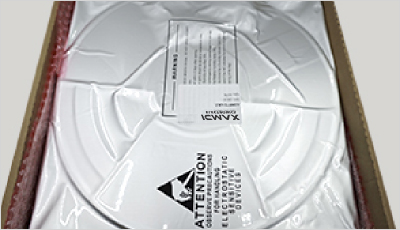
- Step2:Vacuum packaging
-
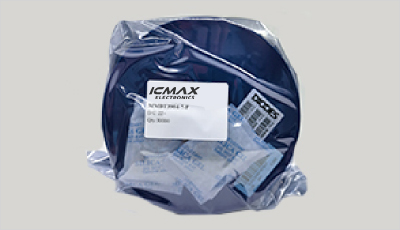
- Step3:Anti-static bag
-
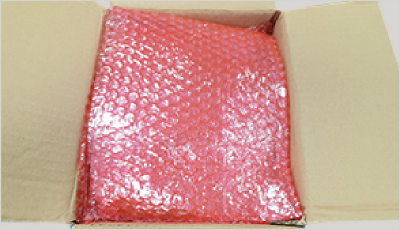
- Step4:Individual package
-
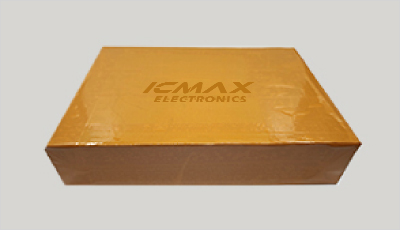
- Step5:Packaging box
-
- Step6:Barcode shipping label
Shipping starts at $40, but some countries will exceed $40. For example (South Africa, Brazil, India, Pakistan, Israel, etc.)
The basic freight (for package ≤0.5kg or corresponding volume) depends on the time zone and country.
Currently, our products are shipped through DHL, FedEx, SF, and UPS.
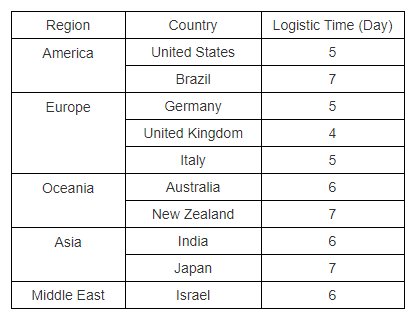
Delivery TimeOnce the goods are shipped, estimated delivery time depends on the shipping methods you chose:
FedEx International, 5-7 business days.
The following are some common countries' logistic time.
- Hot Sale
- Related Categories
- Include Parts
- Popular Search
The following parts include "NCE2302" in Silicon Labs NCE2302.
- Part Number
- Manufacturer
- Package
- Description
- BSZ180P03NS3EGATMA1 Infineon Technologies .vis-row { display: flex; flex-wrap: wrap; gap: 1.5rem; margin: 1.5rem 0; align-items: flex-start; }.vis-col { flex: 1; min-width: 260px; }.vis-title { font-size: 0.78rem; color: #6a8aaa; text-transform: uppercase; letter-spacing: 0.05em; margin-bottom: 0.…
- SIRA14DP-T1-GE3 Vishay Siliconix .vis-row { display: flex; flex-wrap: wrap; gap: 1.5rem; margin: 1.5rem 0; align-items: flex-start; }.vis-col { flex: 1; min-width: 260px; }.vis-title { font-size: 0.78rem; color: #6a8aaa; text-transform: uppercase; letter-spacing: 0.05em; margin-bottom: 0.…
- AO4419 Alpha & Omega Semiconductor Inc. .vis-row { display: flex; flex-wrap: wrap; gap: 1.5rem; margin: 1.5rem 0; align-items: flex-start; }.vis-col { flex: 1; min-width: 260px; }.vis-title { font-size: 0.78rem; color: #6a8aaa; text-transform: uppercase; letter-spacing: 0.05em; margin-bottom: 0.…
- SISA14BDN-T1-GE3 Vishay Siliconix .vis-row { display: flex; flex-wrap: wrap; gap: 1.5rem; margin: 1.5rem 0; align-items: flex-start; }.vis-col { flex: 1; min-width: 260px; }.vis-title { font-size: 0.78rem; color: #6a8aaa; text-transform: uppercase; letter-spacing: 0.05em; margin-bottom: 0.…
- PSMN9R5-30YLC,115 Nexperia USA Inc. .vis-row { display: flex; flex-wrap: wrap; gap: 1.5rem; margin: 1.5rem 0; align-items: flex-start; }.vis-col { flex: 1; min-width: 260px; }.vis-title { font-size: 0.78rem; color: #6a8aaa; text-transform: uppercase; letter-spacing: 0.05em; margin-bottom: 0.…
- BUK9Y21-40E,115 Nexperia USA Inc. .vis-row { display: flex; flex-wrap: wrap; gap: 1.5rem; margin: 1.5rem 0; align-items: flex-start; }.vis-col { flex: 1; min-width: 260px; }.vis-title { font-size: 0.78rem; color: #6a8aaa; text-transform: uppercase; letter-spacing: 0.05em; margin-bottom: 0.…
- RTQ035N03HZGTR Rohm Semiconductor .vis-row { display: flex; flex-wrap: wrap; gap: 1.5rem; margin: 1.5rem 0; align-items: flex-start; }.vis-col { flex: 1; min-width: 260px; }.vis-title { font-size: 0.78rem; color: #6a8aaa; text-transform: uppercase; letter-spacing: 0.05em; margin-bottom: 0.…
- FDMS7680 onsemi .vis-row { display: flex; flex-wrap: wrap; gap: 1.5rem; margin: 1.5rem 0; align-items: flex-start; }.vis-col { flex: 1; min-width: 260px; }.vis-title { font-size: 0.78rem; color: #6a8aaa; text-transform: uppercase; letter-spacing: 0.05em; margin-bottom: 0.…
- RQ3E180BNTB Rohm Semiconductor .vis-row { display: flex; flex-wrap: wrap; gap: 1.5rem; margin: 1.5rem 0; align-items: flex-start; }.vis-col { flex: 1; min-width: 260px; }.vis-title { font-size: 0.78rem; color: #6a8aaa; text-transform: uppercase; letter-spacing: 0.05em; margin-bottom: 0.…
- STL6N2VH5 STMicroelectronics .vis-row { display: flex; flex-wrap: wrap; gap: 1.5rem; margin: 1.5rem 0; align-items: flex-start; }.vis-col { flex: 1; min-width: 260px; }.vis-title { font-size: 0.78rem; color: #6a8aaa; text-transform: uppercase; letter-spacing: 0.05em; margin-bottom: 0.…
The following parts are popular search parts in Test and Measurement.
Inventory:50,000
Please send an inquiry. Send us your inquiry, and we will respond immediately.

- 1500+ Daily average RFQ Volume

- 20,000.000 Standard Product Unit

- 1800+ Worldwide Manufacturers

- 15,000+ In-stock Warehouse