When to Use a Zener Diode vs an LDO for Voltage Regulation
When to Use a Zener Diode vs an LDO for Voltage Regulation
A Zener diode costs $0.02. An LDO costs $0.30. Why pay 15× more? Because they're not the same job. A Zener is a pressure relief valve - crude, passive, always burning power. An LDO is a servo loop - active, precise, burning only what the load demands. Pick wrong and you're wasting watts or injecting noise into your ADC rail.
This article walks through when each makes sense, what the real trade-offs are, and how to combine them when neither alone is right.
Data drawn from EE StackExchange "Zener vs linear regulator" discussions, Nexperia BZX84/BZT52H datasheets (Rev. 7, 2023), and TI LP5912 datasheet (SNVSA77).
The Shunt vs Series Distinction
A Zener is a shunt regulator. It sits in parallel with the load, burning off the current the load doesn't consume. The series resistor sets the total current: Itotal = (VIN − VZ) / R. The Zener takes whatever the load doesn't. At no load, the Zener burns it all.
An LDO is a series regulator. It sits between the input and the load, acting as a variable resistor controlled by a feedback loop. It only passes the current the load actually draws. At no load, it burns almost nothing - just its quiescent current.
This is the fundamental difference. A Zener always runs at full power. An LDO runs at whatever power the load demands. For a 5mA reference, the difference is negligible. For a 500mA rail, it's the difference between cool-running and a space heater.
Per an EE StackExchange discussion, the community consensus was blunt: Zener shunt regulators are "only suitable for loads which draw a low and constant current. A linear voltage regulator would be a much better fit" for anything variable or above ~20mA.
When a Zener Is the Right Choice
Zeners shine where the load is small, constant, and noise-tolerant. Classic cases:
- MOSFET gate clamping. A 16V Zener gate-to-source protects VGS from transient overvoltage. It only conducts during the transient - no sustained power draw. The Zener's noise doesn't matter because it's not in the signal path.
- Voltage references for comparators. A UVLO circuit comparing a divided rail against a Zener reference. Load current is microamps. The Zener's ±5% tolerance is fine for a trip point that doesn't need 1% accuracy.
- Level shifting in analog circuits. Dropping a signal by a fixed 2.4V before it enters an ADC. The soft knee of a low-voltage Zener can actually be useful here - graduated clamping instead of hard clipping.
- Pre-regulation for high-voltage inputs. An LDO rated for 26V max input can't handle a 36V rail. A Zener pre-drop from 36V to 16V keeps the LDO alive. The Zener handles the voltage, the LDO handles the regulation.
The common thread: load current under ~5mA, noise not critical, or the Zener is doing a job (clamping, level-shifting) that an LDO isn't designed for.
When an LDO Is the Right Choice
LDOs take over where Zeners hit their limits. The thresholds:
- Load current above 5mA. A Zener shunt regulator wastes (VIN − VZ) × Itotal as heat 100% of the time. At 12V in, 5V out, 100mA load, that's 0.7W continuous in the series resistor and Zener - even when the load is idle. An LDO at the same conditions dissipates (12−5) × 0.1 = 0.7W only under load. At idle it drops to ~30µA × 7V = 0.2mW.
- Noise-sensitive analog. A Zener reference with a 100nF bypass cap typically measures 150–250µVrms in bench testing. A jellybean AMS1117 runs ~100µVrms (estimated - the datasheet doesn't spec noise). A low-noise LDO like the LP5912 delivers 12µVrms per the TI datasheet (SNVSA77). For a 16-bit ADC where each LSB is 50µV, that's the difference between 0.25 LSB of supply noise and 4+ LSB. When your ADC costs $15, the $0.30 LDO is cheap insurance.
- Variable loads. A Zener shunt must be sized for the minimum load current - meaning at maximum load it may not have enough current to stay in breakdown. An LDO handles load steps from zero to full rated current without changing its regulation behavior.
- Low dropout. Need 3.3V from a 3.7V Li-Ion battery? A Zener at 3.3V can't regulate from 3.7V - it needs several volts of headroom. An LDO like the LP5912 regulates 3.3V from 3.5V input with 95mV dropout.
The Hybrid: Zener Pre-Regulator + LDO
Sometimes neither part alone fits. Example: a 36V industrial rail needs to power a 3.3V MCU pulling 200mA. An LDO rated for 36V input exists, but (36−3.3) × 0.2 = 6.5W of heat in a single package is a thermal nightmare. A switching regulator adds EMI and complexity.
The hybrid: a 16V Zener pre-drops 36V to ~20V, an LDO regulates 20V to 3.3V. Zener takes voltage stress, LDO handles regulation. Power splits: 3.2W in the Zener, 3.3W in the LDO. Still hot, but spread across two packages instead of 6.5W in one.
This isn't elegant. A buck converter would be 85%+ efficient and dissipate under 1W total. But if you can't use a switcher - EMI constraints, BOM restrictions, certification requirements - a Zener + LDO cascade is a legitimate, production-tested approach.
Quick Decision Table
| Situation | Use | Why |
|---|---|---|
| MOSFET gate overvoltage clamp | Zener | Only conducts during transients. Noise irrelevant. |
| ADC reference rail, 16-bit | Low-noise LDO | Zener noise eats 4+ LSB. LDO keeps it under 0.5 LSB. |
| Battery-powered always-on 3.3V | LDO (low IQ) | Zener shunt burns power even at idle. LP5912 draws 30µA. |
| 24V→5V, 50mA, cost-sensitive | Zener | At 50mA, (24−5)×0.05 = 0.95W. A 1W Zener + resistor works. |
| 3.7V Li-Ion → 3.3V | LDO | Zener can't regulate with only 0.4V headroom. |
| UVLO threshold reference | Zener | Microamp load. ±5% tolerance fine. $0.02 cost. |
| Post-switcher ripple cleanup | LDO | Zener has no PSRR. LDO attenuates ripple by 5,600×. |
The Bottom Line
Zeners aren't obsolete. They're the right tool when the job is clamping, crude referencing, or pre-regulation - anywhere precision doesn't matter and cost does. LDOs took over the regulation job because they're better at it: lower noise, higher efficiency at varying loads, tighter accuracy.
But the real skill isn't picking one over the other. It's knowing when to use both. A Zener gate clamp protecting a MOSFET, an LDO powering the ADC that's reading the current through that MOSFET - two $0.02 parts, two completely different jobs, one working circuit.
Related Products
Related information




-
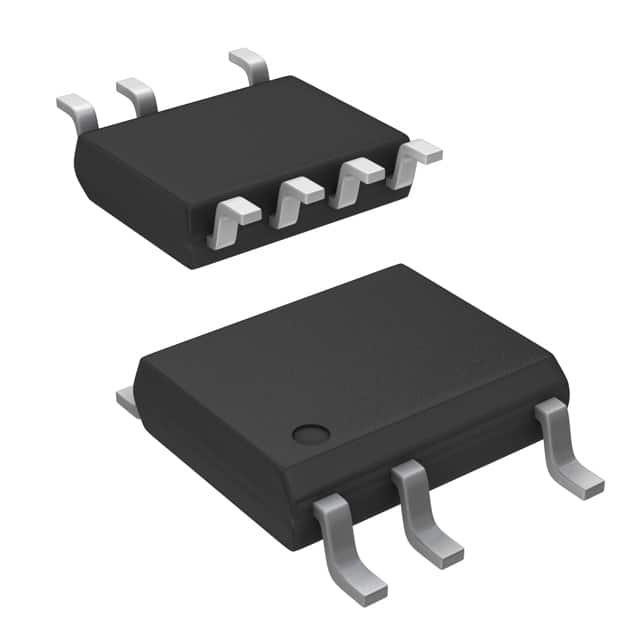
LNK304DN-TL Power Integrations
-
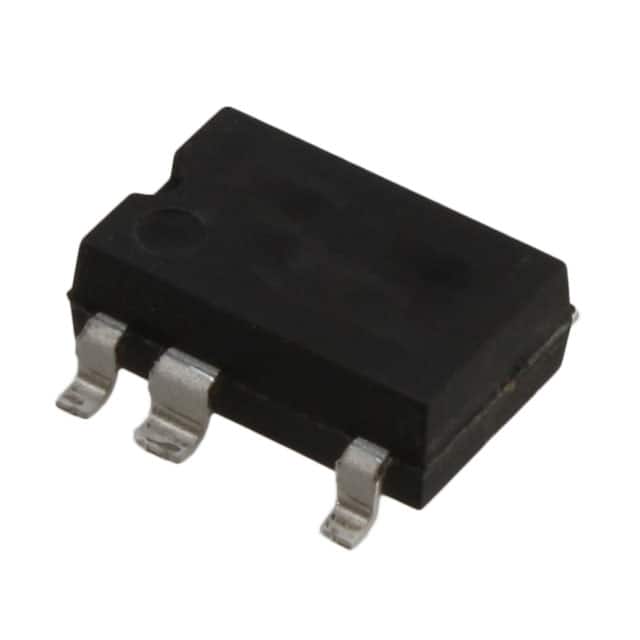
LNK304GN-TL Power Integrations
-
LNK304DG-TL Power Integrations
-
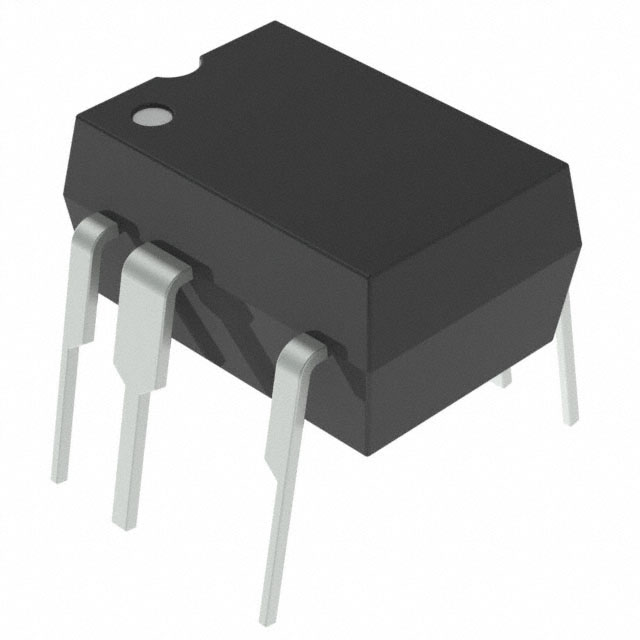
TNY277PN Power Integrations
-
TNY276PN Power Integrations
-
TNY278PN Power Integrations
-
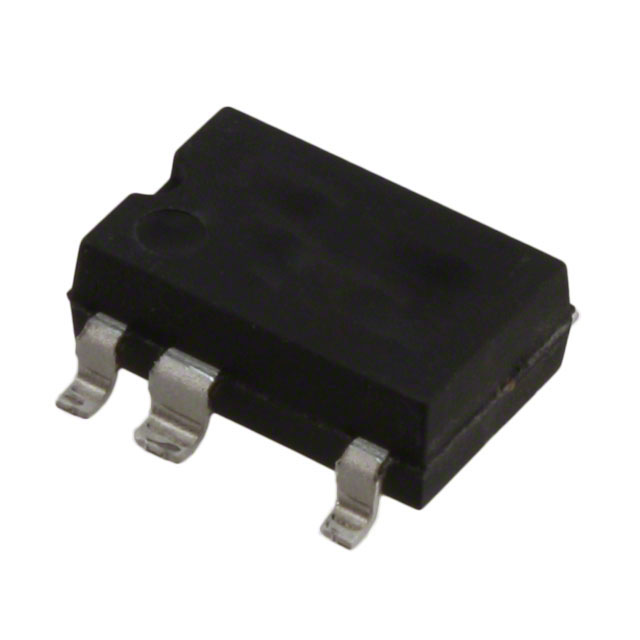
TNY278GN-TL Power Integrations
-
TNY280GN-TL Power Integrations
-
TOP266KG-TL Power Integrations
-
TOP258PN Power Integrations
-
TOP253PN Power Integrations
-
TOP253PNAU Power Integrations

- 1500+ Daily average RFQ Volume

- 20,000.000 Standard Product Unit

- 1800+ Worldwide Manufacturers

- 15,000+ In-stock Warehouse