When Low VF Costs You Safety Margin — Schottky Voltage Rating Selection
When Low VF Costs You Safety Margin — Schottky Voltage Rating Selection
Pick the lowest voltage rating that clears your worst-case transient — not the lowest VF on the shelf. A 30V Schottky drops 395mV; a 100V part drops 750mV; a 200V part drops 840mV. Every volt of reverse rating you buy is millivolts of forward loss you pay on every single cycle.
The trap is that low-VF parts look great on paper and die quietly in the field.
In the industrial designs we support (2025–2026), the most common failure is a 40V-rated Schottky on a 24V rail — it survives for months, then a load-dump transient punches it short.
The 100V part would have cost 0.3V more per amp and never failed.
This guide gives you the numbers, the failure modes, and a three-step selection framework — plus the real-world swap mistakes we see coming back from the field.
Every Volt of Rating Costs Millivolts — the VF Tax
Schottky forward voltage climbs with reverse rating, in a roughly linear staircase. Take the generic SK12–SK110 family as the cleanest example:
| Voltage rating (VRRM) | Typical VF max @ 1A | Cost per amp |
|---|---|---|
| 20V | 0.50V | 500mW |
| 30–40V | 0.55V | 550mW |
| 50–60V | 0.70V | 700mW |
| 80–100V | 0.85V | 850mW |
ST states the rule outright: the higher the breakdown voltage, the higher the forward voltage drop. It's not a manufacturing defect — it's the barrier. A higher-rated Schottky needs a thicker, higher metal-semiconductor barrier, and that barrier costs forward voltage at every current.
Above roughly 45V, the die also gains a P-guard-ring. That's a parallel PN junction added to protect the edge of the Schottky contact — and it raises VF further while slightly slowing recovery. It's why the jump from 40V to 100V hurts so much more than 20V to 40V.
The practical consequence: between the 30V MBRS130LT3G (395mV) and the 100V MBRS1100T3G (750mV), the difference is 355mW per amp. On a 1A rail running 24/7, that's 3.1 kWh per year of pure heat — in an enclosure, that heat also shortens every electrolytic near it.
Leakage — the Cost You Pay While the Diode Is Off
The second price of a Schottky is reverse leakage, and it doubles roughly every 10°C. At 25°C, 1mA at rated voltage is normal. At 85°C, that's on the order of 10mA — and 100V x 10mA is a full watt of idle heat, doing nothing.
That heat feeds back into the leak: more temperature, more leakage, more heat — a positive feedback loop that ends in thermal runaway.
A forum warning from a repair bench puts it bluntly: Schottky diodes and high voltage aren't a great combination, the reverse leakage rockets with temperature.
Reverse thermal runaway is a real possibility unless the part is heatsinked.
This is why "bigger is safer" fails for Schottkys. A worked example from the forums: a 30A/30V part pressed into a 0.8A application leaked 60mA at -20V — 1.2W wasted while off.
At 50% duty cycle, total losses were worse than the humble 1N5819 it replaced. The oversize rating didn't add safety; it added a parasitic load.
The counterintuitive part: lower-voltage Schottkys also leak, just less per volt. So the "lowest rating that clears the transient" rule minimizes both halves of the equation — VF and leakage — at once.
Margin Math — What Your Bus Actually Needs
The industry rule of thumb is 20% margin over worst-case reverse voltage; transient environments need far more.
Automotive load-dump (ISO 7637) can push a 12V rail past 40V for hundreds of milliseconds; a 48V telecom bus with ringing can see 80V+; a relay coil on 24V kicks back well past the rail.
| Bus voltage | 30V part (MBRS130) | 40V part (MBRS140) | 100V part (MBRS1100) | 200V part (MBRS3200) |
|---|---|---|---|---|
| 5V | 6x — ideal | 8x | 20x — wasted | 40x — wasted |
| 12V (clean) | 2.5x — OK | 3.3x — sweet spot | 8.3x — safe | 16x |
| 12V (automotive) | — load-dump kills it | marginal | 8.3x — rides through | 16x |
| 24V | 1.25x — too tight | 1.7x — tight | 4.2x — safe | 8.3x |
| 48V | 0.6x — invalid | 0.8x — invalid | 2.1x — minimum | 4.2x — safe |
Read the matrix as a staircase, not a pick-one. At 5V, the 30V part is the efficiency winner. At clean 12V, 40V is the sweet spot. Automotive 12V and anything above pushes you to 100V. Harsh 48V environments justify 200V.
A 2x minimum is a good working rule for industrial rails. Ringing on an un-terminated bus can easily double the nominal voltage for a few microseconds; below 2x, you're betting the junction on the snubber being right.
The Decision Framework — Three Questions Before You Pick
Question 1: What is the worst-case reverse voltage, including transients? Not the nominal bus. Simulate or measure the spike with a scope on a real prototype — relay kicks, load-dumps, and capacitor inrush all count.
Question 2: What is the ambient temperature and duty cycle? Leakage doubles every 10°C. A 100V part in a 70°C enclosure leaks ten times its 25°C spec — if it's reverse-biased most of the time, that's a real power number.
Question 3: What does one watt of loss cost in this design? In a battery device, it's runtime. In a sealed enclosure, it's electrolytic lifetime. In a solar string, it's harvested energy. Compare that against the cost of a higher-rated part.
The three questions collapse into one habit: spec the worst-case spike first, then pick the smallest rating above it with 2x margin, then sanity-check the leakage at your ambient. When in doubt between two classes, the higher one wins — but only by one class, not three.
| Scenario | Pick | Why |
|---|---|---|
| 3.3V/5V rail, battery-powered | 30V class (395mV) | Every millivolt is runtime; transients are tame |
| Clean 12V lab supply | 40V class (~0.5V) | 3.3x margin, reasonable VF |
| Automotive 12V, relays nearby | 100V class (750mV) | ISO 7637 load-dump rides through |
| 24V industrial rail | 100V class (750mV) | 4.2x margin absorbs kickback |
| 48V telecom/solar | 100V minimum, 200V preferred | Transients reach 80V+; 2.1x is the floor |
| Below 5V, high current | Sync rectification, not Schottky | A MOSFET's RDS(on) beats any diode VF |
| Above 150V | Ultrafast or SiC | Schottky VF climbs; ultrafast matches with 100x less leakage |
What We See in Real Swaps (2025–2026)
The most common field failure in our support queue is the 40V part on a 24V rail.
It works on the bench and passes the first-year production run, then a maintenance crew hits a relay bank at the wrong moment — and the diode is shorted.
The 100V part would have cost 0.3V per amp and never failed.
Second most common: a 30V or 40V part sold as a 100V replacement — the footprint looks identical, the price is right.
It fails the leakage-at-voltage test on the bench in seconds — one of the easiest fakes to catch, and one of the most common in spot-market lots.
Third: the efficiency regression nobody measures. A "safer" 200V part swapped into a 5V rail silently adds 400mV per amp. Nobody notices until the enclosure gets warm and the battery life drops 4% — then it's a two-week investigation to find the "free upgrade" that wasn't.
How we avoid all three: every lot we stock gets measured for VF at rated current and leakage at rated voltage. A remarked 40V part fails the second test instantly; a mis-spec'd 30V part fails the first. The datasheet doesn't catch it — the bench does.
Bench Checks — Three Measurements Before You Trust the Datasheet
Measurement 1: forward voltage at rated current. Set a DC supply to 1A through the diode (a power resistor in series works), read the drop with a 4-wire meter, and compare to the datasheet max.
A 100V part reading 0.45V at 1A is not "a good deal" — it's a remarked 30V die that will fail the first transient.
Measurement 2: reverse leakage at rated voltage. Apply the rated reverse voltage through a current meter and read the leak at 25°C.
A 40V die marked 100V leaks several times the 100V spec at 100V bias — the fastest fake detector on the bench.
Repeat at 85°C with a heat gun to see the temperature slope for yourself.
Measurement 3: the transient itself. Scope the reverse voltage across the diode in the real circuit — relay kick, load-dump, or inrush. The nominal bus voltage tells you nothing; the spike tells you the required rating. Design margin from the spike, not from the rail label.
All three take under ten minutes. The first two catch fakes and mis-specs; the third catches the design error that kills the good part in the field. Every supplier should be able to show you this data — if they can't, treat the parts as suspect until proven.
This is how we ship every Schottky lot at ICMASS: VF at rated current and leakage at rated voltage, measured per lot, with the temperature curve available on request.
That's the difference between buying a part number and buying a rating — the silicon inside the SMB body is what actually survives the transient.
Frequently Asked Questions About Schottky Voltage Rating
Q1: Should I always pick the lowest VF Schottky?
A: No — pick the lowest voltage rating that clears your worst-case transient. The lowest VF part in a given voltage class is usually the right choice, but a lower voltage class with a tempting VF can fail in the field on the first transient. Margin beats millivolts when the bus isn't clean.
Q2: What's the difference between a 30V and 100V Schottky?
A: 70V of reverse margin, and roughly 0.35V more forward drop per amp. A 30V part drops 395mV and suits 5V-class rails; a 100V part drops 750mV and survives 24V/48V transients. Same package, same current class, different survival envelope.
Q3: How much leakage is normal in a Schottky?
A: 0.1–1mA at rated voltage and 25°C is normal; it doubles every ~10°C. The spec sheet number is a 25°C snapshot. At 85°C expect ten times it — and check that leakage x reverse voltage stays inside your thermal budget.
Q4: Why does my 100V Schottky get hot when the circuit is idle?
A: Reverse leakage is dissipating while the diode is off. At 100V bias and high ambient, 10mA of leak is 1W of heat. If the part sits reverse-biased most of the time, the leakage loss can exceed the conduction loss. Check the datasheet curves at operating temperature.
Q5: Is a higher-rated Schottky always safer?
A: No — over-rating adds leakage and heat. A 200V part on a 5V rail leaks more and drops 400mV more than a 30V part. A forum case showed a 30A part on a 0.8A load wasting 1.2W while off — worse than the smaller part it replaced. Match the rating to the bus, not to fear.
Q6: When should I stop using Schottky entirely?
A: Below 5V outputs, consider synchronous rectification; above ~150V, switch to ultrafast or SiC. Below 5V, a MOSFET's RDS(on) beats any diode VF. Above 150V, Schottky VF keeps climbing while ultrafast diodes match it with 100x less leakage.
Q7: How do I verify a Schottky is the rated voltage?
A: Measure reverse leakage at the rated voltage — a remarked lower-voltage part fails instantly. A 40V die marked as 100V leaks far more at 100V bias than the spec allows. VF measurement at rated current is the second check; both take seconds on a bench with a DC supply and a meter.
Related information




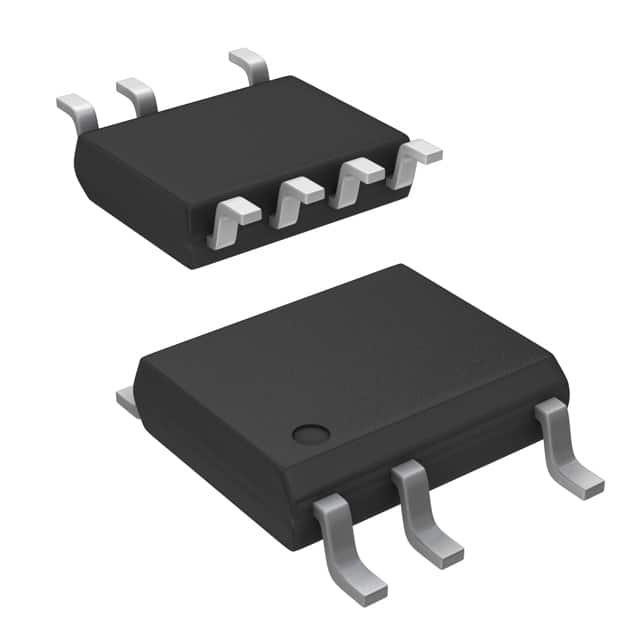
-
LNK304DN-TL Power Integrations
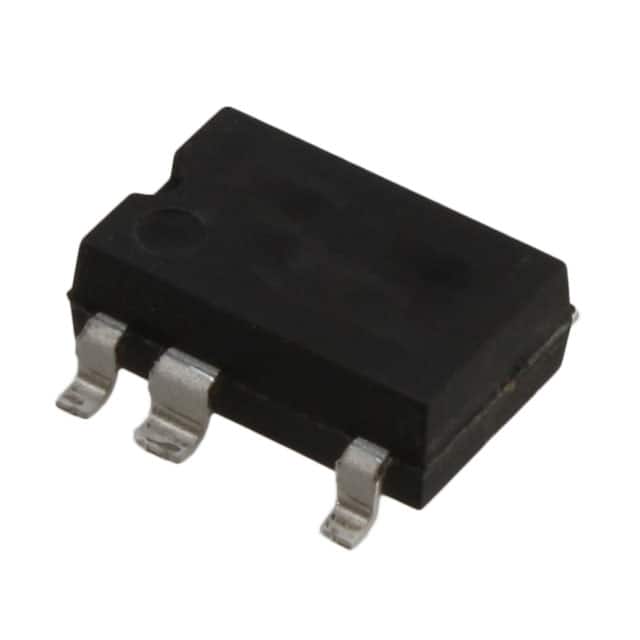
-
LNK304GN-TL Power Integrations
-
LNK304DG-TL Power Integrations
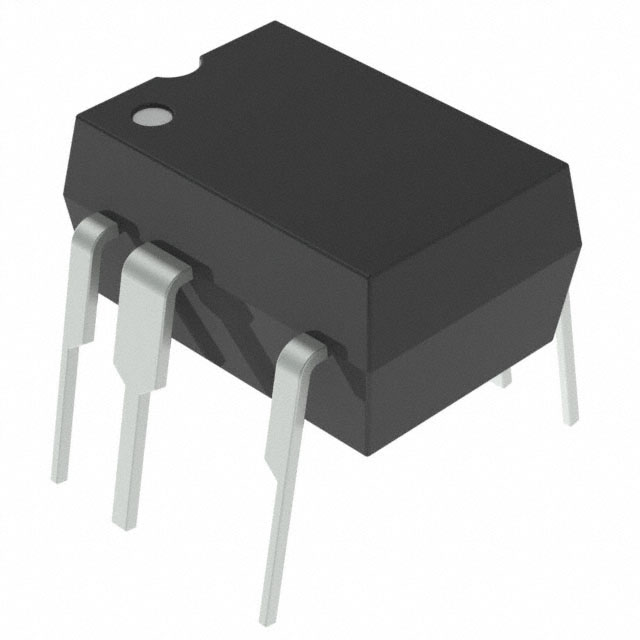
-
TNY277PN Power Integrations
-
TNY276PN Power Integrations
-
TNY278PN Power Integrations
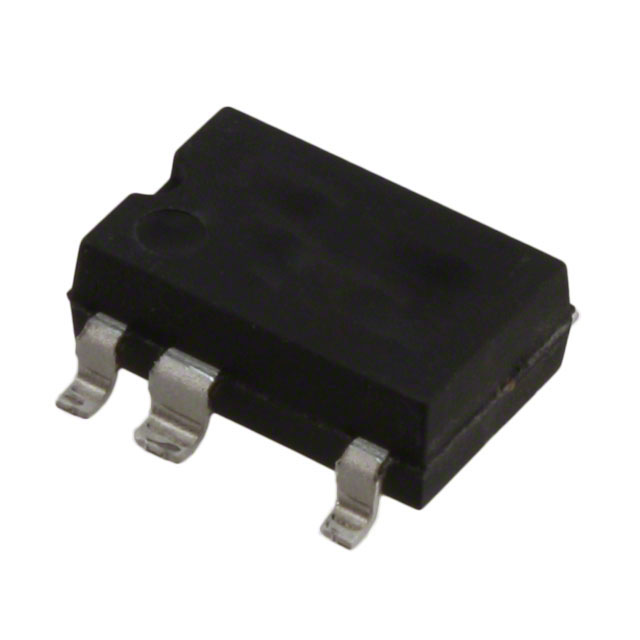
-
TNY278GN-TL Power Integrations
-
TNY280GN-TL Power Integrations
-
TOP266KG-TL Power Integrations
-
TOP258PN Power Integrations
-
TOP253PN Power Integrations
-
TOP253PNAU Power Integrations

- 1500+ Daily average RFQ Volume

- 20,000.000 Standard Product Unit

- 1800+ Worldwide Manufacturers

- 15,000+ In-stock Warehouse