The $0.02 Diode That Destroys Your TOPSwitch: A Repair Diagnosis Chain
The $0.02 Diode That Destroys Your TOPSwitch: A Repair Diagnosis Chain
A repair tech replaced a TOP201 and a diode. The diode hit 90°C in five seconds. At 36 volts input. Here's why.
In January 2024, an EEVblog forum user known as "2X" posted a repair that should have been routine. A power supply using a TOPSwitch TOP201YAI had a shorted switching IC and a shorted diode -- D88 on the schematic. He replaced both. Powered up on a variac at just 36 Vrms. Within five seconds, the new diode hit 90°C. The TOPSwitch wasn't even working hard yet. The downstream load was disconnected. The fault had nothing to do with the load.
He was using a 1N4007.
The thread ran for two months before he posted the fix. A UF4007. Same package. Same voltage rating. Same current rating. Two cents more. The original diode worked fine after the swap -- no overheating, no shorting, normal operation at full input voltage. The difference? About 500x faster turn-off.
This is not an isolated incident. I have seen this exact failure mode in TOPSwitch repairs across EEVblog, Badcaps, and the Power Integrations community forum. The diagnosis chain is always the same. And it always starts with a diode that looks right on paper and is completely wrong for the job.
What Actually Happens When You Put a 1N4007 in a 100 kHz Snubber
The TOPSwitch family -- TOP221 through TOP227, plus the older TOP201 -- switches at 100 kHz. That is a 10 microsecond period. Each cycle, the internal MOSFET turns on, current ramps up in the transformer primary, the MOSFET turns off, and the magnetic field collapses. The collapsing field dumps its energy into the snubber network through a blocking diode.
When the MOSFET turns on again, the voltage across that blocking diode reverses. The diode needs to stop conducting. Now.
A 1N4007 is a standard silicon rectifier designed for 50/60 Hz mains -- 8.3 millisecond half-cycles. Its reverse recovery time is not specified in the datasheet because at 60 Hz, nobody cares. When you actually measure it, a 1N4007 takes somewhere between 1.5 and 30 microseconds to stop conducting after the voltage reverses.
At 100 kHz, a 1.5 microsecond recovery time means the diode is conducting in reverse for 15% of every switching cycle. At 30 microseconds -- which some batches measure -- the diode literally never stops conducting. It's a resistor, not a rectifier.
During that reverse conduction window, current flows backward through the diode. The MOSFET is already on, pulling current through the primary. The diode is also conducting. The result is a near shoot-through condition: the snubber capacitor discharges backward through the still-conducting diode into the MOSFET, which is trying to drive the transformer. The diode sees massive current spikes that no multimeter can capture. A Fluke set to DC amps reads 55 mA and says everything is fine. The diode junction is seeing amps of reverse current at a 50% duty cycle. It hits 90°C because it is dissipating watts, not milliwatts.
The fix is a UF4007: same 1000V rating, same 1A rating, same DO-41 package. But the reverse recovery time is 75 nanoseconds -- not 1,500, not 30,000. At 100 kHz, 75 ns is 0.75% of a switching cycle. The diode actually turns off. It runs cool. The TOPSwitch survives.
The Diagnosis Chain: When the Wrong Diode Kills More Than Itself
The 1N4007 failure is usually the first domino. Here is the full chain, as it appears in real repairs:
Step 1: The Diode Cooks Itself
The 1N4007 in the snubber position overheats -- sometimes slowly over weeks, sometimes in seconds if the supply runs near full load. It fails short. This is the primary failure that brings the equipment in for repair.
Step 2: The Snubber Stops Snubbing
With the snubber diode shorted, the RCD clamp network stops functioning. The transformer leakage inductance energy has nowhere to go. The DRAIN pin voltage on the TOPSwitch spikes above the 700V breakdown rating at every turn-off.
Step 3: The TOPSwitch Fails Catastrophically
The TOPSwitch's internal MOSFET avalanches. The 700V rating is a hard limit -- exceed it and the device conducts uncontrollably. The chip usually fails short from DRAIN to SOURCE. The fuse blows. Sometimes the PCB carbonizes around the DRAIN pin.
Step 4: The Repair Tech Replaces Both -- And Repeats Step 1
This is the trap. The tech finds a shorted TOPSwitch and a shorted diode. Replaces both. If they reach for a 1N4007 -- because it is the most common 1000V 1A diode in the parts drawer, because it fits the footprint, because the schematic just says "diode" -- the replacement will fail exactly the same way. Within seconds at full load. Within minutes at half load. Eventually in the field, where it costs real money.
What Else to Check in the Snubber Chain
Once you have the UF4007 in place, verify the rest of the snubber:
- Snubber capacitor (typically 1-2.2 nF): check it is not open and ESR is reasonable. A dried-out or open snubber cap produces the same symptom -- no clamping action, TOPSwitch overvoltage, destruction.
- Discharge resistor (typically 100-300k ohm): if too high, the capacitor does not fully discharge between cycles. The voltage ratchets upward until the TOPSwitch's breakdown voltage is exceeded.
- Transformer leakage inductance: short all secondaries, measure primary inductance. If it is more than 2x the design value, the snubber is dissipating 2x the intended power and will run hot even with the correct diode. Rewind or replace the transformer.
The Diode Selection Table That Should Be on Every Repair Bench
| Diode | Type | Reverse Recovery (trr) | 100 kHz Viable? | Use In |
|---|---|---|---|---|
| 1N4007 | Standard rectifier | 1,500-30,000 ns | No -- will overheat and fail | 50/60 Hz mains rectification only |
| 1N4148 | Small-signal fast switching | 4 ns | Yes, but 100V/200mA limit | Low-voltage signal paths |
| UF4007 | Ultra-fast recovery | 75 ns | Yes | Snubber/clamp, output rectification up to 1A |
| FR307 | Fast recovery | 500 ns | Marginal at 100 kHz | Medium-speed rectification, better at 50-70 kHz |
| MUR160 | Ultra-fast recovery | 50 ns | Yes | Same applications as UF4007, slightly faster |
| ES1J | Super-fast recovery (SMD) | 35 ns | Yes | Compact SMD snubber designs |
For TOPSwitch snubber circuits specifically: UF4007 is the minimum. FR307 works below about 70 kHz but will run warm at 100 kHz. If you want margin, MUR160 or ES1J. Never a 1N400x.
The Real Cost of a Two-Cent Decision
A UF4007 costs about $0.02 more than a 1N4007 in volume. That is the entire difference between a power supply that runs for a decade and one that comes back under warranty.
At ICMASS, we stock the full TOPSwitch gradient -- TOP221 through TOP227 in TO-220, DIP-8, and SMD packages -- and we stock UF4007s by the reel. When a customer orders TOPSwitch parts for a repair or production run, we include a note about the diode. Not because we sell diodes. Because we have seen enough field returns traced to a 1N4007 in the snubber to know that the $0.02 matters.
The EEVblog thread that inspired this article ended with the OP confirming the UF4007 fix and marking the thread solved. Two months, dozens of replies, and the answer was a diode that costs less than the shipping on the TOPSwitch it was protecting.
Components Referenced
- TOP224YN -- TOPSwitch-II, 700V, 45W, TO-220-3
- LNK304PN -- LinkSwitch-TN, 700V, 120mA, DIP-7
- TNY274PN -- TinySwitch-III, 700V, 8.5W, DIP-8C
Full measurement data, scope captures, and component sourcing at icmass.com
Related information




-
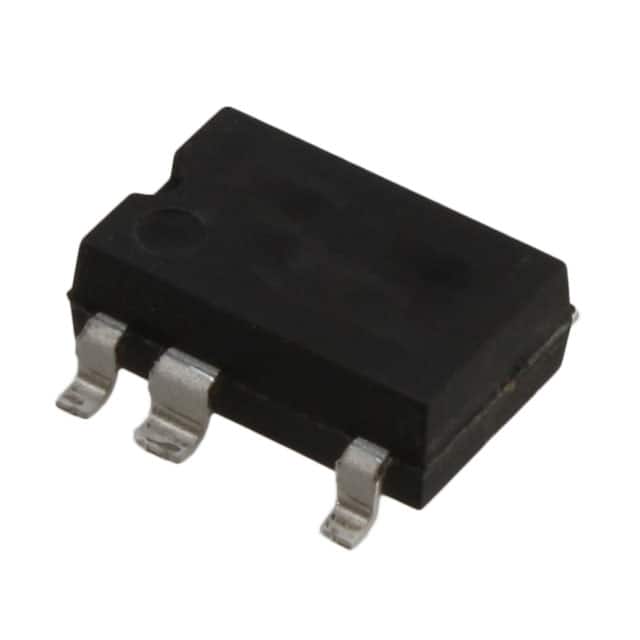
LNK304DN-TL Power Integrations
-
LNK304GN-TL Power Integrations
-
LNK304DG-TL Power Integrations
-
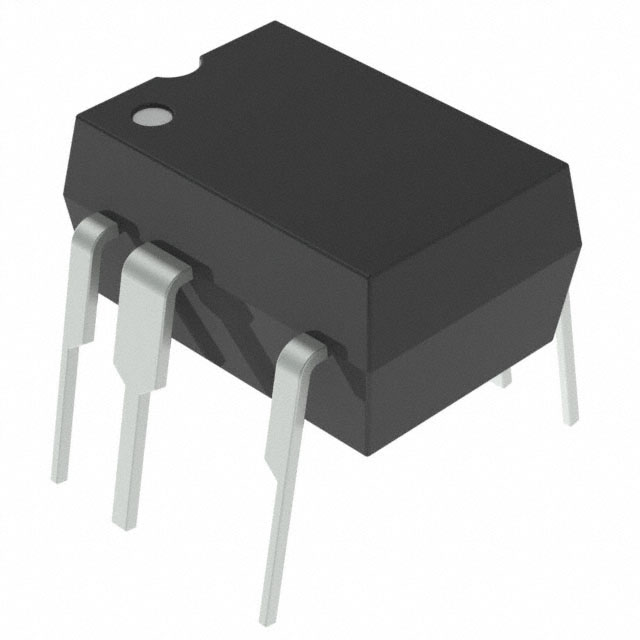
TNY277PN Power Integrations
-
TNY276PN Power Integrations
-
TNY278PN Power Integrations
-
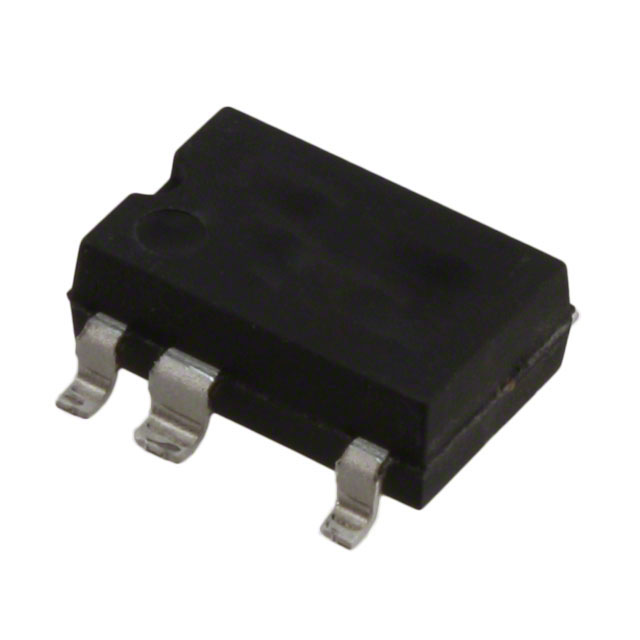
TNY278GN-TL Power Integrations
-
TNY280GN-TL Power Integrations
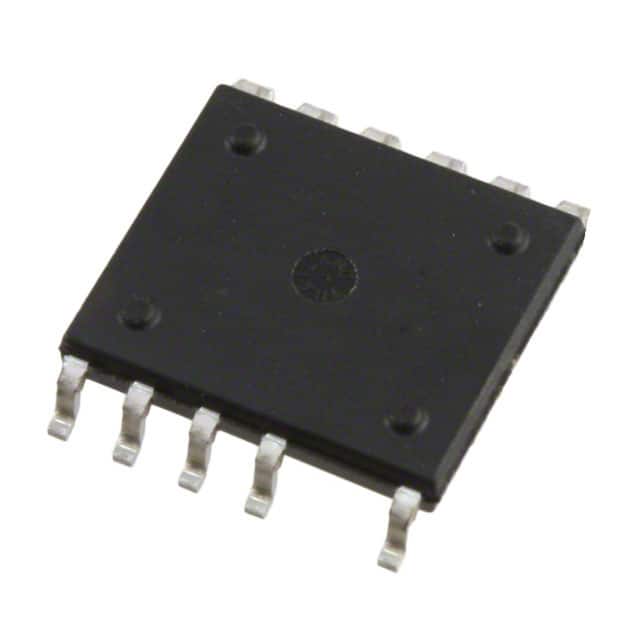
-
TOP266KG-TL Power Integrations
-
TOP258PN Power Integrations
-
TOP253PN Power Integrations
-
TOP253PNAU Power Integrations

- 1500+ Daily average RFQ Volume

- 20,000.000 Standard Product Unit

- 1800+ Worldwide Manufacturers

- 15,000+ In-stock Warehouse