TP4056 Equivalent, Alternative & Replacement Guide
TP4056 Equivalent, Alternative & Replacement Guide | ICMASS
The TP4056 is a 1A linear Li-Ion battery charger IC in SOP-8, used in everything from USB power banks to DIY 18650 chargers. At commodity pricing in volume, it's the most ubiquitous single-cell charger on the market — and one of the most heavily counterfeited ICs period.
If your TP4056 module won't stop charging, overheats when idle, or terminates early at 4.07V, the chip is probably fake.
So why is this chip counterfeited so aggressively? The genuine part costs pennies in reel quantities. The die is simple enough that clone fabs produce lookalikes for even less. And the market for 18650 charger modules is enormous.
This page covers genuine alternatives: ME4057 (adds reverse-polarity protection), TC4056A (legitimate second-source, less counterfeited), and five other pin-compatible replacements. They all work in the same circuit — same PCB, same passives. The question is which one won't burn your battery.
TP4056 vs ME4057 vs TC4056A: Full Comparison
| Parameter | TP4056 | ME4057 | TC4056A |
|---|---|---|---|
| Manufacturer | NanJing Top Power | Microne (Nanjing) | Fuman Electronics |
| Package | SOP-8 / ESOP-8 | SOP-8 / ESOP-8 | SOP-8 / ESOP-8 |
| Max Charge Current | 1A (programmable) | 1A (programmable) | 1A (programmable) |
| Charge Voltage | 4.2V ±1% | 4.2V ±1% | 4.2V ±1.5% |
| Input Voltage Range | 4.5–5.5V | 4.5–6.5V | 4.5–5.5V |
| Reverse Polarity Protection | No — burns out | Yes | No |
| Battery Drain When Off | <2µA | <2µA | <5µA |
| Trickle Charge Threshold | 2.9V | 2.9V | 2.9V |
| Charge Termination | C/10 | C/10 | C/10 |
| Status Outputs | CHRG + STDBY | CHRG + STDBY | CHRG + STDBY |
| Thermal Regulation | Yes | Yes | Yes |
| Pinout | Identical — TEMP(1) PROG(2) GND(3) VCC(4) BAT(5) STDBY(6) CHRG(7) CE(8) | ||
| Best For | Known-genuine source | Battery reversal safety | Budget, less counterfeited |
Charge current vs RPROG resistor. All three ICs use the same formula: ICHG = 1200 / RPROG (where RPROG is in kΩ). A 1.2kΩ resistor sets 1A; 10kΩ sets 130mA.
All three ICs program identically. At 1A, the ESOP-8 package with exposed pad is mandatory — the standard SOP-8 will hit thermal regulation and throttle well before 1A.
SOP-8 pinout — identical across all three ICs. Pin 1 (TEMP) can be grounded to disable temperature monitoring. Pin 8 (CE) floats high by default; pull low to disable charging.
Feature comparison — what you actually get for the money. The TP4056 is the reference design. The ME4057 adds reverse-polarity protection and wider input voltage. The TC4056A is a legitimate clone that hasn't been targeted by counterfeiters yet.
Left bar = TP4056 baseline, right bar (blue) = best alternative. The ME4057 wins on features; the TC4056A wins on supply chain integrity at the budget end.
When to Use Each
Use ME4057 if: Your device has a removable battery and users will insert it backwards. The reverse-polarity protection is the one feature that saves boards — everything else is identical. Worth the small price premium over TP4056 for any consumer-facing product.
Use TC4056A if: You're buying from a market where TP4056 counterfeits are common and you can't visually inspect each reel. The TC4056A hasn't been widely cloned yet, so your chances of getting genuine silicon are higher.
Use genuine TP4056 if: You can verify the source. Look for the NanJing Top Power logo (stylised "F" symbol) laser-etched in the upper-left corner of the IC. Chips with just "TP4056" text and no logo are clones. Genuine parts deliver 4.2V ±1% with a proper CC/CV profile.
How to Spot a Fake TP4056
The TP4056 counterfeit problem is worse than most engineers realise. BudgetLightForum members have documented systematic failures across multiple clone batches. But how do you tell before you solder it onto a board? Here's what to check:
- Missing manufacturer logo. Genuine TP4056 has the Top Power "F" symbol laser-etched in the upper-left corner. Chips with just "TP4056" text, "4056ES", or no markings at all are clones.
- Overcharging beyond 4.2V. Clones have been measured pushing cells to 4.27–4.37V. If your module's red LED never turns off or the blue LED flickers erratically, the charge termination circuit is broken.
- Early cutoff at 3.95–4.09V. Some clones enter CV mode far too early or terminate at C/20 instead of C/10. The cell never reaches full charge.
- No proper CC phase. Some clones skip the constant-current phase entirely — current starts dropping immediately after power-up. Charging takes 2–3x longer than expected.
- Overheating when idle. A documented fault on some clones: the IC can latch into a state drawing ~1A from the battery when a load is connected, overheating until the battery is physically disconnected.
If you're already stuck with suspect TP4056 modules, upgrading to ME4057 is a drop-in fix. Same PCB, same passives. Hot-air the old IC off, solder the ME4057 on, and the reverse-polarity protection comes for free.
Other Alternatives Worth Knowing
| Model | Manufacturer | Key Difference | Best For |
|---|---|---|---|
| CL4056 | ChipLink | Functional equivalent to TP4056 | Direct swap, similar availability |
| BL4056 | Shanghai Belling | 1A, same pinout | Domestic Chinese supply chain |
| AP5056 | X-Peng | Pin-compatible, similar specs | Budget alternative to ME4057 |
| LS4056 | Lansheng | Adds battery reverse protection | ME4057 alternative with same feature |
| TP5100 | Top Power | 2A, buck topology, 2S support | Higher current or 2-cell charging |
| BQ24090 | TI | 1A, 1% accuracy, JEITA thermal | When you need a datasheet you can trust |
If your design needs more than 1A charge current, the TP4056 family isn't the answer. Step up to the TP5100 (2A buck charger, supports 2S packs) or the TI BQ-series (better accuracy, JEITA thermal profiling, and a datasheet that survived legal review).
Frequently Asked Questions
Q1: Can I drop an ME4057 onto a TP4056 PCB without any changes?
A: Yes, 100% drop-in. The pinout is identical, the RPROG formula is the same (I = 1200/R), and the passives (two capacitors, one resistor, two LEDs) stay exactly as they are. The only difference is the ME4057 won't die if someone inserts the battery backwards.
Q2: How do I tell if my TP4056 is genuine?
A: Look for the NanJing Top Power logo. It's a stylised "F" symbol laser-etched in the upper-left corner of the IC package. Chips marked only with "TP4056" text (no logo), "4056ES," or with blurry/faded markings are clones. A USB microscope or 20x loupe is enough to check.
Q3: Why does my TP4056 module never stop charging?
A: The chip is likely a clone with a broken charge termination circuit. Genuine TP4056 terminates at C/10 — when charge current drops to 1/10th of the programmed value, the CHRG pin goes high and charging stops. Clones often skip this, overcharging the cell to 4.3V+. If you're seeing the red LED stay on indefinitely, replace the IC.
Q4: What's the difference between TP4056 and TP4057?
A: TP4057 lacks a proper constant-current phase. Current starts dropping immediately instead of holding steady until the cell reaches 4.2V. It still charges to 4.2V eventually, but it takes longer. For most designs, stick with TP4056 or ME4057 — the TP4057 is a downgrade.
Q5: Can TP4056 charge while the load is connected?
A: Not directly. The TP4056 monitors charge current to determine termination. If a load is drawing current, the IC never sees the current drop to C/10 and never terminates. Use a load-sharing circuit: a P-MOSFET that disconnects the load while charging, or a dedicated power-path IC.
Q6: Why is the TP4056 overheating?
A: Linear charger + 1A + standard SOP-8 = thermal regulation kicks in. At 5V input and 3.7V battery, the IC drops 1.3V at 1A = 1.3W dissipation. The standard SOP-8 can't handle that without throttling. Use the ESOP-8 package with the exposed thermal pad soldered to a copper pour, or drop the charge current to 500mA.
Related information
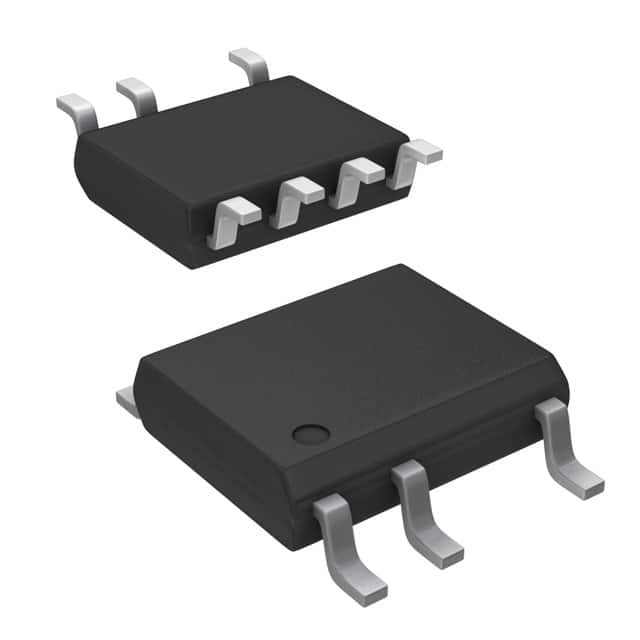
-
LNK304DN-TL Power Integrations
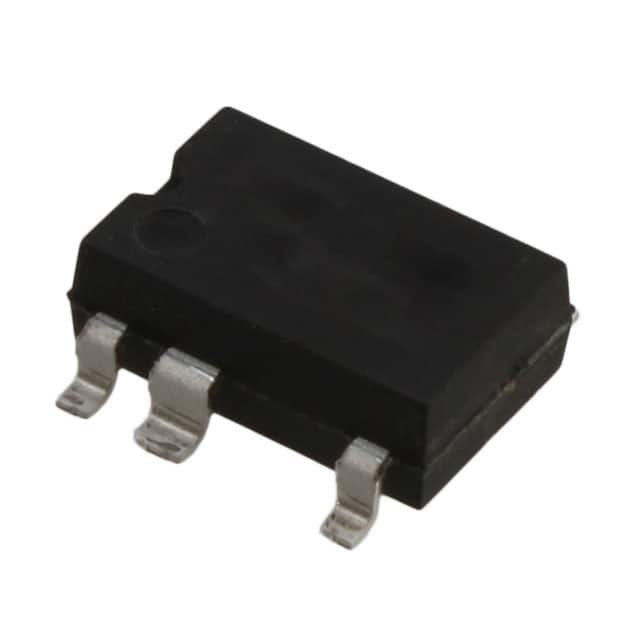
-
LNK304GN-TL Power Integrations
-
LNK304DG-TL Power Integrations
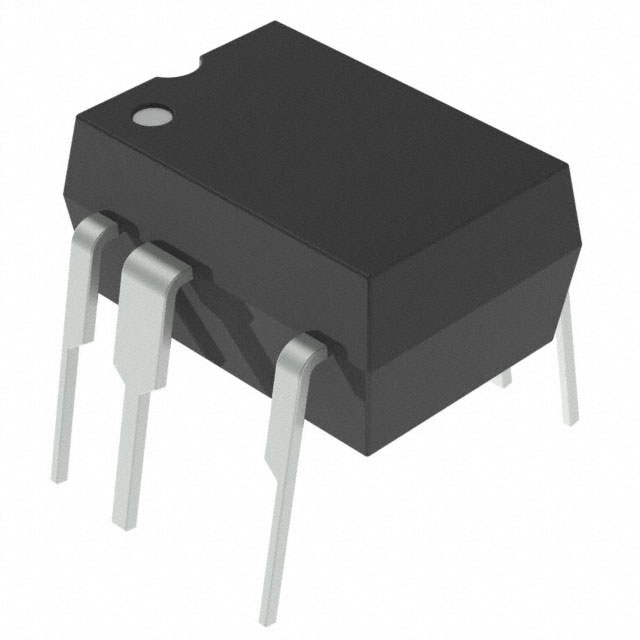
-
TNY277PN Power Integrations
-
TNY276PN Power Integrations
-
TNY278PN Power Integrations
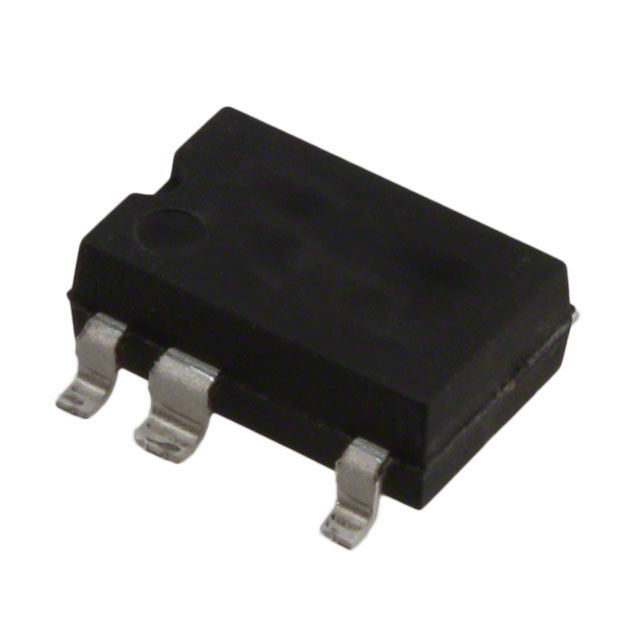
-
TNY278GN-TL Power Integrations
-
TNY280GN-TL Power Integrations
-
TOP266KG-TL Power Integrations
-
TOP258PN Power Integrations
-
TOP253PN Power Integrations
-
TOP253PNAU Power Integrations

- 1500+ Daily average RFQ Volume

- 20,000.000 Standard Product Unit

- 1800+ Worldwide Manufacturers

- 15,000+ In-stock Warehouse