LDO Dropout Voltage and Thermal Design: Why Your Regulator Runs Hot and How to Fix It
LDO Dropout Voltage and Thermal Design: Why Your Regulator Runs Hot and How to Fix It
Most engineers pick an LDO by output voltage and current rating. Then they wonder why it runs at 120°C or oscillates at certain loads. The answer is almost always in two numbers on the datasheet they skipped: dropout voltage and θJA.
This article walks through how dropout voltage determines your minimum input voltage, how θJA determines whether your LDO needs a heatsink, and which TI regulator fits your actual operating conditions - not just your output specs.
Dropout Voltage: The Number That Tells You If It Will Even Work
Dropout voltage is the minimum difference between input and output voltage at which the LDO can maintain regulation. Below dropout, the pass transistor can't pull the output up to the set voltage - the output sags, PSRR collapses, and the part is essentially a resistor between input and output.
For a 3.3V LDO with 1.2V dropout: VIN(min) = 3.3 + 1.2 = 4.5V. A 5V rail gives you 0.5V of margin. A 3.7V Li-ion battery gives you 0.4V at full charge and zero at nominal - it won't work.
So why doesn't every design use the lowest-dropout LDO? Because lower dropout costs more and usually means a smaller pass transistor with less current capability. The 800mA LM1117: 1.2V dropout at $0.10/volume. The 400mA TPS73633: 75mV dropout at $0.40. Two tools for two jobs.
The LM1117: Medium Dropout, 800mA Workhorse
The LM1117 family from TI (and the original AMS1117 from Advanced Monolithic Systems) is the most common linear regulator in embedded design. Fixed versions at 3.3V (LM1117IDTX-3.3) and 1.8V (LM1117MPX-1.8), plus an adjustable version - one silicon platform for three different jobs.
Dropout is 1.2V typical at 800mA. That means a 5V rail comfortably regulates to 3.3V with 0.5V of margin for line transients. Power it from 3.3V and you can get 1.8V out - only 1.5V of headroom needed per the 1.2V dropout plus a small margin.
Where the 1117 doesn't work: Li-ion battery to 3.3V. A single Li-ion cell at 3.7V nominal minus 1.2V dropout gives 2.5V - below the 3.3V target. For battery-to-3.3V, use a buck-boost converter or a true low-dropout LDO like the TPS73633.
Capacitor Stability: The LM1117's Hidden Requirement
Per the TI LM1117-N datasheet (Rev L), the output capacitor is mandatory, not optional. The control loop needs ESR between 0.3Ω and 22Ω on the output capacitor. Tantalum capacitors in the 10µF–100µF range naturally fall in this ESR window. Ceramic capacitors don't - their ESR is well below 0.1Ω.
Put a 10µF MLCC on the output of an LM1117 and phase margin collapses. The output oscillates - sometimes visibly, sometimes as HF ring that overheats LDO and load. Fix: add 0.5Ω–1Ω resistor in series with the ceramic capacitor, or use a tantalum capacitor.
The LM317: High Voltage, High Current, Higher Everything
The LM317 (LM317AMDTX in TO-252) is a different beast. Adjustable from 1.25V to 37V, up to 1.5A, and rated for 40V input. Dropout is 2.25V typical - nearly double the LM1117.
Why accept worse dropout? Because 40V input and 1.5A output open up applications the LM1117 can't touch: 24V industrial to 12V at 1A, 48V pre-regulation before a switching stage, constant-current LED drivers at 350mA, and battery chargers with CC/CV profiles.
The LM317 also has a minimum load requirement: 5–10mA must flow from the output at all times. The fix: R1 = 240Ω (120Ω for LM317A), drawing 5.2mA. Too large an R1 and output rises at light loads — the most common LM317 mistake.
Thermal Math: Why Your TO-252 Runs Hot
Linear regulators dissipate power as heat: PD = (VIN − VOUT) × IOUT. The junction temperature rise is PD × θJA. Here's what that means for three common scenarios:
| Device | VIN | VOUT | IOUT | PD | θJA | TJ rise | Verdict |
|---|---|---|---|---|---|---|---|
| LM1117IDTX (TO-252) | 5V | 3.3V | 500mA | 0.85W | 45°C/W | 38°C | OK |
| LM1117MPX (SOT-223) | 5V | 1.8V | 500mA | 1.6W | 61.6°C/W | 99°C | Marginal |
| LM1117MPX (SOT-223) | 5V | 1.8V | 800mA | 2.56W | 61.6°C/W | 158°C | FAIL |
| LM317AMDTX (TO-252) | 12V | 5V | 500mA | 3.5W | 103°C/W | 361°C | FAIL |
| LM317AMDTX (TO-252) | 12V | 5V | 100mA | 0.7W | 103°C/W | 72°C | OK |
The pattern: SOT-223 at 5V-to-1.8V, 800mA exceeds 125°C. Switch to TO-252 or drop to 400mA. The LM317 at 12V-to-5V is a thermal disaster above 200mA without a heatsink. For that case, use TO-220 LM317T or a switching regulator.
The SOT-223 at 5V-to-1.8V at 800mA exceeds the junction limit. For high VIN−VOUT at high current, the TO-252 package or a switching regulator is the right answer.
Package Selection: It's a Thermal Decision
The LM1117 comes in two packages. The difference isn't just footprint - it's thermal performance:
- TO-252 (DPAK): θJA = 45°C/W. Tab solders to PCB copper. Handles ~1.5W with 2cm² of copper before hitting 125°C at 25°C ambient. Use for currents above 400mA or VIN−VOUT above 2V.
- SOT-223: θJA = 61.6°C/W. Smaller, lighter, cheaper. Handles ~0.8W before thermal limits. Use for currents below 400mA or VIN−VOUT below 2V.
A practical rule: multiply (VIN − VOUT) × IOUT. If the result is under 1W, SOT-223 is fine. Under 2W, TO-252 works with reasonable copper. Above 2W, you need a switching regulator, a TO-220 with heatsink, or a different approach.
The Adjustable Advantage: When Fixed Voltages Won't Cut It
Fixed LDOs cover 1.8V, 2.5V, 3.3V, and 5V. For anything else - 4.2V for Li-ion charging, 9V for audio circuits, 13.6V for lead-acid float charging - you need an adjustable regulator. The LM317 gives you any voltage from 1.25V to 37V with two resistors: VOUT = 1.25 × (1 + R2/R1).
The trade-off is dropout and parts count. A fixed LM1117 needs two capacitors. An LM317 needs two resistors, two capacitors, and two protection diodes. For production with standard voltages, fixed LDOs win on simplicity and cost. For prototyping or non-standard rails, the LM317 is universal.
Three Common LDO Mistakes
1. Picking the LDO by Output Voltage Alone
You need 3.3V. You pick a 3.3V LDO. You power it from a Li-ion battery at 3.7V. It doesn't regulate. The mistake: you didn't check dropout voltage. For battery-to-3.3V, you need dropout under 0.4V. The LM1117 at 1.2V dropout won't work. The TPS73633 at 75mV will.
2. Neglecting Minimum Load on the LM317
The LM317 needs 5–10mA of load current to maintain regulation. If your circuit draws microamps in sleep mode, the output voltage rises above the set point. The fix: ensure R1 ≤ 240Ω in the adjustment divider, or add a pre-load resistor from output to ground.
3. Using Ceramic Output Caps on an LM1117 Without Series Resistance
The LM1117 control loop was designed around tantalum capacitors with 0.3Ω–22Ω ESR. A 10µF MLCC has ESR under 0.01Ω - the phase margin collapses, the output oscillates. Either add a series resistor, switch to tantalum, or use a ceramic-stable LDO like the TLV1117.
Quick Selection: TI LDOs for Common Scenarios
| Scenario | Part | Why |
|---|---|---|
| 5V-to-3.3V, >400mA | LM1117IDTX-3.3 (TO-252) | 45°C/W handles the heat |
| 5V-to-3.3V, <400mA | LM1117MPX-3.3 (SOT-223) | Smaller footprint, adequate thermals |
| 3.3V-to-1.8V, <500mA | LM1117MPX-1.8 (SOT-223) | 1.5V headroom, 0.75W dissipation |
| Non-standard voltage, <1.5A | LM317AMDTX (TO-252) | 1.25V–37V, any voltage with 2 resistors |
| 24V-to-12V, 1A | LM317T (TO-220) + heatsink | 12W needs a heatsink; TO-252 won't survive |
| Li-ion-to-3.3V, 400mA | TPS73633DBVR | 75mV dropout, 400mA |
| Low-noise analog, 3.3V | LP5912-3.3DRVR | 12µV noise, 95mV dropout |
The right LDO isn't the one with the right output voltage. It's the one whose dropout voltage, θJA, and stability requirements match your actual operating conditions. Read the dropout spec, do the thermal math, check the capacitor ESR requirements - before you lay out the board.
Related Products
- LM1117IDTX-3.3/NOPB — 3.3V/800mA fixed LDO, TO-252
- LM1117MPX-1.8/NOPB — 1.8V/800mA fixed LDO, SOT-223
- LM317AMDTX/NOPB — Adjustable 1.5A regulator, TO-252
- LP5912-3.3DRVR — Low-noise 500mA LDO, WSON-6
- LM317T — Adjustable 1.5A regulator, TO-220 for heatsinking
Related information




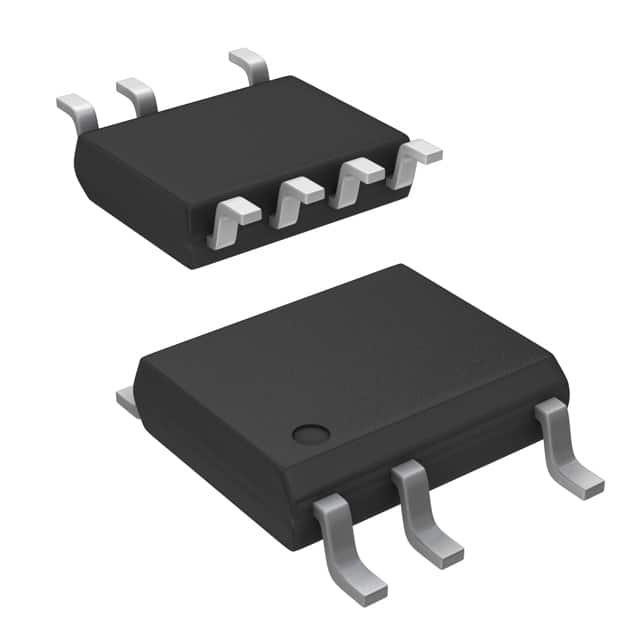
-
LNK304DN-TL Power Integrations
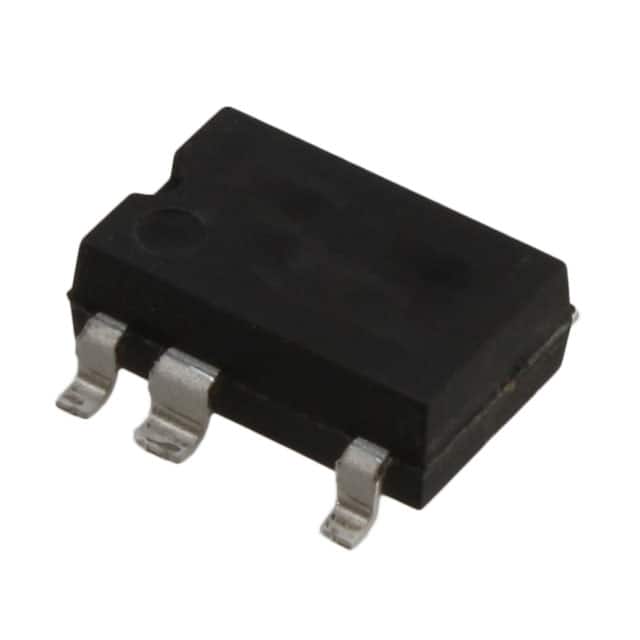
-
LNK304GN-TL Power Integrations
-
LNK304DG-TL Power Integrations
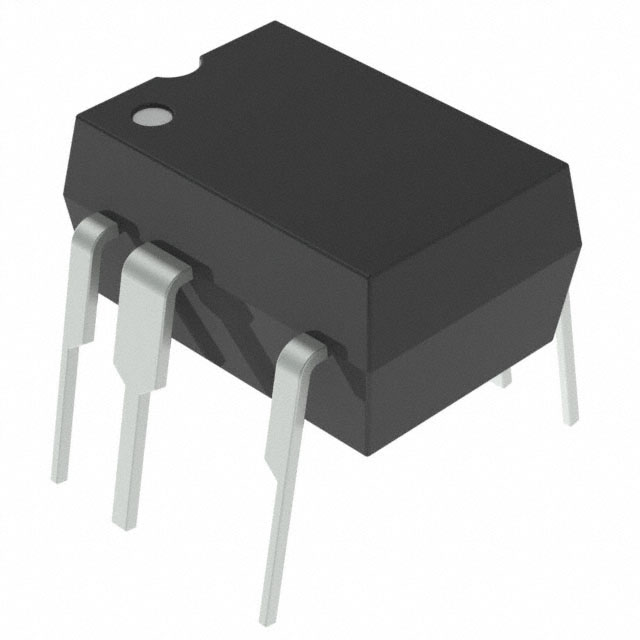
-
TNY277PN Power Integrations
-
TNY276PN Power Integrations
-
TNY278PN Power Integrations
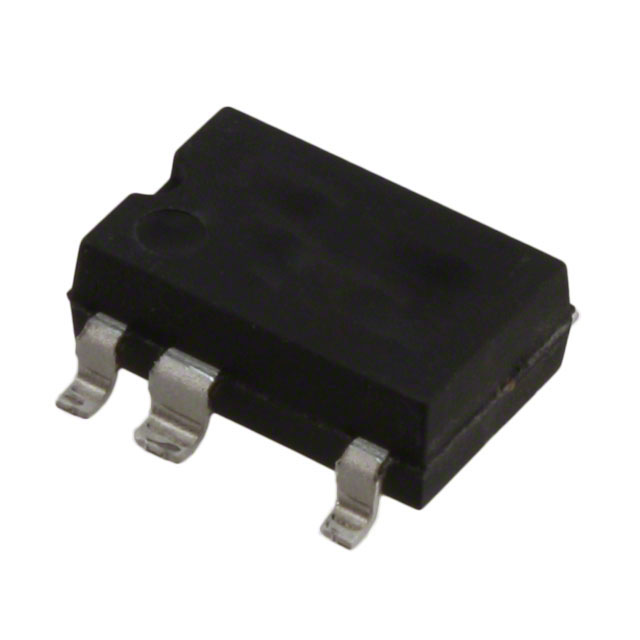
-
TNY278GN-TL Power Integrations
-
TNY280GN-TL Power Integrations
-
TOP266KG-TL Power Integrations
-
TOP258PN Power Integrations
-
TOP253PN Power Integrations
-
TOP253PNAU Power Integrations

- 1500+ Daily average RFQ Volume

- 20,000.000 Standard Product Unit

- 1800+ Worldwide Manufacturers

- 15,000+ In-stock Warehouse