Vishay General Semiconductor - Diodes Division 1N4007GP-E3/54 — 1A/1000V Glass Passivated Standard Recovery Rectifier Diode (DO-41)

- Part No.:
- 1N4007GP-E3/54 — 1A/1000V Glass Passivated Standard Recovery Rectifier Diode (DO-41)
- Manufacturer:
- Vishay General Semiconductor - Diodes Division
- Category:
- Single Diodes
- Package:
- DO-204AL, DO-41, Axial
 1N4007GP-E3/54 — 1A/1000V Glass Passivated Standard Recovery Rectifier Diode (DO-41).pdf
- Description:
- DIODE GEN PURP 1KV 1A DO204AL
- Quantity:
-
Unit Price:$0
Ext Price:$0
- Payment:
-

- Shipping:
-


1N4007GP-E3/54 — 1A/1000V Glass Passivated Standard Recovery Rectifier Diode (DO-41) Information
- Specifications
- Product Details
- Comparison
- Tags
- Product attributes
- Attribute value
- Manufacturer:
- Vishay General Semiconductor - Diodes Division
- Series:
- SUPERECTIFIER®
- Package/Case:
- DO-204AL, DO-41, Axial
- Packaging:
- Tape & Reel (TR)
- Product Status:
- Active
- Technology:
- Standard
- Voltage - DC Reverse (Vr) (Max):
- 1000 V
- Current - Average Rectified (Io):
- 1A
- Voltage - Forward (Vf) (Max) @ If:
- 1.1 V @ 1 A
- Speed:
- Standard Recovery >500ns, > 200mA (Io)
- Reverse Recovery Time (trr):
- 2 µs
- Current - Reverse Leakage @ Vr:
- 5 µA @ 1000 V
- Capacitance @ Vr, F:
- 8pF @ 4V, 1MHz
- Grade:
- -
- Qualification:
- -
- Mounting Type:
- Through Hole
- Supplier Device Package:
- DO-204AL (DO-41)
- Operating Temperature - Junction:
- -50°C ~ 150°C
1N4007GP-E3/54 — 1A/1000V Glass Passivated Standard Recovery Rectifier Diode (DO-41)
The 1N4007GP-E3/54 is Vishay's glass passivated version of the ubiquitous 1N4007 rectifier diode. Same 1000V peak reverse voltage, same 1A forward current, same DO-41 axial package — but the "GP" suffix means a cavity-free glass-passivated junction that delivers specified reverse recovery time of 2µs, 175°C maximum junction temperature, and leakage current typically under 0.1µA. The standard 1N4007 guarantees none of these.
In the Shenzhen market, the 1N4007GP costs marginally more than a generic 1N4007 — the premium buys you a known trr, AEC-Q101 qualification for automotive designs, and a statistically lower field failure rate. If your BOM says "1N4007" and the circuit cares about reverse recovery behavior at all, the GP version is the safer call. For pure 50/60Hz mains rectification where speed truly doesn't matter, the standard part works fine — but the cost difference is small enough that many production lines standardize on the GP.
What Are the Technical Specifications of 1N4007GP-E3/54?
| Parameter | Value |
|---|---|
| Type | Glass Passivated Standard Recovery Rectifier (SUPERECTIFIER®) |
| Package | DO-41 (DO-204AL) axial lead, through-hole |
| Peak Repetitive Reverse Voltage (VRRM) | 1000V |
| Average Forward Current (IF(AV)) | 1A @ 75°C ambient (0.375" lead length) |
| Peak Forward Surge Current (IFSM) | 30A (8.3ms single half-sine); 45A (1ms square wave) |
| Forward Voltage (VF) | 1.1V max @ 1A, 25°C |
| Reverse Recovery Time (trr) | 2µs typical (IF=0.5A, IR=1A, recovery to 0.25A) |
| Reverse Leakage Current (IR) | 5µA max @ 1000V, 25°C; <0.1µA typical |
| Junction Capacitance (CJ) | 8pF typ @ 4V, 1MHz |
| Operating Temperature Range | -65°C to +175°C |
| Thermal Resistance (RθJA) | 55°C/W (PCB mounted, 0.375" lead length) |
| Mounting | Through-hole (axial leads, 0.8mm diameter) |
| Packaging Options | /54: 13" tape & reel (5500 pcs); /73: ammo pack (3000 pcs) |
| Qualification | AEC-Q101 qualified (HE3 suffix versions), RoHS compliant (E3 suffix) |
| Manufacturer | Vishay General Semiconductor |
1N4007GP vs standard 1N4007 — the three specs where glass passivation changes the game. Same package, same pinout, same basic ratings. The differences are in the numbers that datasheets don't always emphasize — but your circuit cares about them.
What these bars mean in practice: The GP's specified 2µs trr means you can predict reverse recovery behavior. The standard 1N4007's trr is not characterized — it varies from batch to batch. In a design where reverse recovery current couples into sensitive nodes, that variability is a hidden risk. The 175°C junction rating gives you 25°C of extra thermal headroom, which matters in enclosed power supplies and automotive under-hood applications.
When Should You Use (and NOT Use) the 1N4007GP-E3/54?
✅ Use 1N4007GP-E3/54 when:
- Automotive or high-reliability rectification. AEC-Q101 qualification and 175°C TJ max make this the right call for anything that goes into a vehicle, industrial controller, or outdoor installation. The glass passivation is not a marketing term — it eliminates microscopic voids in the junction that become failure nucleation sites over thermal cycles.
- AC-DC front-end rectification where trr variability matters. In a LinkSwitch or TinySwitch-based design, the rectifier's reverse recovery behavior directly affects startup current. Forum reports from Power Integrations' own community confirm that switching from a generic 1N4007 to the GP version resolved field failures.
- Designs with tight leakage current budgets. At 0.1µA typical at room temperature, the GP leaks roughly 5× less than a generic 1N4007. In battery-powered equipment with a reverse-protection diode, that directly extends shelf life.
- Production lines that want one rectifier SKU across all products. The GP costs slightly more than a generic 1N4007, but standardizing on it eliminates the risk of a standard part ending up in a GP-required position. One reel, zero mix-ups.
❌ Don't use 1N4007GP-E3/54 when:
- Switching above ~5kHz. The 2µs trr is specified but it's still a standard recovery diode. In an SMPS output rectifier running at 65kHz+, reverse recovery losses will cook it. Use UF4007 (75ns) or ES1J (35ns SMD).
- You need the absolute lowest VF. At 1.1V forward drop, the 1N4007GP wastes ~1.1W at 1A. For low-voltage circuits (≤24V) where every millivolt counts, a Schottky like the 1N5819 (VF=0.45V) is the better choice — but it only blocks 40V.
- Surface-mount is non-negotiable. The GP is through-hole only. For SMD general-purpose rectification at 1000V/1A, look at S1M (SMA package, same ratings). For glass-passivated SMD, consider US1M (ultrafast, 75ns).
- Cost is the only priority and volume exceeds 100k units. At very high volumes, the price difference between GP and generic 1N4007 becomes meaningful. If your design truly doesn't care about trr or leakage (LED string rectification, basic transformer secondaries), the generic part saves money.
What Are the Alternatives to 1N4007GP-E3/54?
| Model | Type | Key Difference | Best For |
|---|---|---|---|
| 1N4007 (generic) | Standard Recovery | Same 1000V/1A/DO-41, trr unspecified, TJ=150°C, lower cost | 50/60Hz mains rectification, non-critical applications |
| UF4007 | Ultrafast Recovery | Same 1000V/1A/DO-41, trr=75ns, VF=1.7V | SMPS output rectification, snubber circuits, >5kHz switching |
| 1N5819 | Schottky Barrier | 40V/1A, VF=0.45V, near-zero trr | Low-voltage DC-DC, battery reverse protection |
| S1M | Standard Recovery (SMD) | 1000V/1A, SMA package, trr ~2.5µs | SMD general-purpose rectification |
| 1N4937 | Fast Recovery | 600V/1A, trr=200ns, VF=1.2V | Mid-frequency rectification, faster than GP, cheaper than UF4007 |
The GP sits in a sweet spot. It costs less than a UF4007, handles the same voltage and current, and gives you a specified trr that generic 1N4007s don't guarantee. For 50/60Hz rectification, it's arguably over-specified. For SMPS output rectification, it's too slow. But for the vast middle ground — line-frequency power supplies where you want predictable performance and field reliability — the GP is exactly the right part.
What Are the Typical Applications of 1N4007GP-E3/54?
AC mains bridge rectification (50/60Hz). Four 1N4007GPs in a bridge configuration give you a 1000V/1A rectifier that handles 230V AC with margin. The glass passivation means the reverse recovery is consistent across all four diodes — no imbalance in the bridge that could generate unexpected EMI. For most sub-10W linear and basic switching supplies, this is the default choice.
Automotive reverse-battery protection. A series diode on the input rail that blocks reverse voltage and survives load dump. The 175°C junction rating and AEC-Q101 qualification matter here — under-hood ambient can exceed 100°C, leaving only 50°C of rise for a standard 150°C part. The GP's extra 25°C of headroom is the difference between a design that passes thermal qualification and one that doesn't.
Freewheeling diode for relays and solenoids. When a relay coil de-energizes, the flyback voltage spikes until the freewheeling diode clamps it. The 1N4007GP's 1000V rating handles the worst-case inductive kickback, and the specified trr means the clamp activates predictably. For AC-line-powered relays and contactors, this is the standard protection diode.
Industrial power supply input protection. In 24V industrial control panels, the GP sits on the DC input as reverse-polarity protection and surge clamping. The low leakage (<0.1µA typical) means it doesn't slowly drain backup batteries. The 30A surge rating handles inrush when large capacitor banks charge through it.
Why Buy 1N4007GP-E3/54 from ICMASS?
We stock both the /54 (tape & reel, 5500 pcs) and /73 (ammo pack, 3000 pcs) variants. If you're hand-soldering prototypes, we can cut tape to your quantity. If you're running a pick-and-place line with a through-hole insertion station, the ammo pack is ready to feed. Tell us your assembly process and we'll ship the right packaging.
Cross-reference support for other GP-series diodes. If your BOM calls for 1N4004GP or 1N4006GP (lower voltage grades of the same glass-passivated family), we can help you cross-reference to the 1N4007GP — same specs, higher voltage rating, and often in stock when the lower-voltage grades are on allocation.
BOM consolidation across your rectifier line items. Many of our customers standardize on the 1N4007GP for all through-hole rectification under 1A, replacing multiple lower-voltage SKUs. One part, one reel, every general-purpose rectifier position on the board. We can quote your annual volume and hold buffer stock so you don't carry the inventory cost.
Frequently Asked Questions
Q1: What is the difference between 1N4007 and 1N4007GP?
A: The GP version uses a cavity-free glass-passivated junction instead of a standard diffused junction. This gives it a specified trr of 2µs (vs unspecified for standard), 175°C max junction temperature (vs 150°C), and typical leakage under 0.1µA (vs ~0.5µA). Same 1000V/1A/DO-41 ratings. The GP costs slightly more and is statistically more reliable in the field.
Q2: Can I use 1N4007GP in an SMPS output rectifier?
A: No. At 2µs trr, the GP is a standard recovery diode. In an SMPS switching at 65kHz (15µs period), reverse recovery alone would consume 13% of the cycle. Use a UF4007 (75ns trr) or ES1J (35ns, SMD) for any switching frequency above ~5kHz. The GP is designed for line-frequency rectification where trr doesn't matter.
Q3: Is the 1N4007GP-E3/54 RoHS compliant?
A: Yes. The E3 suffix indicates RoHS compliance per JESD 201 class 1A whisker test. The leads are matte tin plated — no lead finish compatibility issues with standard soldering processes.
Q4: What does the "/54" mean in the part number?
A: /54 = 13" tape & reel, 5500 pieces per reel. The alternative is /73 = ammo pack, 3000 pieces. The silicon inside is identical. Choose /54 for automated insertion, /73 if you're hand-stuffing boards and want the leads pre-formed.
Q5: Can I replace a 1N4007 with a 1N4007GP in an existing design?
A: Yes — drop-in replacement. Same package, same pinout, same voltage and current ratings. The GP's 2µs trr is close enough to a typical generic 1N4007's actual trr (which is usually 1–3µs anyway, just not guaranteed) that no circuit changes are needed. You get guaranteed specs and better reliability without touching the PCB.
Q6: What is the forward voltage drop of the 1N4007GP at 1A?
A: 1.1V maximum at 1A, 25°C. At lower currents, VF decreases: roughly 0.8V at 100mA and 0.95V at 500mA. The negative temperature coefficient means VF drops about 2mV/°C as the junction heats up — at 125°C, expect approximately 0.9V at 1A.
Q7: Is the 1N4007GP suitable for automotive applications?
A: Yes, with the HE3 suffix version. The standard 1N4007GP-E3/54 is industrial-grade. For automotive, order 1N4007GPHE3/54 — same diode, but AEC-Q101 qualified with full PPAP documentation. The 175°C TJ rating makes it viable for under-hood applications where ambient can reach 105°C.
Q8: What is the difference between Vishay's SUPERECTIFIER and a standard plastic rectifier?
A: The SUPERECTIFIER construction is Vishay's trademarked name for their glass-passivated process. Standard plastic rectifiers encapsulate the silicon die directly in epoxy, which can trap moisture and create microscopic voids at the junction surface over thermal cycles. SUPERECTIFIER parts fuse a glass layer directly onto the junction surface before epoxy molding — no voids, no moisture path, and a hermetically sealed junction inside a plastic package. It's the reliability mechanism behind the 175°C rating and the specified trr.
Q9: How does the 1N4007GP compare to the UF4007 for a 50/60Hz bridge rectifier?
A: For 50/60Hz, use the GP. The UF4007's 75ns trr adds cost you don't need at line frequency, and its higher VF (1.7V vs 1.1V) increases conduction loss by ~55%. The GP is the right speed for the right job.
Q10: What is the surge current rating of the 1N4007GP?
A: 30A peak for an 8.3ms half-sine, 45A for a 1ms square pulse. The I²t rating for fusing is 3.7 A²s. In practice, this means the GP survives the inrush when a 100µF capacitor charges through it at power-on. If you need higher surge capability, step up to a 3A diode like the 1N5408 (200A surge, same 1000V rating).
Related Products
- 1N4007 — Standard Recovery 1000V/1A Rectifier (DO-41)
- UF4007 — Ultrafast Recovery 1000V/1A Rectifier (DO-41, 75ns)
- 1N5819 — Schottky Barrier 40V/1A Rectifier (DO-41)
- 1N4007 vs UF4007 vs 1N5819 — Full Comparison Guide
- S1M — Standard Recovery 1000V/1A SMD Rectifier (SMA)
- 1N4937 — Fast Recovery 600V/1A Rectifier (DO-41, 200ns)
| Image |

|
|
|
|
|
| Part Number | 1N4007GP-E3/54 — 1A/1000V Glass Passivated Standard Recovery Rectifier Diode (DO-41) | 1N4007GP-E3/73 | 1N4007GPE-E3/73 | 1N4007GPE-E3/54 | 1N4007GP-E3/53 |
| Manufacturer | Vishay General Semiconductor - Diodes Division | Vishay General Semiconductor - Diodes Division | Vishay General Semiconductor - Diodes Division | Vishay General Semiconductor - Diodes Division | Vishay General Semiconductor - Diodes Division |
| Series | SUPERECTIFIER® | SUPERECTIFIER® | SUPERECTIFIER® | SUPERECTIFIER® | SUPERECTIFIER® |
| Package/Case | DO-204AL, DO-41, Axial | DO-204AL, DO-41, Axial | DO-204AL, DO-41, Axial | DO-204AL, DO-41, Axial | DO-204AL, DO-41, Axial |
| Packaging | Tape & Reel (TR) | Cut Tape (CT) | Cut Tape (CT) | Tape & Reel (TR) | Cut Tape (CT) |
| Product Status | Active | Active | Active | Active | Active |
| Technology | Standard | Standard | Standard | Standard | Standard |
| Voltage - DC Reverse (Vr) (Max) | 1000 V | 1000 V | 1000 V | 1000 V | 1000 V |
| Current - Average Rectified (Io) | 1A | 1A | 1A | 1A | 1A |
| Voltage - Forward (Vf) (Max) @ If | 1.1 V @ 1 A | 1.1 V @ 1 A | 1.1 V @ 1 A | 1.1 V @ 1 A | 1.1 V @ 1 A |
| Speed | Standard Recovery >500ns, > 200mA (Io) | Standard Recovery >500ns, > 200mA (Io) | Standard Recovery >500ns, > 200mA (Io) | Standard Recovery >500ns, > 200mA (Io) | Standard Recovery >500ns, > 200mA (Io) |
| Reverse Recovery Time (trr) | 2 µs | 2 µs | 2 µs | 2 µs | 2 µs |
| Current - Reverse Leakage @ Vr | 5 µA @ 1000 V | 5 µA @ 1000 V | 5 µA @ 1000 V | 5 µA @ 1000 V | 5 µA @ 1000 V |
| Capacitance @ Vr, F | 8pF @ 4V, 1MHz | 8pF @ 4V, 1MHz | 8pF @ 4V, 1MHz | 8pF @ 4V, 1MHz | 8pF @ 4V, 1MHz |
| Grade | - | - | - | - | - |
| Qualification | - | - | - | - | - |
| Mounting Type | Through Hole | Through Hole | Through Hole | Through Hole | Through Hole |
| Supplier Device Package | DO-204AL (DO-41) | DO-204AL (DO-41) | DO-204AL (DO-41) | DO-204AL (DO-41) | DO-204AL (DO-41) |
| Operating Temperature - Junction | -50°C ~ 150°C | -65°C ~ 175°C | -65°C ~ 175°C | -65°C ~ 175°C | -65°C ~ 175°C |
User Guide
- Purchase & Inquiry
- Package
- Shipping Information
- Customer Review
You may place an order without registering to IC-MAX.COM
We strongly suggest you sign in before purchasing as you can track your order in real time.
For your convenience, we accept multiple payment methods in USD, including PayPal, Credit Card, and wire transfer.
RFQ (Request for Quotations)
It is recommended to request for quotations to get the latest prices and inventories about the part.
Our sales will reply to your request by email within 24 hours.
1. You'll receive an order information email in your inbox. (Please remember to check the spam folder if you didn't hear from us).
2. Since inventories and prices may fluctuate to some extent, the sales manager is going to reconfirm the order and let you know if there are any updates.
-
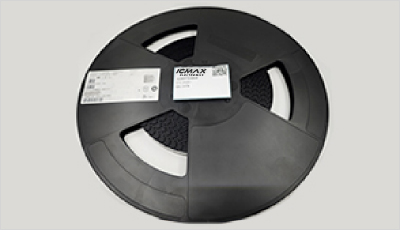
- Step1:Prepare product
-
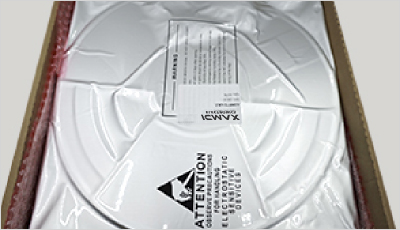
- Step2:Vacuum packaging
-
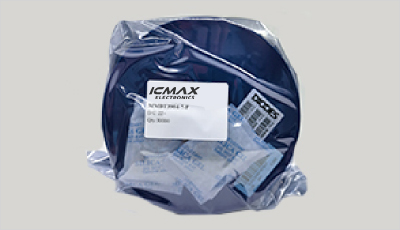
- Step3:Anti-static bag
-
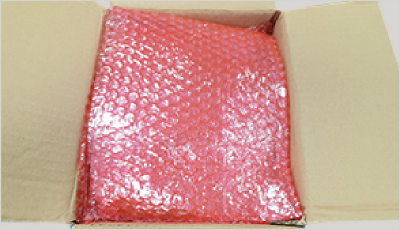
- Step4:Individual package
-
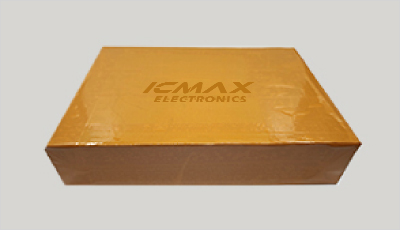
- Step5:Packaging box
-
- Step6:Barcode shipping label
Shipping starts at $40, but some countries will exceed $40. For example (South Africa, Brazil, India, Pakistan, Israel, etc.)
The basic freight (for package ≤0.5kg or corresponding volume) depends on the time zone and country.
Currently, our products are shipped through DHL, FedEx, SF, and UPS.
Delivery TimeOnce the goods are shipped, estimated delivery time depends on the shipping methods you chose:
FedEx International, 5-7 business days.
The following are some common countries' logistic time.

- Hot Sale
- Related Categories
- Include Parts
- Popular Search
The following parts include "1N4007GP-E3/54 — 1A/1000V Glass Passivated Standard Recovery Rectifier Diode (DO-41)" in Silicon Labs 1N4007GP-E3/54 — 1A/1000V Glass Passivated Standard Recovery Rectifier Diode (DO-41).
- Part Number
- Manufacturer
- Package
- Description
- 1N4448X-TP Micro Commercial Co DO-204AL, DO-41, Axial DIODE GEN PURP 1KV 1A DO204AL
- 1N4148WX-TP Micro Commercial Co DO-204AL, DO-41, Axial DIODE GEN PURP 1KV 1A DO204AL
- 1N4148TR onsemi DO-204AL, DO-41, Axial DIODE GEN PURP 1KV 1A DO204AL
- MMSD4148T1G onsemi DO-204AL, DO-41, Axial DIODE GEN PURP 1KV 1A DO204AL
- MMBD914LT3G onsemi DO-204AL, DO-41, Axial DIODE GEN PURP 1KV 1A DO204AL
- BAS16HT1G onsemi DO-204AL, DO-41, Axial DIODE GEN PURP 1KV 1A DO204AL
- 1N914BWT onsemi DO-204AL, DO-41, Axial DIODE GEN PURP 1KV 1A DO204AL
- BAS21LT1G onsemi DO-204AL, DO-41, Axial DIODE GEN PURP 1KV 1A DO204AL
- LL4148 onsemi DO-204AL, DO-41, Axial DIODE GEN PURP 1KV 1A DO204AL
- BAS16LT1G onsemi DO-204AL, DO-41, Axial DIODE GEN PURP 1KV 1A DO204AL
The following parts are popular search parts in Test and Measurement.
Inventory:19,651
Please send an inquiry. Send us your inquiry, and we will respond immediately.

- 1500+ Daily average RFQ Volume

- 20,000.000 Standard Product Unit

- 1800+ Worldwide Manufacturers

- 15,000+ In-stock Warehouse