UTC LM358G-S08-R

- Part No.:
- LM358G-S08-R
- Manufacturer:
- UTC
- Category:
- Instrumentation, Op Amps, Buffer Amps
- Package:
- 8-SOIC (0.154", 3.90mm Width)
- Description:
- IC OPAMP GP 2 CIRCUIT 8SOIC
- Quantity:
-
Unit Price:$0
Ext Price:$0
- Payment:
-

- Shipping:
-


LM358G-S08-R Information
- Specifications
- Product Details
- Comparison
- Tags
- Product attributes
- Attribute value
- Manufacturer:
- UTC
- Series:
- -
- Package/Case:
- 8-SOIC (0.154", 3.90mm Width)
- Packaging:
- Tube
- Product Status:
- Active
- Amplifier Type:
- General Purpose
- Number of Circuits:
- 2
- Output Type:
- -
- Slew Rate:
- 0.6V/µs
- Gain Bandwidth Product:
- 700 kHz
- -3db Bandwidth:
- -
- Current - Input Bias:
- 20 nA
- Voltage - Input Offset:
- 2 mV
- Current - Supply:
- 700µA (x2 Channels)
- Current - Output / Channel:
- 40 mA
- Voltage - Supply Span (Min):
- 3 V
- Voltage - Supply Span (Max):
- 30 V
- Operating Temperature:
- 0°C ~ 70°C
- Grade:
- Automotive
- Qualification:
- Reel
- Mounting Type:
- Surface Mount
- Supplier Device Package:
- 8-SOIC
LM358G-S08-R - UTC Dual Op-Amp, 3–32V, 1MHz GBW (SOP-8)
The LM358G-S08-R is UTC's dual general-purpose op-amp in SOP-8. It's a direct second-source for the TI LM358 - same pinout, same 3–32V supply range, same 1MHz gain-bandwidth product. 0.8mA quiescent current (typ) across both channels.
Why does sourcing a second-source LM358 matter? The LM358 is one of the most counterfeited analog ICs around. A remarked LM358 passes DC testing but fails on slew rate or GBW. Buy from a traceable channel - TI or UTC - and you get what's on the label.
The UTC LM358G is the value play: same electrical performance as the TI version at a lower price point. For cost-sensitive production where every cent on the BOM counts, it's the part you reach for after you've validated the design on TI silicon.
What Are the Technical Specifications of LM358G-S08-R?
| Parameter | Value |
|---|---|
| Type | Dual General-Purpose Operational Amplifier (Bipolar) |
| Manufacturer | UTC (Unisonic Technologies) |
| Package | SOP-8 (4.90mm × 3.90mm, 1.27mm pitch) |
| Single Supply Range | 3V to 32V |
| Dual Supply Range | ±1.5V to ±16V |
| Quiescent Current (IQ) | 0.8mA typ / 2.0mA max (both channels) |
| Gain Bandwidth Product | ~1MHz typ |
| Slew Rate | 0.5V/µs typ |
| Input Offset Voltage (VOS) | 2mV typ / 5mV max at 25°C |
| Input Bias Current (IB) | 45nA typ / 250nA max |
| Input Common-Mode Range | 0V to VCC−1.5V (includes ground) |
| Large Signal Voltage Gain | 100V/mV typ (100dB) |
| CMRR | 65dB min / 80dB typ |
| Output Current (Source) | 30mA typ at 15V |
| Operating Temperature | −40°C to +105°C |
| Channel Separation | 120dB (1–20kHz) |
Key numbers that matter. The 0.5V/µs slew rate is the limiting spec. At 1MHz GBW and unity gain, the LM358G handles audio-band signals and DC control loops easily. But at 20kHz full-swing, you need ~1.3V/µs for a 10Vpp output. The LM358G rounds off sine waves above ~8kHz at full swing.
The 0.8mA quiescent current at 5V is modest - not ultra-low-power territory, but manageable for line-powered or large-battery designs. For battery-powered always-on circuits, consider the LMV358 (210µA typ) or a CMOS op-amp.
When Should You Use (and NOT Use) the LM358G-S08-R?
✅ Use LM358G-S08-R when:
- Cost-sensitive production in volume. The UTC LM358G delivers TI-equivalent electrical performance at a lower unit price. For consumer electronics, appliances, and industrial control where the BOM has already been squeezed, it's the obvious second-source.
- DC and low-frequency signal conditioning (sensors, transducers). The 1MHz GBW is more than enough for thermocouple amplifiers, current sensing, and 4–20mA loop receivers. The input common-mode range includes ground - no negative rail needed for single-supply designs.
- Unity-gain buffer for slow-moving signals. Internally compensated for unity gain stability. Common as a voltage follower between a high-impedance sensor and an ADC input.
- Single-supply designs from 5V to 24V. The LM358G works from 3V to 32V single supply - covers 5V USB-powered, 12V automotive, and 24V industrial rails without a separate op-amp rail.
- Drop-in replacement for TI LM358DR in SOP-8. Same pinout, same package, same specs. Validate one batch, then use interchangeably.
❌ Don't use LM358G-S08-R when:
- Rail-to-rail output needed (low-voltage single supply). The LM358G output can only swing to about VCC−2V on the high side and ~1V above ground on the low side. At 3.3V supply, usable output range is only ~1V to 1.3V. Use LMV358 (rail-to-rail output) instead.
- Audio above line level. At 0.5V/µs, a 2Vrms audio signal starts distorting around 10kHz. For audio preamps and active filters, use a faster op-amp like the NE5532 (9V/µs).
- Precision DC measurement (<1mV offset). 5mV max VOS is fine for general use but not for microvolt-level thermocouple or strain gauge signals. Use a precision op-amp like the OPA2333 (10µV max VOS, zero-drift).
- Input signals near the positive rail. The input common-mode range stops at VCC−1.5V. If your signal sits near the positive supply, the output goes undefined. AC-couple and re-bias, or use a rail-to-rail input op-amp.
LM358G vs TI LM358DR: Second-Source Comparison
The electrical differences are small. The sourcing difference is not: UTC LM358G typically comes in lower on unit price for production volumes. For most general-purpose designs, the two are interchangeable. Validate one lot, then buy whichever is available at the right price.
LM358G Output Swing: Why Rail-to-Rail Matters at Low Voltage
What Are the Alternatives to LM358G-S08-R?
| Model | Type | Key Difference | Best For |
|---|---|---|---|
| LM358DR | TI Dual Op-Amp | Same specs, TI brand, 7mV VOS max | Designs where TI brand is specified or preferred |
| LMV358IDR | Low-Voltage RRIO Op-Amp | 2.7–5.5V, rail-to-rail I/O, 210µA IQ, 1MHz GBW | 3.3V/5V single-supply, battery-powered, near-rail signals |
| LM2904DR | Industrial Dual Op-Amp | 3–26V, same pinout, wider temp range (−40 to +125°C guaranteed) | Automotive and industrial where extended temp specs matter |
| NE5532DR | Low-Noise Audio Op-Amp | 10MHz GBW, 9V/µs slew rate, 5nV/√Hz noise | Audio preamps, active filters, professional audio |
| TL072IDR | JFET-Input Dual Op-Amp | 3MHz GBW, 13V/µs slew rate, 65pA IB (JFET) | High-impedance sensors, faster signal conditioning |
LM358G vs LM358DR - which one? Electrically, they're interchangeable. The real decision is sourcing strategy. If your design is validated on TI LM358DRs, the UTC LM358G is a cost-reduction second-source. Validate across temperature - if it passes, you've cut your op-amp BOM cost without a PCB change.
What Are the Typical Applications of LM358G-S08-R?
Current sensing in power supplies. One channel configured as a differential amplifier across a shunt resistor. The input common-mode range includes ground, so low-side current sensing works directly - no negative rail. The 0.8mA draw is trivial compared to the supply's output.
Sensor signal conditioning (thermocouple, pressure, pH). The second channel provides gain or filtering after the first channel buffers the sensor. The LM358G's 1MHz GBW gives usable gain up to ~100× at 10kHz - enough for most industrial sensors.
4–20mA current loop receiver. A precision resistor converts the loop current to voltage. The LM358G buffers this voltage and drives an ADC input. The wide 3–32V supply range means it can run from the loop's own 24V rail without a separate regulator.
Voltage follower / buffer between stages. The LM358G at unity gain is stable with no external compensation. Common as an impedance buffer between a high-output-impedance sensor stage and a low-input-impedance ADC or filter stage.
Why Buy LM358G-S08-R from ICMASS?
Traceable UTC supply chain. We source LM358G-S08-R directly from UTC-authorized channels. Every reel comes with manufacturer traceability. For production buyers, that means your quality auditor checks the box without asking extra questions.
Cross-reference and BOM consolidation. Ordering LM358Gs alongside comparators, references, ADCs, and passives for the same build? We consolidate into one shipment - fewer customs forms, lower freight per part.
Batch validation support. Need to qualify a new second-source op-amp for production? We'll send samples from the same lot as your production order, so your validation data matches the parts you actually receive.
Shenzhen warehouse, global shipping. Same-day dispatch for orders placed before 15:00 CST. Contact us for a same-day quote on your reel quantities.
Frequently Asked Questions
Q1: Is the LM358G-S08-R a drop-in replacement for TI LM358DR?
A: Yes - same SOP-8 pinout, same 3–32V supply range, same 1MHz GBW and 0.5V/µs slew rate. The UTC LM358G is designed as a direct second-source. Validate one production lot to confirm electrical performance in your circuit, then use interchangeably.
Q2: Why can't the LM358G output reach the supply rails?
A: It's a bipolar design with a Darlington output stage - not rail-to-rail. The output can typically swing to within ~2V of the positive rail and ~1V of ground (at light loads). At 5V supply, you get about 2V of usable output swing. At 3.3V, it drops to ~1V. For near-rail output, use a rail-to-rail op-amp like the LMV358.
Q3: Can I use the LM358G as a comparator?
A: Yes, but it's not ideal. The LM358G will work as a comparator in a pinch, but the open-loop recovery from saturation is slow (tens of microseconds). The output swing doesn't match logic levels cleanly. A dedicated comparator like the LM393DR gives faster, cleaner switching with an open-collector output designed for logic interfaces.
Q4: What happens if my input signal goes below ground?
A: Phase reversal - the output can flip to the wrong rail. The LM358G's input common-mode range extends to ground but not below it. More than ~0.3V below ground on either input can cause the output to latch to the positive rail. AC-couple and re-bias to mid-supply, or clamp the input with a Schottky diode to ground.
Q5: What's the difference between LM358G-S08-R and LM358L-S08-R?
A: The "G" suffix = halogen-free/green plating. The LM358L is the standard version. Electrical specs are identical. The G variant is for RoHS compliance in markets that require halogen-free packaging. For most procurement, the G version is the current standard.
Q6: How does the LM358G compare to the LMV358 for low-voltage designs?
A: LMV358 is the better choice below 5V. The LMV358 is rail-to-rail on both input and output, draws 210µA (vs 0.8mA), and works from 2.7V. The LM358G needs at least 3V and gives you only ~1V of usable swing at 3.3V. Use the LM358G for 5V+ designs; switch to LMV358 for 3.3V or battery-powered circuits.
Q7: Why does my LM358G circuit work at 5V but fail at 3.3V?
A: Input common-mode range collapse. At 3.3V supply, the usable input range is roughly 0V to 1.8V (Vcc−1.5V). If your signal exceeds 1.8V, the output becomes unpredictable. The fix: either raise the supply voltage, or switch to a rail-to-rail input op-amp like the LMV358.
Q8: What should I do with the unused op-amp channel?
A: For the bipolar LM358G, leaving all three pins floating is acceptable for prototyping. The internal bias currents (tens of nA) naturally pull the inputs to a defined state. For production, TI recommends connecting the unused channel as a voltage follower with the non-inverting input tied to a mid-supply reference. Do not leave inputs floating on CMOS op-amps - but the LM358G is bipolar, so this is less critical.
Related Products
| Image |
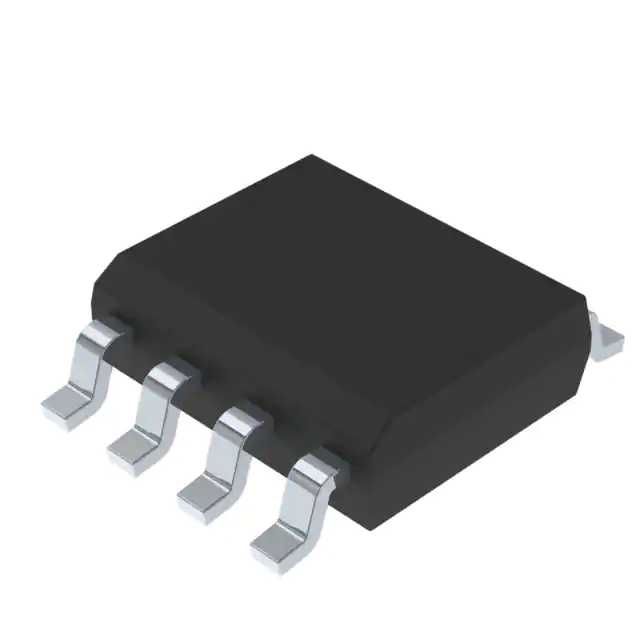
|

|
| Part Number | LM358G-S08-R | LM358G‑D08‑R |
| Manufacturer | UTC | UTC |
| Series | - | - |
| Package/Case | 8-SOIC (0.154", 3.90mm Width) | 8-DIP (0.300", 7.62mm) |
| Packaging | Tube | Tape & Reel |
| Product Status | Active | Active |
| Amplifier Type | General Purpose | General Purpose |
| Number of Circuits | 2 | 2 |
| Output Type | - | - |
| Slew Rate | 0.6V/µs | 0.3V/µs |
| Gain Bandwidth Product | 700 kHz | 700 kHz |
| -3db Bandwidth | - | - |
| Current - Input Bias | 20 nA | 20 nA |
| Voltage - Input Offset | 2 mV | 3 mV |
| Current - Supply | 700µA (x2 Channels) | 500µA (x2 Channels) |
| Current - Output / Channel | 40 mA | 40 mA |
| Voltage - Supply Span (Min) | 3 V | 3 V |
| Voltage - Supply Span (Max) | 30 V | 30 V |
| Operating Temperature | 0°C ~ 70°C | 0°C ~ 70°C (TA) |
| Grade | Automotive | - |
| Qualification | Reel | - |
| Mounting Type | Surface Mount | Through Hole |
| Supplier Device Package | 8-SOIC | 8-PDIP |
User Guide
- Purchase & Inquiry
- Package
- Shipping Information
- Customer Review
You may place an order without registering to IC-MAX.COM
We strongly suggest you sign in before purchasing as you can track your order in real time.
For your convenience, we accept multiple payment methods in USD, including PayPal, Credit Card, and wire transfer.
RFQ (Request for Quotations)
It is recommended to request for quotations to get the latest prices and inventories about the part.
Our sales will reply to your request by email within 24 hours.
1. You'll receive an order information email in your inbox. (Please remember to check the spam folder if you didn't hear from us).
2. Since inventories and prices may fluctuate to some extent, the sales manager is going to reconfirm the order and let you know if there are any updates.
-
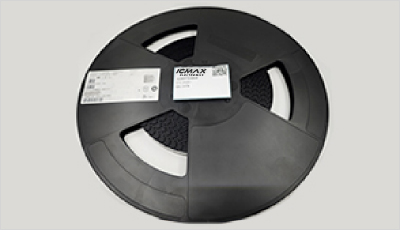
- Step1:Prepare product
-
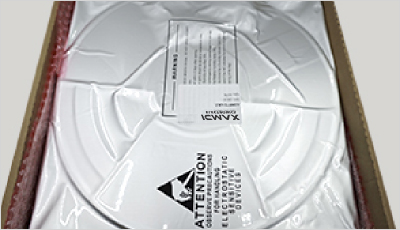
- Step2:Vacuum packaging
-
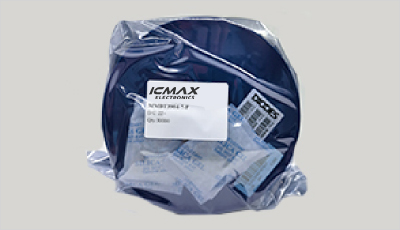
- Step3:Anti-static bag
-
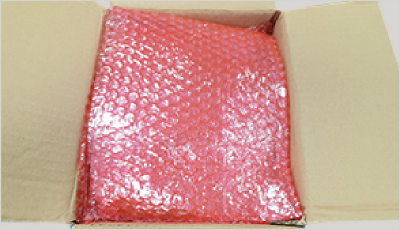
- Step4:Individual package
-
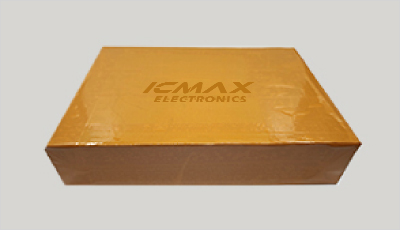
- Step5:Packaging box
-
- Step6:Barcode shipping label
Shipping starts at $40, but some countries will exceed $40. For example (South Africa, Brazil, India, Pakistan, Israel, etc.)
The basic freight (for package ≤0.5kg or corresponding volume) depends on the time zone and country.
Currently, our products are shipped through DHL, FedEx, SF, and UPS.
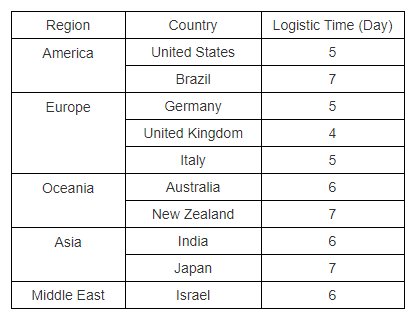
Delivery TimeOnce the goods are shipped, estimated delivery time depends on the shipping methods you chose:
FedEx International, 5-7 business days.
The following are some common countries' logistic time.
- Hot Sale
- Related Categories
- Include Parts
- Popular Search
The following parts include "LM358G-S08-R" in Silicon Labs LM358G-S08-R.
- Part Number
- Manufacturer
- Package
- Description
- LM358DT STMicroelectronics 8-SOIC (0.154", 3.90mm Width) IC OPAMP GP 2 CIRCUIT 8SOIC
- LM358DR Texas Instruments 8-SOIC (0.154", 3.90mm Width) IC OPAMP GP 2 CIRCUIT 8SOIC
- LM2904DR Texas Instruments 8-SOIC (0.154", 3.90mm Width) IC OPAMP GP 2 CIRCUIT 8SOIC
- LM358ADR Texas Instruments 8-SOIC (0.154", 3.90mm Width) IC OPAMP GP 2 CIRCUIT 8SOIC
- LM2904DGKR Texas Instruments 8-SOIC (0.154", 3.90mm Width) IC OPAMP GP 2 CIRCUIT 8SOIC
- LM324DR Texas Instruments 8-SOIC (0.154", 3.90mm Width) IC OPAMP GP 2 CIRCUIT 8SOIC
- MCP6006T-E/OT Microchip Technology 8-SOIC (0.154", 3.90mm Width) IC OPAMP GP 2 CIRCUIT 8SOIC
- MCP6006UT-E/OT Microchip Technology 8-SOIC (0.154", 3.90mm Width) IC OPAMP GP 2 CIRCUIT 8SOIC
- LM324PWR Texas Instruments 8-SOIC (0.154", 3.90mm Width) IC OPAMP GP 2 CIRCUIT 8SOIC
- LM2902PWR Texas Instruments 8-SOIC (0.154", 3.90mm Width) IC OPAMP GP 2 CIRCUIT 8SOIC
The following parts are popular search parts in Test and Measurement.
Inventory:25,907
Please send an inquiry. Send us your inquiry, and we will respond immediately.

- 1500+ Daily average RFQ Volume

- 20,000.000 Standard Product Unit

- 1800+ Worldwide Manufacturers

- 15,000+ In-stock Warehouse