UTC LM317G-AA3-R — Adjustable 1.3V–37V/1A Linear Voltage Regulator, SOT-223 (UTC Unisonic)

- Part No.:
- LM317G-AA3-R — Adjustable 1.3V–37V/1A Linear Voltage Regulator, SOT-223 (UTC Unisonic)
- Manufacturer:
- UTC
- Package:
- SOT-223,Reel
- Description:
- LINEAR VOLTAGE REGULATORS LOW CU
- Quantity:
-
Unit Price:$0
Ext Price:$0
- Payment:
-

- Shipping:
-


LM317G-AA3-R — Adjustable 1.3V–37V/1A Linear Voltage Regulator, SOT-223 (UTC Unisonic) Information
- Specifications
- Product Details
- Comparison
- Tags
- Product attributes
- Attribute value
- Manufacturer:
- UTC
- Series:
- -
- Package/Case:
- SOT-223,Reel
- Packaging:
- Tape & Reel (TR)
- Product Status:
- Active
- Output Configuration:
- Positive
- Output Type:
- Adjustable
- Number of Regulators:
- 1
- Voltage - Input (Max):
- 40V
- Voltage - Output (Min/Fixed):
- 1.3V
- Voltage - Output (Max):
- 37V
- Voltage Dropout (Max):
- -
- Current - Output:
- 1.5A
- Current - Quiescent (Iq):
- 12 mA
- Current - Supply (Max):
- -
- PSRR:
- 75dB ~ 60dB (120Hz)
- Control Features:
- -
- Protection Features:
- Over Current, Over Temperature, Short Circuit
- Operating Temperature:
- 0°C ~ 85°C (TJ)
- Grade:
- -
- Qualification:
- -
- Mounting Type:
- Surface Mount
- Supplier Device Package:
- SOT-223,Reel
LM317G-AA3-R — Adjustable 1.3V–37V/1A Linear Voltage Regulator, SOT-223 (UTC Unisonic)
The LM317G-AA3-R is UTC Unisonic's SOT-223 surface-mount take on the classic LM317 adjustable regulator. Same 1.25V reference, same 1.3V to 37V output range, same two-resistor setpoint formula that engineers have been using for decades. What's different: it's in a SOT-223 package that weighs 0.3 grams and occupies 6.5mm of board space — about a quarter the footprint of a TO-220.
But the small package comes with a thermal reality check. The SOT-223's junction-to-ambient thermal resistance is 165°C/W — roughly 3× worse than a TO-220 standing in free air. So while the silicon is capable of 1A, you'll hit the 125°C junction limit at about 0.3A with a 10V input-output differential, unless you sink heat through the PCB copper. In the Shenzhen market, the LM317G-AA3-R costs less than a TI LM317 in the same package and is widely used in consumer power supplies, battery chargers, and LED drivers where the BOM savings add up and the thermal math checks out.
What Are the Technical Specifications of LM317G-AA3-R?
| Parameter | Value |
|---|---|
| Type | Adjustable 3-Terminal Positive Linear Voltage Regulator |
| Package | SOT-223-3L (surface mount, gull-wing leads) |
| Output Voltage Range | 1.3V to 37V (set via R1/R2 divider) |
| Reference Voltage (VREF) | 1.20V min / 1.25V typ / 1.30V max |
| Output Current | Rated 1A (thermally limited in SOT-223 — see thermal notes) |
| Input-Output Voltage Differential | 40V max (VIN − VOUT) |
| Line Regulation | 0.01%/V typ / 0.04%/V max |
| Load Regulation | 5mV typ / 25mV max (VOUT ≤ 5V); 0.1% typ / 0.5% max (VOUT ≥ 5V) |
| Ripple Rejection (PSRR) | 65dB typ @ 120Hz |
| Adjust Pin Current (IADJ) | 50µA typ / 100µA max |
| Minimum Load Current | 3.5mA typ / 10mA max |
| Thermal Resistance (θJA) | 165°C/W (SOT-223, minimal copper) |
| Thermal Resistance (θJC) | 23°C/W (junction to case) |
| Operating Junction Temperature | -40°C to +125°C |
| Protection Features | Short-circuit current limiting, thermal overload shutdown, SOA compensation |
| Packaging | Tape & reel (R suffix), halogen-free (G suffix), RoHS compliant |
| Manufacturer | UTC Unisonic Technologies (Taiwan, IATF 16949 / ISO 9001 certified) |
LM317 SOT-223 vs TO-220 — same silicon, radically different thermal envelope. The electrical specs are identical. The thermal specs are not. Here's what the package choice means for your design.
What these bars mean: The SOT-223 can dissipate about 0.6W before hitting the 125°C junction limit at 25°C ambient. With a 10V drop across the regulator (say 15V in, 5V out), that's 60mA max. Push more current and the thermal shutdown kicks in — the output cycles on and off as the die heats and cools. The TO-220 buys you roughly 3× the power handling before you even bolt on a heatsink. Add a heatsink and the TO-220 pulls far ahead.
But the SOT-223's thermal story isn't all bad. Its θJC of 23°C/W is reasonable — most of the 165°C/W θJA is the junction-to-board path. Maximize the copper pour under the package, add thermal vias to an internal ground plane, and you can push θJA down toward 60–80°C/W. A well-designed SOT-223 layout can handle 0.5A at a 5V drop — not 1A, but usable for a lot of real designs.
When Should You Use (and NOT Use) the LM317G-AA3-R?
✅ Use LM317G-AA3-R when:
- You need an adjustable rail on an SMD-only board. If your entire BOM is surface-mount and you don't want a through-hole LM317 forcing a hand-soldering step, the SOT-223 version fits the reflow process. This is the single biggest reason to choose the LM317G over an LM317T.
- Low power dissipation (<0.5W). Dropping 5V at 100mA or 3.3V at 150mA — these are in the SOT-223's comfort zone with decent PCB copper. LED current sources, op-amp bias supplies, low-current battery chargers all fit.
- Cost-sensitive consumer designs. UTC's pricing is aggressive. For products shipping in volume where every cent counts and the thermal math works, the LM317G-AA3-R is the economic choice over TI or onsemi equivalents.
- Prototyping a design that will eventually switch to a fixed LDO. The LM317's adjustability makes it ideal for development — tweak R2 until the voltage is right, then swap to a fixed regulator for production. The SOT-223 footprint is compatible with many fixed LDOs in the same package.
❌ Don't use LM317G-AA3-R when:
- You're dropping more than 10V at more than 100mA. At 10V × 200mA = 2W, you're well past what the SOT-223 can handle. Use an LM317T (TO-220 with heatsink) or a switching regulator like the LM2596.
- Ambient temperature exceeds 70°C. With only 55°C of rise budget (125−70), you can dissipate just 0.33W. That's a 3.3V drop at 100mA. For hot environments, the TO-220 or a switcher is mandatory.
- Low noise is critical. At 65dB PSRR at 120Hz, the LM317 is fine for general-purpose use, but for RF or precision analog, you'll want a modern LDO with >80dB PSRR and lower output noise. Look at LP5912 or TPS7A series.
- You need sub-1.25V output. The LM317's reference is 1.25V — you cannot regulate below that without a negative rail. For outputs below 1.25V, use an adjustable LDO with a lower reference, like the AMS1117-ADJ (1.25V ref but lower dropout) or a dedicated low-VOUT regulator.
What Are the Alternatives to LM317G-AA3-R?
| Model | Type | Key Difference | Best For |
|---|---|---|---|
| LM317T (TO-220) | Adjustable Linear | Same 1.25V ref, TO-220, θJA=50°C/W, heatsink-ready | Anything above 0.5W dissipation; through-hole designs |
| LM1117IMPX-3.3 | Fixed LDO | Fixed 3.3V, SOT-223, 1.2V dropout, 800mA | 3.3V rails from 5V input, better thermal than LM317 |
| AMS1117-ADJ | Adjustable LDO | 1.25V ref, SOT-223, 1.1V dropout, 1A | Lower dropout than LM317, same package |
| LM2596S-ADJ | Switching Regulator | Adjustable buck, TO-263, 3A, >80% efficiency | Large Vin-Vout differentials; no thermal headache |
| TL431 + PNP pass transistor | Shunt + Series hybrid | Customizable output, scales with transistor rating | When you need more current than an LM317 can deliver |
The LM317G-AA3-R's real competition is the AMS1117-ADJ. Same SOT-223 package, same 1.25V reference, but the AMS1117 drops out at 1.1V versus the LM317's ~2.5V. In a 5V-to-3.3V application, the AMS1117 runs cooler because less voltage is dropped across the regulator. The LM317G wins when you need the full 37V input rating or when the AMS1117 is on allocation — a situation that happens more often than datasheets would suggest.
What Are the Typical Applications of LM317G-AA3-R?
Low-current adjustable bench supply (0–100mA). The classic LM317 lab supply shrunk to SMD. With a 12V input, you can dial anything from 1.25V to 9V at up to 100mA without heatsinking — perfect for powering sensors, op-amp circuits, and microcontroller prototypes on a breadboard adapter PCB.
LED constant-current driver. A single resistor between OUT and ADJ sets the current: I = 1.25V / R. At 100mA, R = 12.5Ω and the regulator dissipates (VIN − VLED − 1.25V) × 0.1A. For a 12V input driving a 3V LED, that's 0.78W — warm but within the SOT-223's capability on a decent copper pour. Common in architectural and automotive LED lighting where SMD assembly is required.
Battery charger for NiMH and Li-Ion (trickle/top-off). The LM317 in constant-current mode delivers a precise charge current set by one resistor. For a 4.2V Li-Ion top-off at 100mA from a 9V supply, power dissipation is (9 − 4.2 − 1.25) × 0.1 = 0.36W — comfortably inside the SOT-223 envelope. Add a voltage-limiting circuit on the ADJ pin and you have a complete CC/CV charger in two square centimeters of board space.
Post-regulation after a switching supply. A switcher knocks 24V down to 7V at 85% efficiency, then the LM317G cleans up the ripple and provides a precise adjustable output. This combo — switcher for efficiency, linear for noise — is common in test equipment and audio circuits. The LM317 does the last 1–2V of regulation where the power loss is small and the PSRR cleans up the switching noise.
Why Buy LM317G-AA3-R from ICMASS?
We stock the UTC LM317G alongside TI and onsemi LM317 variants. If your BOM calls for the TI part but lead times are stretching, we can help you cross-reference to the UTC version. Same reference voltage, same pinout, same external resistor formula — the circuit doesn't know the difference. Thousands of production lines run UTC LM317s without issues.
SOT-223 tape & reel, ready for your pick-and-place. The AA3-R suffix means SOT-223 in tape & reel — exactly what your assembly house needs. No cutting, no re-packing, no hand-placement surcharge. Tell us your monthly run rate and we'll keep a buffer reel allocated so your line never stops.
We know the thermal math. The most common reason an LM317G-AA3-R gets returned is thermal shutdown in a design that should have used a TO-220 or a switcher. Tell us your input voltage, output voltage, and load current before you order — we'll help you confirm the SOT-223 is the right package for your design before the boards go to assembly.
Frequently Asked Questions
Q1: What is the difference between LM317G-AA3-R and LM317T?
A: Package only. The silicon is functionally identical. LM317G-AA3-R is SOT-223 (SMD, θJA=165°C/W, max ~0.6W dissipation). LM317T is TO-220 (through-hole, θJA=50°C/W, heatsink-ready). Same reference voltage, same output formula. Choose based on your power dissipation and assembly process.
Q2: How much current can the LM317G-AA3-R really deliver?
A: It depends entirely on the input-output voltage difference. At 3V drop (e.g., 8V in, 5V out), you can pull about 200mA before hitting the 125°C junction limit at room temperature. At 10V drop, that falls to ~60mA. The 1A datasheet rating assumes the package is kept at 25°C — practically impossible in SOT-223 without active cooling. Maximize your PCB copper pour under the tab and use thermal vias to internal planes to get the most out of the package.
Q3: Is UTC Unisonic a reliable manufacturer?
A: Yes, for general-purpose and consumer applications. UTC is a Taiwanese semiconductor company founded in 1990, IATF 16949 and ISO 9001 certified. Their LM317 is a second-source clone of the original National Semiconductor design. For commercial and industrial use, UTC parts are widely deployed and considered reliable. For mil-spec, aerospace, or medical where full traceability matters, you may want the TI or onsemi version with full lot-level documentation — but for the other 95% of designs, the UTC part works.
Q4: What capacitors do I need with the LM317G-AA3-R?
A: Input: 0.1µF ceramic close to the VIN pin. Output: 1µF (or larger) electrolytic or tantalum. The input capacitor is not optional if the regulator is more than a few inches from the input filter cap — without it, the LM317 can oscillate. The output capacitor improves transient response but is technically optional for stability. If you use an output capacitor larger than 25µF, add a protection diode from VOUT to VIN to prevent reverse current during power-down.
Q5: Why does my LM317G-AA3-R keep shutting down and restarting?
A: Thermal overload. The junction is hitting ~150°C, the thermal protection kicks in and shuts off the output, the die cools to ~125°C, the output comes back, and the cycle repeats. This is the single most common issue with SOT-223 LM317s. Solutions: reduce the input voltage, reduce the load current, or increase PCB copper area under the tab. If you can't change any of those, switch to an LM317T with a heatsink.
Q6: Can I use the LM317G-AA3-R to generate voltages below 1.25V?
A: Not without a negative supply. The internal reference is 1.25V, which sets the minimum output. To go lower, you need to pull the ADJ pin below ground with a negative voltage — typically -1.25V from a charge pump or an extra winding on the transformer. For sub-1.25V outputs without the hassle, use a modern adjustable LDO with a 0.6V or 0.8V reference.
Q7: What is the dropout voltage of the LM317G-AA3-R?
A: About 2.5V at 1A, decreasing at lower currents. At 100mA, dropout is roughly 1.5V. This is higher than modern LDOs like the AMS1117 (1.1V) because the LM317 uses a Darlington pass transistor rather than a PNP or P-channel FET. In a 5V-to-3.3V application, the LM317G needs at least 5.8V input to regulate properly — if your 5V rail is actually 4.9V, you're in trouble.
Q8: How do I set the output voltage?
A: VOUT = 1.25 × (1 + R2/R1). R1 goes between OUT and ADJ. R2 goes between ADJ and ground. Standard practice: set R1 = 240Ω (gives ~5.2mA through the divider, satisfying the 10mA minimum load when combined with the output load). Then R2 = (VOUT/1.25 − 1) × R1. For 5V output: R2 = (5/1.25 − 1) × 240 = 720Ω. Use 1% resistors — the ADJ pin current (50µA typ) adds a small error term with high-value R2.
Q9: Does the LM317G-AA3-R need a heatsink?
A: Not in the traditional sense — the PCB is the heatsink. The SOT-223 package has no mounting hole. The tab is soldered directly to a copper pad on the PCB, and heat flows down through the board. Maximize the copper area connected to the tab (at least 1 square inch on both top and bottom layers, stitched with thermal vias) to improve θJA. At very low power (<0.3W), the package body alone is sufficient.
Q10: What is the difference between LM317G, LM317, and LM317M?
A: LM317G is UTC's halogen-free ("Green") version. Standard LM317 from any manufacturer follows the same 1.25V reference design. LM317M is a medium-current variant rated for 500mA instead of 1A, with slightly better line/load regulation specs. The "M" version is available in smaller packages (SOT-89, TO-252) and is a good choice when you know you'll never exceed 500mA.
Related Products
- LM317T — Adjustable Regulator, TO-220 (1.5A, Heatsink-Ready)
- AMS1117-ADJ — Adjustable LDO, SOT-223 (1A, 1.1V Dropout)
- LM1117IMPX-3.3 — Fixed 3.3V LDO, SOT-223 (800mA)
- LM2596S-ADJ — Adjustable Buck Converter, TO-263 (3A, >80% Eff)
- LM317 vs AMS1117 vs LM2596 — Linear vs LDO vs Switching Comparison
- LM7805L-TA3-T — Fixed 5V Regulator, TO-220 (1.5A)
| Image |

|
|
| Part Number | LM317G-AA3-R — Adjustable 1.3V–37V/1A Linear Voltage Regulator, SOT-223 (UTC Unisonic) | LM317G‑AB3‑R |
| Manufacturer | UTC | UTC |
| Series | - | LM |
| Package/Case | SOT-223,Reel | TO-220-3 |
| Packaging | Tape & Reel (TR) | Tape & Reel |
| Product Status | Active | Active |
| Output Configuration | Positive | Positive |
| Output Type | Adjustable | Adjustable |
| Number of Regulators | 1 | 1 |
| Voltage - Input (Max) | 40V | 40V |
| Voltage - Output (Min/Fixed) | 1.3V | 1.3V |
| Voltage - Output (Max) | 37V | 37V |
| Voltage Dropout (Max) | - | - |
| Current - Output | 1.5A | 1.5A |
| Current - Quiescent (Iq) | 12 mA | - |
| Current - Supply (Max) | - | 2.2 A |
| PSRR | 75dB ~ 60dB (120Hz) | 60dB (120kHz) |
| Control Features | - | - |
| Protection Features | Over Current, Over Temperature, Short Circuit | Over Current, Over Temperature, Short Circuit |
| Operating Temperature | 0°C ~ 85°C (TJ) | 0℃ ~ +70℃ |
| Grade | - | - |
| Qualification | - | - |
| Mounting Type | Surface Mount | Through Hole |
| Supplier Device Package | SOT-223,Reel | TO-220 |
User Guide
- Purchase & Inquiry
- Package
- Shipping Information
- Customer Review
You may place an order without registering to IC-MAX.COM
We strongly suggest you sign in before purchasing as you can track your order in real time.
For your convenience, we accept multiple payment methods in USD, including PayPal, Credit Card, and wire transfer.
RFQ (Request for Quotations)
It is recommended to request for quotations to get the latest prices and inventories about the part.
Our sales will reply to your request by email within 24 hours.
1. You'll receive an order information email in your inbox. (Please remember to check the spam folder if you didn't hear from us).
2. Since inventories and prices may fluctuate to some extent, the sales manager is going to reconfirm the order and let you know if there are any updates.
-
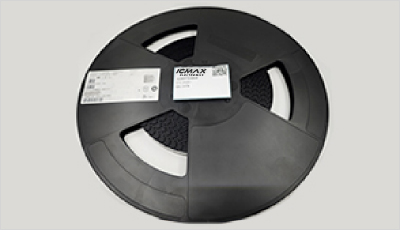
- Step1:Prepare product
-
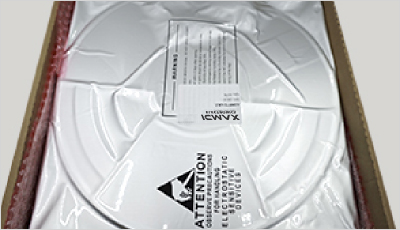
- Step2:Vacuum packaging
-
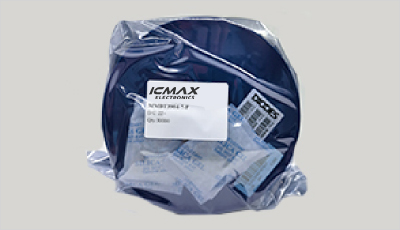
- Step3:Anti-static bag
-
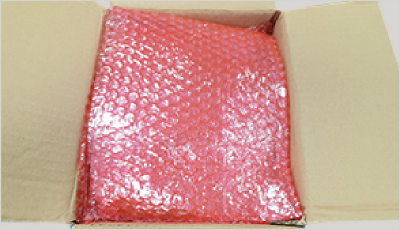
- Step4:Individual package
-
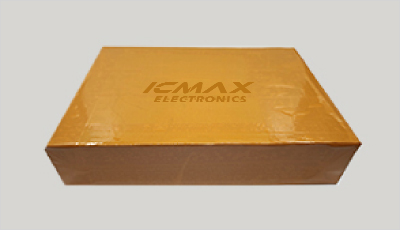
- Step5:Packaging box
-
- Step6:Barcode shipping label
Shipping starts at $40, but some countries will exceed $40. For example (South Africa, Brazil, India, Pakistan, Israel, etc.)
The basic freight (for package ≤0.5kg or corresponding volume) depends on the time zone and country.
Currently, our products are shipped through DHL, FedEx, SF, and UPS.
Delivery TimeOnce the goods are shipped, estimated delivery time depends on the shipping methods you chose:
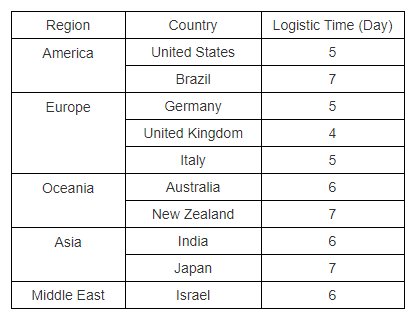
FedEx International, 5-7 business days.
The following are some common countries' logistic time.
- Hot Sale
- Related Categories
- Include Parts
- Popular Search
- Voltage Regulators - Linear, Low Drop Out (LDO) Regulators(66836)
- Voltage Regulators - Linear Regulator Controllers(325)
- Voltage Regulators - Linear + Switching(1473)
- Voltage Regulators - DC DC Switching Regulators(35756)
- Voltage Reference(8428)
- V/F and F/V Converters(139)
- Thermal Management(515)
- Supervisors(41287)
- Special Purpose Regulators(4820)
- RMS to DC Converters(144)
The following parts include "LM317G-AA3-R — Adjustable 1.3V–37V/1A Linear Voltage Regulator, SOT-223 (UTC Unisonic)" in Silicon Labs LM317G-AA3-R — Adjustable 1.3V–37V/1A Linear Voltage Regulator, SOT-223 (UTC Unisonic).
- Part Number
- Manufacturer
- Package
- Description
- MIC5504-1.8YM5-TR Microchip Technology SOT-223,Reel LINEAR VOLTAGE REGULATORS LOW CU
- MIC5504-3.3YM5-TR Microchip Technology SOT-223,Reel LINEAR VOLTAGE REGULATORS LOW CU
- MIC5365-3.0YC5-TR Microchip Technology SOT-223,Reel LINEAR VOLTAGE REGULATORS LOW CU
- MIC5365-1.8YC5-TR Microchip Technology SOT-223,Reel LINEAR VOLTAGE REGULATORS LOW CU
- MIC5365-2.5YC5-TR Microchip Technology SOT-223,Reel LINEAR VOLTAGE REGULATORS LOW CU
- MIC5365-3.3YC5-TR Microchip Technology SOT-223,Reel LINEAR VOLTAGE REGULATORS LOW CU
- MIC5365-3.3YD5-TR Microchip Technology SOT-223,Reel LINEAR VOLTAGE REGULATORS LOW CU
- MIC5317-3.3YM5-TR Microchip Technology SOT-223,Reel LINEAR VOLTAGE REGULATORS LOW CU
- TLV1117LV33DCYR Texas Instruments SOT-223,Reel LINEAR VOLTAGE REGULATORS LOW CU
- MIC5317-3.3YMT-TZ Microchip Technology SOT-223,Reel LINEAR VOLTAGE REGULATORS LOW CU
The following parts are popular search parts in Test and Measurement.
Inventory:4,992
Please send an inquiry. Send us your inquiry, and we will respond immediately.

- 1500+ Daily average RFQ Volume

- 20,000.000 Standard Product Unit

- 1800+ Worldwide Manufacturers

- 15,000+ In-stock Warehouse