UTC UT3232G-S16-R

- Part No.:
- UT3232G-S16-R
- Manufacturer:
- UTC
- Category:
- Drivers, Receivers, Transceivers
- Package:
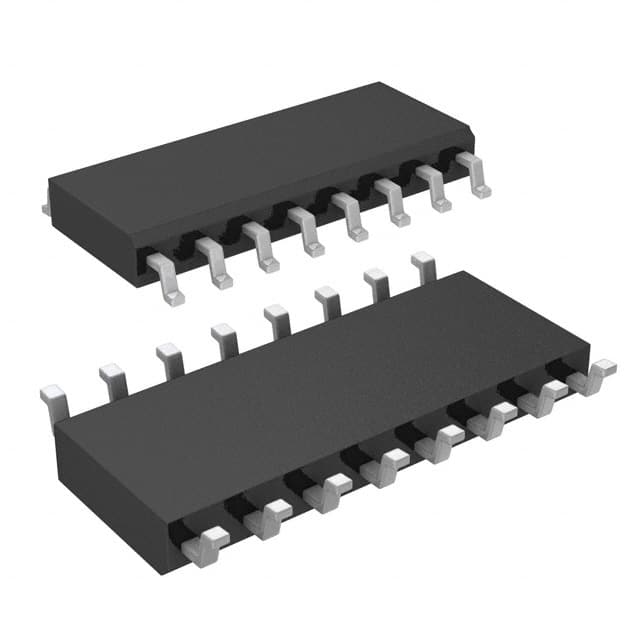
- 16-SOIC (0.154", 3.90mm Width)
- Description:
- IC TRANSCEIVER FULL 2/2 16SOIC
- Quantity:
-
Unit Price:$0
Ext Price:$0
- Payment:
-

- Shipping:
-


UT3232G-S16-R Information
- Specifications
- Product Details
- Comparison
- Tags
- Product attributes
- Attribute value
- Manufacturer:
- UTC
- Series:
- -
- Package/Case:
- 16-SOIC (0.154", 3.90mm Width)
- Packaging:
- Tube
- Product Status:
- Active
- Type:
- Transceiver
- Protocol:
- RS232
- Number of Drivers/Receivers:
- 2/2
- Duplex:
- Full
- Receiver Hysteresis:
- 300 mV
- Data Rate:
- 235Kbps
- Voltage - Supply:
- 3V ~ 5.5V
- Operating Temperature:
- 0°C ~ 70°C
- Grade:
- -
- Qualification:
- -
- Mounting Type:
- Surface Mount
- Supplier Device Package:
- 16-SOIC
UT3232G-S16-R — 3.0V–5.5V RS-232 Transceiver, MAX3232 Drop-in (SOP-16)
The UT3232G-S16-R is a 2-driver, 2-receiver RS-232 line transceiver from UTC (Unisonic Technologies). It's a drop-in replacement for the MAX3232 — same pinout, same 4 × 0.1μF external capacitors, same 3.0V–5.5V supply range. If your BOM already has a MAX3232 or SP3232 on it, the UT3232 swaps in with zero PCB changes.
What makes any 3232-family part useful is the built-in dual charge pump. Feed it a single 3.3V or 5V rail, and the internal voltage doubler + inverter generate the ±5.5V rails that RS-232 signaling requires. No external negative supply. No DC-DC converter. Just four 0.1μF caps.
The UT3232's logic inputs are 5V-tolerant even when VCC = 3.3V. That means a 3.3V MCU talking RS-232 can still safely receive 5V logic from a legacy UART without level shifters on the TTL side.
What Are the Technical Specifications of UT3232G-S16-R?
| Parameter | Value |
|---|---|
| Supply Voltage (VCC) | 3.0V – 5.5V |
| Drivers / Receivers | 2 / 2 |
| Maximum Data Rate | 250 kbps (typical); up to 470 kbps (depending on load) |
| Charge Pump Capacitors | 4 × 0.1μF (ceramic, X7R or X5R) |
| RS-232 Output Voltage | ±5.5V (typical, from charge pump) |
| ESD Protection | ±8 kV (HBM, RS-232 I/O pins) |
| Logic Input Compatibility | 5V-tolerant at VCC = 3.3V |
| Standby Supply Current | <1 μA (typical, no load) |
| Package | SOP-16 (10.0 × 3.93 mm, 1.27 mm pitch) |
| Operating Temperature | 0°C to +70°C (commercial grade) |
| Compliance | TIA/EIA-232-F, ITU V.28 |
| Green/RoHS | Halogen-free, lead-free ("G" suffix) |
| Manufacturer | UTC (Unisonic Technologies) |
The charge pump deserves a closer look. From a single VCC, the voltage doubler (C1) generates ~+5.5V on the V+ pin. The inverter (C2) flips it to ~−5.5V on the V− pin. The drivers swing between these two rails — true ±5V RS-232 levels from a 3.3V supply.
Same architecture as the MAX3232, same four 0.1μF capacitors. Don't substitute larger values; it won't help and can cause startup issues.
UT3232 vs MAX3232 vs MAX232: Which One?
| Feature | UT3232G | MAX3232 (TI/Maxim) | MAX232 (legacy) |
|---|---|---|---|
| Supply Voltage | 3.0–5.5V | 3.0–5.5V | 4.5–5.5V only |
| External Capacitors | 4 × 0.1μF | 4 × 0.1μF | 4 × 1μF (electrolytic) |
| Data Rate | 250–470 kbps | 250–470 kbps | 120–250 kbps |
| ESD (RS-232 Pins) | ±8 kV HBM | ±15 kV (varies by mfr) | ±2 kV typical |
| 3.3V Logic Compatible | Yes | Yes | No |
| Temp Range | 0–70°C | −40–+85°C (industrial) | 0–70°C |
| Package | SOP-16 | SOIC-16 / TSSOP-16 | SOIC-16 / DIP-16 |
| Relative Cost | $ (budget) | $$ (premium) | $ (old stock) |
UT3232 vs MAX3232 — cost vs temp range. Electrically interchangeable. Same pinout, same caps, same data rate. The real difference: MAX3232 offers industrial temperature range (−40°C to +85°C) and higher ESD ratings from some manufacturers.
If your product lives indoors at room temperature, the UT3232's commercial 0–70°C range is fine. Outdoor kiosk or factory floor? Step up to the industrial-grade MAX3232 or SP3232.
MAX232 is the wrong part for a 3.3V design. The MAX232 needs a 5V supply, uses larger 1μF capacitors (often electrolytic), and its logic inputs won't read 3.3V signals. If your MCU is 3.3V — and most modern MCUs are — you need a 3232-family part.
The "MAX232" part number has been around since the 1980s and still shows up in old reference schematics. Don't blindly copy it into a new design.
What Are the Typical Applications of UT3232?
MCU UART-to-RS-232 Level Shifting. The classic use case. An STM32, ESP32, or ATmega talks UART at 3.3V logic levels. The UT3232 translates those 3.3V TTL signals to ±5V RS-232 levels for a DB-9 port. Two drivers handle TXD + RTS. Two receivers handle RXD + CTS. Four 0.1μF caps and done.
Industrial PLC Serial Interface. Programmable logic controllers still ship with RS-232 ports for programming and diagnostics. The UT3232 provides the physical layer between the PLC's internal 3.3V or 5V logic and the outside world.
POS Terminal / Barcode Scanner. Point-of-sale equipment — receipt printers, barcode scanners, cash drawers — still uses RS-232 extensively. The UT3232's low standby current (<1 μA) matters in POS handhelds running on battery.
Networking Equipment Console Port. Routers and switches have RS-232 console ports for out-of-band management. The UT3232 sits between the management SoC's UART and the RJ-45 console connector. Commercial temperature range is fine for indoor networking gear.
USB-to-Serial Adapter. Combined with a USB-UART bridge (FT232, CH340, CP2102), the UT3232 on the output side gives a full USB-to-RS-232 adapter. USB side = 5V from VBUS → power the UT3232 directly. Or 3.3V from the bridge's internal LDO → UT3232 runs at 3.3V.
UT3232 Circuit Design Checklist
Capacitor selection. Use 0.1μF ceramic caps, X7R or X5R dielectric, 16V rating minimum. Place them as close to the IC as possible — C1 and C2 within 5 mm of the pins. The charge pump switches at ~150 kHz internally; long cap traces radiate EMI and reduce output voltage under load.
VCC bypassing. Add a 0.1μF bypass cap from VCC (pin 16) to GND (pin 15), right next to the IC. If VCC comes from a noisy rail (e.g., switching regulator), add a 10μF bulk cap in parallel.
Unused drivers/receivers. Tie unused driver inputs (DIN1/DIN2) to GND. Leave unused driver outputs (DOUT1/DOUT2) floating. Unused receiver inputs (RIN1/RIN2) can be left floating — internal 5kΩ pulldowns keep them low. Unused receiver outputs (ROUT1/ROUT2) float.
RS-232 connector protection. The UT3232 has ±8 kV ESD on the RS-232 pins, but that's HBM (Human Body Model) — an assembly-line discharge, not a repeated cable-plug event. For products where users frequently connect/disconnect the RS-232 cable, add external TVS diodes (e.g., 5V bidirectional TVS) on RIN and DOUT lines, right at the connector.
Why Buy UT3232G-S16-R from ICMASS?
The UT3232 costs less than the MAX3232 without cutting corners. UTC isn't a no-name fab. They're a publicly listed Taiwanese semiconductor company (TWSE: 8261) with 30+ years of analog IC manufacturing. The UT3232 is built on the same CMOS process node as the MAX3232, not a simplified clone.
We stock the full UTC RS-232 lineup. Need the 1-driver/1-receiver UT3221? Or the industrial-temp UT3232I? We carry all variants in SOP-16 and TSSOP-16 packages. If your volume justifies it, we can quote reel pricing directly.
"G" suffix matters for EU/US compliance. The G in UT3232G means halogen-free molding compound and lead-free plating. If you export to the EU (RoHS/REACH) or sell to US distributors, this is non-negotiable. We stock the "G" variant exclusively — nothing else ships.
Shenzhen warehouse, tape-and-reel ready. The "-R" suffix means 2,500 units per reel. Same-day shipping for orders before 15:00 CST. Contact us for current pricing on your quantity.
Frequently Asked Questions About UT3232
Q1: Can UT3232 directly replace MAX3232 on my PCB?
A: Yes, drop-in replacement. Same SOP-16 pinout, same 0.1μF external capacitors, same 3.0–5.5V supply range. No PCB changes, no BOM changes beyond the part number. The only difference is commercial temp range vs the industrial temp range on some MAX3232 variants.
Q2: Why do I get garbled characters with my UT3232?
A: Check three things. First: are TX and RX crossed over on the DE-9 connector? TX from one device goes to RX on the other. Second: is the MCU baud rate actually matching? Third: are the 0.1μF caps ceramic X7R/X5R, not some other value or dielectric? Wrong caps cause weak RS-232 levels.
Q3: My UT3232 works at 9600 baud but fails at 115200. Why?
A: Most likely capacitor layout. If the four 0.1μF charge pump caps are too far from the IC, the charge pump can't deliver enough current at higher switching rates. Keep C1 and C2 within 5mm of the pins. Also check that your load capacitance on the RS-232 side isn't exceeding the 250pF per driver that the datasheet assumes.
Q4: Can I power the UT3232 at 5V and connect it to a 3.3V MCU?
A: Only in one direction safely. The UT3232's receiver outputs (ROUT) will swing to VCC — if VCC = 5V, that's 5V going into your 3.3V MCU's RX pin. This can trigger ESD clamping diodes in the MCU. Better approach: run the UT3232 at 3.3V. Its logic inputs are 5V-tolerant, so the MCU's 3.3V TX signal is fine.
Q5: Can I use 1μF capacitors like the old MAX232?
A: No. The charge pump oscillator frequency is designed for 0.1μF. Using 1μF changes the charge transfer timing and can reduce output voltage or cause instability. Stick with 0.1μF ceramic, X7R, 16V rating.
Q6: What's the difference between UT3232 and MAX232?
A: MAX232 is the 5V-only predecessor from the 1980s. It needs 4 × 1μF electrolytic capacitors, won't run at 3.3V, and its logic inputs need 5V TTL levels. The UT3232 (MAX3232 family) is the modern replacement: 3.0–5.5V supply, 0.1μF ceramic caps, and 5V-tolerant inputs at 3.3V VCC.
Q7: Does the UT3232 need a negative supply?
A: No. The internal charge pump generates −5.5V from the VCC rail. The voltage doubler stage produces +5.5V on the V+ pin, then the inverter stage flips it to −5.5V on the V− pin. All you provide is a single positive 3.0–5.5V supply.
Q8: Can the UT3232 drive a long RS-232 cable (15m+)?
A: Possibly, but don't count on it. The RS-232 spec guarantees operation up to 2500pF load capacitance, which is roughly 15m of standard cable at 20 kbps. At 115 kbps, cable length drops to ~3–5m before signal degradation. For long cable runs, add external line drivers or switch to RS-485.
Q9: Can I leave unused driver inputs floating?
A: No. Tie unused DIN pins to GND. Floating inputs can oscillate, causing unnecessary power draw and radiated noise from the charge pump and output stage. Unused RIN pins have internal pull-downs and can float safely.
Q10: UT3232 vs SP3232 vs ST3232 — which should I use?
A: Pick based on temperature range and ESD requirements. All three are pin-compatible. UT3232 = commercial 0–70°C. SP3232 = −40–+85°C with higher ESD ratings on some variants. ST3232 = −40–+85°C, ±15 kV ESD. For indoor consumer products, the UT3232 is fine. For outdoor or industrial, go SP3232 or ST3232.
| Image |
|
| Part Number | UT3232G-S16-R |
| Manufacturer | UTC |
| Series | - |
| Package/Case | 16-SOIC (0.154", 3.90mm Width) |
| Packaging | Tube |
| Product Status | Active |
| Type | Transceiver |
| Protocol | RS232 |
| Number of Drivers/Receivers | 2/2 |
| Duplex | Full |
| Receiver Hysteresis | 300 mV |
| Data Rate | 235Kbps |
| Voltage - Supply | 3V ~ 5.5V |
| Operating Temperature | 0°C ~ 70°C |
| Grade | - |
| Qualification | - |
| Mounting Type | Surface Mount |
| Supplier Device Package | 16-SOIC |
User Guide
- Purchase & Inquiry
- Package
- Shipping Information
- Customer Review
You may place an order without registering to IC-MAX.COM
We strongly suggest you sign in before purchasing as you can track your order in real time.
For your convenience, we accept multiple payment methods in USD, including PayPal, Credit Card, and wire transfer.
RFQ (Request for Quotations)
It is recommended to request for quotations to get the latest prices and inventories about the part.
Our sales will reply to your request by email within 24 hours.
1. You'll receive an order information email in your inbox. (Please remember to check the spam folder if you didn't hear from us).
2. Since inventories and prices may fluctuate to some extent, the sales manager is going to reconfirm the order and let you know if there are any updates.
-
- Step1:Prepare product
-
- Step2:Vacuum packaging
-
- Step3:Anti-static bag
-
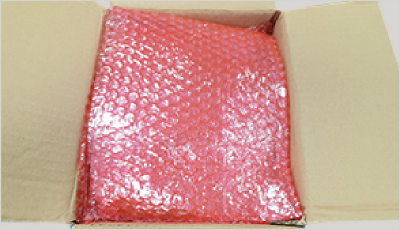
- Step4:Individual package
-
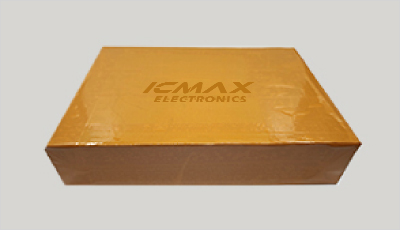
- Step5:Packaging box
-
- Step6:Barcode shipping label
Shipping starts at $40, but some countries will exceed $40. For example (South Africa, Brazil, India, Pakistan, Israel, etc.)
The basic freight (for package ≤0.5kg or corresponding volume) depends on the time zone and country.
Currently, our products are shipped through DHL, FedEx, SF, and UPS.
Delivery TimeOnce the goods are shipped, estimated delivery time depends on the shipping methods you chose:
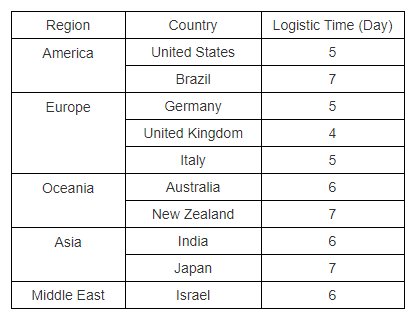
FedEx International, 5-7 business days.
The following are some common countries' logistic time.
- Hot Sale
- Related Categories
- Include Parts
- Popular Search
The following parts include "UT3232G-S16-R" in Silicon Labs UT3232G-S16-R.
- Part Number
- Manufacturer
- Package
- Description
- ATA6561-GAQW-N Microchip Technology 16-SOIC (0.154", 3.90mm Width) IC TRANSCEIVER FULL 2/2 16SOIC
- ATA6561-GBQW-N Microchip Technology 16-SOIC (0.154", 3.90mm Width) IC TRANSCEIVER FULL 2/2 16SOIC
- AM26LS32ACDR Texas Instruments 16-SOIC (0.154", 3.90mm Width) IC TRANSCEIVER FULL 2/2 16SOIC
- SP485CN-L/TR MaxLinear, Inc. 16-SOIC (0.154", 3.90mm Width) IC TRANSCEIVER FULL 2/2 16SOIC
- SP485EN-L/TR MaxLinear, Inc. 16-SOIC (0.154", 3.90mm Width) IC TRANSCEIVER FULL 2/2 16SOIC
- SP485EEN-L/TR MaxLinear, Inc. 16-SOIC (0.154", 3.90mm Width) IC TRANSCEIVER FULL 2/2 16SOIC
- SP485ECN-L/TR MaxLinear, Inc. 16-SOIC (0.154", 3.90mm Width) IC TRANSCEIVER FULL 2/2 16SOIC
- THVD1400DR Texas Instruments 16-SOIC (0.154", 3.90mm Width) IC TRANSCEIVER FULL 2/2 16SOIC
- AM26C31IDR Texas Instruments 16-SOIC (0.154", 3.90mm Width) IC TRANSCEIVER FULL 2/2 16SOIC
- TLIN1021ADRQ1 Texas Instruments 16-SOIC (0.154", 3.90mm Width) IC TRANSCEIVER FULL 2/2 16SOIC
The following parts are popular search parts in Test and Measurement.
Inventory:1,144
Please send an inquiry. Send us your inquiry, and we will respond immediately.

- 1500+ Daily average RFQ Volume

- 20,000.000 Standard Product Unit

- 1800+ Worldwide Manufacturers

- 15,000+ In-stock Warehouse