UTC UHE4913G‑AE3‑R

- Part No.:
- UHE4913G‑AE3‑R
- Manufacturer:
- UTC
- Category:
- Switches (Solid State)
- Package:
- TO-236-3, SC-59, SOT-23-3
- Description:
- MAGNETIC SWITCH OMNIPOL SOT23-3
- Quantity:
-
Unit Price:$0
Ext Price:$0
- Payment:
-

- Shipping:
-


UHE4913G‑AE3‑R Information
- Specifications
- Product Details
- Comparison
- Tags
- Product attributes
- Attribute value
- Manufacturer:
- UTC
- Series:
- -
- Package/Case:
- TO-236-3, SC-59, SOT-23-3
- Packaging:
- Tape & Reel (TR)
- Product Status:
- Active
- Function:
- Omnipolar Switch
- Technology:
- Hall Effect
- Polarization:
- North Pole, South Pole
- Sensing Range:
- ±4.8mT Trip, ±0.5mT Release
- Test Condition:
- -
- Voltage - Supply:
- 2.4V ~ 5.5V
- Current - Supply (Max):
- 2.5µA
- Current - Output (Max):
- 5mA
- Output Type:
- Push-Pull
- Features:
- -
- Operating Temperature:
- -40°C ~ 85°C (TA)
- Grade:
- -
- Qualification:
- -
- Mounting Type:
- Surface Mount
- Supplier Device Package:
- SOT-23-3
UHE4913G-AE3-R — 3µA Low-Power Omnipolar Hall Effect Switch (SOT-23) from UTC
The UHE4913G-AE3-R is a low-power CMOS Hall effect switch in SOT-23 from Unisonic Technologies (UTC). It runs from 2.4V to 5.5V, draws 3µA average, and triggers on either magnet pole — no orientation worries in assembly.
From what we see across Shenzhen lots (2025–2026), the 4913 family is the default battery-grade Hall switch for flip-cover detection, e-cigarette draw sensors, and toy magnetic switches. The most common field complaint: pin 1 (VDD) wired to ground — the SOT-23 layout puts the supply on the left, not the middle.
Three microamps. A CR2032 coin cell runs this sensor for roughly eight years.
What Are the Technical Specifications of UHE4913G-AE3-R?
| Parameter | Value |
|---|---|
| Type | Low-power CMOS Hall effect switch (omnipolar) |
| Package | SOT-23 (3 pins), halogen-free |
| Supply Voltage (VDD) | 2.4V–5.5V (typ 2.7V) |
| Average Supply Current | 3µA typ / 20µA max @ 2.7V |
| Sample Mode | 50µs operating / 130ms standby (0.04% duty) |
| Operate Point |BOP| | 20–50 Gauss (typ 35G) |
| Release Point |BRP| | 12–42 Gauss (typ 27G) |
| Hysteresis | 2–16 Gauss (typ 8G) |
| Polarity Detection | Both poles (omnipolar) |
| Output Type | Push-pull digital (High = no field, Low = field present) |
| Output Saturation Voltage | 0.1V |
| Output Rise / Fall Time | 0.5µs / 0.1µs typ (2.7kΩ load) |
| Power Consumption | 10µW typ @ 2.7V |
| Operating Temperature | −40°C to +85°C |
| Marking | UEMG (SOT-23) |
Key numbers that matter: the 3µA average is the headline — the chip wakes for 50µs, samples, and sleeps for 130ms. And because it triggers on either pole, a flip cover works no matter how the magnet lands in assembly.
When Should You Use (and NOT Use) the UHE4913G-AE3-R?
✅ Use UHE4913G-AE3-R when:
- Battery-powered presence or lid detection. Flip-phone covers, laptop lids, e-cigarette draw sensors — the 3µA budget is invisible next to the rest of the system.
- Reed switch replacement in low-voltage circuits. No moving parts, no contact bounce, no vibration false-triggers — and tight switch-point tolerance means no mechanical calibration.
- Assembly without magnet orientation control. The omnipolar sensing removes the "which pole faces up" line item from your production checklist.
- 3.3V or 5V logic interfaces. The push-pull output drives a MCU GPIO directly — no pull-up resistor needed.
- 4913-family drop-in. Same SOT-23 pinout across UTC and clone versions — swap without a board change.
❌ Don't use UHE4913G-AE3-R when:
- You need continuous high-speed field sensing. The 130ms sleep between samples misses fast motion — a spinning rotor needs a latching Hall or a continuous-sensing part.
- Long trigger distances (>3–5cm). At 35G typical operate point, the sensing range is a few millimeters to a few centimeters with a strong neodymium magnet. Beyond that, use a linear Hall sensor or a comparator front-end.
- Switching mains or high current. This is a logic-level sensor, not a power switch — pair it with a MOSFET or relay for load drive.
- High-temperature or automotive environments above 85°C. The -40 to +85°C range covers consumer use; automotive bays need an AEC-Q100 rated part.
What Are the Alternatives to UHE4913G-AE3-R?
| Model | Type | Key Difference | Best For |
|---|---|---|---|
| DRV5032 | Omnipolar, micropower | TI, similar 3µA class, 1.65–5.5V | Branded BOMs that need a Western original |
| SL0216-3L | Omnipolar, micropower | 2.4µA, open-drain output | Cheapest omnipolar option; needs a pull-up |
| A3144 | Unipolar switch | 4mA supply, ~65G operate, open-collector | Legacy designs with power to spare |
| US1881 | Latching switch | Latches until opposite pole applied | Rotation counting, brushless motor commutation |
| Reed switch | Mechanical contact | Zero standby current, but bounces and wears | Legacy BOMs already built around a reed |
The 3µA vs 4mA decision in one line: battery life → UHE4913; legacy socket → A3144. On a CR2032, the UHE4913 runs years where an A3144-class part runs hours.
SOT-23 pinout: pin 1 is VDD, pin 2 is the digital output, pin 3 is GND — per the UTC ordering information. The push-pull output needs no pull-up, so the sensor is a three-wire hookup: supply, output, ground.
MCU interface circuit: VDD to the 2.4–5.5V rail with 0.1µF decoupling, OUT straight into a GPIO (push-pull, no pull-up), GND to ground. A magnet crossing the sensing face pulls the output low; removing it releases high.
CR2032 (220mAh) battery life with one always-on sensor — longer is better:
The 0.04% sample duty cycle is the whole story: 3µA average versus 4mA for a legacy Hall switch — about 1,300× less power for the same sensing job.
What Are the Typical Applications of UHE4913G-AE3-R?
Flip-cover and lid detection: the chip's original design target from the datasheet — flip phones and PDAs. A magnet in the cover and the sensor under the body give clean on/off state with zero contact wear, in a 3-pin footprint.
E-cigarette draw sensors: a small magnet on the mouthpiece and the 4913 inside the body detect the draw motion. The 3µA budget matters here — these products sit in standby for weeks between puffs.
Battery-driven door and window alarms: the sensor stays powered permanently while the rest of the alarm sleeps. One CR2032 covers years of monitoring, and the omnipolar sensing tolerates whichever way the magnet lands on the frame.
Toy and consumer magnetic switches: on/off by magnet proximity — light-up toys, game controllers, and handheld instruments. Push-pull output drives a GPIO or a small load directly, and the SOT-23 part survives assembly soldering with no mechanical adjustment.
Why Buy UHE4913G-AE3-R from ICMASS?
Every lot tested for operate point and supply current. We batch-test the |BOP| threshold and the 3µA draw before shipment. Counterfeit or relabeled Hall switches typically fail the current measurement — a part that draws milliamps instead of microamps kills the battery budget silently.
Cross-reference support for the whole Hall family. Not sure whether your design wants UHE4913, a latching US1881, or a linear Hall sensor? Send us your trigger distance, magnet size, and supply — we'll tell you which part the board actually needs.
BOM consolidation for portable builds. The same battery product usually carries a boost or LDO (LM2596, 78L05G), a charger (TP4056), and the UHE4913 sensor — one shipment from Shenzhen covers the whole power and sensing section.
Same-day dispatch, 5–10 days worldwide. Orders before 15:00 CST ship same day via DHL or FedEx. For volume orders, we source directly from the UTC production line.
Frequently Asked Questions About UHE4913G-AE3-R
Q1: How do I wire the UHE4913 in SOT-23?
A: Pin 1 = VDD, pin 2 = output, pin 3 = GND. Per the UTC ordering information, the SOT-23 layout is I (VDD) on pin 1, O (output) on pin 2, G (GND) on pin 3. The most common wiring mistake across field reports is pin 1 going to ground — the supply sits on the left in this package, not the center.
Q2: Which magnet pole triggers it?
A: Either one — that's the omnipolar feature. The datasheet's "switching for both poles of magnet" means a north or south face triggers the same output. No orientation control in assembly, no "magnet backwards" failures on the line.
Q3: How close does the magnet need to be?
A: A few millimeters to a few centimeters, depending on magnet strength. The typical operate point is 35 Gauss. A small neodymium disc triggers at roughly 5–15mm through air or a thin wall; weak ferrite magnets need contact distance. Forum threads asking for 40–50mm range are pointed to linear Hall sensors instead — this class of switch can't do it.
Q4: How much current does it really draw?
A: 3µA average at 2.7V — about 10µW. The chip samples for 50µs, then sleeps 130ms (0.04% duty). During the sample window it draws 1.1mA; in standby 2.5µA. On a CR2032 coin cell, that averages out to roughly eight years of continuous sensing.
Q5: Can the output drive a load directly?
A: Only small logic loads — this is a sensor output, not a power switch. The push-pull output saturates at 0.1V and handles logic-level current. For LEDs, relays, or motors, drive a small MOSFET or transistor from the output — forum builds commonly pair Hall switches with SOT-23 MOSFETs for exactly this.
Q6: Can I replace a reed switch with it?
A: Yes, with three differences: supply it, respect the voltage, and accept µA leakage. The Hall switch wins on vibration immunity, zero contact bounce, and effectively unlimited life — reeds wear and false-trigger when battered. But a reed handles hundreds of volts with zero off-state leakage; the 4913 runs on 2.4–5.5V and leaks microamps when off. For low-voltage logic circuits it's a straight upgrade.
Q7: Is the output high or low when the magnet is present?
A: Low — the output is high with no field, and goes low past the operate point. This inverted logic is worth checking before you wire the GPIO interrupt: presence = logic low. The hysteresis (8G typ) keeps it from chattering at the threshold.
Q8: My sensor false-triggers near a motor — why?
A: Stray magnetic fields from the motor or transformer are crossing the 35G threshold. Mount the sensor on a non-metallic bracket away from the field source, or shield it. Forum threads on false triggers consistently trace back to mounting too close to a coil or unshielded motor windings.
Q9: How fast can it detect motion?
A: Not fast — the 130ms sleep between samples sets the practical limit. Each sample takes 50µs, then the chip sleeps. A magnet sweeping past faster than the sample interval gets missed. For rotation counting or brushless commutation, use a latching Hall (US1881-class) or a continuous-sensing part.
Q10: UHE4913 vs a latching Hall switch — which do I need?
A: Latching for rotation; UHE4913 for presence. A latch (US1881, A3213) holds its state until the opposite pole arrives — right for counting rotations. The UHE4913 is a switch: it follows the field in real time (sampled), right for lids, covers, and proximity detection. Both are 3-pin and cheap; the wrong choice shows up as wrong behavior in the field.
| Image |

|
| Part Number | UHE4913G‑AE3‑R |
| Manufacturer | UTC |
| Series | - |
| Package/Case | TO-236-3, SC-59, SOT-23-3 |
| Packaging | Tape & Reel (TR) |
| Product Status | Active |
| Function | Omnipolar Switch |
| Technology | Hall Effect |
| Polarization | North Pole, South Pole |
| Sensing Range | ±4.8mT Trip, ±0.5mT Release |
| Test Condition | - |
| Voltage - Supply | 2.4V ~ 5.5V |
| Current - Supply (Max) | 2.5µA |
| Current - Output (Max) | 5mA |
| Output Type | Push-Pull |
| Features | - |
| Operating Temperature | -40°C ~ 85°C (TA) |
| Grade | - |
| Qualification | - |
| Mounting Type | Surface Mount |
| Supplier Device Package | SOT-23-3 |
User Guide
- Purchase & Inquiry
- Package
- Shipping Information
- Customer Review
You may place an order without registering to IC-MAX.COM
We strongly suggest you sign in before purchasing as you can track your order in real time.
For your convenience, we accept multiple payment methods in USD, including PayPal, Credit Card, and wire transfer.
RFQ (Request for Quotations)
It is recommended to request for quotations to get the latest prices and inventories about the part.
Our sales will reply to your request by email within 24 hours.
1. You'll receive an order information email in your inbox. (Please remember to check the spam folder if you didn't hear from us).
2. Since inventories and prices may fluctuate to some extent, the sales manager is going to reconfirm the order and let you know if there are any updates.
-
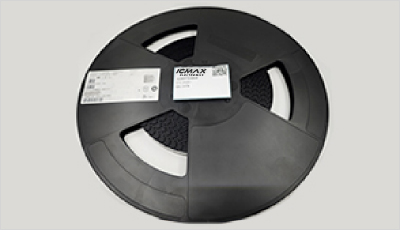
- Step1:Prepare product
-
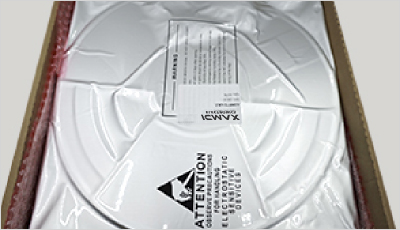
- Step2:Vacuum packaging
-
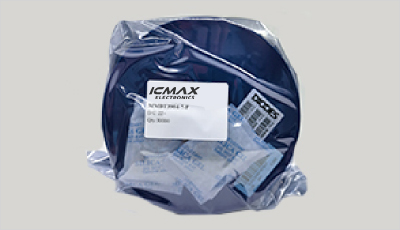
- Step3:Anti-static bag
-
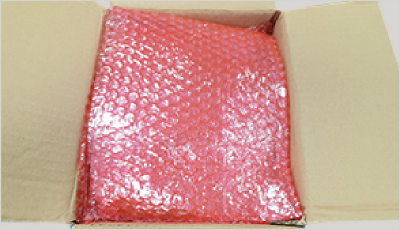
- Step4:Individual package
-
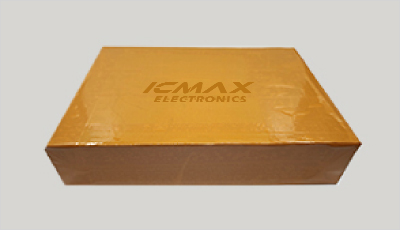
- Step5:Packaging box
-

- Step6:Barcode shipping label
Shipping starts at $40, but some countries will exceed $40. For example (South Africa, Brazil, India, Pakistan, Israel, etc.)
The basic freight (for package ≤0.5kg or corresponding volume) depends on the time zone and country.
Currently, our products are shipped through DHL, FedEx, SF, and UPS.
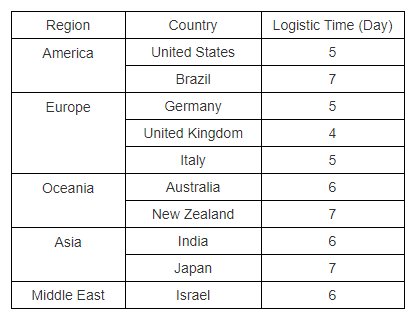
Delivery TimeOnce the goods are shipped, estimated delivery time depends on the shipping methods you chose:
FedEx International, 5-7 business days.
The following are some common countries' logistic time.
- Hot Sale
- Related Categories
- Include Parts
- Popular Search
The following parts include "UHE4913G‑AE3‑R" in Silicon Labs UHE4913G‑AE3‑R.
- Part Number
- Manufacturer
- Package
- Description
- TCS40DLR,LF Toshiba Semiconductor and Storage TO-236-3, SC-59, SOT-23-3 MAGNETIC SWITCH OMNIPOL SOT23-3
- DRV5032FBDBZR Texas Instruments TO-236-3, SC-59, SOT-23-3 MAGNETIC SWITCH OMNIPOL SOT23-3
- DRV5032FADBZR Texas Instruments TO-236-3, SC-59, SOT-23-3 MAGNETIC SWITCH OMNIPOL SOT23-3
- AH1912-FA-7 Diodes Incorporated TO-236-3, SC-59, SOT-23-3 MAGNETIC SWITCH OMNIPOL SOT23-3
- AH1913-W-7 Diodes Incorporated TO-236-3, SC-59, SOT-23-3 MAGNETIC SWITCH OMNIPOL SOT23-3
- AH1911-W-7 Diodes Incorporated TO-236-3, SC-59, SOT-23-3 MAGNETIC SWITCH OMNIPOL SOT23-3
- TLI49631MXTSA1 Infineon Technologies TO-236-3, SC-59, SOT-23-3 MAGNETIC SWITCH OMNIPOL SOT23-3
- SM453R Honeywell Sensing and Productivity Solutions TO-236-3, SC-59, SOT-23-3 MAGNETIC SWITCH OMNIPOL SOT23-3
- MLX90248ESE-EBA-000-RE Melexis Technologies NV TO-236-3, SC-59, SOT-23-3 MAGNETIC SWITCH OMNIPOL SOT23-3
- MLX92213ELD-AAA-000-RE Melexis Technologies NV TO-236-3, SC-59, SOT-23-3 MAGNETIC SWITCH OMNIPOL SOT23-3
The following parts are popular search parts in Test and Measurement.
Inventory:9,794
Please send an inquiry. Send us your inquiry, and we will respond immediately.

- 1500+ Daily average RFQ Volume

- 20,000.000 Standard Product Unit

- 1800+ Worldwide Manufacturers

- 15,000+ In-stock Warehouse