UTC TDA2822G‑S08‑R

- Part No.:
- TDA2822G‑S08‑R
- Manufacturer:
- UTC
- Category:
- Audio Amplifiers
- Package:
- 8-DIP (0.300", 7.62mm)
- Description:
- IC AMP AB MONO/STER 2W 8MINI DIP
- Quantity:
-
Unit Price:$0
Ext Price:$0
- Payment:
-

- Shipping:
-


TDA2822G‑S08‑R Information
- Specifications
- Product Details
- Comparison
- Tags
- Product attributes
- Attribute value
- Manufacturer:
- UTC
- Series:
- -
- Package/Case:
- 8-DIP (0.300", 7.62mm)
- Packaging:
- Tape & Reel
- Product Status:
- Obsolete
- Type:
- Class AB
- Output Type:
- 1-Channel (Mono) or 2-Channel (Stereo)
- Max Output Power x Channels @ Load:
- 2W x 1 @ 16Ohm; 1W x 2 @ 8Ohm
- Voltage - Supply:
- 1.8V ~ 15V
- Features:
- -
- Mounting Type:
- Through Hole
- Operating Temperature:
- 0℃ ~ +70℃
- Grade:
- -
- Qualification:
- -
- Supplier Device Package:
- 8-Mini DIP
TDA2822G-S08-R — Dual 0.45W Stereo / 0.94W Bridge Audio Amplifier (SOP-8) from UTC
The TDA2822G-S08-R is a dual low-voltage audio power amplifier in SOP-8 from Unisonic Technologies (UTC). It runs from 1.8V to 12V, delivers 0.45W typ per channel in stereo or 0.94W typ bridged at 6V/4Ω, and needs only a handful of external parts.
From what we see across Shenzhen lots (2025–2026), the TDA2822 family is the workhorse "one-dollar amplifier" of intercoms, toy speakers, and portable radios. The most common field complaint: treating the SOP-8 version as if it were the DIP-8 — expecting 1.35W bridged out of a package that dissipates half the heat.
The 1.4W figure you see everywhere? That's the DIP-8 number. The SOP-8 tops out lower — and the difference matters.
What Are the Technical Specifications of TDA2822G-S08-R?
| Parameter | Value |
|---|---|
| Type | Dual low-voltage audio power amplifier |
| Package | SOP-8, halogen-free (4.90×3.90mm) |
| Supply Voltage (VCC) | 1.8V–12V (abs max 15V) |
| Quiescent Current | 9mA typ |
| Closed-Loop Gain | 40dB (stereo and bridge) |
| Output Power, Stereo | 0.28W min / 0.45W typ per ch @ 6V, 4Ω, THD=10% |
| Output Power, Bridge | 0.63W min / 0.94W typ @ 6V, 4Ω |
| Total Harmonic Distortion | 0.5% @ 8Ω, 0.2–0.5W |
| Ripple Rejection | 24dB min / 30dB typ @ 100Hz (C3 = 100µF) |
| Output Noise Voltage | 0.5mV typ / 2.0mV max (20Hz–20kHz) |
| Crosstalk | 50dB @ 1kHz |
| Input Resistance | 100kΩ |
| Peak Output Current | 1A |
| Power Dissipation (SOP-8) | 0.5W (vs 1.0W for DIP-8) |
| Operating Temperature | −20°C to +85°C (guaranteed 0–70°C) |
Key numbers that matter: the 1.8V floor lets a single alkaline cell or a nearly-dead NiMH pair run the amp. And the package split is the real gotcha: the SOP-8 dissipates 0.5W, the DIP-8 1.0W — so bridged output drops from 1.35W to 0.94W on the surface-mount part.
When Should You Use (and NOT Use) the TDA2822G-S08-R?
✅ Use TDA2822G-S08-R when:
- Stereo line-level audio from a small rail. Portable radios, cassette players, and mini speaker kits — the chip's original design target — run happily from 3–9V.
- Bridged mono for voice and alert tones. At 9V, bridged output reaches ~1.2W into 4Ω — plenty for intercom, doorbell, or siren audio without a class-D IC.
- Ultra-low supply rails (1.8–3V). One cell, two AA cells, or a Li-ion at end of charge — the 1.8V minimum covers all of them.
- Cost-critical BOMs. The TDA2822 is the cheapest dual audio amp in the catalog — cents per part, 6 external parts, no heatsink at these power levels.
- TDA2822-family drop-in. Same 8-pin layout across UTC, ST, and clone versions in DIP, SOP, and mini-DIP — swap packages without a board change.
❌ Don't use TDA2822G-S08-R when:
- You need more than ~1W per channel. The SOP-8's 0.5W dissipation budget caps bridged output at ~0.94W. For real wattage, use a class-D amp like PAM8403 (3W×2) or the DIP-8 TDA2822M.
- Noisy SMPS power. Ripple rejection is only 30dB typ — switch-mode noise passes through as audible buzz. Linear supplies or heavy filtering required.
- Hi-fi or bass-heavy playback. Fixed 40dB gain, 0.5% THD, and 2.0mV noise floor are 1980s specs. Modern ears notice.
- Continuous 4Ω drive at high level. Peak output current is 1A; sustained 4Ω full-power runs exceed the package thermal budget.
What Are the Alternatives to TDA2822G-S08-R?
| Model | Type | Key Difference | Best For |
|---|---|---|---|
| TDA2822M | Same amp, DIP-8 | 1.0W dissipation, 1.35W typ bridged | Through-hole builds that can afford the bigger package |
| MC34119 | Voice-band differential amp | 250mW, 2.0V floor, mute pin, no coupling caps | Speakerphone / hands-free where mute matters |
| LM386 | Single-ended audio amp | 325mW, 4–12V, gain set by pin | Simple single-channel audio projects |
| KA2209 | TDA2822 clone | Samsung-made pin-compatible stereo amp | Second-source TDA2822 footprints |
| PAM8403 | Class-D stereo amp | 3W×2, ~85% efficient, 2.5–5.5V | Battery designs where heat and noise matter |
The TDA2822 vs MC34119 decision in one line: stereo music or bridge power → TDA2822; battery voice with a mute pin → MC34119. Both are 8-pin, both cheap — the TDA2822 wins on watts, the MC34119 on 2.0V operation and the CD mute pin.
SOP-8 pinout: OUT1 and OUT2 on pins 1 and 3, VCC on pin 2, GND on pin 4. The four input pins (5–8) carry the inverting and non-inverting inputs of both channels — identical layout to the DIP-8 TDA2822M.
Stereo application circuit: left and right inputs into IN1/IN2 through 1µF coupling caps, outputs through 470µF (use 2200µF for bass) to 4–8Ω speakers. Decouple VCC with 100µF at the chip; the 40dB gain is fixed, so pad the input if the source is hot.
Output power into 4Ω at 6V — same die, different package and topology:
Bridge mode roughly doubles the swing per channel, but the SOP-8's 0.5W heat budget caps it at 0.94W. If your design needs the full wattage, the DIP-8 or a class-D part is the honest answer.
What Are the Typical Applications of TDA2822G-S08-R?
Portable stereo players and radios: the chip's original design target. A 3–6V rail, two 4Ω speakers, and a handful of parts produce a complete stereo stage — the classic cassette-player and pocket-radio audio section.
Intercom, doorbell, and pager audio: bridged at 9V, the TDA2822 delivers about 1.2W into 4Ω — enough voice and alert volume for a door intercom or a workshop pager, with the fixed 40dB gain keeping the BOM small.
Toy speakers and educational kits: at 1.8–3V the amp runs off two AA cells or a single Li-ion cell. Soldering-education kits and toy sound modules use it because a miswired board rarely kills the chip — it just gets quiet.
Headphone and small-speaker dual drive: the stereo outputs can feed a headphone jack and a small speaker from one source. Add series 4.7Ω resistors on the input pins in stereo mode to keep crosstalk down.
Why Buy TDA2822G-S08-R from ICMASS?
Every lot tested for output power and THD. We batch-test the SOP-8 versions for bridged output and distortion before they ship. The TDA2822 is a favorite for remarked old-stock in Shenzhen — DIP-8 dies re-stamped and sold in SOP-8 tape.
Cross-reference support for the whole family. Not sure whether your design wants TDA2822M, TDA2822G-S08, MC34119, or PAM8403? Send us your supply, speaker impedance, and power target — we'll tell you which part the board actually needs.
BOM consolidation for audio builds. The same product usually carries a TL431 reference, small-signal transistors, an electret mic, and the TDA2822 — one shipment from Shenzhen covers the whole audio section.
Same-day dispatch, 5–10 days worldwide. Orders before 15:00 CST ship same day via DHL or FedEx. For volume orders, we source directly from the UTC production line.
Frequently Asked Questions About TDA2822G-S08-R
Q1: My TDA2822 sounds distorted and fuzzy at volume — why?
A: Two classic causes: bridge-mode overload or a bad layout. A 9V bridged build went "fuzzy dirty" — drop the supply to 6V or pad the input. On breadboards, the same symptom traces to long leads: the TDA2822 self-oscillates. Solder compact and decouple VCC at the pin.
Q2: My build buzzes when powered from a switch-mode supply — why?
A: Ripple rejection is only 30dB typ, so SMPS noise rides straight into the speakers. The same chip is clean at 5V linear but buzzes on a 12V switch-mode supply. Fixes: a linear supply, or 100µF + 0.1µF right at VCC. Stay under the 15V absolute maximum.
Q3: How do I wire the TDA2822 in bridge mode?
A: Ground IN2+ (pin 6), feed the signal into IN1− (pin 8), and connect the speaker across OUT1 and OUT2 through 100µF caps. This wiring fixed a "one channel barely works" bridge build. Add the RC Zobel network — without it the bridge oscillates.
Q4: Is the Zobel network (RC filter) on the speaker really required?
A: Yes — forum threads are unanimous that omitting it causes oscillation. The datasheet's 1R + 0.1µF is the standard; one diyaudio contributor fixed a persistent oscillation by switching to 10R + 0.047µF. The network damps the speaker's inductance at high frequency, which the chip's output stage needs to stay stable.
Q5: Why do I hear a thump when plugging headphones into a bridged amp?
A: In bridge mode there's no ground reference — DC sits on the output until the caps charge. Audioguru's Stack Exchange answer: the outputs must be capacitor-coupled, and the charging transient is the thump. Series caps on the headphone outputs fix it; using stereo mode with ground-referenced outputs avoids it entirely.
Q6: My stereo build has no bass at all — why?
A: The 470µF output caps form a high-pass filter with the 4Ω speakers, cutting at ~85Hz. From the Arduino forum: bigger speakers and the same caps = no low end. Go to 2200µF output caps (rolls off around 18Hz) or accept that a small speaker system doesn't reproduce bass anyway.
Q7: How do I avoid crosstalk between the two channels?
A: Keep the input pins separated and add series 4.7Ω resistors in stereo wiring. Tying pin 8 (IN1−) and pin 5 (IN2−) together is the classic crosstalk source — each channel needs its own input path in stereo mode.
Q8: Does the TDA2822 need input bias resistors?
A: Yes — unlike the LM386, there are no internal input bias resistors. A floating input picks up noise and drifts. The standard fix: a 10kΩ resistor to ground at the input, plus a coupling cap. A top cause of "it works but it's noisy" reports.
Q9: SOP-8 vs DIP-8 — is the output power really different?
A: Yes — bridged output drops from 1.35W (DIP) to 0.94W (SOP) typ. Per the UTC datasheet, the SOP-8 dissipates 0.5W vs 1.0W for the DIP-8, so the same die delivers less. If the BOM needs the full number, use the DIP-8 or a class-D.
Q10: TDA2822 vs PAM8403 — which should I use for a new design?
A: For battery power and clean audio, PAM8403; for simplicity and cost, TDA2822. The class-D PAM8403 gives 3W×2 at ~85% efficiency, but needs 2.5–5.5V. The TDA2822 runs from 1.8V, needs no special layout, and costs less.
| Image |

|
| Part Number | TDA2822G‑S08‑R |
| Manufacturer | UTC |
| Series | - |
| Package/Case | 8-DIP (0.300", 7.62mm) |
| Packaging | Tape & Reel |
| Product Status | Obsolete |
| Type | Class AB |
| Output Type | 1-Channel (Mono) or 2-Channel (Stereo) |
| Max Output Power x Channels @ Load | 2W x 1 @ 16Ohm; 1W x 2 @ 8Ohm |
| Voltage - Supply | 1.8V ~ 15V |
| Features | - |
| Mounting Type | Through Hole |
| Operating Temperature | 0℃ ~ +70℃ |
| Grade | - |
| Qualification | - |
| Supplier Device Package | 8-Mini DIP |
User Guide
- Purchase & Inquiry
- Package
- Shipping Information
- Customer Review
You may place an order without registering to IC-MAX.COM
We strongly suggest you sign in before purchasing as you can track your order in real time.
For your convenience, we accept multiple payment methods in USD, including PayPal, Credit Card, and wire transfer.
RFQ (Request for Quotations)
It is recommended to request for quotations to get the latest prices and inventories about the part.
Our sales will reply to your request by email within 24 hours.
1. You'll receive an order information email in your inbox. (Please remember to check the spam folder if you didn't hear from us).
2. Since inventories and prices may fluctuate to some extent, the sales manager is going to reconfirm the order and let you know if there are any updates.
-
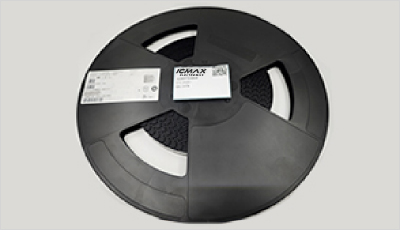
- Step1:Prepare product
-
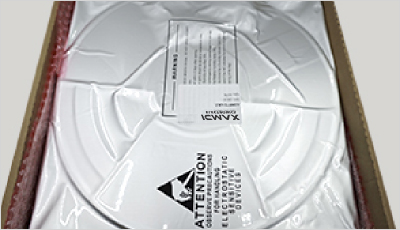
- Step2:Vacuum packaging
-
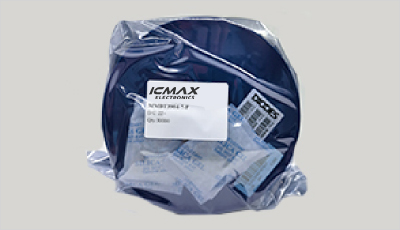
- Step3:Anti-static bag
-
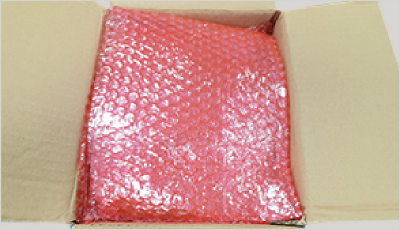
- Step4:Individual package
-
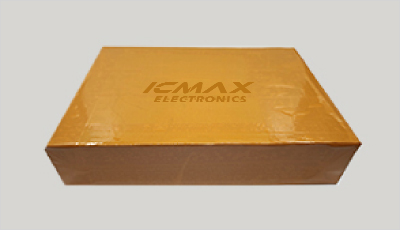
- Step5:Packaging box
-
- Step6:Barcode shipping label
Shipping starts at $40, but some countries will exceed $40. For example (South Africa, Brazil, India, Pakistan, Israel, etc.)
The basic freight (for package ≤0.5kg or corresponding volume) depends on the time zone and country.
Currently, our products are shipped through DHL, FedEx, SF, and UPS.
Delivery TimeOnce the goods are shipped, estimated delivery time depends on the shipping methods you chose:
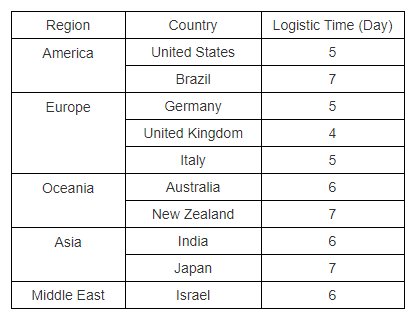
FedEx International, 5-7 business days.
The following are some common countries' logistic time.
- Hot Sale
- Related Categories
- Include Parts
- Popular Search
The following parts include "TDA2822G‑S08‑R" in Silicon Labs TDA2822G‑S08‑R.
- Part Number
- Manufacturer
- Package
- Description
- TS34119CS RLG Taiwan Semiconductor Corporation 8-DIP (0.300", 7.62mm) IC AMP AB MONO/STER 2W 8MINI DIP
- LM386MX-1/NOPB Texas Instruments 8-DIP (0.300", 7.62mm) IC AMP AB MONO/STER 2W 8MINI DIP
- TPA711DGNR Texas Instruments 8-DIP (0.300", 7.62mm) IC AMP AB MONO/STER 2W 8MINI DIP
- LM386N-4/NOPB Texas Instruments 8-DIP (0.300", 7.62mm) IC AMP AB MONO/STER 2W 8MINI DIP
- TS4990IST STMicroelectronics 8-DIP (0.300", 7.62mm) IC AMP AB MONO/STER 2W 8MINI DIP
- PAM8302AASCR Diodes Incorporated 8-DIP (0.300", 7.62mm) IC AMP AB MONO/STER 2W 8MINI DIP
- TPA6130A2RTJR Texas Instruments 8-DIP (0.300", 7.62mm) IC AMP AB MONO/STER 2W 8MINI DIP
- TPA6111A2DGNR Texas Instruments 8-DIP (0.300", 7.62mm) IC AMP AB MONO/STER 2W 8MINI DIP
- LM4861MX/NOPB Texas Instruments 8-DIP (0.300", 7.62mm) IC AMP AB MONO/STER 2W 8MINI DIP
- LM386M-1/NOPB Texas Instruments 8-DIP (0.300", 7.62mm) IC AMP AB MONO/STER 2W 8MINI DIP
The following parts are popular search parts in Test and Measurement.
Inventory:0
Please send an inquiry. Send us your inquiry, and we will respond immediately.

- 1500+ Daily average RFQ Volume

- 20,000.000 Standard Product Unit

- 1800+ Worldwide Manufacturers

- 15,000+ In-stock Warehouse