UTC MC34063AG-S08-R

- Part No.:
- MC34063AG-S08-R
- Manufacturer:
- UTC
- Package:
- 8-SOIC (0.154", 3.90mm Width)
- Description:
- IC REG BUCK BOOST ADJ 1.5A 8SOIC
- Quantity:
-
Unit Price:$0
Ext Price:$0
- Payment:
-

- Shipping:
-


MC34063AG-S08-R Information
- Specifications
- Product Details
- Comparison
- Tags
- Product attributes
- Attribute value
- Manufacturer:
- UTC
- Series:
- -
- Package/Case:
- 8-SOIC (0.154", 3.90mm Width)
- Packaging:
- Tape & Reel (TR)
- Product Status:
- Active
- Function:
- Step-Up, Step-Down
- Output Configuration:
- Positive or Negative
- Topology:
- Buck, Boost
- Output Type:
- Adjustable
- Number of Outputs:
- 1
- Voltage - Input (Min):
- 3V
- Voltage - Input (Max):
- 40V
- Voltage - Output (Min/Fixed):
- 1.25V
- Voltage - Output (Max):
- 40V (Switch)
- Current - Output:
- 1.5A (Switch)
- Frequency - Switching:
- 100kHz
- Synchronous Rectifier:
- No
- Operating Temperature:
- 0°C ~ 70°C (TA)
- Grade:
- -
- Qualification:
- -
- Mounting Type:
- Surface Mount
- Supplier Device Package:
- SOP-8
MC34063AG-S08-R — DC-DC Converter Controller, Buck/Boost/Inverting (SOP-8)
The MC34063AG-S08-R is a monolithic DC-DC converter controller from UTC. One chip does buck, boost, and inverting topologies. Input range: 3V to 40V. Output switch: 1.5A peak. Internal reference: 1.25V ±2%. If you've designed a power supply in the last 40 years, you've met this chip.
But here's the thing. The MC34063 does nothing for you automatically. No thermal shutdown. No soft-start. No frequency compensation.
Every component around it — inductor, sense resistor, timing capacitor, catch diode, output filter — you size yourself. That's either its biggest weakness or its biggest strength. For cost-sensitive designs where the BOM is king, it still earns its place on the board.
What Are the Technical Specifications of MC34063AG-S08-R?
| Parameter | Value |
|---|---|
| Type | Monolithic DC-DC Converter Controller |
| Package | SOP-8 (4.9mm × 3.9mm body) |
| Input Voltage Range | 3V to 40V |
| Output Switch Current (IPK) | 1.5A peak (internal Darlington switch) |
| Reference Voltage (VREF) | 1.25V ±2% (1.225–1.275V) |
| Oscillator Frequency Range | 100Hz to 100kHz (set by external CT at pin 3) |
| Output Voltage Range | Adjustable — set by external R1/R2 divider |
| Quiescent Current | 4mA typical (no load, no switching) |
| Current Limit Sense Voltage | 300mV typical across external RSC (pin 7–pin 6) |
| Collector-Emitter Voltage (VCE) | 40V max (internal output switch) |
| Operating Temperature Range | -40°C to +85°C (industrial) |
| Manufacturer | UTC (Unisonic Technologies) |
Key numbers that matter. The 1.25V reference appears at the comparator's inverting input (pin 5). Your output voltage = 1.25 × (1 + R1/R2). Simple, predictable, no surprises.
The 1.5A peak switch current is peak across the internal Darlington, not continuous output. In buck mode at 2:1 step-down, figure ~500–750mA max. In boost at 3:1 step-up, more like 150–250mA. Read the peak rating as "switch stress limit," not "what you can pull from the output."
At 100kHz, the Darlington's storage time eats into efficiency. Most practical designs run 30–50kHz. It's why the MC34063 works better with larger magnetics and lower frequencies — the old-school sweet spot.
When Should You Use (and NOT Use) the MC34063?
✅ Use MC34063 when:
- You need one chip for multiple topologies across a BOM. Stock one part, use it for 5V buck here, 24V boost there, -12V inverter over there. External components change; the controller stays the same.
- BOM cost is the dominant constraint. The MC34063 itself is under $0.10 in volume. At 100k units, this chip plus hand-selected discretes can beat any integrated module on cost.
- Input voltage spans a wide range (3V–40V). Automotive (12V/24V), industrial (36V), battery gear with wide swings — the 40V input rating gives headroom that 18V-max alternatives don't.
- You don't need advanced features. No sequencing, no I²C, no dynamic voltage scaling. If all you want is a fixed output that stays put, the MC34063 doesn't make you pay for features you'll never use.
- You're building a negative rail from a positive supply. The inverting topology needs almost no extra thought. Same math, rearranged layout. Many modern regulators can't invert at all.
❌ Don't use MC34063 when:
- You need >75% efficiency. The internal Darlington drops ~1V in saturation at 1A. That's a watt of heat before switching losses. For battery designs, use a synchronous buck with integrated MOSFETs instead.
- Output current exceeds 500mA continuous. The 1.5A peak rating is real, but at 100kHz on a 2-layer board, 500mA is the practical ceiling before a heatsink. Above that, step up to LM2596 (3A integrated).
- The design must survive a short-circuit. No thermal shutdown, no hiccup mode, no fault protection of any kind. A shorted output means the switch stays on until something melts.
- Output ripple must stay under 50mV. The 100kHz ceiling and hysteretic control mean ripple is a function of your LC filter. For noise-sensitive rails, a low-noise LDO after the MC34063 works, but now you're cascading two stages.
What Are the Alternatives to MC34063?
| Model | Type | Key Difference | Best For |
|---|---|---|---|
| LM2596 | Integrated Buck Regulator | 3A/150kHz, internal switch, buck only, thermal shutdown + current limit built in | 12V→5V at 1–3A with minimal design effort |
| XL6009 | Boost/Buck-Boost Regulator | 4A switch/400kHz, internal MOSFET, boost/SEPIC/inverting, up to 94% efficiency | Boost or buck-boost, battery-powered, high efficiency |
| TPS5430 | Integrated Step-Down | 3A/500kHz, internal FET, 110mΩ RDS(on), thermal shutdown | High-efficiency buck, low parts count, >1A load |
| LNK304 | AC-DC Buck Converter | Offline (AC input), integrated 700V MOSFET, buck from rectified mains | Non-isolated AC-DC, direct from 120/230V AC |
| MT3608 | Boost Converter | 2A switch/1.2MHz, internal FET, SOT-23-6, up to 28V out | Compact low-power boost (3.7V→5V, 5V→12V) |
MC34063 vs LM2596. The LM2596 costs more but brings its own switch, thermal protection, and a proven 3A rating. The MC34063 is cheaper per IC but you pay in design time and board space.
For one-off projects, buy the LM2596 module. For 100k-unit production where every cent counts, the MC34063 can still win — if your power engineer knows the part.
MC34063 vs XL6009. The XL6009 runs at 4× the frequency, uses a MOSFET instead of a Darlington, and hits >90% efficiency. If you need boost or buck-boost, it's almost always the better answer. The MC34063 hangs on in ultra-cost-sensitive buck designs where one part number covers three topologies.
What Are the Typical Applications of MC34063?
Buck Converter — 24V to 5V at 500mA. The most common MC34063 application. A 24V industrial or automotive rail steps down to 5V for a microcontroller. External parts: 150µH inductor, 1N5819 Schottky catch diode, 100µF output cap, 470pF timing cap for ~50kHz. Efficiency lands around 78–82% at half load.
Add a 10µF ceramic directly at the input pin. Skipping this is why half the "MC34063 overheating" posts exist.
Boost Converter — 5V to 12V at 150mA. Powers an op-amp rail or fan from a 5V logic supply. Peak switch current runs about 3× average output — at 150mA out, the switch sees ~450mA peak, well within the 1.5A rating. Watch out: boost mode needs Vout > Vin + 2V minimum.
Inverting Converter — +5V to -12V at 100mA. Generates a negative rail for op-amps or LCD bias from a single supply. Same component math as the boost, different inductor connection.
Output: |Vout| = 1.25 × (1 + R1/R2). The switch sees |Vin| + |Vout| — 17V total for 5V-to-(-12V), well within the 40V rating.
LED Constant-Current Driver. Place the sense resistor in series with the LED string and feed back from the high side. The 300mV sense threshold means only 300mV × ILED dissipated in the sense resistor — far less than a linear regulator. Common for driving 1–3 high-power LEDs from 12V or 24V rails.
Battery Charger (NiMH/NiCd). Configure as a buck with current limiting for constant-current charging. The 1.5A peak switch limits charge current to about 500–700mA. Add a thermistor and external comparator for charge termination. The MC34063 provides the power stage, not the charge algorithm.
Why Buy MC34063AG-S08-R from ICMASS?
UTC-sourced with lot traceability. We stock from authorized supply, not the open market. The MC34063 is one of the most counterfeited DC-DC controllers. A fake part may pass a DC check but fail at 85°C or show 2× the specified quiescent current. We batch-verify key parameters before shipping.
Know which variant you're getting. "AG" = industrial temperature (-40°C to +85°C). "S08-R" = SOP-8 tape-and-reel. We also stock DIP-8 for prototyping and the ON Semi cross. Tell us your volume and we'll quote the right variant in the right packaging.
One shipment for your power design BOM. You're ordering MC34063s for the controller. You also need 1N5819 Schottky diodes, power inductors, low-ESR output caps, and probably a MOSFET or two. We stock the passives and discretes alongside the controller — one shipment, one invoice.
Shenzhen warehouse, global DHL/FedEx. Same-day shipping for orders before 15:00 CST. International delivery in 5–10 days. Contact us for current pricing on your quantity.
Frequently Asked Questions About MC34063
Q1: Why is my MC34063 overheating at only 200mA output?
A: Missing or undersized input capacitor is the #1 cause. The MC34063 draws current in pulses. Without 100µF + 100nF ceramic right at pin 6, those pulses sag the input and force the switch to stay on longer. Second suspect: inductor saturation. Third: switching frequency too high for your Vin/Vout ratio.
Q2: Can MC34063 really output 1.5A?
A: 1.5A is peak switch current, not continuous output. In buck mode at 12V→5V, continuous output is roughly 50–65% of peak — about 750–900mA max. In boost mode (5V→12V), about 350mA. The Darlington drops ~1V at 1A (1W of heat). For >500mA continuous, start with LM2596 or TPS5430.
Q3: What switching frequency should I use?
A: 33–50kHz is the sweet spot. At 33kHz (CT=1nF) you get clean switching with low loss. At 100kHz, the Darlington's storage time cuts efficiency 5–10 points. Lower frequency means larger magnetics but cooler operation — a good trade on a first design.
Q4: Why does my MC34063 boost converter output sag under load?
A: Two likely causes. The hysteretic control keeps pumping energy even at light load, causing overshoot at no-load and sag at full load. And boost mode needs Vout > Vin + 2V minimum. Check your inductor — it's probably saturating. Boost converters stress inductors harder than bucks at the same power.
Q5: Does MC34063 have thermal shutdown or short-circuit protection?
A: No — it has none of these. Only protection: cycle-by-cycle current limit via external RSC at 300mV threshold. This is peak current control, not fault protection. A sustained short means the switch hits IPK every cycle until the die overheats. Add a PTC fuse or external latch if your design must survive a short.
Q6: Can I use MC34063 for a negative voltage supply?
A: Yes, and this is one of its best use cases. The inverting configuration produces a regulated negative output with the same components. |Vout| = 1.25 × (1 + R1/R2). The switch sees |Vin| + |Vout| — 24V total for 12V-to-(-12V), well within 40V rating. Clean, cheap solution for op-amp rails.
Q7: MC34063 vs discrete design — when does it make sense?
A: When you want topology flexibility without reinventing the control loop. A discrete DC-DC using a 555 + comparator + MOSFET means designing oscillator, feedback, and current limiting from scratch. The MC34063 gives you all three for under $0.10. For one fixed buck, an LM2596 module is cheaper in engineering time.
Q8: What's the difference between MC34063A, MC34063AG, and MC33063?
A: "A" = improved reference tolerance (±2% vs ±4%). "AG" = industrial temp (-40°C to +85°C) in green package. MC33063 is industrial grade; MC34063 was commercial (0°C to +70°C). Most manufacturers now ship only industrial-temp die. For new designs, specify MC34063AG.
Q9: Can I parallel two MC34063s for more current?
A: Not directly — the hysteretic control doesn't support current sharing. Two outputs tied together will fight each other. For more current, use one MC34063 plus an external PNP or P-channel MOSFET pass transistor. Or switch to a higher-current regulator — an LM2596 costs less by the time you add the external parts.
Q10: Why does my MC34063 circuit whine audibly?
A: Sub-harmonic oscillation dropping into the audio range at light load. At no-load, the hysteretic control skips cycles erratically at audible frequencies. Fix: add a 1–5mA minimum load resistor; use a larger output cap to reduce ripple; or lower the switching frequency with a 1nF CT — 33kHz is usually quiet.
| Image |
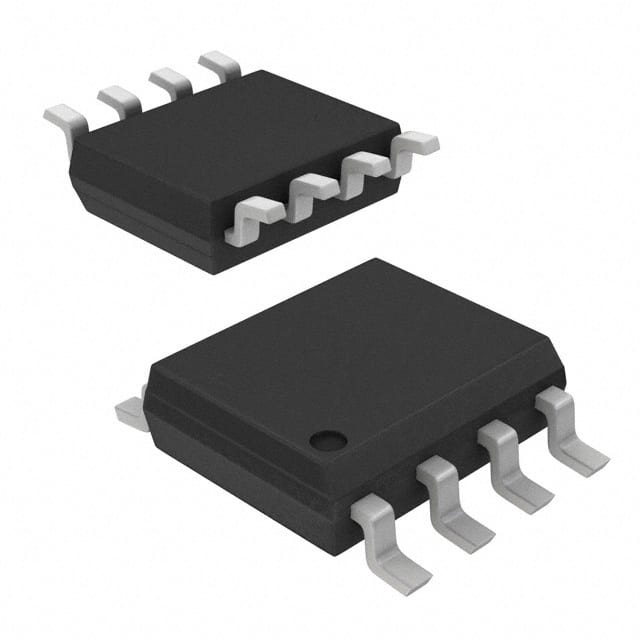
|
| Part Number | MC34063AG-S08-R |
| Manufacturer | UTC |
| Series | - |
| Package/Case | 8-SOIC (0.154", 3.90mm Width) |
| Packaging | Tape & Reel (TR) |
| Product Status | Active |
| Function | Step-Up, Step-Down |
| Output Configuration | Positive or Negative |
| Topology | Buck, Boost |
| Output Type | Adjustable |
| Number of Outputs | 1 |
| Voltage - Input (Min) | 3V |
| Voltage - Input (Max) | 40V |
| Voltage - Output (Min/Fixed) | 1.25V |
| Voltage - Output (Max) | 40V (Switch) |
| Current - Output | 1.5A (Switch) |
| Frequency - Switching | 100kHz |
| Synchronous Rectifier | No |
| Operating Temperature | 0°C ~ 70°C (TA) |
| Grade | - |
| Qualification | - |
| Mounting Type | Surface Mount |
| Supplier Device Package | SOP-8 |
User Guide
- Purchase & Inquiry
- Package
- Shipping Information
- Customer Review
You may place an order without registering to IC-MAX.COM
We strongly suggest you sign in before purchasing as you can track your order in real time.
For your convenience, we accept multiple payment methods in USD, including PayPal, Credit Card, and wire transfer.
RFQ (Request for Quotations)
It is recommended to request for quotations to get the latest prices and inventories about the part.
Our sales will reply to your request by email within 24 hours.
1. You'll receive an order information email in your inbox. (Please remember to check the spam folder if you didn't hear from us).
2. Since inventories and prices may fluctuate to some extent, the sales manager is going to reconfirm the order and let you know if there are any updates.
-
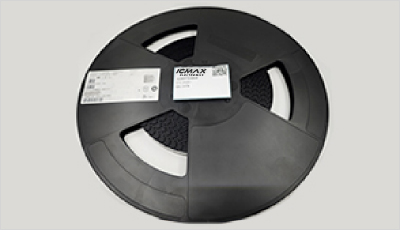
- Step1:Prepare product
-
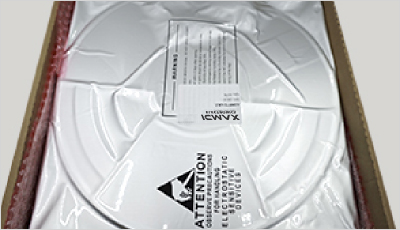
- Step2:Vacuum packaging
-
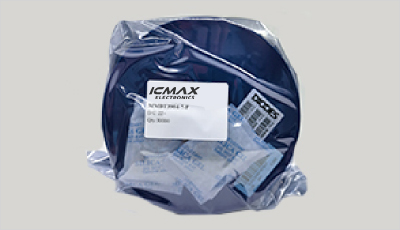
- Step3:Anti-static bag
-

- Step4:Individual package
-
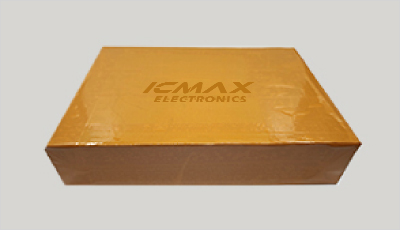
- Step5:Packaging box
-
- Step6:Barcode shipping label
Shipping starts at $40, but some countries will exceed $40. For example (South Africa, Brazil, India, Pakistan, Israel, etc.)
The basic freight (for package ≤0.5kg or corresponding volume) depends on the time zone and country.
Currently, our products are shipped through DHL, FedEx, SF, and UPS.
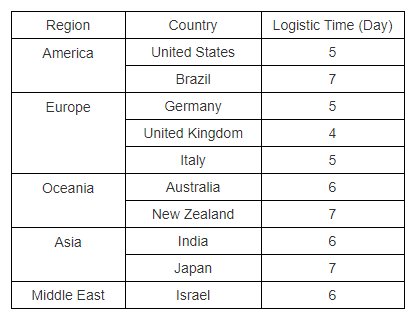
Delivery TimeOnce the goods are shipped, estimated delivery time depends on the shipping methods you chose:
FedEx International, 5-7 business days.
The following are some common countries' logistic time.
- Hot Sale
- Related Categories
- Include Parts
- Popular Search
- Voltage Regulators - Linear, Low Drop Out (LDO) Regulators(66836)
- Voltage Regulators - Linear Regulator Controllers(325)
- Voltage Regulators - Linear + Switching(1473)
- Voltage Regulators - DC DC Switching Regulators(35756)
- Voltage Reference(8428)
- V/F and F/V Converters(139)
- Thermal Management(515)
- Supervisors(41287)
- Special Purpose Regulators(4820)
- RMS to DC Converters(144)
The following parts include "MC34063AG-S08-R" in Silicon Labs MC34063AG-S08-R.
- Part Number
- Manufacturer
- Package
- Description
- TPS562201DDCR Texas Instruments 8-SOIC (0.154", 3.90mm Width) IC REG BUCK BOOST ADJ 1.5A 8SOIC
- MC34063ABD-TR STMicroelectronics 8-SOIC (0.154", 3.90mm Width) IC REG BUCK BOOST ADJ 1.5A 8SOIC
- TPS561201DDCR Texas Instruments 8-SOIC (0.154", 3.90mm Width) IC REG BUCK BOOST ADJ 1.5A 8SOIC
- MC33063ADR Texas Instruments 8-SOIC (0.154", 3.90mm Width) IC REG BUCK BOOST ADJ 1.5A 8SOIC
- MC34063ADR Texas Instruments 8-SOIC (0.154", 3.90mm Width) IC REG BUCK BOOST ADJ 1.5A 8SOIC
- TPS560200DBVR Texas Instruments 8-SOIC (0.154", 3.90mm Width) IC REG BUCK BOOST ADJ 1.5A 8SOIC
- AP3012KTR-G1 Diodes Incorporated 8-SOIC (0.154", 3.90mm Width) IC REG BUCK BOOST ADJ 1.5A 8SOIC
- TLV61048DBVR Texas Instruments 8-SOIC (0.154", 3.90mm Width) IC REG BUCK BOOST ADJ 1.5A 8SOIC
- AZ34063UMTR-G1 Diodes Incorporated 8-SOIC (0.154", 3.90mm Width) IC REG BUCK BOOST ADJ 1.5A 8SOIC
- TPS562200DDCR Texas Instruments 8-SOIC (0.154", 3.90mm Width) IC REG BUCK BOOST ADJ 1.5A 8SOIC
The following parts are popular search parts in Test and Measurement.
Inventory:24,596
Please send an inquiry. Send us your inquiry, and we will respond immediately.

- 1500+ Daily average RFQ Volume

- 20,000.000 Standard Product Unit

- 1800+ Worldwide Manufacturers

- 15,000+ In-stock Warehouse