UTC LM393G‑S08‑R

- Part No.:
- LM393G‑S08‑R
- Manufacturer:
- UTC
- Category:
- Comparators
- Package:
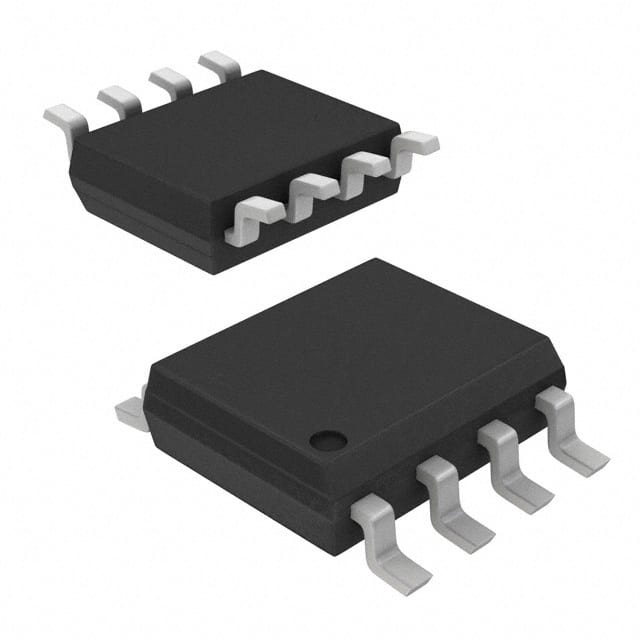
- 8-SOIC (0.154", 3.90mm Width)
- Description:
- IC COMPARATOR 2 GEN PUR 8SOIC
- Quantity:
-
Unit Price:$0
Ext Price:$0
- Payment:
-

- Shipping:
-


LM393G‑S08‑R Information
- Specifications
- Product Details
- Comparison
- Tags
- Product attributes
- Attribute value
- Manufacturer:
- UTC
- Package/Case:
- 8-SOIC (0.154", 3.90mm Width)
- Series:
- -
- Packaging:
- Tape & Reel
- Product Status:
- Obsolete
- Type:
- General Purpose
- Number of Elements:
- 2
- Output Type:
- Open-Collector, Rail-to-Rail
- Voltage - Supply, Single/Dual (±):
- 2V ~ 36V, ±1V ~ 18V
- :
- 5mV @ 30V
- Voltage - Input Offset (Max):
- 0.25µA @ 5V
- Current - Input Bias (Max):
- 16mA @ 5V
- Current - Output (Typ):
- 2.5mA
- Current - Quiescent (Max):
- -
- CMRR, PSRR (Typ):
- 700ns
- Propagation Delay (Max):
- -
- Hysteresis:
- 0°C ~ 70°C
- Operating Temperature:
- -
- Grade:
- -
- Qualification:
- Surface Mount
- :
- 8-SOIC
LM393G-S08-R — Dual Differential Voltage Comparator (SOP-8) from UTC
The LM393G-S08-R is a dual differential voltage comparator in SOP-8 from Unisonic Technologies (UTC) — two independent open-collector comparators on one 8-pin package, running from a 2V to 36V single supply or ±18V dual supply.
From what we see across Shenzhen lots (2025–2026), the LM393G is the default comparator on battery-monitor, thermostat, and window-comparator boards — cheap, fast enough for most thresholds, and pin-compatible with the classic LM393.
The most common field complaint isn't a dead comparator — it's the missing pull-up resistor on the open-collector output, or an input driven past the VCC − 1.5V common-mode limit.
What Are the Technical Specifications of LM393G-S08-R?
| Parameter | Value |
|---|---|
| Type | Dual differential voltage comparator |
| Package | SOP-8, halogen-free / lead-free |
| Supply Voltage (VCC) | 2V–36V single, ±1V–±18V dual |
| Quiescent Current (ICC) | 0.8mA typ, 2.5mA max |
| Input Offset Voltage | 1.0mV typ, 5.0mV max |
| Input Bias Current | 25nA typ, 250nA max |
| Input Common-Mode Range | 0 to VCC − 1.5V |
| Output Saturation Voltage | 160mV typ, 400mV max @ 4mA sink |
| Output Sink Current | 6mA min, 18mA typ |
| Output Leakage Current | 0.1nA typ @ 5V; 1.0µA max @ 30V |
| Large-Signal Response Time | 350ns typ |
| Large-Signal Voltage Gain | 50–200 V/mV |
| Differential Input Voltage | ±36V max |
| Power Dissipation (SOP-8) | 420mW |
| Operating Temperature | −40°C to +125°C |
Key numbers that matter: the 2V floor lets it sit on a battery rail that's almost flat. The open-collector output is the design constraint most engineers forget — it sinks, never sources, so the pull-up resistor decides the high level. But why does that single resistor trip up so many boards?
The 5mV offset is the practical resolution limit: two inputs within 5mV of each other are indistinguishable, which is why threshold circuits add hysteresis instead of pushing the offset.
When Should You Use (and NOT Use) the LM393G-S08-R?
✅ Use LM393G-S08-R when:
- You're comparing two voltages against a threshold. Battery monitors, over-voltage locks, thermostat trip points — the comparator's whole job is a clean high/low decision.
- Single-supply 3.3V or 5V logic rails. The 2V minimum covers everything down to a nearly-dead Li-ion cell, and the open-collector output drives TTL, DTL, and CMOS inputs directly.
- High-impedance sensing. The 25nA bias current means a 100kΩ divider chain barely loads the node it measures.
- Level shifting between different logic rails. Pull the output up to 3.3V while the comparator runs at 12V — the open collector makes rail conversion free.
- LM393-family drop-in. UTC, TI, ST, and NXP versions share the same 8-pin layout in DIP and SOP — swap sources without a board change.
❌ Don't use LM393G-S08-R when:
- You need an amplifier, not a comparator. A comparator has no frequency compensation; run it closed-loop and it oscillates. That's what the LM358G is for.
- Your input must swing near the positive rail. Common-mode tops out at VCC − 1.5V. Rail-to-rail input comparators (TLV3701-class) cover the top 1.5V instead.
- You need a push-pull output. The LM393 only sinks. For a logic output that drives high without a pull-up, look at push-pull comparators like the TLC3702.
- Fast switching beyond ~1MHz. The 350ns response is fine for power and battery logic, but class-D or HF threshold work needs a faster comparator (TLV3501: 4.5ns).
What Are the Alternatives to LM393G-S08-R?
| Model | Type | Key Difference | Best For |
|---|---|---|---|
| LM393G-S08-R | UTC dual comparator | Same pinout and specs as the classic LM393, SOP-8 | Cost-sensitive volume boards |
| LM393DR | TI dual comparator | Original manufacturer, identical footprint | BOMs that call out a branded part |
| LM393N | TI / ST dual comparator | DIP-8 through-hole version | Breadboard and through-hole prototypes |
| LM339DR | TI quad comparator | Four comparators, same electrical core | Designs needing 3–4 thresholds |
| LM358G-S08-R | UTC dual op-amp | Pin-compatible, but an amplifier — not a comparator | When the signal needs gain, not a decision |
The LM393G vs LM393DR decision in one line: identical silicon behavior, different price and logo. The UTC part is what volume boards in Shenzhen actually carry; the TI part matters when your customer requires a branded source. Which one actually lands on your BOM?
Need four thresholds instead of two? Step up to the LM339 — same electrical core, four channels in a 14-pin package.
SOP-8 pinout: comparator 1 is pins 1–3 (OUT1, IN1−, IN1+), comparator 2 is pins 5–7 (IN2+, IN2−, OUT2). Pin 4 is GND, pin 8 is VCC. Both outputs are open-collector — each one needs its own pull-up resistor.
Undervoltage lockout with hysteresis: the divider (R1/R2) feeds VIN to IN1(+); a 2.5V reference sits on IN1(−). R3 (470k) from OUT1 back to IN1(+) adds hysteresis so noise near the threshold can't toggle the output. R4 is the mandatory pull-up — without it the output never goes high.
Rising-edge time into 140pF stray capacitance at 200kHz — smaller is a cleaner square wave:
The open-collector output can only sink — the pull-up resistor sources the rise. At 200kHz, a 10k pull-up leaves the output rounded and unusable; 2.2k is the common compromise between edge speed and current draw.
What Are the Typical Applications of LM393G-S08-R?
Battery undervoltage and overvoltage monitoring: a divider chain senses the pack, a reference sets the trip, hysteresis stops the annoying "click on, click off" at the boundary. The 2V floor keeps the monitor alive while the pack is nearly empty — a 2.5V reference and a 2V rail still leave headroom.
Window comparators for sensor validation: two comparators, one reference above and one below, and the output flags when the signal leaves the band. The LM393G is the classic two-channel part for exactly this — the second channel is already there.
Level translation between rails: comparator at 12V, output pulled up to 3.3V, and the MCU sees clean logic. The open collector makes this a two-resistor job with no level-shifter IC.
Relaxation oscillators and pulse generators: a capacitor charges through a resistor, the comparator flips at the trip points, and the output square wave drives buzzers, timers, or fan tach simulators. The 350ns response keeps oscillation accurate into the hundreds of kHz.
Why Buy LM393G-S08-R from ICMASS?
Every lot tested for offset and saturation voltage. We batch-test input offset and VOL on LM393Gs before shipping. The most common counterfeit is a re-marked older die — it passes a continuity test but shows 10–20mV offset, which silently shifts your threshold.
Cross-reference support for the whole comparator family. Not sure whether the design wants LM393G, LM393DR, or LM339DR? Send us your channel count, supply voltage, and switching speed — we'll tell you which part the board actually needs.
BOM consolidation for monitor and protection boards. The same product usually carries a TL431 reference, a 78L05 regulator, and the LM393G. One shipment from Shenzhen covers the whole control section.
Same-day dispatch, 5–10 days worldwide. Orders before 15:00 CST ship same day via DHL or FedEx. For volume orders, we source directly from the UTC production line.
Frequently Asked Questions About LM393G-S08-R
Q1: My LM393 output never goes high — what's wrong?
A: The pull-up resistor is missing or not connected to the right rail. The output is open-collector: it only pulls low, and something external must pull it high. Add a 2.2k–10k resistor from the output pin to VCC. This is the single most common LM393 failure reported on electronics forums.
Q2: The output edge is slow and rounded — why?
A: The pull-up value is too high for the frequency. The rise time is the pull-up resistor times the stray capacitance. At 200kHz, a 10k pull-up produces a rounded, unusable waveform; drop to 2.2k (or 680Ω for fast edges) and the square wave comes back.
Q3: The output oscillates when the inputs are close together — what causes this?
A: Noise near the threshold is flipping the comparator — add hysteresis. A resistor (470k–1M) from the output back to the non-inverting input creates a dead band. This is the standard fix discussed in comparator threads on Stack Exchange and All About Circuits.
Q4: The comparator misbehaves when the input is near VCC — why?
A: The common-mode range stops at VCC − 1.5V. Drive the input above that and the comparator can reverse polarity or oscillate. Keep inputs at least 1.5V below the rail, or switch to a rail-to-rail input comparator (TLV3701-class).
Q5: My threshold drifts between units — could it be the comparator?
A: Yes — the 5mV max offset shifts the trip point. With a 10k/10k divider on a 5V rail, 5mV of offset moves the threshold about 10mV. That's normal spec, not a fault. For tighter thresholds, use larger divider ratios or a comparator with lower offset.
Q6: Do I really need a 100nF decoupling capacitor?
A: Yes — right across VCC and GND, close to the chip. The comparator switches in 350ns, and the current spike from that edge needs a local reservoir. Without it, high-speed oscillation and false triggers are common, especially near other switching circuits.
Q7: What should I do with the unused comparator inputs?
A: Tie them to ground. One input to GND and the other to a known level (GND or VCC) prevents the unused half from oscillating and injecting noise into the used half. Never leave comparator inputs floating.
Q8: Can I use the LM393 as an op-amp?
A: No — a comparator is built for open-loop decision, not linear gain. Without internal frequency compensation, closed-loop operation oscillates. If you need gain, use an op-amp like the LM358G; if you need a clean threshold decision, the LM393 is the right tool.
Q9: Can the LM393 output drive an LED directly?
A: Yes — it sinks 18mA typical (6mA guaranteed). Connect the LED between the output and VCC with a series resistor; the LED lights when the output is low. Note the output can't source current — it only pulls low, so the LED goes to the positive rail, not to ground.
Q10: LM393 vs LM339 — which one should I use?
A: Two channels → LM393; four channels → LM339. Same electrical core, same open-collector output, same 2V–36V range. The LM339's 14-pin package costs more board area, so pick it only when you genuinely need all four thresholds.
| Image |
|
| Part Number | LM393G‑S08‑R |
| Manufacturer | UTC |
| Package/Case | 8-SOIC (0.154", 3.90mm Width) |
| Series | - |
| Packaging | Tape & Reel |
| Product Status | Obsolete |
| Type | General Purpose |
| Number of Elements | 2 |
| Output Type | Open-Collector, Rail-to-Rail |
| Voltage - Supply, Single/Dual (±) | 2V ~ 36V, ±1V ~ 18V |
| 5mV @ 30V | |
| Voltage - Input Offset (Max) | 0.25µA @ 5V |
| Current - Input Bias (Max) | 16mA @ 5V |
| Current - Output (Typ) | 2.5mA |
| Current - Quiescent (Max) | - |
| CMRR, PSRR (Typ) | 700ns |
| Propagation Delay (Max) | - |
| Hysteresis | 0°C ~ 70°C |
| Operating Temperature | - |
| Grade | - |
| Qualification | Surface Mount |
| 8-SOIC |
User Guide
- Purchase & Inquiry
- Package
- Shipping Information
- Customer Review
You may place an order without registering to IC-MAX.COM
We strongly suggest you sign in before purchasing as you can track your order in real time.
For your convenience, we accept multiple payment methods in USD, including PayPal, Credit Card, and wire transfer.
RFQ (Request for Quotations)
It is recommended to request for quotations to get the latest prices and inventories about the part.
Our sales will reply to your request by email within 24 hours.
1. You'll receive an order information email in your inbox. (Please remember to check the spam folder if you didn't hear from us).
2. Since inventories and prices may fluctuate to some extent, the sales manager is going to reconfirm the order and let you know if there are any updates.
-
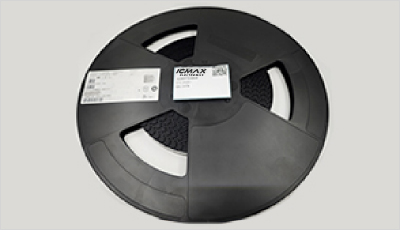
- Step1:Prepare product
-
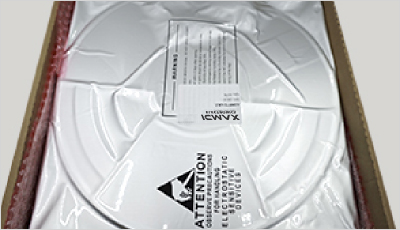
- Step2:Vacuum packaging
-
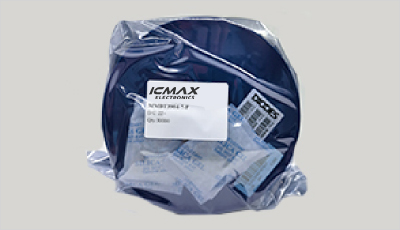
- Step3:Anti-static bag
-
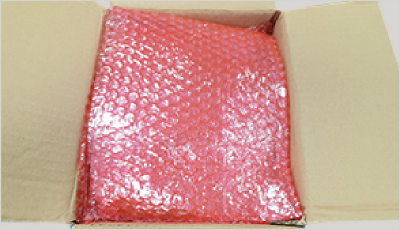
- Step4:Individual package
-
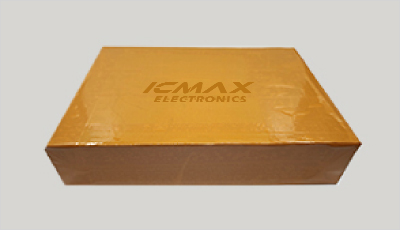
- Step5:Packaging box
-
- Step6:Barcode shipping label
Shipping starts at $40, but some countries will exceed $40. For example (South Africa, Brazil, India, Pakistan, Israel, etc.)
The basic freight (for package ≤0.5kg or corresponding volume) depends on the time zone and country.
Currently, our products are shipped through DHL, FedEx, SF, and UPS.
Delivery TimeOnce the goods are shipped, estimated delivery time depends on the shipping methods you chose:
FedEx International, 5-7 business days.
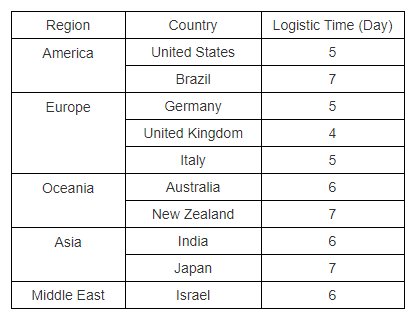
The following are some common countries' logistic time.
- Hot Sale
- Related Categories
- Include Parts
- Popular Search
The following parts include "LM393G‑S08‑R" in Silicon Labs LM393G‑S08‑R.
- Part Number
- Manufacturer
- Package
- Description
- LM2903DR Texas Instruments 8-SOIC (0.154", 3.90mm Width) IC COMPARATOR 2 GEN PUR 8SOIC
- LM339DR Texas Instruments 8-SOIC (0.154", 3.90mm Width) IC COMPARATOR 2 GEN PUR 8SOIC
- LM339PWR Texas Instruments 8-SOIC (0.154", 3.90mm Width) IC COMPARATOR 2 GEN PUR 8SOIC
- LM393DT STMicroelectronics 8-SOIC (0.154", 3.90mm Width) IC COMPARATOR 2 GEN PUR 8SOIC
- LM2901PWR Texas Instruments 8-SOIC (0.154", 3.90mm Width) IC COMPARATOR 2 GEN PUR 8SOIC
- LM2903DT STMicroelectronics 8-SOIC (0.154", 3.90mm Width) IC COMPARATOR 2 GEN PUR 8SOIC
- LM393DR Texas Instruments 8-SOIC (0.154", 3.90mm Width) IC COMPARATOR 2 GEN PUR 8SOIC
- LM239DR Texas Instruments 8-SOIC (0.154", 3.90mm Width) IC COMPARATOR 2 GEN PUR 8SOIC
- LM339APWR Texas Instruments 8-SOIC (0.154", 3.90mm Width) IC COMPARATOR 2 GEN PUR 8SOIC
- LM2903P Texas Instruments 8-SOIC (0.154", 3.90mm Width) IC COMPARATOR 2 GEN PUR 8SOIC
The following parts are popular search parts in Test and Measurement.
Inventory:271
Please send an inquiry. Send us your inquiry, and we will respond immediately.

- 1500+ Daily average RFQ Volume

- 20,000.000 Standard Product Unit

- 1800+ Worldwide Manufacturers

- 15,000+ In-stock Warehouse