UTC 78L05G‑AB3‑R

- Part No.:
- 78L05G‑AB3‑R
- Manufacturer:
- UTC
- Package:
- TO-236-3, SC-59, SOT-23-3
- Description:
- SOT-23 LINEAR VOLTAGE REGULATORS
- Quantity:
-
Unit Price:$0
Ext Price:$0
- Payment:
-

- Shipping:
-


78L05G‑AB3‑R Information
- Specifications
- Product Details
- Comparison
- Tags
- Product attributes
- Attribute value
- Manufacturer:
- UTC
- Series:
- 78Lxx
- Package/Case:
- TO-236-3, SC-59, SOT-23-3
- Packaging:
- Tape & Reel
- Product Status:
- Active
- Output Configuration:
- Positive
- Output Type:
- Fixed
- Number of Regulators:
- 1
- Voltage - Input (Max):
- 30V
- Voltage - Output (Min/Fixed):
- 5V
- Voltage - Output (Max):
- -
- Voltage Dropout (Max):
- 1.7V @ 40mA
- Current - Output:
- 100mA
- Current - Quiescent (Iq):
- 5.5 mA
- Current - Supply (Max):
- -
- PSRR:
- 49dB (120Hz)
- Control Features:
- -
- Protection Features:
- Over Current, Over Temperature, Short Circuit
- Operating Temperature:
- 0°C ~ 70°C
- Grade:
- -
- Qualification:
- -
- Mounting Type:
- Surface Mount
- Supplier Device Package:
- SOT-23
78L05G-AB3-R — 5V/100mA Fixed Linear Regulator in SOT-89
The 78L05G-AB3-R is UTC's 100mA fixed 5V regulator in a SOT-89 package, accepting up to 30V input with a dropout of 1.7V max at 40mA.
It's the "L" (low-current) corner of the 78xx family — the part you pick for a bias rail, a reference supply, or an MCU that draws tens of milliamps, not the main rail.
In the boards we see at distribution (2025–2026), the failure pattern with this part is usually a pin mix-up: the SOT-89 pins run O-G-I (1-2-3), the opposite order of the TO-92 body you probably learned first — flip it and you feed 30V into the output pin.
The second pattern is power: 350mW of SOT-89 dissipation means 30V in, 5V out, and you can only draw about 14mA before the package gives up.
What Are the Technical Specifications of 78L05G-AB3-R?
| Parameter | Value |
|---|---|
| Output Voltage | 5V fixed |
| Output Current | 100mA (78L family class) |
| Maximum Input Voltage | 30V (5V–9V output versions) |
| Dropout Voltage | 1.7V max @ 40mA (typ) |
| Quiescent Current (Iq) | 2mA typ (5.5mA max operating) |
| PSRR | 80dB @ 120Hz |
| Output Noise | 40µV |
| Power Dissipation | 350mW (SOT-89) |
| Operating Temperature | -40°C to +85°C (junction to +150°C) |
| Package / Pinout | SOT-89, pin 1 = OUT, pin 2 = GND, pin 3 = IN (code O-G-I) |
| Protection | Thermal overload shutdown, short-circuit current limiting, OCP |
| Compliance | RoHS, halogen-free (G suffix) |
Key numbers that matter: Per the UTC 78L05G datasheet, the 1.7V dropout at 40mA sets the practical minimum input at 7V — feed it 5.5V and you get whatever the input gives you, minus a diode drop.
The 350mW limit is the real spec to respect: this part is about delivering milliamps cleanly, not about delivering power.
OUT, GND, IN — not IN-GND-OUT. The SOT-89 body puts the output on pin 1, where a TO-92 78L05 puts the input. Design the footprint from the datasheet, not from muscle memory, and check the board that swaps between the two.
When Should You Use (and NOT Use) the 78L05G-AB3-R?
✅ Use 78L05G-AB3-R when:
- Bias and reference rails under 100mA. An op-amp supply, a pull-up domain, a transceiver rail — the "L" class exists for exactly these.
- MCU rails that draw tens of milliamps. A small MCU plus sensors typically sits in the 20–60mA range, inside the 350mW envelope from a 12V input.
- 12V and 24V inputs. 30V input covers both rails with headroom, and the 80dB PSRR keeps the analog sections clean.
- Board-space-constrained designs. SOT-89 is a 4.5mm part with a solderable tab — no heatsink hole, no bracket, one reflow pass.
- Automated assembly lines. SOT-89 is pick-and-place friendly, and the halogen-free G variant keeps the BOM clean.
❌ Don't use 78L05G-AB3-R when:
- The load approaches 100mA. A genuine 78L05 at 80–90mA is already pushing its current limit and its thermal budget — step up to the 78D05AL-TN3-R (1A) or a 78M05 class part.
- Inputs near 30V with any real load. 25V of headroom at 40mA is 1W — three times the SOT-89 dissipation rating. Drop the input first with a buck or a series resistor.
- You need low dropout. 1.7V at 40mA is a 78xx number, not an LDO number; an AMS1117 in SOT-223 clears it at ~1.1V with 5x the current.
- Battery-powered designs where every microamp counts. 2mA quiescent drains a coin cell in weeks — a µA-class LDO is the right tool.
- Outputs above 5V. This is the 5V fixed version; the 78LXXG family covers 6V–18V if your rail differs.
What Are the Alternatives to 78L05G-AB3-R?
| Model | Type | Key Difference | Best For |
|---|---|---|---|
| 78D05AL-TN3-R | UTC 78D05, TO-252 | 1A class, same 5V fixed | Main 5V rails and heavier loads |
| LM78M05CDT/NOPB | TI 78M05, TO-252 | 500mA middle class | 100–500mA loads in SMD |
| L78L05ACZ | ST 78L05, TO-92 | 100mA, through-hole, IN-GND-OUT pins | Breadboards and through-hole bias rails |
| AMS1117-3.3 | AMS LDO, SOT-223 | ~1.1V dropout, 1A | Low-dropout rails near the target voltage |
| LM2596S-ADJ | UTC buck, TO-263 | Switching, high efficiency at 3A | Anything above ~1W of dissipation budget |
Pick the current class, not the biggest part. On the forums the consensus is the same every time: a 1A regulator at 10% load wastes more than a 100mA part at 30% load — the 78L05 is the honest answer for a 20mA rail.
Watch the pinout when swapping packages: the TO-92 L78L05ACZ runs IN-GND-OUT, the SOT-89 runs O-G-I. Same die class, mirrored footprint.
What Are the Typical Applications of 78L05G-AB3-R?
MCU Bias Rail in an Appliance Board: The main 12V rail feeds the relay drivers; the 78L05G-AB3-R drops a clean 5V for the MCU and its pull-ups at 20–40mA. 350mW covers it with margin, and the SOT-89 body fits the dense power board.
Op-Amp Supply on a Sensor Board: A 24V industrial sensor board needs a quiet 5V for the op-amp front end. 80dB PSRR at 120Hz keeps the 24V rail's rectifier ripple out of the measurement, and the 100mA class is plenty for a dual op-amp plus reference.
12V Vehicle Auxiliary Rail: A small ECU add-on that draws 30mA from the vehicle rail gets a clean 5V without a buck converter's EMI. 30V input rides out load-dump transients, and the small footprint fits the cramped enclosure.
Why the dummy load exists: some manufacturers spec a 1–5mA minimum load before the output is guaranteed regulated. A 1kΩ resistor across the output draws 5mA and removes the question — cheap insurance on a rail that mostly sleeps.
Why Buy 78L05G-AB3-R from ICMASS?
Genuine UTC die, tested at the current limit. We measure dropout at 40mA and output voltage at 100mA on every incoming lot.
A remarked or rebadged regulator in this family fails the load test — and with 78L05-class fakes being common on gray market, the test is what separates our stock from the noise.
Cross-reference support. Not sure whether your rail needs the 100mA, 500mA, or 1A class? Tell us the load current and the input rail — we'll confirm the right 78xx die before you commit the BOM.
The whole UTC 78xx family in one shipment. You're likely ordering 78L05G for bias rails, 78D05AL for the main 5V, and an LM7805 TO-220 for the board you can't shrink. We stock the UTC family from Shenzhen with same-day dispatch.
Frequently Asked Questions About 78L05G-AB3-R
Q1: What voltage and current does the 78L05G-AB3-R provide?
A: A fixed 5V at up to 100mA. It's the "L" (low-current) member of UTC's 78LXXG family, which covers 5V through 18V. The output is set internally — no adjustment pin, no external divider.
Q2: How is the 78L05 different from the 78M05 and the 7805?
A: The middle letter is the current class: L = 100mA, M = 500mA, no letter = 1A. Same 5V concept, different die and package. The forum advice is to pick the class that matches your real load — a 20mA rail on a 1A regulator wastes power and makes heat.
Q3: What's the pinout of the SOT-89 version?
A: O-G-I: pin 1 = OUT, pin 2 = GND, pin 3 = IN. That's the mirror of the TO-92 78L05, which runs IN-GND-OUT. Mix them up and you feed the input into the output pin — the regulator fails instantly, and the downstream load takes the hit.
Q4: What's the maximum input voltage?
A: 30V for the 5V–9V output versions. That covers 12V and 24V rails with headroom. At high input voltages the dissipation limit bites first: 25V of headroom at 40mA is 1W, three times the SOT-89 rating.
Q5: What's the dropout voltage?
A: 1.7V max at 40mA. Set the practical minimum input at about 7V. The 78xx family is not low-dropout — near the target voltage, an AMS1117-style LDO is the right part.
Q6: Does the 78L05 need a minimum load?
A: Datasheets spec 1mA; some manufacturers' parts need 5mA before regulation is guaranteed. On the forums, one camp says genuine 78xx parts regulate fine unloaded at room temperature, another adds a 1kΩ dummy resistor to be safe. At high junction temperatures, leakage is exactly why the spec exists.
Q7: Why is my 78L05 output too high at low current?
A: Check three things before suspecting the regulator: input voltage near dropout (a 7.5V input can produce ~6.5V out), counterfeit parts, and missing decoupling. An EEVblog thread on a 6µA load traced the failure to supply issues, not the regulator itself — the "no-load overvoltage" myth is mostly fake parts and bad layouts.
Q8: How much power can the SOT-89 package handle?
A: 350mW. From 12V in, that's about 50mA of load; from 30V in, only 14mA. Beyond that the junction climbs toward 150°C — use the 78D05AL (TO-252) or a buck for real loads.
Q9: Can I replace an L78L05ACZ or LM78L05 with this part?
A: Electrically yes, physically check the pinout. Same 5V/100mA class, but the TO-92 runs IN-GND-OUT and the SOT-89 runs O-G-I. The SOT-89 tab also needs a proper solder joint to the board — it's not a heatsink bolt like TO-220.
Q10: How much does 78L05G-AB3-R cost and is it in stock?
A: Volume pricing typically ranges from $0.03–$0.08/unit depending on quantity and date code. ICMASS stocks 78L05G-AB3-R in SOT-89 and ships same-day from Shenzhen. Contact us for a quote on your specific quantity.
| Image |

|
| Part Number | 78L05G‑AB3‑R |
| Manufacturer | UTC |
| Series | 78Lxx |
| Package/Case | TO-236-3, SC-59, SOT-23-3 |
| Packaging | Tape & Reel |
| Product Status | Active |
| Output Configuration | Positive |
| Output Type | Fixed |
| Number of Regulators | 1 |
| Voltage - Input (Max) | 30V |
| Voltage - Output (Min/Fixed) | 5V |
| Voltage - Output (Max) | - |
| Voltage Dropout (Max) | 1.7V @ 40mA |
| Current - Output | 100mA |
| Current - Quiescent (Iq) | 5.5 mA |
| Current - Supply (Max) | - |
| PSRR | 49dB (120Hz) |
| Control Features | - |
| Protection Features | Over Current, Over Temperature, Short Circuit |
| Operating Temperature | 0°C ~ 70°C |
| Grade | - |
| Qualification | - |
| Mounting Type | Surface Mount |
| Supplier Device Package | SOT-23 |
User Guide
- Purchase & Inquiry
- Package
- Shipping Information
- Customer Review
You may place an order without registering to IC-MAX.COM
We strongly suggest you sign in before purchasing as you can track your order in real time.
For your convenience, we accept multiple payment methods in USD, including PayPal, Credit Card, and wire transfer.
RFQ (Request for Quotations)
It is recommended to request for quotations to get the latest prices and inventories about the part.
Our sales will reply to your request by email within 24 hours.
1. You'll receive an order information email in your inbox. (Please remember to check the spam folder if you didn't hear from us).
2. Since inventories and prices may fluctuate to some extent, the sales manager is going to reconfirm the order and let you know if there are any updates.
-
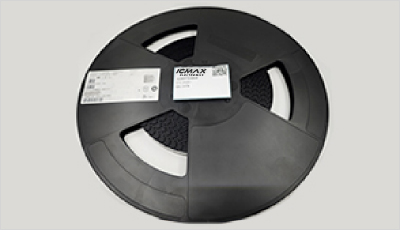
- Step1:Prepare product
-
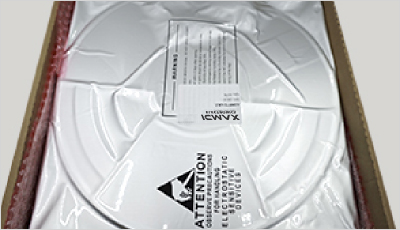
- Step2:Vacuum packaging
-
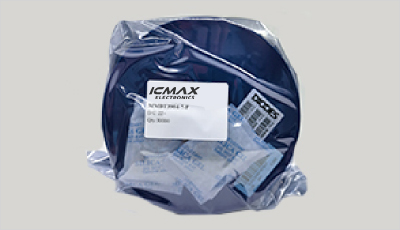
- Step3:Anti-static bag
-
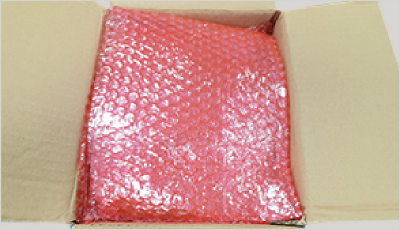
- Step4:Individual package
-
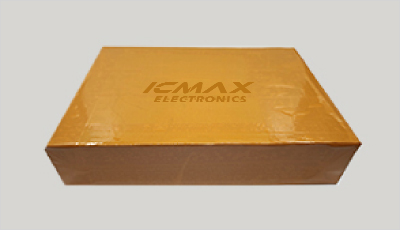
- Step5:Packaging box
-
- Step6:Barcode shipping label
Shipping starts at $40, but some countries will exceed $40. For example (South Africa, Brazil, India, Pakistan, Israel, etc.)
The basic freight (for package ≤0.5kg or corresponding volume) depends on the time zone and country.
Currently, our products are shipped through DHL, FedEx, SF, and UPS.
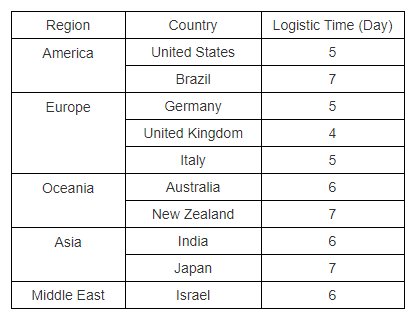
Delivery TimeOnce the goods are shipped, estimated delivery time depends on the shipping methods you chose:
FedEx International, 5-7 business days.
The following are some common countries' logistic time.
- Hot Sale
- Related Categories
- Include Parts
- Popular Search
- Voltage Regulators - Linear, Low Drop Out (LDO) Regulators(66836)
- Voltage Regulators - Linear Regulator Controllers(325)
- Voltage Regulators - Linear + Switching(1473)
- Voltage Regulators - DC DC Switching Regulators(35756)
- Voltage Reference(8428)
- V/F and F/V Converters(139)
- Thermal Management(515)
- Supervisors(41287)
- Special Purpose Regulators(4820)
- RMS to DC Converters(144)
The following parts include "78L05G‑AB3‑R" in Silicon Labs 78L05G‑AB3‑R.
- Part Number
- Manufacturer
- Package
- Description
- MIC5504-1.8YM5-TR Microchip Technology TO-236-3, SC-59, SOT-23-3 SOT-23 LINEAR VOLTAGE REGULATORS
- MIC5504-3.3YM5-TR Microchip Technology TO-236-3, SC-59, SOT-23-3 SOT-23 LINEAR VOLTAGE REGULATORS
- MIC5365-3.0YC5-TR Microchip Technology TO-236-3, SC-59, SOT-23-3 SOT-23 LINEAR VOLTAGE REGULATORS
- MIC5365-1.8YC5-TR Microchip Technology TO-236-3, SC-59, SOT-23-3 SOT-23 LINEAR VOLTAGE REGULATORS
- MIC5365-2.5YC5-TR Microchip Technology TO-236-3, SC-59, SOT-23-3 SOT-23 LINEAR VOLTAGE REGULATORS
- MIC5365-3.3YC5-TR Microchip Technology TO-236-3, SC-59, SOT-23-3 SOT-23 LINEAR VOLTAGE REGULATORS
- MIC5365-3.3YD5-TR Microchip Technology TO-236-3, SC-59, SOT-23-3 SOT-23 LINEAR VOLTAGE REGULATORS
- MIC5317-3.3YM5-TR Microchip Technology TO-236-3, SC-59, SOT-23-3 SOT-23 LINEAR VOLTAGE REGULATORS
- TLV1117LV33DCYR Texas Instruments TO-236-3, SC-59, SOT-23-3 SOT-23 LINEAR VOLTAGE REGULATORS
- MIC5317-3.3YMT-TZ Microchip Technology TO-236-3, SC-59, SOT-23-3 SOT-23 LINEAR VOLTAGE REGULATORS
The following parts are popular search parts in Test and Measurement.
Inventory:2,329
Please send an inquiry. Send us your inquiry, and we will respond immediately.

- 1500+ Daily average RFQ Volume

- 20,000.000 Standard Product Unit

- 1800+ Worldwide Manufacturers

- 15,000+ In-stock Warehouse