UMW TP4056

- Part No.:
- TP4056
- Manufacturer:
- UMW
- Category:
- Battery Chargers
- Package:
- SOT-8
- Description:
- SOT8 BATTERY MANAGEMENT ICS R
- Quantity:
-
Unit Price:$0
Ext Price:$0
- Payment:
-

- Shipping:
-


TP4056 Information
- Specifications
- Product Details
- Comparison
- Tags
- Product attributes
- Attribute value
- Manufacturer:
- UMW
- Series:
- -
- Package/Case:
- SOT-8
- Packaging:
- Cut Tape (CT)
- Product Status:
- Active
- Battery Chemistry:
- Lithium Ion
- Number of Cells:
- 1
- Current - Charging:
- Constant - Programmable
- Programmable Features:
- Current, Timer, Voltage
- Fault Protection:
- Over Temperature
- Charge Current - Max:
- 1000mA
- Battery Pack Voltage:
- 4.24V
- Voltage - Supply (Max):
- 6.5V
- Interface:
- USB
- Operating Temperature:
- -40°C ~ 85°C
- Grade:
- -
- Qualification:
- -
- Mounting Type:
- Surface Mount
- Supplier Device Package:
- SOT-8
TP4056 - 1A Single-Cell Li-Ion / LiPo Linear Charge Management IC
The TP4056 is a complete single-cell lithium charger in a SOP-8 package. Set the charge current with one resistor (up to 1A), feed it 5V from USB, and it runs the full constant-current / constant-voltage cycle to 4.2V on its own - including trickle charge for flat cells and automatic termination. It's the chip on nearly every red-and-blue "18650 charger" board you've ever seen, and it's popular for one reason: it's dead simple and costs almost nothing.
Here's the thing you have to understand before you use it, because it's where most projects go wrong: the TP4056 is a charger, not a protector. It has no over-discharge or over-current protection for the battery. And because it's a linear charger, it turns every volt of the USB-to-battery difference straight into heat. Get either of those wrong and you get a hot chip and a possibly-ruined cell. Both are covered below.
What Is the TP4056 and How Does It Work?
Charging a lithium cell safely means following a specific profile, and the TP4056 does it automatically:
- Trickle charge - if the cell is below about 2.9V (deeply discharged), it charges gently at 1/10 the set current to avoid stressing a weak cell.
- Constant current (CC) - once above 2.9V, it pushes the full programmed current (say 1A) into the cell while the voltage climbs.
- Constant voltage (CV) - when the cell reaches 4.2V, it holds that voltage and lets current taper.
- Termination - when current tapers to 1/10 of the set value, charging stops. It auto-recharges if the cell later drops below ~4.05V.
You set the current with one resistor on the PROG pin. Roughly: 1.2kΩ gives ~1000mA, 2kΩ gives ~580mA, 5kΩ gives ~250mA. Lower current means less heat - remember that number, it comes back.
The chip has a built-in thermal regulation loop: if the die hits about 120°C it automatically reduces charge current to protect itself. That's a safety net, not a design target - if your TP4056 is relying on thermal regulation, you set the current too high.
Position among chargers: the TP4056 is the entry-level 1A linear single-cell charger. Need 2A or better efficiency? That's a switching charger like the TP5000. Need a tiny 500mA charger in SOT-23? That's the MCP73831. Need charging plus load-sharing and power-path? That's an IP5306-class part.
What Are the Specifications of the TP4056?
| Parameter | Value | Notes |
|---|---|---|
| Manufacturer | Nanjing Top Power (TPowerX) | Original |
| Charger Type | Linear (CC/CV) | Single cell |
| Battery Chemistry | Li-ion / LiPo | 1 cell, 4.2V |
| Charge Voltage | 4.2V ±1.5% | Preset, internal reference |
| Max Charge Current | 1000 mA | Set by PROG resistor |
| Input Voltage | 4.0V – 8.0V | 4.5–5.5V typical (USB) |
| Trickle Threshold | 2.9V | Below this, charges at C/10 |
| Termination | C/10 of set current | Auto-recharge at ~4.05V |
| Thermal Regulation | ~120°C die temp | Auto current reduction |
| Cell Temp Sensing | TEMP pin (NTC input) | Often disabled on cheap boards |
| Status Outputs | CHRG + STDBY | Open-drain, drive LEDs |
| Standby Current | ~55 μA | With cell charged |
| Package | SOP-8 (exposed pad) | Pad must be soldered |
Pinout (SOP-8)
| Pin | Name | Function |
|---|---|---|
| 1 | TEMP | Battery NTC input (tie to GND to disable) |
| 2 | PROG | Charge-current set resistor to GND |
| 3 | GND | Ground |
| 4 | VCC | 4–8V input (USB 5V) |
| 5 | BAT | To battery positive |
| 6 | STDBY | Charge-complete indicator (open-drain) |
| 7 | CHRG | Charging indicator (open-drain) |
| 8 | CE | Chip enable (high = on) |
The Numbers That Bite
- Heat = (Vin − Vbat) × Icharge: this is a linear charger, so it burns the input-to-battery voltage difference as heat inside that little SOP-8. Charge a 3.7V cell at 1A from 5V USB and that's (5.0 − 3.7) × 1.0 = 1.3W in an 8-pin package. That's a lot. The single most effective fix is to lower the charge current - drop to 500mA and you halve the heat. Many cheap boards ship set to the full 1A, which is why "TP4056 overheating" is the top forum complaint.
- The exposed pad is not optional: the SOP-8 has a thermal pad on its belly. If it isn't soldered down to a copper pour, the heat has nowhere to go, thermal regulation kicks in early, and the chip derates the charge current. A board that "charges slowly" often just has a poorly-soldered pad.
- TEMP pin grounded = no battery temperature protection: the TP4056 can monitor cell temperature through an NTC thermistor on pin 1. Most cheap boards tie pin 1 straight to GND, disabling it entirely. If you want real temperature safety, cut that trace and wire a 10kΩ NTC with a 10kΩ divider - a fix documented repeatedly on the Arduino forum and the iSpindel project.
What Is the TP4056 Used For?
DIY and Maker Battery Projects
The default charger for hobby lithium projects - Arduino/ESP32 gadgets, portable sensors, LED projects. Cheap, single-resistor setup, status LEDs built in.
18650 and LiPo Cell Charging
Charging bare 18650 cells or LiPo packs from USB. Critical caveat: pair it with protection (see the 3-chip note below) if the cell is unprotected.
Small Power Banks
Simple USB power banks use the TP4056 for the charge side. Note it doesn't do load-sharing on its own - you can't cleanly charge and power a load from the same board without a power-path fix, which is where the IP5306 wins.
IoT and Battery-Backed Devices
Battery-backed sensor nodes and remote loggers that top up from a small solar panel or USB. Keep the charge current low here - solar input is weak and low current means less heat.
TP4056 vs TP5000 vs MCP73831
| Parameter | TP4056 | TP5000 | MCP73831 |
|---|---|---|---|
| Charger Type | Linear | Switching | Linear |
| Max Current | 1A | 2A | 500 mA |
| Efficiency | Low (heat) | High (cool) | Low (heat) |
| Chemistry | Li-ion 1S | Li-ion + LiFePO4 | Li-ion 1S |
| Package | SOP-8 | ESOP-8 | SOT-23-5 |
| Battery Protection | None | None | None |
| Best For | Cheap simple 1S charging | Higher current, less heat | Tiny space-limited designs |
Pick TP4056 when: you want the cheapest, simplest single-cell USB charger and your current stays at or below ~500mA. It's the universal hobby default and it's well-documented everywhere.
Pick TP5000 when: the TP4056 runs too hot, you need 2A, or you're charging LiFePO4. Being a switching charger it wastes far less energy as heat - the right upgrade when thermal is your problem.
Pick MCP73831 when: board space is tight. In SOT-23-5 it's tiny, tops out at 500mA, and suits small wearables and compact PCBs where a SOP-8 won't fit.
Why Buy TP4056 from ICMASS?
- Original Nanjing Top Power parts with traceability. There are documented bad batches of TP4056 that draw ~1A from the battery even with USB disconnected and overheat - a latching failure traced to specific lots. Genuine, traceable parts are how you avoid that.
- In stock, ships from Shenzhen, tape-and-reel or cut-tape.
- The switching upgrade (TP5000) and the compact option (MCP73831) are available on the same order if your thermal or space needs change.
- From our experience, most "faulty TP4056" returns are actually a design set to full 1A with an unsoldered thermal pad - we can help you get the current and layout right before production.
Frequently Asked Questions About the TP4056
Q1: Why does my TP4056 get so hot when charging?
A: Because it's a linear charger - it burns the input-to-battery voltage difference as heat. The heat is (Vin − Vbat) × Icharge, so charging a 3.7V cell at 1A from 5V dissipates about 1.3W in the small SOP-8. This is the number-one complaint on the Arduino forum. The fix: lower the charge current by increasing the PROG resistor (a 2kΩ resistor drops you to ~580mA), and make sure the chip's exposed thermal pad is soldered to a copper pour.
Q2: How do I reduce the charge current?
A: Change the PROG resistor (often labeled R3 on modules). Roughly: 1.2kΩ ≈ 1000mA, 2kΩ ≈ 580mA, 2.4kΩ ≈ 500mA, 5kΩ ≈ 250mA. Higher resistance means lower current means less heat. For most hobby projects, 500mA is a good balance of charge speed and temperature.
Q3: Does the TP4056 protect my battery from over-discharge?
A: No. This is the most important thing to know. The TP4056 only charges - it has no over-discharge, over-current, or short-circuit protection for the battery. For that you need the 3-chip board that adds a DW01 protection IC and an FS8205 dual MOSFET. If you're charging bare 18650 or LiPo cells, always use the protected (3-chip) version, or the cell can be over-discharged and damaged.
Q4: Can I charge a battery and power my circuit at the same time?
A: Not cleanly with a plain TP4056. It has no load-sharing / power-path circuitry, so powering a load directly off the battery pin while charging confuses the termination logic and can stress the cell. For simultaneous charge-and-run, use a charger with power-path like the IP5306, or add proper load-sharing circuitry.
Q5: Can I charge from a modern USB-C charger?
A: Often no, on older USB-C modules. Many early USB-C TP4056 boards lack the CC pin pull-down resistors that USB-C chargers require to negotiate power, so a modern USB-C PD charger won't turn on. Use a USB-A-to-USB-C cable, an older charger, or a board with the correct CC resistors.
Q6: My TP4056 overheats even when it's NOT charging. What's happening?
A: This is a rare but documented failure - the chip draws around 1A from the battery with USB disconnected. It's been linked to specific bad batches on StackExchange, and swapping to a genuine part from a different lot resolved it. If you see this, disconnect the battery immediately and replace the chip with a traceable part.
Q7: Is it safe to charge a deeply discharged or damaged cell?
A: Be very careful. A cell that's dropped below ~2.5V or has ever been short-circuited can cause the TP4056 to overheat badly while trying to recover it, with real fire risk. Forum consensus is to dispose of cells that have gone that low - they're permanently damaged. The TP4056's trickle mode helps with mildly flat cells, but it's not a rescue tool for abused ones.
Q8: What do the CHRG and STDBY pins / LEDs mean?
A: CHRG (usually the red LED) is on while charging. STDBY (usually blue or green) comes on when charging is complete. Both are open-drain outputs, which is why they can sink LED current directly. If both are off with a battery connected, the chip is likely disabled (CE low) or in a fault state.
Q9: Why is my module drawing more current than I set, or the current keeps rising?
A: Some modules have been reported drawing ~1.6A instead of a set 0.8A after warming up - usually a faulty module or a wrong PROG resistor value. Verify the actual PROG resistor on the board matches the current you expect. If the behavior persists on a good resistor value, the chip is suspect; consider a switching charger like the TP5000 instead.
Pricing & Availability
| Parameter | Details |
|---|---|
| Part Number | TP4056 (SOP-8) |
| Package | SOP-8 with exposed pad |
| Condition | New, original Nanjing Top Power |
| Lead Time | In stock, ships from Shenzhen |
| Packing | Tape & Reel / Cut Tape |
Contact ICMASS for current pricing. We stock original TP4056 plus the switching upgrade (TP5000) and the compact SOT-23 option (MCP73831) for the same battery-charging designs.
| Image |
|
| Part Number | TP4056 |
| Manufacturer | UMW |
| Series | - |
| Package/Case | SOT-8 |
| Packaging | Cut Tape (CT) |
| Product Status | Active |
| Battery Chemistry | Lithium Ion |
| Number of Cells | 1 |
| Current - Charging | Constant - Programmable |
| Programmable Features | Current, Timer, Voltage |
| Fault Protection | Over Temperature |
| Charge Current - Max | 1000mA |
| Battery Pack Voltage | 4.24V |
| Voltage - Supply (Max) | 6.5V |
| Interface | USB |
| Operating Temperature | -40°C ~ 85°C |
| Grade | - |
| Qualification | - |
| Mounting Type | Surface Mount |
| Supplier Device Package | SOT-8 |
User Guide
- Purchase & Inquiry
- Package
- Shipping Information
- Customer Review
You may place an order without registering to IC-MAX.COM
We strongly suggest you sign in before purchasing as you can track your order in real time.
For your convenience, we accept multiple payment methods in USD, including PayPal, Credit Card, and wire transfer.
RFQ (Request for Quotations)
It is recommended to request for quotations to get the latest prices and inventories about the part.
Our sales will reply to your request by email within 24 hours.
1. You'll receive an order information email in your inbox. (Please remember to check the spam folder if you didn't hear from us).
2. Since inventories and prices may fluctuate to some extent, the sales manager is going to reconfirm the order and let you know if there are any updates.
-
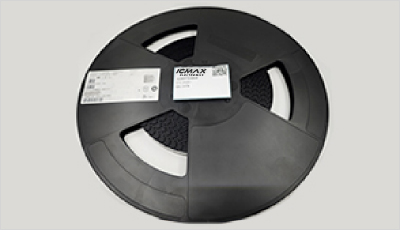
- Step1:Prepare product
-
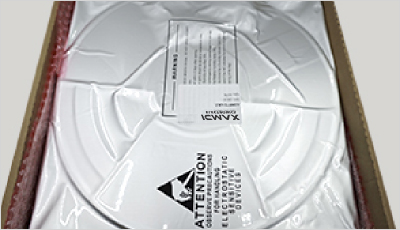
- Step2:Vacuum packaging
-
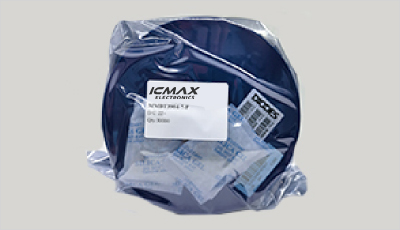
- Step3:Anti-static bag
-
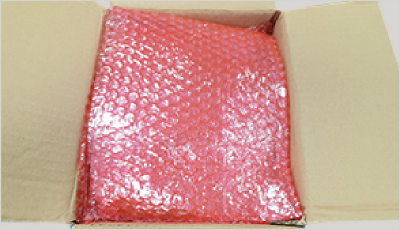
- Step4:Individual package
-
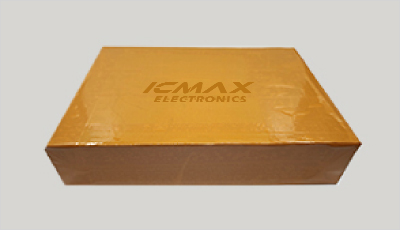
- Step5:Packaging box
-
- Step6:Barcode shipping label
Shipping starts at $40, but some countries will exceed $40. For example (South Africa, Brazil, India, Pakistan, Israel, etc.)
The basic freight (for package ≤0.5kg or corresponding volume) depends on the time zone and country.
Currently, our products are shipped through DHL, FedEx, SF, and UPS.
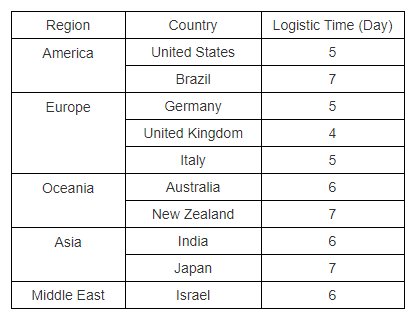
Delivery TimeOnce the goods are shipped, estimated delivery time depends on the shipping methods you chose:
FedEx International, 5-7 business days.
The following are some common countries' logistic time.
- Hot Sale
- Related Categories
- Include Parts
- Popular Search
- Voltage Regulators - Linear, Low Drop Out (LDO) Regulators(66836)
- Voltage Regulators - Linear Regulator Controllers(325)
- Voltage Regulators - Linear + Switching(1473)
- Voltage Regulators - DC DC Switching Regulators(35756)
- Voltage Reference(8428)
- V/F and F/V Converters(139)
- Thermal Management(515)
- Supervisors(41287)
- Special Purpose Regulators(4820)
- RMS to DC Converters(144)
The following parts include "TP4056" in Silicon Labs TP4056.
- Part Number
- Manufacturer
- Package
- Description
- BQ21040DBVR Texas Instruments SOT-8 SOT8 BATTERY MANAGEMENT ICS R
- MCP73812T-420I/OT Microchip Technology SOT-8 SOT8 BATTERY MANAGEMENT ICS R
- MCP73831T-2ACI/OT Microchip Technology SOT-8 SOT8 BATTERY MANAGEMENT ICS R
- MCP73832T-2ACI/OT Microchip Technology SOT-8 SOT8 BATTERY MANAGEMENT ICS R
- MCP73831T-2DCI/OT Microchip Technology SOT-8 SOT8 BATTERY MANAGEMENT ICS R
- MCP73832T-2DCI/OT Microchip Technology SOT-8 SOT8 BATTERY MANAGEMENT ICS R
- MCP73831T-2ATI/OT Microchip Technology SOT-8 SOT8 BATTERY MANAGEMENT ICS R
- MCP73832T-2ATI/OT Microchip Technology SOT-8 SOT8 BATTERY MANAGEMENT ICS R
- MCP73831T-5ACI/OT Microchip Technology SOT-8 SOT8 BATTERY MANAGEMENT ICS R
- MCP73832T-2ACI/MC Microchip Technology SOT-8 SOT8 BATTERY MANAGEMENT ICS R
The following parts are popular search parts in Test and Measurement.
Inventory:2,126
Please send an inquiry. Send us your inquiry, and we will respond immediately.

- 1500+ Daily average RFQ Volume

- 20,000.000 Standard Product Unit

- 1800+ Worldwide Manufacturers

- 15,000+ In-stock Warehouse