UMW MAX485ESA

- Part No.:
- MAX485ESA
- Manufacturer:
- UMW
- Category:
- Drivers, Receivers, Transceivers
- Package:
- 8-SOIC (0.154", 3.90mm Width)
- Datasheet:
-
 MAX485ESA.pdf
- Description:
- IC TRANSCEIVER HALF 1/1 8SOP
- Quantity:
-
Unit Price:$0
Ext Price:$0
- Payment:
-

- Shipping:
-


MAX485ESA Information
- Specifications
- Product Details
- Comparison
- Tags
- Product attributes
- Attribute value
- Manufacturer:
- UMW
- Series:
- -
- Package/Case:
- 8-SOIC (0.154", 3.90mm Width)
- Packaging:
- Cut Tape (CT)
- Product Status:
- Active
- Type:
- Transceiver
- Protocol:
- RS422, RS485
- Number of Drivers/Receivers:
- 1/1
- Duplex:
- Half
- Receiver Hysteresis:
- 70 mV
- Data Rate:
- 2.5Mbps
- Voltage - Supply:
- 4.75V ~ 5.25V
- Operating Temperature:
- -40°C ~ 105°C (TA)
- Grade:
- -
- Qualification:
- -
- Mounting Type:
- Surface Mount
- Supplier Device Package:
- 8-SOP
- Datasheet:
-
MAX485ESA.pdf
MAX485ESA - 5V Half-Duplex RS-485/RS-422 Transceiver by Analog Devices (Maxim)
The MAX485ESA is a 5V half-duplex RS-485/RS-422 transceiver in an 8-pin SOIC. It runs up to 2.5 Mbps, drives up to 32 nodes on one bus, and survives a common-mode range of -7V to +12V - which is what keeps it alive on long, noisy industrial cables. Feed it a clean 5V rail, wire A-to-A and B-to-B, and it just works. Most of the trouble people hit with this part isn't the chip. It's the wiring and the fail-safe biasing.
The "ESA" suffix is the one you want for a PCB: 8-pin narrow SOIC, -40°C to +85°C. Per the datasheet it draws about 300 μA quiescent - low enough that you never think about it.
What Is the MAX485ESA and How Does It Work?
RS-485 is a differential signaling standard. Instead of one wire referenced to ground, it uses two wires - A and B - and reads the difference between them. That's why it shrugs off ground shifts and electrical noise that would wreck a plain UART. The MAX485 is the chip that converts your MCU's single-ended TX/RX into that differential pair and back.
It's half-duplex, so the same A/B pair carries data in both directions - but only one direction at a time. That's what the DE (Driver Enable) and RE (Receiver Enable) pins are for. Pull DE high to talk; pull RE low to listen. Most designs tie DE and RE together to one GPIO and flip the whole thing between transmit and receive.
The receiver has a built-in open-circuit fail-safe: if the A/B lines are left floating (nothing driving them), the output defaults to logic high instead of chattering. Useful - but, as you'll see below, it doesn't cover every idle condition.
Position in the family: the MAX485 is the workhorse 5V, 2.5 Mbps, full-unit-load version. Need 3.3V? That's the MAX3485. Need 128 nodes on one bus? That's the quarter-unit-load MAX487. Need automatic direction control so you can drop the DE/RE GPIO entirely? That's the MAX13487E.
What Are the Specifications of the MAX485ESA?
| Parameter | Value | Notes |
|---|---|---|
| Manufacturer | Analog Devices (Maxim) | Original |
| Supply Voltage | 4.75V – 5.25V | 5V nominal |
| Data Rate | 2.5 Mbps max | Not slew-rate limited |
| Standard | RS-485 / RS-422 | Half-duplex |
| Nodes per Bus | 32 | Full unit load |
| Driver Diff Output | 2.0V min | Into 54Ω load |
| Common-Mode Range | -7V to +12V | Receiver input |
| Receiver Sensitivity | ±200 mV | Guaranteed threshold |
| Receiver Input Resistance | 12 kΩ min | 1 unit load |
| Supply Current | 300 μA typ (no load) | 500 μA max |
| Driver Short-Circuit Limit | ±250 mA | Built-in |
| Fail-Safe | Open-circuit (Rx defaults high) | Not true fail-safe |
| Protection | Current limit + Thermal shutdown | - |
| Package | SOIC-8 (narrow) | 4.90 × 3.90 mm |
| Operating Temp | -40°C to +85°C | "E" grade |
Pinout (8-Pin SOIC)
| Pin | Name | Function |
|---|---|---|
| 1 | RO | Receiver Output → to MCU RX |
| 2 | RE | Receiver Enable (active low) |
| 3 | DE | Driver Enable (active high) |
| 4 | DI | Driver Input ← from MCU TX |
| 5 | GND | Ground |
| 6 | A | Non-inverting driver/receiver I/O |
| 7 | B | Inverting driver/receiver I/O |
| 8 | VCC | +5V |
Numbers That Actually Bite
- Data rate 2.5 Mbps, NOT slew-limited: the MAX485 has fast edges. At long cable lengths that means reflections if you skip termination. You need a 120Ω resistor at each end of the bus - not the middle, not just one end. Slew-limited parts (MAX487, MAX483) forgive sloppy wiring; the MAX485 doesn't.
- 5V part, Voh ≈ 3.5V min on RO: the receiver output can swing above 3.6V. Wire that straight into a 3.3V-only MCU pin (ESP32, most STM32) and you're over-driving the input. Over time that's how pins die. From what we see in returns, this mismatch is the single most common reason a "dead" MAX485 board comes back working fine on a 5V MCU.
- Vih = 2.0V min: a 3.3V MCU driving DI is fine on the input side. The trap is only the output side (RO) above.
- 32 nodes, 12kΩ input: one MAX485 is one full unit load. Hang 33 of them and the last node's signal margin collapses. Need more? Use the MAX487 (1/4 UL = 128 nodes).
What Is the MAX485ESA Used For?
Modbus RTU Networks
The default physical layer for Modbus RTU is RS-485, and the MAX485 is the chip under most of it - PLCs, VFDs, energy meters, HVAC controllers. Half-duplex, one master polling many slaves, exactly what this part is built for.
Multi-Drop Sensor Buses
Soil sensors, temperature probes, flow meters strung along a factory floor. A single twisted pair can run hundreds of meters and carry 32 sensors. This is where RS-485's noise immunity earns its keep versus running 32 separate analog lines.
Motor and Drive Control
Industrial motor drives talk RS-485 for setpoints and telemetry. The -7V to +12V common-mode range matters here - motor environments shift grounds around, and a plain UART would corrupt on the first switching transient.
Building Automation (BACnet MS/TP)
BACnet MS/TP runs over RS-485 at 9600 to 115200 baud. Lighting, access control, thermostats. The MAX485 handles it comfortably, and the built-in fail-safe keeps the bus from chattering when a device drops off.
Long-Distance MCU-to-MCU Links
Two Arduinos or STM32s that need to talk across a workshop? RS-485 beats UART past a few meters. Wire DI/RO to your serial pins, tie DE/RE to a spare GPIO, and you've got a robust link out to 1200 m at lower baud rates.
MAX485ESA vs MAX3485 vs MAX487
| Parameter | MAX485ESA | MAX3485 | MAX487 |
|---|---|---|---|
| Supply Voltage | 5V | 3.3V | 5V |
| Data Rate | 2.5 Mbps | 12 Mbps | 250 kbps |
| Slew-Rate Limited | No | No | Yes |
| Nodes per Bus | 32 | 32 | 128 |
| Unit Load | 1 | 1 | 1/4 |
| Common-Mode | -7V to +12V | -7V to +12V | -7V to +12V |
| Best For | 5V industrial standard | 3.3V MCUs (ESP32) | Big multi-drop, slow |
Pick MAX485ESA when: you have a 5V system and want the industry-default RS-485 transceiver with three decades of field history. It's the safe, universally documented choice.
Pick MAX3485 when: your MCU runs at 3.3V. This is the fix for the RO-overvoltage problem above - same pinout, 3.3V logic, no level shifting needed.
Pick MAX487 when: you need more than 32 nodes on one bus, and your data rate is low (≤250 kbps). The quarter unit load buys you up to 128 devices, and the slew limiting forgives longer, less-terminated cable runs.
Why Buy MAX485ESA from ICMASS?
- Original Analog Devices (Maxim) parts with full traceability - the RS-485 transceiver market has its share of relabeled clones, and a fake here means a bus that fails intermittently in the field.
- In stock, ships from Shenzhen, tape-and-reel or cut-tape.
- Pin-compatible alternatives (MAX3485 for 3.3V, MAX487 for high node count) available for multi-sourcing on the same BOM.
- From our experience supplying this part into Modbus and building-automation builds, we can flag the 3.3V-MCU pitfall before it costs you a board spin.
Frequently Asked Questions About the MAX485ESA
Q1: Can I power the MAX485 from 3.3V or connect it to a 3.3V MCU?
A: The MAX485 is a 5V device - it won't work reliably at 3.3V supply. And even at 5V supply, its RO (receiver output) can swing to 3.5V minimum, which over-drives a 3.3V-only MCU input pin. If your MCU runs at 3.3V (ESP32, most STM32), use the MAX3485 instead - same pinout, 3.3V logic. This exact mismatch is the most common cause of "stuttering data" reports on the Arduino and Analog Devices forums.
Q2: Do I need 120Ω termination resistors?
A: Yes, at long cable runs. The MAX485 is not slew-rate limited, so its fast edges reflect off unterminated cable ends and corrupt data. Put one 120Ω resistor at each physical end of the bus - two total, not one, and not in the middle. Short bench setups under a meter often work without it, which is why the problem looks intermittent.
Q3: After I added the 120Ω terminating resistor, communication stopped. Why?
A: This is a known fail-safe issue confirmed on the Analog Devices EngineerZone forum. The MAX485's fail-safe only covers a fully open bus. Once you add the 120Ω resistor and the bus goes idle, A and B look nearly shorted (about ±0.2V), and the receiver output becomes undefined. Fix it by adding bias resistors - roughly 1kΩ pull-up from A to VCC and 1kΩ pull-down from B to GND - on one node. Or use a true fail-safe part like the MAX13487E.
Q4: I'm getting random garbage characters (0xFF, 0x00) when nothing is transmitting. What's wrong?
A: Two usual causes, per the Arduino forum threads. First, the bus is floating with no bias - add the pull-up/pull-down biasing from Q3. Second, in software, reading the UART without checking Serial.available() first returns -1, which shows up as 0xFF. Check for data before you read it.
Q5: My MAX485 burned out - I think I swapped A and B. Is that it?
A: Very likely. Reversing A and B can put the driver outputs into a low-impedance fight when both ends drive opposite levels at once, pushing current past the chip's limit. A connects to A, B connects to B. Always confirm polarity before power-up.
Q6: Only one slave responds and the others go silent - cycling power changes which one works. Why?
A: Bus contention from DE/RE timing. If a slave doesn't drop DE low fast enough after transmitting, it keeps holding the bus and blocks everyone else. Add a small guard delay after your last byte finishes shifting out (wait for the UART's transmit-complete flag, not just the buffer-empty flag) before switching back to receive.
Q7: Do I need the pull-up/pull-down resistors on my MAX485 breakout board?
A: Not strictly, if every node on the bus is a MAX485 - the open-circuit fail-safe covers a truly open line. But the moment you add termination (Q3) or mix in transceivers without that feature, you need bias resistors on at least one node. When in doubt, add them; they don't hurt.
Q8: After connecting the MAX485, my MCU's serial port / USB programming stopped working. Why?
A: The RO pin drives the MCU's RX line continuously, even while you're trying to flash firmware over that same UART. Add a jumper to lift RO during programming, use a separate UART for RS-485 versus debug, or gate RO with the RE pin so it only drives when you're actually receiving.
Q9: How many MAX485s can I put on one bus?
A: 32. Each MAX485 presents one full unit load (12kΩ minimum input resistance). Beyond 32 the signal margin drops. If you need up to 128 nodes, switch to the MAX487, which is a quarter unit load - but it caps out at 250 kbps.
Q10: What's the maximum cable length and data rate?
A: The classic RS-485 tradeoff: about 1200 m at 100 kbps, dropping to roughly 12 m at the MAX485's full 2.5 Mbps. Speed and distance trade off against each other. For long runs, slow the baud rate and terminate both ends properly.
Pricing & Availability
| Parameter | Details |
|---|---|
| Part Number | MAX485ESA+ (SOIC-8) |
| Package | SOIC-8 narrow |
| Condition | New, original Analog Devices (Maxim) |
| Lead Time | In stock, ships from Shenzhen |
| Packing | Tape & Reel / Cut Tape |
Contact ICMASS for current pricing. We stock original Maxim RS-485 transceivers with traceability, plus the MAX3485 (3.3V) and MAX487 (128-node) variants for the same footprint.
| Image |

|
| Part Number | MAX485ESA |
| Manufacturer | UMW |
| Series | - |
| Package/Case | 8-SOIC (0.154", 3.90mm Width) |
| Packaging | Cut Tape (CT) |
| Product Status | Active |
| Type | Transceiver |
| Protocol | RS422, RS485 |
| Number of Drivers/Receivers | 1/1 |
| Duplex | Half |
| Receiver Hysteresis | 70 mV |
| Data Rate | 2.5Mbps |
| Voltage - Supply | 4.75V ~ 5.25V |
| Operating Temperature | -40°C ~ 105°C (TA) |
| Grade | - |
| Qualification | - |
| Mounting Type | Surface Mount |
| Supplier Device Package | 8-SOP |
User Guide
- Purchase & Inquiry
- Package
- Shipping Information
- Customer Review
You may place an order without registering to IC-MAX.COM
We strongly suggest you sign in before purchasing as you can track your order in real time.
For your convenience, we accept multiple payment methods in USD, including PayPal, Credit Card, and wire transfer.
RFQ (Request for Quotations)
It is recommended to request for quotations to get the latest prices and inventories about the part.
Our sales will reply to your request by email within 24 hours.
1. You'll receive an order information email in your inbox. (Please remember to check the spam folder if you didn't hear from us).
2. Since inventories and prices may fluctuate to some extent, the sales manager is going to reconfirm the order and let you know if there are any updates.
-
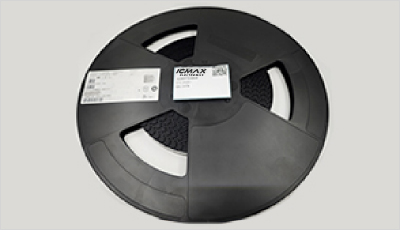
- Step1:Prepare product
-
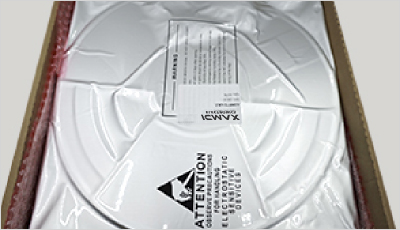
- Step2:Vacuum packaging
-
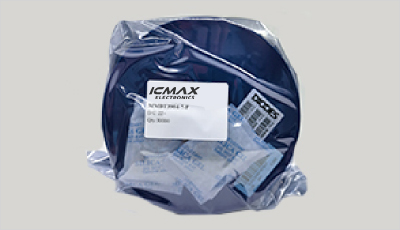
- Step3:Anti-static bag
-
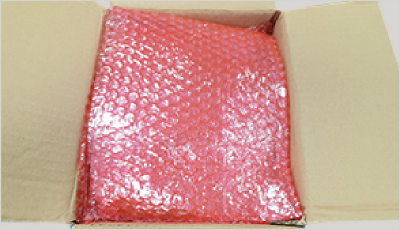
- Step4:Individual package
-
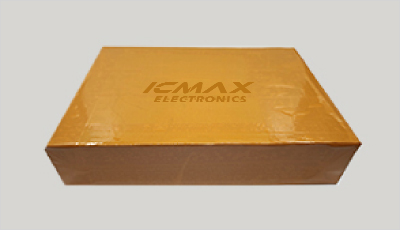
- Step5:Packaging box
-
- Step6:Barcode shipping label
Shipping starts at $40, but some countries will exceed $40. For example (South Africa, Brazil, India, Pakistan, Israel, etc.)
The basic freight (for package ≤0.5kg or corresponding volume) depends on the time zone and country.
Currently, our products are shipped through DHL, FedEx, SF, and UPS.
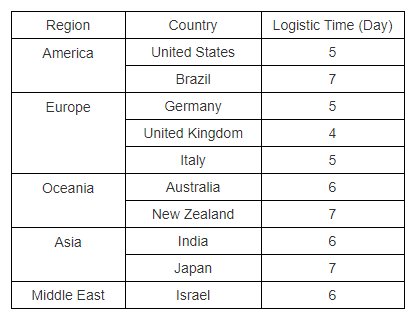
Delivery TimeOnce the goods are shipped, estimated delivery time depends on the shipping methods you chose:
FedEx International, 5-7 business days.
The following are some common countries' logistic time.
- Hot Sale
- Related Categories
- Include Parts
- Popular Search
The following parts include "MAX485ESA" in Silicon Labs MAX485ESA.
- Part Number
- Manufacturer
- Package
- Description
- ATA6561-GAQW-N Microchip Technology 8-SOIC (0.154", 3.90mm Width) IC TRANSCEIVER HALF 1/1 8SOP
- ATA6561-GBQW-N Microchip Technology 8-SOIC (0.154", 3.90mm Width) IC TRANSCEIVER HALF 1/1 8SOP
- AM26LS32ACDR Texas Instruments 8-SOIC (0.154", 3.90mm Width) IC TRANSCEIVER HALF 1/1 8SOP
- SP485CN-L/TR MaxLinear, Inc. 8-SOIC (0.154", 3.90mm Width) IC TRANSCEIVER HALF 1/1 8SOP
- SP485EN-L/TR MaxLinear, Inc. 8-SOIC (0.154", 3.90mm Width) IC TRANSCEIVER HALF 1/1 8SOP
- SP485EEN-L/TR MaxLinear, Inc. 8-SOIC (0.154", 3.90mm Width) IC TRANSCEIVER HALF 1/1 8SOP
- SP485ECN-L/TR MaxLinear, Inc. 8-SOIC (0.154", 3.90mm Width) IC TRANSCEIVER HALF 1/1 8SOP
- THVD1400DR Texas Instruments 8-SOIC (0.154", 3.90mm Width) IC TRANSCEIVER HALF 1/1 8SOP
- AM26C31IDR Texas Instruments 8-SOIC (0.154", 3.90mm Width) IC TRANSCEIVER HALF 1/1 8SOP
- TLIN1021ADRQ1 Texas Instruments 8-SOIC (0.154", 3.90mm Width) IC TRANSCEIVER HALF 1/1 8SOP
The following parts are popular search parts in Test and Measurement.
Inventory:2,490
Please send an inquiry. Send us your inquiry, and we will respond immediately.

- 1500+ Daily average RFQ Volume

- 20,000.000 Standard Product Unit

- 1800+ Worldwide Manufacturers

- 15,000+ In-stock Warehouse