UMW MAX232ESE

- Part No.:
- MAX232ESE
- Manufacturer:
- UMW
- Category:
- Drivers, Receivers, Transceivers
- Package:
- 16-SOIC (0.154", 3.90mm Width)
- Datasheet:
-
 MAX232ESE.pdf
- Description:
- IC TRANSCEIVER FULL 2/2 16SOP
- Quantity:
-
Unit Price:$0
Ext Price:$0
- Payment:
-

- Shipping:
-


MAX232ESE Information
- Specifications
- Product Details
- Comparison
- Tags
- Product attributes
- Attribute value
- Manufacturer:
- UMW
- Series:
- -
- Package/Case:
- 16-SOIC (0.154", 3.90mm Width)
- Packaging:
- Cut Tape (CT)
- Product Status:
- Active
- Type:
- Transceiver
- Protocol:
- RS232
- Number of Drivers/Receivers:
- 2/2
- Duplex:
- Full
- Receiver Hysteresis:
- -
- Data Rate:
- 120kbps
- Voltage - Supply:
- 4.5V ~ 5.5V
- Operating Temperature:
- -40°C ~ 85°C (TA)
- Grade:
- -
- Qualification:
- -
- Mounting Type:
- Surface Mount
- Supplier Device Package:
- 16-SOP
- Datasheet:
-
MAX232ESE.pdf
MAX232ESE - Dual RS-232 Transceiver with ±15kV ESD Protection from Analog Devices (Maxim)
What Are the Technical Specifications of MAX232ESE?
| Parameter | Value |
|---|---|
| IC Type | RS-232 Transceiver |
| Drivers / Receivers | 2 / 2 |
| Duplex | Full Duplex |
| Data Rate | Up to 120 kbps |
| Supply Voltage (Vcc) | 4.5V ~ 5.5V (nominal 5V) |
| Supply Current (Quiescent) | 5-10 mA typical |
| RS-232 Output Voltage Swing | ±9V to ±12V (min ±5V at 3kΩ load) |
| Receiver Input Thresholds | 0.8V (low), 2.0V (high) - Schmitt Trigger |
| Receiver Hysteresis | 500 mV typical |
| RS-232 Input Voltage Tolerance | ±30V |
| ESD Protection | ±15kV (Human Body Model) on RS-232 I/O |
| External Capacitors | 4 × 1µF (up to 10µF acceptable) |
| Propagation Delay | 10 µs max |
| Operating Temperature | -40°C to +85°C (Industrial) |
| Package | 16-pin SOIC (Narrow, 3.9mm body) |
| Manufacturer | Analog Devices (formerly Maxim Integrated) |
What Are the Alternatives to MAX232ESE?
| Part Number | Manufacturer | Key Difference | Approx. Price (qty 1) |
|---|---|---|---|
| MAX232CSE+ | Analog Devices | 0°C to +70°C commercial temp | ~$7.62 |
| MAX232ECSE+ | Analog Devices | Same as MAX232ESE, alternate code | ~$8.55 |
| MAX202ECSE+ | Analog Devices | ±15kV ESD, functionally equivalent | ~$8.61 |
| MAX3232ESE+ | Analog Devices | 3.0V-5.5V, 0.1µF caps, 1Mbps | ~$3.50 |
| MAX232DR | Texas Instruments | SOIC-16, functionally equivalent | ~$1.62 |
| TRS232ECN | Texas Instruments | Direct equivalent, ±15kV ESD | ~$1.28 |
| ICL232CBEZ | Renesas | Direct equivalent, SOIC-16 | ~$0.79 |
| MAX232ESE(UMW) | UMW (友台) | Chinese pin-compatible clone | ~$0.38 |
| MAX232ESE/HG | HGSEMI (华冠) | Chinese pin-compatible clone | ~$0.26 |
MAX232ESE vs MAX3232ESE+ - Detailed Comparison
| Parameter | MAX232ESE | MAX3232ESE+ |
|---|---|---|
| Supply Voltage | 4.5V ~ 5.5V | 3.0V ~ 5.5V |
| External Capacitors | 4 × 1µF | 4 × 0.1µF |
| Max Data Rate | 120 kbps | 1 Mbps |
| ESD Protection | ±15kV | ±15kV |
| Quiescent Current | 5-10 mA | 0.3 mA (3.3V, no load) |
| Pin Compatibility | - | Pin-compatible (same SOIC-16) |
How Much Does MAX232ESE Cost and Is It in Stock?
| Quantity | Genuine ADI MAX232ESE+ | UMW Clone | HGSEMI Clone |
|---|---|---|---|
| 1-49 | $3.28 - $6.08 | $0.38 | $0.26 |
| 50-999 | $4.34 - $5.99 | $0.28 | $0.20 |
| 1,000+ | $2.89 - $4.72 | $0.22 | $0.16 |
| 5,000+ | Contact ICMASS | $0.17 | $0.13 |
ICMASS stocks both genuine ADI and cost-optimized alternatives. Contact us for current batch pricing and lead time. Same-day dispatch from Shenzhen on orders before 15:00 CST.
What Are the Typical Applications of MAX232ESE?
- Microcontroller UART to PC Serial Port - Connect any 5V MCU (STM32, ATmega328P, 8051, PIC) to a PC's RS-232 port for firmware debugging, bootloader programming, or data logging.
- Industrial PLC and HMI Communication - Standard physical layer for PLC programming ports and HMI panels. ±15kV ESD protection and -40°C to +85°C range for factory floor environments.
- Legacy Equipment Interface and Maintenance - Standard replacement for failed RS-232 ICs in manufacturing equipment, lab instruments, and POS terminals.
- Modem and Telecom Line Drivers - Full-duplex 120kbps supports dial-up modem applications and AT command-based GSM/GPRS modules.
- Educational and Prototyping Projects - Textbook RS-232 interface IC. SOIC-16 production-ready package for moving from prototype to PCB.
Why Buy MAX232ESE from ICMASS?
- Genuine parts with batch traceability - Sourced through authorized distribution or factory-direct channels. Date code and lot number traceability on request.
- Both genuine ADI and cost-optimized alternatives in one order - UMW and HGSEMI clones stocked alongside genuine parts, clearly labeled.
- Shenzhen-based, same-day dispatch - Orders before 15:00 CST ship same day. DHL/FedEx to North America and Europe in 3-5 business days.
- Application support included - Technical questions answered before you buy, not after.
Frequently Asked Questions About MAX232ESE
Q1: What is the difference between MAX232ESE and MAX232CSE?
A: The "E" suffix indicates ±15kV ESD protection and -40°C to +85°C industrial temperature range. The MAX232CSE has no enhanced ESD protection and a 0°C to +70°C commercial range.
Q2: Can I use 0.1µF capacitors with MAX232ESE?
A: No. The MAX232ESE requires a minimum of 1µF for all four charge pump capacitors. Using 0.1µF will result in insufficient charge pump output and unreliable communication. Use MAX3232ESE+ instead for 0.1µF capacitor designs.
Q3: What capacitor voltage rating should I use?
A: Use at least 16V-rated capacitors. The charge pump generates approximately +10V on V+ and -10V on V-, so a 10V rating leaves no margin. 16V or 25V ceramic MLCC or tantalum capacitors are recommended.
Q4: Can I draw power from V+ or V- pins to supply other circuits?
A: Yes, but only for very small loads - typically under 5mA. Drawing more current reduces RS-232 driver output swing. Increase C1-C4 to 10µF if you need to tap these rails.
Q5: Is MAX232ESE pin-compatible with MAX3232?
A: Yes. The MAX3232ESE+ uses the same SOIC-16 pinout. It operates from 3.0V-5.5V and only requires 0.1µF capacitors - a drop-in upgrade for 3.3V designs.
Q6: Why is my MAX232ESE output voltage low or zero?
A: Most common causes: (1) wrong capacitor values - must be 1µF, not 0.1µF; (2) Vcc below 4.5V - measure pin 16; (3) poor ground connection on pin 15; (4) counterfeit IC - fake parts often fail to reach proper output voltages. Debug by measuring V+ (pin 2, should be ~+10V) and V- (pin 6, should be ~-10V).
Q7: What data rate does MAX232ESE support?
A: 120 kbps maximum. Sufficient for all standard UART baud rates up to 115,200 bps. For higher rates, consider MAX3232 (1 Mbps) or a USB-UART bridge like CP2102 or FT232RL.
Q8: Do I need a Vcc bypass capacitor?
A: Yes. Place a 0.1µF to 1µF ceramic capacitor between Vcc (pin 16) and GND (pin 15), as close to the IC as possible. The charge pump switching generates noise on the supply rail.
Q9: Can MAX232ESE work with 3.3V microcontrollers?
A: Not directly. The MAX232ESE requires a 5V supply, and its TTL input thresholds are designed for 5V logic. A 3.3V MCU's HIGH output may not reliably trigger the inputs. For 3.3V designs, use MAX3232ESE+ instead.
Q10: What are the four capacitors for?
A: C1 and C2 are flying capacitors for the charge pump that doubles 5V to ~+10V. C3 stores the positive doubled voltage (V+). C4 generates the negative rail (V-, ~-10V). All four must be 1µF minimum.
Q11: How do I know if my MAX232ESE is genuine or counterfeit?
A: (1) Measure V+ and V- - genuine parts produce ±9V to ±10V; fakes often produce ±5V to ±7V. (2) Check date code format against Analog Devices' standard. (3) Compare quiescent current - genuine parts draw 5-10mA. (4) Buy from authorized distribution.
Q12: What is the difference between MAX232ESE+ and MAX232ESE+T?
A: MAX232ESE+ is RoHS-compliant in tube packaging. MAX232ESE+T is the same part in tape-and-reel (2,500 units/reel) for automated assembly. The IC itself is identical. "+" = lead-free; "T" = tape-and-reel.
Q13: Can I leave unused driver/receiver pins floating?
A: Not recommended. Tie unused TTL inputs (T1IN, T2IN) to GND or Vcc to prevent oscillation. Tie unused RS-232 inputs (R1IN, R2IN) to GND. Unused outputs can be left unconnected.
Q14: Does MAX232ESE need external ESD protection diodes?
A: Generally no - the "E" suffix means ±15kV ESD protection is built into the RS-232 I/O pins. For harsh industrial environments (surge, lightning-induced transients), add TVS diodes on the DB9 connector side.
Q15: What is the typical lifespan of a MAX232ESE in continuous operation?
A: As a CMOS IC with no internal electrolytic components, it can function for decades within rated limits. The external capacitors are the typical failure point - use ceramic MLCC (1µF, 16V, X7R) for maximum lifespan.
| Image |

|
| Part Number | MAX232ESE |
| Manufacturer | UMW |
| Series | - |
| Package/Case | 16-SOIC (0.154", 3.90mm Width) |
| Packaging | Cut Tape (CT) |
| Product Status | Active |
| Type | Transceiver |
| Protocol | RS232 |
| Number of Drivers/Receivers | 2/2 |
| Duplex | Full |
| Receiver Hysteresis | - |
| Data Rate | 120kbps |
| Voltage - Supply | 4.5V ~ 5.5V |
| Operating Temperature | -40°C ~ 85°C (TA) |
| Grade | - |
| Qualification | - |
| Mounting Type | Surface Mount |
| Supplier Device Package | 16-SOP |
User Guide
- Purchase & Inquiry
- Package
- Shipping Information
- Customer Review
You may place an order without registering to IC-MAX.COM
We strongly suggest you sign in before purchasing as you can track your order in real time.
For your convenience, we accept multiple payment methods in USD, including PayPal, Credit Card, and wire transfer.
RFQ (Request for Quotations)
It is recommended to request for quotations to get the latest prices and inventories about the part.
Our sales will reply to your request by email within 24 hours.
1. You'll receive an order information email in your inbox. (Please remember to check the spam folder if you didn't hear from us).
2. Since inventories and prices may fluctuate to some extent, the sales manager is going to reconfirm the order and let you know if there are any updates.
-
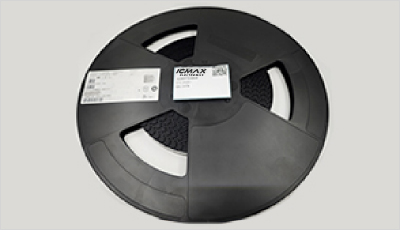
- Step1:Prepare product
-
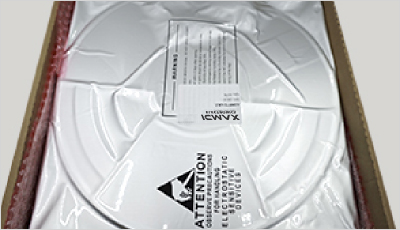
- Step2:Vacuum packaging
-
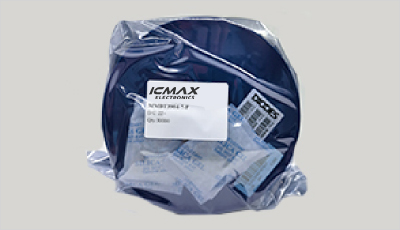
- Step3:Anti-static bag
-
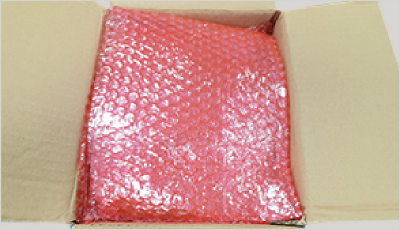
- Step4:Individual package
-
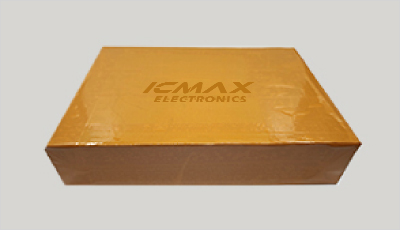
- Step5:Packaging box
-
- Step6:Barcode shipping label
Shipping starts at $40, but some countries will exceed $40. For example (South Africa, Brazil, India, Pakistan, Israel, etc.)
The basic freight (for package ≤0.5kg or corresponding volume) depends on the time zone and country.
Currently, our products are shipped through DHL, FedEx, SF, and UPS.
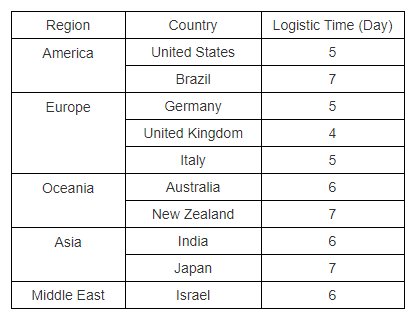
Delivery TimeOnce the goods are shipped, estimated delivery time depends on the shipping methods you chose:
FedEx International, 5-7 business days.
The following are some common countries' logistic time.
- Hot Sale
- Related Categories
- Include Parts
- Popular Search
The following parts include "MAX232ESE" in Silicon Labs MAX232ESE.
- Part Number
- Manufacturer
- Package
- Description
- ATA6561-GAQW-N Microchip Technology 16-SOIC (0.154", 3.90mm Width) IC TRANSCEIVER FULL 2/2 16SOP
- ATA6561-GBQW-N Microchip Technology 16-SOIC (0.154", 3.90mm Width) IC TRANSCEIVER FULL 2/2 16SOP
- AM26LS32ACDR Texas Instruments 16-SOIC (0.154", 3.90mm Width) IC TRANSCEIVER FULL 2/2 16SOP
- SP485CN-L/TR MaxLinear, Inc. 16-SOIC (0.154", 3.90mm Width) IC TRANSCEIVER FULL 2/2 16SOP
- SP485EN-L/TR MaxLinear, Inc. 16-SOIC (0.154", 3.90mm Width) IC TRANSCEIVER FULL 2/2 16SOP
- SP485EEN-L/TR MaxLinear, Inc. 16-SOIC (0.154", 3.90mm Width) IC TRANSCEIVER FULL 2/2 16SOP
- SP485ECN-L/TR MaxLinear, Inc. 16-SOIC (0.154", 3.90mm Width) IC TRANSCEIVER FULL 2/2 16SOP
- THVD1400DR Texas Instruments 16-SOIC (0.154", 3.90mm Width) IC TRANSCEIVER FULL 2/2 16SOP
- AM26C31IDR Texas Instruments 16-SOIC (0.154", 3.90mm Width) IC TRANSCEIVER FULL 2/2 16SOP
- TLIN1021ADRQ1 Texas Instruments 16-SOIC (0.154", 3.90mm Width) IC TRANSCEIVER FULL 2/2 16SOP
The following parts are popular search parts in Test and Measurement.
Inventory:1,243
Please send an inquiry. Send us your inquiry, and we will respond immediately.

- 1500+ Daily average RFQ Volume

- 20,000.000 Standard Product Unit

- 1800+ Worldwide Manufacturers

- 15,000+ In-stock Warehouse