Texas Instruments TPS5430DDAR

- Part No.:
- TPS5430DDAR
- Manufacturer:
- Texas Instruments
- Package:
- 8-PowerSOIC (0.154", 3.90mm Width)
- Datasheet:
-
 TPS5430DDAR.pdf
- Description:
- IC REG BUCK ADJ 3A 8SOPWR
- Quantity:
-
Unit Price:$0
Ext Price:$0
- Payment:
-

- Shipping:
-


TPS5430DDAR Information
- Specifications
- Product Details
- Comparison
- Tags
- Product attributes
- Attribute value
- Manufacturer:
- Texas Instruments
- Series:
- -
- Package/Case:
- 8-PowerSOIC (0.154", 3.90mm Width)
- Packaging:
- Tape & Reel (TR)
- Product Status:
- Active
- Function:
- Step-Down
- Output Configuration:
- Positive
- Topology:
- Buck
- Output Type:
- Adjustable
- Number of Outputs:
- 1
- Voltage - Input (Min):
- 5.5V
- Voltage - Input (Max):
- 36V
- Voltage - Output (Min/Fixed):
- 1.221V
- Voltage - Output (Max):
- 32.04V
- Current - Output:
- 3A
- Frequency - Switching:
- 500kHz
- Synchronous Rectifier:
- No
- Operating Temperature:
- -40°C ~ 125°C (TJ)
- Grade:
- -
- Qualification:
- -
- Mounting Type:
- Surface Mount
- Supplier Device Package:
- 8-SO PowerPad
- Datasheet:
-
TPS5430DDAR.pdf
TPS5430DDAR - 3A Step-Down Buck Converter by Texas Instruments
The TPS5430DDAR is a 3A step-down (buck) DC-DC converter from Texas Instruments' SWIFT family. It takes an input from 5.5V to 36V and delivers an adjustable output from 1.22V to 31V at up to 3A continuous, with efficiency hitting 95% depending on the conversion ratio.
It comes in an 8-pin SOIC PowerPad package - same footprint as a standard SOIC-8 but with a thermal pad underneath for heat dissipation. The switching frequency is fixed at 500 kHz, which is a good balance between component size and efficiency. No external compensation needed - it's built in.
If you're running a 12V or 24V industrial bus and need a 3.3V, 5V, or adjustable local rail, this is a solid workhorse part. It's been in production for years and is widely second-sourced.
What Is TPS5430DDAR and How Does It Work?
It's a PWM-based buck converter with an integrated 100 mΩ high-side N-channel MOSFET. No external FET needed - just an inductor, a catch diode, capacitors, and a few resistors, and you've got a complete switching supply.
The "DDA" suffix tells you the package: 8-pin HSOIC with PowerPad. The "R" means tape-and-reel. The device is rated for the full -40°C to +125°C junction temperature range, so it handles industrial environments.
Key design points:
- Voltage feedforward - Input voltage feeds into the PWM ramp for fast line transient response. If the input dips, the duty cycle adjusts immediately - no waiting for the error amplifier to catch up.
- Internal compensation - Saves two or three external components compared to older controllers like the TL494.
- Enable pin (ENA) - Active-high. Pull below 0.5V to shut down (15 μA shutdown current). And here's something we see a lot in the forums - don't leave it floating. The internal pull-up is weak, and ESD or touch can trigger false shutdowns.
- Boot capacitor - Needs 0.01 μF low-ESR ceramic between BOOT and PH. If this cap is missing or bad, the converter won't start.
Position in the product line: The TPS5430 is the 3A member of the SWIFT family, alongside the TPS5420 (2A) and TPS5450 (5A). Same pinout, same basic design, different current ratings. Need to scale up or down? You can swap within the family with minimal PCB changes.
But here's the question that comes up most often on TI's E2E forum: why did my TPS5430 blow up on first power-up? Let's talk about what kills these chips.
What Are the Specifications of TPS5430DDAR?
| Parameter | Value | Notes |
|---|---|---|
| Manufacturer | Texas Instruments | SWIFT family |
| Input Voltage Range | 5.5V to 36V | UVLO below 5.5V |
| Output Voltage Range | 1.22V to 31V | Set by resistor divider |
| Max Output Current | 3A continuous | 4A peak |
| Switching Frequency | 500 kHz (fixed) | ±15% tolerance |
| High-Side FET | 100 mΩ N-channel | Integrated |
| Reference Voltage | 1.221V | ±1.5% accuracy |
| Efficiency | Up to 95% | Depends on conversion ratio |
| Control Topology | Voltage Mode PWM | Internal compensation |
| Quiescent Current | 3 mA typ | 4.4 mA max |
| Shutdown Current | 15 μA typ | ENA < 0.5V |
| Duty Cycle Range | 0% to 90% | Typical |
| Soft Start | Internal ~5 ms | Fixed |
| Protection | OCP, OVP, Thermal shutdown | - |
| Package | 8-pin HSOIC PowerPad | 4.89 × 3.90 mm |
| Junction Temperature | -40°C to +125°C | - |
| Packaging | Tape & Reel | 2500 pcs/reel |
Key Numbers That Matter
- Input range 5.5V to 36V: Works on 12V, 24V, or unregulated 28V supplies. The 36V max gives headroom for transients on a 24V bus. But don't run it at 36V continuously - leave margin for transients.
- 3A continuous output: Real 3A with proper PowerPad soldering. Without good thermal connection to a copper pour, expect derating around 2A. The thermal pad is pin 9 - it must be soldered.
- 500 kHz switching: Fast enough for small components (15 μH inductor), slow enough for forgiving layout. Above audible range, so no whining inductors.
- Efficiency up to 95%: At optimal conversion ratios. At 24V to 5V you'll see about 85%. This isn't a synchronous converter - the catch diode is the main loss. If efficiency is critical, look at the TPS54620.
What Is TPS5430DDAR Used For?
So where does this thing end up in real designs?
24V Industrial Bus to 5V/3.3V Local Rail
The killer app. 24V is the standard industrial supply voltage, and most digital logic runs on 5V or 3.3V. The TPS5430 drops 24V to 5V at 3A with ~85% efficiency - way better than a linear regulator which would burn (24-5) × 3 = 57W as heat.
12V to 5V Point-of-Load (POL)
Distributed power architecture: 12V intermediate bus → TPS5430 → 5V local rail. From what we see in customer BOMs, this is one of the most common use cases.
Battery-Powered Equipment
The wide input range handles battery sag. A 12V lead-acid battery ranges from 10.5V (discharged) to 14.4V (charging). The TPS5430 works across the entire range.
Automotive
With proper input protection (TVS, reverse battery diode), the TPS5430 works on automotive 12V systems. The 36V max gives margin for load dump transients when paired with a TVS clamp.
Setting the Output Voltage
VOUT = 1.221 × (1 + R1 / R2). Here are the common resistor values:
| Target VOUT | R1 (top) | R2 (bottom) |
|---|---|---|
| 3.3V | 10 kΩ | 5.9 kΩ |
| 5.0V | 10 kΩ | 3.24 kΩ |
| 12V | 10 kΩ | 1.13 kΩ |
Use 1% tolerance resistors. The VSENSE input bias current is negligible for these values.
TPS5430 vs TPS5420 vs TPS5450
Here's the comparison if you're wondering which one to design in:
| Parameter | TPS5420DDAR | TPS5430DDAR | TPS5450DDAR |
|---|---|---|---|
| Max Output Current | 2A | 3A | 5A |
| Input Voltage | 5.5V-36V | 5.5V-36V | 5.5V-36V |
| FET Rds(on) | 200 mΩ | 100 mΩ | 70 mΩ |
| Switching Freq | 500 kHz | 500 kHz | 500 kHz |
| Package | SOIC-8 PowerPad | SOIC-8 PowerPad | SOIC-8 PowerPad |
| Pinout | Identical | Identical | Identical |
| Price (1k) | ~$1.50 | ~$2.00 | ~$2.80 |
Pick TPS5430DDAR when: You need 3A - the sweet spot. The 2A version leaves no margin, and the 5A version costs 40% more.
Pick TPS5420DDAR when: Your load is under 1.5A and cost matters. It's about 25% cheaper.
Pick TPS5450DDAR when: You need 5A or close to it. The lower Rds(on) also helps efficiency at high currents.
Layout: What Kills the TPS5430
Based on TI E2E forum threads, here are the top failure modes we see:
- Input capacitor placement: The #1 killer. If the input cap isn't placed right next to VIN and GND, the parasitic inductance can destroy the chip on first power-up. We've seen reports of 40 units failing at 100% rate due to this.
- ENA pin left floating: The internal pull-up is only 5 μA - too weak to hold a stable voltage. ESD or even touching the pin can cause false shutdown. Use a resistor divider from VIN to set a fixed enable voltage (~2.4V–3V).
- PowerPad not soldered: The thermal pad (pin 9) must be soldered to a copper pour with thermal vias. Without it, the device derates significantly and can hit thermal shutdown under load.
- Capacitor voltage rating: Use capacitors with adequate voltage derating. We've seen reports of output capacitors exploding because the voltage rating was too low.
Frequently Asked Questions About TPS5430DDAR
Q1: What's the maximum input voltage I can feed it?
A: 36V absolute maximum. For reliable operation, keep it at 35V or below to leave margin for transients. UVLO prevents startup below 5.5V.
Q2: How do I get a fixed 5V output?
A: Use a resistor divider: R1 = 10 kΩ (top) and R2 = 3.24 kΩ (bottom) gives you 4.99V. Add a 100 μF output cap and 15 μH inductor for a standard design.
Q3: Does it need a heatsink?
A: For 24V to 5V at 2A, expect ~3.8W dissipation in the FET. With proper PowerPad soldering and 2 oz copper, you can handle 2–3W. Above that, add airflow or a heatsink on the bottom-side copper. From what we see in the forums, one of the most common issues is people not soldering the PowerPad and wondering why the chip shuts down under load.
Q4: Is it pin-compatible with the TPS5450?
A: Yes. Same pinout, same package. The TPS5450 has a lower Rds(on) FET (70 mΩ vs 100 mΩ) for higher current. You can drop the TPS5450 into a TPS5430 layout if you need more current - just check the inductor and capacitor ratings.
Q5: What inductor do I need?
A: 15 μH for 5V output at 500 kHz. For 3.3V use 10 μH, for 12V use 22 μH. The inductor must be rated for at least 3.5A saturation current.
Q6: What killed my TPS5430 on first power-up?
A: This is the most common question on TI's forum. The usual culprit: missing or poorly placed input capacitor. Without a low-ESR ceramic cap right at VIN and GND, the parasitic inductance creates voltage spikes that destroy the chip. Second most common: ENA pin left floating. Third: wrong Schottky diode orientation.
Q7: Can I use it to generate a negative voltage?
A: Yes, with an inverting buck-boost topology. It's possible to get +12V to -12V conversion, but it requires careful design. Some users have reported overshoot issues after switching to new date code batches.
Q8: Does it have short-circuit protection?
A: Yes. Pulse-by-pulse current limiting on the FET. If the condition persists, thermal shutdown eventually takes over.
Q9: Can I synchronize it to an external clock?
A: No. The 500 kHz frequency is fixed and can't be synchronized. If you need sync, look at the TPS54620.
Q10: What type of output capacitor should I use?
A: Ceramic X5R or X7R works well. A typical design uses 100 μF. If you see large ripple (1ms+ period) under load, you need more capacitance - try 220 μF.
Q11: What's the minimum input for a 5V output?
A: About 5.5V. Maximum duty cycle is ~90%, so you need roughly 10% more input than output.
Q12: Is TPS5430DDAR RoHS compliant?
A: Yes. Ni/Pd/Au lead finish, lead-free and RoHS compliant.
Pricing & Availability
| Parameter | Details |
|---|---|
| Part Number | TPS5430DDAR |
| Package | 8-pin HSOIC PowerPad |
| Condition | New, original Texas Instruments |
| Lead Time | In stock, ship from Shenzhen |
| Packing | Tape & Reel (2500 pcs/reel) |
Contact ICMASS for current pricing. We carry original TI SWIFT converters with full traceability. Pin-compatible options (TPS5420DDAR for 2A, TPS5450DDAR for 5A) also available.
| Image |

|
|
| Part Number | TPS5430DDAR | TPS5430DDARG4 |
| Manufacturer | Texas Instruments | Texas Instruments |
| Series | - | - |
| Package/Case | 8-PowerSOIC (0.154", 3.90mm Width) | 8-PowerSOIC (0.154", 3.90mm Width) |
| Packaging | Tape & Reel (TR) | Tape & Reel (TR) |
| Product Status | Active | Discontinued at Digi-Key |
| Function | Step-Down | Step-Down |
| Output Configuration | Positive | Positive |
| Topology | Buck | Buck |
| Output Type | Adjustable | Adjustable |
| Number of Outputs | 1 | 1 |
| Voltage - Input (Min) | 5.5V | 5.5V |
| Voltage - Input (Max) | 36V | 36V |
| Voltage - Output (Min/Fixed) | 1.221V | 1.221V |
| Voltage - Output (Max) | 32.04V | 32.04V |
| Current - Output | 3A | 3A |
| Frequency - Switching | 500kHz | 500kHz |
| Synchronous Rectifier | No | No |
| Operating Temperature | -40°C ~ 125°C (TJ) | -40°C ~ 125°C (TJ) |
| Grade | - | - |
| Qualification | - | - |
| Mounting Type | Surface Mount | Surface Mount |
| Supplier Device Package | 8-SO PowerPad | 8-SO PowerPad |
User Guide
- Purchase & Inquiry
- Package
- Shipping Information
- Customer Review
You may place an order without registering to IC-MAX.COM
We strongly suggest you sign in before purchasing as you can track your order in real time.
For your convenience, we accept multiple payment methods in USD, including PayPal, Credit Card, and wire transfer.
RFQ (Request for Quotations)
It is recommended to request for quotations to get the latest prices and inventories about the part.
Our sales will reply to your request by email within 24 hours.
1. You'll receive an order information email in your inbox. (Please remember to check the spam folder if you didn't hear from us).
2. Since inventories and prices may fluctuate to some extent, the sales manager is going to reconfirm the order and let you know if there are any updates.
-
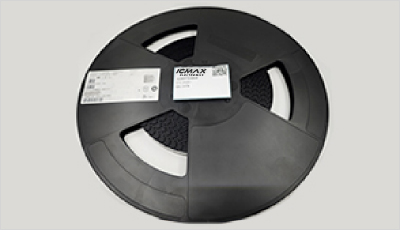
- Step1:Prepare product
-
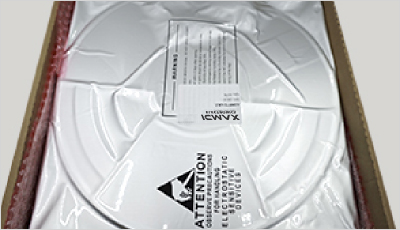
- Step2:Vacuum packaging
-
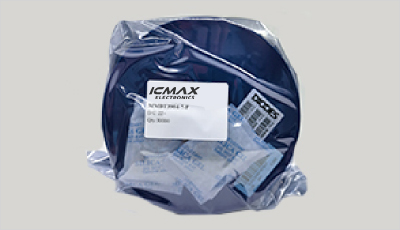
- Step3:Anti-static bag
-
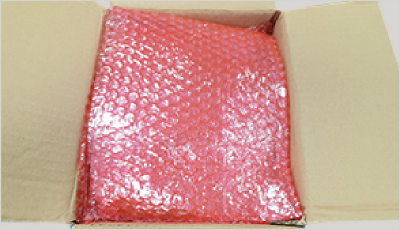
- Step4:Individual package
-
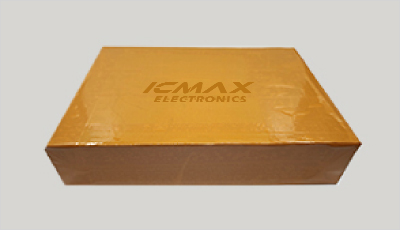
- Step5:Packaging box
-

- Step6:Barcode shipping label
Shipping starts at $40, but some countries will exceed $40. For example (South Africa, Brazil, India, Pakistan, Israel, etc.)
The basic freight (for package ≤0.5kg or corresponding volume) depends on the time zone and country.
Currently, our products are shipped through DHL, FedEx, SF, and UPS.
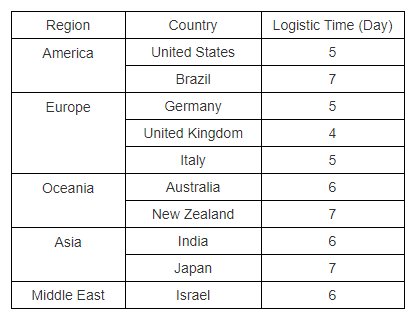
Delivery TimeOnce the goods are shipped, estimated delivery time depends on the shipping methods you chose:
FedEx International, 5-7 business days.
The following are some common countries' logistic time.
- Hot Sale
- Related Categories
- Include Parts
- Popular Search
- Voltage Regulators - Linear, Low Drop Out (LDO) Regulators(66836)
- Voltage Regulators - Linear Regulator Controllers(325)
- Voltage Regulators - Linear + Switching(1473)
- Voltage Regulators - DC DC Switching Regulators(35756)
- Voltage Reference(8428)
- V/F and F/V Converters(139)
- Thermal Management(515)
- Supervisors(41287)
- Special Purpose Regulators(4820)
- RMS to DC Converters(144)
The following parts include "TPS5430DDAR" in Silicon Labs TPS5430DDAR.
- Part Number
- Manufacturer
- Package
- Description
- TPS562201DDCR Texas Instruments 8-PowerSOIC (0.154", 3.90mm Width) IC REG BUCK ADJ 3A 8SOPWR
- MC34063ABD-TR STMicroelectronics 8-PowerSOIC (0.154", 3.90mm Width) IC REG BUCK ADJ 3A 8SOPWR
- TPS561201DDCR Texas Instruments 8-PowerSOIC (0.154", 3.90mm Width) IC REG BUCK ADJ 3A 8SOPWR
- MC33063ADR Texas Instruments 8-PowerSOIC (0.154", 3.90mm Width) IC REG BUCK ADJ 3A 8SOPWR
- MC34063ADR Texas Instruments 8-PowerSOIC (0.154", 3.90mm Width) IC REG BUCK ADJ 3A 8SOPWR
- TPS560200DBVR Texas Instruments 8-PowerSOIC (0.154", 3.90mm Width) IC REG BUCK ADJ 3A 8SOPWR
- AP3012KTR-G1 Diodes Incorporated 8-PowerSOIC (0.154", 3.90mm Width) IC REG BUCK ADJ 3A 8SOPWR
- TLV61048DBVR Texas Instruments 8-PowerSOIC (0.154", 3.90mm Width) IC REG BUCK ADJ 3A 8SOPWR
- AZ34063UMTR-G1 Diodes Incorporated 8-PowerSOIC (0.154", 3.90mm Width) IC REG BUCK ADJ 3A 8SOPWR
- TPS562200DDCR Texas Instruments 8-PowerSOIC (0.154", 3.90mm Width) IC REG BUCK ADJ 3A 8SOPWR
The following parts are popular search parts in Test and Measurement.
Inventory:5,856
Please send an inquiry. Send us your inquiry, and we will respond immediately.

- 1500+ Daily average RFQ Volume

- 20,000.000 Standard Product Unit

- 1800+ Worldwide Manufacturers

- 15,000+ In-stock Warehouse