Texas Instruments TLV9002IDGKR

- Part No.:
- TLV9002IDGKR
- Manufacturer:
- Texas Instruments
- Category:
- Instrumentation, Op Amps, Buffer Amps
- Package:
- 8-TSSOP, 8-MSOP (0.118", 3.00mm Width)
- Datasheet:
-
 TLV9002IDGKR.pdf
- Description:
- IC OPAMP GP 2 CIRCUIT 8VSSOP
- Quantity:
-
Unit Price:$0
Ext Price:$0
- Payment:
-

- Shipping:
-


TLV9002IDGKR Information
- Specifications
- Product Details
- Comparison
- Tags
- Product attributes
- Attribute value
- Manufacturer:
- Texas Instruments
- Series:
- -
- Package/Case:
- 8-TSSOP, 8-MSOP (0.118", 3.00mm Width)
- Packaging:
- Tape & Reel (TR)
- Product Status:
- Active
- Amplifier Type:
- General Purpose
- Number of Circuits:
- 2
- Output Type:
- Rail-to-Rail
- Slew Rate:
- 2V/µs
- Gain Bandwidth Product:
- 1 MHz
- -3db Bandwidth:
- -
- Current - Input Bias:
- 5 pA
- Voltage - Input Offset:
- 400 µV
- Current - Supply:
- 60µA
- Current - Output / Channel:
- 40 mA
- Voltage - Supply Span (Min):
- 1.8 V
- Voltage - Supply Span (Max):
- 5.5 V
- Operating Temperature:
- -40°C ~ 125°C (TA)
- Grade:
- -
- Qualification:
- -
- Mounting Type:
- Surface Mount
- Supplier Device Package:
- 8-VSSOP
- Datasheet:
-
TLV9002IDGKR.pdf
TLV9002IDGKR — TI Dual RRIO CMOS Op-Amp, 1.8–5.5V, 60µA/ch, VSSOP-8
The TLV9002IDGKR is TI's cost-optimised dual CMOS op-amp in VSSOP-8. 1.8–5.5V. 60µA/ch. Rail-to-rail I/O. Still using an LM358 at low voltage? This is the replacement — same price, but RRIO, 5pA bias, and 0.4mV offset vs the LM358's 2mV.
But why switch from a 40-year-old part? The LM358 can't reach the positive rail, needs ~2V headroom, and its offset eats small-signal accuracy. The TLV9002 fixes all three at lower supply current. And 1MHz GBW is enough for most sensor and general-purpose work below 100kHz.
What Are the Technical Specifications of TLV9002IDGKR?
| Parameter | Value |
|---|---|
| Type | Dual CMOS Operational Amplifier, RRIO |
| Package | VSSOP-8 (DGK) — 3.00 × 3.00 × 0.97mm |
| Supply Voltage (Single) | 1.8V to 5.5V |
| Supply Voltage (Dual) | ±0.9V to ±2.75V |
| Quiescent Current | 60µA typ per channel |
| Gain-Bandwidth Product | 1MHz |
| Slew Rate | 2V/µs |
| Input Offset Voltage (VOS) | ±0.4mV typ; 1.6mV max |
| VOS Drift | 0.6µV/°C typ |
| Input Bias Current (IB) | 5pA typ (CMOS inputs) |
| Input Voltage Noise Density | 30nV/√Hz @ 1kHz |
| CMRR / PSRR | 90dB typ / 105dB typ |
| Output Current | 40mA per channel (short-circuit protected) |
| Capacitive Load Drive | 500pF stable |
| Operating Temperature | -40°C to +125°C |
| Features | Unity-gain stable, internal RFI/EMI filter, no phase reversal |
| Manufacturer | Texas Instruments |
Key numbers that matter: 5pA input bias is 1000× lower than the LM358's 20–100nA. For photodiodes, pH probes, piezo sensors — that's clean signal vs DC error you can't calibrate out. And 1.8V minimum supply means it runs from two alkaline cells or a single Li-Ion near end-of-discharge.
When Should You Use (and NOT Use) the TLV9002IDGKR?
✔ Use TLV9002IDGKR when:
- Low-voltage, battery-powered designs (1.8–5.5V). Runs from two AA/AAA cells, a single Li-Ion, or a 3.3V rail. RRIO means you use the full supply range — no wasted headroom at either rail. The 60µA/ch quiescent current stretches battery life in always-on sensor nodes.
- High-impedance sensor signal conditioning. 5pA input bias current means it doesn't load your sensor. Photodiode transimpedance amps, pH probe buffers, thermocouple amplifiers — any source impedance above 100kΩ where an LM358's nanoamp bias current creates measurable offset.
- Replacing LM358/LMV358 in existing designs. Pin-compatible in SOIC-8 and VSSOP-8 footprints. Same-or-better specs on every parameter that matters. Drop it in, get RRIO and 5× better offset for essentially the same BOM cost.
- Unity-gain buffers near ground. The LM358 can't buffer signals within ~15mV of its negative rail. The TLV9002's CMOS input stage swings all the way to ground — critical for single-supply current sensing and low-side shunt amplifiers.
- General-purpose analog in space-constrained designs. The VSSOP-8 package is 3×3mm. Two op-amp channels in the same footprint as a single SOT-23-5. For multi-channel sensor conditioning on a tight board, that channel density matters.
✘ Don't use TLV9002IDGKR when:
- Supply voltage above 5.5V. The TLV9002 is a low-voltage part. For 12V or ±15V rails, use OPA2197 (36V, precision) or stick with LM358 (32V, if precision isn't critical).
- Bandwidth above ~500kHz needed. At 1MHz GBW, closed-loop bandwidth at gain=10 is ~100kHz. For higher-speed signal paths, step to TLV9062 (10MHz GBW, same package) or OPA2322 (20MHz).
- Ultra-low noise applications (audio front-ends, precision ADC drivers). 30nV/√Hz is fine for general-purpose work but too noisy for a 24-bit ADC driver or a phono preamp. For sub-5nV/√Hz, look at OPA2210 (2.2nV/√Hz) or discrete JFET front-ends.
- Capacitive loads above 500pF without compensation. The TLV9002 is stable to 500pF. Driving long cables or large MOSFET gates? Add an external isolation resistor (50–100Ω) between the output and the capacitive load.
What Are the Alternatives to TLV9002IDGKR?
So why does this matter? Because the TLV9002 sits in a crowded part of the op-amp market. The right alternative depends on whether your bottleneck is bandwidth, power, precision, or price.
| Model | Type | Key Difference | Best For |
|---|---|---|---|
| LM358DR | TI Bipolar Dual | 3–32V, 0.5mA/ch, 3mV Vos max, no RRIO | Legacy designs, >5.5V rails, cost-sensitive non-precision |
| TLV9062IDGKR | TI CMOS Dual RRIO | 10MHz GBW, 10V/µs slew, 0.5mV Vos, VSSOP-8 | Higher bandwidth, same package, same supply range |
| OPA2322AIDGKR | TI CMOS Precision Dual | 20MHz GBW, 2mV Vos max, 0.9pA IB, VSSOP-8 | When speed matters more than power (1.5mA/ch) |
| MCP6002T-I/SN | Microchip CMOS Dual | 1.8–6.0V, 1MHz GBW, 100µA/ch, SOIC-8 | Cross-manufacturer second source |
| TSV912IDT | ST CMOS Dual RRIO | 2.5–5.5V, 8MHz GBW, 0.8mV Vos, SOIC-8 | Higher BW alternative, different mfr, similar price |
TLV9002 vs LM358 — the upgrade decision. The LM358 works. At low voltage, it costs accuracy. The TLV9002 fixes all three: RRIO, 0.4mV offset, 5pA bias. Same price, lower power. But why? Pin-compatible upgrade. Zero PCB changes. Better signal chain, same BOM cost. Design runs 5V or less? Skip the LM358.
What Are the Typical Applications of TLV9002IDGKR?
Battery-Powered Sensor Node: 3.3V MCU reads a resistive bridge through TLV9002. Ch A as instrumentation amp (gain=100), Ch B as 2.5V reference buffer. Total: 120µA. RRIO handles bridge common-mode swinging near both rails without clipping.
Low-Side Current Sensing: 10mΩ shunt on a 5V rail drops 0–50mV at 0–5A. The TLV9002 amplifies to 0–2.5V ADC range at gain=50. 0.4mV offset = ~8mA error vs ~40mA with LM358. Input range goes to ground — shunt referenced directly to 0V, no level shifting needed.
Portable Medical Device Analog Front-End: ECG, pulse oximeter, or blood pressure monitor running from two AAA cells. The TLV9002 provides two channels of signal conditioning with rail-to-rail swing, using the full battery voltage until end-of-discharge at 1.8V. The 60µA/ch draw means the analog front-end isn't the thing killing the battery.
Active Filter in Audio/Industrial Band: Sallen-Key or multiple-feedback low-pass filter at 1–10kHz corner. At 1MHz GBW, the TLV9002 handles gains up to 100 at 10kHz before bandwidth limiting. The 0.004% THD+N keeps audio signals clean. The RRIO output drives a 10kΩ ADC input directly without an additional buffer stage.
Why Buy TLV9002IDGKR from ICMASS?
TI authorized channel traceability. Every reel ships with TI original factory marking, date codes, and lot traceability. CMOS op-amps are sensitive to ESD damage in the supply chain. We handle and ship to JEDEC JESD22-A114 standards — you get parts that meet the datasheet, not degraded by poor handling.
We stock the full TLV900x family. TLV9001 (single, SOT-23-5/SC70), TLV9002 (dual, SOIC-8/VSSOP-8), TLV9004 (quad, TSSOP-14). Need the shutdown variant (TLV9002S)? We stock that too. One BOM line or the whole signal chain — your choice.
Shenzhen warehouse, global DHL/FedEx. Same-day shipping before 15:00 CST. Full reels (2,500 units) and cut tape available. Contact ICMASS for current pricing on your quantity.
Frequently Asked Questions About TLV9002IDGKR
Q1: Can TLV9002IDGKR directly replace an LM358?
A: Yes, in most 5V and lower single-supply designs. The TLV9002 is pin-compatible in SOIC-8 and VSSOP-8 packages. RRIO, lower offset, lower bias current, and lower supply current are all upgrades. But check your supply voltage — the TLV9002 max is 5.5V. If your LM358 runs at 12V, it's not a drop-in. For 3.3V/5V designs, swap it and get better performance for the same cost.
Q2: What does "rail-to-rail input and output" actually mean?
A: The input common-mode range extends from V− to V+, and the output can swing within millivolts of both rails. Practically: you can buffer a signal at 0V (ground-sensing) and amplify it to nearly the full supply voltage. The LM358's input range stops ~2V below V+ and its output can't reach within ~1.5V of V+. The TLV9002 has neither limitation. For single-supply designs where every millivolt of dynamic range counts, RRIO is the difference between working and clipping.
Q3: How does the TLV9002 compare to the TLV9062?
A: TLV9062 is the higher-bandwidth, higher-power sibling. Same supply range, same packages. TLV9062 gives 10MHz GBW and 10V/µs slew rate but draws 538µA/ch vs 60µA/ch. If your signal is above ~50kHz or you need faster settling, go TLV9062. If your signal is below 10kHz and battery life matters, the TLV9002's lower power wins. Same pinout, so you can swap later if bandwidth becomes the bottleneck.
Q4: Is the TLV9002 unity-gain stable?
A: Yes. It's stable at gain=1 with up to 500pF capacitive load. No external compensation needed for most applications. If you're driving a long cable or large MOSFET gate beyond 500pF, add a 50–100Ω isolation resistor at the output. The internal RFI/EMI filter helps reject high-frequency interference on the input pins — useful in industrial environments.
Q5: What's the actual noise performance for sensor applications?
A: 30nV/√Hz at 1kHz, integrated noise ~25µVRMS from 0.1Hz to 10Hz. Fine for 10–12 bit ADC systems. For 16-bit and above, or signals below 100µV, step to OPA2322 (lower broadband noise) or OPA2210 (2.2nV/√Hz) for precision. For thermocouples, load cells, and general bridge sensors, the TLV9002's noise floor is adequate.
Q6: Why does input bias current matter for my design?
A: Because IB flowing through your source impedance creates a DC offset you can't distinguish from your signal. 5pA through 1MΩ = 5µV offset — negligible. The LM358's 50nA through the same 1MΩ = 50mV offset — completely unusable without calibration. If your sensor has high output impedance (photodiodes, pH probes, piezoelectrics), the TLV9002's CMOS inputs are non-negotiable.
Q7: Can I run it from a single Li-Ion cell?
A: Yes, across the full discharge curve. A Li-Ion cell ranges from 4.2V (full) to ~3.0V (empty). The TLV9002 operates down to 1.8V, so it keeps working long after the rest of the circuit has browned out. The RRIO output means you maintain full signal swing even as the battery voltage drops.
Related Products
- TLV9062IDGKR — 10MHz GBW upgrade, same VSSOP-8, 538µA/ch
- OPA2322AIDGKR — 20MHz precision alternative, same VSSOP-8
- TLV9001IDBVR — Single-channel version, SOT-23-5
- LM358DR — Legacy bipolar dual, 3–32V, lower cost but no RRIO
- MCP6002T-I/SN — Microchip equivalent, cross-manufacturer second source
| Image |

|
| Part Number | TLV9002IDGKR |
| Manufacturer | Texas Instruments |
| Series | - |
| Package/Case | 8-TSSOP, 8-MSOP (0.118", 3.00mm Width) |
| Packaging | Tape & Reel (TR) |
| Product Status | Active |
| Amplifier Type | General Purpose |
| Number of Circuits | 2 |
| Output Type | Rail-to-Rail |
| Slew Rate | 2V/µs |
| Gain Bandwidth Product | 1 MHz |
| -3db Bandwidth | - |
| Current - Input Bias | 5 pA |
| Voltage - Input Offset | 400 µV |
| Current - Supply | 60µA |
| Current - Output / Channel | 40 mA |
| Voltage - Supply Span (Min) | 1.8 V |
| Voltage - Supply Span (Max) | 5.5 V |
| Operating Temperature | -40°C ~ 125°C (TA) |
| Grade | - |
| Qualification | - |
| Mounting Type | Surface Mount |
| Supplier Device Package | 8-VSSOP |
User Guide
- Purchase & Inquiry
- Package
- Shipping Information
- Customer Review
You may place an order without registering to IC-MAX.COM
We strongly suggest you sign in before purchasing as you can track your order in real time.
For your convenience, we accept multiple payment methods in USD, including PayPal, Credit Card, and wire transfer.
RFQ (Request for Quotations)
It is recommended to request for quotations to get the latest prices and inventories about the part.
Our sales will reply to your request by email within 24 hours.
1. You'll receive an order information email in your inbox. (Please remember to check the spam folder if you didn't hear from us).
2. Since inventories and prices may fluctuate to some extent, the sales manager is going to reconfirm the order and let you know if there are any updates.
-
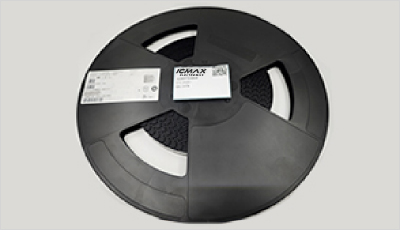
- Step1:Prepare product
-
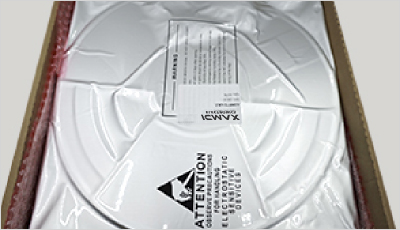
- Step2:Vacuum packaging
-
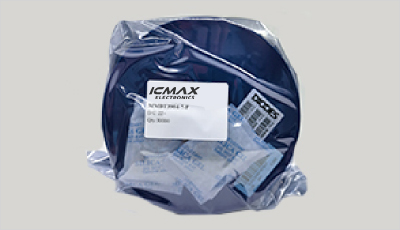
- Step3:Anti-static bag
-
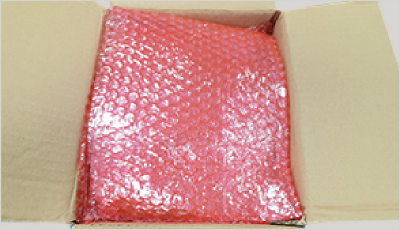
- Step4:Individual package
-
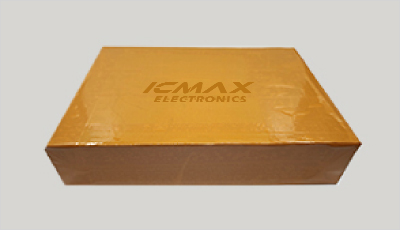
- Step5:Packaging box
-
- Step6:Barcode shipping label
Shipping starts at $40, but some countries will exceed $40. For example (South Africa, Brazil, India, Pakistan, Israel, etc.)
The basic freight (for package ≤0.5kg or corresponding volume) depends on the time zone and country.
Currently, our products are shipped through DHL, FedEx, SF, and UPS.
Delivery TimeOnce the goods are shipped, estimated delivery time depends on the shipping methods you chose:
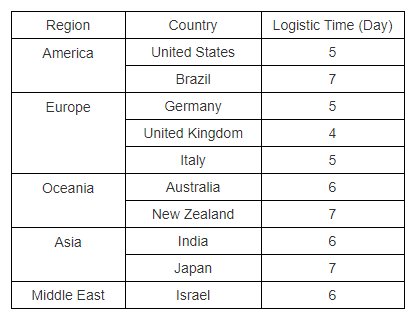
FedEx International, 5-7 business days.
The following are some common countries' logistic time.
- Hot Sale
- Related Categories
- Include Parts
- Popular Search
The following parts include "TLV9002IDGKR" in Silicon Labs TLV9002IDGKR.
- Part Number
- Manufacturer
- Package
- Description
- LM358DT STMicroelectronics 8-TSSOP, 8-MSOP (0.118", 3.00mm Width) IC OPAMP GP 2 CIRCUIT 8VSSOP
- LM358DR Texas Instruments 8-TSSOP, 8-MSOP (0.118", 3.00mm Width) IC OPAMP GP 2 CIRCUIT 8VSSOP
- LM2904DR Texas Instruments 8-TSSOP, 8-MSOP (0.118", 3.00mm Width) IC OPAMP GP 2 CIRCUIT 8VSSOP
- LM358ADR Texas Instruments 8-TSSOP, 8-MSOP (0.118", 3.00mm Width) IC OPAMP GP 2 CIRCUIT 8VSSOP
- LM2904DGKR Texas Instruments 8-TSSOP, 8-MSOP (0.118", 3.00mm Width) IC OPAMP GP 2 CIRCUIT 8VSSOP
- LM324DR Texas Instruments 8-TSSOP, 8-MSOP (0.118", 3.00mm Width) IC OPAMP GP 2 CIRCUIT 8VSSOP
- MCP6006T-E/OT Microchip Technology 8-TSSOP, 8-MSOP (0.118", 3.00mm Width) IC OPAMP GP 2 CIRCUIT 8VSSOP
- MCP6006UT-E/OT Microchip Technology 8-TSSOP, 8-MSOP (0.118", 3.00mm Width) IC OPAMP GP 2 CIRCUIT 8VSSOP
- LM324PWR Texas Instruments 8-TSSOP, 8-MSOP (0.118", 3.00mm Width) IC OPAMP GP 2 CIRCUIT 8VSSOP
- LM2902PWR Texas Instruments 8-TSSOP, 8-MSOP (0.118", 3.00mm Width) IC OPAMP GP 2 CIRCUIT 8VSSOP
The following parts are popular search parts in Test and Measurement.
Inventory:19,986
Please send an inquiry. Send us your inquiry, and we will respond immediately.

- 1500+ Daily average RFQ Volume

- 20,000.000 Standard Product Unit

- 1800+ Worldwide Manufacturers

- 15,000+ In-stock Warehouse