Texas Instruments LP5912-3.3DRVR

- Part No.:
- LP5912-3.3DRVR
- Manufacturer:
- Texas Instruments
- Package:
- 6-WDFN Exposed Pad
- Datasheet:
-
 LP5912-3.3DRVR.pdf
- Description:
- IC REG LINEAR 3.3V 500MA 6WSON
- Quantity:
-
Unit Price:$0
Ext Price:$0
- Payment:
-

- Shipping:
-


LP5912-3.3DRVR Information
- Specifications
- Product Details
- Comparison
- Tags
- Product attributes
- Attribute value
- Manufacturer:
- Texas Instruments
- Series:
- -
- Package/Case:
- 6-WDFN Exposed Pad
- Packaging:
- Tape & Reel (TR)
- Product Status:
- Active
- Output Configuration:
- Positive
- Output Type:
- Fixed
- Number of Regulators:
- 1
- Voltage - Input (Max):
- 6.5V
- Voltage - Output (Min/Fixed):
- 3.3V
- Voltage - Output (Max):
- -
- Voltage Dropout (Max):
- 0.18V @ 500mA
- Current - Output:
- 500mA
- Current - Quiescent (Iq):
- 55 µA
- Current - Supply (Max):
- 600 µA
- PSRR:
- 80dB ~ 40dB (100Hz ~ 100kHz)
- Control Features:
- Enable, Power Good, Soft Start
- Protection Features:
- Over Temperature, Reverse Polarity, Short Circuit
- Operating Temperature:
- -40°C ~ 125°C (TJ)
- Grade:
- -
- Qualification:
- -
- Mounting Type:
- Surface Mount
- Supplier Device Package:
- 6-WSON (2x2)
- Datasheet:
-
LP5912-3.3DRVR.pdf
LP5912-3.3DRVR — 500mA Low-Noise LDO Voltage Regulator, Fixed 3.3V (WSON-6)
The LP5912-3.3DRVR is a fixed 3.3V, 500mA low-dropout linear regulator from Texas Instruments in a 2mm × 2mm WSON-6 package. Its defining spec: 12µVrms output noise with no noise bypass capacitor required. That's 8–10× quieter than a typical LDO and two orders of magnitude below what a Zener reference can deliver.
TI built this part for RF and precision analog rails - camera modules, PLLs, ADC references, HiFi audio chains. The 30µA quiescent current fits battery-powered designs that can't afford the 5mA burn of a classic LM1117.
But there are corners to watch. PSRR degrades below VOUT + 0.5V headroom. Output capacitance must stay in the 1–10µF window. A pre-biased output can prevent startup. Get the layout right and this part disappears into the noise floor.
What Are the Technical Specifications of LP5912-3.3DRVR?
| Parameter | Value |
|---|---|
| Type | Fixed Low-Dropout (LDO) Linear Voltage Regulator |
| Output Voltage (VOUT) | 3.3V fixed, ±2% (per TI datasheet SNVSA77) |
| Maximum Output Current | 500mA |
| Input Voltage Range | 1.6V to 6.5V (VIN ≥ VOUT + VDO for regulation) |
| Dropout Voltage (VDO) | 95mV typ / 180mV max @ 500mA (per TI datasheet) |
| Output Noise (10Hz–100kHz) | 12µVrms typ — no bypass cap needed (per TI datasheet) |
| PSRR @ 1kHz | 75dB typ |
| PSRR @ 100kHz | 40dB typ |
| Quiescent Current (IQ) | 30µA typ (no load, enabled) |
| Shutdown Current | 0.01µA typ (EN = low) |
| Output Capacitance | 1–10µF ceramic (X5R/X7R, ESR 5–500mΩ) |
| Thermal Shutdown | 160°C typ (hysteresis to ~145°C) |
| Operating Junction Temp | −40°C to +125°C |
| Package | WSON-6 (DRV), 2.0 × 2.0mm, exposed thermal pad |
| Manufacturer | Texas Instruments |
| Features | Enable + Power-Good output, reverse current protection, auto-discharge, internal soft-start |
Key numbers that matter: 12µVrms output noise is the headline. Per the TI LP5912 datasheet (SNVSA77), this is achieved without a noise bypass capacitor. A jellybean AMS1117 runs 100–150µVrms. A Zener with a 100nF filter cap might hit 200µVrms. The LP5912 beats both by an order of magnitude.
The 30µA IQ is the second number. A classic LM1117 burns 5–10mA doing nothing. In a battery sensor node sleeping at 50µA, an LM1117 triples the budget. The LP5912 adds 30µA — barely a rounding error. In shutdown it pulls 10nA. That's not a typo.
When Should You Use (and NOT Use) the LP5912-3.3?
✅ Use LP5912-3.3 when:
- RF/analog signal chain power. PLLs, VCOs, ADCs, and op-amp rails are hypersensitive to supply noise. The 12µVrms noise floor means the LDO isn't the limiting factor in your SNR budget. Per a TI E2E discussion, designers pair this with ADS1147-class ADCs specifically for this reason.
- Battery-powered always-on 3.3V rail. At 30µA IQ, this LDO can stay enabled 24/7 in a sensor node without draining the battery. Compare: an LM1117 at 5mA IQ on a 500mAh battery gives you ~4 days. The LP5912 gives you ~2 years.
- Post-switcher cleanup. A buck converter gives you efficiency but leaves 10–50mV of ripple. An LP5912 post-regulating to 3.3V with 75dB PSRR at 1kHz attenuates that ripple by a factor of 5,600×. What was 20mV ripple becomes 3.5µV at the output.
- Space-constrained precision designs. At 2mm × 2mm WSON-6, this is smaller than most 500mA LDOs. No noise bypass cap means one less BOM line and one less placement. Total solution size: the IC + two 1µF ceramics — about 12mm².
❌ Don't use LP5912-3.3 when:
- Input voltage is below 3.8V. VOUT + 0.5V headroom is required for full PSRR performance. Below that, the LDO still regulates but PSRR degrades sharply. A TI E2E thread clarified: the 0.5V margin is for best noise performance, not a hard regulation requirement. But if you're buying this for the noise spec, give it the headroom.
- You need >500mA. At VIN = 5V and 500mA load, the LDO dissipates (5−3.3) × 0.5 = 850mW. With θJA = 71°C/W, that's a 60°C junction rise — fine at 25°C ambient but marginal at 65°C. For >500mA, step up to a TPS7A8300 (2A, similar noise).
- Output capacitance outside 1–10µF. Below 1µF the LDO may oscillate. Above 10µF the control loop wasn't characterized — per TI E2E, it may or may not be stable, and TI won't guarantee it. This is a non-negotiable design constraint.
- You need adjustable output voltage. The LP5912 is fixed-voltage only. For adjustable output at similar noise, use the TPS7A4901 or the LP5907 (250mA, adjustable).
What Are the Alternatives to LP5912-3.3DRVR?
| Model | Type | Key Difference | Best For |
|---|---|---|---|
| LP5907MFX-3.3 | Low-noise LDO | 250mA, 6.5µVrms noise, SOT-23-5, lower IQ (12µA) | Sub-250mA loads needing even lower noise |
| TPS7A2033PDBVR | Ultra-low-noise LDO | 300mA, 7µVrms, 95dB PSRR @ 1kHz, SOT-23-5 | When 12µVrms isn't quiet enough |
| AMS1117-3.3 | General-purpose LDO | 1A, ~100µVrms noise, SOT-223, 5–10mA IQ | Cost-sensitive, non-battery, noise-tolerant |
| LM1117MPX-3.3 | General-purpose LDO | 800mA, SOT-223, 1.2V dropout, 5mA IQ | Legacy drop-in, higher current, no noise spec |
| TLV1117LV33DCYR | Low-dropout LDO | 1A, 3.3V fixed, SOT-223, lower dropout than LM1117 | Higher current, moderate noise sensitivity |
LP5912 vs LP5907 — twice the current or half the noise? The LP5907 delivers 6.5µVrms at 250mA. For loads under 200mA, it's the better part. For 300–500mA in noise-sensitive analog, the LP5912 is the right choice. Both beat discrete Zener references by 20–40× on noise.
LP5912 vs TPS7A20 — when to pay for quieter. The TPS7A20 pushes 7µVrms noise and 95dB PSRR at 1kHz. At 300mA, it's slightly lower current. Price premium: 30–50%. Pay it when your SNR budget has no margin left. For most RF rails, 12µVrms is already below PCB trace noise.
How Much Does LP5912-3.3DRVR Cost and Is It in Stock?
| Quantity | Reference Price (per unit) |
|---|---|
| 1–99 | $0.30–$0.55 |
| 100–999 | $0.20–$0.35 |
| 1,000–9,999 (full reel) | $0.15–$0.25 |
| 10,000+ | $0.12–$0.18 |
Contact ICMASS for a same-day quote. The LP5912 is in active production at TI with stable availability. Priced above commodity LDOs (AMS1117 ~$0.05) but below ultra-low-noise parts (TPS7A94 ~$2). The per-unit premium is trivial next to the cost of debugging a noise problem on a fabricated PCB. We stock fixed voltages from 1.1V to 5.0V.
What Are the Typical Applications of LP5912-3.3DRVR?
ADC/DAC Analog Supply Rail. A 16-bit ADC at 3.3V has a 50µV LSB. A 100µVrms supply eats 2 bits before the first sample. The LP5912 at 12µVrms keeps supply noise below 0.25 LSB. TI E2E discussions confirm pairing with ADS1147-class ADCs, with the caution to bias the PG pull-up from VIN (not VOUT) to keep digital noise off the analog rail.
Camera Module Sensor Power. Image sensors are hypersensitive to supply ripple - row noise and fixed-pattern noise increase with LDO noise. The LP5912's 12µVrms and 75dB PSRR make it the default for MIPI camera modules. The LP5912-Q1 automotive variant is designed into backup and surround-view cameras.
PLL/VCO Supply in RF Transceivers. A PLL's phase noise is directly modulated by supply noise. The LP5912's 75dB PSRR at 1kHz suppresses dominant noise sources - mains hum and switching regulator ripple. At 100kHz PSRR drops to 40dB, so a post-LDO ferrite bead or LC filter is common above 1MHz.
Post-DC/DC Regulator Cleanup. The standard architecture: a buck converter drops the bus voltage to 3.6–3.8V, then an LP5912 post-regulates to 3.3V. The buck handles power, the LDO handles noise. At VIN = 3.8V and 500mA, dissipation is 250mW - an 18°C junction rise. No heatsink needed on a 2mm part.
Battery-Powered IoT Sensor Nodes. An ESP32 transmitting at 500mA peak draws from the LP5912, which transitions from 30µA to 500mA in microseconds. The soft-start limits inrush so the battery doesn't sag-reset the MCU. Average current for once-per-minute TX: ~40µA. Years of runtime from a single Li-SOCl2 cell.
Why Buy LP5912-3.3DRVR from ICMASS?
TI authorized channel, factory-sealed reels. The LP5912 is a precision analog part. A remarked AMS1117 passes a DC voltage check but fails on noise, PSRR, and dropout. We source from TI's authorized channel. Every reel traceable to fab lot and date code.
Full LP5912 voltage range in stock. We carry the LP5912 series from 1.1V to 5.0V. If your design uses different rail voltages (1.8V for digital core, 3.3V for analog, 5.0V for sensors), one order covers all three.
Application support: noise, layout, and stability. Got a 1.1MHz noise spur you can't explain? Output oscillating with a 22µF cap? Pre-biased output refusing to start? We've debugged all of these. Send us your schematic and layout.
Shenzhen warehouse, same-day shipping. Orders placed before 15:00 CST ship same day. DHL/FedEx in 5–10 days worldwide.
Frequently Asked Questions About LP5912-3.3DRVR
Q1: Do I need a noise bypass capacitor with the LP5912?
A: No. The LP5912 achieves 12µVrms noise without one. Per the TI datasheet (SNVSA77), the internal reference and error amplifier are designed to be this quiet natively. Most low-noise LDOs need an external bypass cap (typically 10nF–100nF) on a dedicated pin to hit their noise spec. The LP5912 eliminates that pin, that cap, and that BOM line entirely. This is one of its main selling points over competitors.
Q2: What happens if I use a 22µF output capacitor?
A: Don't. The LP5912 is only characterized for 1–10µF output capacitance. Per TI E2E discussions, the control loop was not designed or tested above 10µF. You might get lucky and it stays stable, or you might get a 100kHz oscillation that's invisible on a DC multimeter but destroys your RF performance. TI's official answer: stay within 1–10µF. If you need more bulk capacitance, put it before the LDO on the input side.
Q3: Why is my LP5912 output noisy even though the datasheet says 12µVrms?
A: Check three things: input headroom, layout, and PG pull-up. First, VIN ≥ VOUT + 0.5V for full PSRR. Running 3.5V in for 3.3V out degrades PSRR. Second, per the TI datasheet, caps must be on the same PCB side with wide, short traces. Vias add inductance that kills PSRR. Third, pull PG up to VIN (not VOUT) to keep digital noise off the analog rail. TI E2E confirmed this is safe.
Q4: Can the LP5912 really deliver 500mA in a 2mm × 2mm package?
A: Yes — if you connect the thermal pad properly. At VIN = 5V, 500mA, the LDO dissipates 850mW. With θJA = 71°C/W, junction rises 60°C above ambient. At room temp: 85°C, fine. At 65°C ambient: 125°C, within spec with zero margin. The thermal pad must connect to a ground plane with multiple vias. A floating pad will thermal-shutdown long before 500mA. Continuous 500mA needs a copper pour on the pad.
Q5: LP5912 vs LP5907 — which one for my design?
A: LP5907 if <250mA and you need the absolute lowest noise. LP5912 if 250–500mA. The LP5907 has 6.5µVrms noise (half the LP5912) and 12µA IQ at 250mA max. The LP5912 doubles the current at twice the noise. For an ADC reference or a PLL supply drawing under 200mA, the LP5907 is the better part. For a complete analog front-end pulling 400mA, the LP5912 is the right choice.
Q6: Why won't my LP5912 start up when there's already voltage on the output?
A: Pre-bias startup issue - a known design characteristic. Per TI E2E, the LP5912 can fail to start if a pre-bias voltage from another supply is on the output when EN goes high. Workaround: add an RC delay on EN so the LDO starts after the pre-bias decays, or sequence the LP5912 first. TI acknowledged this in the forum. It's not a silicon defect.
Q7: What's the actual dropout voltage at 500mA?
A: 95mV typical, 180mV maximum at 500mA and 25°C. Per TI datasheet (SNVSA77): VIN(min) = 3.48V for guaranteed regulation at full load. In practice, most units regulate with ~100mV headroom at room temp. Design to max spec for production. PSRR degrades near dropout.
Q8: Can I parallel two LP5912s for 1A output?
A: Not directly. LDOs don't current-share. The higher-voltage unit takes all current until it limits, then the second kicks in - not smoothly. For 1A, use a TPS7A8300 (2A, 4.7µVrms). Ballast resistors on each output defeat the precision you're paying for.
Related Products
- LP5907MFX-3.3 — 250mA, 6.5µVrms, half the noise, half the current
- TPS7A2033PDBVR — 300mA, 7µVrms, 95dB PSRR, next step up in quiet
- AMS1117-3.3 — 1A general-purpose LDO, lower cost for noise-tolerant designs
- TL431 — Shunt reference, 2.495V, an alternative for low-current precision rails
- LDO vs Zener vs Shunt Reference — Which Voltage Regulation Strategy?
| Image |

|
|
|
|
|
| Part Number | LP5912-3.3DRVR | LP5912Q3.3DRVRQ1 | LP5912-2.5DRVR | LP5912-1.1DRVR | LP5912-1.8DRVR |
| Manufacturer | Texas Instruments | Texas Instruments | Texas Instruments | Texas Instruments | Texas Instruments |
| Series | - | - | - | - | - |
| Package/Case | 6-WDFN Exposed Pad | 6-WDFN Exposed Pad | 6-WDFN Exposed Pad | 6-WDFN Exposed Pad | 6-WDFN Exposed Pad |
| Packaging | Tape & Reel (TR) | Tape & Reel (TR) | Tape & Reel (TR) | Tape & Reel (TR) | Tape & Reel (TR) |
| Product Status | Active | Active | Active | Active | Active |
| Output Configuration | Positive | Positive | Positive | Positive | Positive |
| Output Type | Fixed | Fixed | Fixed | Fixed | Fixed |
| Number of Regulators | 1 | 1 | 1 | 1 | 1 |
| Voltage - Input (Max) | 6.5V | 6.5V | 6.5V | 6.5V | 6.5V |
| Voltage - Output (Min/Fixed) | 3.3V | 3.3V | 2.5V | 1.1V | 1.8V |
| Voltage - Output (Max) | - | - | - | - | - |
| Voltage Dropout (Max) | 0.18V @ 500mA | 0.18V @ 500mA | 0.25V @ 500mA | - | 0.25V @ 500mA |
| Current - Output | 500mA | 500mA | 500mA | 500mA | 500mA |
| Current - Quiescent (Iq) | 55 µA | 55 µA | 55 µA | 55 µA | 55 µA |
| Current - Supply (Max) | 600 µA | 600 µA | 600 µA | 600 µA | 600 µA |
| PSRR | 80dB ~ 40dB (100Hz ~ 100kHz) | 80dB ~ 40dB (100Hz ~ 100kHz) | 80dB ~ 40dB (100Hz ~ 100kHz) | 80dB ~ 40dB (100Hz ~ 100kHz) | 80dB ~ 40dB (100Hz ~ 100kHz) |
| Control Features | Enable, Power Good, Soft Start | Enable, Power Good, Soft Start | Enable, Power Good, Soft Start | Enable, Power Good, Soft Start | Enable, Power Good, Soft Start |
| Protection Features | Over Temperature, Reverse Polarity, Short Circuit | Over Temperature, Reverse Polarity, Short Circuit | Over Temperature, Reverse Polarity, Short Circuit | Over Temperature, Reverse Polarity, Short Circuit | Over Temperature, Reverse Polarity, Short Circuit |
| Operating Temperature | -40°C ~ 125°C (TJ) | -40°C ~ 125°C (TJ) | -40°C ~ 125°C (TJ) | -40°C ~ 125°C (TJ) | -40°C ~ 125°C (TJ) |
| Grade | - | Automotive | - | - | - |
| Qualification | - | AEC-Q100 | - | - | - |
| Mounting Type | Surface Mount | Surface Mount | Surface Mount | Surface Mount | Surface Mount |
| Supplier Device Package | 6-WSON (2x2) | 6-WSON (2x2) | 6-WSON (2x2) | 6-WSON (2x2) | 6-WSON (2x2) |
User Guide
- Purchase & Inquiry
- Package
- Shipping Information
- Customer Review
You may place an order without registering to IC-MAX.COM
We strongly suggest you sign in before purchasing as you can track your order in real time.
For your convenience, we accept multiple payment methods in USD, including PayPal, Credit Card, and wire transfer.
RFQ (Request for Quotations)
It is recommended to request for quotations to get the latest prices and inventories about the part.
Our sales will reply to your request by email within 24 hours.
1. You'll receive an order information email in your inbox. (Please remember to check the spam folder if you didn't hear from us).
2. Since inventories and prices may fluctuate to some extent, the sales manager is going to reconfirm the order and let you know if there are any updates.
-
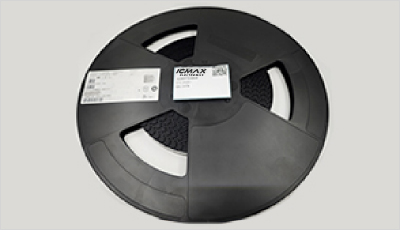
- Step1:Prepare product
-
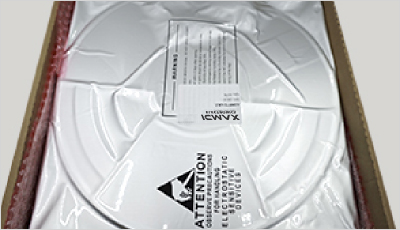
- Step2:Vacuum packaging
-
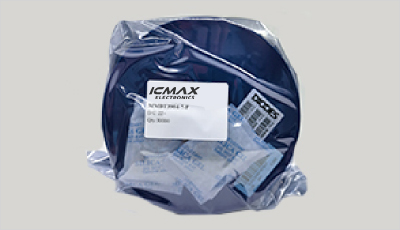
- Step3:Anti-static bag
-
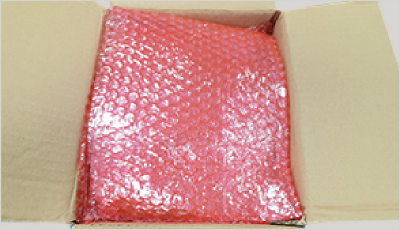
- Step4:Individual package
-
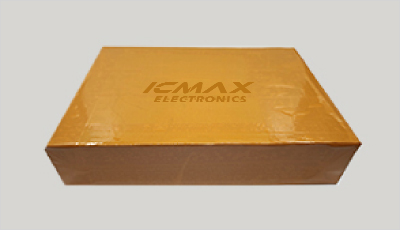
- Step5:Packaging box
-
- Step6:Barcode shipping label
Shipping starts at $40, but some countries will exceed $40. For example (South Africa, Brazil, India, Pakistan, Israel, etc.)
The basic freight (for package ≤0.5kg or corresponding volume) depends on the time zone and country.
Currently, our products are shipped through DHL, FedEx, SF, and UPS.
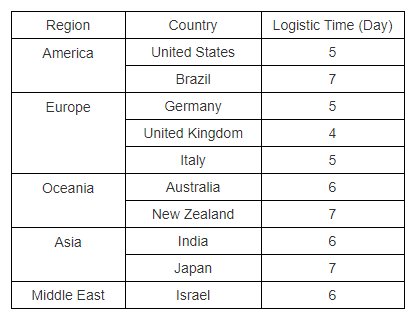
Delivery TimeOnce the goods are shipped, estimated delivery time depends on the shipping methods you chose:
FedEx International, 5-7 business days.
The following are some common countries' logistic time.
- Hot Sale
- Related Categories
- Include Parts
- Popular Search
- Voltage Regulators - Linear, Low Drop Out (LDO) Regulators(66836)
- Voltage Regulators - Linear Regulator Controllers(325)
- Voltage Regulators - Linear + Switching(1473)
- Voltage Regulators - DC DC Switching Regulators(35756)
- Voltage Reference(8428)
- V/F and F/V Converters(139)
- Thermal Management(515)
- Supervisors(41287)
- Special Purpose Regulators(4820)
- RMS to DC Converters(144)
The following parts include "LP5912-3.3DRVR" in Silicon Labs LP5912-3.3DRVR.
- Part Number
- Manufacturer
- Package
- Description
- MIC5504-1.8YM5-TR Microchip Technology 6-WDFN Exposed Pad IC REG LINEAR 3.3V 500MA 6WSON
- MIC5504-3.3YM5-TR Microchip Technology 6-WDFN Exposed Pad IC REG LINEAR 3.3V 500MA 6WSON
- MIC5365-3.0YC5-TR Microchip Technology 6-WDFN Exposed Pad IC REG LINEAR 3.3V 500MA 6WSON
- MIC5365-1.8YC5-TR Microchip Technology 6-WDFN Exposed Pad IC REG LINEAR 3.3V 500MA 6WSON
- MIC5365-2.5YC5-TR Microchip Technology 6-WDFN Exposed Pad IC REG LINEAR 3.3V 500MA 6WSON
- MIC5365-3.3YC5-TR Microchip Technology 6-WDFN Exposed Pad IC REG LINEAR 3.3V 500MA 6WSON
- MIC5365-3.3YD5-TR Microchip Technology 6-WDFN Exposed Pad IC REG LINEAR 3.3V 500MA 6WSON
- MIC5317-3.3YM5-TR Microchip Technology 6-WDFN Exposed Pad IC REG LINEAR 3.3V 500MA 6WSON
- TLV1117LV33DCYR Texas Instruments 6-WDFN Exposed Pad IC REG LINEAR 3.3V 500MA 6WSON
- MIC5317-3.3YMT-TZ Microchip Technology 6-WDFN Exposed Pad IC REG LINEAR 3.3V 500MA 6WSON
The following parts are popular search parts in Test and Measurement.
Inventory:12,372
Please send an inquiry. Send us your inquiry, and we will respond immediately.

- 1500+ Daily average RFQ Volume

- 20,000.000 Standard Product Unit

- 1800+ Worldwide Manufacturers

- 15,000+ In-stock Warehouse