Texas Instruments LMV393IDR

- Part No.:
- LMV393IDR
- Manufacturer:
- Texas Instruments
- Category:
- Comparators
- Package:
- 8-SOIC (0.154", 3.90mm Width)
- Datasheet:
-
 LMV393IDR.pdf
- Description:
- IC COMPARATOR 2 GEN PUR 8SOIC
- Quantity:
-
Unit Price:$0
Ext Price:$0
- Payment:
-

- Shipping:
-


LMV393IDR Information
- Specifications
- Product Details
- Comparison
- Tags
- Product attributes
- Attribute value
- Manufacturer:
- Texas Instruments
- Package/Case:
- 8-SOIC (0.154", 3.90mm Width)
- Series:
- -
- Packaging:
- Tape & Reel (TR)
- Product Status:
- Active
- Type:
- General Purpose
- Number of Elements:
- 2
- Output Type:
- Open-Collector
- Voltage - Supply, Single/Dual (±):
- 2.7V ~ 5.5V
- :
- 7mV @ 5V
- Voltage - Input Offset (Max):
- 0.25µA @ 5V
- Current - Input Bias (Max):
- 84mA @ 5V
- Current - Output (Typ):
- 250µA
- Current - Quiescent (Max):
- -
- CMRR, PSRR (Typ):
- 600ns
- Propagation Delay (Max):
- -
- Hysteresis:
- -40°C ~ 85°C
- Operating Temperature:
- -
- Grade:
- -
- Qualification:
- Surface Mount
- :
- 8-SOIC
- Datasheet:
-
LMV393IDR.pdf
LMV393IDR - TI Low-Voltage Dual Comparator, 2.7–5.5V (SOIC-8)
The LMV393IDR is TI's low-voltage dual comparator. Same industry-standard SOIC-8 pinout as the classic LM393, but built to run from 2.7V to 5.5V. It pulls 50µA for both channels at 2.7V - roughly 20× less than a standard LM393 at 5V.
The trade-off: no 12V+ supply capability, and propagation delay runs 200–600ns. But at 5V with 100mV overdrive, the LMV393 is actually faster than the LM393 (300ns–1.5µs).
It's the go-to dual comparator for battery-powered gear and 3.3V microcontroller threshold detection. But there's a blind spot: no phase-reversal protection on the inputs.
Why does that matter? If either input pin goes more than 0.3V below ground, the output can flip state. Add a series resistor to limit current, or step up to the LM393LV family.
What Are the Technical Specifications of LMV393IDR?
| Parameter | Value |
|---|---|
| Type | Dual General-Purpose Low-Voltage Comparator |
| Manufacturer | Texas Instruments |
| Package | SOIC-8 (3.91mm × 4.90mm body, 1.27mm pitch) |
| Supply Voltage (VS) | 2.7V to 5.5V single-supply |
| Supply Current (IQ) | 50µA typ (both channels, at 2.7V); ~70µA/ch at 5V |
| Propagation Delay | 200–350ns typ (100mV overdrive); 600ns max |
| Input Offset Voltage (VOS) | 1.7mV typ / 7mV max at 25°C |
| Input Bias Current (IB) | 25nA typ / 250nA max |
| Input Common-Mode Range | −0.1V to VCC−0.7V (includes ground) |
| Output Type | Open-Collector (requires pull-up resistor) |
| Output Sink Current | 5mA min / 23mA typ / 84mA max at 5V |
| Output Saturation Voltage | 150–200mV typ |
| Operating Temperature | −40°C to +125°C |
| ESD (HBM) | 2000V |
Key numbers that matter. The 50µA supply current at 2.7V is the standout spec. A standard LM393 pulls 400–1000µA at 5V. In a battery-powered design that spends 99% of its life sleeping, that difference is the gap between a 2-year battery life and a 6-month one.
The propagation delay of 200–600ns is fast enough for 100kHz–500kHz switching converters, overvoltage protection circuits, and zero-crossing detectors. For anything above 1MHz, step up to a dedicated high-speed comparator like the TLV3501 (4.5ns).
When Should You Use (and NOT Use) the LMV393IDR?
✅ Use LMV393IDR when:
- Battery-powered threshold detection (3.3V or 5V rail). The 50µA total quiescent current means the comparator draws less power than most voltage references. For undervoltage lockout or battery-low detection on a Li-Ion pack, it's hard to beat.
- 3.3V microcontroller window comparator. Two channels, open-collector outputs - wire-OR them with a single pull-up to flag whether a signal is inside or outside a voltage window. Common in power-supply sequencing and overvoltage protection.
- Replacing an LM393 in a 5V-only design for lower power. Pin-compatible drop-in. Same SOIC-8 footprint, same open-collector output, same pull-up resistor arrangement. You change the part number, not the PCB.
- Zero-crossing detection on line-powered metering. The input range includes ground (−0.1V), so you can sense AC zero-crossings with a simple resistive divider - no negative rail needed.
- Oscillator and PWM generator circuits under 500kHz. The 200–600ns delay keeps timing accurate at moderate frequencies. For a 100kHz PWM ramp generator, the propagation delay is 2–6% of the period - usable.
❌ Don't use LMV393IDR when:
- Supply voltage above 5.5V. The LMV393's absolute max is 5.5V. For 12V or 24V rails, use the LM393DR (rated to 30V). Same pinout, different voltage class.
- Input signal can go negative by more than 0.3V. The LMV393 has no phase-reversal protection. A −0.5V spike on the input can flip the output state. If your signal source can dip negative, either add a series current-limiting resistor plus Schottky clamp, or use the LM393LVDR (which has built-in protection).
- Propagation delay under 50ns required. For high-speed overcurrent protection or fast fault detection, 200–600ns is too slow. Use a dedicated high-speed comparator like the TLV3501 (4.5ns).
- Sub-2V supply operation. The LMV393 needs at least 2.7V. For 1.8V rails, the LM393LVDR works down to 1.65V.
LMV393IDR Pinout
LMV393 vs LM393: Supply Current at 5V
The LMV393 draws roughly 8–20× less quiescent current than a standard LM393 at 5V. Both are open-collector, same pinout. For a battery-powered device that runs the comparator 24/7, that difference is real.
LMV393IDR vs LM393LVDR: Which Low-Voltage Comparator?
The LV version wins on offset, power, and input protection. The LMV393IDR wins on speed and availability. So which one should you pick?
If your input never goes negative and you need 200–350ns response, the LMV393IDR is the right part. If your signal can dip below ground - or you're running below 2.7V - pay the small premium for the LV.
What Are the Alternatives to LMV393IDR?
| Model | Type | Key Difference | Best For |
|---|---|---|---|
| LM393DR | Standard Dual Comparator | 5–30V supply, 400–1000µA IQ, same SOIC-8 pinout | 12V/24V industrial, automotive, higher-voltage systems |
| LM393LVDR | Low-Voltage w/ Protection | 1.65–5.5V, 35µA IQ, 2mV VOS, phase-reversal protection, POR, fail-safe outputs | New designs needing input protection, sub-2V operation |
| LM339DR | Quad Comparator | Same LV specs, 4 channels in SOIC-14, 2–36V supply | Multi-channel monitoring without daisy-chaining |
| TLV3501 | High-Speed Comparator | 4.5ns propagation delay, push-pull output, 2.7–5.5V | Overcurrent fault detection, high-speed window comparators |
| LM2903DR | Industrial Dual Comparator | 2–36V supply, 400µA IQ, −40°C to +125°C, wider VOS | Automotive/industrial where LM393 pinout + extended temp range matter |
LMV393IDR vs LM393DR - the voltage decision. Same pinout, same open-collector output, same SOIC-8 footprint. The difference is entirely about your rail voltage.
If your board runs at 3.3V or 5V, the LMV393IDR gives you the same function at a fraction of the supply current. If your design has a 12V or 24V rail, the LM393DR is the answer - no regulator needed just for a comparator.
What Are the Typical Applications of LMV393IDR?
Battery undervoltage lockout (UVLO). One channel compares a divided battery voltage against a reference (TL431 or bandgap). The open-collector output pulls the enable pin low when the battery drops below threshold. The 50µA quiescent current means the protection circuit itself isn't what drains the battery.
Window comparator for power-supply sequencing. Both channels wired as a window detector - one checks "above minimum," the other checks "below maximum." Wire-OR the two open-collector outputs to a single Power-Good signal. Common in FPGA and multi-rail processor boards where 3.3V, 1.8V, and 1.2V must come up in order.
Zero-crossing detector for AC line metering. The input common-mode range includes ground (−0.1V). A resistive divider from the AC line to the non-inverting input - inverting input tied to ground - produces a clean square wave at each zero-crossing. The 200–600ns delay adds negligible phase error at 50/60Hz.
Oscillator and PWM ramp generator. A simple relaxation oscillator: one channel generates a triangle wave on a capacitor, the other compares it against a control voltage. Adding hysteresis via positive feedback gives clean switching. Reliable up to 200–500kHz with the LMV393IDR's propagation delay.
Why Buy LMV393IDR from ICMASS?
Full batch testing for offset voltage. We screen incoming LMV393IDR lots for input offset voltage - the 7mV max spec matters when you're comparing signals only 50–100mV apart. A part that drifts to 10mV VOS in a window comparator turns a "Power Good" signal into a "Power Maybe."
Cross-reference support for comparator selection. Not sure whether your design needs an LMV393IDR, LM393DR, or LM393LVDR? Tell us your supply voltage, input signal range, and required response time. We'll recommend the right part - not the most expensive one on the BOM.
Single-source for your signal chain BOM. You're likely ordering LMV393IDRs alongside op-amps (LM358, LM324), voltage references (TL431), ADCs, and MCUs for the same board. We stock the full signal chain - one shipment, one invoice.
Shenzhen warehouse, global express shipping. Same-day dispatch for orders placed before 15:00 CST. DHL/FedEx delivery in 5–10 business days worldwide. Contact us for a same-day quote on your quantity.
Frequently Asked Questions
Q1: Is the LMV393IDR a drop-in replacement for the LM393DR?
A: Yes - same SOIC-8 pinout, same open-collector output, same pull-up resistor arrangement. But only if your supply voltage is 5.5V or below. The LMV393IDR's absolute max supply is 5.5V, while the LM393DR handles up to 30V. If your board runs at 3.3V or 5V, swapping to the LMV393IDR cuts quiescent current by 8–20× with no PCB changes.
Q2: What happens if the input goes negative on the LMV393IDR?
A: Phase reversal - the output can flip to the wrong state. The datasheet specifies a minimum input voltage of −0.1V. At roughly −0.3V and beyond, the internal input stage can invert, causing the output to go high when it should be low. The LMV393 has no built-in phase-reversal protection. If your signal source can dip negative, add a series resistor (10–100kΩ) to limit current, plus a Schottky clamp to ground. Or use the LM393LVDR, which includes protection.
Q3: What's the difference between LMV393IDR and LM393LVDR?
A: The LV version adds phase-reversal protection, lower offset (2mV vs 7mV max), lower minimum supply (1.65V vs 2.7V), and even lower quiescent current (35µA vs 50µA). The trade-off: it's slightly slower (600ns vs 200–350ns typ). The LMV393IDR is the right choice when speed matters and your input stays within the common-mode range. The LM393LVDR is the safer choice for new designs - fewer ways to get burned.
Q4: Why does the LMV393IDR need a pull-up resistor?
A: The output is open-collector - it can only pull low, not drive high. Without a pull-up resistor to VCC (or a separate logic rail), the output floats and you'll read an undefined voltage. Typical pull-up: 4.7kΩ to 10kΩ. Lower resistance = faster rise time but more current when the output is low. For a 100kHz signal with 10pF load, 10kΩ gives a ~70ns rise time - negligible compared to the 200–600ns propagation delay.
Q5: Can I use the LMV393IDR at 1.8V?
A: No - minimum supply is 2.7V. At 1.8V the internal bias circuits don't operate correctly. For 1.8V rails, use the LM393LVDR (rated down to 1.65V).
Q6: What's the maximum frequency the LMV393IDR can handle?
A: About 500kHz for a clean square wave; 1MHz for rough threshold detection. At 500kHz (2µs period), the 200–600ns propagation delay is 10–30% of the period - the output still switches but the duty cycle accuracy degrades. For a relaxation oscillator, aim for ≤200kHz to keep timing error under 10%.
Q7: LMV393IDR vs LM339DR - which one for multi-channel monitoring?
A: LM339DR if you need 4 channels in one package. The LM339 is a quad comparator with similar specs but wider supply range (2–36V). The LMV393IDR is dual-channel, low-voltage only. If you're monitoring 4 rails and board space is tight, one LM339 replaces two LMV393s. If your design is 3.3V-only, two LMV393IDRs still draw less total current than one LM339.
Q8: Both inputs grounded - what does the output do?
A: Indeterminate. With both inputs at exactly the same voltage (including ground), the comparator output state depends on input offset voltage - which varies part-to-part. The datasheet doesn't guarantee a particular state. In practice, add a few mV of hysteresis or offset one input to force a defined output.
Related Products
| Image |
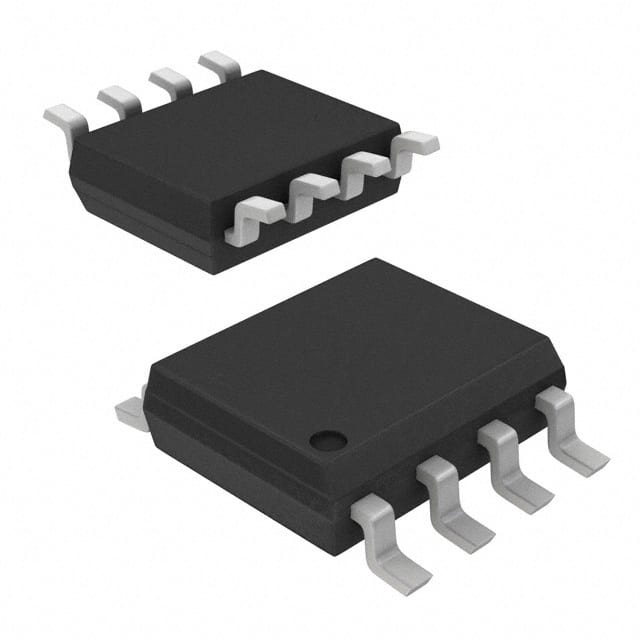
|
|
| Part Number | LMV393IDR | LMV393IDRG4 |
| Manufacturer | Texas Instruments | Texas Instruments |
| Package/Case | 8-SOIC (0.154", 3.90mm Width) | 8-SOIC (0.154", 3.90mm Width) |
| Series | - | - |
| Packaging | Tape & Reel (TR) | Tape & Reel (TR) |
| Product Status | Active | Discontinued at Digi-Key |
| Type | General Purpose | General Purpose |
| Number of Elements | 2 | 2 |
| Output Type | Open-Collector | Open-Collector |
| Voltage - Supply, Single/Dual (±) | 2.7V ~ 5.5V | 2.7V ~ 5.5V |
| 7mV @ 5V | 7mV @ 5V | |
| Voltage - Input Offset (Max) | 0.25µA @ 5V | 0.25µA @ 5V |
| Current - Input Bias (Max) | 84mA @ 5V | 84mA @ 5V |
| Current - Output (Typ) | 250µA | 250µA |
| Current - Quiescent (Max) | - | - |
| CMRR, PSRR (Typ) | 600ns | 600ns |
| Propagation Delay (Max) | - | - |
| Hysteresis | -40°C ~ 85°C | -40°C ~ 85°C |
| Operating Temperature | - | - |
| Grade | - | - |
| Qualification | Surface Mount | Surface Mount |
| 8-SOIC | 8-SOIC |
User Guide
- Purchase & Inquiry
- Package
- Shipping Information
- Customer Review
You may place an order without registering to IC-MAX.COM
We strongly suggest you sign in before purchasing as you can track your order in real time.
For your convenience, we accept multiple payment methods in USD, including PayPal, Credit Card, and wire transfer.
RFQ (Request for Quotations)
It is recommended to request for quotations to get the latest prices and inventories about the part.
Our sales will reply to your request by email within 24 hours.
1. You'll receive an order information email in your inbox. (Please remember to check the spam folder if you didn't hear from us).
2. Since inventories and prices may fluctuate to some extent, the sales manager is going to reconfirm the order and let you know if there are any updates.
-
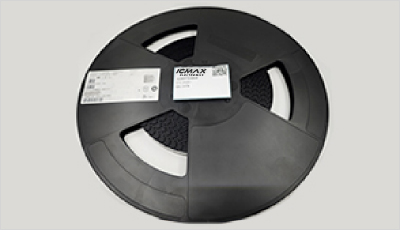
- Step1:Prepare product
-
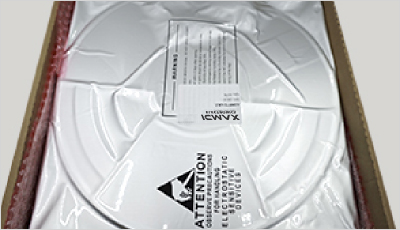
- Step2:Vacuum packaging
-
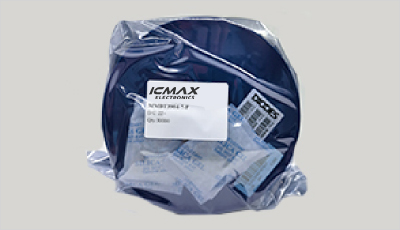
- Step3:Anti-static bag
-
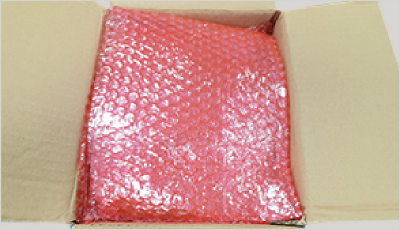
- Step4:Individual package
-
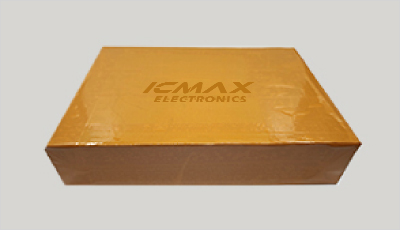
- Step5:Packaging box
-
- Step6:Barcode shipping label
Shipping starts at $40, but some countries will exceed $40. For example (South Africa, Brazil, India, Pakistan, Israel, etc.)
The basic freight (for package ≤0.5kg or corresponding volume) depends on the time zone and country.
Currently, our products are shipped through DHL, FedEx, SF, and UPS.
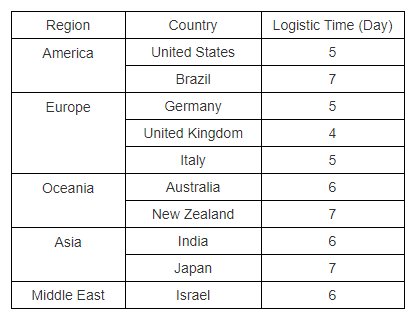
Delivery TimeOnce the goods are shipped, estimated delivery time depends on the shipping methods you chose:
FedEx International, 5-7 business days.
The following are some common countries' logistic time.
- Hot Sale
- Related Categories
- Include Parts
- Popular Search
The following parts include "LMV393IDR" in Silicon Labs LMV393IDR.
- Part Number
- Manufacturer
- Package
- Description
- LM2903DR Texas Instruments 8-SOIC (0.154", 3.90mm Width) IC COMPARATOR 2 GEN PUR 8SOIC
- LM339DR Texas Instruments 8-SOIC (0.154", 3.90mm Width) IC COMPARATOR 2 GEN PUR 8SOIC
- LM339PWR Texas Instruments 8-SOIC (0.154", 3.90mm Width) IC COMPARATOR 2 GEN PUR 8SOIC
- LM393DT STMicroelectronics 8-SOIC (0.154", 3.90mm Width) IC COMPARATOR 2 GEN PUR 8SOIC
- LM2901PWR Texas Instruments 8-SOIC (0.154", 3.90mm Width) IC COMPARATOR 2 GEN PUR 8SOIC
- LM2903DT STMicroelectronics 8-SOIC (0.154", 3.90mm Width) IC COMPARATOR 2 GEN PUR 8SOIC
- LM393DR Texas Instruments 8-SOIC (0.154", 3.90mm Width) IC COMPARATOR 2 GEN PUR 8SOIC
- LM239DR Texas Instruments 8-SOIC (0.154", 3.90mm Width) IC COMPARATOR 2 GEN PUR 8SOIC
- LM339APWR Texas Instruments 8-SOIC (0.154", 3.90mm Width) IC COMPARATOR 2 GEN PUR 8SOIC
- LM2903P Texas Instruments 8-SOIC (0.154", 3.90mm Width) IC COMPARATOR 2 GEN PUR 8SOIC
The following parts are popular search parts in Test and Measurement.
Inventory:16,250
Please send an inquiry. Send us your inquiry, and we will respond immediately.

- 1500+ Daily average RFQ Volume

- 20,000.000 Standard Product Unit

- 1800+ Worldwide Manufacturers

- 15,000+ In-stock Warehouse