Texas Instruments LM317AMDTX/NOPB

- Part No.:
- LM317AMDTX/NOPB
- Manufacturer:
- Texas Instruments
- Package:
- TO-252-3, DPAK (2 Leads + Tab), SC-63
- Datasheet:
-
 LM317AMDTX/NOPB.pdf
- Description:
- IC REG LIN POS ADJ 1.5A TO252-3
- Quantity:
-
Unit Price:$0
Ext Price:$0
- Payment:
-

- Shipping:
-


LM317AMDTX/NOPB Information
- Specifications
- Product Details
- Comparison
- Tags
- Product attributes
- Attribute value
- Manufacturer:
- Texas Instruments
- Series:
- -
- Package/Case:
- TO-252-3, DPAK (2 Leads + Tab), SC-63
- Packaging:
- Tape & Reel (TR)
- Product Status:
- Active
- Output Configuration:
- Positive
- Output Type:
- Adjustable
- Number of Regulators:
- 1
- Voltage - Input (Max):
- 40V
- Voltage - Output (Min/Fixed):
- 1.25V
- Voltage - Output (Max):
- 37V
- Voltage Dropout (Max):
- -
- Current - Output:
- 1.5A
- Current - Quiescent (Iq):
- 10 mA
- Current - Supply (Max):
- -
- PSRR:
- 80dB ~ 65dB (120Hz)
- Control Features:
- -
- Protection Features:
- Over Current, Over Temperature, Short Circuit
- Operating Temperature:
- -40°C ~ 125°C
- Grade:
- -
- Qualification:
- -
- Mounting Type:
- Surface Mount
- Supplier Device Package:
- TO-252-3
- Datasheet:
-
LM317AMDTX/NOPB.pdf
LM317AMDTX/NOPB — Adjustable 1.5A Linear Voltage Regulator (TO-252)
The LM317AMDTX/NOPB is an adjustable positive linear regulator from Texas Instruments, delivering 1.25V to 37V at up to 1.5A in a TO-252 surface-mount package. Output voltage is set with two external resistors: VOUT = 1.25V × (1 + R2/R1).
This is not an LDO — dropout is 2.25V, closer to a classic NPN regulator than a modern low-dropout part. So why use a 40-year-old adjustable regulator when modern fixed LDOs are everywhere? Because one LM317 replaces a drawer full of fixed-voltage parts. Any voltage, one BOM line.
What Are the Technical Specifications of LM317AMDTX/NOPB?
| Parameter | Value |
|---|---|
| Type | Adjustable Positive Linear Regulator (Floating) |
| Output Voltage Range | 1.25V to 37V (set by R1/R2 divider) |
| Output Current | 1.5A max (current-limit protected) |
| Input Voltage Range | Up to 40V (VIN − VOUT ≤ 40V) |
| Dropout Voltage (VIN−VOUT) | 2.25V typ, 2.5V max @ 1.5A |
| Reference Voltage (VREF) | 1.25V ±1% (LM317A grade) |
| Line Regulation | 0.01%/V typ |
| Load Regulation (10mA–1.5A) | 0.1% typ |
| PSRR @ 120Hz | 80dB typ (with CADJ = 10µF) |
| Output Noise | 0.003% of VOUT |
| Adjust Pin Current (IADJ) | 50µA typ, 100µA max |
| Minimum Load Current | 5–10mA (satisfied by R1 ≤ 240Ω) |
| Package | TO-252-3 (DPAK), θJA ≈ 103°C/W |
| Operating Temperature | −40°C to +125°C (junction) |
| Protection | Current limit, thermal shutdown, SOA protection |
| Packaging | Tape & Reel, 2,500 pcs/reel |
Key numbers that matter. VREF is 1.25V between OUT and ADJ — this appears across R1. VOUT = 1.25(1 + R2/R1) + IADJ×R2. The IADJ term is usually negligible (50µA × 2kΩ = 100mV), but at high output voltages with large R2, it adds measurable error.
Per the TI LM317A datasheet (Rev M, SNVS774M), the minimum load requirement is critical: the output must source at least 5mA to maintain regulation. The standard fix is R1 = 240Ω (or 120Ω for the LM317A), which draws 1.25V/240Ω = 5.2mA even with no external load.
LM317AMDTX Pinout (TO-252)
Critical difference from LM1117: pin 1 is ADJ (adjustment), not GND. The tab is VOUT. Swapping an LM317 into an LM1117 footprint without checking the pinout will short the adjustment pin to ground and output the reference voltage (1.25V).
When Should You Use (and NOT Use) the LM317AMDTX?
Use LM317AMDTX when:
- You need a non-standard voltage. 2.8V, 4.2V, 7.5V, 9V, 13.6V — any voltage from 1.25V to 37V with two resistors. One part covers every rail on your prototype BOM.
- Prototyping and lab work. The LM317 is the universal regulator for bench supplies and one-off designs. No need to stock a dozen fixed-voltage LDOs — keep a reel of LM317s and a resistor kit.
- Constant-current source. With a single resistor from OUT to ADJ, the LM317 becomes a precision current regulator: IOUT = 1.25V / R. Common for LED drivers, battery chargers, and current-loop interfaces.
- High-voltage linear regulation (up to 40V). The LM1117 maxes out at 15V; the LM317 handles 40V input. For industrial 24V rails or automotive 12V systems with load-dump margin, the LM317 is the linear regulator of choice.
Don't use LM317AMDTX when:
- Low-dropout operation required. 2.25V dropout at 1.5A means a 5V rail can only regulate to ~2.75V. For 5V-to-3.3V or Li-ion-to-3.3V, use a true LDO like the LM1117 (1.2V dropout) or TPS736 (75mV dropout).
- 800mA+ from 12V or higher. (12−5)×1A = 7W dissipation × 103°C/W → exceeds the thermal limit. For large VIN−VOUT differentials, use a switching regulator or the TO-220 LM317 with a heatsink.
- Ultra-low noise without careful layout. The ADJ pin is high-impedance and picks up noise. The CADJ bypass capacitor is essential for clean output. Without it, ripple rejection drops from 80dB to ~65dB.
- Fixed-voltage production BOM. If your design always needs 3.3V, a fixed LDO eliminates two resistors and the associated tolerance stack. The LM1117-3.3 is simpler and more repeatable.
What Are the Alternatives to LM317AMDTX/NOPB?
| Model | Type | Key Difference | Best For |
|---|---|---|---|
| LM317T | Adj Regulator, TO-220 | Same 1.5A, θJA = 23°C/W with heatsink | High dissipation, through-hole |
| LM1117-ADJ | Adj LDO, SOT-223/TO-252 | 800mA, 1.2V dropout, same R-divider formula | Lower dropout, lower current |
| LM1084IS-ADJ | Adj LDO, TO-263 | 5A, 1.3V dropout | High current adjustable |
| LM338T | Adj Regulator, TO-220 | 5A, 1.2–32V, military heritage | Very high current bench supplies |
| TLV1117-ADJ | Adj LDO, SOT-223 | 800mA, 1.2V dropout, ceramic-cap stable | Modern LM317 alternative for <15V |
LM317 vs LM1117-ADJ — dropout voltage decides. The LM1117-ADJ offers the same adjustable flexibility with 1.2V dropout. But it's limited to 800mA and 15V input. The LM317 handles 1.5A at 40V. 24V to 12V at 1A? The LM1117 can't touch it — the LM317 can.
LM317AMDTX vs LM317T — SMD or through-hole? The LM317T (TO-220) bolts to a heatsink for serious dissipation. The TO-252 uses PCB copper alone. At 1A, 12V to 5V, a TO-220 with clip-on heatsink runs at 60°C; the TO-252 at 103°C/W hits the limit. TO-252 for <500mA SMD; TO-220 for high current.
Output Voltage Range Comparison
The LM317 covers the entire range that would require a drawer full of fixed-voltage regulators. The trade-off: two extra resistors and higher dropout.
Typical Application: Adjustable Bench Supply (1.25V–12V)
Standard adjustable configuration. R1 = 240Ω sets 5.2mA minimum load. R2 selects output voltage: R2 = 0Ω gives 1.25V; R2 = 2kΩ gives ~11.5V. Place R1 as close to the OUT and ADJ pins as physically possible — trace resistance here directly degrades load regulation.
How Much Does the LM317AMDTX/NOPB Cost and Is It in Stock?
| Quantity | Reference Price (per unit) |
|---|---|
| 1–99 | $0.25–$0.50 |
| 100–999 | $0.15–$0.30 |
| 1,000+ (full reel) | $0.10–$0.20 |
Contact ICMASS for a same-day quote. The LM317 is one of the most commoditised linear regulators in production. TI, ON Semi, ST, and UTC all produce pin-compatible versions. We stock the TI version for traceability and guaranteed ±1% VREF (A grade). Reel quantities of 2,500 ship same-day from Shenzhen.
What Are the Typical Applications of LM317AMDTX?
Adjustable bench/lab power supply. A transformer, bridge rectifier, filter cap, and an LM317 is the classic linear bench supply topology. With a potentiometer for R2, you get a 1.25V–15V output at up to 1.5A. Add a digital voltmeter and you have a useful lab tool for under $5 in parts.
LED constant-current driver. With a single resistor R from OUT to ADJ, the LM317 regulates current at 1.25V/R. For a 350mA LED: R = 1.25/0.35 = 3.6Ω (1W resistor). The LM317 maintains constant current regardless of LED forward voltage, within the 40V input-output differential limit.
Battery charger (constant current / constant voltage). Configure the LM317 as a current limiter followed by voltage regulation for CC/CV charging of lead-acid or Li-ion batteries. The built-in current limit and thermal shutdown provide inherent safety.
High-voltage pre-regulator. Drop a 48V rail to 24V with the LM317 before a downstream switching or LDO stage. The 40V rating and SOA protection handle industrial voltage transients that would destroy a standard LDO.
Why Buy LM317AMDTX/NOPB from ICMASS?
Genuine TI LM317A grade (±1% VREF). The standard LM317 has ±4% reference tolerance. The 'A' grade (LM317A) guarantees ±1%, which matters when you're setting a 1.25V reference that gets multiplied by the R2/R1 ratio. A 4% error at VREF becomes a 4% error at VOUT.
Cross-reference support for adjustable regulators. Need an LM317 but at higher current? We stock the LM1084 (5A) and LM338 (5A). Need lower dropout? The LM1117-ADJ. One conversation covers your adjustable regulator needs.
BOM consolidation for power designs. You're likely ordering LM317s alongside the bridge rectifiers, filter capacitors, potentiometers, and protection diodes for the same power supply. One shipment, one invoice.
Shenzhen warehouse, global DHL/FedEx. Orders before 15:00 CST ship same day. International delivery in 5–10 business days.
Frequently Asked Questions About LM317AMDTX/NOPB
Q1: What value should I use for R1 and R2?
A: R1 = 240Ω (or 120Ω for LM317A) to guarantee 5–10mA minimum load. R2 is calculated from VOUT = 1.25(1 + R2/R1). For 5V output with R1 = 240Ω: R2 = 240 × (5/1.25 − 1) = 720Ω (use 750Ω standard). For adjustable supplies, use a 5kΩ potentiometer for R2.
Q2: Can I replace an LM1117 with an LM317?
A: Not without a PCB change — the pinouts are different. The LM1117 has GND on pin 1; the LM317 has ADJ on pin 1. Swapping one into the other's footprint will not work and may damage the regulator. The LM317 also needs two external resistors that the fixed LM1117 doesn't use.
Q3: Why does my LM317 output drift at light loads?
A: The minimum load current isn't being met. The LM317 needs 5–10mA flowing from OUT to maintain regulation. If R1 is too large (e.g., 1kΩ = 1.25mA), and your load draws near zero, the output voltage rises. Fix: use R1 ≤ 240Ω, or add a pre-load resistor from OUT to GND.
Q4: Do I need capacitors on the LM317?
A: Input: recommended if >15cm from filter cap. Output: optional for stability, recommended for transient response (1µF tantalum or 25µF aluminum). ADJ bypass (CADJ): 10µF for 80dB ripple rejection. Add protection diodes (1N4002) from ADJ to OUT and OUT to IN if output capacitance exceeds 25µF.
Q5: What's the difference between LM317, LM317A, and LM317M?
A: LM317A has tighter VREF (±1% vs ±4%) and uses R1 = 120Ω for even better regulation. LM317M is the medium-current version (500mA). All share the same pinout and operating principle. The A grade costs slightly more but eliminates the VREF tolerance as a source of output error.
Q6: Can the LM317 output zero volts?
A: Not without a negative supply. The minimum output is 1.25V (VREF). To get down to 0V, you need to pull the ADJ pin below ground with a negative voltage. This is common in bench supplies: add a −1.25V rail (e.g., from a charge pump or auxiliary winding) and the output goes to 0V.
Related Products
- LM317T — Same LM317, TO-220 through-hole for heatsinking
- LM1117-ADJ — Adj LDO, 800mA, 1.2V dropout
- LM1117IDTX-3.3/NOPB — Fixed 3.3V, TO-252, simpler BOM
- LM1117MPX-1.8/NOPB — Fixed 1.8V, SOT-223
- LM1084IS-ADJ — 5A adjustable LDO, TO-263
- TLV1117-ADJ — Modern ceramic-cap-stable adjustable LDO
| Image |

|
|
| Part Number | LM317AMDTX/NOPB | LM317AMDTX |
| Manufacturer | Texas Instruments | Texas Instruments |
| Series | - | - |
| Package/Case | TO-252-3, DPAK (2 Leads + Tab), SC-63 | TO-252-3, DPAK (2 Leads + Tab), SC-63 |
| Packaging | Tape & Reel (TR) | Tape & Reel (TR) |
| Product Status | Active | Obsolete |
| Output Configuration | Positive | Positive |
| Output Type | Adjustable | Adjustable |
| Number of Regulators | 1 | 1 |
| Voltage - Input (Max) | 40V | 40V |
| Voltage - Output (Min/Fixed) | 1.25V | 1.25V |
| Voltage - Output (Max) | 37V | 37V |
| Voltage Dropout (Max) | - | - |
| Current - Output | 1.5A | 1.5A |
| Current - Quiescent (Iq) | 10 mA | 10 mA |
| Current - Supply (Max) | - | - |
| PSRR | 80dB ~ 65dB (120Hz) | 80dB ~ 65dB (120Hz) |
| Control Features | - | - |
| Protection Features | Over Current, Over Temperature, Short Circuit | Over Current, Over Temperature, Short Circuit |
| Operating Temperature | -40°C ~ 125°C | -40°C ~ 125°C |
| Grade | - | - |
| Qualification | - | - |
| Mounting Type | Surface Mount | Surface Mount |
| Supplier Device Package | TO-252-3 | TO-252-3 |
User Guide
- Purchase & Inquiry
- Package
- Shipping Information
- Customer Review
You may place an order without registering to IC-MAX.COM
We strongly suggest you sign in before purchasing as you can track your order in real time.
For your convenience, we accept multiple payment methods in USD, including PayPal, Credit Card, and wire transfer.
RFQ (Request for Quotations)
It is recommended to request for quotations to get the latest prices and inventories about the part.
Our sales will reply to your request by email within 24 hours.
1. You'll receive an order information email in your inbox. (Please remember to check the spam folder if you didn't hear from us).
2. Since inventories and prices may fluctuate to some extent, the sales manager is going to reconfirm the order and let you know if there are any updates.
-
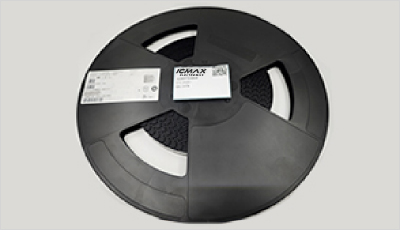
- Step1:Prepare product
-
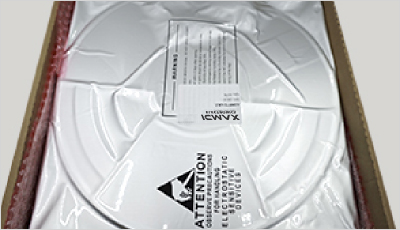
- Step2:Vacuum packaging
-
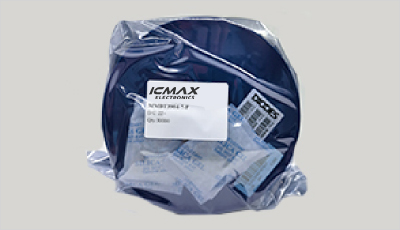
- Step3:Anti-static bag
-
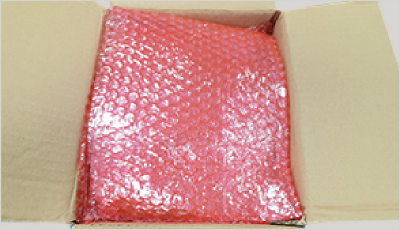
- Step4:Individual package
-
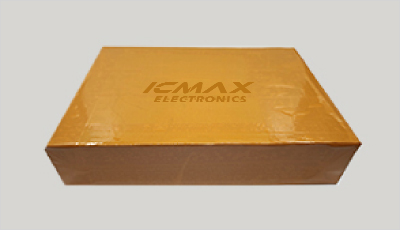
- Step5:Packaging box
-
- Step6:Barcode shipping label
Shipping starts at $40, but some countries will exceed $40. For example (South Africa, Brazil, India, Pakistan, Israel, etc.)
The basic freight (for package ≤0.5kg or corresponding volume) depends on the time zone and country.
Currently, our products are shipped through DHL, FedEx, SF, and UPS.
Delivery TimeOnce the goods are shipped, estimated delivery time depends on the shipping methods you chose:
FedEx International, 5-7 business days.
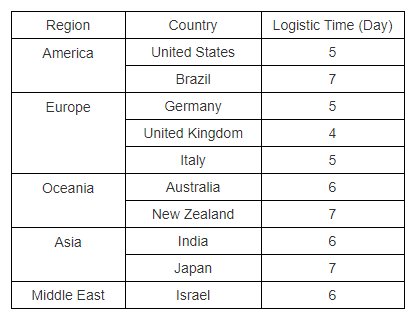
The following are some common countries' logistic time.
- Hot Sale
- Related Categories
- Include Parts
- Popular Search
- Voltage Regulators - Linear, Low Drop Out (LDO) Regulators(66836)
- Voltage Regulators - Linear Regulator Controllers(325)
- Voltage Regulators - Linear + Switching(1473)
- Voltage Regulators - DC DC Switching Regulators(35756)
- Voltage Reference(8428)
- V/F and F/V Converters(139)
- Thermal Management(515)
- Supervisors(41287)
- Special Purpose Regulators(4820)
- RMS to DC Converters(144)
The following parts include "LM317AMDTX/NOPB" in Silicon Labs LM317AMDTX/NOPB.
- Part Number
- Manufacturer
- Package
- Description
- MIC5504-1.8YM5-TR Microchip Technology TO-252-3, DPAK (2 Leads + Tab), SC-63 IC REG LIN POS ADJ 1.5A TO252-3
- MIC5504-3.3YM5-TR Microchip Technology TO-252-3, DPAK (2 Leads + Tab), SC-63 IC REG LIN POS ADJ 1.5A TO252-3
- MIC5365-3.0YC5-TR Microchip Technology TO-252-3, DPAK (2 Leads + Tab), SC-63 IC REG LIN POS ADJ 1.5A TO252-3
- MIC5365-1.8YC5-TR Microchip Technology TO-252-3, DPAK (2 Leads + Tab), SC-63 IC REG LIN POS ADJ 1.5A TO252-3
- MIC5365-2.5YC5-TR Microchip Technology TO-252-3, DPAK (2 Leads + Tab), SC-63 IC REG LIN POS ADJ 1.5A TO252-3
- MIC5365-3.3YC5-TR Microchip Technology TO-252-3, DPAK (2 Leads + Tab), SC-63 IC REG LIN POS ADJ 1.5A TO252-3
- MIC5365-3.3YD5-TR Microchip Technology TO-252-3, DPAK (2 Leads + Tab), SC-63 IC REG LIN POS ADJ 1.5A TO252-3
- MIC5317-3.3YM5-TR Microchip Technology TO-252-3, DPAK (2 Leads + Tab), SC-63 IC REG LIN POS ADJ 1.5A TO252-3
- TLV1117LV33DCYR Texas Instruments TO-252-3, DPAK (2 Leads + Tab), SC-63 IC REG LIN POS ADJ 1.5A TO252-3
- MIC5317-3.3YMT-TZ Microchip Technology TO-252-3, DPAK (2 Leads + Tab), SC-63 IC REG LIN POS ADJ 1.5A TO252-3
The following parts are popular search parts in Test and Measurement.
Inventory:4,953
Please send an inquiry. Send us your inquiry, and we will respond immediately.

- 1500+ Daily average RFQ Volume

- 20,000.000 Standard Product Unit

- 1800+ Worldwide Manufacturers

- 15,000+ In-stock Warehouse