Texas Instruments LM1117IMPX-5.0

- Part No.:
- LM1117IMPX-5.0
- Manufacturer:
- Texas Instruments
- Package:
- TO-261-4, TO-261AA
- Datasheet:
-
 LM1117IMPX-5.0.pdf
- Description:
- IC REG LINEAR 5V 800MA SOT223-4
- Quantity:
-
Unit Price:$0
Ext Price:$0
- Payment:
-

- Shipping:
-


LM1117IMPX-5.0 Information
- Specifications
- Product Details
- Comparison
- Tags
- Product attributes
- Attribute value
- Manufacturer:
- Texas Instruments
- Series:
- -
- Package/Case:
- TO-261-4, TO-261AA
- Packaging:
- Tape & Reel (TR)
- Product Status:
- Obsolete
- Output Configuration:
- Positive
- Output Type:
- Fixed
- Number of Regulators:
- 1
- Voltage - Input (Max):
- 15V
- Voltage - Output (Min/Fixed):
- 5V
- Voltage - Output (Max):
- -
- Voltage Dropout (Max):
- 1.2V @ 800mA
- Current - Output:
- 800mA
- Current - Quiescent (Iq):
- 5 mA
- Current - Supply (Max):
- 10 mA
- PSRR:
- 75dB (120Hz)
- Control Features:
- -
- Protection Features:
- Over Current, Over Temperature
- Operating Temperature:
- -40°C ~ 125°C
- Grade:
- -
- Qualification:
- -
- Mounting Type:
- Surface Mount
- Supplier Device Package:
- SOT-223-4
- Datasheet:
-
LM1117IMPX-5.0.pdf
LM1117IMPX-5.0 - 5V Fixed LDO Regulator by Texas Instruments
The LM1117IMPX-5.0 is a fixed 5V low-dropout linear regulator from Texas Instruments. It delivers 800 mA with a dropout voltage of 1.2V at full load and ±1% output accuracy. Feed it from a 7.5V or 9V rail - common scenarios for 5V regulation - and you've got plenty of headroom for clean regulation.
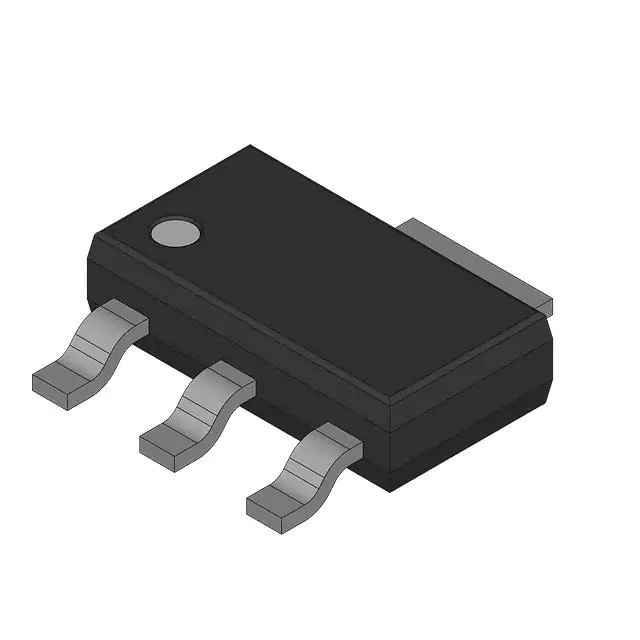
It comes in SOT-223, the same form factor as the 3.3V version and pin-compatible with the AMS1117-5.0. The tab is GND, which is the standard arrangement for this pinout. The /NOPB suffix means lead-free / RoHS compliant.
Like its 3.3V sibling, the LM1117 has been in production for over 20 years. It's not the newest LDO on the market - TI has the TLV1117 and TPS7A series as successors - but it's the kind of part you can design in without worrying about obsolescence.
What Is LM1117IMPX-5.0 and How Does It Work?
It's a linear regulator: unregulated DC in, stable 5V out. Dropout is 1.2V at 800 mA, so you need at least 6.2V input to guarantee a clean 5V at full load. A 9V input gives you 3.8V of headroom - that's plenty. At lighter loads, dropout drops below 1V, so a 7.5V wall wart works fine for most applications.
The "IMPX" suffix tells you: "I" = industrial temperature range (-40°C to +125°C), "MP" = SOT-223 package. The /NOPB means RoHS-compliant.
The LM1117 design goes back to National Semiconductor (acquired by TI in 2011). The silicon is well-characterized and the datasheet is thorough. For 5V fixed output, this is one of the most commonly used LDOs in industrial and embedded applications.
Position in the product line: The LM1117 sits between the AMS1117-5.0 (cheaper, 1A rated) and higher-current 5V LDOs like the LM1085-5.0 (3A, TO-220). The LM1117IMPX-5.0 is the modern orderable version - it replaces the older LM1117MP-5.0 markings.
But here's the question engineers actually ask: is this the right LDO for my 5V rail, or should I pick something else? Let's walk through it.
What Are the Specifications of LM1117IMPX-5.0?
| Parameter | Value | Notes |
|---|---|---|
| Manufacturer | Texas Instruments | Originally National Semi |
| Output Voltage | 5.0V (fixed) | ±1% accuracy |
| Max Output Current | 800 mA | Current limited at ~1.2A typ |
| Dropout Voltage | 1.2V typ @ 800 mA | 1.4V max at full load |
| Max Input Voltage | 15V | Absolute max 20V |
| Operating Input | 6.2V to 12V recommended | - |
| Quiescent Current (Iq) | 5 mA typ, 10 mA max | Not a low-Iq part |
| PSRR | 75 dB @ 120 Hz | ~30 dB @ 10 kHz |
| Line Regulation | 0.2% max | - |
| Load Regulation | 0.4% max | - |
| Output Noise | 40 μVrms typ | 10 Hz to 100 kHz |
| Protection | Current limit + Thermal shutdown | - |
| Package | SOT-223-4 (TO-261-4) | 6.70×3.70 mm |
| Junction Temperature | -40°C to +125°C | Industrial |
| θJA | 136 °C/W typ | SOT-223 on standard PCB |
| Min Output Capacitor | 10 μF tantalum | Required for stability |
Key Numbers That Matter
- Dropout = 1.2V @ 800 mA: If your input rail is 7.5V, you lose 1.2V across the regulator. The 1.3V headroom is comfortable. But what if you're running from a 6V rail - say, four AA batteries? You're right at the edge: 6V − 1.2V = 4.8V, which is below 5V. From our sourcing experience, we see engineers forget about battery sag all the time, then wonder why their 5V rail browns out.
- PSRR = 75 dB @ 120 Hz: Excellent at line frequency. Kills 120 Hz ripple from full-wave rectifiers. But at 10 kHz it drops to about 30 dB. If you're post-regulating a switching supply running at 100 kHz+, the LDO won't help much - add a ferrite bead instead.
- Iq = 5 mA: Not battery-friendly. If every μA counts, look at the TPS7A05 (Iq = 1 μA). But if you're running from a 9V wall wart or 24V industrial rail, 5 mA is irrelevant.
- Capacitor: 10 μF tantalum: Here's the gotcha. The LM1117 needs ESR in the 0.3–22 ohm range for stability. Ceramics (<10 mOhm) can cause oscillation. You'd be surprised how often we hear from customers who used ceramic caps and couldn't figure out why the output was unstable. Use tantalum or add a 1–2 ohm series resistor.
What Is LM1117IMPX-5.0 Used For?
So where does this thing actually end up in real designs?
5V Logic and MCU Power
Many industrial MCUs and logic families still run on 5V. The LM1117-5.0 is a clean source for powering 5V microcontrollers, CAN transceivers, RS-485 interfaces, and relay drivers. At 800 mA, you can power an MCU plus a handful of peripherals.
Post-Regulation for 9V/12V/24V to 5V
The most common application chain: a 24V industrial rail → buck converter (e.g., LM2596) → 7.5V intermediate → LM1117-5.0 → clean 5V. The buck handles the high voltage drop efficiently, the LDO cleans up the noise.
Sensor and Analog Power
Precision sensors often need a clean 5V excitation or bias voltage. The 40 μVrms output noise is good enough for 12-bit measurement systems.
Relay and Solenoid Driver Supply
5V is the standard coil voltage for many industrial relays. From what we see in the market, this is a common use case in industrial control panels.
LM1117IMPX-5.0 vs AMS1117-5.0 vs TLV1117-50
Here's the comparison you probably came for. How does the LM1117 stack up against its competition?
| Parameter | LM1117IMPX-5.0 | AMS1117-5.0 | TLV1117-50 |
|---|---|---|---|
| Manufacturer | TI | AMS | TI (newer) |
| Max Current | 800 mA | 1A | 800 mA |
| Dropout @ full load | 1.2V | 1.3V | 1.3V |
| Accuracy | ±1% | ±1.5% | ±1% |
| Iq | 5 mA | 5 mA | 2 mA |
| PSRR @ 120 Hz | 75 dB | 70 dB | 65 dB |
| Output Noise | 40 μVrms | 40 μVrms | 30 μVrms |
| Ceramic Cap OK? | No | No | Yes |
| Typical Price (1k) | Reference | ~20–40% lower | ~10–20% higher |
Pick LM1117IMPX-5.0 when: You need a known-quantity part with decades of field data. Safe choice for long-lifetime industrial products.
Pick AMS1117-5.0 when: Cost is the main driver. Pin-compatible. But here's the thing - AMS1117 is one of the most commonly faked LDOs we encounter in the Shenzhen market. If you go this route, buy from a trusted source.
Pick TLV1117-50 when: You want a newer TI design that works with ceramic output capacitors and draws lower quiescent current. Starting a new 5V rail design today? This is the better technical choice.
Frequently Asked Questions About LM1117IMPX-5.0
Q1: Is LM1117IMPX-5.0 the same as LM1117-5.0?
A: Same die. The IMPX suffix specifies SOT-223 package and industrial temperature range. LM1117IMPX-5.0/NOPB is the current lead-free orderable version.
Q2: What's the minimum input voltage I can feed it?
A: 6.2V at 800 mA load (5V + 1.2V dropout). At lighter loads, you can go as low as 6V. A 7.5V or 9V rail is the sweet spot. Here's a common mistake - people try to feed it 5V thinking it'll pass through cleanly. It won't. The output drops out of regulation. You'll find this exact question all over Arduino forums where folks try to power the Vin pin with 5V.
Q3: Can I drop it in place of an AMS1117-5.0?
A: Usually yes. Both are SOT-223 with the same pinout. The AMS1117-5.0 is rated for 1A vs the LM1117's 800 mA - so if your load is pushing 1A, stick with the AMS1117.
Q4: Why would I use an LDO instead of a buck converter for 12V to 5V?
A: Short answer: you probably shouldn't. At 12V to 5V, efficiency is only 42%. At 500 mA you're burning 3.5W as heat - that's a lot for a tiny SOT-223 package. From what we see in customer designs, the smarter play is a buck converter for the main drop and the LDO for post-regulation if noise is a concern.
Q5: Does it need a heatsink?
A: From 9V to 5V at 300 mA, dissipation is 1.2W. With θJA of 136°C/W, that's a 163°C rise - way too hot. For continuous loads above 100 mA from a 9V rail, you need copper pours or a heatsink. Arduino Nano users hit this all the time - the regulator overheats and shuts down in the middle of writing to an SD card.
Q6: Can I get away with ceramic capacitors?
A: Not directly. The LM1117 needs output capacitor ESR between 0.3–22 ohms. Ceramics are below 10 mOhm. Use them alone and you risk oscillation - this is literally the most common question about the LM1117 on TI's E2E forum. Solution: use tantalum or aluminum electrolytic, or add a 1–2 ohm resistor in series with a ceramic.
Q7: What happens if I draw more than 800 mA?
A: Current limit kicks in at ~1.2A typical. The output voltage drops but the device doesn't die immediately. If the overload continues, thermal shutdown takes over at ~160°C.
Q8: Can I power a 5V relay directly from this thing?
A: Yes, as long as the total relay current stays under 800 mA. A typical 5V relay coil draws 40–100 mA. Just account for switching inrush - coil energization can pull 2–3× steady-state, and the LM1117's current limit at ~1.2A gives you some margin.
Q9: Does it have reverse voltage protection?
A: No. If the input goes below ground or the output exceeds the input, it can be damaged. Add a protection diode from output to input if there's any risk of reverse current.
Q10: Wait, /NOPB means lead-free?
A: Yes. /NOPB = No Pb (lead) - RoHS compliant. The version without /NOPB contains lead. If you're designing for RoHS compliance, you want the /NOPB suffix.
Q11: What's the difference between the fixed 5V and the adjustable version?
A: The fixed version has internal feedback resistors set for 5V - two fewer external components. The adjustable version (LM1117-ADJ) needs two external resistors to set the output from 1.25V to 13.8V. If you always need 5V, go fixed.
Q12: Is this any good for battery-powered stuff?
A: Not really. 5 mA quiescent current is a lot when you're trying to save every microamp. From what we see in customer inquiries, most battery-powered designs use parts like the TPS7A05 (1 μA Iq) instead.
Pricing & Availability
| Parameter | Details |
|---|---|
| Part Number | LM1117IMPX-5.0/NOPB |
| Package | SOT-223-4 |
| Condition | New, original Texas Instruments |
| Lead Time | In stock, ship from Shenzhen |
| Packing | Tape & Reel |
Contact ICMASS for current pricing. We carry original TI LDOs with full traceability. Pin-compatible alternatives (AMS1117-5.0, TLV1117-50) also available for multi-sourcing.
| Image |

|
|
|
|
|
| Part Number | LM1117IMPX-3.3/NOPB | LM1117IMPX-ADJ/NOPB | LM1117IMPX-5.0/NOPB | LM1117IMPX-3.3 | LM1117IMPX-5.0 |
| Manufacturer | Texas Instruments | Texas Instruments | Texas Instruments | Texas Instruments | Texas Instruments |
| Series | LM1117-3.3 | - | - | LM1117-3.3 | - |
| Package/Case | TO-261-4, TO-261AA | TO-261-4, TO-261AA | TO-261-4, TO-261AA | TO-261-4, TO-261AA | TO-261-4, TO-261AA |
| Packaging | Tape & Reel (TR) | Tape & Reel (TR) | Tape & Reel (TR) | Tape & Reel (TR) | Tape & Reel (TR) |
| Product Status | Active | Active | Active | Discontinued at Digi-Key | Obsolete |
| Output Configuration | Positive | Positive | Positive | Positive | Positive |
| Output Type | Fixed | Adjustable | Fixed | Fixed | Fixed |
| Number of Regulators | 1 | 1 | 1 | 1 | 1 |
| Voltage - Input (Max) | 15V | 15V | 15V | 15V | 15V |
| Voltage - Output (Min/Fixed) | 3.3V | 1.25V | 5V | 3.3V | 5V |
| Voltage - Output (Max) | - | 13.8V | - | - | - |
| Voltage Dropout (Max) | 1.2V @ 800mA | 1.2V @ 800mA | 1.2V @ 800mA | 1.2V @ 800mA | 1.2V @ 800mA |
| Current - Output | 800mA | 800mA | 800mA | 800mA | 800mA |
| Current - Quiescent (Iq) | 5 mA | 5 mA | 5 mA | 5 mA | 5 mA |
| Current - Supply (Max) | 10 mA | 10 mA | 10 mA | 10 mA | 10 mA |
| PSRR | 75dB (120Hz) | 75dB (120Hz) | 75dB (120Hz) | 75dB (120Hz) | 75dB (120Hz) |
| Control Features | - | - | - | - | - |
| Protection Features | Over Current, Over Temperature | Over Current, Over Temperature | Over Current, Over Temperature | Over Current, Over Temperature | Over Current, Over Temperature |
| Operating Temperature | -40°C ~ 125°C | -40°C ~ 125°C | -40°C ~ 125°C | -40°C ~ 125°C | -40°C ~ 125°C |
| Grade | - | - | - | - | - |
| Qualification | - | - | - | - | - |
| Mounting Type | Surface Mount | Surface Mount | Surface Mount | Surface Mount | Surface Mount |
| Supplier Device Package | SOT-223-4 | SOT-223-4 | SOT-223-4 | SOT-223-4 | SOT-223-4 |
User Guide
- Purchase & Inquiry
- Package
- Shipping Information
- Customer Review
You may place an order without registering to IC-MAX.COM
We strongly suggest you sign in before purchasing as you can track your order in real time.
For your convenience, we accept multiple payment methods in USD, including PayPal, Credit Card, and wire transfer.
RFQ (Request for Quotations)
It is recommended to request for quotations to get the latest prices and inventories about the part.
Our sales will reply to your request by email within 24 hours.
1. You'll receive an order information email in your inbox. (Please remember to check the spam folder if you didn't hear from us).
2. Since inventories and prices may fluctuate to some extent, the sales manager is going to reconfirm the order and let you know if there are any updates.
-
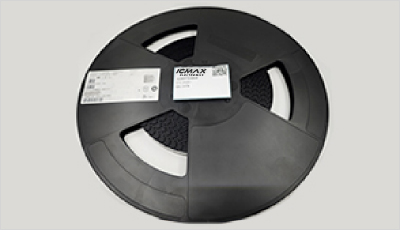
- Step1:Prepare product
-
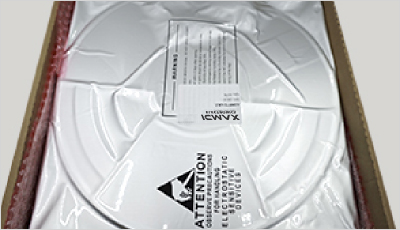
- Step2:Vacuum packaging
-
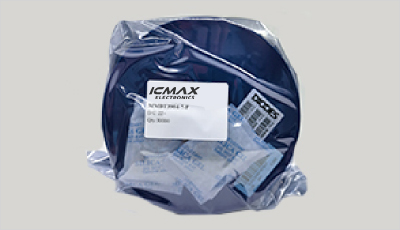
- Step3:Anti-static bag
-
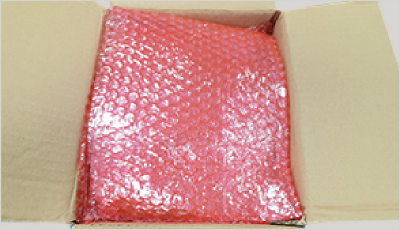
- Step4:Individual package
-
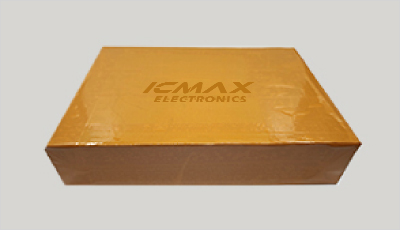
- Step5:Packaging box
-
- Step6:Barcode shipping label
Shipping starts at $40, but some countries will exceed $40. For example (South Africa, Brazil, India, Pakistan, Israel, etc.)
The basic freight (for package ≤0.5kg or corresponding volume) depends on the time zone and country.
Currently, our products are shipped through DHL, FedEx, SF, and UPS.
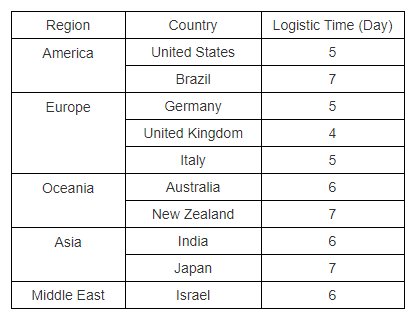
Delivery TimeOnce the goods are shipped, estimated delivery time depends on the shipping methods you chose:
FedEx International, 5-7 business days.
The following are some common countries' logistic time.
- Hot Sale
- Related Categories
- Include Parts
- Popular Search
- Voltage Regulators - Linear, Low Drop Out (LDO) Regulators(66836)
- Voltage Regulators - Linear Regulator Controllers(325)
- Voltage Regulators - Linear + Switching(1473)
- Voltage Regulators - DC DC Switching Regulators(35756)
- Voltage Reference(8428)
- V/F and F/V Converters(139)
- Thermal Management(515)
- Supervisors(41287)
- Special Purpose Regulators(4820)
- RMS to DC Converters(144)
The following parts include "LM1117IMPX-5.0" in Silicon Labs LM1117IMPX-5.0.
- Part Number
- Manufacturer
- Package
- Description
- MIC5504-1.8YM5-TR Microchip Technology TO-261-4, TO-261AA IC REG LINEAR 5V 800MA SOT223-4
- MIC5504-3.3YM5-TR Microchip Technology TO-261-4, TO-261AA IC REG LINEAR 5V 800MA SOT223-4
- MIC5365-3.0YC5-TR Microchip Technology TO-261-4, TO-261AA IC REG LINEAR 5V 800MA SOT223-4
- MIC5365-1.8YC5-TR Microchip Technology TO-261-4, TO-261AA IC REG LINEAR 5V 800MA SOT223-4
- MIC5365-2.5YC5-TR Microchip Technology TO-261-4, TO-261AA IC REG LINEAR 5V 800MA SOT223-4
- MIC5365-3.3YC5-TR Microchip Technology TO-261-4, TO-261AA IC REG LINEAR 5V 800MA SOT223-4
- MIC5365-3.3YD5-TR Microchip Technology TO-261-4, TO-261AA IC REG LINEAR 5V 800MA SOT223-4
- MIC5317-3.3YM5-TR Microchip Technology TO-261-4, TO-261AA IC REG LINEAR 5V 800MA SOT223-4
- TLV1117LV33DCYR Texas Instruments TO-261-4, TO-261AA IC REG LINEAR 5V 800MA SOT223-4
- MIC5317-3.3YMT-TZ Microchip Technology TO-261-4, TO-261AA IC REG LINEAR 5V 800MA SOT223-4
The following parts are popular search parts in Test and Measurement.
Inventory:0
Please send an inquiry. Send us your inquiry, and we will respond immediately.

- 1500+ Daily average RFQ Volume

- 20,000.000 Standard Product Unit

- 1800+ Worldwide Manufacturers

- 15,000+ In-stock Warehouse