STMicroelectronics M24128-BWMN6TP

- Part No.:
- M24128-BWMN6TP
- Manufacturer:
- STMicroelectronics
- Category:
- Memory
- Package:
- 8-SOIC (0.154", 3.90mm Width)
- Datasheet:
-
 M24128-BWMN6TP.pdf
- Description:
- IC EEPROM 128KBIT I2C 8SOIC
- Quantity:
-
Unit Price:$0
Ext Price:$0
- Payment:
-

- Shipping:
-


M24128-BWMN6TP Information
- Specifications
- Product Details
- Comparison
- Tags
- Product attributes
- Attribute value
- Manufacturer:
- STMicroelectronics
- Series:
- -
- Package/Case:
- 8-SOIC (0.154", 3.90mm Width)
- Packaging:
- Tape & Reel (TR)
- Product Status:
- Not For New Designs
- Programmable:
- Not Verified
- Memory Type:
- Non-Volatile
- Memory Format:
- EEPROM
- Technology:
- EEPROM
- Memory Size:
- 128Kbit
- Memory Organization:
- 16K x 8
- Memory Interface:
- I2C
- Clock Frequency:
- 1 MHz
- Write Cycle Time - Word, Page:
- 5ms
- Access Time:
- 450 ns
- Voltage - Supply:
- 2.5V ~ 5.5V
- Operating Temperature:
- -40°C ~ 85°C (TA)
- Grade:
- -
- Qualification:
- -
- Mounting Type:
- Surface Mount
- Supplier Device Package:
- 8-SOIC
- Datasheet:
-
M24128-BWMN6TP.pdf
M24128-BWMN6TP — 128Kbit I²C Serial EEPROM (SOP-8) from STMicroelectronics
The M24128-BWMN6TP is a 128Kbit (16K × 8) I²C serial EEPROM in SOP-8 from STMicroelectronics — running from 2.5V to 5.5V, clocking at 1MHz in Fast-mode Plus, with a 64-byte page write and a 5ms write cycle.
From what we see across Shenzhen lots (2025–2026), the M24128 is the default I²C EEPROM on parameter-storage footprints — calibration data, serial numbers, and factory settings that a SPI flash would chew through in a year of writes.
The most common field complaint isn't a dead chip — it's the WC pin left high silently rejecting every write, or the 2-byte internal address forgotten by firmware written for small 24C02-class parts.
What Are the Technical Specifications of M24128-BWMN6TP?
| Parameter | Value |
|---|---|
| Type | Serial I²C EEPROM |
| Density | 128Kbit (16K × 8) |
| Package | SOP-8 (SOIC-8), ECOPACK2, MSL 1 |
| Supply Voltage (VCC) | 2.5V–5.5V |
| Clock Frequency | 1MHz (Fm+), 400kHz (Fm), 100kHz (Std) |
| Page Size | 64 bytes |
| Write Cycle Time (tWC) | 5ms max (byte and page write) |
| Write Endurance | >4 million write cycles |
| Data Retention | >200 years |
| Supply Current (ICC) | 2mA typ, 2.5mA max |
| Operating Temperature | −40°C to +85°C (industrial) |
| Device Address | 0x50 base (A0/A1/A2 selectable) |
| Read Modes | Random, sequential (auto-increment) |
| Protection | Hardware WC pin, ESD, ECC, power-on reset |
Key numbers that matter: the >4 million write cycles is the spec that separates EEPROM from flash — roughly 40× the endurance of a typical SPI NOR flash. That's the whole reason calibration data lives on an EEPROM. But why does endurance matter more than speed for a parameter store?
The 5ms write cycle is the hidden tax: after every page write the chip goes busy for up to 5ms. Poll for the ACK, don't just fire writes back-to-back.
When Should You Use (and NOT Use) the M24128-BWMN6TP?
✅ Use M24128-BWMN6TP when:
- Frequent, byte-granular data updates. Calibration coefficients, counters, and configuration fields rewritten daily — the 4M-cycle endurance absorbs years of that.
- You're already on an I²C bus. Two wires, shared with sensors and RTCs, no extra SPI CS lines. Address pins A0/A1/A2 let you stack up to eight parts on one bus.
- Data must survive power loss instantly. EEPROM writes are atomic per byte and need no erase step — no block-erase window where a power cut corrupts neighboring data.
- Serial numbers and factory data at 2.5–5.5V. The wide supply range covers 3.3V and 5V logic systems without a regulator on the memory rail.
- Drop-in 24C128 compatibility. The M24128 family follows the standard 24C128 I²C protocol — ST, Microchip, onsemi, and clones share the same address scheme.
❌ Don't use M24128-BWMN6TP when:
- You need more than 16KB. 128Kbit is a parameter store, not a file system. For application data or code, step up to a SPI NOR flash (W25Q32-class).
- You're streaming or logging large blocks. The 64-byte page limit and 5ms write cycle cap throughput at roughly 12KB/s of sustained writes — a SPI flash with 256-byte pages and fast program runs circles around it.
- Your bus is noisy or long. I²C tops out around 400kHz–1MHz and needs pull-ups; a noisy harness wants SPI or a differential bus instead.
- Writes are rare but you need huge capacity. If the data changes once at the factory and never again, a cheaper SPI flash (100K-cycle endurance) is plenty.
What Are the Alternatives to M24128-BWMN6TP?
| Model | Type | Key Difference | Best For |
|---|---|---|---|
| M24128-BWMN6TP | ST I²C EEPROM, SOP-8 | 128Kbit, 1MHz Fm+, 4M cycles, ECC | Parameter storage on I²C buses |
| AT24C128 | Microchip I²C EEPROM | Same 24C128 protocol, 400kHz typical | Second-source 24C128 footprints |
| CAT24C128 | onsemi I²C EEPROM | Same class, pin-compatible | Dual-source 24C128 designs |
| W25Q32JVSSIQ | Winbond SPI NOR flash | 32Mbit, 256-byte pages, ~100K cycles | Firmware, logs, large data storage |
| GD25Q16CTIGR | GigaDevice SPI NOR flash | 16Mbit SPI flash, low cost | Code storage and boot memory |
The 24C128 vs SPI flash decision in one line: EEPROM for data that changes often and must survive power cuts; SPI flash for data that's mostly written once and read many times. The 4M-cycle endurance gap is the deciding number.
SOP-8 pinout: pins 1–3 (A0/A1/A2) select the I²C address — all grounded gives 0x50. Pin 5 is SDA, pin 6 is SCL. Pin 7 (WC) is the write-control pin: tie it to GND for writes, high for hardware write protection.
I²C bus connection: SDA and SCL run from the MCU to pins 5 and 6, each with a 4.7kΩ pull-up to VCC — the pull-ups are mandatory, internal MCU pull-ups are not enough. A0/A1/A2 grounded selects address 0x50; WC to GND enables writes.
How do you know whether one chip can do both jobs?
Write endurance — EEPROM vs SPI NOR flash, this is why the chip exists:
Write a counter every second and the EEPROM lasts 46 days; the flash wears out the same section in just over a day. EEPROM is the only memory that makes frequent byte updates survivable.
What Are the Typical Applications of M24128-BWMN6TP?
Calibration and parameter storage: sensor offsets, gain coefficients, and trim values written at the factory and updated in the field. The 4M-cycle endurance absorbs firmware updates that rewrite the block a hundred times a day.
Serial numbers and device identity: one page holds the MAC address, serial, and manufacture date, written once and read at every boot. The 200-year retention means the identity outlives the product.
Configuration memory on shared I²C buses: alongside an RTC, a temperature sensor, and a battery monitor, the EEPROM rides the same two wires. The A0/A1/A2 pins let multiple EEPROMs coexist at different addresses.
Industrial and medical data logging: counters, event flags, and last-known-good state written on every power transition. EEPROM's atomic byte writes survive mid-write power loss without corrupting the neighboring data — something flash's block-erase can't promise.
Why Buy M24128-BWMN6TP from ICMASS?
Every lot tested for address decode and write behavior. We batch-verify the device responds at 0x50 and completes a full page write before shipping. Counterfeit and re-marked 24C128s commonly fail page-write wrap or read back garbage at the wrong address.
Cross-reference support for the 24C128 family. Not sure whether the board wants ST, Microchip, or onsemi? Send us your bus speed and capacity requirement — we'll tell you which part drops into the footprint.
BOM consolidation for control boards. The same product usually carries an MCU, an RTC, and the M24128. One shipment from Shenzhen covers the whole digital section.
Same-day dispatch, 5–10 days worldwide. Orders before 15:00 CST ship same day via DHL or FedEx. For volume orders, we source directly from the ST production line.
Frequently Asked Questions About M24128-BWMN6TP
Q1: My MCU can't find the EEPROM on the I²C bus — what's wrong?
A: Run an I²C scanner and check the address pins — most "missing" EEPROMs are at a different address than the code expects. With A0/A1/A2 grounded the part answers at 0x50; any high pin shifts it (0x52, 0x54, etc.). Address pins must be tied to VCC or GND — floating inputs behave unpredictably. Missing 4.7k pull-ups cause the same symptom.
Q2: Writes are silently rejected — why?
A: The WC pin is high, or the pull-up is missing. Tie pin 7 to GND to enable writes; tied high, the whole array is hardware-write-protected and every write is silently ignored. This is the first hardware check in every EEPROM troubleshooting thread.
Q3: My code works with a 24C02 but hangs with the M24128 — what changed?
A: The 128Kbit part needs a 2-byte internal address. Small EEPROMs like the 24C02 address within one byte; the 24C128/24C256 family sends two address bytes after the device address. Firmware that skips the second byte stalls on the first random-access operation.
Q4: What pull-up resistor value do I need?
A: 4.7kΩ on both SDA and SCL — the internal MCU pull-ups aren't enough. At 400kHz–1MHz the bus capacitance charges through the pull-ups; too weak and edges round off, too strong and the bus draws excess current. 4.7k is the standard starting point for 3.3V and 5V buses.
Q5: My page write wraps around and corrupts data — what's happening?
A: You're crossing the 64-byte page boundary in a single write. Page writes wrap within the page — bytes past the boundary land at the page start. Split writes that span pages into separate page-write operations; this is the classic 24C128 page-write bug reported on forums.
Q6: How long do I wait between writes?
A: Up to 5ms — poll the ACK instead of delaying blindly. After a write the chip goes busy and won't ACK new start conditions. The robust pattern is ACK-polling: keep sending the device address until it ACKs, then continue. A fixed 5ms delay also works but wastes time on every write.
Q7: Can I put several EEPROMs on one bus?
A: Yes — up to eight, by setting A0/A1/A2 differently on each. Give each part a unique address and the bus supports them all. On longer buses watch the total capacitance: roughly one device per 1m of wire at 400kHz, or drop the clock rate.
Q8: Can a 3.3V MCU talk to a 5V bus EEPROM?
A: Yes — the M24128 runs from 2.5V to 5.5V, so power it at the MCU's rail. If the bus has 5V devices pulling up to 5V, put the EEPROM on the same 5V rail and level-shift the MCU side, or use series resistors. Don't pull a 3.3V-powered EEPROM's lines up to 5V.
Q9: Is 4 million write cycles really enough?
A: For parameter storage, comfortably — do the math. A device rewriting 10 bytes every minute does 14,400 writes a day: 4M cycles lasts 277 days if hammering one address, but with wear leveling across 16KB it's effectively never worn out. Flash's 100K cycles would fail the same pattern in a week of concentrated writes.
Q10: M24128 vs a SPI flash — which should I use?
A: Frequent small writes → EEPROM; big data or code → SPI flash. The EEPROM wins on endurance (4M vs 100K cycles), byte-granular writes with no erase step, and two-wire integration. The flash wins on capacity (32Mbit vs 128Kbit) and raw write throughput. See our EEPROM vs SPI Flash comparison for the full decision guide.
| Image |
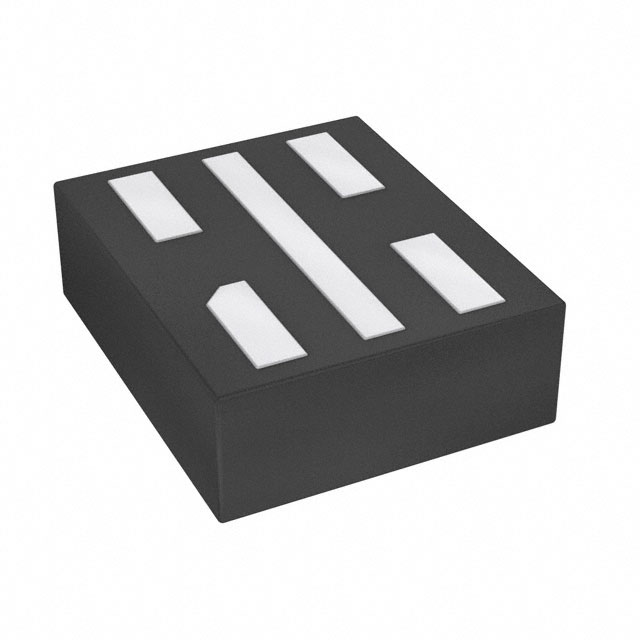
|

|
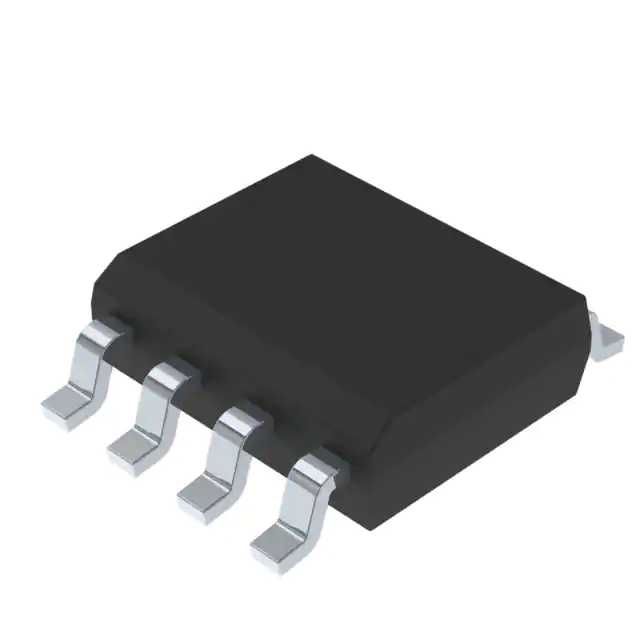
|
|
|
| Part Number | M24128-BFMH6TG | M24128X-FCU6T/TF | M24128-BFMN6TP | M24128-BWMN6TP | M24128-BRMN6TP |
| Manufacturer | STMicroelectronics | STMicroelectronics | STMicroelectronics | STMicroelectronics | STMicroelectronics |
| Series | - | - | - | - | - |
| Package/Case | 5-UFDFN | 4-XFBGA, WLCSP | 8-SOIC (0.154", 3.90mm Width) | 8-SOIC (0.154", 3.90mm Width) | 8-SOIC (0.154", 3.90mm Width) |
| Packaging | Tape & Reel (TR) | Tape & Reel (TR) | Tape & Reel (TR) | Tape & Reel (TR) | Tape & Reel (TR) |
| Product Status | Active | Active | Active | Not For New Designs | Active |
| Programmable | Not Verified | Not Verified | Not Verified | Not Verified | Verified |
| Memory Type | Non-Volatile | Non-Volatile | Non-Volatile | Non-Volatile | Non-Volatile |
| Memory Format | EEPROM | EEPROM | EEPROM | EEPROM | EEPROM |
| Technology | EEPROM | EEPROM | EEPROM | EEPROM | EEPROM |
| Memory Size | 128Kbit | 128Kbit | 128Kbit | 128Kbit | 128Kbit |
| Memory Organization | 16K x 8 | 16K x 8 | 16K x 8 | 16K x 8 | 16K x 8 |
| Memory Interface | I2C | I2C | I2C | I2C | I2C |
| Clock Frequency | 1 MHz | 1 MHz | 1 MHz | 1 MHz | 1 MHz |
| Write Cycle Time - Word, Page | 5ms | 5ms | 5ms | 5ms | 5ms |
| Access Time | 450 ns | 650 ns | 450 ns | 450 ns | 450 ns |
| Voltage - Supply | 1.7V ~ 5.5V | 1.7V ~ 5.5V | 1.7V ~ 5.5V | 2.5V ~ 5.5V | 1.8V ~ 5.5V |
| Operating Temperature | -40°C ~ 85°C (TA) | -40°C ~ 85°C (TA) | -40°C ~ 85°C (TA) | -40°C ~ 85°C (TA) | -40°C ~ 85°C (TA) |
| Grade | - | - | - | - | - |
| Qualification | - | - | - | - | - |
| Mounting Type | Surface Mount | Surface Mount | Surface Mount | Surface Mount | Surface Mount |
| Supplier Device Package | 5-UFDFPN (1.7x1.4) | 4-WLCSP (0.83x0.83) | 8-SOIC | 8-SOIC | 8-SOIC |
User Guide
- Purchase & Inquiry
- Package
- Shipping Information
- Customer Review
You may place an order without registering to IC-MAX.COM
We strongly suggest you sign in before purchasing as you can track your order in real time.
For your convenience, we accept multiple payment methods in USD, including PayPal, Credit Card, and wire transfer.
RFQ (Request for Quotations)
It is recommended to request for quotations to get the latest prices and inventories about the part.
Our sales will reply to your request by email within 24 hours.
1. You'll receive an order information email in your inbox. (Please remember to check the spam folder if you didn't hear from us).
2. Since inventories and prices may fluctuate to some extent, the sales manager is going to reconfirm the order and let you know if there are any updates.
-
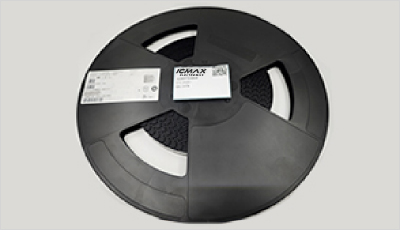
- Step1:Prepare product
-
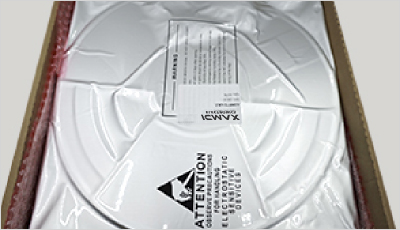
- Step2:Vacuum packaging
-
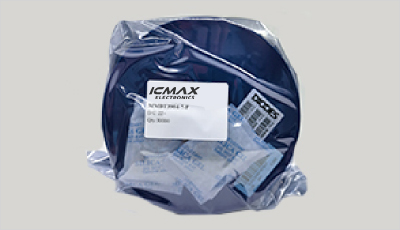
- Step3:Anti-static bag
-
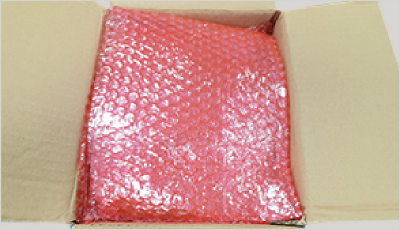
- Step4:Individual package
-
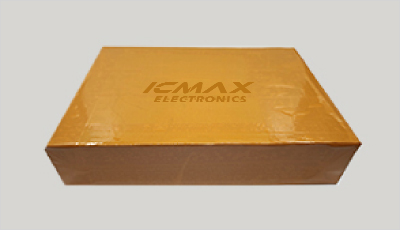
- Step5:Packaging box
-
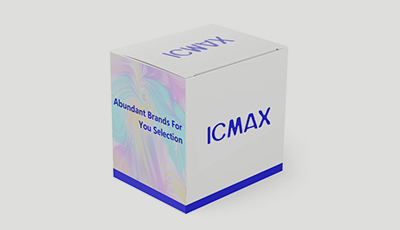
- Step6:Barcode shipping label
Shipping starts at $40, but some countries will exceed $40. For example (South Africa, Brazil, India, Pakistan, Israel, etc.)
The basic freight (for package ≤0.5kg or corresponding volume) depends on the time zone and country.
Currently, our products are shipped through DHL, FedEx, SF, and UPS.
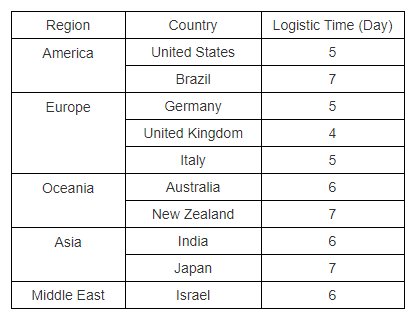
Delivery TimeOnce the goods are shipped, estimated delivery time depends on the shipping methods you chose:
FedEx International, 5-7 business days.
The following are some common countries' logistic time.
- Hot Sale
- Related Categories
- Include Parts
- Popular Search
The following parts include "M24128-BWMN6TP" in Silicon Labs M24128-BWMN6TP.
- Part Number
- Manufacturer
- Package
- Description
- M24C02-WMN6TP STMicroelectronics 8-SOIC (0.154", 3.90mm Width) IC EEPROM 128KBIT I2C 8SOIC
- AT24C02C-XHM-T Microchip Technology 8-SOIC (0.154", 3.90mm Width) IC EEPROM 128KBIT I2C 8SOIC
- AT21CS01-STUM10-T Microchip Technology 8-SOIC (0.154", 3.90mm Width) IC EEPROM 128KBIT I2C 8SOIC
- AT24C02C-SSHM-T Microchip Technology 8-SOIC (0.154", 3.90mm Width) IC EEPROM 128KBIT I2C 8SOIC
- 24LC01BT-I/OT Microchip Technology 8-SOIC (0.154", 3.90mm Width) IC EEPROM 128KBIT I2C 8SOIC
- M24C02-FMC6TG STMicroelectronics 8-SOIC (0.154", 3.90mm Width) IC EEPROM 128KBIT I2C 8SOIC
- AT24CS02-SSHM-T Microchip Technology 8-SOIC (0.154", 3.90mm Width) IC EEPROM 128KBIT I2C 8SOIC
- 93LC46BT-I/OT Microchip Technology 8-SOIC (0.154", 3.90mm Width) IC EEPROM 128KBIT I2C 8SOIC
- AT24C04C-SSHM-T Microchip Technology 8-SOIC (0.154", 3.90mm Width) IC EEPROM 128KBIT I2C 8SOIC
- 24LC01BT-I/SN Microchip Technology 8-SOIC (0.154", 3.90mm Width) IC EEPROM 128KBIT I2C 8SOIC
The following parts are popular search parts in Test and Measurement.
Inventory:12,903
Please send an inquiry. Send us your inquiry, and we will respond immediately.

- 1500+ Daily average RFQ Volume

- 20,000.000 Standard Product Unit

- 1800+ Worldwide Manufacturers

- 15,000+ In-stock Warehouse