STMicroelectronics JST134Q-600D

- Part No.:
- JST134Q-600D
- Manufacturer:
- STMicroelectronics
- Category:
- TRIACs
- Package:
- TO-126
- Description:
- TRIAC SENS GATE 700V 4A TO220AB
- Quantity:
-
Unit Price:$0
Ext Price:$0
- Payment:
-

- Shipping:
-


JST134Q-600D Information
- Specifications
- Product Details
- Comparison
- Tags
- Product attributes
- Attribute value
- Manufacturer:
- STMicroelectronics
- Series:
- -
- Package/Case:
- TO-126
- Packaging:
- Bulk
- Product Status:
- Active
- Triac Type:
- Voltage - Off State:
- 600 V
- Current - On State (It (RMS)) (Max):
- 4 A
- Voltage - Gate Trigger (Vgt) (Max):
- 1.5 V
- Current - Non Rep. Surge 50, 60Hz (Itsm):
- 40A, 42A
- Current - Gate Trigger (Igt) (Max):
- 5/5/5/10 mA
- Current - Hold (Ih) (Max):
- Configuration:
- Single
- Operating Temperature:
- -40°C ~ 150°C (TJ)
- Grade:
- -
- Qualification:
- -
- Mounting Type:
- Supplier Device Package:
JST134Q-600D — 4A/600V Four-Quadrant TRIAC (TO-126)
The JST134Q-600D is a 4A, 600V four-quadrant TRIAC from JieJie Microelectronics in TO-126 — the part for phase-controlled AC switching in the 1–3A load range. Gate trigger current is 5mA in quadrants 1–3 and 10mA in quadrant 4.
From our Shenzhen distribution work (2025–2026), 4A/600V TO-126 triacs like this one are the quiet workhorses of appliance control — dimmers, fan regulators, heater switches. The boards where a relay is too clunky and a MOSFET doesn't understand AC.
The number that decides whether your circuit holds: holding current is only 7mA max, latching current 10mA (20mA in quadrant 2). Below that load current, the triac drops out mid-cycle and the load flickers.
What Are the Technical Specifications of JST134Q-600D?
| Parameter | Value |
|---|---|
| Type | Four-quadrant TRIAC, general-purpose AC switching |
| Manufacturer | JieJie Microelectronics (JieJie / 捷捷微电) |
| Package | TO-126, 3-lead, tab = MT2, RoHS |
| On-state RMS Current (IT(RMS)) | 4A @ Tc ≤ 84°C |
| Repetitive Peak Off-State / Reverse Voltage (VDRM/VRRM) | 600V |
| Gate Trigger Current IGT (Quadrants 1/2/3) | 5mA max |
| Gate Trigger Current IGT (Quadrant 4) | 10mA max |
| Gate Trigger Voltage (VGT) | 1.0V max |
| Latching Current (IL) | 10mA max (Q1/3/4), 20mA max (Q2) |
| Holding Current (IH) | 7mA max |
| On-State Voltage (VTM) | 1.55V max @ ITM = 5A |
| Surge Current (ITSM) | 25A (20ms) / 27.5A (16.6ms) |
| Critical dV/dt (off-state) | 120 V/µs min @ 400V, gate open, Tj = 110°C |
| Critical dI/dt (on-state) | 50 A/µs (Q1–3), 30 A/µs (Q4) |
| Commutation dV/dt | 2.5 V/µs @ (dI/dt)c = 1.8A/ms |
| Peak Pulse Voltage (Vpp) | 3kV |
| Thermal Resistance Rth(j-c) | 7.5 °C/W |
| Operating Junction Temperature | -40°C to +125°C |
| Off-State Leakage (IRRM) | 5µA max @ VDRM/VRRM |
Key numbers that matter: the gate spec is where this part lives or dies. IGT 5/5/5/10mA means a single opto-triac class driver can fire it from a 3.3V or 5V MCU — but only if you feed the LED side enough current.
At 4A RMS, VTM 1.55V works out to roughly 5–6W of on-state loss, and Rth(j-c) of 7.5°C/W decides how much copper that needs.
Per the JieJie JST134 datasheet (Rev A.1.0), the 4A rating holds at Tc ≤ 84°C. In a sealed appliance enclosure you're realistically at 2–3A — derate for your real case temperature, not the datasheet's.
When Should You Use (and NOT Use) the JST134Q-600D?
✅ Use JST134Q-600D when:
- AC phase control — dimmers and motor speed. The core TRIAC job: cut a portion of the sine wave to dim lamps or slow fans in the 1–3A range.
- ON/OFF AC switching where relay bounce and wear hurt. No contacts, no bounce, no arcing — silent switching for appliance controls.
- Zero-cross switching with an opto-triac driver. Switching near the zero crossing kills EMI — a classic appliance-control pattern.
- Loads that need the 10mA quadrant-4 trigger. Some DC-driven opto drivers only fire in certain quadrants; the D-class gate gives you all four.
- Small induction-motor starting circuits. Listed in the datasheet's own applications — with a snubber for the phase shift.
❌ Don't use JST134Q-600D when:
- You're switching DC. A triac only turns off when current through it drops below IH — on DC it latches permanently. Use a MOSFET or relay.
- The load current is under ~20mA. Below holding current the device drops out every half-cycle. LED indicator strings and dry contacts are the wrong load.
- Heavily inductive loads without a snubber. Commutation dV/dt of 2.5V/µs will false-fire on motor back-EMF — plan the RC snubber.
- Continuous load above ~3A in a sealed box. 4A is a case-temperature rating; thermal derating is real.
- Mains above 600V or surge-heavy environments. The 3kV Vpp rating is a pulse spec, not a licence to skip varistors.
What Are the Alternatives to JST134Q-600D?
| Model | Type | Key Difference | Best For |
|---|---|---|---|
| JST134QP-600D | JieJie, TO-220 | Same 4A/600V die in the bigger TO-220 body | Through-hole sockets that need a better heat path |
| BT136-600D | NXP/WeEn, TO-220 | 4A/600V industry standard, same D-class gate | BOM dual-sourcing and TO-220 pin-compatible swaps |
| BTA06-600B | ST, TO-220 | 6A/600V with more current headroom | Derating-heavy designs and marginal loads |
| MAC4DSM | Littelfuse, DPAK | 4A/600V surface-mount TRIAC | SMD assembly lines that can't hand-insert TO-126 |
| Z0409MF | ST, TO-202 | 4A/600V, insulated plastic body | Live-chassis layouts where tab isolation matters |
The socket decision in one line: JST134Q-600D when you want the JieJie footprint and cost profile; BT136-600D when your BOM already sources NXP-class TO-220; MAC4DSM when the line is surface-mount.
For a TO-126 to TO-220 swap, check the pinout first — both are T1/T2/G on pins 1/2/3, so the mechanical change is usually the only one. Same part in a bigger body means better Rth(j-c) for the same die.
TO-126 pinout: pin 1 T1 (MT1), pin 2 T2 (MT2), pin 3 Gate, tab = MT2 — the standard TO-126 TRIAC arrangement. The tab is electrically MT2 and carries heat: bolt it to the copper or case if you plan to run the full 4A.
Opto-isolated phase control: AC Live feeds the load, then the JST134Q-600D’s T2; T1 returns to Neutral. The MCU drives the MOC3021’s LED through R1 (LED− returns to MCU ground).
The opto’s internal triac fires the main gate through Rg — pin 6 side to the gate, pin 4 side to T1 (MT1).
The gate-to-T1 resistor (47–100Ω) shunts leakage from the opto’s internal triac so the main device can’t self-trigger. The gate circuit is complete only because it returns through T1 — reference the gate to the load side instead and Rg carries full mains current.
Gate trigger current by quadrant — what your driver must supply:
The D-class gate is symmetric where it matters: 5mA in quadrants 1–3 and 10mA in quadrant 4. An opto-triac driver sized for 10mA+ covers every quadrant, so your drive circuit never picks the wrong polarity.
What Are the Typical Applications of JST134Q-600D?
Resistive-load dimmers: Phase control on incandescent and resistive loads is the classic socket. The 4A rating covers a 480W dimmer at 120V or 920W at 230V with headroom for inrush on cold filaments.
Fan and small motor speed controllers: Series with the motor, with an RC snubber across the triac. The 120V/µs static dV/dt and 2.5V/µs commutation dV/dt give margin against motor back-EMF when the gate drive is clean.
Heating regulation: ON/OFF or phase-cut control for appliance heaters, soldering irons, and thermal regulators — the datasheet's listed "heating regulation" application. Zero-cross switching keeps the mains clean.
Induction motor starting circuits: The datasheet lists these explicitly. A triac in series with the start winding gives controlled ramp-up where a centrifugal switch wears out.
Appliance ON/OFF switching: Silent, bounce-free switching for the appliance class — the relay alternative clicks, arcs, and wears. With zero-cross firing you get the EMI profile of a relay and none of its contact life limits.
Why Buy JST134Q-600D from ICMASS?
Lot-tested gate parameters. We verify IGT and IH on lot samples before shipping. On a triac, a remarked or downgraded die shows up first in the trigger circuit — marginal gate current and early drop-out are the classic tells.
Cross-reference support for the whole TO-126/TO-220 socket. Not sure whether the socket wants the JST134Q, a BT136-class part, or a DPAK die? Send us the load type, RMS current, and whether the board is through-hole — we'll match the body and gate class.
BOM consolidation for appliance controls. The same control BOM carries the TRIAC, the opto-triac driver, and the snubber passives — one shipment covers the whole switching stage.
Same-day dispatch, 5–10 days worldwide. Orders before 15:00 CST ship same day via DHL or FedEx.
Frequently Asked Questions About JST134Q-600D
Q1: What is the JST134Q-600D?
A: A 4A, 600V four-quadrant TRIAC from JieJie Microelectronics in TO-126. It switches AC loads in both half-cycles from a single gate — the standard device for dimmers, fan speed control, and appliance ON/OFF switching in the 1–3A range.
Q2: What does the "D" suffix mean on JST134Q-600D?
A: It's the gate sensitivity class: IGT ≤ 5mA in quadrants 1–3 and ≤ 10mA in quadrant 4. The "Q" means TO-126 package and "600" means 600V VDRM/VRRM. A "B" or "E" suffix variant has a different trigger class.
Q3: Can I trigger the JST134Q-600D directly from an MCU pin?
A: No — and this is the most common failure in beginner circuits. MCU pins deliver about 5mA and the gate needs 5–10mA with a clean return path. More importantly, the MCU's ground isn't the mains neutral. Use an opto-triac driver like the MOC3021 plus a gate resistor; it isolates the MCU and can supply the trigger current properly.
Q4: My triac circuit won't trigger — what should I check?
A: Check three things: gate current, gate reference, and quadrant. Is the drive delivering more than IGT (5mA here, 10mA in quadrant 4)? Is the gate referenced to T1 (MT1) — not the load side? And is the polarity correct for the quadrant you're firing? All three show up repeatedly in real forum threads on dead triac circuits.
Q5: What's the difference between latching current and holding current?
A: Latching current (10mA, 20mA in quadrant 2) is what's needed at turn-on to establish conduction; holding current (7mA) is what keeps it conducting. The gate pulse must persist until load current exceeds latching current — a pulse that's too short or a load that's too light drops out every half-cycle.
Q6: My triac turns on by itself — why?
A: False triggering, usually from leakage current or dV/dt. The opto-triac driver's internal device leaks enough at high temperatures to fire the main triac. A 47–100Ω resistor from gate to T1 shunts that leakage, and an RC snubber across the triac handles fast voltage spikes.
Q7: Can I use the JST134Q-600D to switch DC?
A: No. A TRIAC turns off only when its current drops below holding current — on DC it latches and stays on until the supply dies. DC switching needs a MOSFET, relay, or IGBT.
Q8: How much current can the JST134Q-600D really switch?
A: 4A RMS at case temperature ≤ 84°C, derated from there. In a sealed enclosure or on a small board, plan for 2–3A continuous. The Rth(j-c) of 7.5°C/W means the tab's thermal path decides what you actually get.
Q9: Where can I buy the JST134Q-600D?
A: Contact ICMASS for current pricing and availability. Volume pricing typically lands in the $0.10–$0.25/unit range depending on quantity. We stock the TO-126 part and can quote same-day for your quantity.
| Image |

|
| Part Number | JST134Q-600D |
| Manufacturer | STMicroelectronics |
| Series | - |
| Package/Case | TO-126 |
| Packaging | Bulk |
| Product Status | Active |
| Triac Type | |
| Voltage - Off State | 600 V |
| Current - On State (It (RMS)) (Max) | 4 A |
| Voltage - Gate Trigger (Vgt) (Max) | 1.5 V |
| Current - Non Rep. Surge 50, 60Hz (Itsm) | 40A, 42A |
| Current - Gate Trigger (Igt) (Max) | 5/5/5/10 mA |
| Current - Hold (Ih) (Max) | |
| Configuration | Single |
| Operating Temperature | -40°C ~ 150°C (TJ) |
| Grade | - |
| Qualification | - |
| Mounting Type | |
| Supplier Device Package |
User Guide
- Purchase & Inquiry
- Package
- Shipping Information
- Customer Review
You may place an order without registering to IC-MAX.COM
We strongly suggest you sign in before purchasing as you can track your order in real time.
For your convenience, we accept multiple payment methods in USD, including PayPal, Credit Card, and wire transfer.
RFQ (Request for Quotations)
It is recommended to request for quotations to get the latest prices and inventories about the part.
Our sales will reply to your request by email within 24 hours.
1. You'll receive an order information email in your inbox. (Please remember to check the spam folder if you didn't hear from us).
2. Since inventories and prices may fluctuate to some extent, the sales manager is going to reconfirm the order and let you know if there are any updates.
-
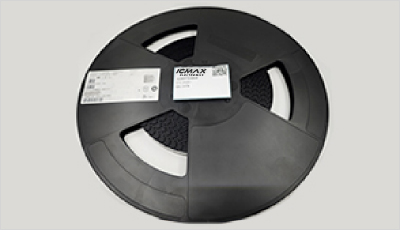
- Step1:Prepare product
-

- Step2:Vacuum packaging
-

- Step3:Anti-static bag
-

- Step4:Individual package
-
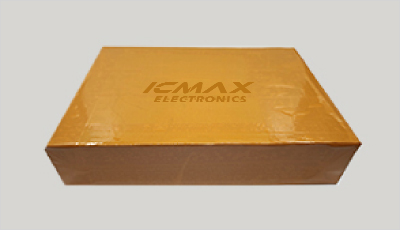
- Step5:Packaging box
-

- Step6:Barcode shipping label
Shipping starts at $40, but some countries will exceed $40. For example (South Africa, Brazil, India, Pakistan, Israel, etc.)
The basic freight (for package ≤0.5kg or corresponding volume) depends on the time zone and country.
Currently, our products are shipped through DHL, FedEx, SF, and UPS.
Delivery TimeOnce the goods are shipped, estimated delivery time depends on the shipping methods you chose:
FedEx International, 5-7 business days.
The following are some common countries' logistic time.

- Hot Sale
- Related Categories
- Include Parts
- Popular Search
The following parts include "JST134Q-600D" in Silicon Labs JST134Q-600D.
- Part Number
- Manufacturer
- Package
- Description
- Z0103NN5AA4 STMicroelectronics TO-126 TRIAC SENS GATE 700V 4A TO220AB
- Z0107MNT1G Littelfuse Inc. TO-126 TRIAC SENS GATE 700V 4A TO220AB
- Z0103MNT1G Littelfuse Inc. TO-126 TRIAC SENS GATE 700V 4A TO220AB
- T405-800B-TR STMicroelectronics TO-126 TRIAC SENS GATE 700V 4A TO220AB
- T835-600B-TR STMicroelectronics TO-126 TRIAC SENS GATE 700V 4A TO220AB
- 2N6073BG Littelfuse Inc. TO-126 TRIAC SENS GATE 700V 4A TO220AB
- 2N6075BG Littelfuse Inc. TO-126 TRIAC SENS GATE 700V 4A TO220AB
- BTA08-600CWRG STMicroelectronics TO-126 TRIAC SENS GATE 700V 4A TO220AB
- T835H-6G-TR STMicroelectronics TO-126 TRIAC SENS GATE 700V 4A TO220AB
- BTA16-800BRG STMicroelectronics TO-126 TRIAC SENS GATE 700V 4A TO220AB
The following parts are popular search parts in Test and Measurement.
Inventory:5,325
Please send an inquiry. Send us your inquiry, and we will respond immediately.

- 1500+ Daily average RFQ Volume

- 20,000.000 Standard Product Unit

- 1800+ Worldwide Manufacturers

- 15,000+ In-stock Warehouse