Power Integrations CAP200DG-TL

- Part No.:
- CAP200DG-TL
- Manufacturer:
- Power Integrations
- Category:
- Specialized ICs
- Package:
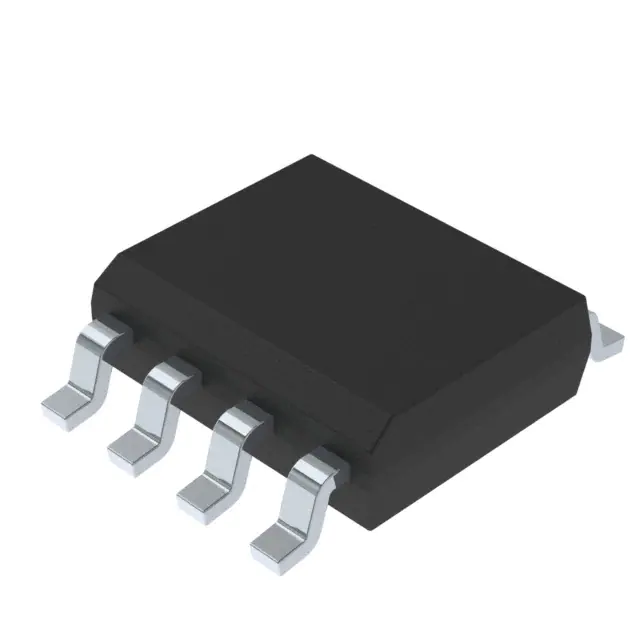
- 8-SOIC (0.154", 3.90mm Width)
- Datasheet:
-
 CAP200DG-TL.pdf
- Description:
- IC AUTOMATIC DISCHARGE 8-SO
- Quantity:
-
Unit Price:$0.400000
Ext Price:$0.400000
- Payment:
-

- Shipping:
-


CAP200DG-TL Information
- Specifications
- Product Details
- Comparison
- Tags
- Product attributes
- Attribute value
- Manufacturer:
- Power Integrations
- Series:
- CAPZero™
- Package/Case:
- 8-SOIC (0.154", 3.90mm Width)
- Packaging:
- Tape & Reel (TR)
- Product Status:
- Active
- Programmable:
- Not Verified
- Type:
- Automatic Discharge
- Applications:
- Converter, ACDC
- Mounting Type:
- Surface Mount
- Supplier Device Package:
- 8-SO
- Grade:
- -
- Qualification:
- -
- Datasheet:
-
CAP200DG-TL.pdf
CAP200DG-TL — Zero-Loss Automatic X-Capacitor Discharge IC (SOIC-8)
The CAP200DG-TL is Power Integrations' CAPZero-2 automatic X-capacitor discharge IC — a two-terminal switch in series with the bleeder resistors that cuts their standby loss to under 5mW at 230VAC.
From what we see across Shenzhen lots (2025–2026), this part lands in EU-market adapters and appliance boards, where no-load draw is regulated. A fixed 1MΩ bleeder burns ~53mW every hour the plug is in — CAPZero switches that off when the AC is live.
The number that gets quoted wrong: it's not a capacitor substitute. It's a switch. Open when AC is connected, closed when the plug comes out. One part covers 100nF to 6µF of X-cap, with a 1000V internal MOSFET.
What Are the Technical Specifications of CAP200DG-TL?
| Parameter | Value |
|---|---|
| Type | Zero-loss automatic X-capacitor discharge IC (CAPZero-2) |
| Manufacturer | Power Integrations |
| Package | SOIC-8 (only pins 2/3, 6/7 connected; 1/4/5/8 NC) |
| Drain Voltage (D1–D2) | 1000V max (either polarity) |
| X-Capacitor Range | 100nF to 6µF (one part covers all) |
| Standby Power Loss | <5mW at 230VAC |
| Supply Current (self-powered) | 21.7µA typ |
| AC Removal Detection Time | 22–31.4ms (47–63Hz line) |
| External Discharge Resistance (R1+R2) | 150kΩ to 7.5MΩ (RC < 1s) |
| Operating Temperature | -10°C to +105°C |
| Junction Temperature (max) | 110°C |
| Creepage / Clearance | >4mm (package + PCB layout) |
| Certifications | NEMKO, CB (IEC 62368-1 compliant) |
| Surge Margin Target | 950V design margin with 47pF CEXT optional |
Key numbers that matter: per the CAPZero-2 family datasheet, the part is fully self-powered — no external bias rail, no ground pin. The 21.7µA self-supply is the whole control circuit, and the 1000V drain rating is what lets it sit across the mains before or after the fuse.
Why does the AC-removal detection time matter? 22–31.4ms — under two line cycles. The moment the plug leaves the wall, the switch closes and the capacitor starts bleeding through R1+R2. That's the difference between meeting the IEC 62368 discharge window and flunking a certification audit.
The creepage note is the one engineers skip: >4mm across the SOIC-8 width only works if you couple pins 1–4 together and pins 5–8 together on the PCB. Datasheet Figure 3 shows the exact pad tie — copy it.
When Should You Use (and NOT Use) the CAP200DG-TL?
✅ Use CAP200DG-TL when:
- Standby regulations are in the spec. ErP Lot 6, US DOE, and California CEC all lean on no-load draw. The bleeder is a fixed cost you can zero out with one part.
- You want a bigger X-cap for EMI without paying for it. A larger X-cap lets you shrink the differential-mode inductor. CAPZero removes the standby penalty that used to cap that trade-off.
- Adapters, chargers, and appliance boards under ~1kW. No-load power is a measurable fraction of the budget at this scale.
- New designs hitting IEC 62368-1. The single-fault discharge path through two independent pin pairs and 1000V-rated silicon is a cleaner compliance story than a resistor chain.
- Industrial 18VAC / 24VAC rails. The datasheet validates operation down to these low line voltages — unusual for a mains part.
❌ Don't use CAP200DG-TL when:
- Multi-kilowatt power stages. Bleeder loss is a rounding error next to the main loss. The BOM cost isn't justified.
- You need a zero-crossing signal. That's the CAP300DG's job — the CAP200DG is discharge-only.
- Ambient below -10°C. The operating range stops at -10°C; cold-environment products need a different discharge strategy.
- No X-capacitor in the design. If there's nothing across L-N, there's nothing to discharge.
- X-cap above 6µF. Discharge current through the internal MOSFET exceeds the safe rating — keep the capacitor in the 100nF–6µF window.
What Are the Alternatives to CAP200DG-TL?
| Model / Approach | Type | Key Difference | Best For |
|---|---|---|---|
| Fixed bleeder resistor (1MΩ) | Passive | ~53mW constant loss at 230VAC | Tiny BOM, no standby regulation |
| CAP200DG (no -TL) | CAPZero-2 | Same silicon, different tape/reel suffix | The -TL suffix is packaging only |
| CAP300DG | CAPZero-2 + zero-cross | Adds lossless zero-crossing signal output | Discharge + mains-phase timing |
| CAP005DG (CAPZero-1) | 1st gen | Higher standby loss, older process | Legacy designs already qualified |
| Relay-based discharge | Discrete | Zero loss when open, bulky + coil power | Test equipment, not mass production |
The upgrade decision in one line: if you're already paying the 53mW tax for a 1MΩ bleeder, the CAP200DG-TL pays for itself in EU-market products — and the CAP300DG adds the zero-crossing output when the controller needs a mains-phase reference.
From our experience (2025–2026), the -TL vs non-TL question comes up more than it should: it's the same die. The suffix is tape-and-reel packaging. If a distributor quotes stock on one, the other ships the identical part.
Here's the thing to check before you design it in: your safety engineer will ask about the single-fault path. The CAP200DG answers with two independent pins per terminal — a lifted-pin fault on D1 (pins 2/3) or D2 (pins 6/7) can't open the discharge path.
Two-state operation: state A — AC is connected, the CAP200DG internal MOSFETs are open, and the R1+R2 bleeder path carries no current (loss <5mW). State B — the plug comes out, the IC closes within 22–31.4ms, and the X-cap discharges through R1+R2 with RC < 1s.
Typical application: the discharge leg is R1 → D1 (pins 2/3) → internal MOSFET → D2 (pins 6/7) → R2, in parallel with the X-cap across L-N. R1 = R2 keeps the fault-case dissipation split in half; the optional 47pF CEXT shaves surge peaks that would otherwise push D1–D2 past 950V.
X-cap discharge path power loss at 230VAC — fixed bleeder vs CAPZero:
A 10× cut on the discharge path alone — and the loss doesn't grow when you pick a bigger X-cap for EMI margin. On a regulated no-load budget, that 48mW is often the difference between passing and redesigning.
What Are the Typical Applications of CAP200DG-TL?
Notebook and phone adapters: No-load draw targets have gotten brutal in the EU. The bleeder at 230VAC is pure loss with the adapter idle — CAPZero zeroes it, and the 100nF–6µF range covers the X-cap in almost every adapter class.
Appliance control boards: Washing machines, air conditioners, and other always-plugged appliances accumulate standby watts across the fleet. One part replaces a resistor that was never doing anything but waiting for the plug to come out.
Displays and TVs: Larger panels need bigger X-caps for conducted-emission margin. CAPZero lets the designer take the bigger cap — and the smaller inductor — without eating the standby penalty that used to force the compromise.
LED drivers with no-load requirements: Non-isolated and isolated driver designs with low standby budgets use the same two-terminal discharge trick across the EMI filter.
Low-voltage industrial rails (18/24VAC): The datasheet explicitly validates operation at industrial low-line voltages — where a fixed bleeder keeps burning power at 24VAC the same way it does at 230VAC.
Why Buy CAP200DG-TL from ICMASS?
Every lot verified against the CAPZero-2 datasheet. We test D1–D2 leakage and the 1000V drain rating on incoming lots before they hit the shelf. A remarked low-voltage part fails the 1000V check instantly — that's the test that catches the counterfeits.
Cross-reference support for the whole discharge family. Not sure whether your design wants CAP200DG or CAP300DG? Send us your X-cap value, standby target, and whether you need the zero-crossing output — we'll tell you which part the board actually needs.
BOM consolidation for AC-DC front ends. The same power-section BOM carries a Power Integrations switcher (LNK/TNY/TOP), a fast-recovery diode (UF4007-class), and the CAPZero discharge IC. One shipment from Shenzhen covers the whole input stage.
Same-day dispatch, 5–10 days worldwide. Orders before 15:00 CST ship same day via DHL or FedEx. Volume orders source directly from the PI-authorized line.
Frequently Asked Questions About CAP200DG-TL
Q1: Is the CAP200DG a capacitor? Can it replace the X-capacitor?
A: No — it's a switch in series with the discharge resistors. It never stores energy. When AC is live it blocks current through the bleeder (cutting loss to <5mW); when AC is removed it closes and lets R1+R2 discharge the X-cap. The X-cap stays in the circuit; the IC just decides when the bleeder burns power.
Q2: How much standby power does it actually save?
A: A fixed 1MΩ bleeder at 230VAC burns about 53mW continuously. CAPZero brings that to under 5mW — a 10x cut on the discharge path alone. On a 90W notebook adapter the discharge resistor is one of the biggest no-load losses left after the controller is optimized.
Q3: Does it connect before or after the input fuse?
A: Either is allowed. The datasheet qualifies the part for use before or after the system input fuse, relying on the >4mm creepage and clearance and the 1000V drain rating. Most designs put it on the line side with the X-cap it protects.
Q4: What happens when AC power is disconnected?
A: The IC detects the removal within 22–31.4ms and closes the internal switch. The X-cap then discharges through R1+R2 with an RC time constant under 1 second — meeting the IEC 62368-1 discharge requirement (safe voltage within the standard's window after unplug).
Q5: What X-capacitor range does it cover?
A: 100nF to 6µF — one part number covers the entire range. Above 6µF the discharge current through the internal MOSFET exceeds the safe rating; below 100nF the discharge requirement is usually met by a small fixed resistor without the IC.
Q6: Does it need an external bias supply?
A: No — it's fully self-powered. The 21.7µA typical supply current comes from the line itself, with no ground pin and no external bias rail. That's what makes it a true two-terminal drop-in in series with the bleeder.
Q7: How do I choose R1 and R2?
A: Total resistance 150kΩ to 7.5MΩ, split into two equal resistors, sized for the RC < 1s discharge rule. The split matters under fault: if D1 shorts to D2, each resistor takes half the dissipation — at 265VAC with R1=R2=75kΩ, that's about 234mW per resistor. Size them for the fault case, not the normal case.
Q8: Why are two pins used for each of D1 and D2?
A: Single-pin fault redundancy. A lifted pin on D1 or D2 can't open the discharge path, because each terminal has two connected pins (2/3 for D1, 6/7 for D2). The datasheet states it's not possible to create a fault condition through a single pin fault — which is exactly what a safety audit looks for.
Q9: What's the difference between CAP200DG and CAP300DG?
A: CAP300DG adds a lossless zero-crossing signal output. Both are CAPZero-2 discharge ICs with the same <5mW standby loss; the CAP300DG also feeds a mains-phase reference to the controller. If you don't need the timing signal, CAP200DG is the simpler, cheaper choice.
Q10: Is it worth it in a high-power supply?
A: Usually not. In a multi-kilowatt PSU, bleeder loss is a rounding error next to the main-stage losses, and the CAPZero BOM cost isn't justified. The part pays off where no-load power is regulated and the input cap is significant — adapters, appliances, and displays under roughly 1kW.
| Image |
|
|
| Part Number | CAP200DG-TL | CAP200DG |
| Manufacturer | Power Integrations | Power Integrations |
| Series | CAPZero™ | CAPZero™ |
| Package/Case | 8-SOIC (0.154", 3.90mm Width) | 8-SOIC (0.154", 3.90mm Width) |
| Packaging | Tape & Reel (TR) | Tube |
| Product Status | Active | Discontinued at Digi-Key |
| Programmable | Not Verified | Not Verified |
| Type | Automatic Discharge | Automatic Discharge |
| Applications | Converter, ACDC | Converter, ACDC |
| Mounting Type | Surface Mount | Surface Mount |
| Supplier Device Package | 8-SO | 8-SO |
| Grade | - | - |
| Qualification | - | - |
User Guide
- Purchase & Inquiry
- Package
- Shipping Information
- Customer Review
You may place an order without registering to IC-MAX.COM
We strongly suggest you sign in before purchasing as you can track your order in real time.
For your convenience, we accept multiple payment methods in USD, including PayPal, Credit Card, and wire transfer.
RFQ (Request for Quotations)
It is recommended to request for quotations to get the latest prices and inventories about the part.
Our sales will reply to your request by email within 24 hours.
1. You'll receive an order information email in your inbox. (Please remember to check the spam folder if you didn't hear from us).
2. Since inventories and prices may fluctuate to some extent, the sales manager is going to reconfirm the order and let you know if there are any updates.
-
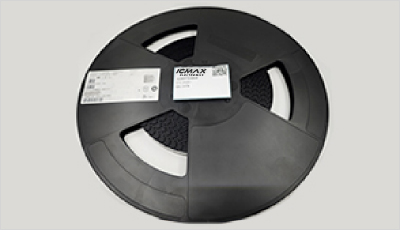
- Step1:Prepare product
-
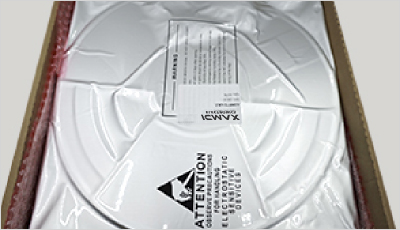
- Step2:Vacuum packaging
-
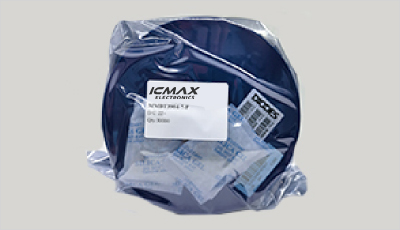
- Step3:Anti-static bag
-
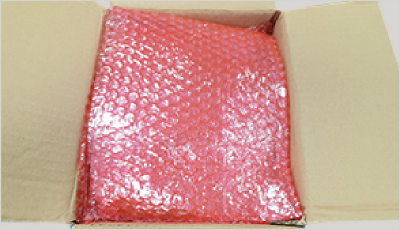
- Step4:Individual package
-
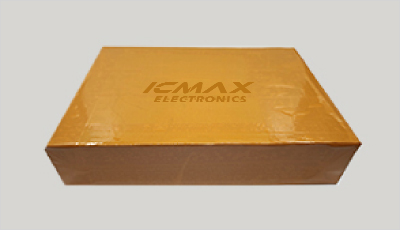
- Step5:Packaging box
-
- Step6:Barcode shipping label
Shipping starts at $40, but some countries will exceed $40. For example (South Africa, Brazil, India, Pakistan, Israel, etc.)
The basic freight (for package ≤0.5kg or corresponding volume) depends on the time zone and country.
Currently, our products are shipped through DHL, FedEx, SF, and UPS.
Delivery TimeOnce the goods are shipped, estimated delivery time depends on the shipping methods you chose:
FedEx International, 5-7 business days.
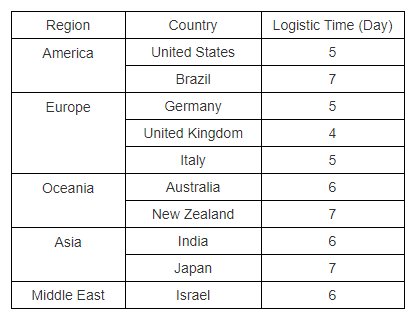
The following are some common countries' logistic time.
- Hot Sale
- Related Categories
- Include Parts
- Popular Search
The following parts include "CAP200DG-TL" in Silicon Labs CAP200DG-TL.
- Part Number
- Manufacturer
- Package
- Description
- CAP200DG-TL Power Integrations 8-SOIC (0.154", 3.90mm Width) IC AUTOMATIC DISCHARGE 8-SO
- ATSHA204A-MAHDA-T Microchip Technology 8-SOIC (0.154", 3.90mm Width) IC AUTOMATIC DISCHARGE 8-SO
- ATSHA204A-SSHDA-T Microchip Technology 8-SOIC (0.154", 3.90mm Width) IC AUTOMATIC DISCHARGE 8-SO
- ATSHA204A-STUCZ-T Microchip Technology 8-SOIC (0.154", 3.90mm Width) IC AUTOMATIC DISCHARGE 8-SO
- ATECC608B-MAHDA-T Microchip Technology 8-SOIC (0.154", 3.90mm Width) IC AUTOMATIC DISCHARGE 8-SO
- ATECC608B-MAHCZ-S Microchip Technology 8-SOIC (0.154", 3.90mm Width) IC AUTOMATIC DISCHARGE 8-SO
- ATECC608B-SSHDA-T Microchip Technology 8-SOIC (0.154", 3.90mm Width) IC AUTOMATIC DISCHARGE 8-SO
- ATECC608B-MAHDA-S Microchip Technology 8-SOIC (0.154", 3.90mm Width) IC AUTOMATIC DISCHARGE 8-SO
- ATECC608A-MAHDA-S Microchip Technology 8-SOIC (0.154", 3.90mm Width) IC AUTOMATIC DISCHARGE 8-SO
- ATECC608B-MAVDA-T Microchip Technology 8-SOIC (0.154", 3.90mm Width) IC AUTOMATIC DISCHARGE 8-SO
The following parts are popular search parts in Test and Measurement.
Inventory:57,771
Please send an inquiry. Send us your inquiry, and we will respond immediately.
In Stock:57,771
| Qty. | Unit Price | Ext. Price |
| 1+ | ¥0.400000 | ¥0.400000 |
| 100+ | ¥0.329000 | ¥32.900000 |
| 1000+ | ¥0.280000 | ¥280.000000 |

- 1500+ Daily average RFQ Volume

- 20,000.000 Standard Product Unit

- 1800+ Worldwide Manufacturers

- 15,000+ In-stock Warehouse