onsemi SS34

- Part No.:
- SS34
- Manufacturer:
- onsemi
- Category:
- Single Diodes
- Package:
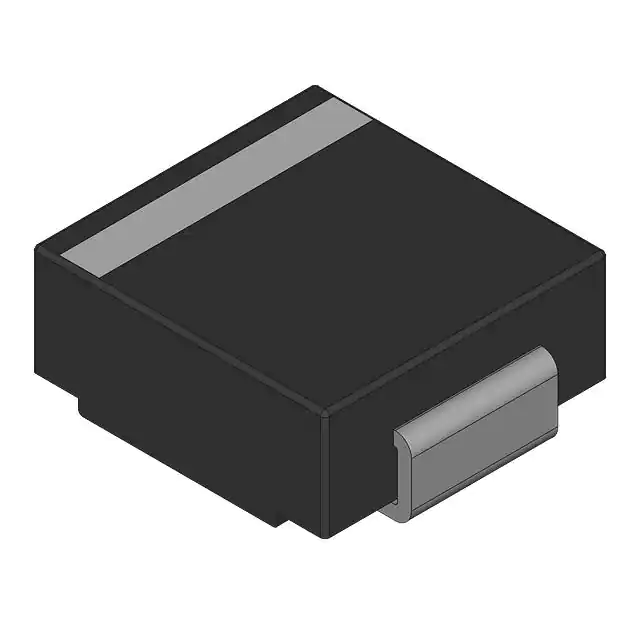
- DO-214AB, SMC
- Datasheet:
-
 SS34.pdf
- Description:
- DIODE SCHOTTKY 40V 3A SMC
- Quantity:
-
Unit Price:$0
Ext Price:$0
- Payment:
-

- Shipping:
-


SS34 Information
- Specifications
- Product Details
- Comparison
- Tags
- Product attributes
- Attribute value
- Manufacturer:
- onsemi
- Series:
- -
- Package/Case:
- DO-214AB, SMC
- Packaging:
- Tape & Reel (TR)
- Product Status:
- Not For New Designs
- Technology:
- Schottky
- Voltage - DC Reverse (Vr) (Max):
- 40 V
- Current - Average Rectified (Io):
- 3A
- Voltage - Forward (Vf) (Max) @ If:
- 500 mV @ 3 A
- Speed:
- Fast Recovery =< 500ns, > 200mA (Io)
- Reverse Recovery Time (trr):
- -
- Current - Reverse Leakage @ Vr:
- 500 µA @ 40 V
- Capacitance @ Vr, F:
- -
- Grade:
- -
- Qualification:
- -
- Mounting Type:
- Surface Mount
- Supplier Device Package:
- DO-214AB (SMC)
- Operating Temperature - Junction:
- -55°C ~ 150°C
- Datasheet:
-
SS34.pdf
SS34 - 3A 40V Surface-Mount Schottky Rectifier Diode
The SS34 is a 3A, 40V Schottky rectifier in an SMA (DO-214AC) package. Its whole reason to exist is the low forward drop - about 0.5V at 3A, versus 0.7-1.0V for an ordinary silicon rectifier. That half-volt saved per amp is why you find the SS34 in almost every buck converter, DC-DC module, and reverse-polarity guard on the market. It switches fast enough to have essentially zero reverse-recovery loss, which is exactly what a switching supply needs.
But there's a catch that trips people up, and it's the one thing to understand before you drop it in: a Schottky leaks. Reverse leakage current climbs steeply with temperature, and at 40V with a hot junction that leakage can feed a thermal runaway. More on that below - it's the difference between a design that lasts and one that cooks itself.
What Is the SS34 and How Does It Work?
A Schottky diode uses a metal-semiconductor junction instead of the usual P-N silicon junction. Two things fall out of that. First, the forward voltage is low (0.5V instead of 0.7V+), so it wastes less power as heat when conducting. Second, it's a majority-carrier device - there's no stored minority charge to sweep out, so it turns off almost instantly. No reverse-recovery spike, no switching loss at that transition.
That combination is tailor-made for the freewheeling (catch) diode spot in a buck converter. Every switching cycle, the inductor current has to keep flowing when the main switch turns off. The SS34 catches it, and because its drop is low and its turn-off is clean, it does so efficiently at hundreds of kHz.
The tradeoff for all this is reverse leakage. A silicon rectifier leaks nanoamps. A Schottky leaks milliamps, and that leakage roughly doubles for every ~10°C of junction temperature rise. Keep that in the back of your mind whenever the SS34 sits at high reverse voltage in a hot spot.
Where it sits in the family: the "SS3x" number tells you the current (3A). The last digit is the voltage: SS32 = 20V, SS34 = 40V, SS36 = 60V. Need 5A? Step up to the SS54. Need a through-hole leaded part? That's the 1N5822 (same 3A/40V ratings, DO-201 body).
What Are the Specifications of the SS34?
| Parameter | Value | Notes |
|---|---|---|
| Type | Schottky barrier rectifier | Metal-semiconductor junction |
| Average Forward Current (IF) | 3A | At Tl = 105°C |
| Repetitive Reverse Voltage (VRRM) | 40V | Absolute max |
| Forward Voltage (VF) | 0.5V typ @ 3A | 0.55V max |
| Reverse Leakage (IR) | 0.5 mA @ 25°C | Rises fast with temperature |
| Peak Surge Current (IFSM) | 100A | 8.3 ms single half-sine |
| Reverse Recovery (trr) | Negligible | Majority-carrier device |
| Junction Capacitance (Cj) | ~110 pF | At 4V reverse |
| Operating Junction Temp (Tj) | -55°C to +150°C | - |
| Package | SMA (DO-214AC) | Surface mount |
| Thermal Resistance (RθJA) | ~75°C/W | On recommended pad |
The Two Numbers That Decide Your Design
- VF = 0.5V at 3A: this is the payoff number. In a 5V-to-3.3V buck at 2A, the catch diode conducts a good fraction of each cycle. At 0.5V drop that's roughly 1W dissipated; a silicon rectifier at 0.8V would burn 1.6W and run much hotter. That's the efficiency argument in one line.
- IR leakage, and why it matters more than the datasheet suggests: at 25°C the SS34 leaks about 0.5 mA. At 100°C junction it can leak 20-30 mA. That leakage dissipates power while reverse-biased - P = VR × IR. At 40V and 25 mA that's 1W of heating with the diode nominally "off," which raises Tj, which raises leakage, which raises heating. In a hot enclosure at full reverse voltage this loop can run away. The fix: don't use a 40V part where 20V would do (the SS32 leaks less and drops less), keep the diode off the hottest parts of the board, and give it copper to dump heat.
What Is the SS34 Used For?
Buck Converter Freewheeling Diode
The classic job. In any non-synchronous buck (LM2596, MC34063, and countless module designs), the SS34 is the catch diode across the inductor. Low VF keeps efficiency up; fast turn-off keeps switching loss down.
Reverse-Polarity Protection
Put an SS34 in series with a DC input and it blocks current if someone connects the supply backwards. The 0.5V drop is the cost - lower than a silicon diode, which is why Schottkys are preferred here. For higher current or lower drop, engineers move to a P-channel MOSFET, but for a few amps the SS34 is the simple answer.
OR-ing Diodes (Power Multiplexing)
Two supplies feeding one load, each through an SS34, so the higher one wins and neither back-feeds the other. Battery-plus-adapter designs use this all the time.
Flyback and Snubber Clamps
The fast recovery makes the SS34 useful clamping inductive kickback in small flyback supplies and relay-coil snubbers, where a slow diode would ring.
LED Driver Freewheeling
Constant-current buck LED drivers (the kind in flashlights and lamp modules) use the SS34 as the catch diode. Note the leakage caveat here - these often run hot, so many designers pick a lower-voltage Schottky than the 40V SS34 to cut both VF and leakage.
SS34 vs SS54 vs 1N5822
| Parameter | SS34 | SS54 | 1N5822 |
|---|---|---|---|
| Forward Current | 3A | 5A | 3A |
| Reverse Voltage | 40V | 40V | 40V |
| VF @ rated current | 0.5V | 0.55V | 0.525V |
| Package | SMA (DO-214AC) | SMC (DO-214AB) | DO-201AD (through-hole) |
| Reverse Recovery | Negligible | Negligible | Negligible |
| Best For | General SMD buck/protection | Higher current, cooler running | Through-hole / hand-assembly |
Pick SS34 when: you need the standard 3A/40V surface-mount Schottky. It's the default catch diode for most buck converters and protection circuits, and it's second-sourced by every major diode maker.
Pick SS54 when: the SS34 runs too hot. Same 40V, but the 5A rating and larger SMC package spread the same current over more silicon and copper, so it runs cooler. A straight thermal upgrade when your SS34 is dissipating more than about 1W.
Pick 1N5822 when: you're on through-hole or building by hand. Identical 3A/40V ratings, leaded DO-201 body. Common in kit designs and repair work.
Do not substitute a standard silicon rectifier (1N4001-1N4007, M7) for an SS34. Those have higher forward drop and slow reverse recovery - in a switching supply they'll overheat and can stop the circuit working. This is the single most common SS34 replacement mistake reported on the electronics forums. Schottky replaces only with Schottky.
Why Buy SS34 from ICMASS?
- Second-sourced from major diode makers with traceability. The SS34 is a commodity part, which unfortunately means the market is full of underspec'd copies that miss their VF or leakage numbers - we supply parts that actually meet the datasheet.
- In stock, ships from Shenzhen, tape-and-reel or cut-tape.
- The full voltage family (SS32 20V, SS34 40V, SS36 60V) and the SS54 5A upgrade are all available on the same order for multi-sourcing.
- From our experience, most SS34 field failures trace back to either a counterfeit part or a thermal-runaway design - we can help you spot both before they ship.
Frequently Asked Questions About the SS34
Q1: Can I replace an SS34 with a standard rectifier diode like M7 or 1N4007?
A: No. The SS34 is a Schottky - low forward drop, fast switching. A silicon rectifier like M7 or the 1N400x series has a higher forward voltage and slow reverse recovery, so in a switching supply it will overheat and can stop the circuit from regulating. This is the most common substitution error on the AllAboutCircuits and EEVblog forums. Replace a Schottky only with another Schottky.
Q2: My SS34 gets very hot. What's wrong?
A: Usually it's undersized for the current, or it's suffering reverse leakage heating. Forward heating is VF × I - at 3A that's about 1.5W, which needs copper to dissipate. If it's hot even when reverse-biased, that's leakage current heating (see Q6). The fix confirmed on the EEWorld forum is to step up to an SS54 (5A) or a D2PAK part that spreads the heat over more area.
Q3: What can I use as a direct substitute for the SS34?
A: For a drop-in SMA replacement, the B340A is essentially the same part from a different maker. For more current headroom and less heat, the SS54 (5A, SMC). For through-hole, the 1N5822. All are 40V Schottkys, so they behave the same electrically.
Q4: Can I use a lower-voltage Schottky to run cooler?
A: Yes, and it's often the right move. The general rule confirmed on the CandlePowerForums: the lower the reverse-voltage rating, the lower the forward drop at a given current. If your circuit never sees more than about 15V reverse (a buck running off ≤8.4V, for instance), a 20V SS32 will run cooler than the 40V SS34 - both lower VF and lower leakage. Don't over-spec the voltage.
Q5: My MOSFET burned out after I replaced the diode. Could the diode be the cause?
A: Check the orientation first. A Schottky installed backwards, or a board with reversed silkscreen markings, will not freewheel correctly and can leave the MOSFET switching into a shorted or unclamped inductor. The banded end is the cathode. Confirm polarity before powering up.
Q6: Why does a Schottky leak so much more than a normal diode?
A: It's inherent to the metal-semiconductor junction. Where a silicon rectifier leaks nanoamps, an SS34 leaks around 0.5 mA at 25°C, and that roughly doubles every 10°C. At 100°C it can reach tens of milliamps. In high-temperature or high-reverse-voltage designs this leakage dissipates real power and can drive thermal runaway - which is why you keep the SS34 cool and never over-spec its voltage rating.
Q7: What forward voltage should I read in diode-test mode on a multimeter?
A: Around 0.15-0.2V (150-200 mV) is typical for a healthy SS34 in a meter's diode test - much lower than the ~0.5-0.7V you'd read on a silicon diode, because the test current is tiny. A reading near 0V means the diode is shorted; "OL" in both directions means it's open. Both mean replace it.
Q8: Is the SS34 fast enough for a switching power supply?
A: Yes. As a majority-carrier device it has essentially no reverse-recovery time, so it turns off cleanly at the switching frequencies used in buck converters (typically 50 kHz to 1 MHz). That clean turn-off is a big part of why Schottkys are the default catch diode in switchers.
Q9: What's the surge current the SS34 can handle?
A: 100A for a single 8.3 ms half-sine pulse (IFSM). That's the inrush rating - useful for surviving capacitor-charging surges at power-up. It is not a continuous rating; steady-state current stays at 3A.
Pricing & Availability
| Parameter | Details |
|---|---|
| Part Number | SS34 (SMA / DO-214AC) |
| Package | SMA (DO-214AC) |
| Condition | New, datasheet-verified |
| Lead Time | In stock, ships from Shenzhen |
| Packing | Tape & Reel / Cut Tape |
Contact ICMASS for current pricing. We stock the full SS3x Schottky family (SS32/SS34/SS36) plus the SS54 5A upgrade, all datasheet-verified for VF and leakage.
| Image |

|
|
| Part Number | SS34FA | SS34 |
| Manufacturer | onsemi | onsemi |
| Series | - | - |
| Package/Case | SOD-123W | DO-214AB, SMC |
| Packaging | Tape & Reel (TR) | Tape & Reel (TR) |
| Product Status | Active | Not For New Designs |
| Technology | Schottky | Schottky |
| Voltage - DC Reverse (Vr) (Max) | 40 V | 40 V |
| Current - Average Rectified (Io) | 3A | 3A |
| Voltage - Forward (Vf) (Max) @ If | 500 mV @ 3 A | 500 mV @ 3 A |
| Speed | Fast Recovery =< 500ns, > 200mA (Io) | Fast Recovery =< 500ns, > 200mA (Io) |
| Reverse Recovery Time (trr) | - | - |
| Current - Reverse Leakage @ Vr | 500 µA @ 40 V | 500 µA @ 40 V |
| Capacitance @ Vr, F | 170pF @ 4V, 1MHz | - |
| Grade | - | - |
| Qualification | - | - |
| Mounting Type | Surface Mount | Surface Mount |
| Supplier Device Package | SOD-123FA | DO-214AB (SMC) |
| Operating Temperature - Junction | -55°C ~ 125°C | -55°C ~ 150°C |
User Guide
- Purchase & Inquiry
- Package
- Shipping Information
- Customer Review
You may place an order without registering to IC-MAX.COM
We strongly suggest you sign in before purchasing as you can track your order in real time.
For your convenience, we accept multiple payment methods in USD, including PayPal, Credit Card, and wire transfer.
RFQ (Request for Quotations)
It is recommended to request for quotations to get the latest prices and inventories about the part.
Our sales will reply to your request by email within 24 hours.
1. You'll receive an order information email in your inbox. (Please remember to check the spam folder if you didn't hear from us).
2. Since inventories and prices may fluctuate to some extent, the sales manager is going to reconfirm the order and let you know if there are any updates.
-
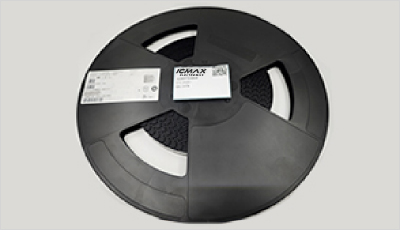
- Step1:Prepare product
-
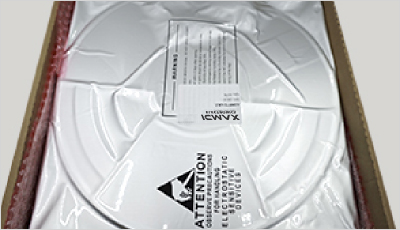
- Step2:Vacuum packaging
-
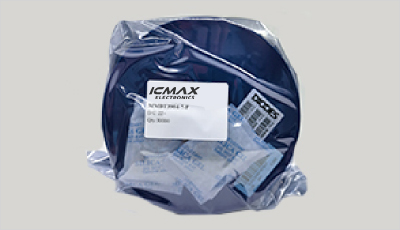
- Step3:Anti-static bag
-
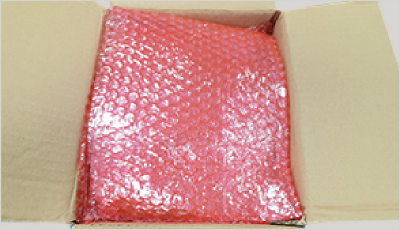
- Step4:Individual package
-
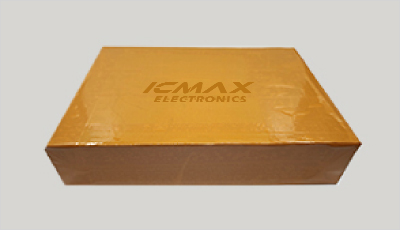
- Step5:Packaging box
-

- Step6:Barcode shipping label
Shipping starts at $40, but some countries will exceed $40. For example (South Africa, Brazil, India, Pakistan, Israel, etc.)
The basic freight (for package ≤0.5kg or corresponding volume) depends on the time zone and country.
Currently, our products are shipped through DHL, FedEx, SF, and UPS.
Delivery TimeOnce the goods are shipped, estimated delivery time depends on the shipping methods you chose:
FedEx International, 5-7 business days.
The following are some common countries' logistic time.

- Hot Sale
- Related Categories
- Include Parts
- Popular Search
The following parts include "SS34" in Silicon Labs SS34.
- Part Number
- Manufacturer
- Package
- Description
- 1N4448X-TP Micro Commercial Co DO-214AB, SMC DIODE SCHOTTKY 40V 3A SMC
- 1N4148WX-TP Micro Commercial Co DO-214AB, SMC DIODE SCHOTTKY 40V 3A SMC
- 1N4148TR onsemi DO-214AB, SMC DIODE SCHOTTKY 40V 3A SMC
- MMSD4148T1G onsemi DO-214AB, SMC DIODE SCHOTTKY 40V 3A SMC
- MMBD914LT3G onsemi DO-214AB, SMC DIODE SCHOTTKY 40V 3A SMC
- BAS16HT1G onsemi DO-214AB, SMC DIODE SCHOTTKY 40V 3A SMC
- 1N914BWT onsemi DO-214AB, SMC DIODE SCHOTTKY 40V 3A SMC
- BAS21LT1G onsemi DO-214AB, SMC DIODE SCHOTTKY 40V 3A SMC
- LL4148 onsemi DO-214AB, SMC DIODE SCHOTTKY 40V 3A SMC
- BAS16LT1G onsemi DO-214AB, SMC DIODE SCHOTTKY 40V 3A SMC
The following parts are popular search parts in Test and Measurement.
Inventory:30,602
Please send an inquiry. Send us your inquiry, and we will respond immediately.

- 1500+ Daily average RFQ Volume

- 20,000.000 Standard Product Unit

- 1800+ Worldwide Manufacturers

- 15,000+ In-stock Warehouse