onsemi NCV4266-2CST50T3G

- Part No.:
- NCV4266-2CST50T3G
- Manufacturer:
- onsemi
- Package:
- TO-261-4, TO-261AA
- Datasheet:
-
 NCV4266-2CST50T3G.pdf
- Description:
- IC REG LINEAR 5V 150MA SOT223
- Quantity:
-
Unit Price:$0
Ext Price:$0
- Payment:
-

- Shipping:
-


NCV4266-2CST50T3G Information
- Specifications
- Product Details
- Comparison
- Tags
- Product attributes
- Attribute value
- Manufacturer:
- onsemi
- Series:
- -
- Package/Case:
- TO-261-4, TO-261AA
- Packaging:
- Tape & Reel (TR)
- Product Status:
- Active
- Output Configuration:
- Positive
- Output Type:
- Fixed
- Number of Regulators:
- 1
- Voltage - Input (Max):
- 45V
- Voltage - Output (Min/Fixed):
- 5V
- Voltage - Output (Max):
- -
- Voltage Dropout (Max):
- 0.5V @ 100mA
- Current - Output:
- 150mA
- Current - Quiescent (Iq):
- 60 µA
- Current - Supply (Max):
- 4 mA
- PSRR:
- 68dB (100Hz)
- Control Features:
- Enable
- Protection Features:
- Over Temperature, Reverse Polarity, Short Circuit
- Operating Temperature:
- -40°C ~ 150°C
- Grade:
- Automotive
- Qualification:
- AEC-Q100
- Mounting Type:
- Surface Mount
- Supplier Device Package:
- SOT-223 (TO-261)
- Datasheet:
-
NCV4266-2CST50T3G.pdf
NCV4266-2CST50T3G — 5V/150mA Automotive LDO with Enable (SOT-223)
The NCV4266-2CST50T3G is an AEC-Q100 Grade 1 automotive LDO from onsemi. Fixed 5V output, 150mA drive, and a 5.5V–45V input range that shrugs off load-dump transients. The numbers that set it apart: 60µA quiescent current and a dropout of just 230mV at 100mA.
In always-on automotive nodes — body controllers, sensor supplies, wake-up circuits — that Iq matters more than the headline current rating.
Here's what most BOM reviews miss about automotive LDOs: the difference between a commercial part and an industrial LM317 isn't on page one of the datasheet. It's the -42V reverse-battery spec and 150°C junction rating. Skip those, and a jump-start turns your 5V rail into a diagnostic ticket.
What Are the Technical Specifications of NCV4266-2CST50T3G?
| Parameter | Value |
|---|---|
| Type | Automotive LDO Linear Voltage Regulator |
| Output Voltage | 5V fixed (±2% over full temperature) |
| Maximum Output Current | 150mA (internally limited) |
| Input Voltage Range | 5.5V to 45V (withstands +45V transients, -42V reverse) |
| Dropout Voltage | 230mV typ @ 100mA; 500mV max |
| Quiescent Current (Iq) | 60µA typ; 40µA @ 100µA load |
| PSRR | 68dB @ 100Hz |
| Output Accuracy | ±2% (-40°C to +150°C) |
| Enable Input | Active high; <1µA shutdown current when pulled low |
| Protection | Over-temperature shutdown, short-circuit current limit, reverse polarity (-42V) |
| Junction Temperature Range | -40°C to +150°C |
| Package | SOT-223-4 (TO-261-4D), 6.5×7.0mm body |
| Qualification | AEC-Q100 Grade 1, PPAP capable |
| Manufacturer | onsemi |
Key numbers that matter. Per the onsemi NCV4266 datasheet (Rev 23, NCV4266/D), the SOT-223-4 package delivers RθJA of 96°C/W on a 168mm² copper pad, dropping to 77°C/W with 736mm². That 19°C/W gap is the difference between "works on the bench" and "works in a parked car in Phoenix."
At 150mA with a 12V input, the part dissipates about 1.05W (7V drop × 150mA). On the minimal pad, that's a 101°C rise — pushing past 125°C at 25°C ambient. Give it copper, or give it less voltage drop.
When Should You Use (and NOT Use) the NCV4266?
Use NCV4266 when:
- Automotive always-on rails (KL30). Body control modules, door-zone controllers, and LIN transceivers all sit on battery power 24/7. At 60µA Iq, the NCV4266 draws less from the battery in a month than a standard LDO burns in a day.
- Load-dump environments. The 45V input ceiling isn't just a maximum operating spec — it's designed to survive ISO 7637-2 load-dump pulses without external clamping. That saves a TVS diode and PCB space.
- Microcontroller system power with enable sequencing. The EN pin lets you sequence the 5V rail after a 3.3V core supply comes up, or kill power to peripherals in sleep mode. Shutdown current drops to under 1µA.
- Sensors and reference rails in engine-bay ECUs. 150mA covers a CAN transceiver, a handful of op-amps, and a resistive sensor bridge with margin. The ±2% accuracy holds across -40°C cold-start to 125°C full-load running.
- Drop-in upgrade from older TLE4266 designs. Same SOT-223-4 footprint, same pinout, same 5V/150mA rating. Lower dropout and better transient behaviour.
Don't use NCV4266 when:
- You need more than 150mA. This is a small-signal LDO, not a system power supply. For 300mA+, look at the NCV47711 (350mA, adjustable) or a discrete buck regulator for any load above 0.5A.
- The input voltage is already under 7V. At 5V input with 230mV dropout, the NCV4266 is past its regulation window. For post-regulated 5V-from-5V applications, you need an LDO with dropout under 100mV or a different topology entirely.
- You're powering an RF or precision analog front-end. 68dB PSRR at 100Hz is solid for digital and mixed-signal loads. But for a 24-bit ADC or a PLL running off the same rail, step up to a low-noise LDO like the LP5912 (75dB PSRR at 1kHz, 12µV RMS noise).
- Cost is the only spec that matters. The NCV4266 is an automotive-qualified part — you're paying for the AEC-Q100 paperwork, the 150°C silicon, and the -42V reverse-battery test. For a non-automotive 5V/150mA rail, a 78L05 or NCP1117 costs less and works fine at room temperature.
What Are the Alternatives to NCV4266-2CST50T3G?
| Model | Type | Key Difference | Best For |
|---|---|---|---|
| TLE4266-2G | Automotive LDO (Infineon) | Same 5V/150mA/SOT-223-4, Iq 40µA typ (slightly lower), same -40 to +150°C | Closest drop-in alternative from a second source |
| NCV4264-2CST33T3G | Automotive LDO (onsemi) | Same family, 3.3V/100mA, lower Iq, SOT-223-3 (not pin-compatible) | 3.3V rails in the same ECU; same qualification pedigree |
| TS4264 | Automotive LDO (TSC) | 5V/150mA/SOT-223, similar dropout, 400µA max Iq (higher) | Cost-reduced alternative; verify Iq budget first |
| MCP1799-5002E/DB | Automotive LDO (Microchip) | 5V/80mA/SOT-223, Iq 25µA, AEC-Q100 Grade 0 (+150°C) | Lower current, better quiescent for ultra-low-power nodes |
| LM317LDR2G | Adjustable LDO (onsemi) | 100mA adjustable, 1.2–37V out, SOP-8, not automotive-qualified | Prototyping or non-automotive where adjustable Vout matters |
NCV4266 vs TLE4266-2G — the sourcing decision. These two are functionally equivalent: both 5V/150mA, both automotive, both SOT-223-4 with enable. The TLE4266 shaves 20µA off the quiescent current. In practice, the choice comes down to availability, pricing, and whether your PPAP package already approves one of them.
If you're designing a new ECU, qualify both in the BOM. Single-sourcing an automotive LDO with one manufacturer is a production-line stoppage waiting to happen.
What Are the Typical Applications of NCV4266?
Body Control Module (BCM) standby rail. The NCV4266 powers the always-on 5V domain in a BCM — the MCU wake-up comparator, LIN transceiver, and CAN monitor mode. At 60µA quiescent, a 45Ah car battery takes over 85 years to drain from this LDO alone. The real drain comes from whatever's downstream.
Sensor supply in distributed ECUs. Engine-bay sensor nodes need a clean 5V rail that starts at -40°C and survives proximity to a turbocharger. The NCV4266's ±2% accuracy across the full temperature range means a ratiometric sensor bridge won't drift between a Minnesota winter and a Death Valley summer.
Infotainment head-unit auxiliary rail. The main processor runs from a multi-amp buck. But CAN, Bluetooth, and steering-wheel buttons need a 5V rail that stays alive during cranking. At 12V in, 150mA load, the NCV4266 dissipates just over 1W. Spread across a 4-layer board's copper fill, that's well within thermal budget.
Electric power steering (EPS) torque sensor interface. Torque sensors output a differential signal on a precision 5V reference. Any droop gets amplified as steering-angle error. The NCV4266's ±2% accuracy and 68dB PSRR keep it clean, even as the EPS motor pulls 80A pulses from the same 12V bus.
Why Buy NCV4266 from ICMASS?
Automotive traceability that matters. We ship NCV4266 lots with date-code traceability back to the onsemi factory. If a batch gets flagged in your end-of-line test, we can trace it to the reel within 24 hours. For PPAP production parts, that's the difference between a containment note and a line shutdown.
Cross-reference support for automotive LDOs. Your BOM says TLE4266 but lead times are 26 weeks? NCV4264 but the pinout doesn't match your layout? We'll go through the pinout, dropout, quiescent current, and protection specs with you and recommend what actually works — as a drop-in or with the minimum layout change.
Single-source automotive power management BOM. You're stocking NCV4266 LDOs alongside NCV4271 voltage trackers, NCV8402 low-side drivers, and NCV7340 CAN transceivers. We carry the onsemi automotive power portfolio in one shipment from our Shenzhen warehouse. No chasing five distributors for five line items.
Shenzhen warehouse, global DHL/FedEx. Same-day shipping for orders placed before 15:00 CST. International delivery in 5–10 days. Contact us for a quote on your specific quantity.
Frequently Asked Questions About NCV4266-2CST50T3G
Q1: Can NCV4266 replace a TLE4266 directly?
A: Yes — the pinout, package, and output spec match. Both are SOT-223-4 with the same IN/GND/OUT/EN pin assignment. The NCV4266 has slightly lower dropout (230mV vs 250mV typ) and similar quiescent current. But check your enable logic threshold. The NCV4266's EN high threshold is 2.0V min, while the TLE4266 turns on at 3.5V. If your MCU GPIO swings to 3.3V, verify it meets the threshold of whichever part you select.
Q2: How much copper area does the NCV4266 need on the PCB?
A: 168mm² minimum for RθJA of 96°C/W; 736mm² drops it to 77°C/W. Start with at least 300mm². The SOT-223's exposed tab is the primary heat path. Solder it to a solid copper plane, not a thermal-relief pad with spoke connections.
At 150mA with a 7V drop (12V in, 5V out), you're dissipating 1.05W. With 300mm² of 1oz copper, the junction runs roughly 89°C above ambient. Fine at 25°C. Marginal at 60°C under the hood. For hot environments, reduce the voltage drop or add inner-layer copper through thermal vias.
Q3: What output capacitor does NCV4266 need for stability?
A: 22µF ceramic on the output, plus 1µF and 100nF on the input. Per the onsemi datasheet (Rev 23), the NCV4266 is stable with typical output capacitances and ESR values. A 22µF X7R ceramic with a 10V or 16V rating is the standard choice. Add a 1Ω series resistor with the 100nF input cap to damp LC ringing from wiring harness inductance. On an automotive ECU, the input wire might be 3 metres of unshielded cable.
Q4: Why does NCV4266 cost more than a standard 7805?
A: You're paying for the automotive qualification, not the silicon area. A 7805 and an NCV4266 both output 5V, but the NCV4266 is tested to operate at 150°C junction, qualified to AEC-Q100, characterized for -42V reverse battery, and comes with PPAP documentation. A 7805 has none of that. For a bench power supply, the 7805 is fine. For an ECU that ships 100,000 units a year and can't afford a single warranty return, the NCV4266's qualification package is cheap insurance.
Q5: Can I parallel two NCV4266s for 300mA?
A: Don't. LDOs don't share current evenly without ballast resistors, and the NCV4266 isn't designed for parallel operation. If you need 300mA, use a single higher-current automotive LDO like the NCV47711 (350mA) or an NCV4269 (150mA with external pass transistor). Ballasting two LDOs adds PCB area, loses voltage accuracy, and creates a failure mode where one LDO takes all the current anyway if the other one's output drifts 20mV higher.
Q6: What happens when the EN pin is left floating?
A: The regulator may be off, or may oscillate between on and off — don't do it. The EN pin has an internal pull-down in most operating conditions, but the datasheet specifies it should be driven, not left floating. Tie it to IN through a 100kΩ resistor for always-on operation, or drive it from a GPIO with a clean high/low signal. A floating pin in an automotive environment picks up noise from ignition coils and injector drivers.
Q7: NCV4266-2CST50T3G vs NCV4266ST50T3G — what does the "-2C" mean?
A: The "-2C" variant has improved startup behaviour during input voltage transients and a slightly wider enable threshold range. Both are 5V/150mA automotive LDOs in SOT-223. The -2C revision adds specific improvements for cold-crank scenarios where the battery voltage dips to 3-4V during starter engagement and then snaps back to 14V. If your ECU needs to stay alive through cranking, use the -2C. Otherwise, the base NCV4266 works the same in steady-state operation.
Q8: Can I use NCV4266 in a non-automotive design?
A: Yes — it works perfectly, but you're paying a premium for qualifications you may not need. The NCV4266 regulates 5V just as well in an industrial controller or a medical device as it does in a car. The wide 5.5–45V input and reverse-battery protection are genuinely useful in any 12V/24V system. But if your product doesn't need AEC-Q100 and PPAP, the NCP1117ST50T3G (commercial grade, same manufacturer, same package) delivers the same output at roughly 30–50% lower cost.
Related Products
| Image |

|
|
|
|
|
| Part Number | NCV4266-2CST50T3G | NCV4266ST50T3G | NCV4266-2CST33T3G | NCV4266ST33T3G | NCV4266ST33T3G |
| Manufacturer | onsemi | onsemi | onsemi | onsemi | onsemi |
| Series | - | - | - | - | - |
| Package/Case | TO-261-4, TO-261AA | TO-261-4, TO-261AA | TO-261-4, TO-261AA | TO-261-4, TO-261AA | TO-261-4, TO-261AA |
| Packaging | Tape & Reel (TR) | Tape & Reel (TR) | Tape & Reel (TR) | Tape & Reel (TR) | Tape & Reel (TR) |
| Product Status | Active | Not For New Designs | Active | Obsolete | Obsolete |
| Output Configuration | Positive | Positive | Positive | Positive | Positive |
| Output Type | Fixed | Fixed | Fixed | Fixed | Fixed |
| Number of Regulators | 1 | 1 | 1 | 1 | 1 |
| Voltage - Input (Max) | 45V | 45V | 45V | 45V | 45V |
| Voltage - Output (Min/Fixed) | 5V | 5V | 3.3V | 3.3V | 3.3V |
| Voltage - Output (Max) | - | - | - | - | - |
| Voltage Dropout (Max) | 0.5V @ 100mA | 0.5V @ 150mA | - | - | - |
| Current - Output | 150mA | 150mA | 150mA | 150mA | 150mA |
| Current - Quiescent (Iq) | 60 µA | 200 µA | 60 µA | 200 µA | 200 µA |
| Current - Supply (Max) | 4 mA | 15 mA | 4 mA | 15 mA | 15 mA |
| PSRR | 68dB (100Hz) | 70dB (100Hz) | 68dB (100Hz) | 70dB (100Hz) | 70dB (100Hz) |
| Control Features | Enable | Enable | Enable | Enable | Enable |
| Protection Features | Over Temperature, Reverse Polarity, Short Circuit | Over Current, Over Temperature, Reverse Polarity | Over Temperature, Reverse Polarity, Short Circuit | Over Current, Over Temperature, Reverse Polarity | Over Current, Over Temperature, Reverse Polarity |
| Operating Temperature | -40°C ~ 150°C | -40°C ~ 150°C | -40°C ~ 150°C | -40°C ~ 150°C (TJ) | -40°C ~ 150°C |
| Grade | Automotive | Automotive | Automotive | Automotive | Automotive |
| Qualification | AEC-Q100 | AEC-Q100 | AEC-Q100 | AEC-Q100 | AEC-Q100 |
| Mounting Type | Surface Mount | Surface Mount | Surface Mount | Surface Mount | Surface Mount |
| Supplier Device Package | SOT-223 (TO-261) | SOT-223 (TO-261) | SOT-223 (TO-261) | SOT-223 (TO-261) | SOT-223 (TO-261) |
User Guide
- Purchase & Inquiry
- Package
- Shipping Information
- Customer Review
You may place an order without registering to IC-MAX.COM
We strongly suggest you sign in before purchasing as you can track your order in real time.
For your convenience, we accept multiple payment methods in USD, including PayPal, Credit Card, and wire transfer.
RFQ (Request for Quotations)
It is recommended to request for quotations to get the latest prices and inventories about the part.
Our sales will reply to your request by email within 24 hours.
1. You'll receive an order information email in your inbox. (Please remember to check the spam folder if you didn't hear from us).
2. Since inventories and prices may fluctuate to some extent, the sales manager is going to reconfirm the order and let you know if there are any updates.
-
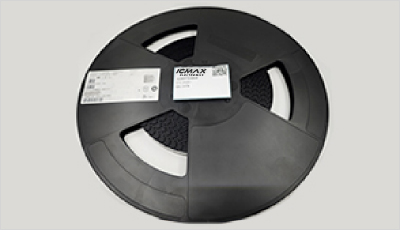
- Step1:Prepare product
-
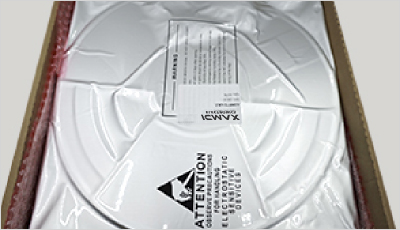
- Step2:Vacuum packaging
-
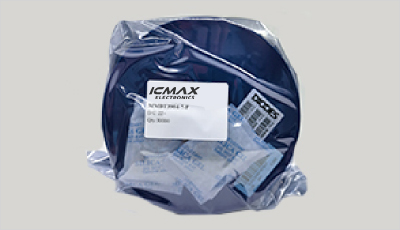
- Step3:Anti-static bag
-
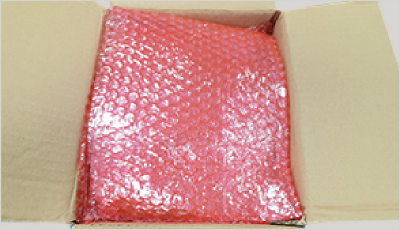
- Step4:Individual package
-
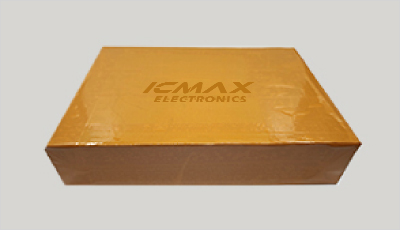
- Step5:Packaging box
-
- Step6:Barcode shipping label
Shipping starts at $40, but some countries will exceed $40. For example (South Africa, Brazil, India, Pakistan, Israel, etc.)
The basic freight (for package ≤0.5kg or corresponding volume) depends on the time zone and country.
Currently, our products are shipped through DHL, FedEx, SF, and UPS.
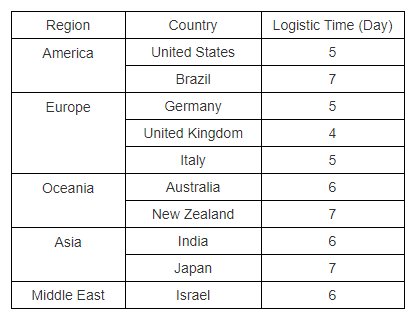
Delivery TimeOnce the goods are shipped, estimated delivery time depends on the shipping methods you chose:
FedEx International, 5-7 business days.
The following are some common countries' logistic time.
- Hot Sale
- Related Categories
- Include Parts
- Popular Search
- Voltage Regulators - Linear, Low Drop Out (LDO) Regulators(66836)
- Voltage Regulators - Linear Regulator Controllers(325)
- Voltage Regulators - Linear + Switching(1473)
- Voltage Regulators - DC DC Switching Regulators(35756)
- Voltage Reference(8428)
- V/F and F/V Converters(139)
- Thermal Management(515)
- Supervisors(41287)
- Special Purpose Regulators(4820)
- RMS to DC Converters(144)
The following parts include "NCV4266-2CST50T3G" in Silicon Labs NCV4266-2CST50T3G.
- Part Number
- Manufacturer
- Package
- Description
- MIC5504-1.8YM5-TR Microchip Technology TO-261-4, TO-261AA IC REG LINEAR 5V 150MA SOT223
- MIC5504-3.3YM5-TR Microchip Technology TO-261-4, TO-261AA IC REG LINEAR 5V 150MA SOT223
- MIC5365-3.0YC5-TR Microchip Technology TO-261-4, TO-261AA IC REG LINEAR 5V 150MA SOT223
- MIC5365-1.8YC5-TR Microchip Technology TO-261-4, TO-261AA IC REG LINEAR 5V 150MA SOT223
- MIC5365-2.5YC5-TR Microchip Technology TO-261-4, TO-261AA IC REG LINEAR 5V 150MA SOT223
- MIC5365-3.3YC5-TR Microchip Technology TO-261-4, TO-261AA IC REG LINEAR 5V 150MA SOT223
- MIC5365-3.3YD5-TR Microchip Technology TO-261-4, TO-261AA IC REG LINEAR 5V 150MA SOT223
- MIC5317-3.3YM5-TR Microchip Technology TO-261-4, TO-261AA IC REG LINEAR 5V 150MA SOT223
- TLV1117LV33DCYR Texas Instruments TO-261-4, TO-261AA IC REG LINEAR 5V 150MA SOT223
- MIC5317-3.3YMT-TZ Microchip Technology TO-261-4, TO-261AA IC REG LINEAR 5V 150MA SOT223
The following parts are popular search parts in Test and Measurement.
Inventory:22,119
Please send an inquiry. Send us your inquiry, and we will respond immediately.

- 1500+ Daily average RFQ Volume

- 20,000.000 Standard Product Unit

- 1800+ Worldwide Manufacturers

- 15,000+ In-stock Warehouse