onsemi NCV4264-2CST33T3G

- Part No.:
- NCV4264-2CST33T3G
- Manufacturer:
- onsemi
- Package:
- TO-261-4, TO-261AA
- Datasheet:
-
 NCV4264-2CST33T3G.pdf
- Description:
- IC REG LINEAR 3.3V 100MA SOT223
- Quantity:
-
Unit Price:$0
Ext Price:$0
- Payment:
-

- Shipping:
-


NCV4264-2CST33T3G Information
- Specifications
- Product Details
- Comparison
- Tags
- Product attributes
- Attribute value
- Manufacturer:
- onsemi
- Series:
- -
- Package/Case:
- TO-261-4, TO-261AA
- Packaging:
- Tape & Reel (TR)
- Product Status:
- Active
- Output Configuration:
- Positive
- Output Type:
- Fixed
- Number of Regulators:
- 1
- Voltage - Input (Max):
- 45V
- Voltage - Output (Min/Fixed):
- 3.3V
- Voltage - Output (Max):
- -
- Voltage Dropout (Max):
- -
- Current - Output:
- 100mA
- Current - Quiescent (Iq):
- 55 µA
- Current - Supply (Max):
- 70 µA
- PSRR:
- 67dB (100Hz)
- Control Features:
- -
- Protection Features:
- Over Current, Over Temperature, Reverse Polarity, Short Circuit
- Operating Temperature:
- -40°C ~ 150°C
- Grade:
- Automotive
- Qualification:
- AEC-Q100
- Mounting Type:
- Surface Mount
- Supplier Device Package:
- SOT-223 (TO-261)
- Datasheet:
-
NCV4264-2CST33T3G.pdf
NCV4264-2CST33T3G — 3.3V/100mA Automotive LDO, Ultra-Low Iq (SOT-223)
The NCV4264-2CST33T3G is an AEC-Q100 Grade 1 automotive LDO from onsemi. Fixed 3.3V output, 100mA, and a 4.5V–45V input range. The headline number: 33µA quiescent current. That's half the NCV4266. In a permanently-connected ECU, this LDO's own consumption barely registers on a battery budget.
Unlike the NCV4266, this is a 3-pin SOT-223. No enable pin. It's on whenever input voltage is present — simpler BOM, one less GPIO to drive, one less thing to sequence at startup. For always-on 3.3V rails that never need to be switched, that simplicity is the point.
But here's the thing you need to know before the layout: this part wants an output capacitor with some ESR. A pure ceramic 10µF with near-zero ESR can oscillate. It's in the datasheet. It's been in the datasheet for years. And it still catches people.
What Are the Technical Specifications of NCV4264-2CST33T3G?
| Parameter | Value |
|---|---|
| Type | Automotive LDO Linear Voltage Regulator |
| Output Voltage | 3.3V fixed (±2% over full temperature) |
| Maximum Output Current | 100mA (internally limited) |
| Input Voltage Range | 4.5V to 45V (withstands +45V transients, -42V reverse) |
| Dropout Voltage | 230mV typ @ 100mA; 500mV max |
| Quiescent Current (Iq) | 33µA typ (55µA worst-case over temperature) |
| PSRR | 67dB @ 100Hz |
| Output Accuracy | ±2% (-40°C to +150°C) |
| Enable Input | Not available — 3-pin device, always on when VIN present |
| Protection | Over-temperature shutdown, short-circuit current limit, reverse polarity (-42V) |
| Junction Temperature Range | -40°C to +150°C |
| Package | SOT-223-3 (TO-261-4D), 6.5×7.0mm body |
| Output Capacitor | 10µF min; requires ESR ≥ some minimum for stability (see Q2) |
| Qualification | AEC-Q100 Grade 1, PPAP capable |
| Manufacturer | onsemi |
Key numbers that matter. 33µA Iq at 3.3V output. In a permanently-on automotive node powered from a 45Ah battery, the NCV4264's self-consumption works out to roughly 0.8mAh per day. A standard LM1117-3.3 at 5mA Iq burns 120mAh in the same period. That's a 150× difference.
The trade-off: 100mA output and no enable pin. If you need software-controlled shutdown or more than 100mA, step up to the NCV8664 (150mA, 22µA, pin-compatible). If 100mA covers your load, the NCV4264 gives you the lowest quiescent current in the onsemi SOT-223 automotive LDO family.
When Should You Use (and NOT Use) the NCV4264?
Use NCV4264 when:
- Always-on 3.3V rails in permanently powered ECUs. No enable pin means it's on whenever the battery is connected. For body controllers, immobilizers, and RKE receivers that never sleep, that's exactly what you want — no GPIO, no sequencing, no software to wake it up.
- Battery-powered sensor nodes with tight sleep budgets. At 33µA, the NCV4264 is the lowest-Iq option in the onsemi automotive LDO lineup. A sensor node sleeping at 50µA total can afford this LDO running continuously.
- Post-regulation from a 5V rail down to 3.3V. With 230mV dropout and a 5V input, you've got 1.7V of headroom. At 100mA that's 170mW dissipation — cool enough for no heatsink in SOT-223.
- Ratiometric sensor reference rails. The ±2% accuracy over -40 to +150°C means a 3.3V-referenced ADC reading won't wander between cold-crank and hot-soak. For pressure sensors, position sensors, and thermistor dividers, that's the difference between a calibration pass and a drift failure.
Don't use NCV4264 when:
- You need more than 100mA. This is a 100mA part. For 150mA+, the NCV8664CST33T3G is pin-compatible with the same 3.3V output and even lower Iq (22µA). No PCB change needed.
- You need to switch the output rail off in software. No EN pin means no shutdown. If your ECU needs to kill the 3.3V domain in sleep mode, use the NCV4266-2CST33T3G (3.3V version with enable) or add a high-side load switch downstream.
- You're using a pure ceramic output capacitor with no series resistance. The NCV4264 needs ESR on its output cap for stability. Modern X7R ceramics with <10mΩ ESR can cause oscillation. Use a tantalum cap, an aluminum electrolytic, or add a 0.5–1Ω series resistor with your ceramic.
- Output noise is critical for a precision analog front-end. 67dB PSRR at 100Hz is fine for digital and mixed-signal. For a 24-bit ADC or low-noise amplifier, look at the LP5912-3.3 (75dB PSRR at 1kHz, 12µVRMS noise).
What Are the Alternatives to NCV4264-2CST33T3G?
| Model | Type | Key Difference | Best For |
|---|---|---|---|
| NCV8664CST33T3G | Automotive LDO (onsemi) | Pin-compatible, 150mA/3.3V, Iq 22µA (lower!), same SOT-223 pinout | Direct upgrade — more current, lower quiescent, active production |
| NCV4266-2CST33T3G | Automotive LDO (onsemi) | 3.3V/150mA with EN pin, Iq 60µA, SOT-223-4 | Need software shutdown; 4-pin layout required (not drop-in) |
| LM2936MP-3.3/NOPB | Automotive LDO (TI) | 3.3V/50mA, Iq 15µA, dropout 200mV, SOT-223-3 | Ultra-low Iq, but half the current capability |
| NCP1117ST33T3G | Commercial LDO (onsemi) | 3.3V/1A, dropout 1.2V, SOT-223-3, not automotive | Higher current, lower cost, non-automotive designs |
| LP5912-3.3DRVR | Low-Noise LDO (TI) | 3.3V/500mA, 12µVRMS noise, WSON-6, not automotive | Precision analog where noise matters more than input voltage range |
NCV4264 vs NCV8664 — upgrade or stay? The NCV8664CST33T3G is pin-compatible, 150mA vs 100mA, 22µA vs 33µA Iq. For a new board, go NCV8664. If you've got 10,000 NCV4264s already PPAP-approved, the NCV4264 is still solid. Just know the ESR requirement.
What Are the Typical Applications of NCV4264?
Always-on immobilizer and RKE receiver supply. Immobilizers and RKE receivers sit on KL30 permanently. The NCV4264's 33µA Iq powers the 3.3V RF front-end, the MCU in listen mode, and the LF coil driver. No EN pin means no wake-up sequencing — the rail is stable before the MCU's POR releases.
Post-regulation from 5V to 3.3V in distributed modules. Main ECU provides a protected 5V rail, each satellite regulates locally. At 230mV dropout and 100mA, the NCV4264 only needs 3.53V input. That's 1.47V of harness drop budget on a 5V supply — plenty for a few metres of 22AWG.
3.3V reference for resistive sensor bridges. Pressure sensors, throttle position sensors, and fuel level senders all use ratiometric measurements. If the sensor excitation voltage drifts, the ADC reading drifts with it. The NCV4264's ±2% accuracy over temperature keeps the 3.3V reference stable, so the only variable is the sensor itself.
Battery-powered telematics sleep rail. A telematics unit waking hourly to report GPS can't afford a 5mA LDO burning 24/7. The NCV4264 at 33µA draws 0.8mAh per day. Negligible next to a GSM burst — but the difference between working after 3 weeks at the airport and a dead battery.
Why Buy NCV4264 from ICMASS?
We know the ESR story. If you call us and say "my NCV4264 is oscillating," our first question is "what output capacitor are you using?" We stock the tantalum caps that keep this part stable. One shipment, one less thing to debug.
Cross-reference for the whole onsemi automotive LDO family. NCV4264 vs NCV8664 vs NCV4266 vs NCV4274. We'll walk through the Iq, dropout, pin count, and ESR requirements with you and recommend what actually fits your design — not what we have the most of in stock.
BOM consolidation for automotive power management. You're ordering NCV4264s alongside NCV4266 5V LDOs, NCV4271 voltage trackers, and NCV7340 CAN transceivers. We carry the onsemi automotive portfolio from one Shenzhen warehouse. One PO, one shipment, one set of date codes to trace.
Shenzhen warehouse, global DHL/FedEx. Same-day shipping for orders before 15:00 CST. International delivery in 5–10 days. Contact us for a quote on your specific quantity.
Frequently Asked Questions About NCV4264-2CST33T3G
Q1: Can I use a ceramic output capacitor with the NCV4264?
A: Not a pure low-ESR ceramic alone — it needs some series resistance for stability. The NCV4264's control loop requires minimum ESR on the output capacitor. Modern X7R MLCCs with single-digit milliohm ESR can push the loop into oscillation. The fix: add a 0.5–1Ω resistor in series with the ceramic cap, or use a tantalum capacitor (which has built-in ESR). Guaranteed stable at COUT = 10µF with ESR = 9Ω.
Q2: Why does the NCV4264 have no enable pin?
A: It's designed for always-on rails where a shutdown feature would add complexity without saving power. In immobilizers, RKE receivers, and battery-backed SRAM supplies, the 3.3V rail needs to be present whenever the battery is connected. An enable pin would mean routing a GPIO, writing wake-up firmware, and dealing with the enable threshold voltage across temperature. The NCV4264 says: if there's input voltage, there's output voltage. Done.
Q3: NCV4264 vs NCV8664 — which one for a new design?
A: NCV8664CST33T3G for new designs. It's pin-compatible, gives you 50% more current, lower Iq, and is in active production. The NCV4264 is still available and works fine, but the NCV8664 is the newer generation. Same SOT-223 package, same pinout, same 3.3V/±2% output. The only reason to stay with the NCV4264 is if your PPAP package is already approved and you don't want to re-qualify.
Q4: How low can the input voltage go and still get 3.3V out?
A: 3.53V minimum at 100mA load (3.3V + 230mV dropout). With lighter loads, dropout shrinks. At 50mA, dropout drops to roughly 115mV, so you can regulate from about 3.42V. This matters during cold-crank: if the battery dips to 4V during starter engagement, the NCV4264 has 470mV of dropout margin at full load — enough to ride through the crank event without a reset.
Q5: What's the difference between NCV4264-2CST33T3G and NCV4264ST33T3G?
A: The "-2C" variant adds improved startup behaviour during input voltage transients. Both are 3.3V/100mA automotive LDOs in SOT-223. The -2C revision adds cold-crank robustness: when the battery voltage dips to 3–4V during starter engagement and snaps back to 14V, the -2C handles the transient without overshoot or latch-up. For ECUs that must stay alive through cranking, use the -2C.
Q6: How much PCB copper does the NCV4264 need?
A: Similar to the NCV4266 — 168mm² minimum, 300mm² recommended. At 100mA with a 12V input (8.7V drop), the NCV4264 dissipates 0.87W. With 300mm² of 1oz copper, the junction runs about 74°C above ambient. At 85°C ambient, that's 159°C — too close to the 150°C limit. Either increase copper area, use a pre-regulator to reduce the voltage drop, or both.
Q7: Can I power the NCV4264 directly from a 24V truck battery?
A: Yes — the 45V input ceiling covers 24V truck systems with margin for load-dump. A 24V truck alternator typically runs at 28V. Load-dump transients can reach 35–40V. The NCV4264's 45V rating handles normal operation plus a moderate load-dump without external clamping. For severe transients above 45V, add a TVS diode at the input.
Q8: Is the NCV4264 pin-compatible with the NCV4266?
A: No. The NCV4264 is 3-pin SOT-223 (IN/GND/OUT). The NCV4266 is 4-pin SOT-223 (IN/GND/EN/OUT). If you need to switch between them, you'll need a PCB revision. The NCV4266's extra EN pin changes the pinout. For a pin-compatible upgrade from the NCV4264, use the NCV8664 instead.
Related Products
| Image |

|
|
|
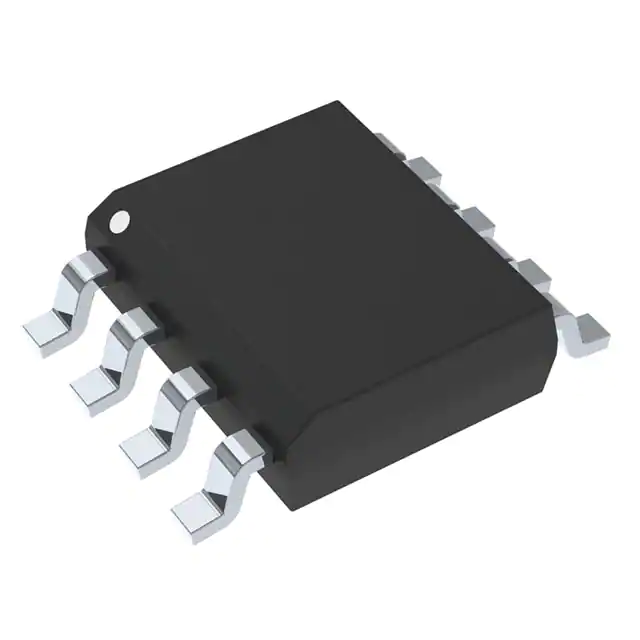
|
|
| Part Number | NCV4264-2CST50T3G | NCV4264-2ST50T3G | NCV4264-2CST33T3G | NCV4264-2D33R2G | NCV4264-2ST33T3G |
| Manufacturer | onsemi | onsemi | onsemi | onsemi | onsemi |
| Series | - | - | - | - | - |
| Package/Case | TO-261-4, TO-261AA | TO-261-4, TO-261AA | TO-261-4, TO-261AA | 8-SOIC (0.154", 3.90mm Width) | TO-261-4, TO-261AA |
| Packaging | Tape & Reel (TR) | Tape & Reel (TR) | Tape & Reel (TR) | Tape & Reel (TR) | Tape & Reel (TR) |
| Product Status | Active | Not For New Designs | Active | Active | Obsolete |
| Output Configuration | Positive | Positive | Positive | Positive | Positive |
| Output Type | Fixed | Fixed | Fixed | Fixed | Fixed |
| Number of Regulators | 1 | 1 | 1 | 1 | 1 |
| Voltage - Input (Max) | 45V | 45V | 45V | 45V | 45V |
| Voltage - Output (Min/Fixed) | 5V | 5V | 3.3V | 3.3V | 3.3V |
| Voltage - Output (Max) | - | - | - | - | - |
| Voltage Dropout (Max) | 0.5V @ 100mA | 0.5V @ 100mA | - | 1.266V @ 100mA | 1.266V @ 100mA |
| Current - Output | 100mA | 100mA | 100mA | 100mA | 100mA |
| Current - Quiescent (Iq) | 55 µA | 55 µA | 55 µA | 55 µA | 55 µA |
| Current - Supply (Max) | 70 µA | 70 µA | 70 µA | 70 µA | 70 µA |
| PSRR | 67dB (100Hz) | 67dB (100Hz) | 67dB (100Hz) | 67dB (100Hz) | 67dB (100Hz) |
| Control Features | - | - | - | - | - |
| Protection Features | Over Current, Over Temperature, Reverse Polarity, Short Circuit | Over Current, Over Temperature, Reverse Polarity, Short Circuit | Over Current, Over Temperature, Reverse Polarity, Short Circuit | Over Current, Over Temperature, Reverse Polarity, Short Circuit | Over Current, Over Temperature, Reverse Polarity, Short Circuit |
| Operating Temperature | -40°C ~ 150°C | -40°C ~ 150°C | -40°C ~ 150°C | -40°C ~ 150°C | -40°C ~ 150°C |
| Grade | Automotive | Automotive | Automotive | Automotive | Automotive |
| Qualification | AEC-Q100 | AEC-Q100 | AEC-Q100 | AEC-Q100 | AEC-Q100 |
| Mounting Type | Surface Mount | Surface Mount | Surface Mount | Surface Mount | Surface Mount |
| Supplier Device Package | SOT-223 (TO-261) | SOT-223 (TO-261) | SOT-223 (TO-261) | 8-SOIC | SOT-223 (TO-261) |
User Guide
- Purchase & Inquiry
- Package
- Shipping Information
- Customer Review
You may place an order without registering to IC-MAX.COM
We strongly suggest you sign in before purchasing as you can track your order in real time.
For your convenience, we accept multiple payment methods in USD, including PayPal, Credit Card, and wire transfer.
RFQ (Request for Quotations)
It is recommended to request for quotations to get the latest prices and inventories about the part.
Our sales will reply to your request by email within 24 hours.
1. You'll receive an order information email in your inbox. (Please remember to check the spam folder if you didn't hear from us).
2. Since inventories and prices may fluctuate to some extent, the sales manager is going to reconfirm the order and let you know if there are any updates.
-
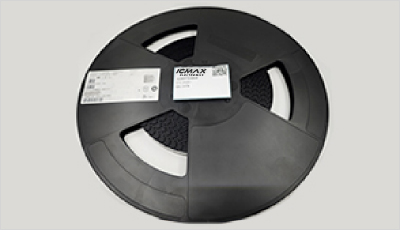
- Step1:Prepare product
-
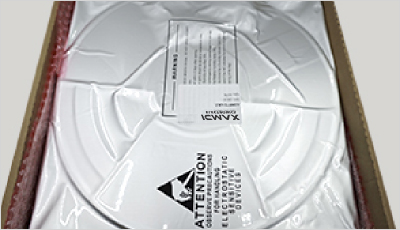
- Step2:Vacuum packaging
-
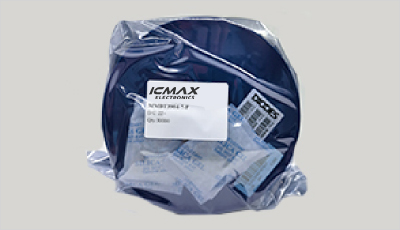
- Step3:Anti-static bag
-
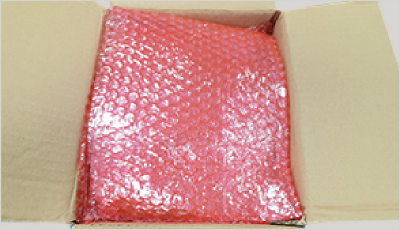
- Step4:Individual package
-
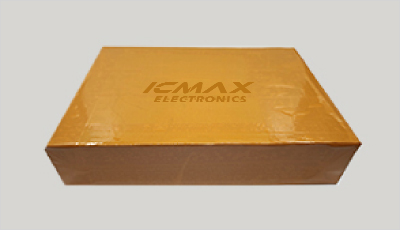
- Step5:Packaging box
-
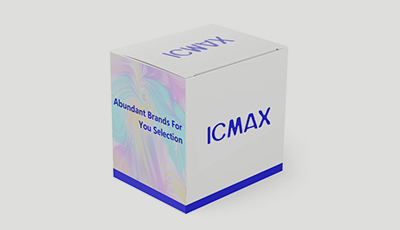
- Step6:Barcode shipping label
Shipping starts at $40, but some countries will exceed $40. For example (South Africa, Brazil, India, Pakistan, Israel, etc.)
The basic freight (for package ≤0.5kg or corresponding volume) depends on the time zone and country.
Currently, our products are shipped through DHL, FedEx, SF, and UPS.
Delivery TimeOnce the goods are shipped, estimated delivery time depends on the shipping methods you chose:
FedEx International, 5-7 business days.
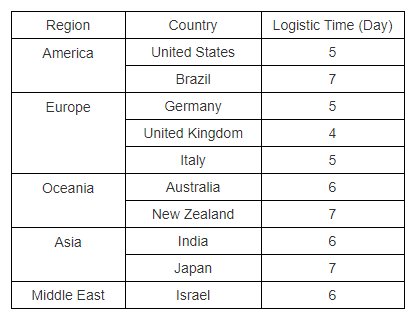
The following are some common countries' logistic time.
- Hot Sale
- Related Categories
- Include Parts
- Popular Search
- Voltage Regulators - Linear, Low Drop Out (LDO) Regulators(66836)
- Voltage Regulators - Linear Regulator Controllers(325)
- Voltage Regulators - Linear + Switching(1473)
- Voltage Regulators - DC DC Switching Regulators(35756)
- Voltage Reference(8428)
- V/F and F/V Converters(139)
- Thermal Management(515)
- Supervisors(41287)
- Special Purpose Regulators(4820)
- RMS to DC Converters(144)
The following parts include "NCV4264-2CST33T3G" in Silicon Labs NCV4264-2CST33T3G.
- Part Number
- Manufacturer
- Package
- Description
- MIC5504-1.8YM5-TR Microchip Technology TO-261-4, TO-261AA IC REG LINEAR 3.3V 100MA SOT223
- MIC5504-3.3YM5-TR Microchip Technology TO-261-4, TO-261AA IC REG LINEAR 3.3V 100MA SOT223
- MIC5365-3.0YC5-TR Microchip Technology TO-261-4, TO-261AA IC REG LINEAR 3.3V 100MA SOT223
- MIC5365-1.8YC5-TR Microchip Technology TO-261-4, TO-261AA IC REG LINEAR 3.3V 100MA SOT223
- MIC5365-2.5YC5-TR Microchip Technology TO-261-4, TO-261AA IC REG LINEAR 3.3V 100MA SOT223
- MIC5365-3.3YC5-TR Microchip Technology TO-261-4, TO-261AA IC REG LINEAR 3.3V 100MA SOT223
- MIC5365-3.3YD5-TR Microchip Technology TO-261-4, TO-261AA IC REG LINEAR 3.3V 100MA SOT223
- MIC5317-3.3YM5-TR Microchip Technology TO-261-4, TO-261AA IC REG LINEAR 3.3V 100MA SOT223
- TLV1117LV33DCYR Texas Instruments TO-261-4, TO-261AA IC REG LINEAR 3.3V 100MA SOT223
- MIC5317-3.3YMT-TZ Microchip Technology TO-261-4, TO-261AA IC REG LINEAR 3.3V 100MA SOT223
The following parts are popular search parts in Test and Measurement.
Inventory:11,241
Please send an inquiry. Send us your inquiry, and we will respond immediately.

- 1500+ Daily average RFQ Volume

- 20,000.000 Standard Product Unit

- 1800+ Worldwide Manufacturers

- 15,000+ In-stock Warehouse